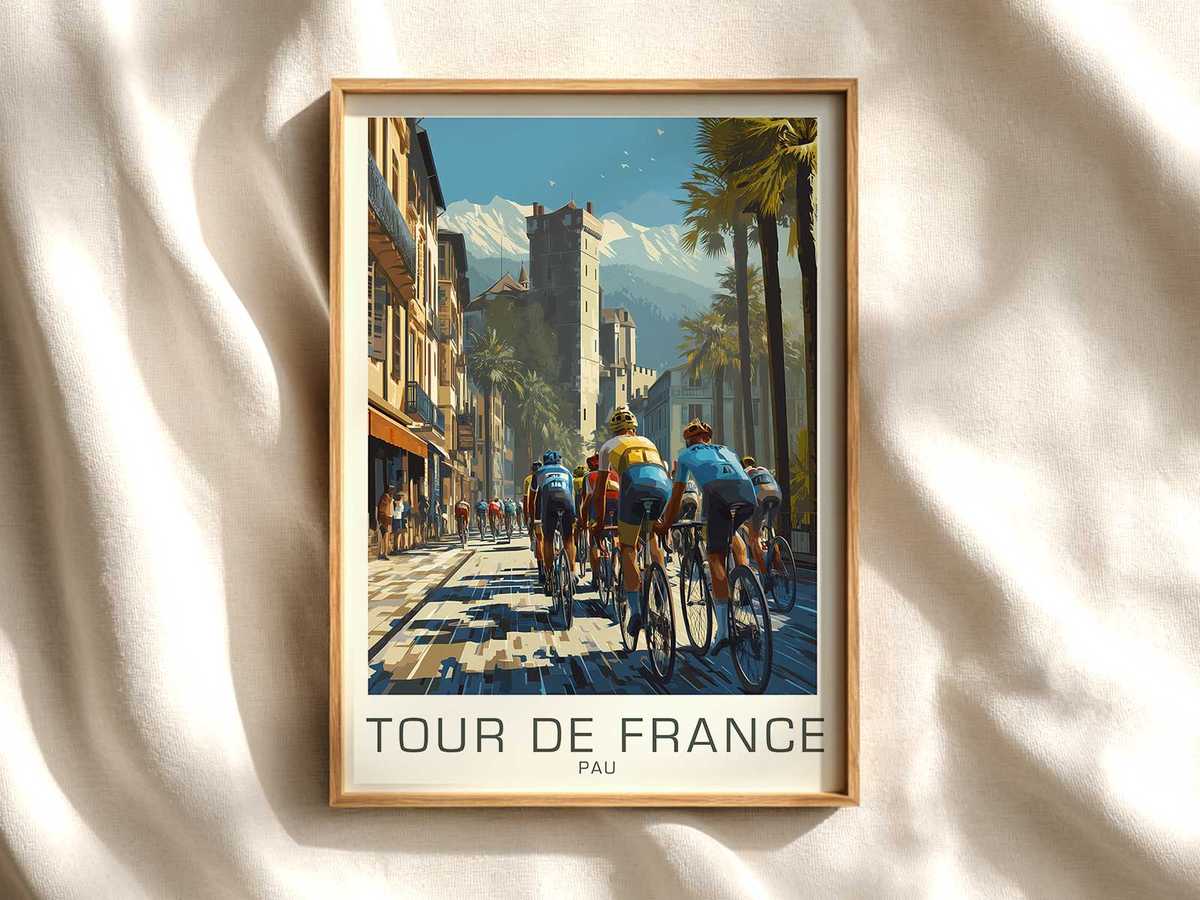
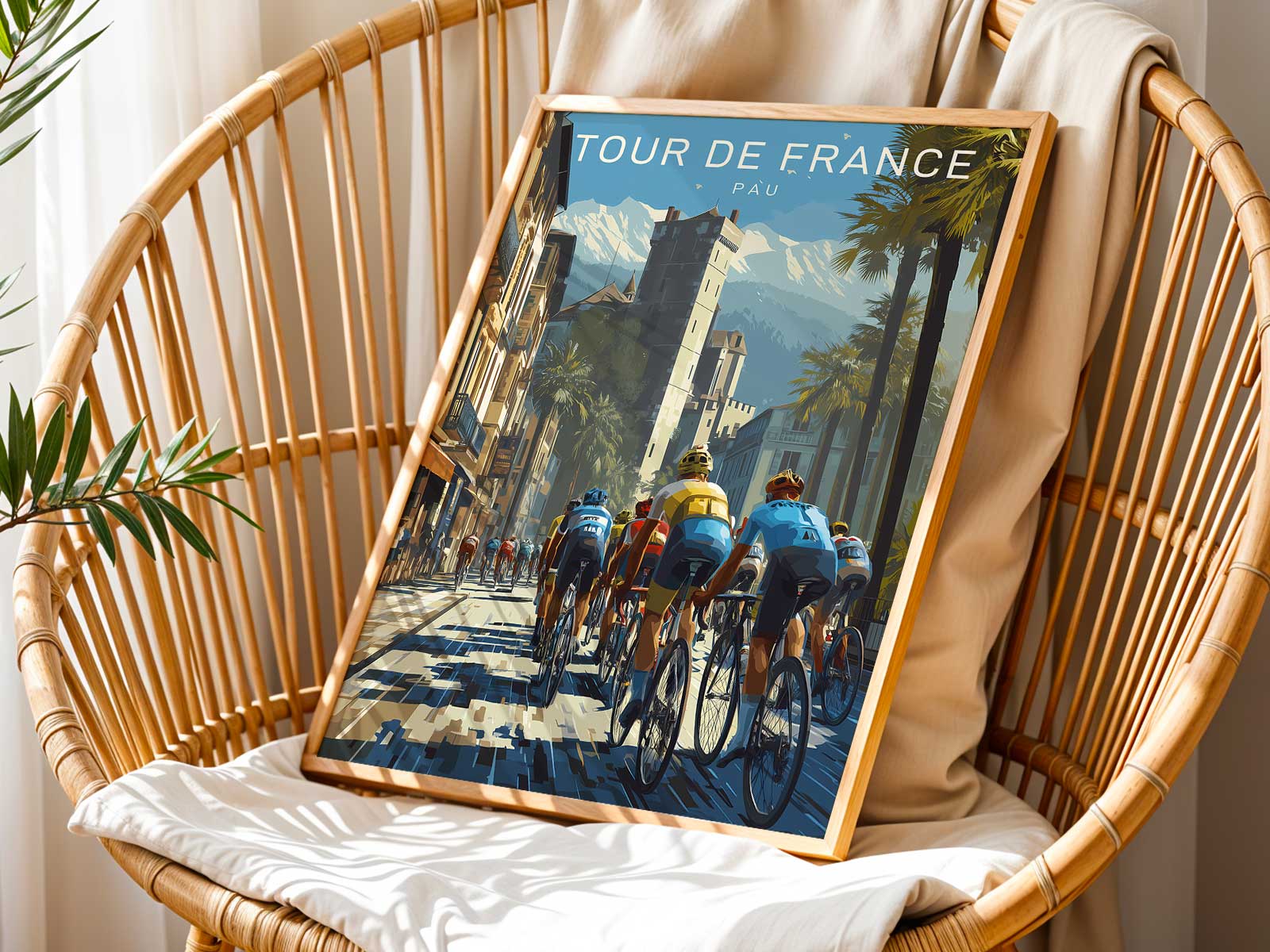
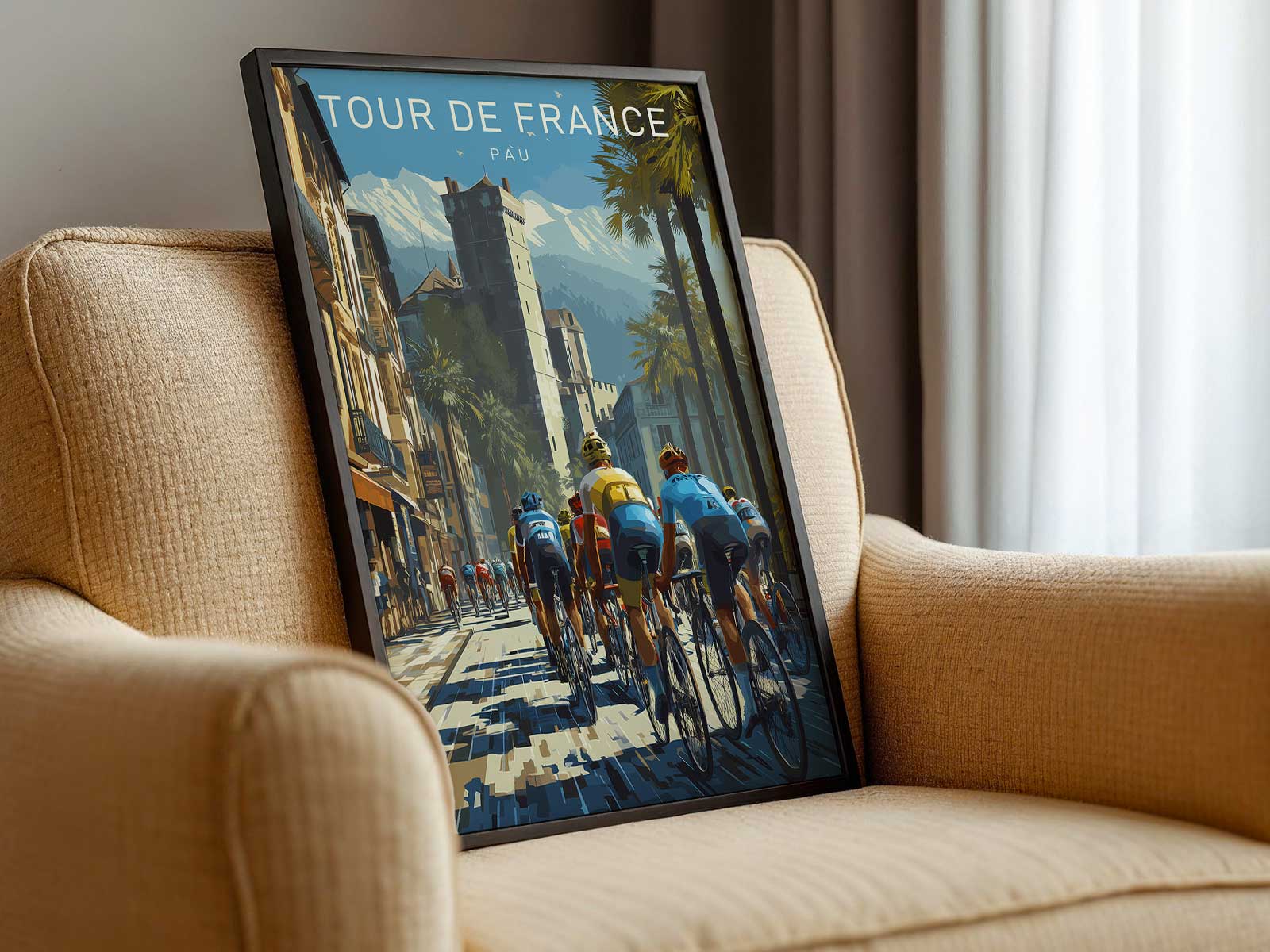
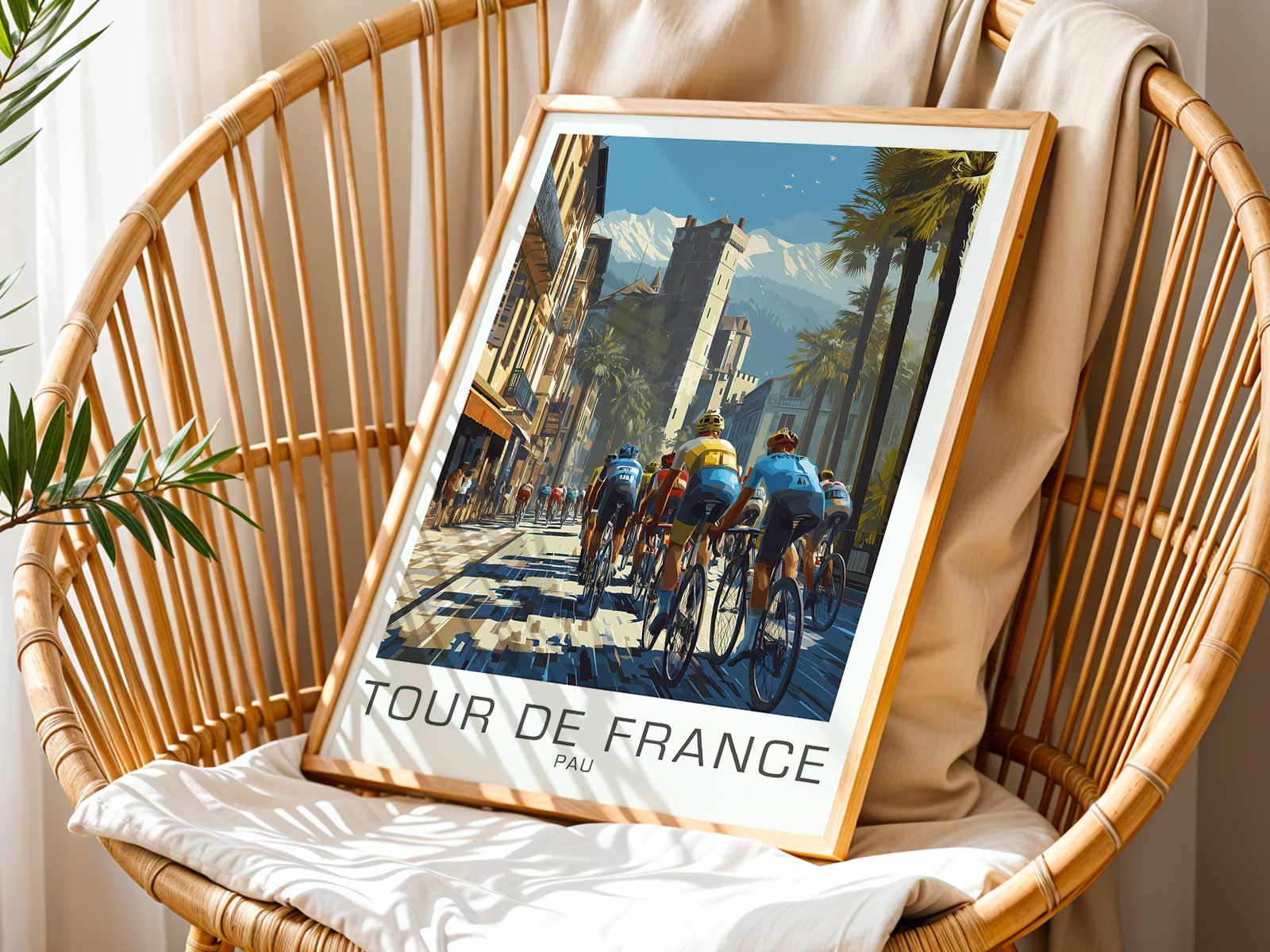
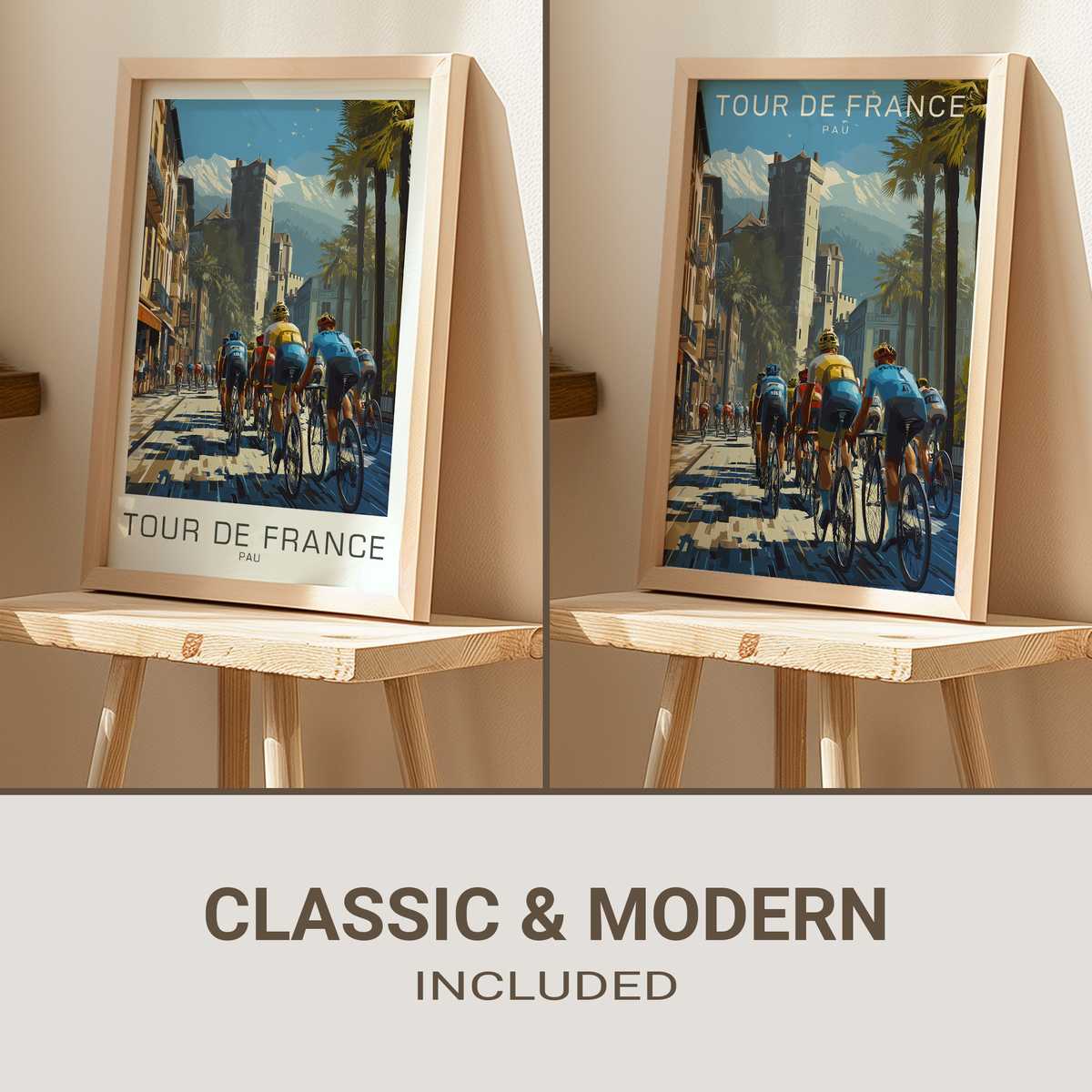
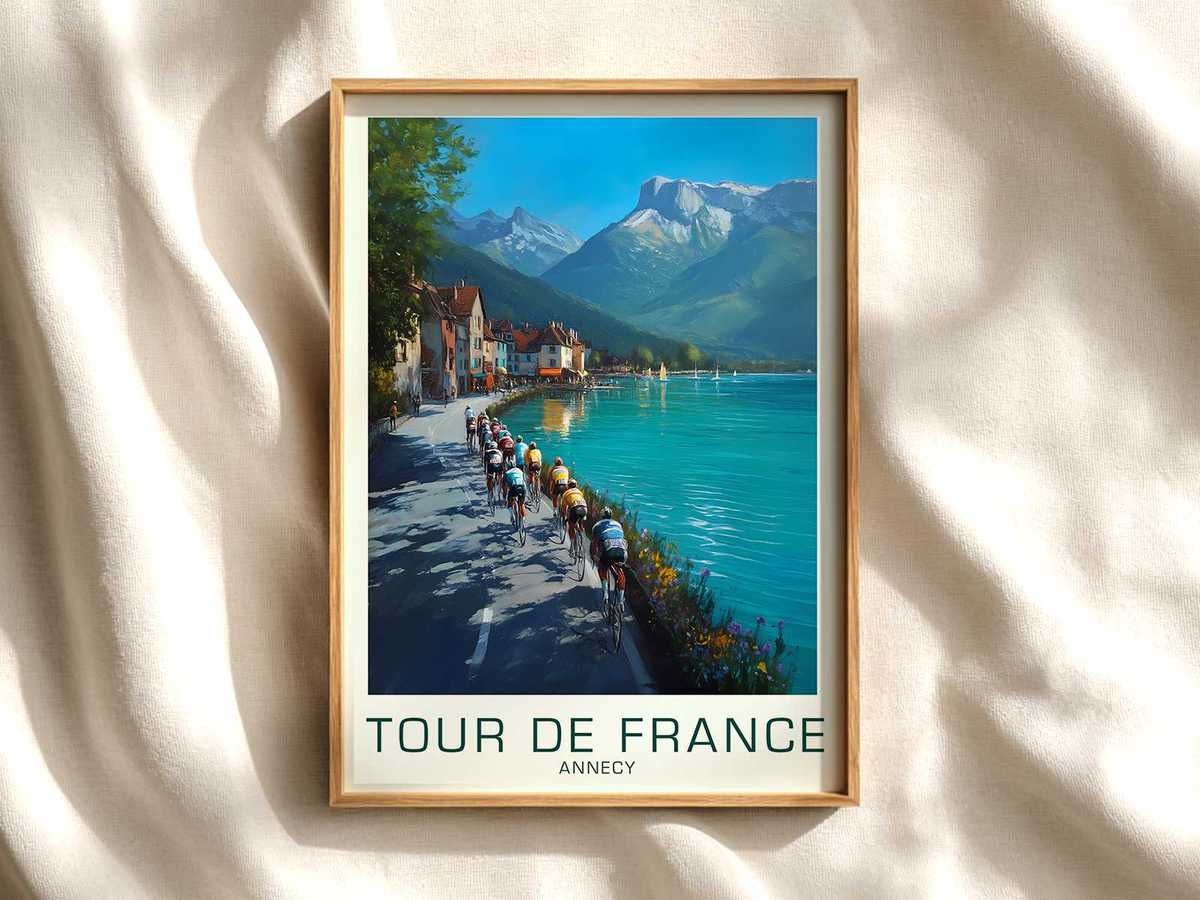
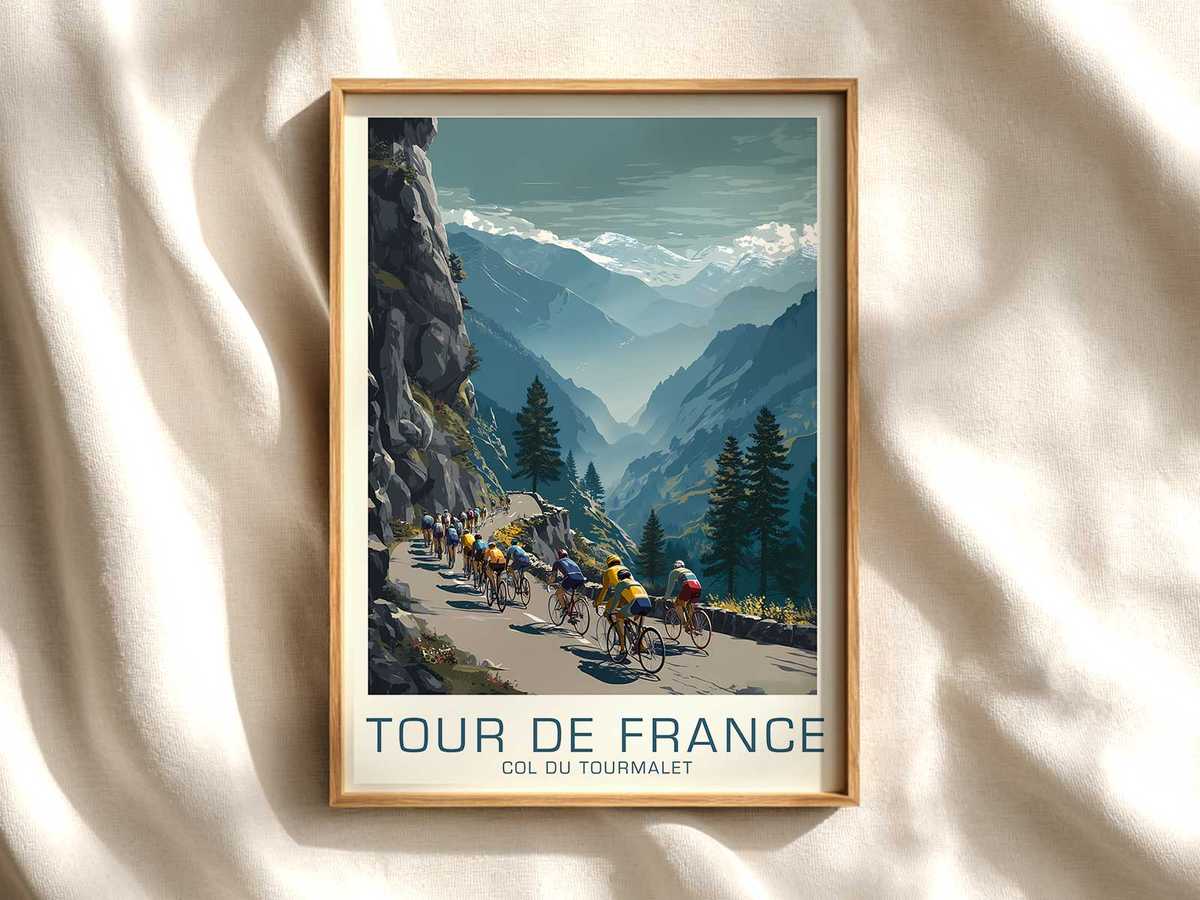
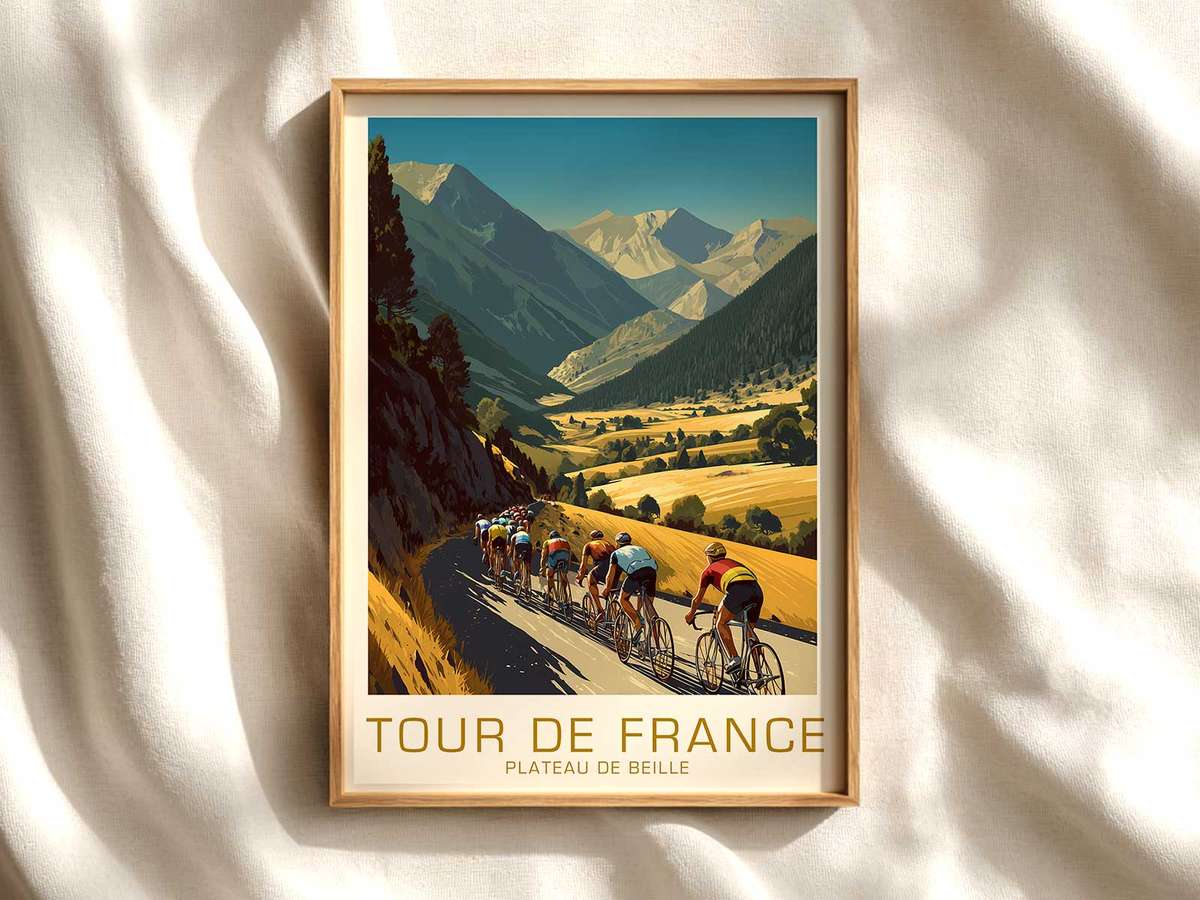
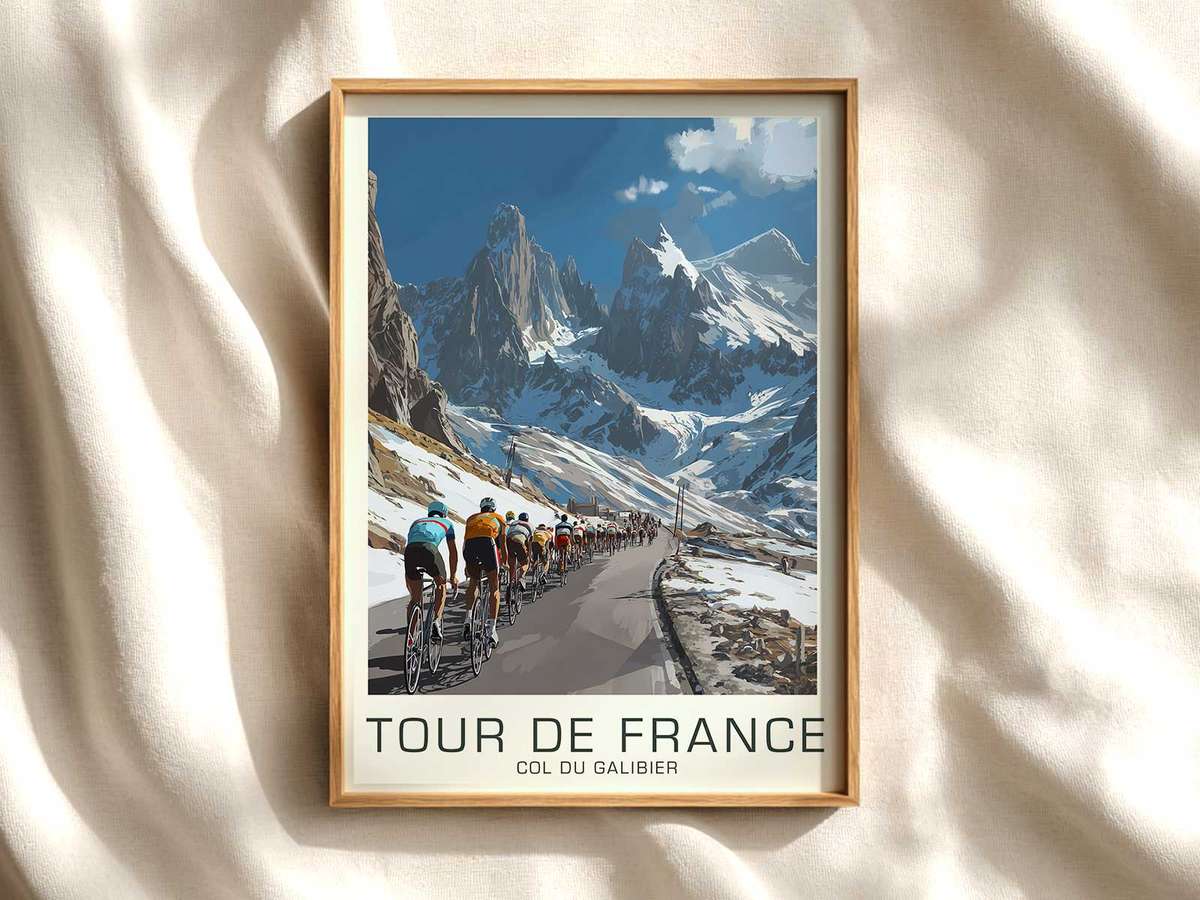
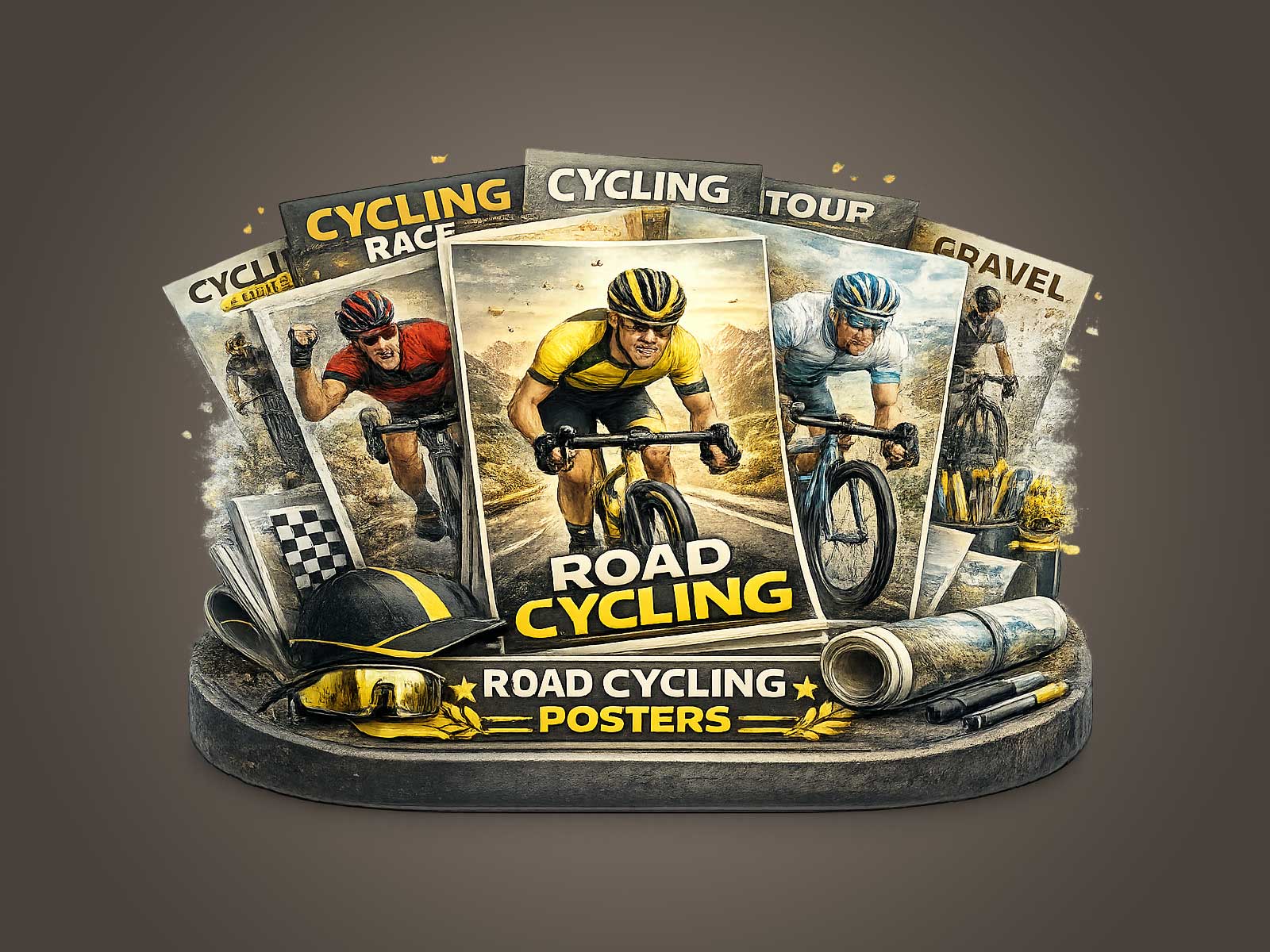
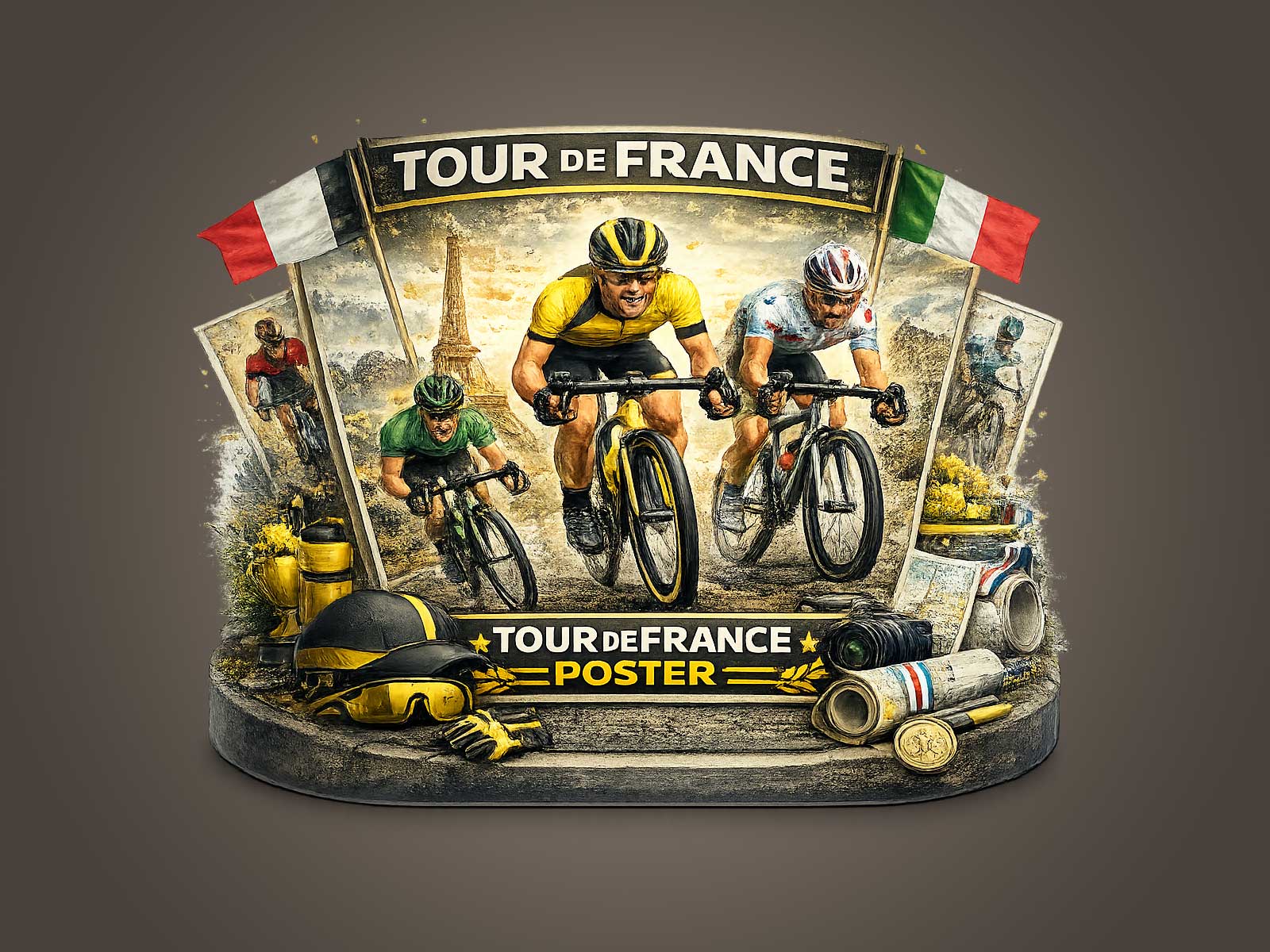
A Pau-inspired poster that places the racing bicycle at its centre does more than show a scene: it composes one. The bike in this artwork becomes an architectural element — a precise constellation of tubes, wheels and cockpit that defines the picture plane, orients the eye along a climb and sets up a latent tension between motion and stillness. Seen from this angle, the bicycle is not merely subject; it is the organising idea that gives the image its clarity, technical drama and museum‑quiet dignity.
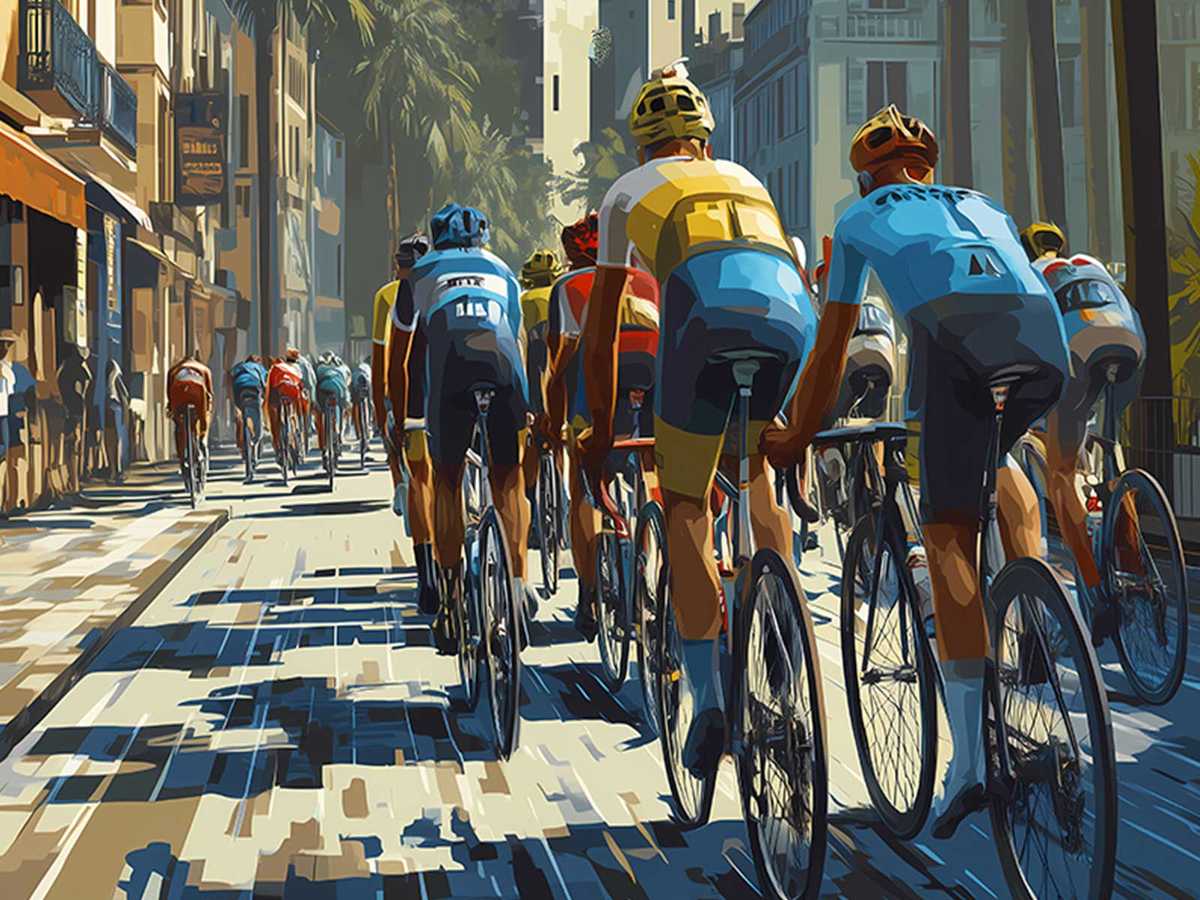
Frame silhouette is the first visual promise. Slim tubes and tight geometry read like drawn lines on a poster: the top tube becomes a horizon, the seatpost a vertical axis. That geometric clarity lets the artist position the machine to cut across background shapes — the slope of the road, the negative space of a crowd, or the mass of a foothill — turning every element into a supporting player. A well-rendered down-tube and chainstay junction anchors the composition the way a keystone steadies an arch; even without brand names or specs, the relationship of those parts communicates engineering intent and racing pedigree.
Wheels and their silhouettes carry emotional weight. Shallow rims register as classic and honest; deeper profiles and the subtle suggestion of motion produce aerodynamic tension. Where the poster plays with shadow or a single strip of light along the rim, it hints at speed and forward thrust while allowing the bicycle to remain elegantly readable at a distance. The circular geometry also offers a calm counterpoint to diagonal lines of the road or the rider's body, so the machine keeps the viewer’s focus without shouting.
Bar, saddle and race posture read like a visual score. The curve of the handlebars, the tilt of the saddle and the compressed triangle between rider and frame dramatise effort and intent: a compact cockpit suggests an aggressive, aerodynamic stance; a raised head and long reach read as climbing patience. These cues are legible even when the rider’s face is absent or blurred — the poster asks you to infer cadence, torque and concentration from mechanical alignment rather than biography, and that restraint invites the viewer to live inside the moment rather than to celebrate a single name.
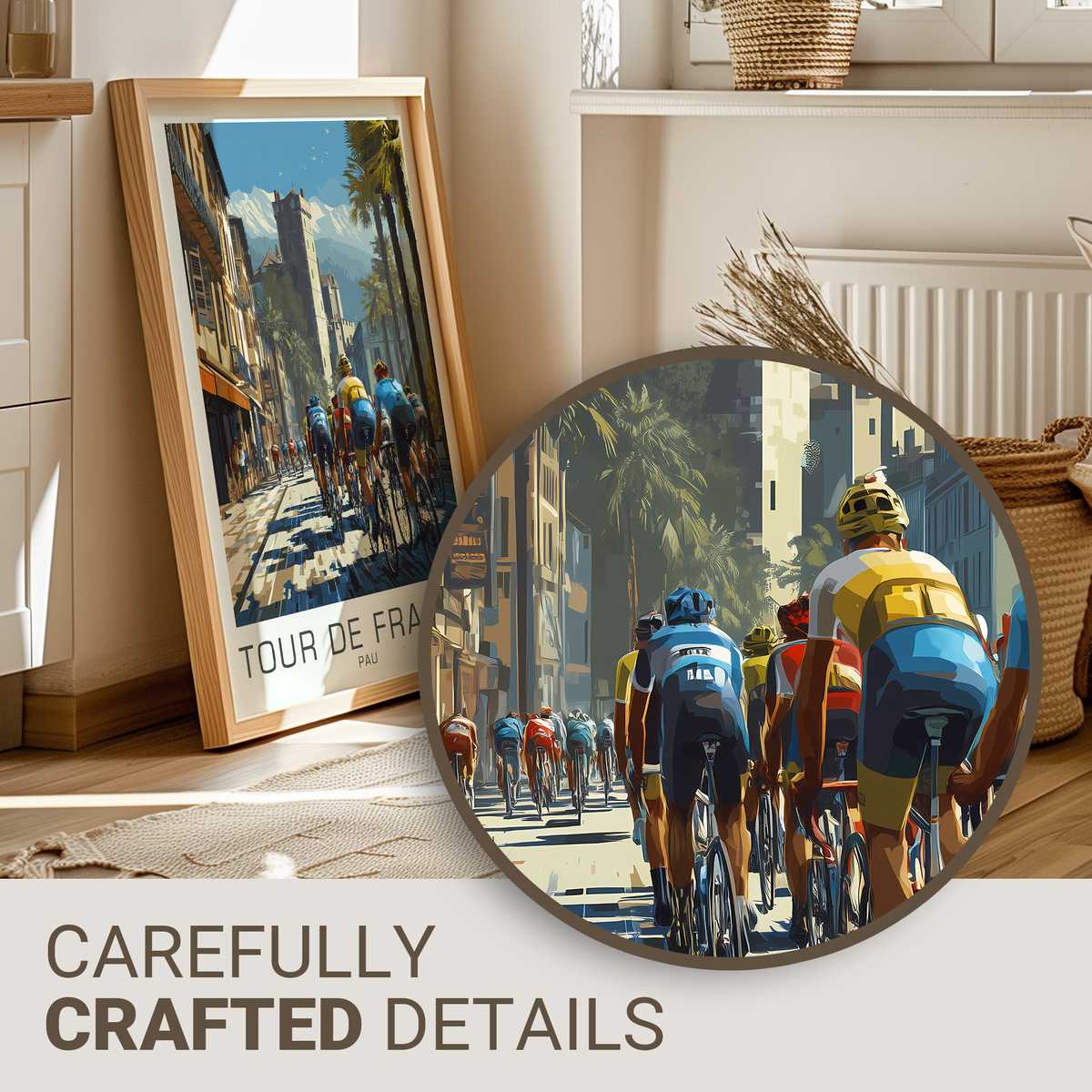
There is also a tactile, material memory embedded in such images. Cables, tyre tread hints, and the handshake between chain and sprocket whisper of maintenance, of races past and of machine care. That material presence grounds the visual rhetoric: this is craftsmanship, calibrated performance and a culture that prizes precision. For an interior devoted to sport‑aware design, the poster brings those cues into a room without overwhelming it — a subtle patina of authenticity that rewards close inspection.
[IMAGE_INSERT_ARTICLE_01]
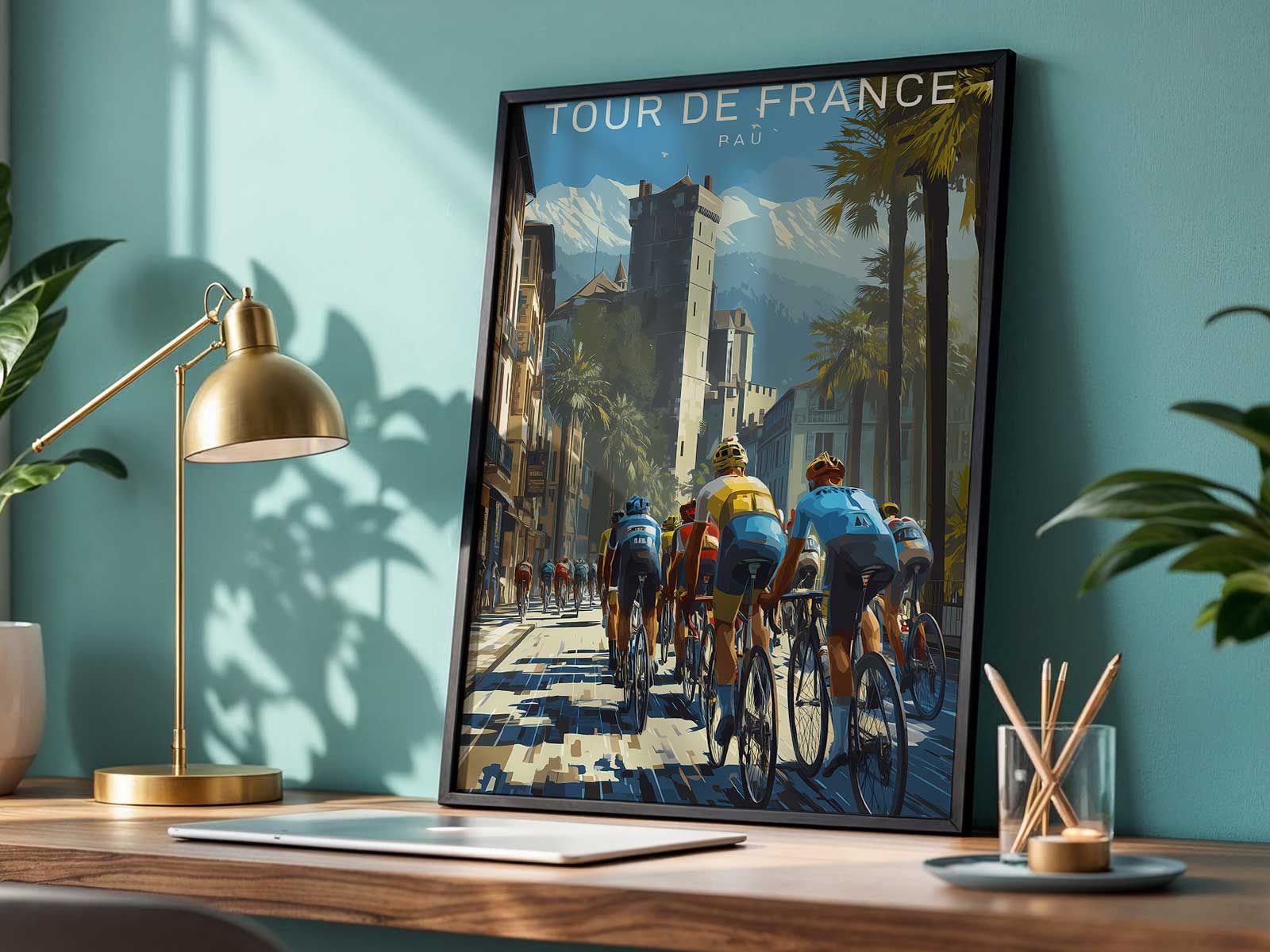
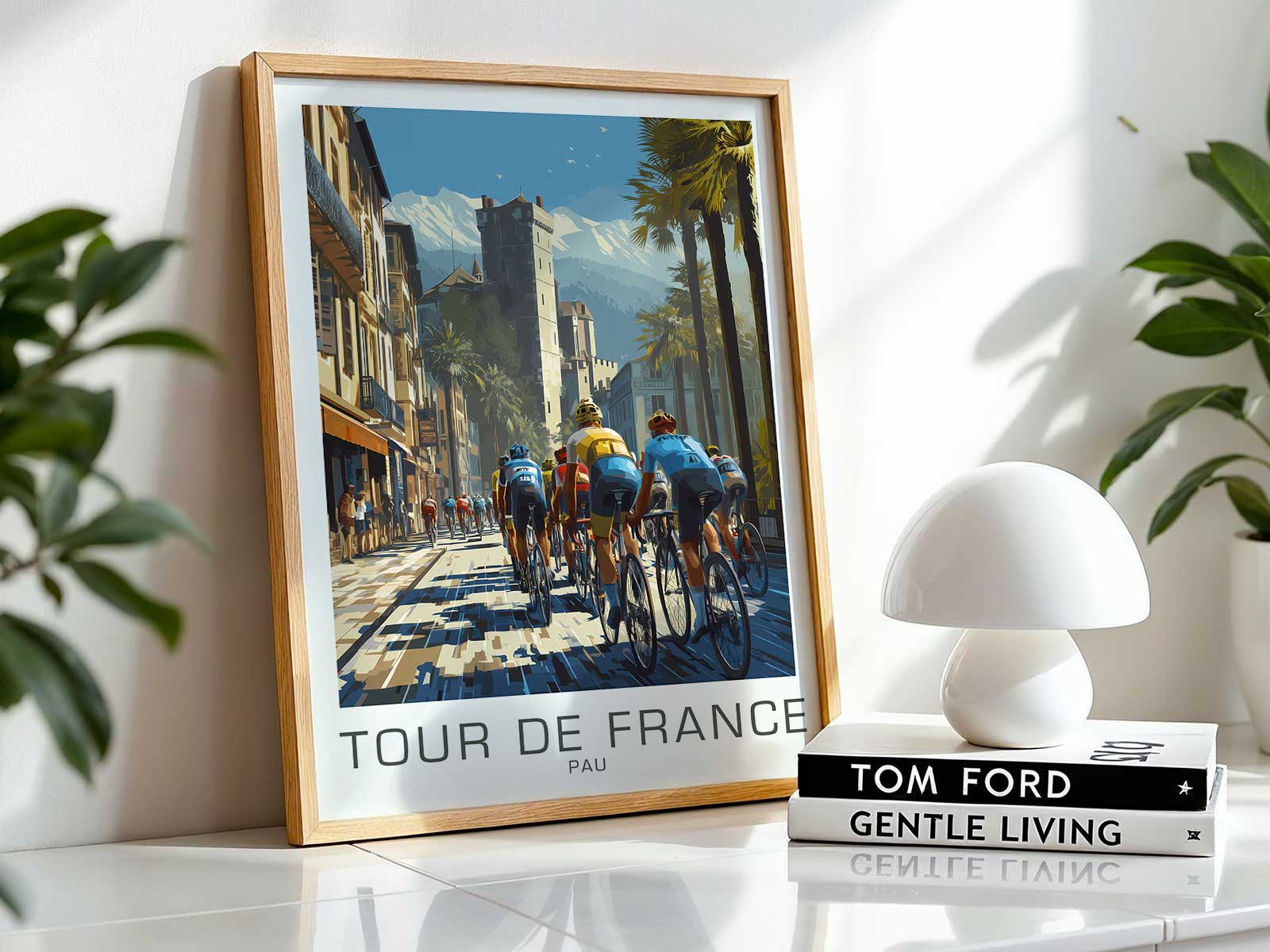
Placed in an office, studio or reading nook, a bike-led Tour poster performs as architecture and mood-setter. It reads well above a console or over a desk because its clean lines echo furniture geometry; it adds vertical lift in a hallway because the frame silhouette naturally draws the eye upwards. The colour restraint common to Pau-inspired artworks — muted roadside greens, pale sky and the dark, purposeful form of the bicycle — keeps the work from competing with other elements, instead harmonising with linen, wood and metal finishes typical of refined interiors.
Finally, the collector’s appeal of these prints lies in the narrative economy: one carefully chosen bicycle pose can suggest a full stage — the grind of gradient, the hush of spectators, the lone focus of the climber — without telling a specific story. That open-endedness is what makes bicycle wall hangings so potent in contemporary spaces. They offer a distilled testimony to endurance and craft, a visual shorthand for precision and style that elevates a room through form, proportion and the unmistakable nobility of the racing bicycle.