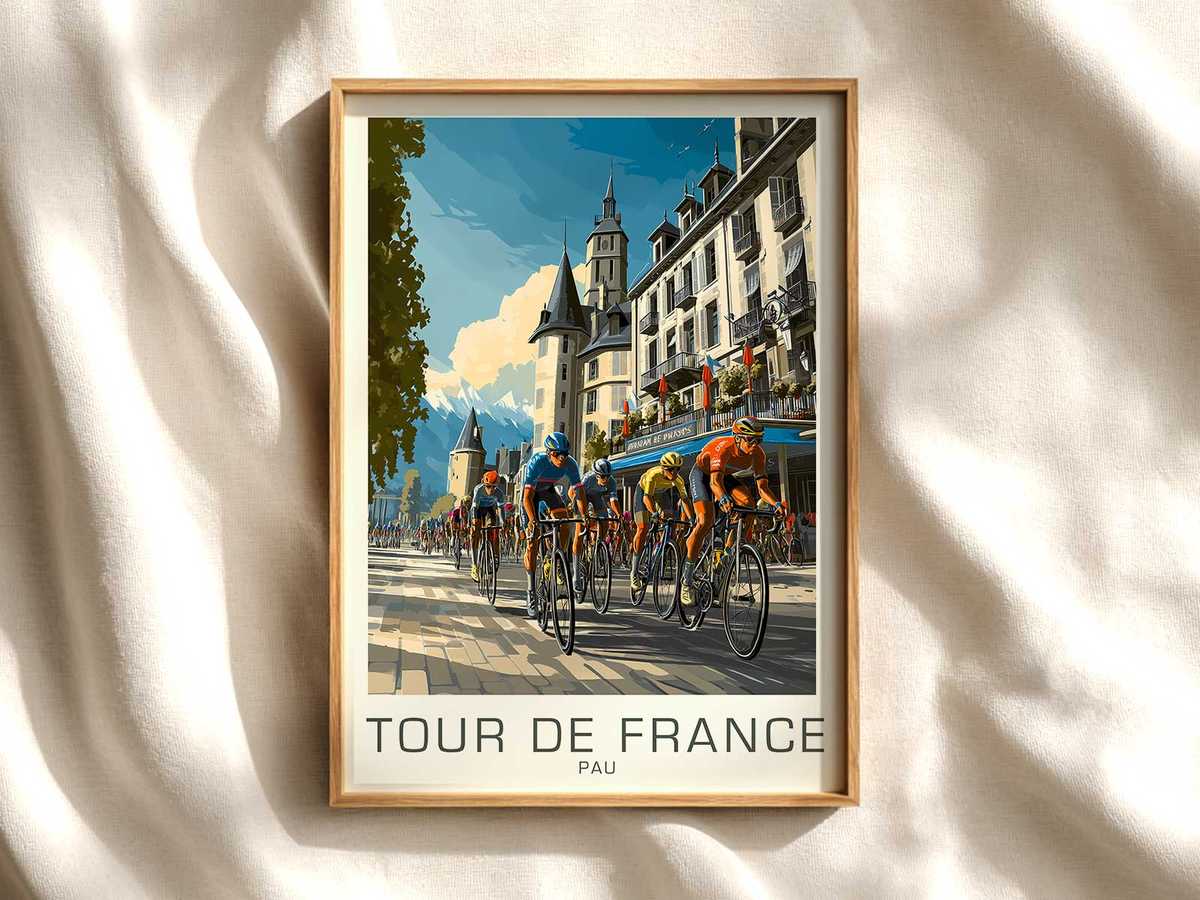
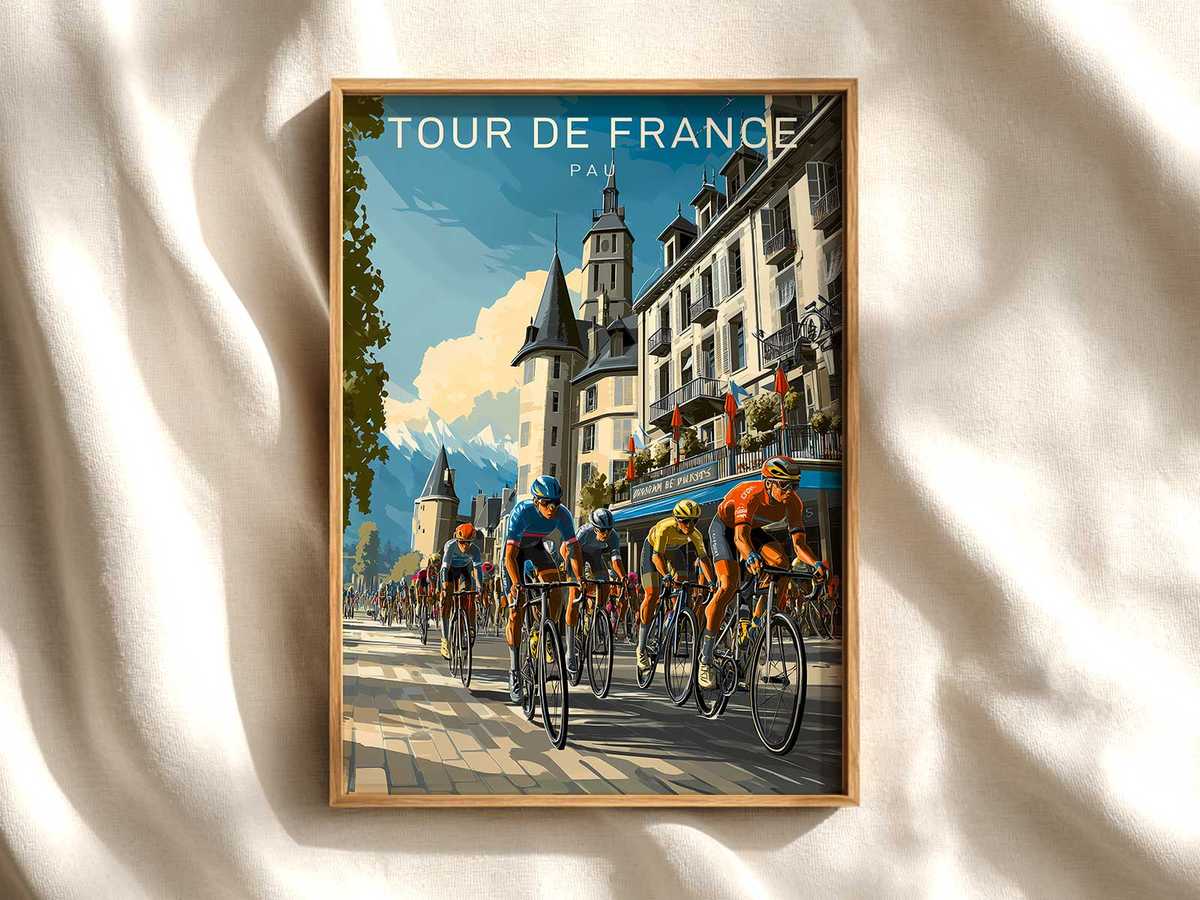
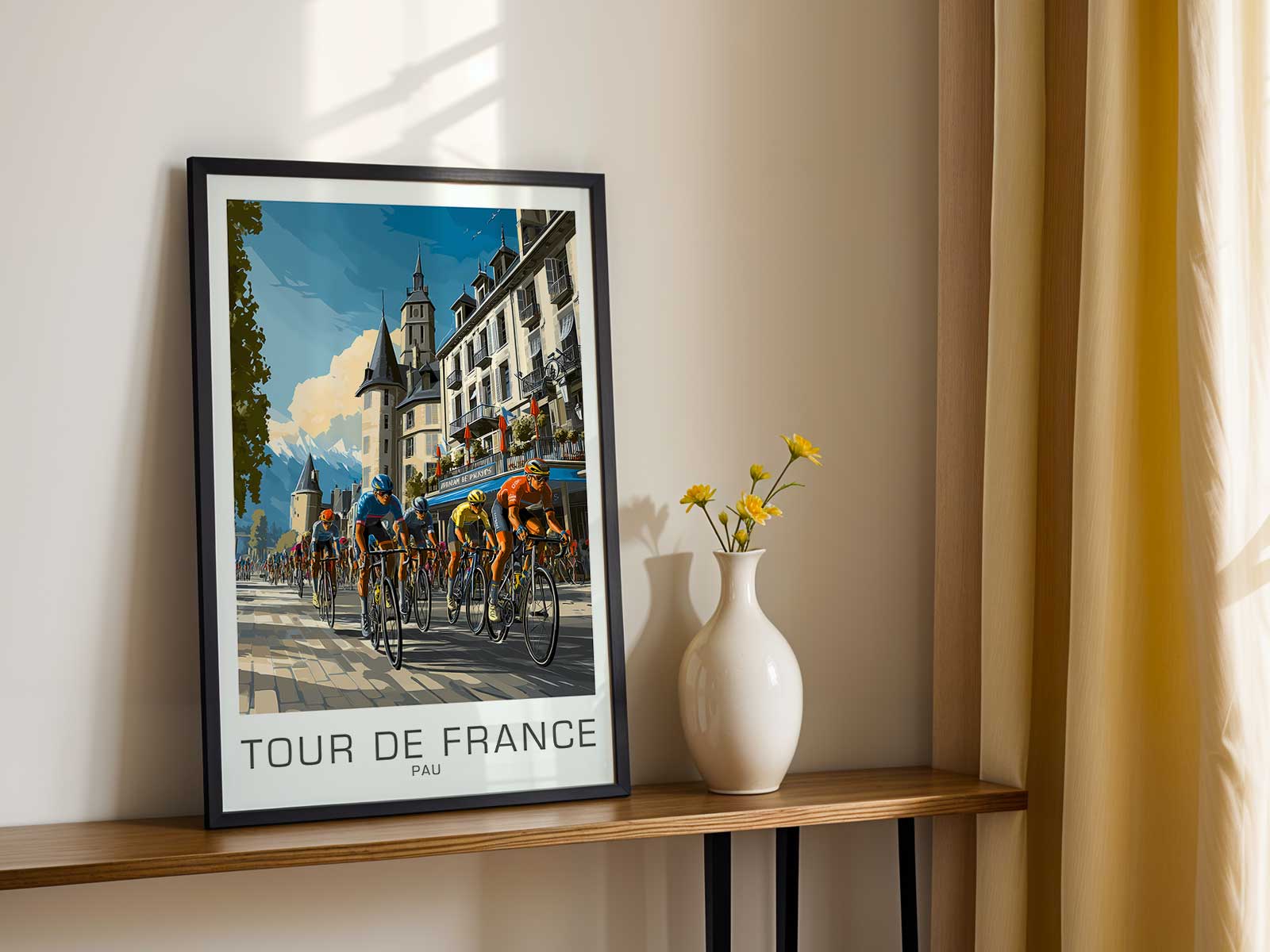
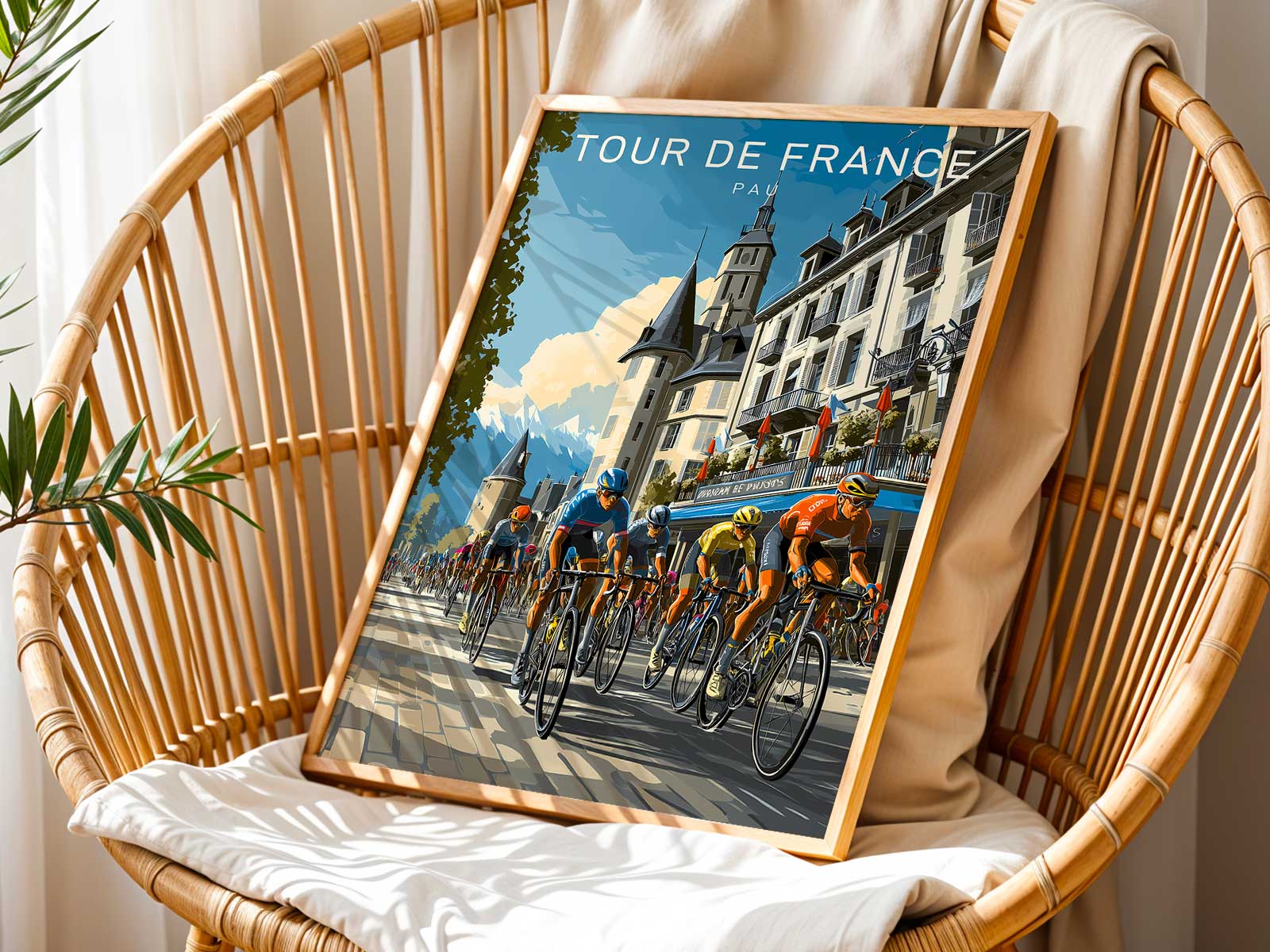
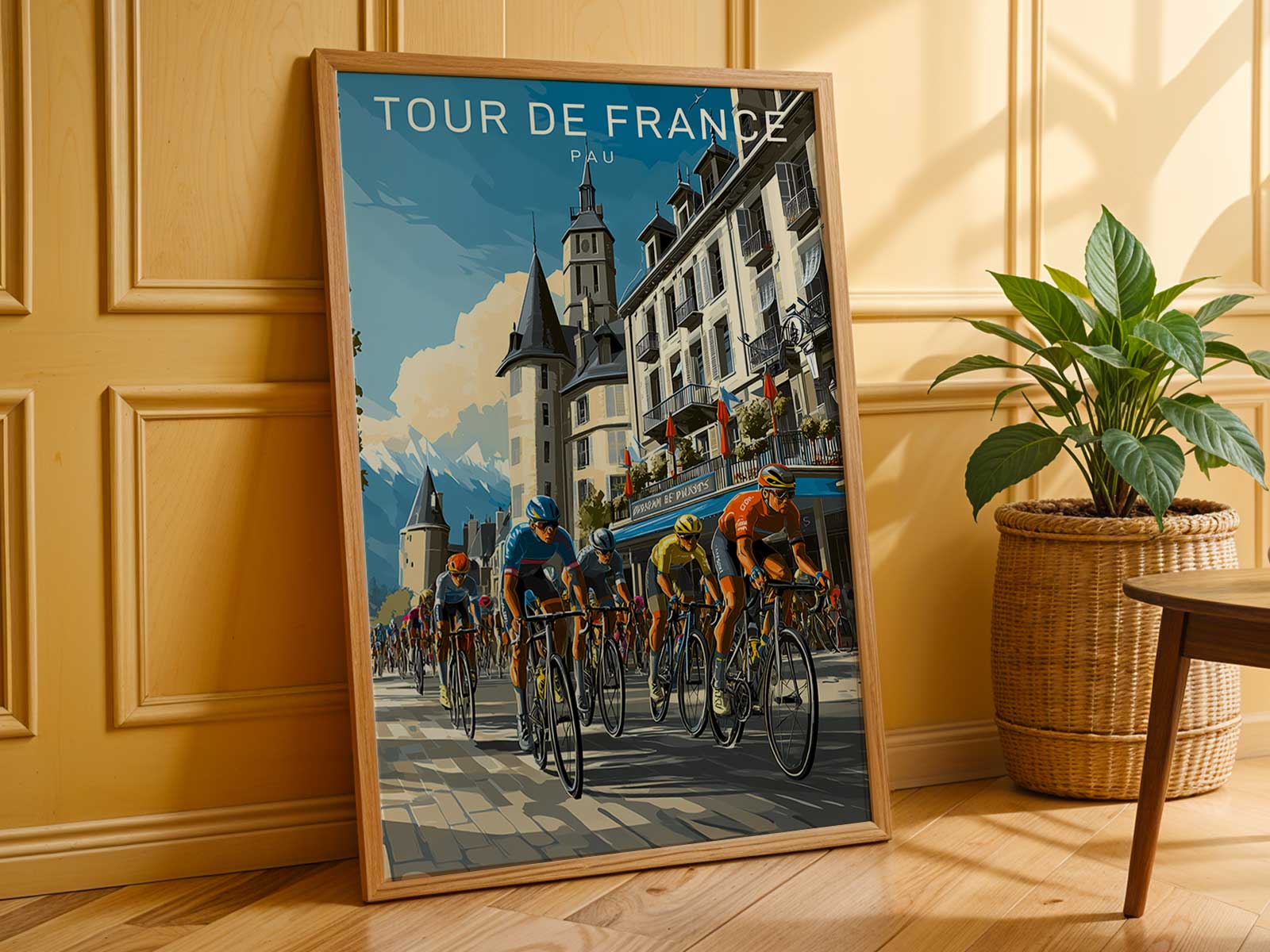
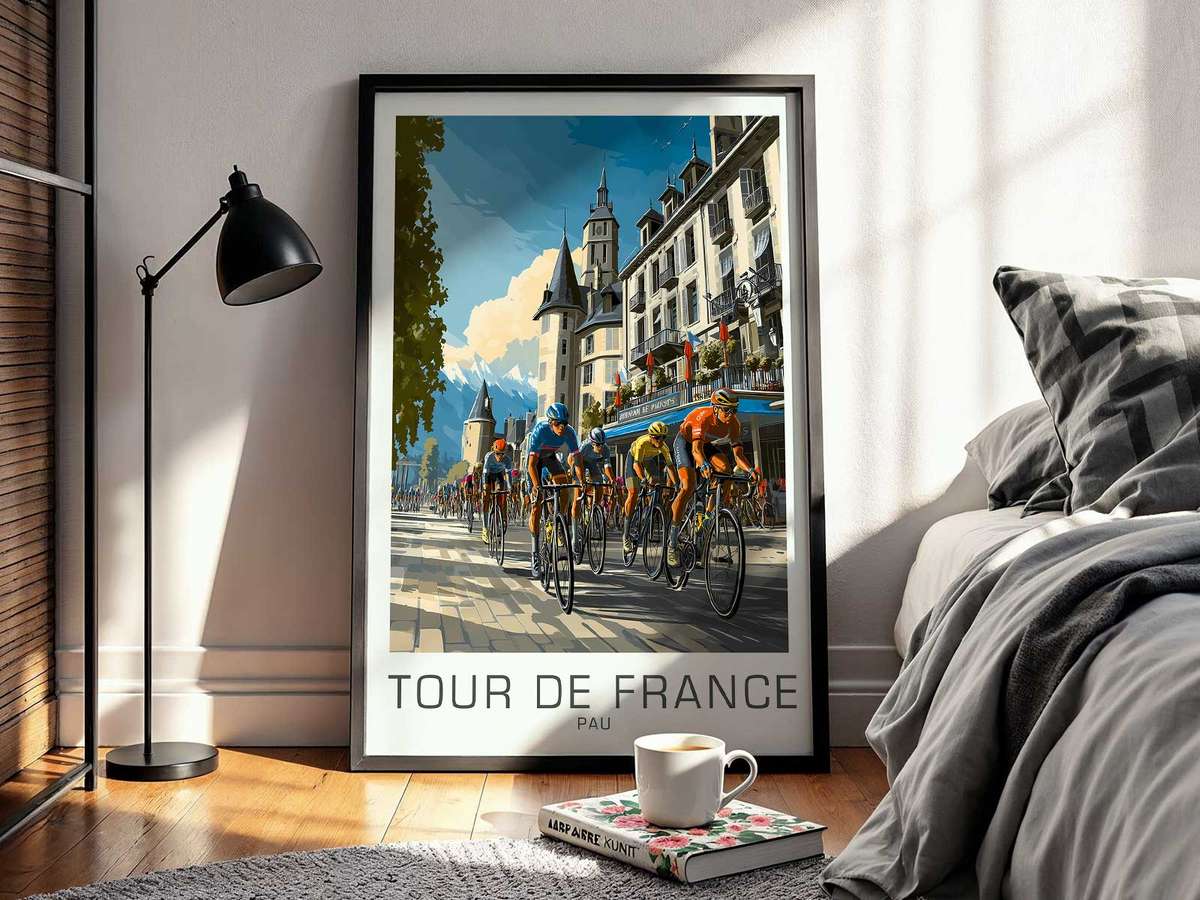
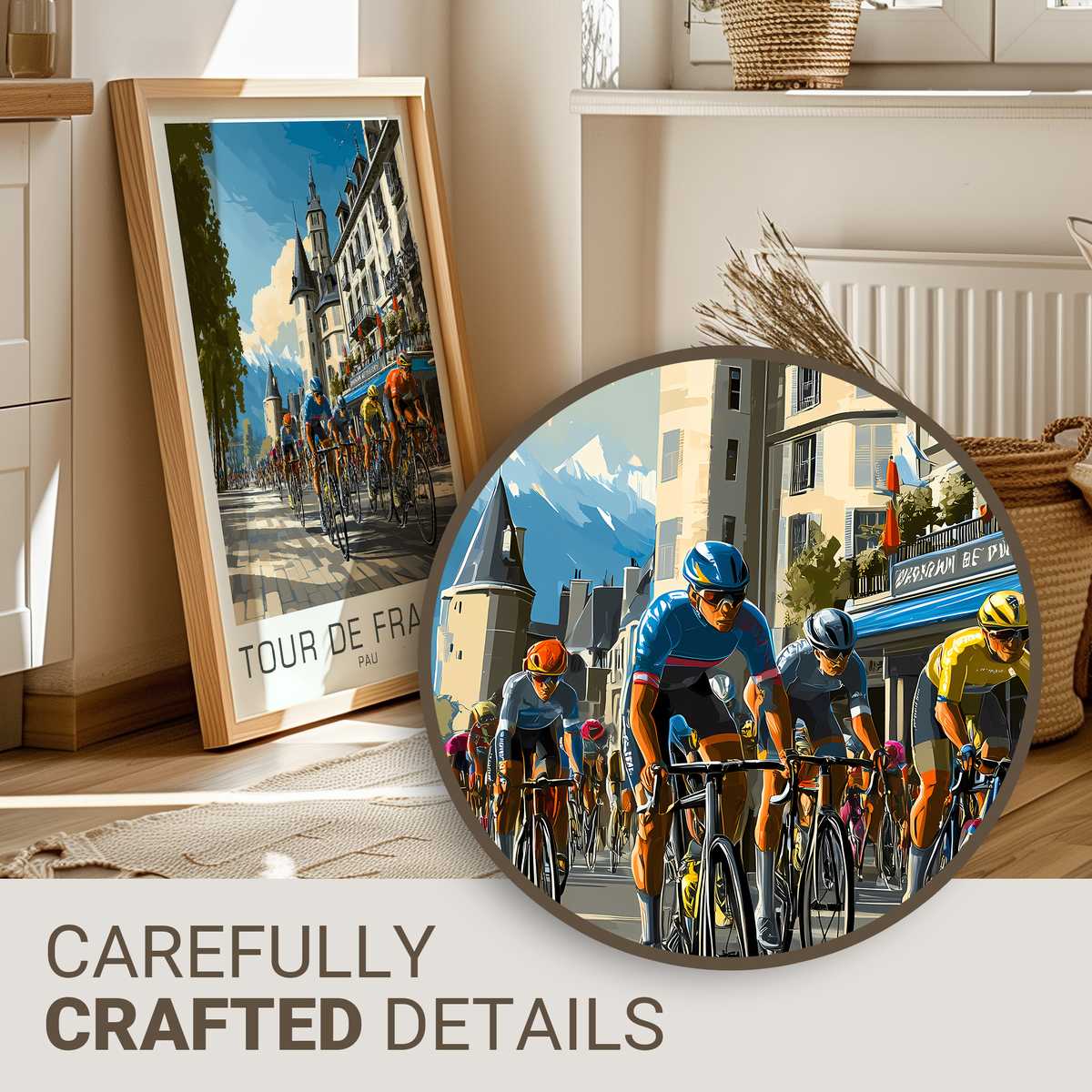
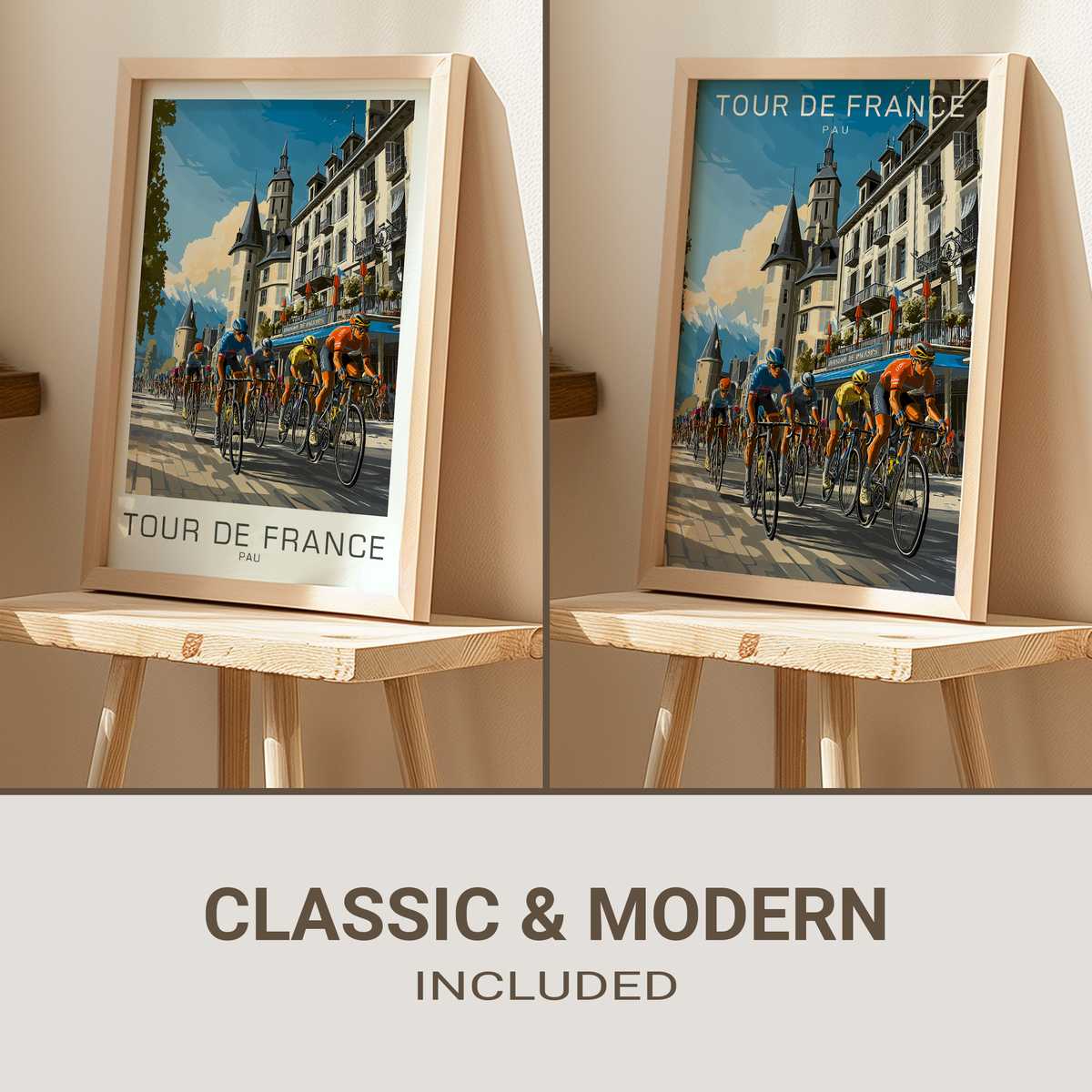
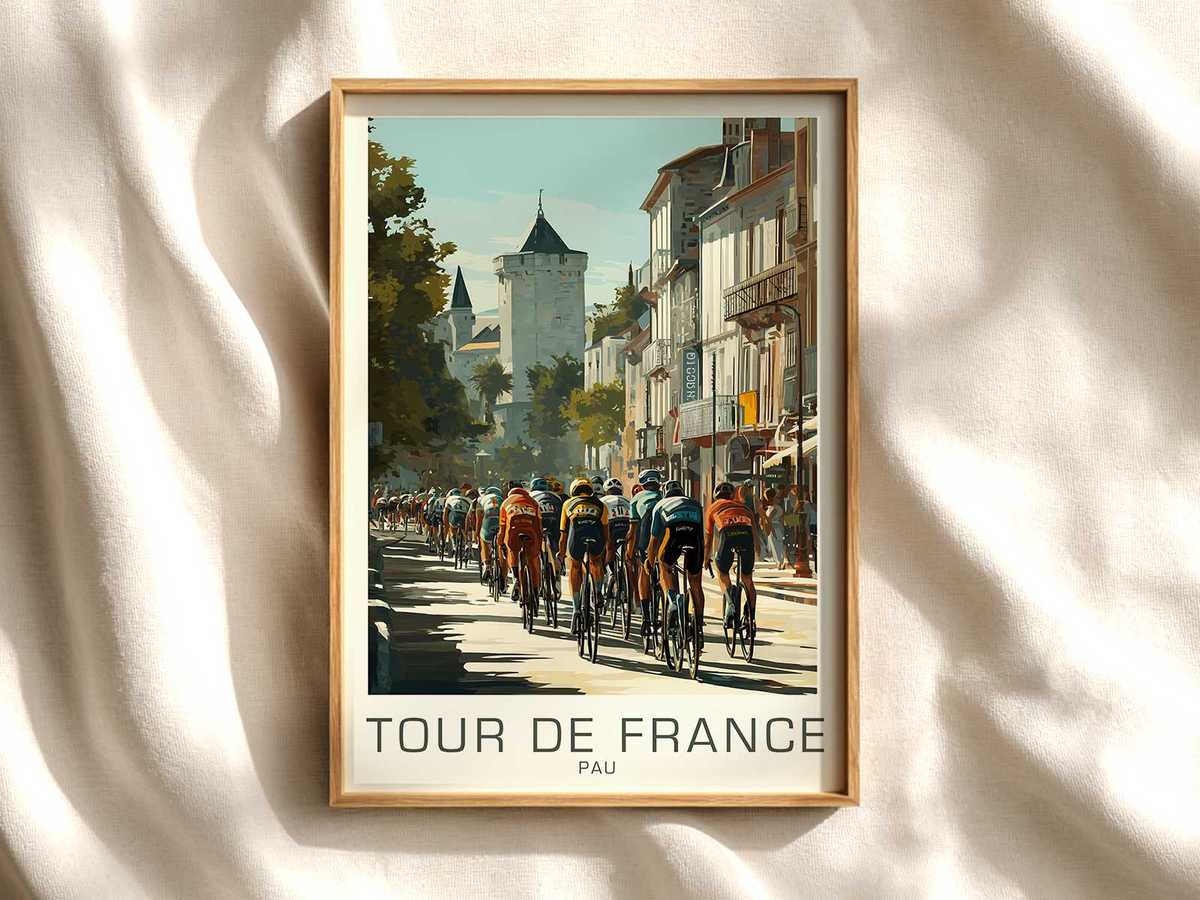
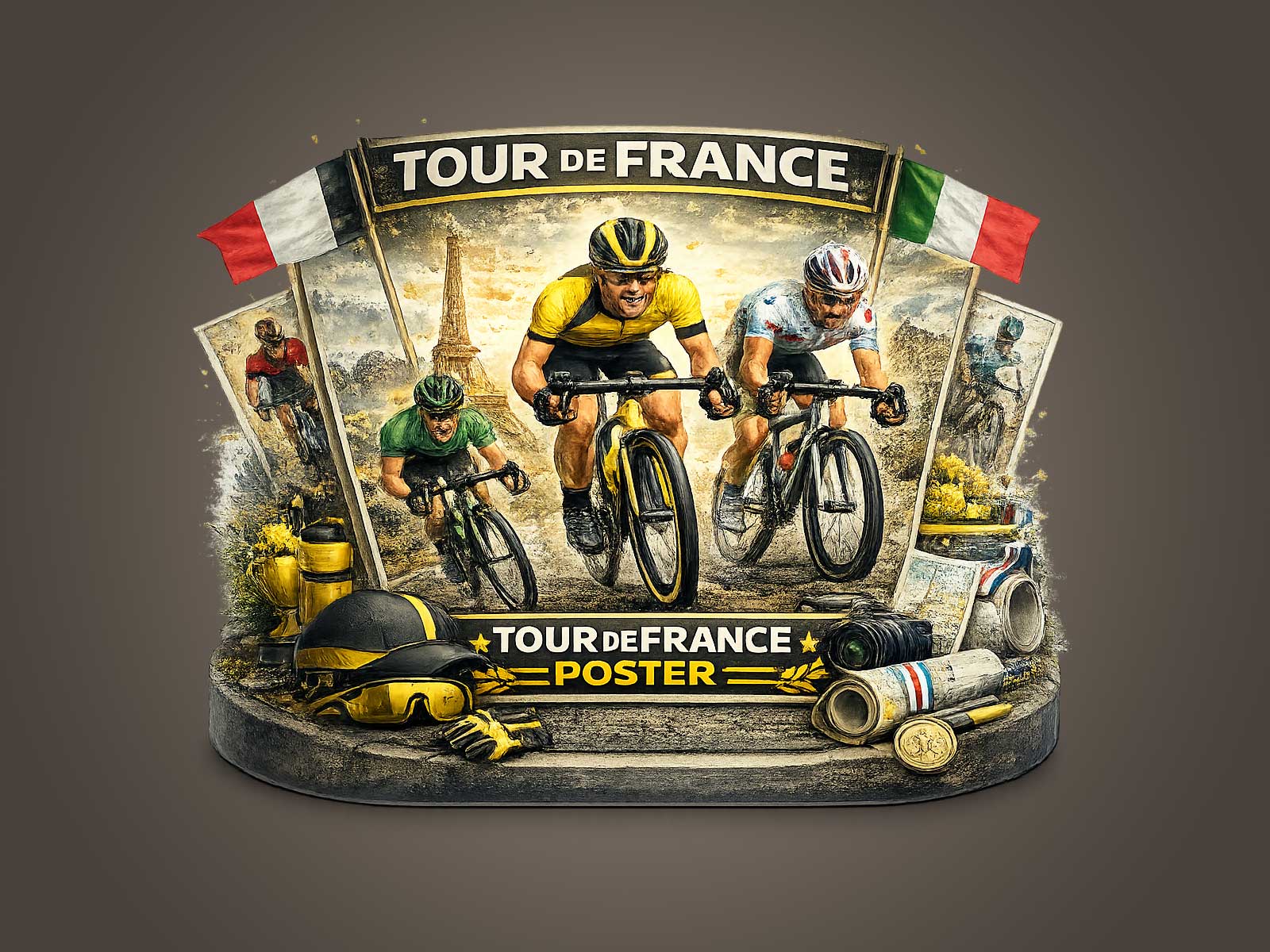
Pau is more than a town on a map; seen through the lens of cycling, it becomes a stage set. A successful bike wall decor piece that evokes Pau doesn’t rely on labels or results — it uses road geometry, the city’s step-down terraces, the horizon of the Pyrenees, and the way light falls across limestone façades to tell a race story at a single glance. The viewer recognises a place before recognising the rider: that immediate legibility is what makes a Pau-inspired poster visually compelling.
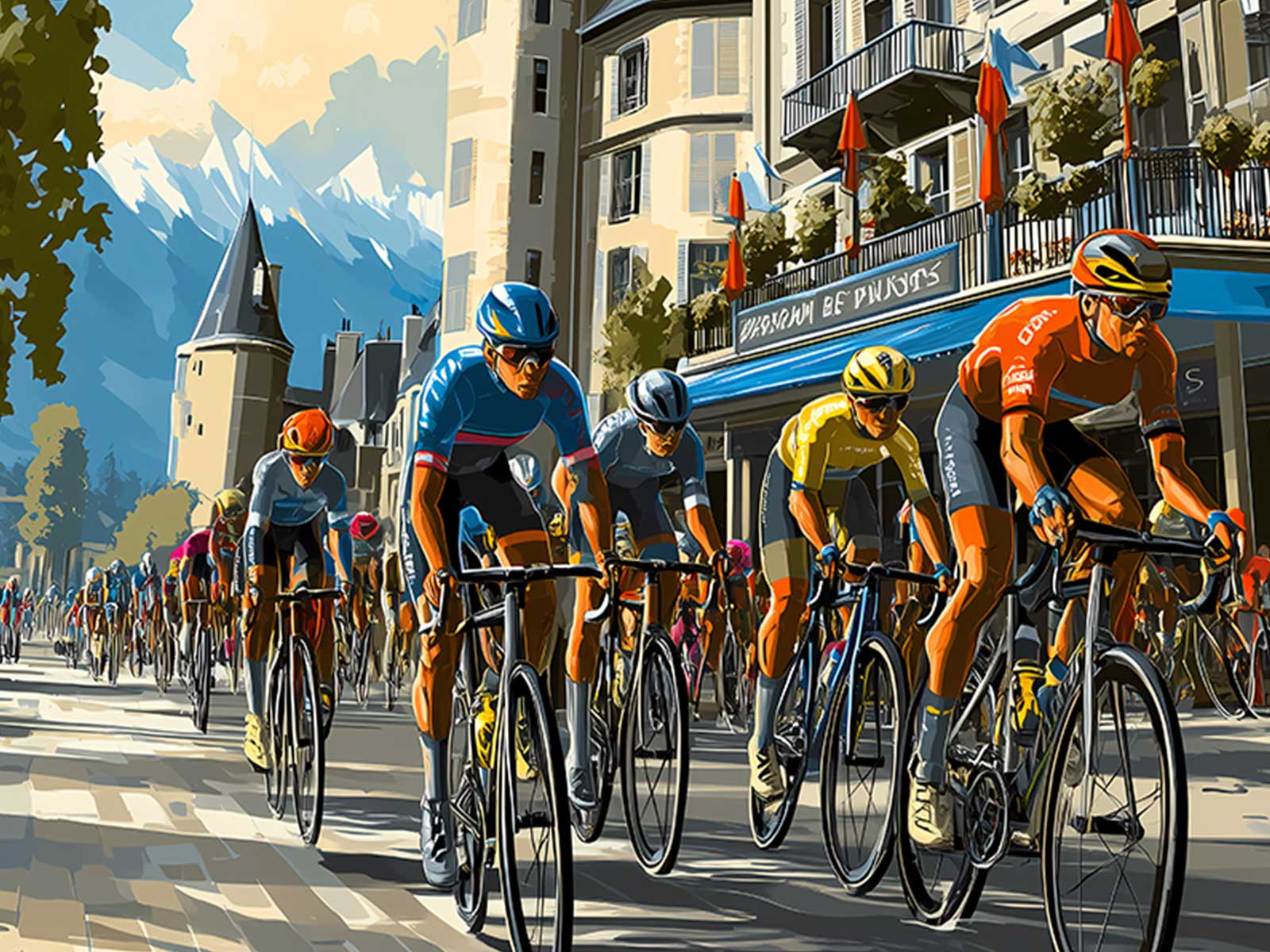
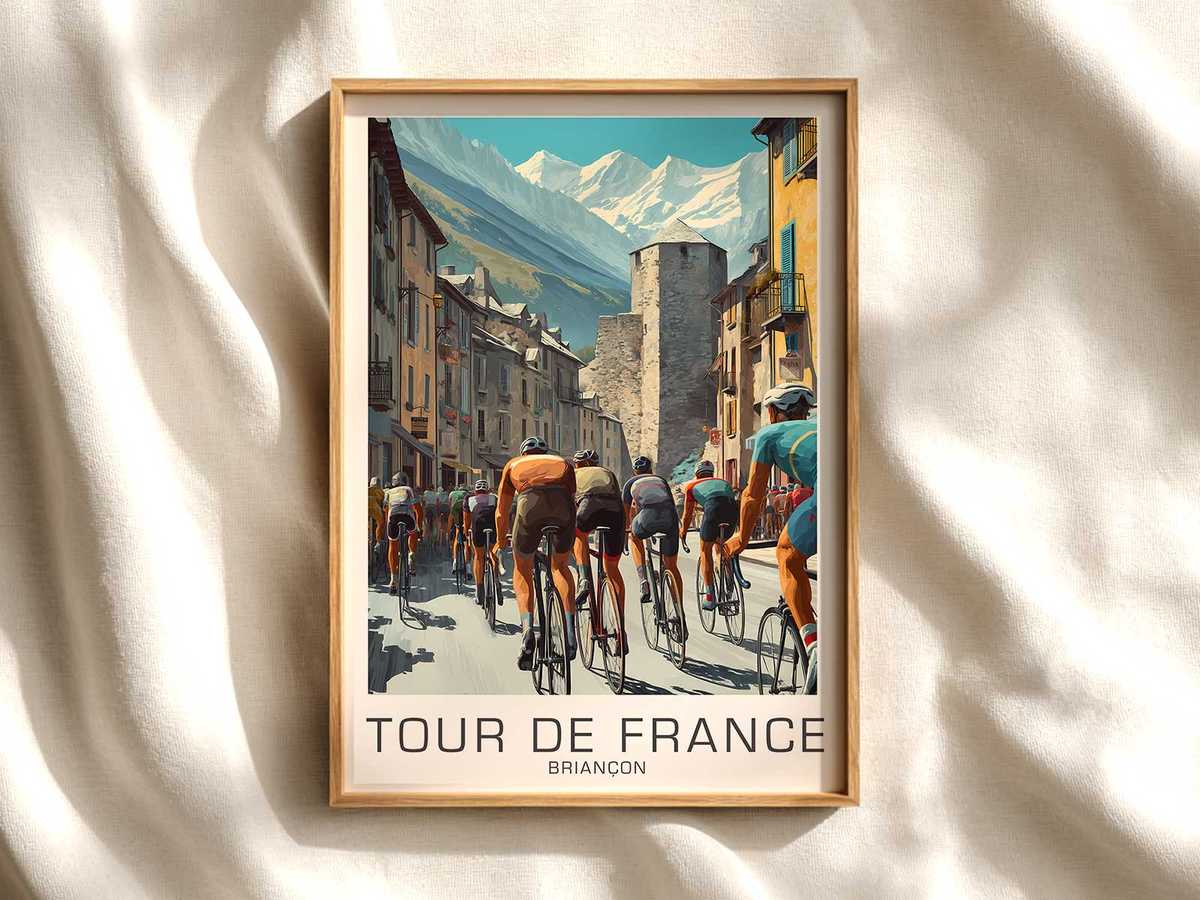
The defining visual elements are simple and decisive. Narrow urban approaches that open suddenly into river valleys, brief steeper ramps that interrupt otherwise steady streets, and the small clusters of stone houses perched above the road give a poster both rhythm and punctuation. A photograph or graphic that frames a rider passing below balconied buildings with distant peaks on the skyline captures contrast — town detail in the foreground, wide mountain air beyond — and that contrast translates to a wall composition that reads well from across a room.
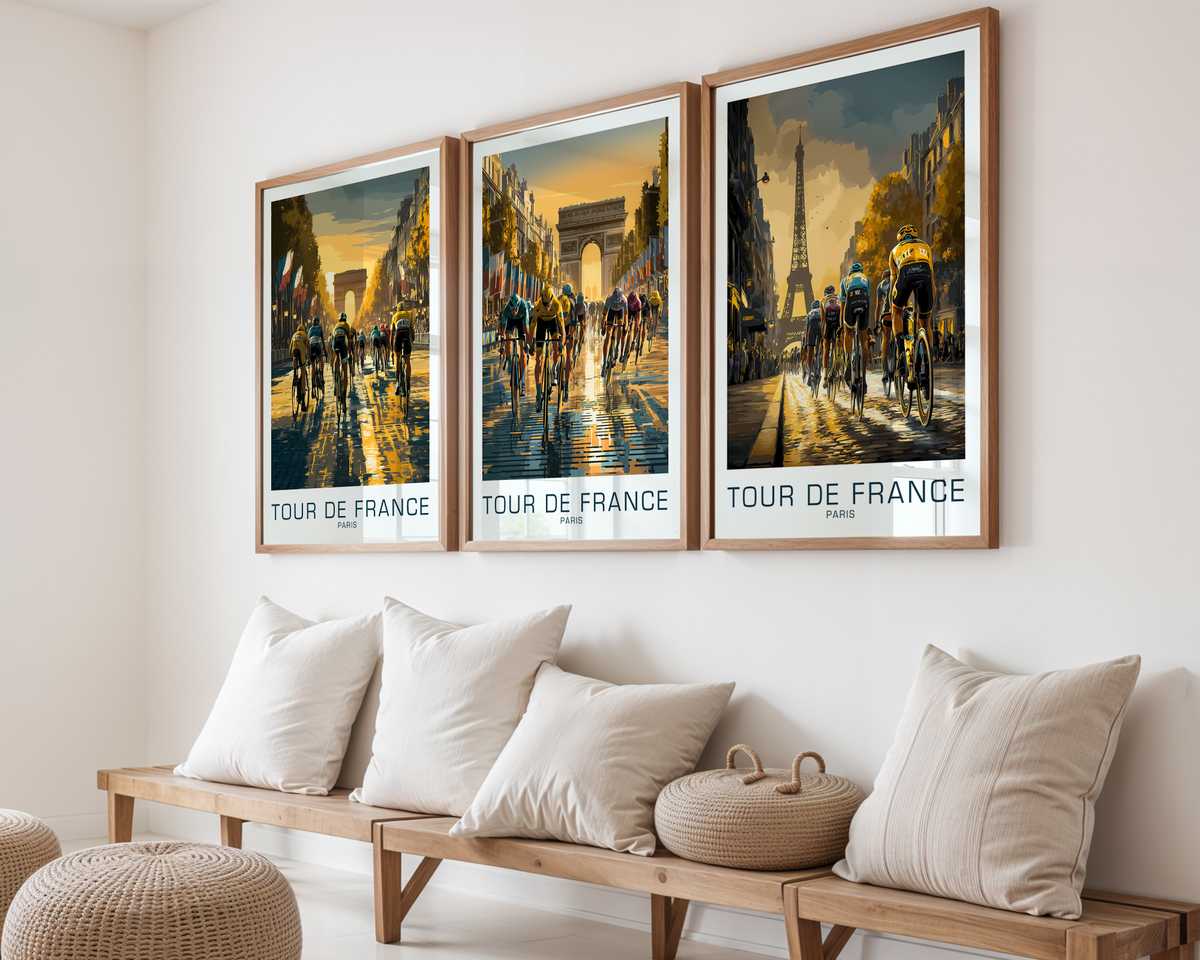
Light is a central character in this scene. Soft morning haze rising from the Gave, low winter sun slicing across gable ends, or the clarity of high summer light on slate roofs: each mood informs the poster’s palette and emotional temperature. In a Pau-themed print, shadows from chimneys and the elongated silhouettes of telegraph poles become compositional lines that lead the eye along the road. That directional energy mirrors the movement of racing cyclists, lending kinetic life to a still image.
Road shape and gradient serve as the visual grammar of the stage. A cobbled ramp squeezed between houses, a sweeping exit toward open countryside, or a sequence of small switchbacks climbing from river level to suburb — these features tell the viewer how a race feels: compact and intense in the town, expansive and airborne as it moves out. When a poster emphasises slope angle, wheel silhouette against sky, or a receding ribbon of tarmac, it communicates effort and narrative without words.
[IMAGE_INSERT_ARTICLE_01]
Village texture adds human scale. Market stalls, clusters of spectators under umbrellas, stray laundry on balconies — these details suggest a lived-in place temporarily converted into a sporting theatre. For wall art, including a modest crowd or a doorway shadow softens the heroic solitude of a lone rider, implying civic ritual and local presence. The viewer senses the ephemeral transformation: ordinary streets becoming arenas, familiar façades watching the passing drama.
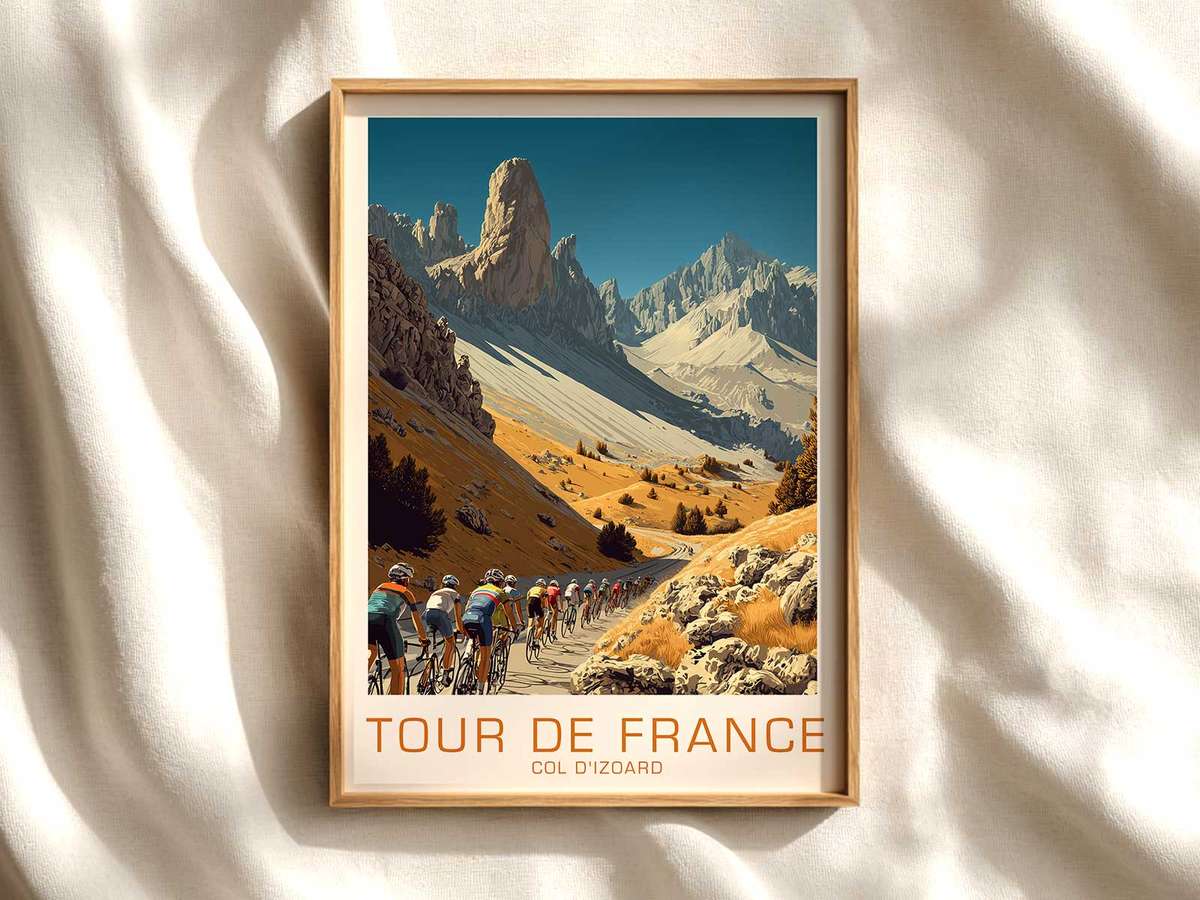
Atmosphere also emerges from how the scene frames altitude and distance. A low viewpoint that looks up a rising street intensifies the sense of climb; a long lens compression that brings the Pyrenees visually closer heightens drama and grandeur. Both choices work for home decor, but they set different moods: intimate and tactile versus cinematic and sweeping. Choosing which mood to hang in a living room or study is as much about personal taste as it is about the particular story the image tells.
Finally, the poster’s desirability rests on memory and mood more than on names or numbers. A Pau-inspired print implies heritage — summers of racing, roadside gatherings, and the meeting point of town and mountain — without needing to claim a specific historical moment. It offers a visual shorthand for endurance and place: the cadence of a rider climbing, the geometry of the street, the distant massif anchoring the composition. That shorthand is what allows such images to change a room’s atmosphere from decorative to narrative.
As bike wall decor, Pau-stage imagery feels curated rather than generic because it privileges place-based details: the texture of masonry, the slope’s angle, the quality of light at a particular hour. Those elements combine to form art that rewards repeat viewing — each glance reveals another corner of the town, another line of the road, another passage of light. In that way, a Pau poster functions as both landscape and story: a piece of wall art that invites the viewer to return to the route, to imagine the roll of tires on stone, and to feel the subtle mechanics of a stage distilled into a single, composed moment.