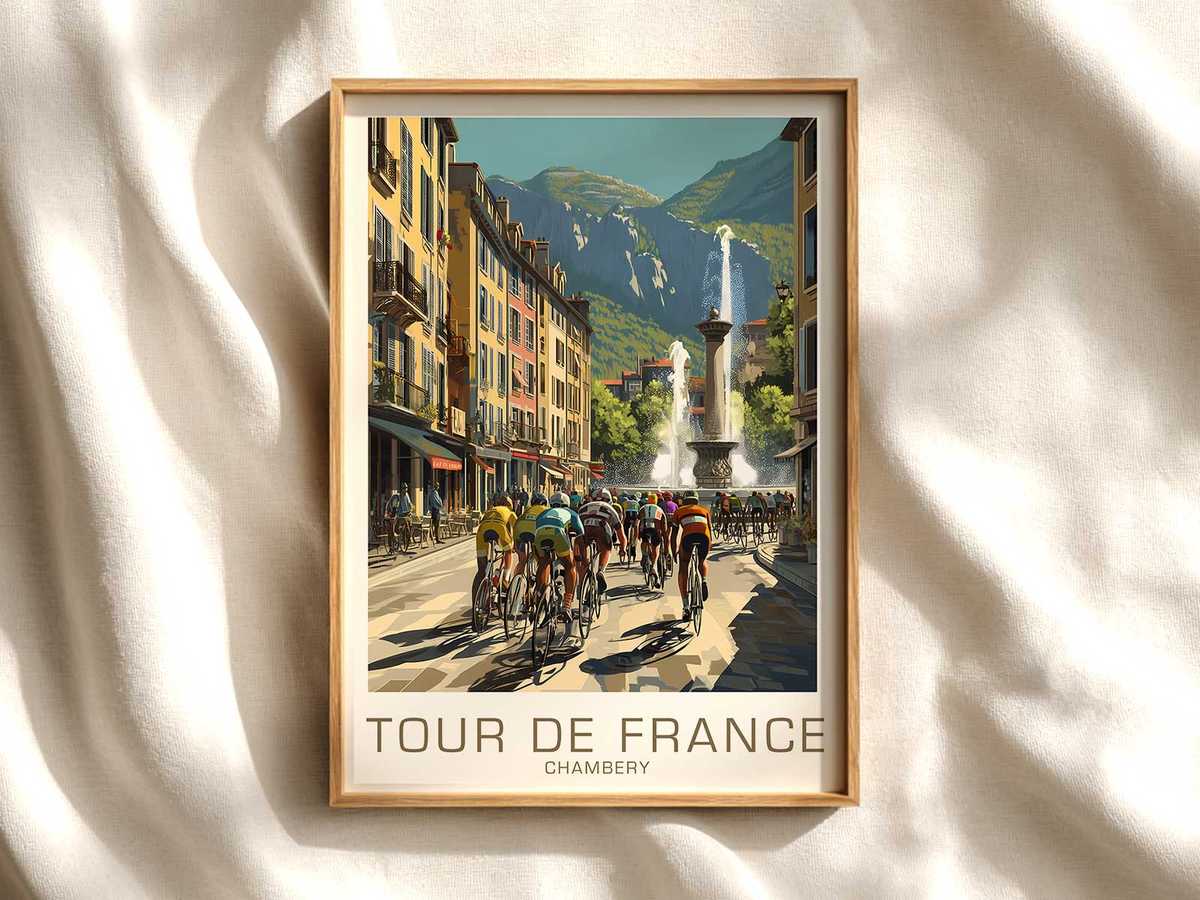
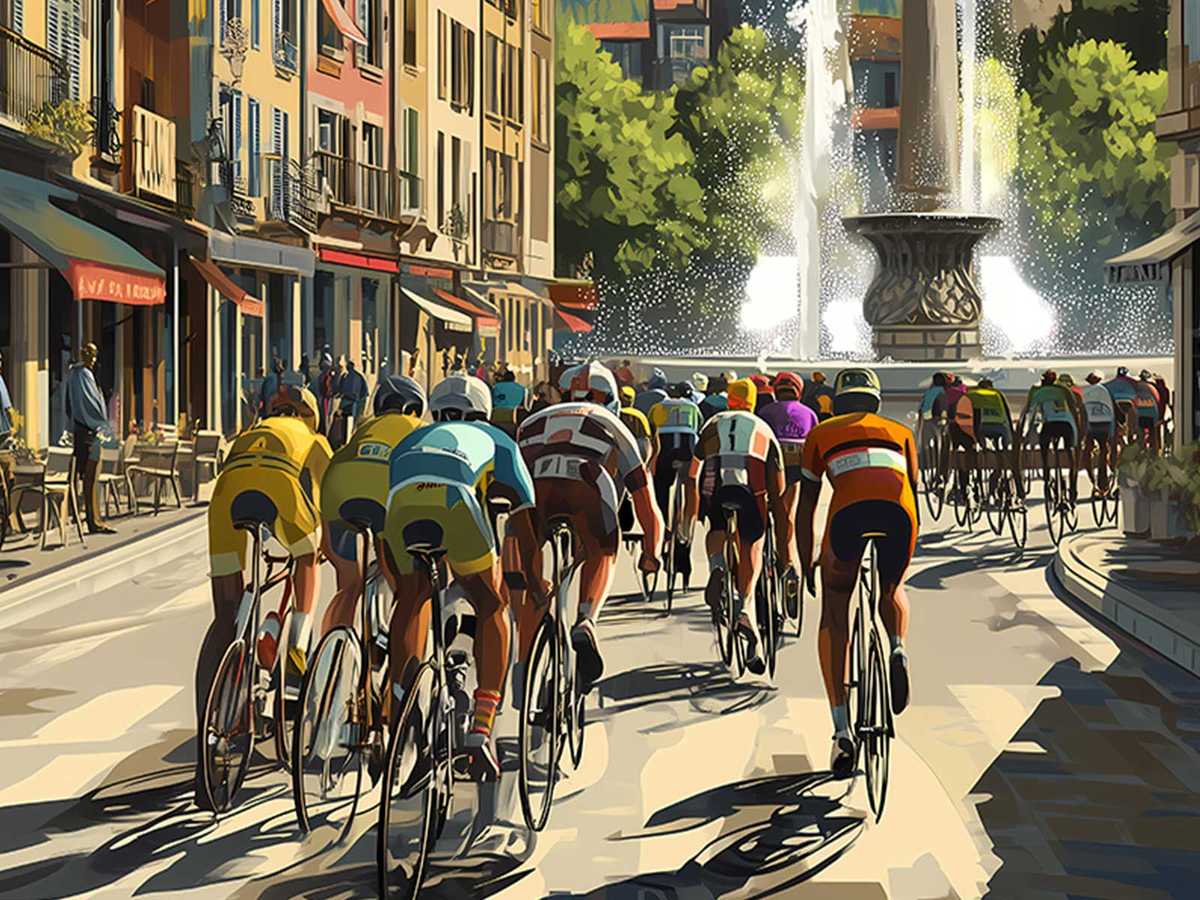
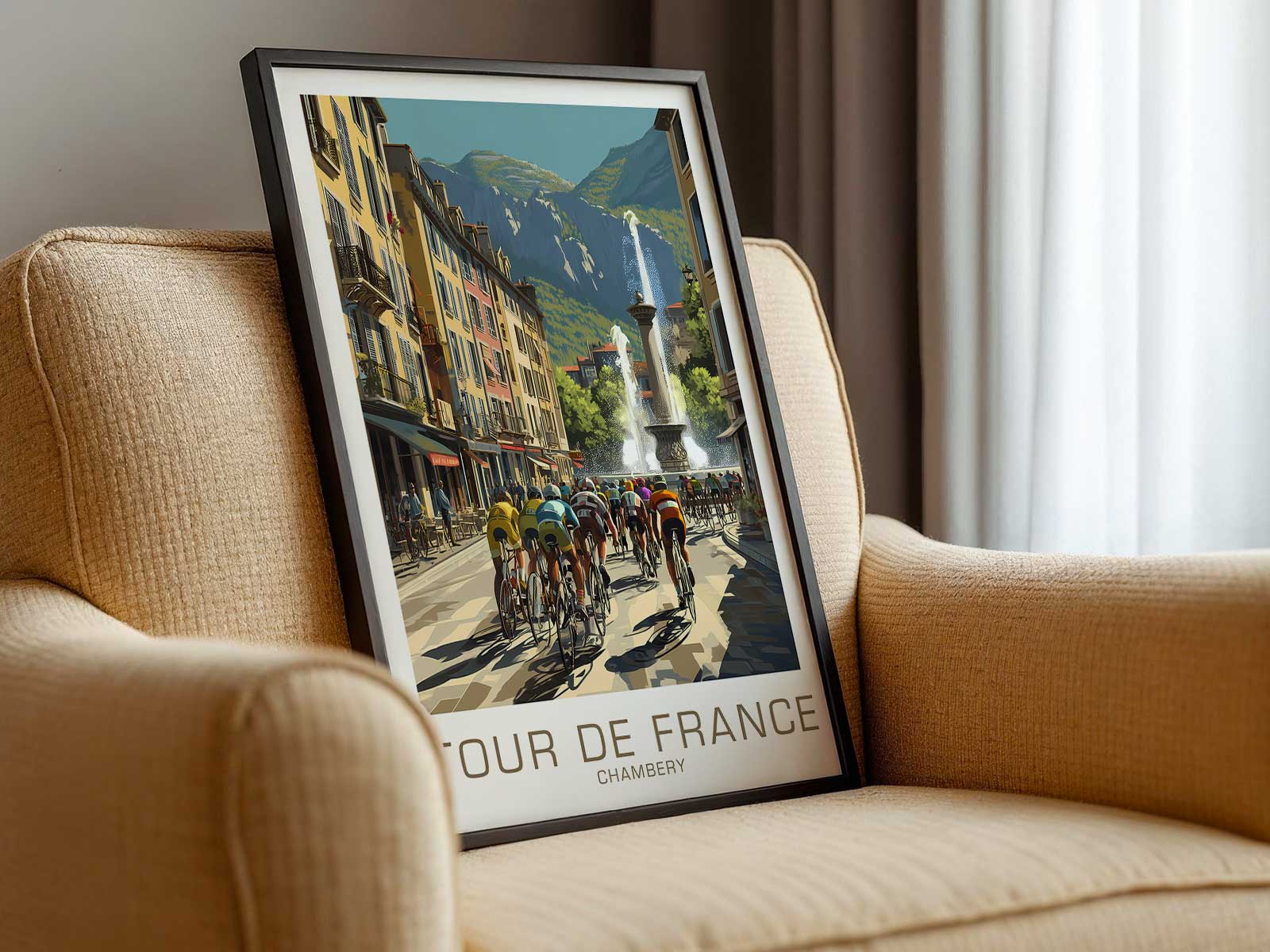
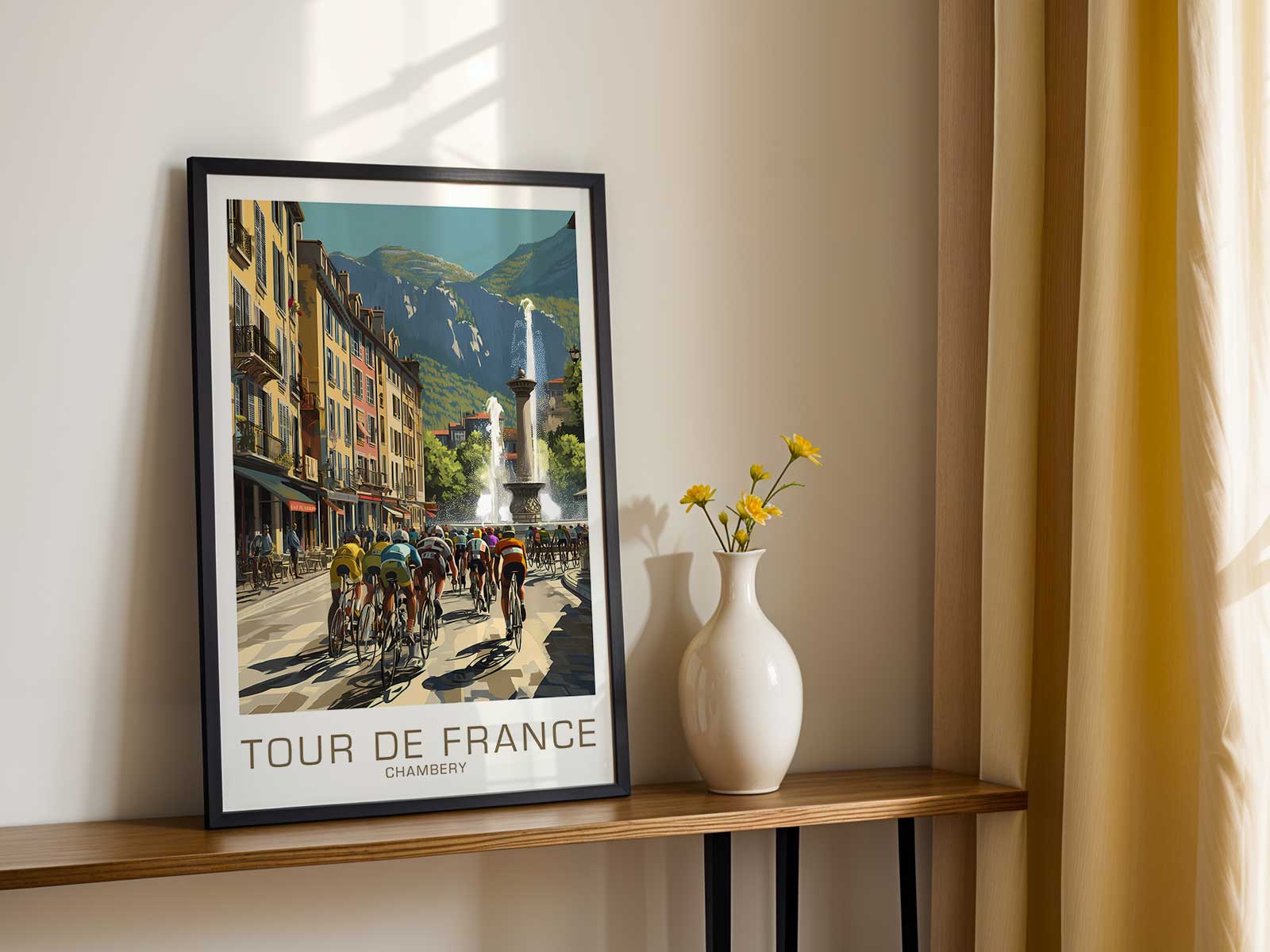
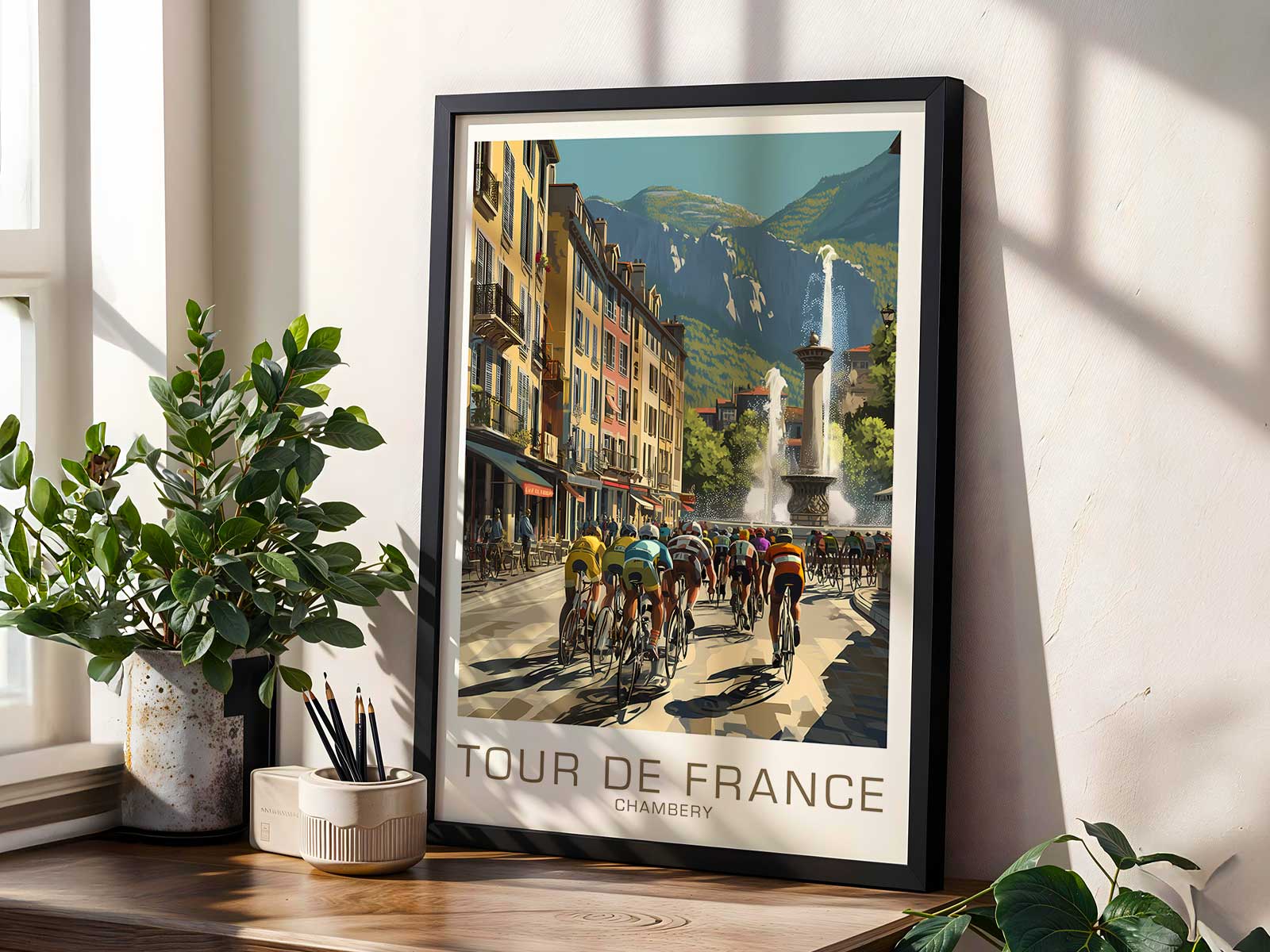
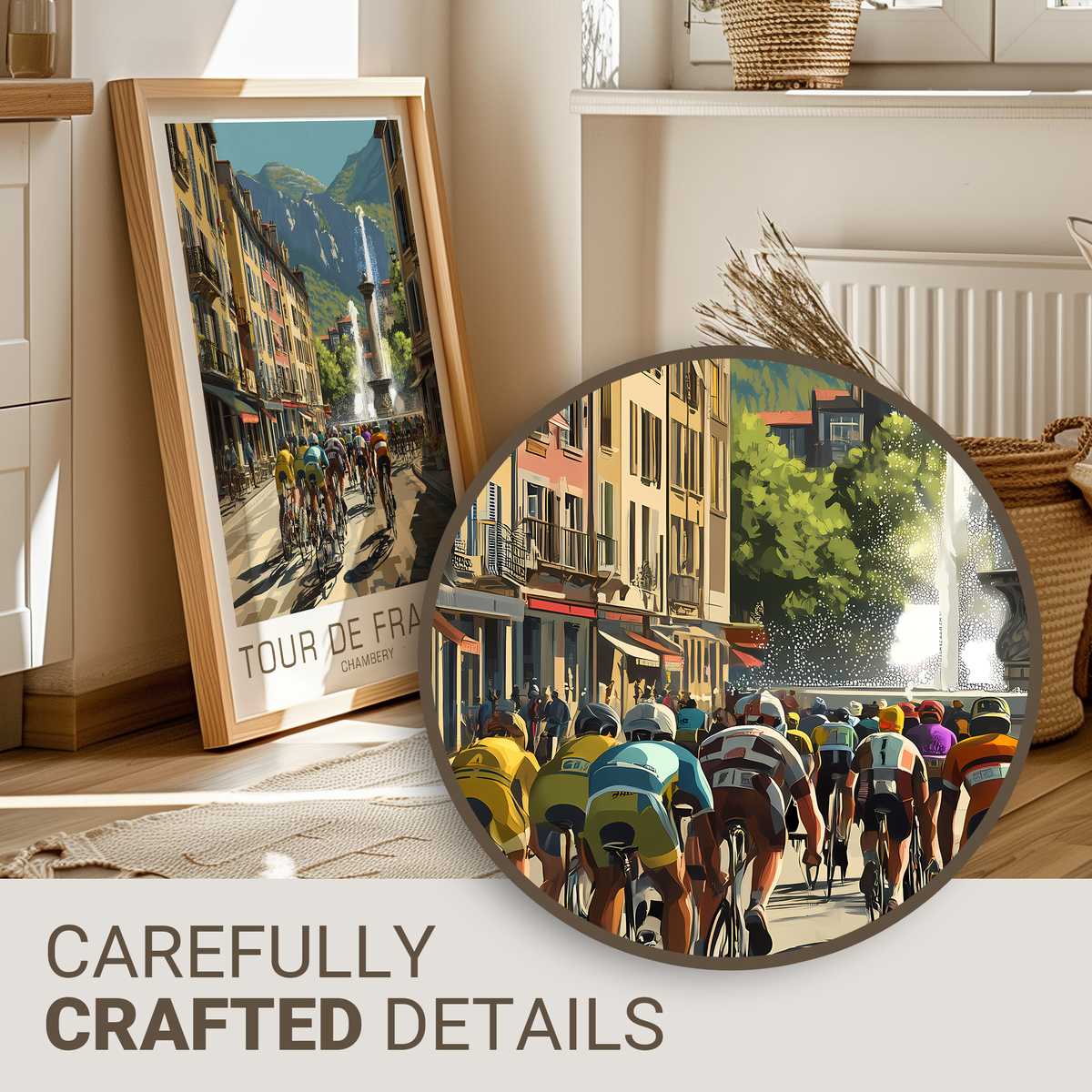
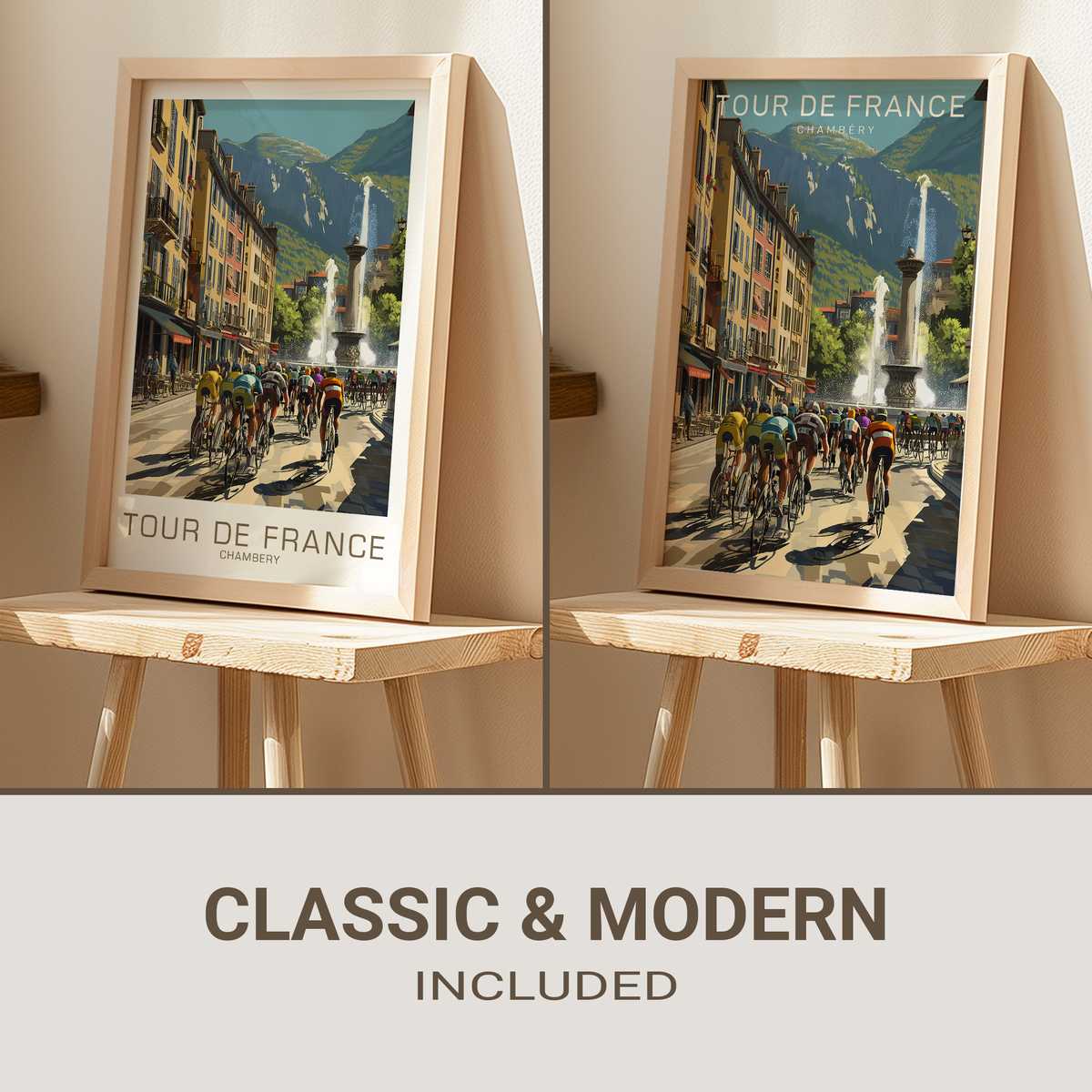
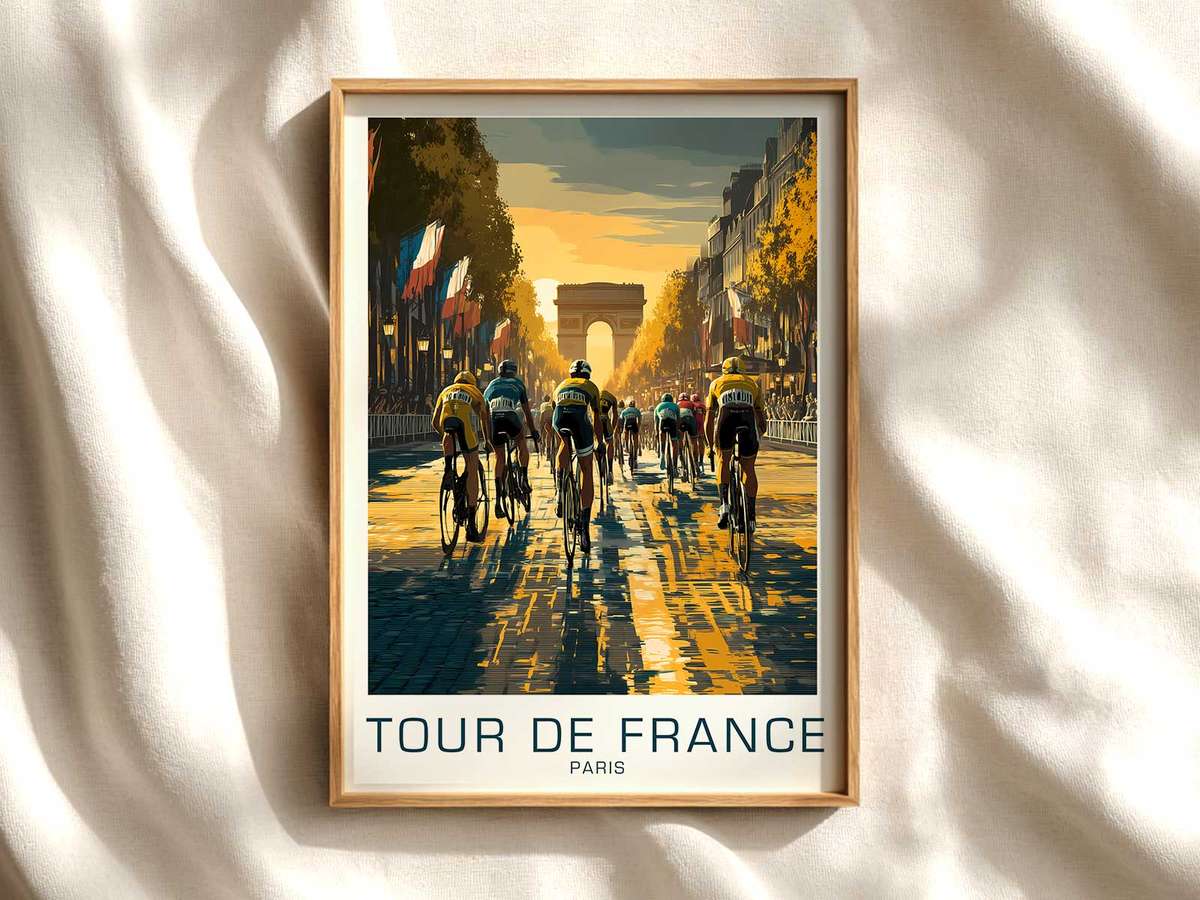
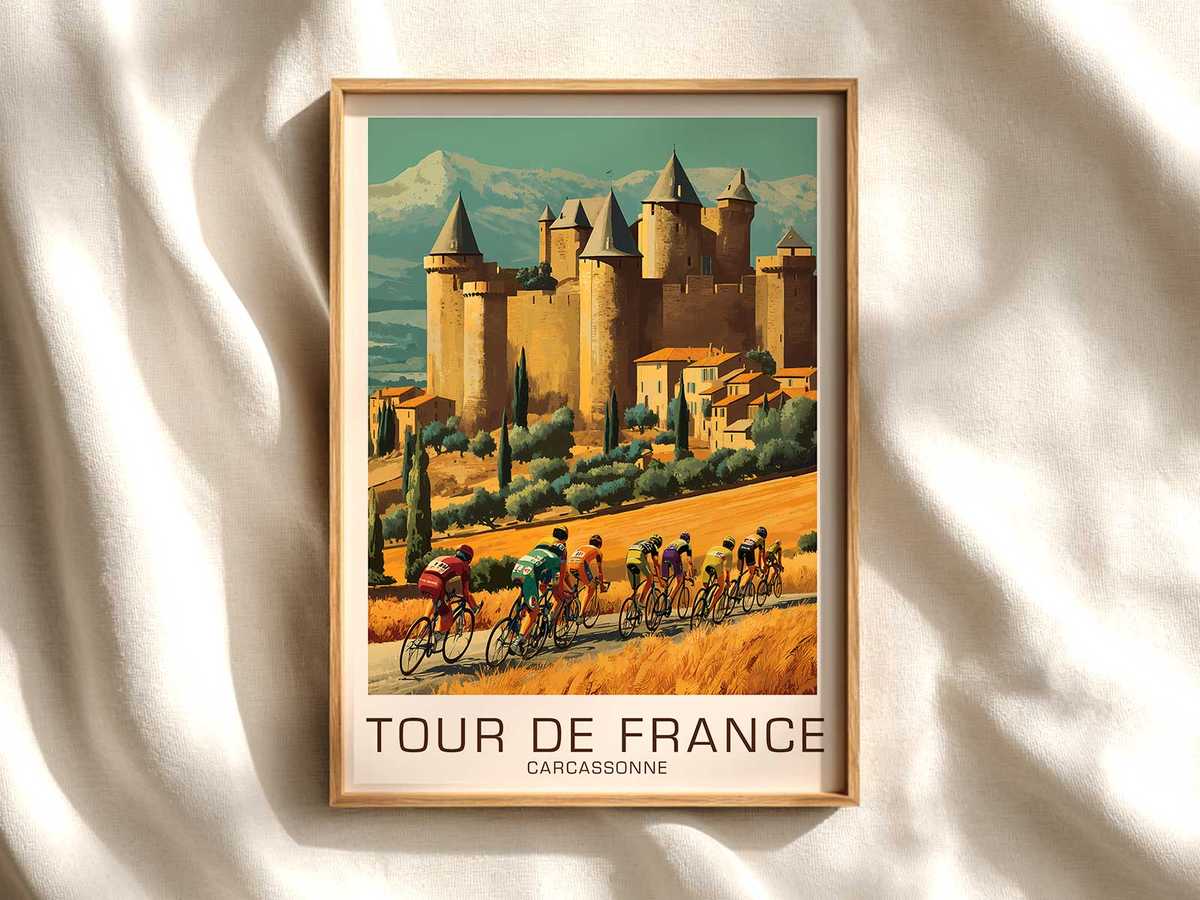
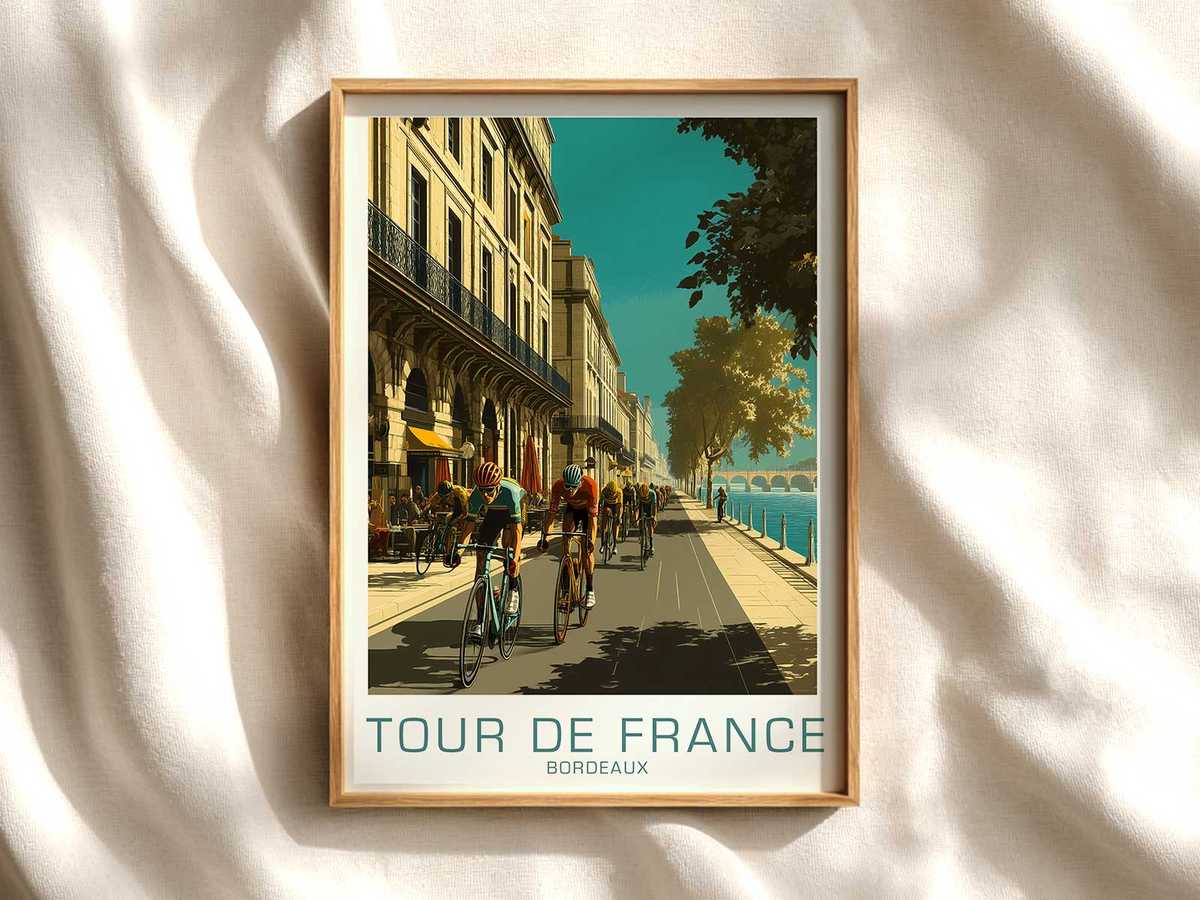
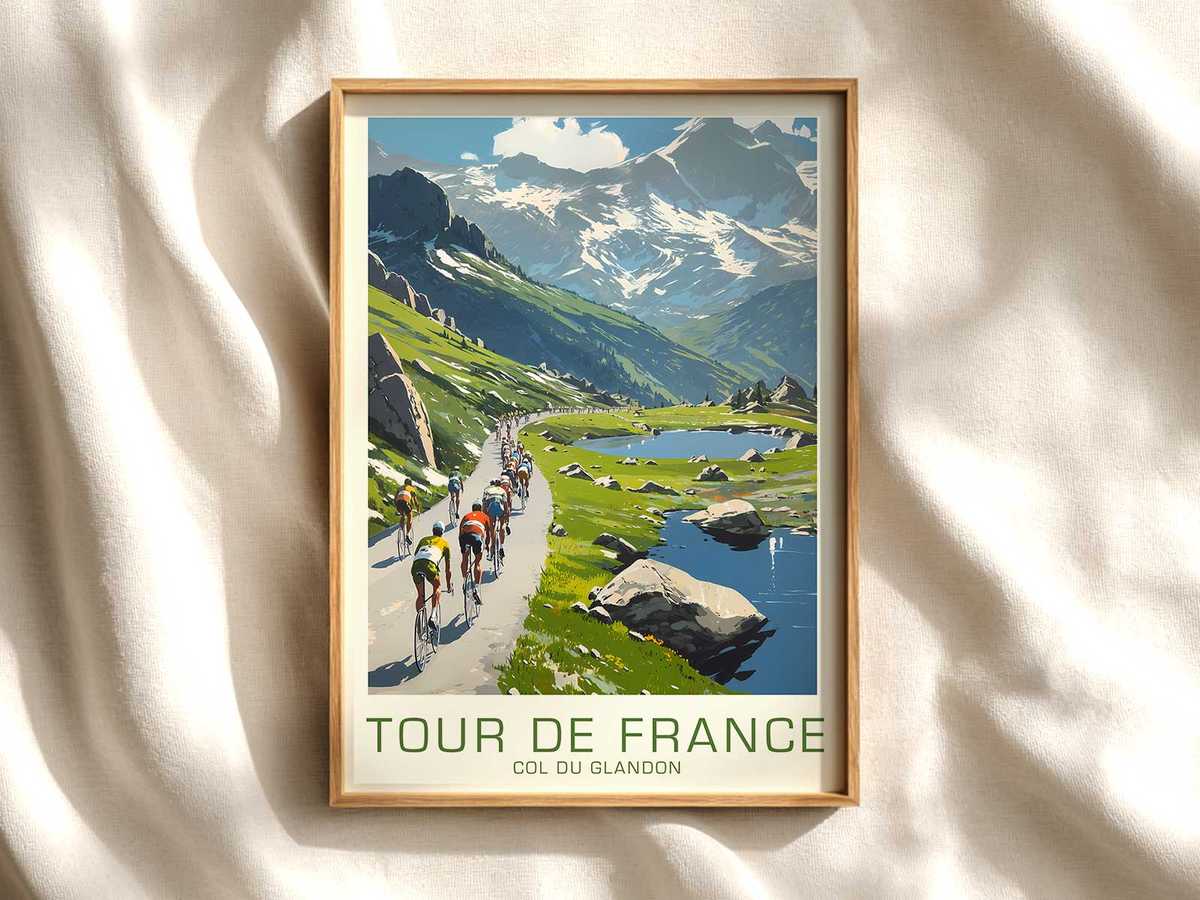
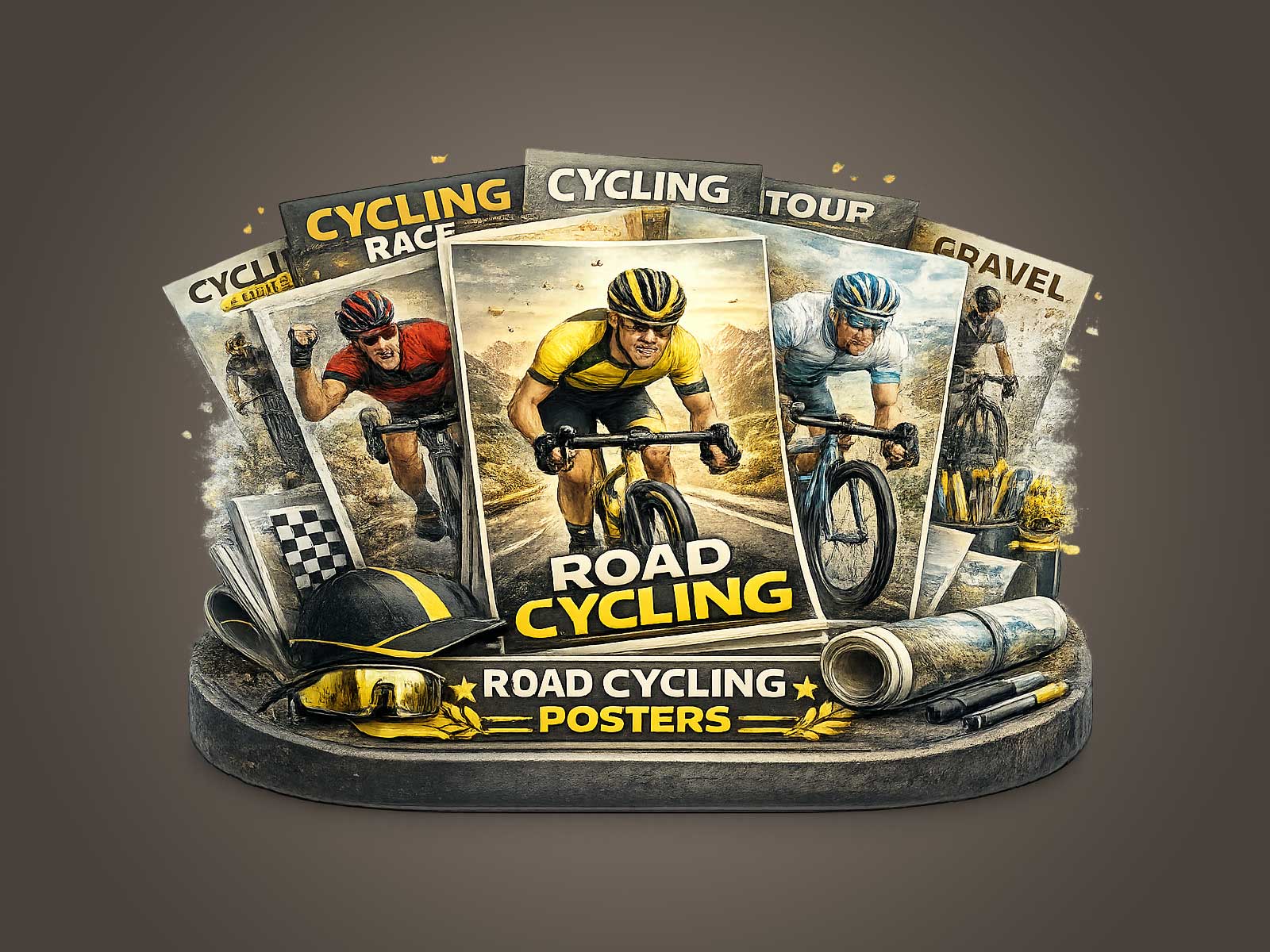
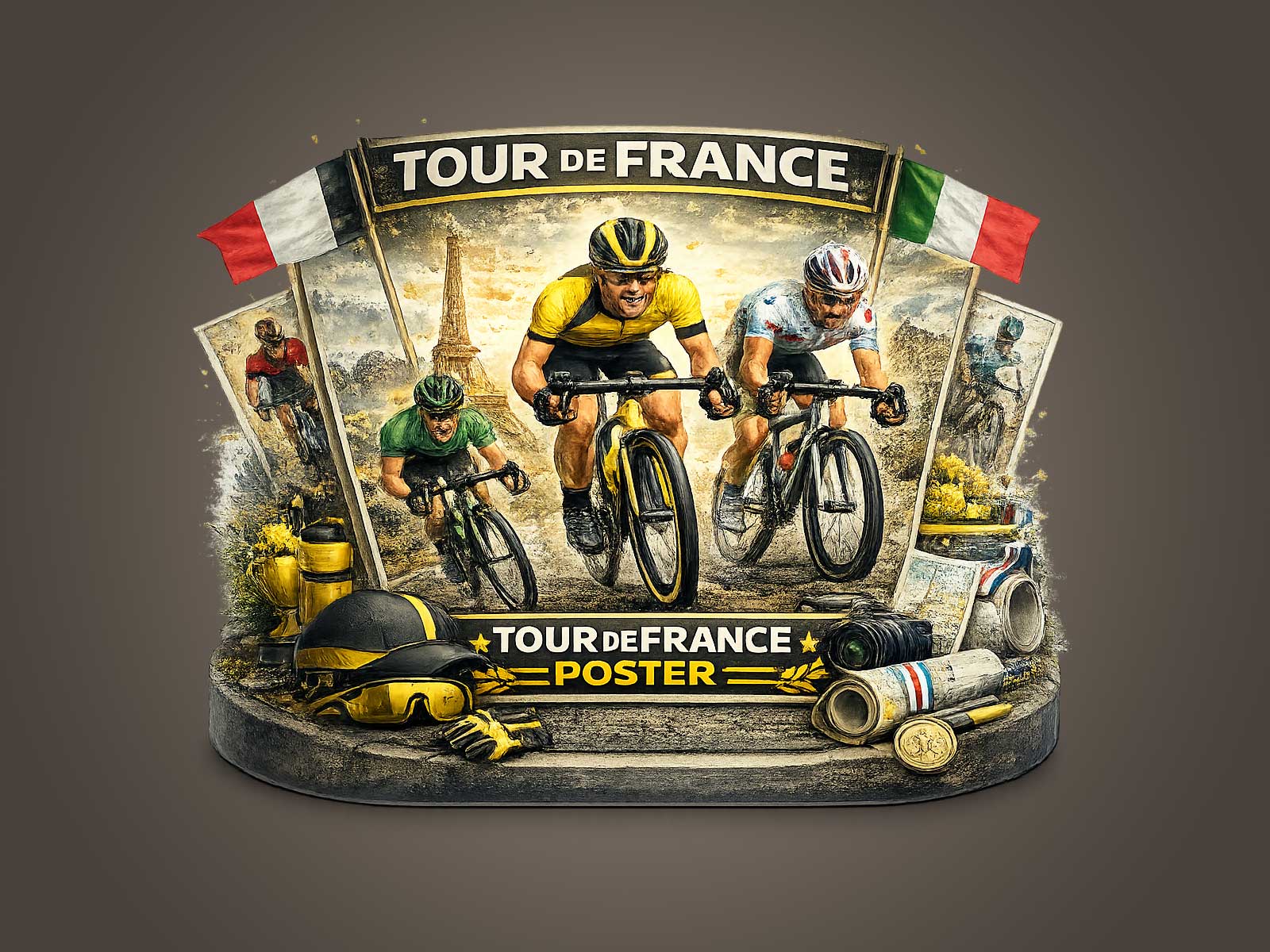
In a Chambéry-inspired poster the racing bicycle is not an accessory: it is the graphic spine that organizes space, tension and memory. The frame’s angles, the wheel silhouettes and the rider’s compact race posture combine to make the machine a deliberate compositional tool. Seen at eye level, a slender top tube and compact rear triangle cut the picture into planes; from a low viewpoint, deep rims and pointed headset create directional force. That geometry gives the artwork its initial clarity—an architectural presence that reads as much like a constructed object as an emotional cue.
The visual argument relies on technical silhouettes rather than catalogue detail. A thin, purposeful frame silhouette implies stiffness and intent; the parallel sweep of fork and down tube draws the eye toward the gradient of the road or a distant ridge. Wheels act like circular anchors: their negative space frames the pavement and sky, and their spoke pattern or rim depth subtly suggests speed even when the scene is still. The cockpit—the compact, wrapped bars and forward-tilted saddle—translates race posture into a graphic line, compressing human effort into a single elegant diagonal across the poster.
What makes this approach compelling for interiors is its translation of performance into form. The poster speaks of precision: every junction of tube and clamp, every knot in the cable routing, becomes a small detail of craft. Viewers who appreciate industrial design or engineered objects will find the same pleasure they take in a finely resolved product photograph: clarity of function expressed through clean geometry. In a study or reading room, that precision reads as calm focus; in a studio or garage it reads as purposeful aspiration.
[IMAGE_INSERT_ARTICLE_01]
The Chambéry reference is important less for literal geography and more for the narrative it implies — mountain roads, a measured climb, the weathered stone of alpine towns. The bicycle anchors that narrative without needing historical attribution. Its presence conjures exertion, altitude and endurance; the viewer supplies memory while the frame supplies form. This balance is why a bike-led composition resists banality: it offers both story and restraint, inviting interpretation rather than delivering a captioned fact.
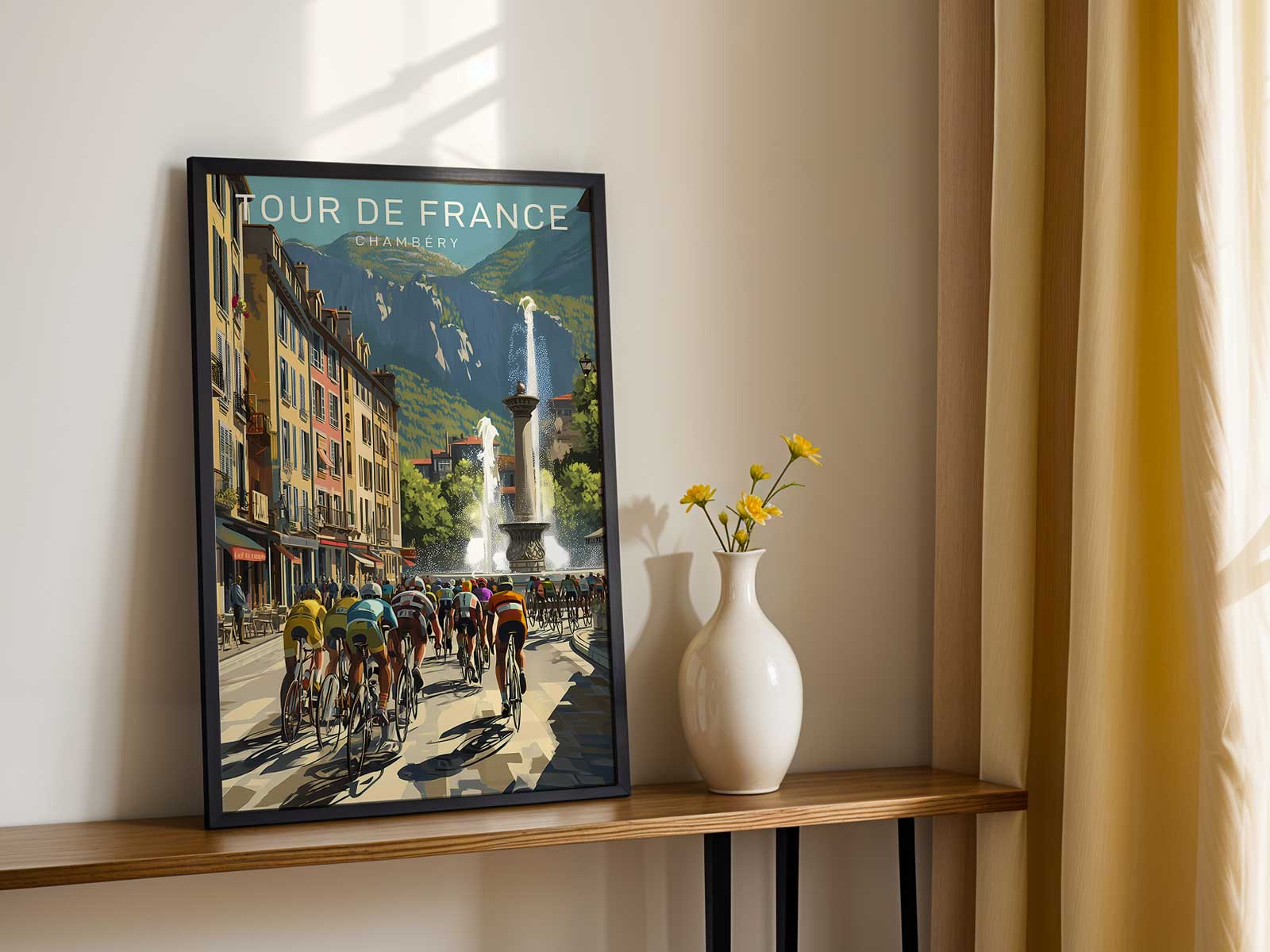
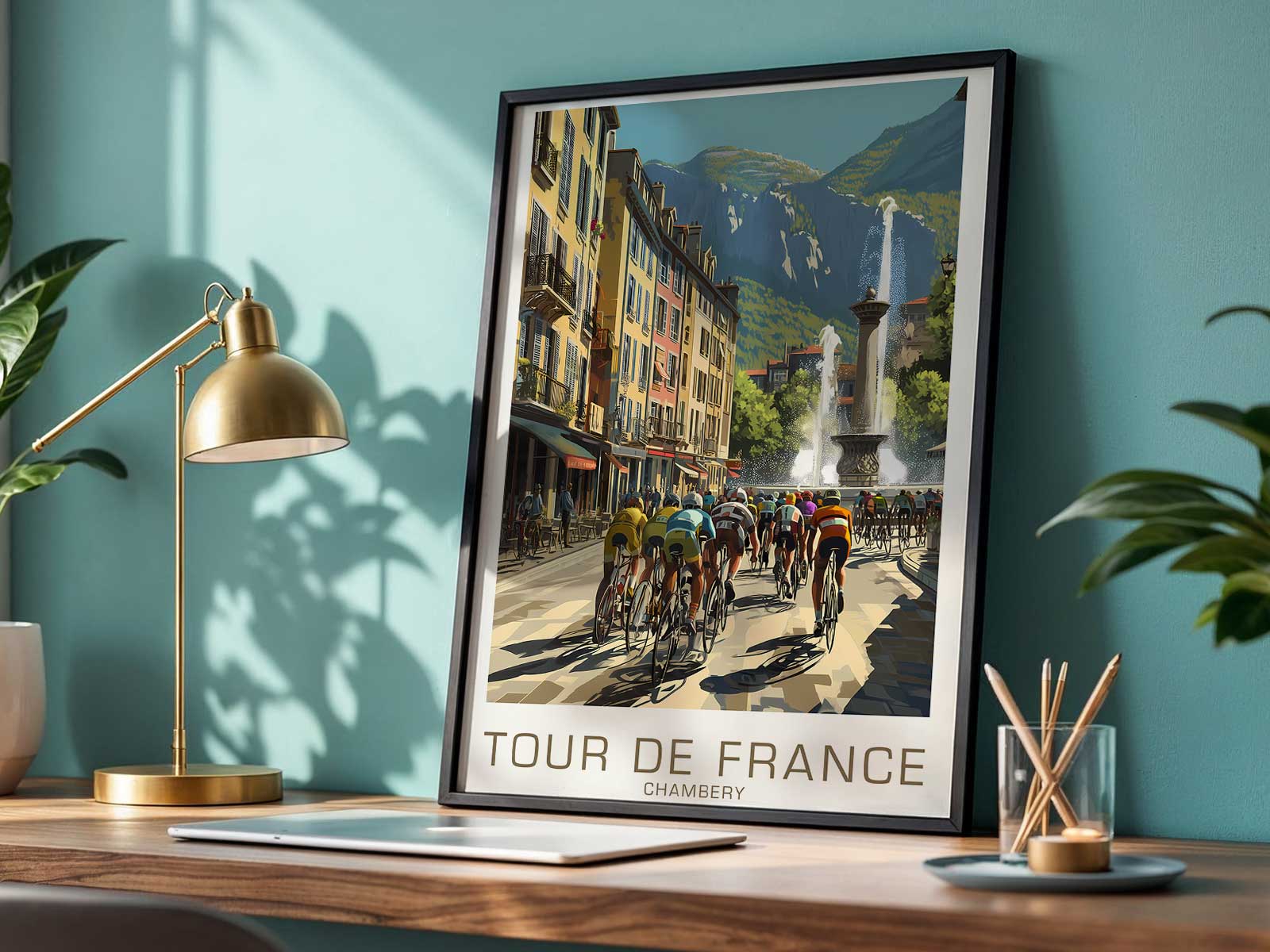
Design-conscious interiors benefit because the poster behaves like an objet d’art. Color palettes are usually restrained—muted road asphalt, a single team hue, a washed sky—so the bike’s black or metallic outline becomes the visual focal point rather than an explosion of brand colors. Placed above a low credenza or beside a minimal lamp, the print delivers a refined accent: it anchors a wall without overwhelming the room’s material language. In an office the image can signal discipline and craft; in a living room it can suggest lived experience and tasteful taste for motion.
Technically minded viewers will also read the poster as shorthand for mechanical elegance. The relationship between frame geometry and rider posture—compact cockpit, angled seat tube, the subtle pitch of the fork—communicates intended use (climbing, rhythmic effort, or controlled descent) without listing components. That read is powerful because it treats the bicycle as a machine that has been tuned and purposed. The viewer completes the picture: cadence, gradient and the sound of tires on tarmac are implied, which lends the poster a cinematic quality while keeping the composition clean.
This visual strategy creates collectible appeal. A bike-led Tour de France print becomes a piece of visual heritage: not a document of a single victory, but a distilled memory of the race’s material culture—the machines that make stories possible. Its desirability is aesthetic and mnemonic: a conversation starter that rewards close looking and stands up to everyday living because it privileges form over flash.
Ultimately, a Chambéry-inspired bike frame artwork succeeds because it treats the racing bicycle as a protagonist with a clear role in the picture: to structure space, to introduce mechanical tension, and to recall the textured world of the Tour de France. For anyone assembling a thoughtful interior—an office, studio, or reading corner—this kind of poster changes the room less by shouting and more by lending it focused intent, quiet movement and a refined, engineered beauty.