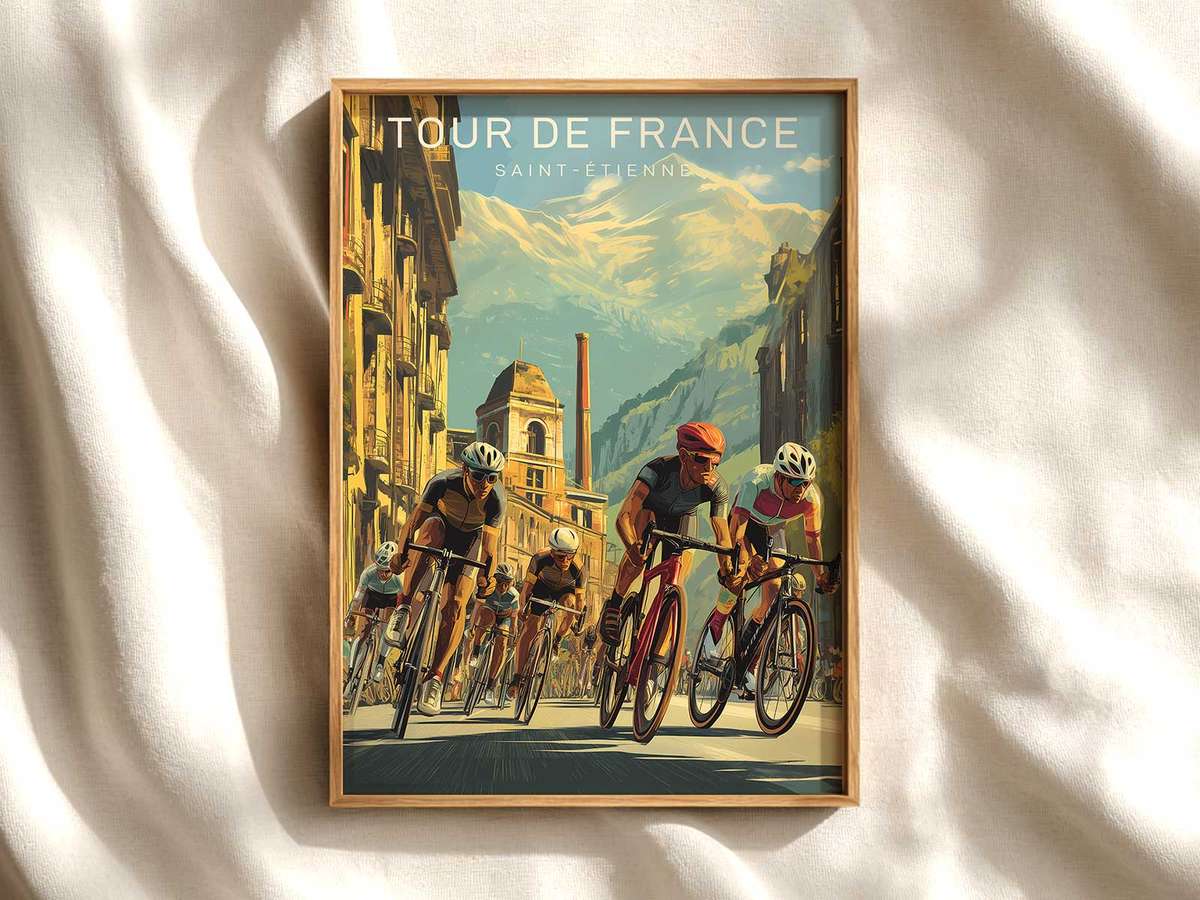
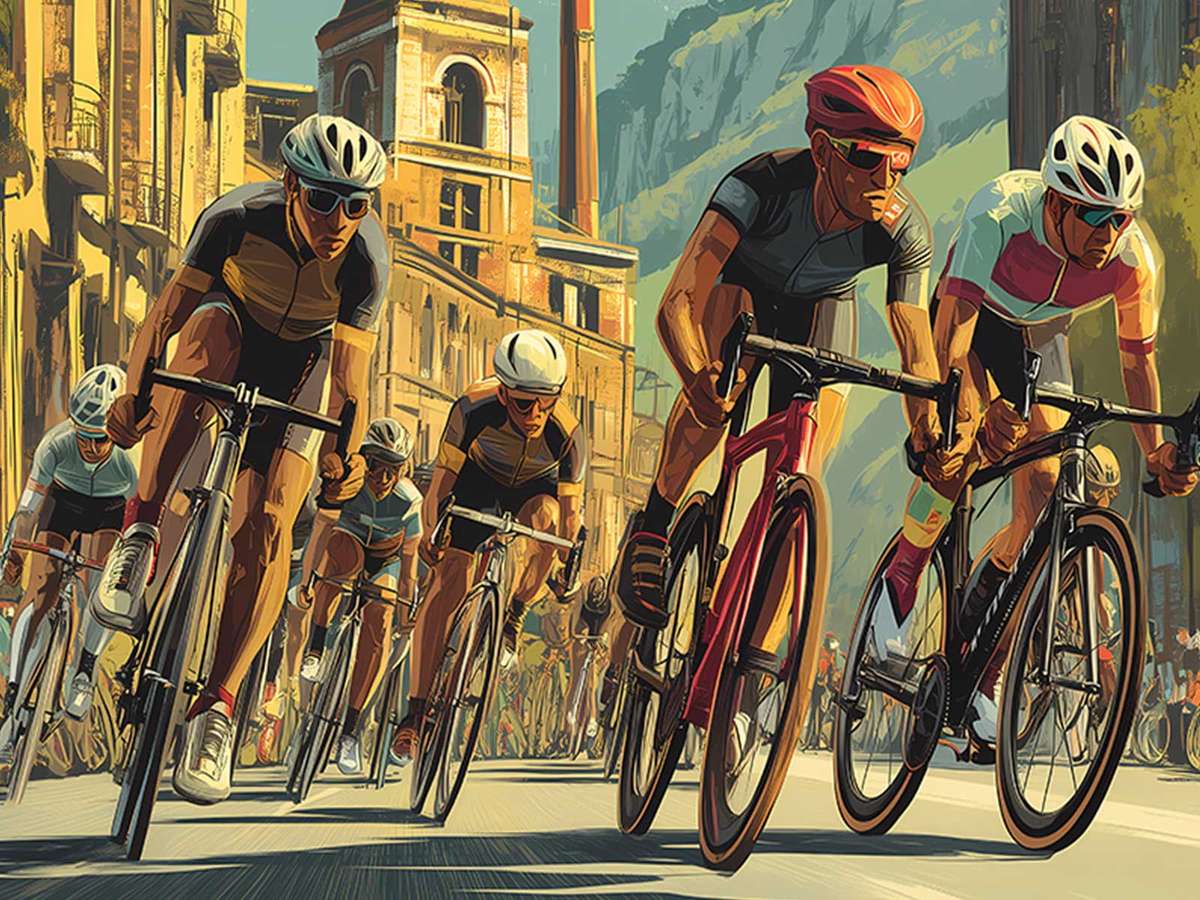
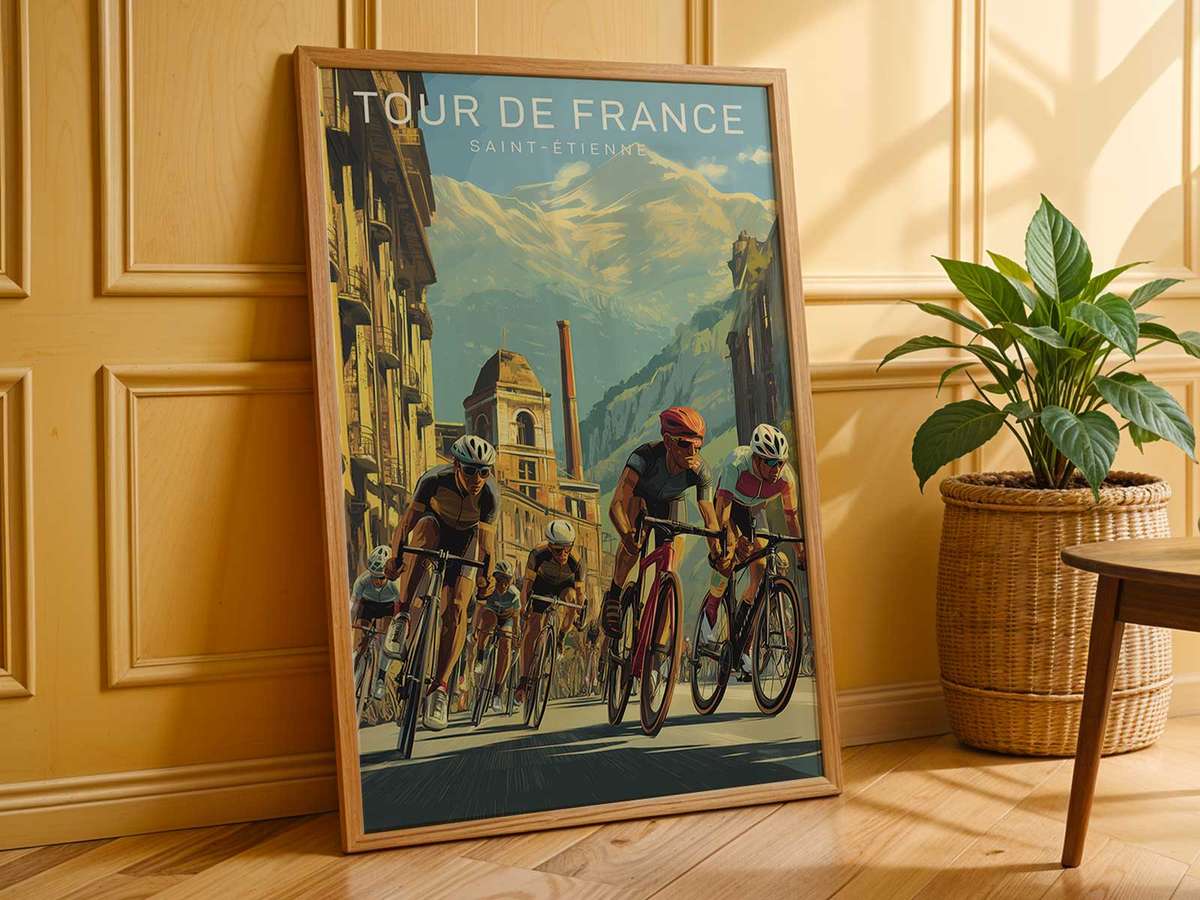
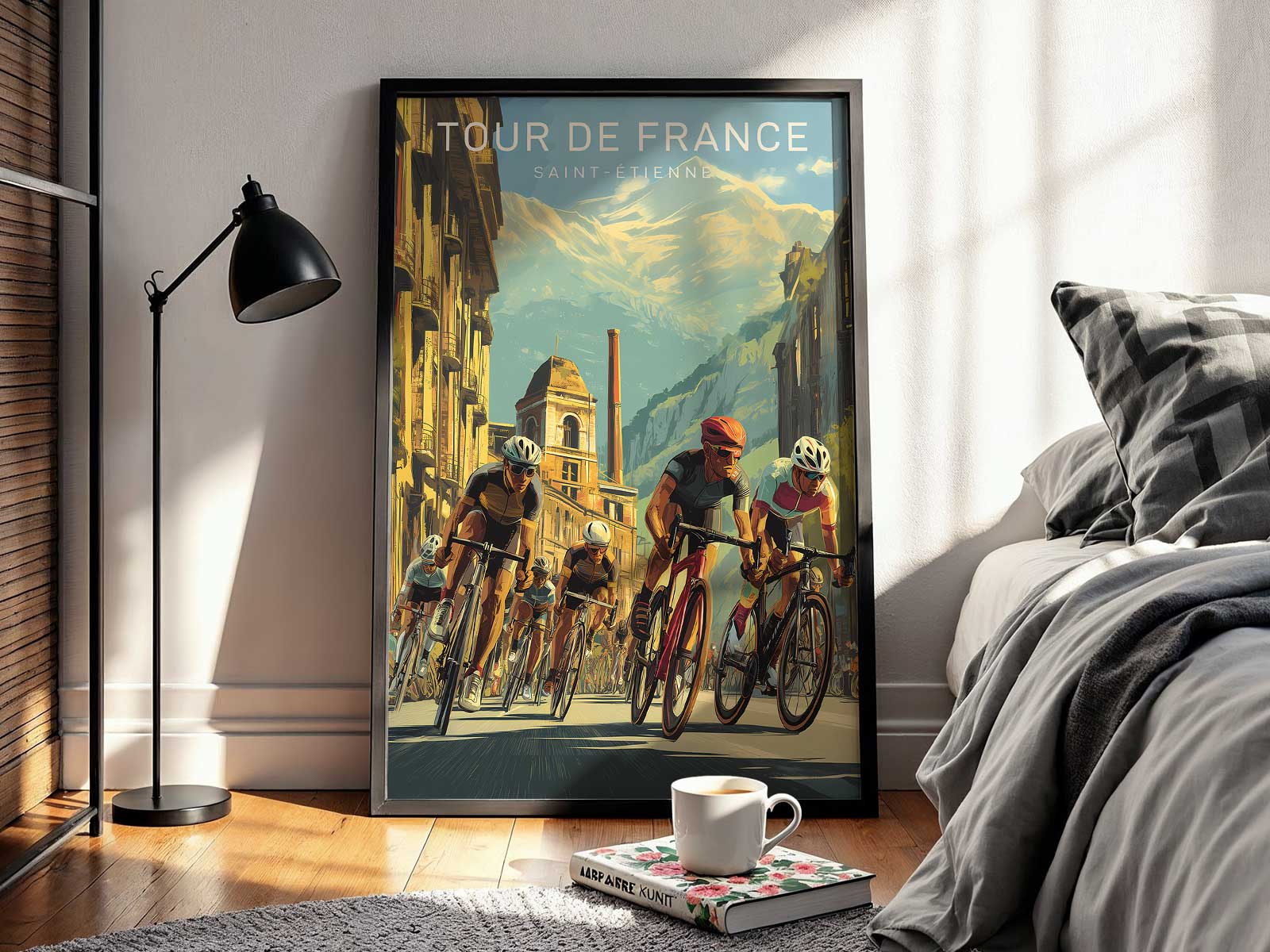
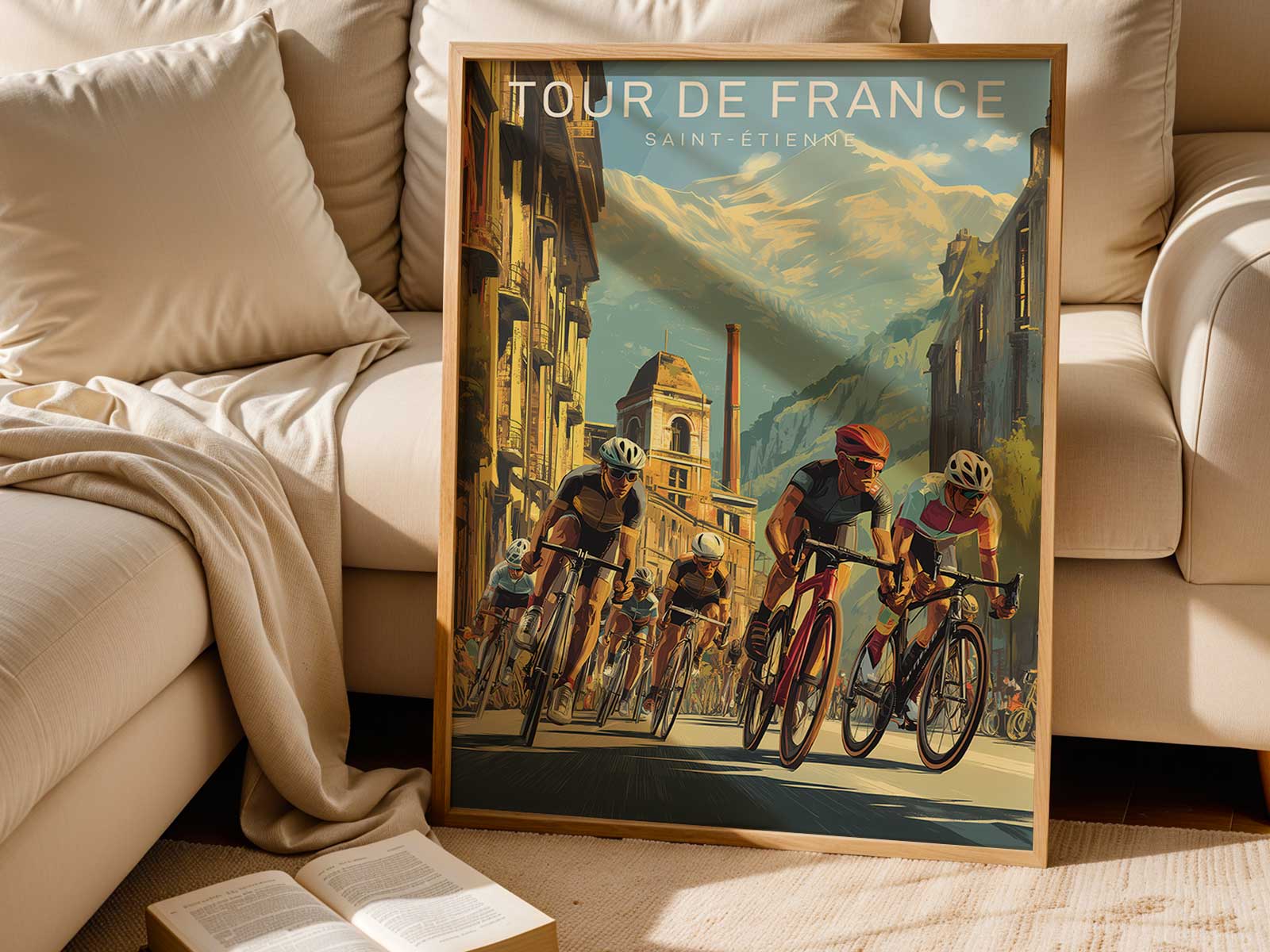
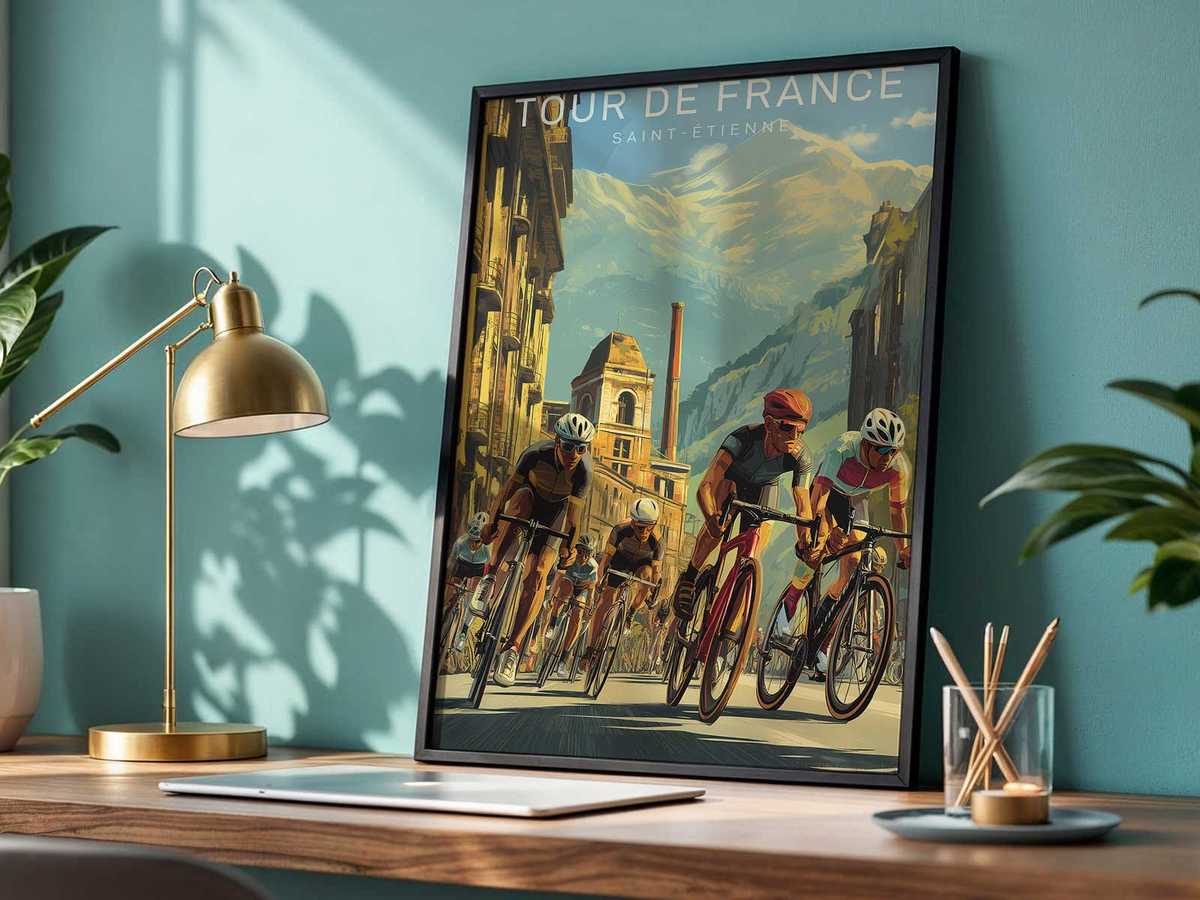
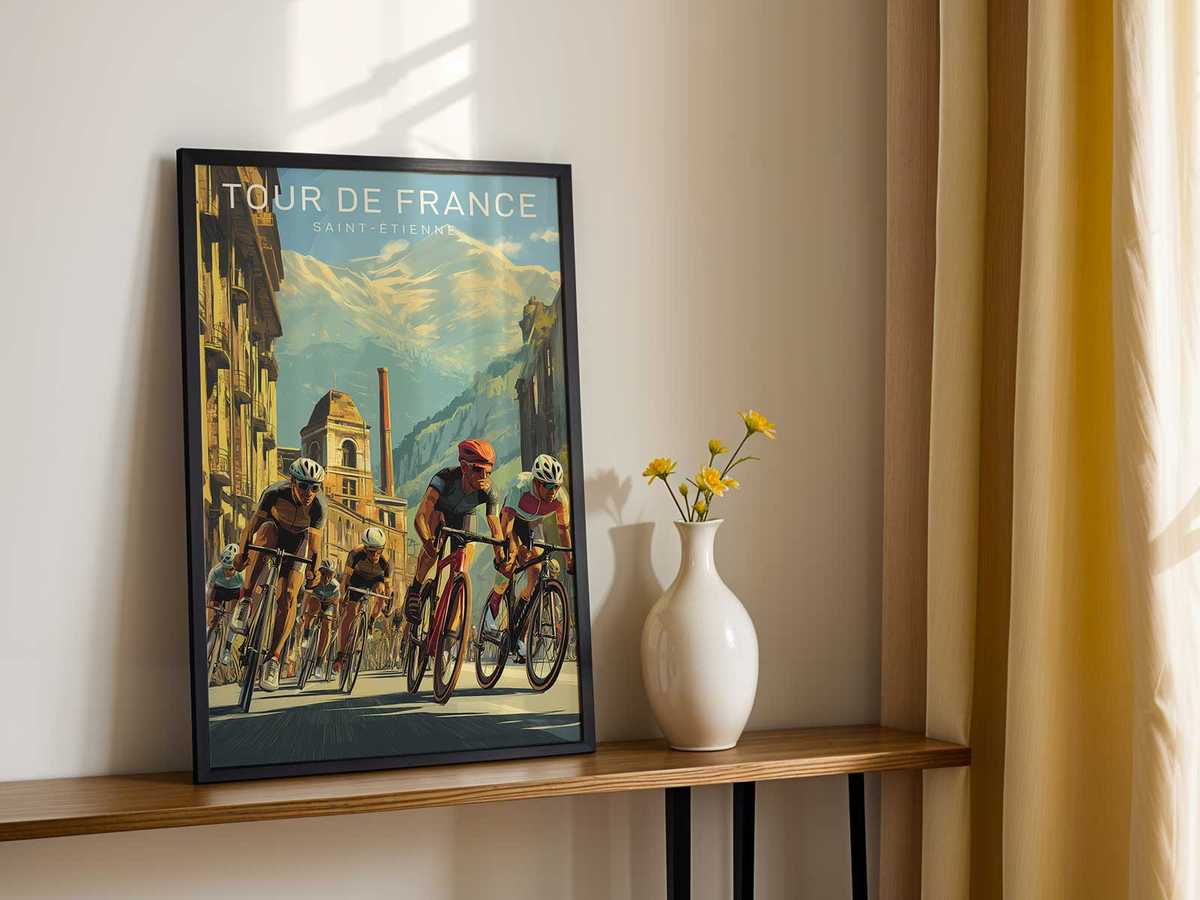
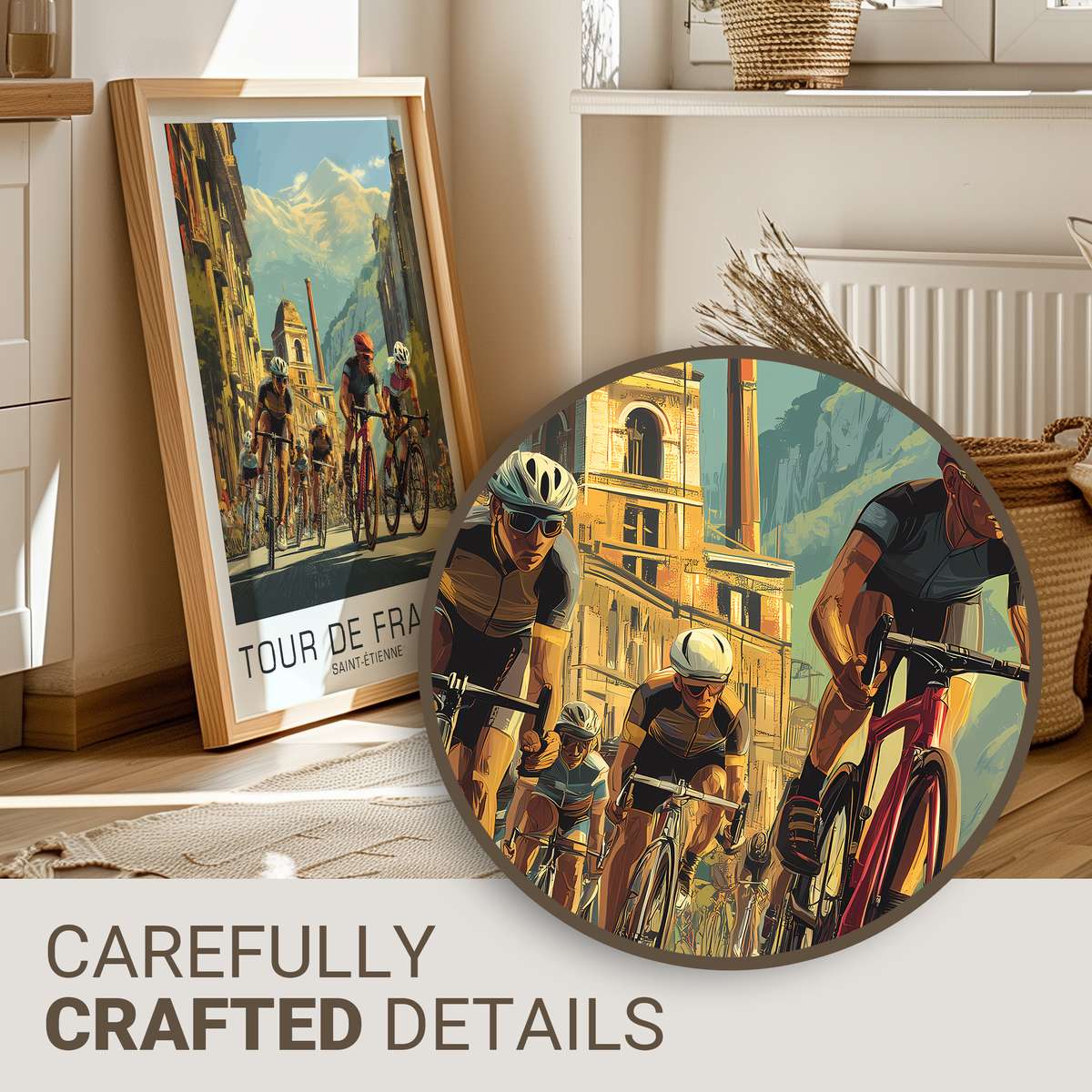
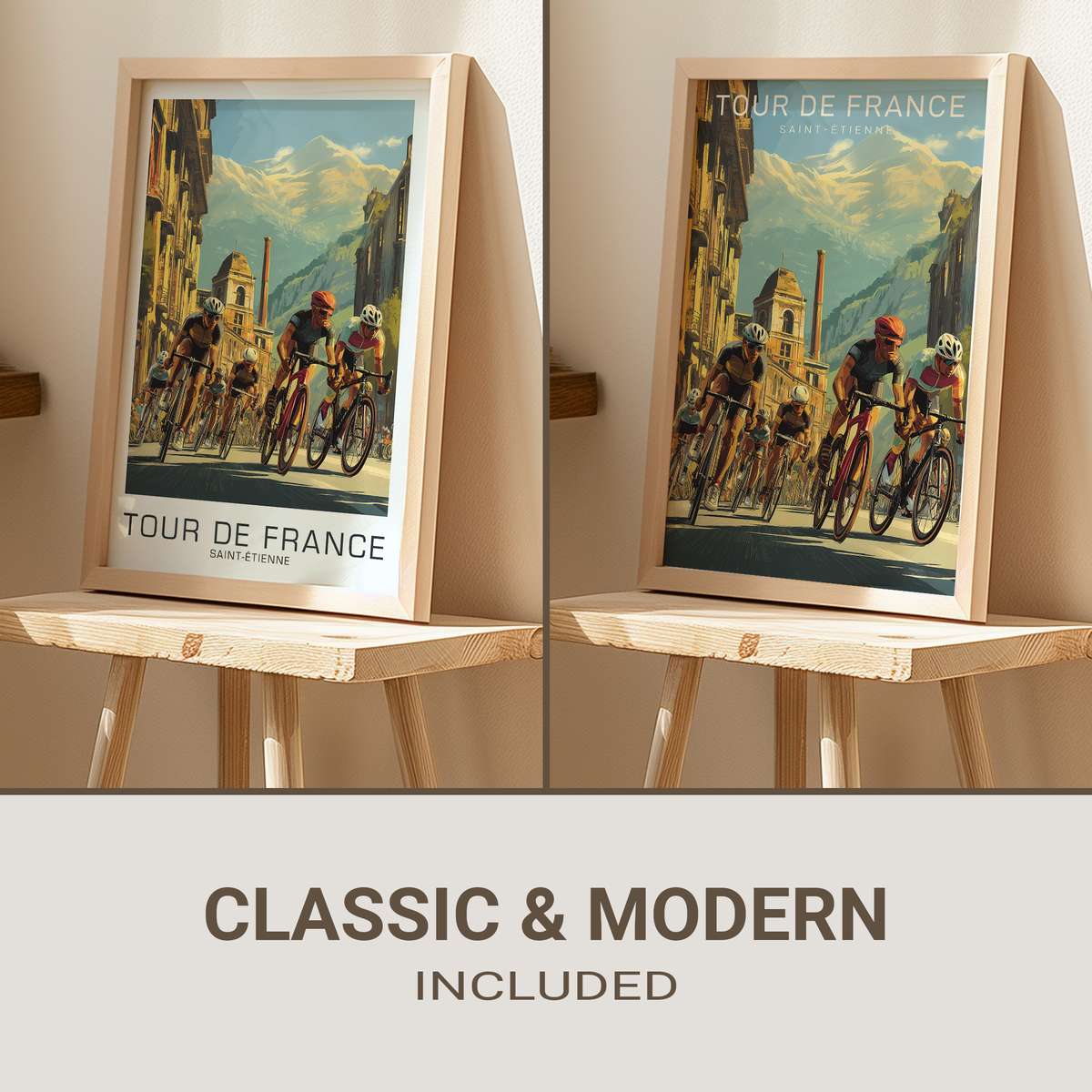
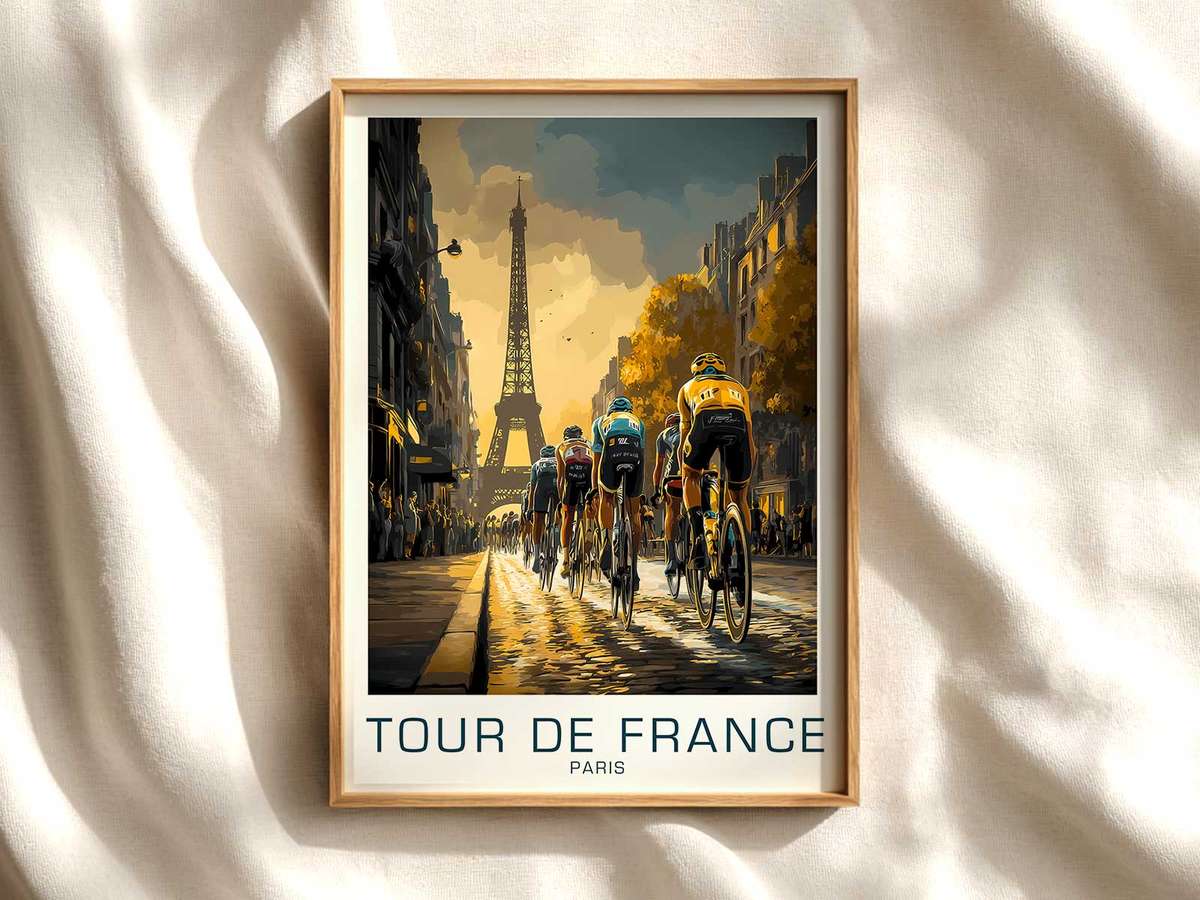
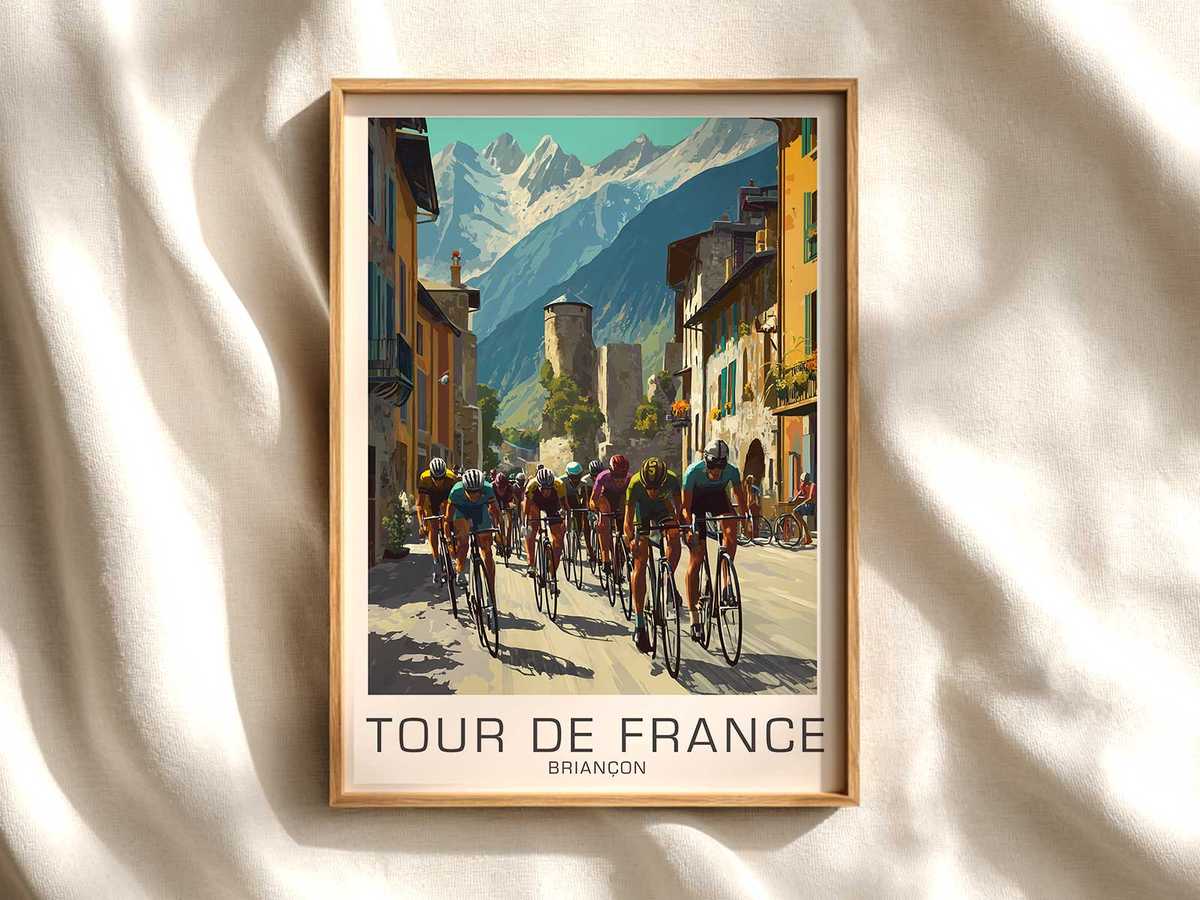
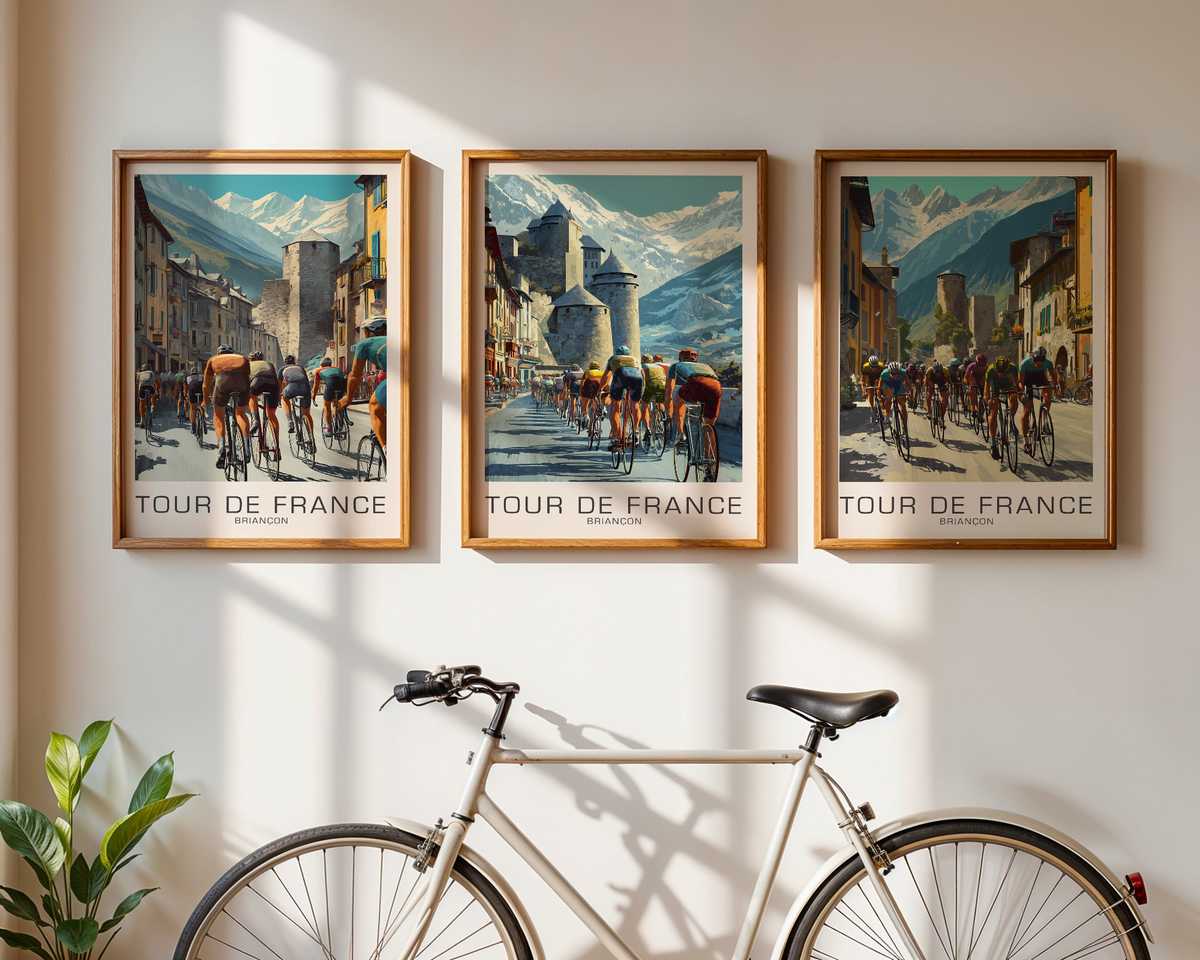
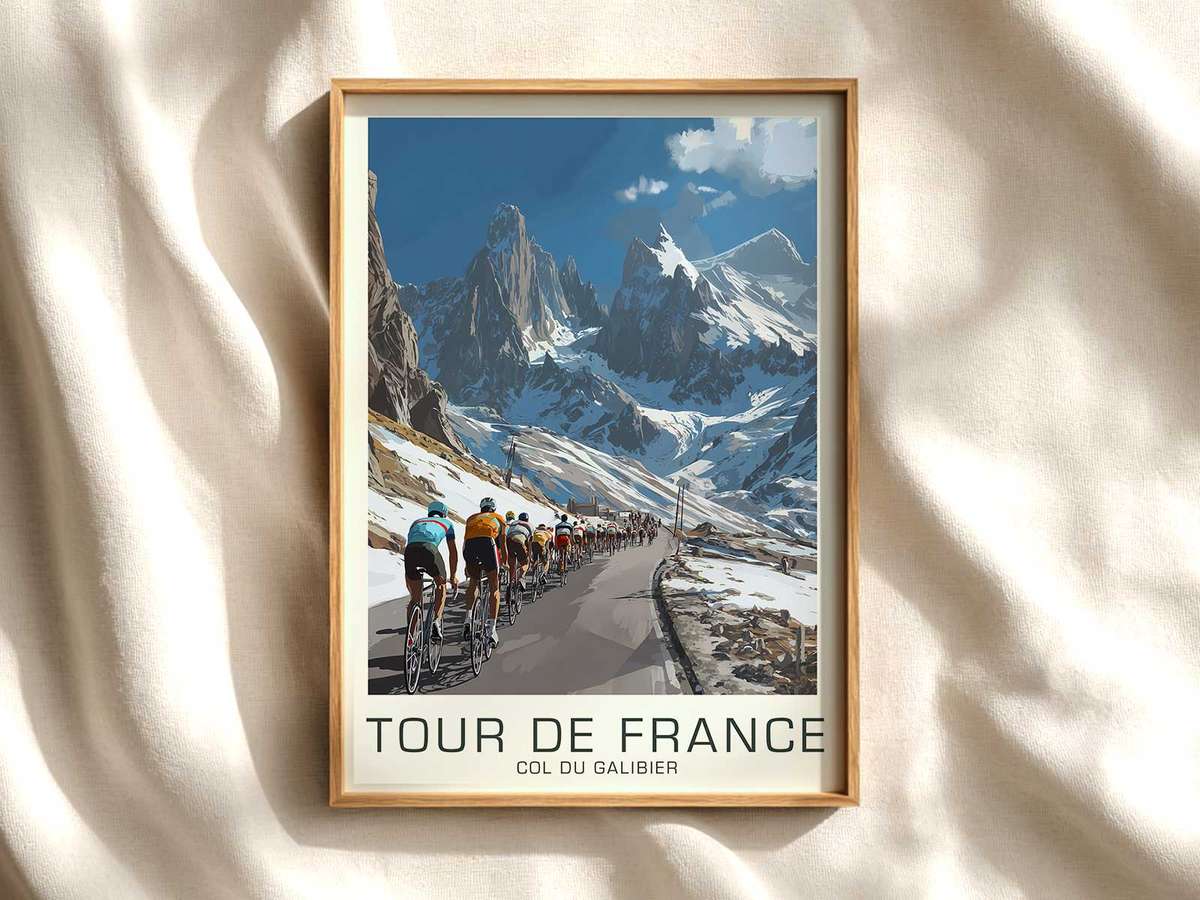
There is a peculiar power in a printed image that feels lived-in: muted inks that have settled into paper, a palette narrowed by time, the silhouette of a classic bicycle rendered with the economy of an era that trusted visual shorthand. A poster linked to Saint-Étienne performs this alchemy. Read as heritage rather than mere retro, it opens beneath the eye as a fragment of Tour de France memory—local streets, workshop culture, and the stoic posture of a rider converge to give the image a decorative gravity beyond a simple sporting print.
What makes this reading persuasive is texture. Archival warmth is not just a color choice but a tactile suggestion: the off-white of aged stock, tiny flecks in the paper field, and the soft halo where printed pigment once pooled. These cues prompt the viewer to imagine hands, posters on café walls, and shopkeepers who watched the race pass through provincial streets. The bicycle—its thin steel frame, downtube shifters, and narrow saddle—becomes shorthand for workmanship and endurance. Framed on the wall, those details read as calm evidence of a craft culture rather than a staged nod to nostalgia.
Iconography matters. A Saint-Étienne-linked scene often includes more than a rider: a distant factory silhouette, a tramline, or a tiled storefront edge can anchor the composition to place. When such elements are treated with restraint—period typography, flat planes of colour, and careful negative space—they transform the subject from a momentary race snapshot into a composed study of time and place. The result is an image that invites slow looking; it rewards a room that is itself curated, where objects carry stories and surfaces hold memory.
[IMAGE_INSERT_ARTICLE_01]
Heritage-led cycling art also communicates through absence as much as presence. You may notice the crowd suggested by pale smudges rather than explicit faces, or a road whose grain implies repeated passage. This economy of depiction lets the viewer supply memory: a grandfather's tale, a roadside café, or the metallic smell of tools. The classic jersey, rendered with faithful restraint rather than hyper-detail, reads as a costume of endurance. The bicycle silhouette—elegant, spare—anchors the composition as an object of design as well as sport, making the poster appropriate for study nooks, reading rooms, and offices where visual refinement matters.
Why does such imagery feel deeper than ordinary retro styling? Because it is governed by restraint. Where generic vintage effects lean on gimmick—faked creases, forced sepia, or tired slogans—heritage interpretation privileges provenance of feeling. It borrows the vocabulary of archives: modest color ranges, considered type, and compositional balance that privileges mood over spectacle. That restraint creates a breathing space on the wall; the poster is an invitation to inhabit a historical sensibility rather than an assertive brand statement.
The collector’s eye responds to these qualities. Subtle wear, accurate silhouettes, and era-minded typography create layers of meaning: the poster is decorative, yes, but also a portal. It speaks to the continuity of the Tour—how routes thread through towns, how bicycles and local industry have always been in conversation—and to personal memory, where family anecdotes and local legend live alongside official records. This layered appeal is what makes bicycle framed wall art of this kind suitable for interiors that prize narrative depth: it looks composed above a leather chair, in a light-filled studio, or in a compact library where each object contributes to a quiet archive.
In practical terms, choosing such a piece is choosing atmosphere. You are inviting a particular kind of stillness: the concentrated calm of a climb, the formal grace of a vintage frame, the suggestive geometry of an old town lane. The image works because it asks to be read repeatedly—small discoveries revealed with each viewing—rather than shouted from the wall. That is where its decorative value lies: in the way a single print can hold both a specific local memory of Saint-Étienne and a universal sense of cycling’s long visual culture.
Frame it simply, light it gently, and let the poster keep its quiet. In that restraint, a heritage-led Tour image outlives trend and becomes part of a room’s lasting character.