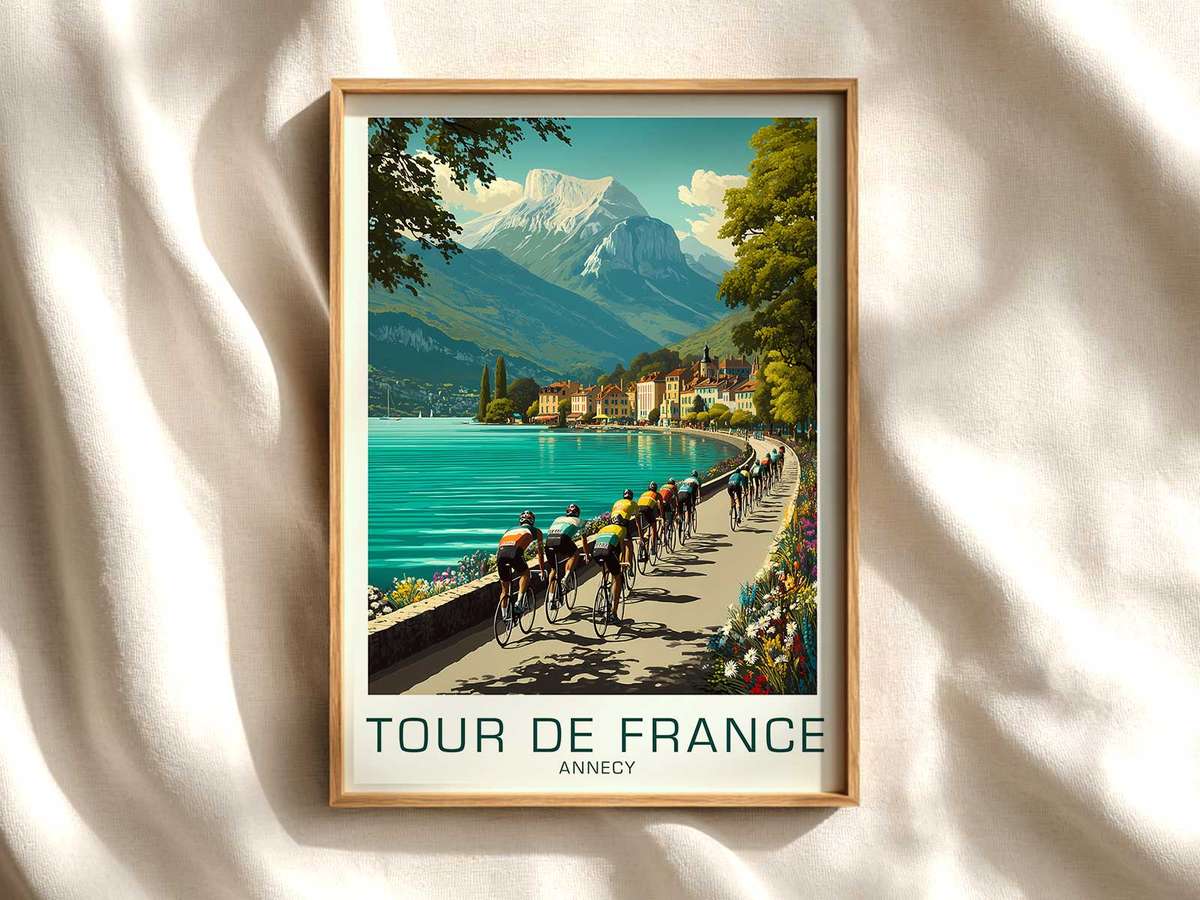
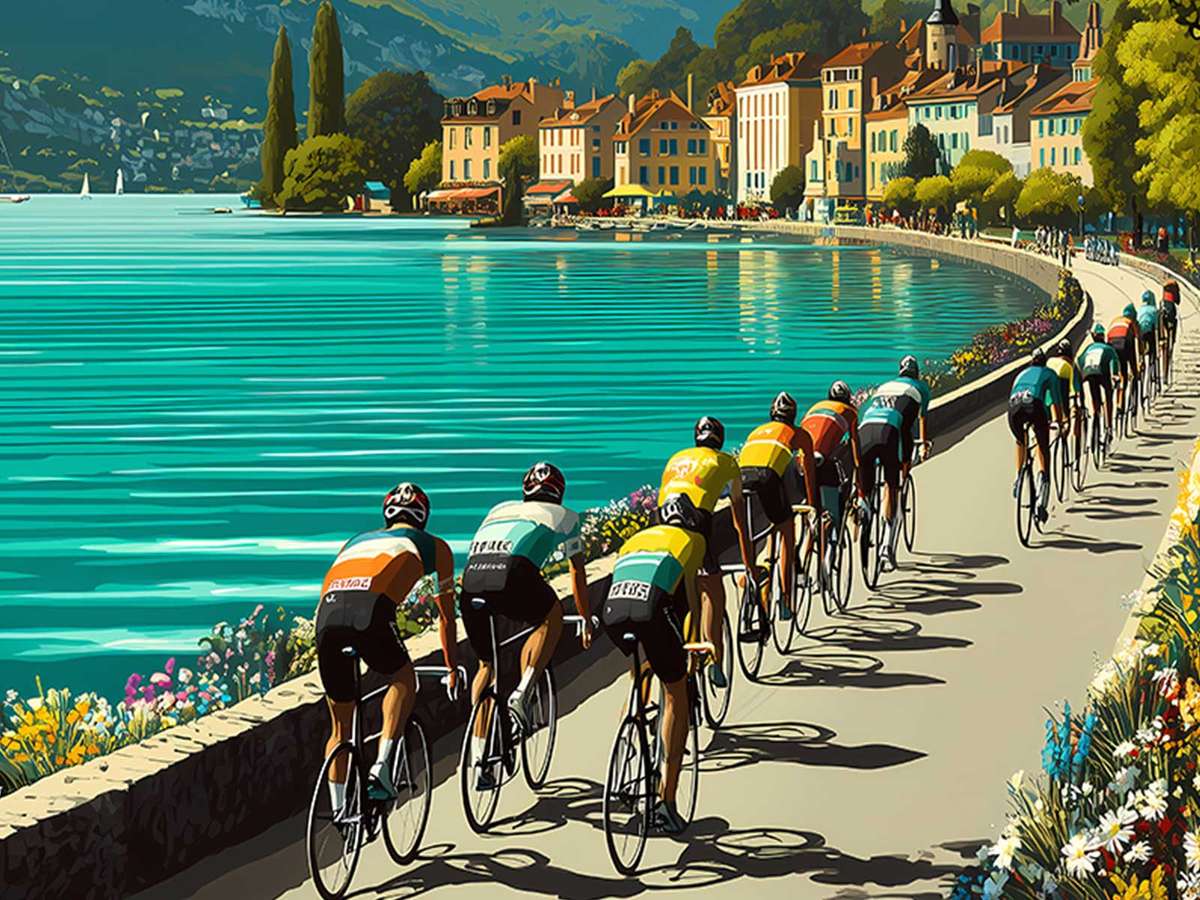
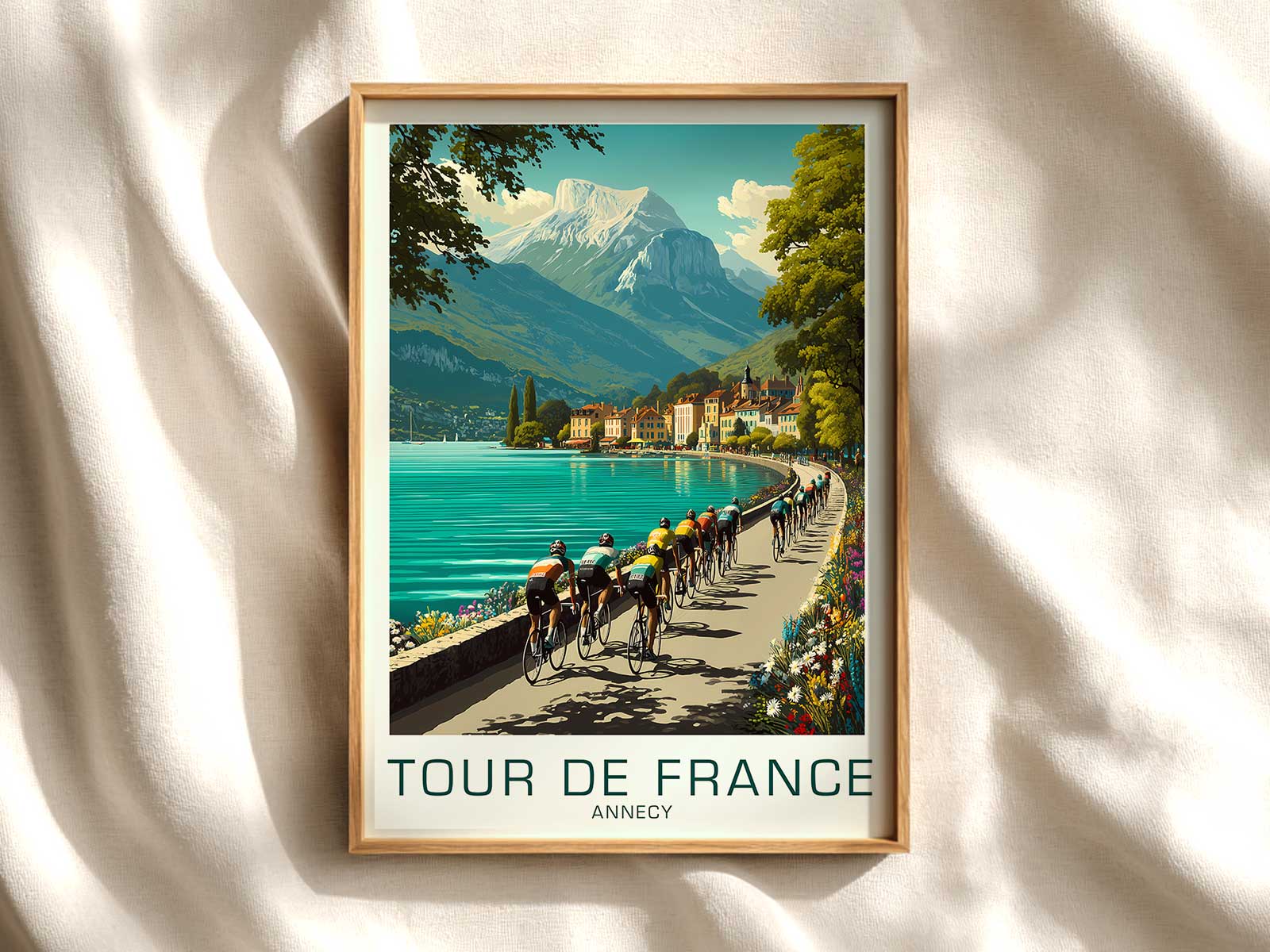
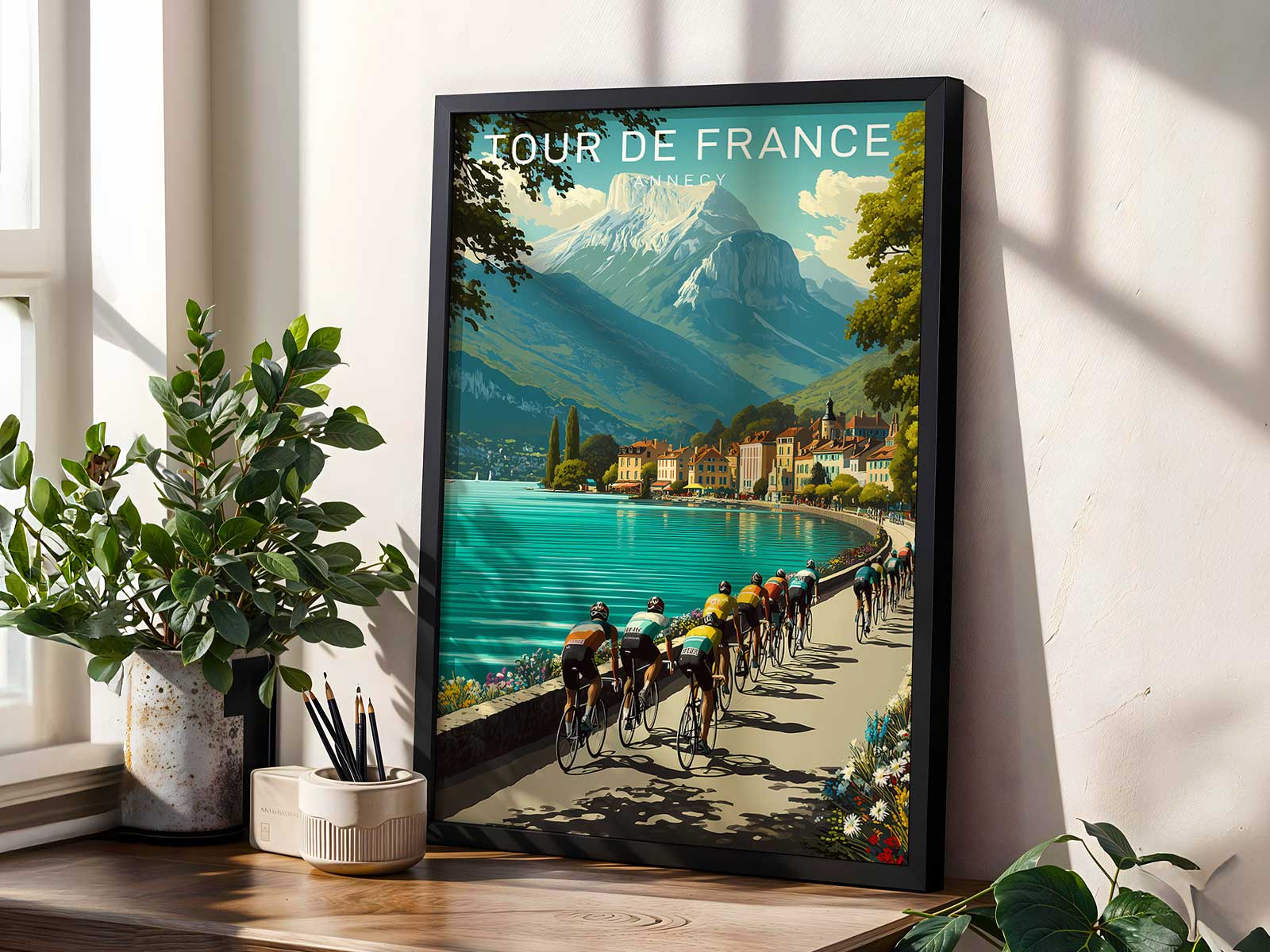
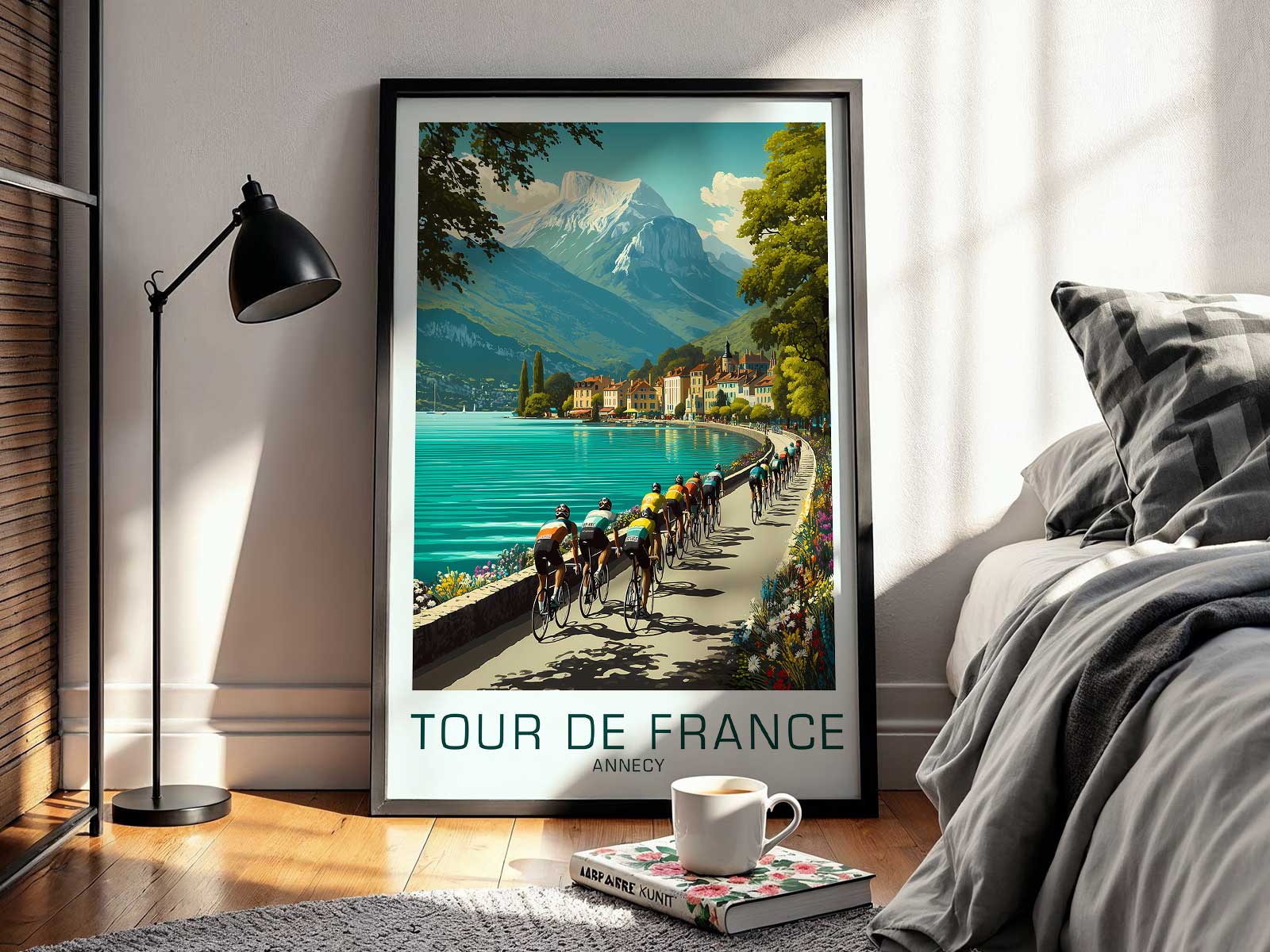
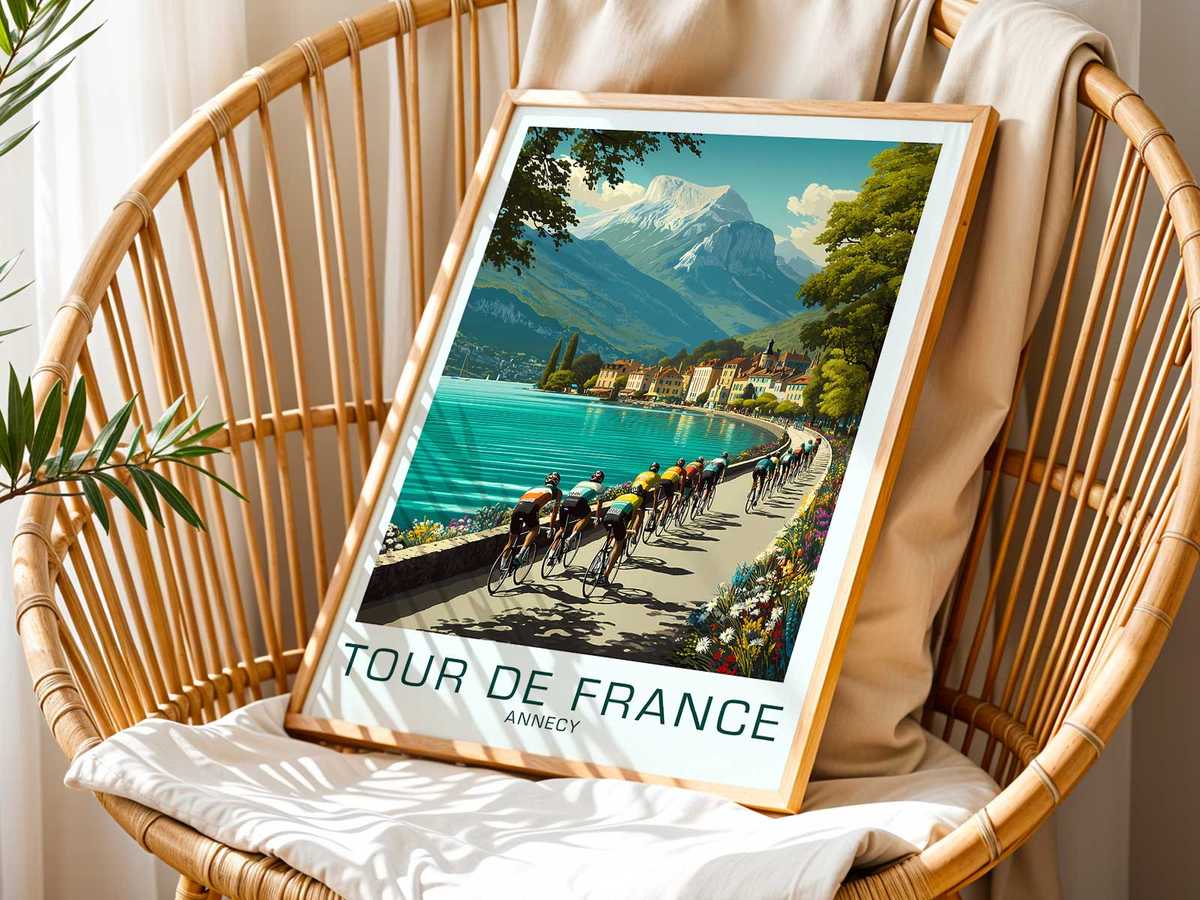
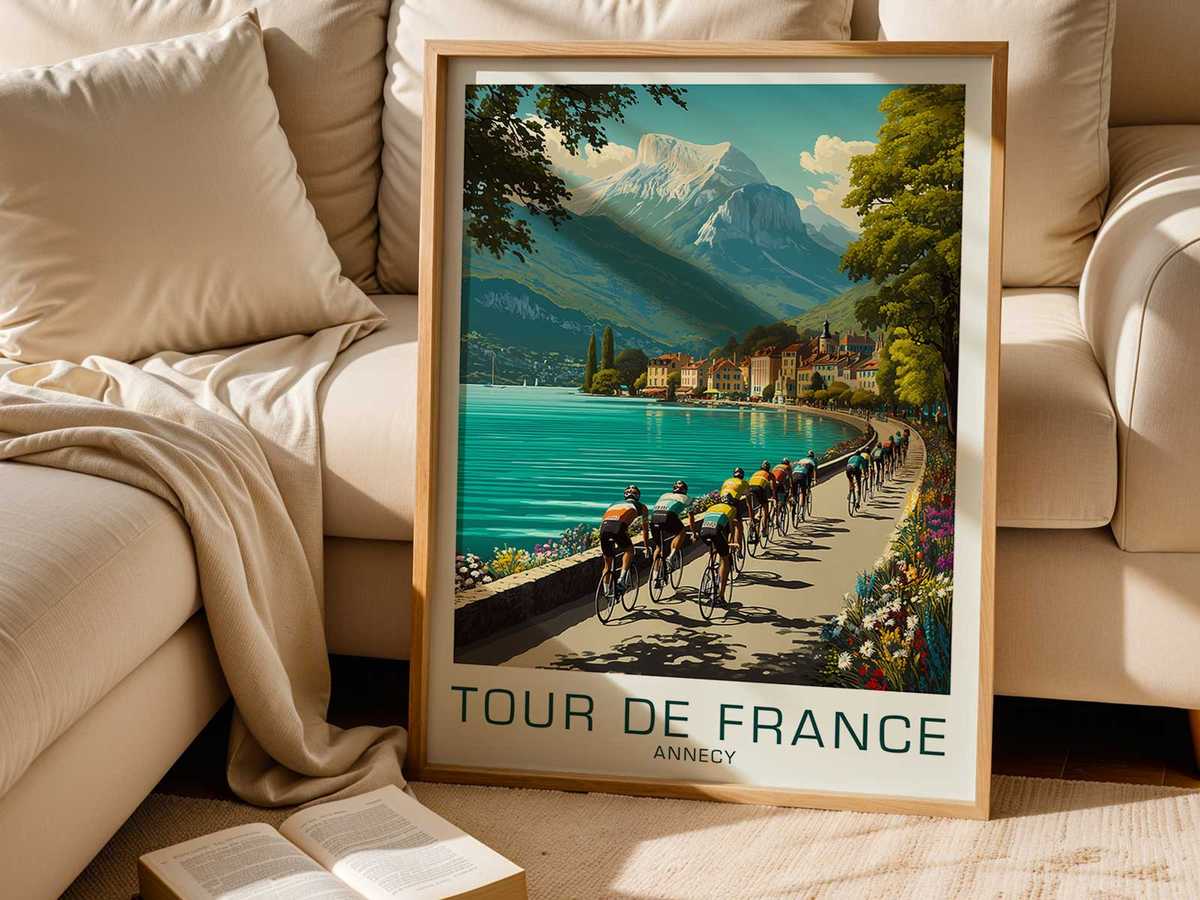
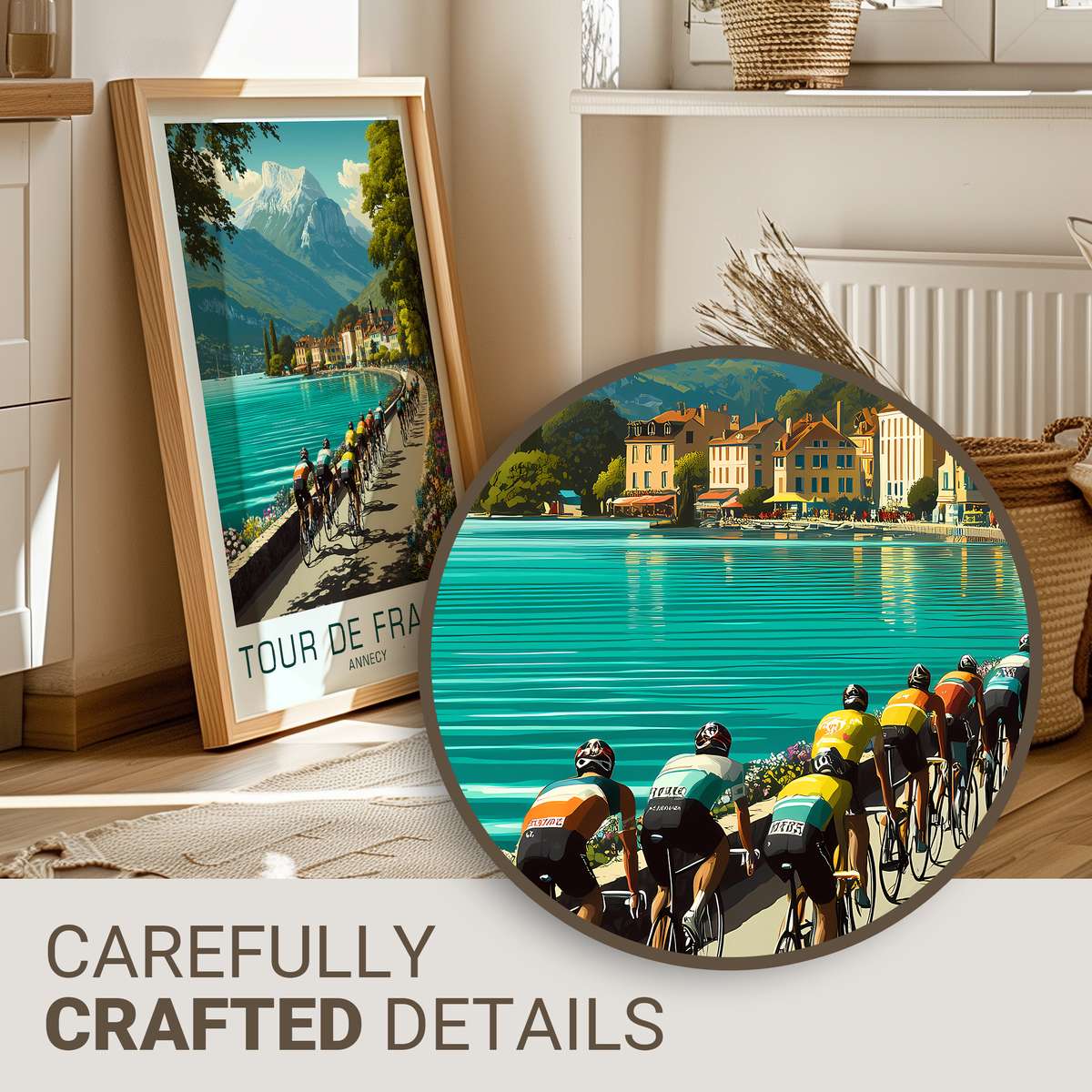
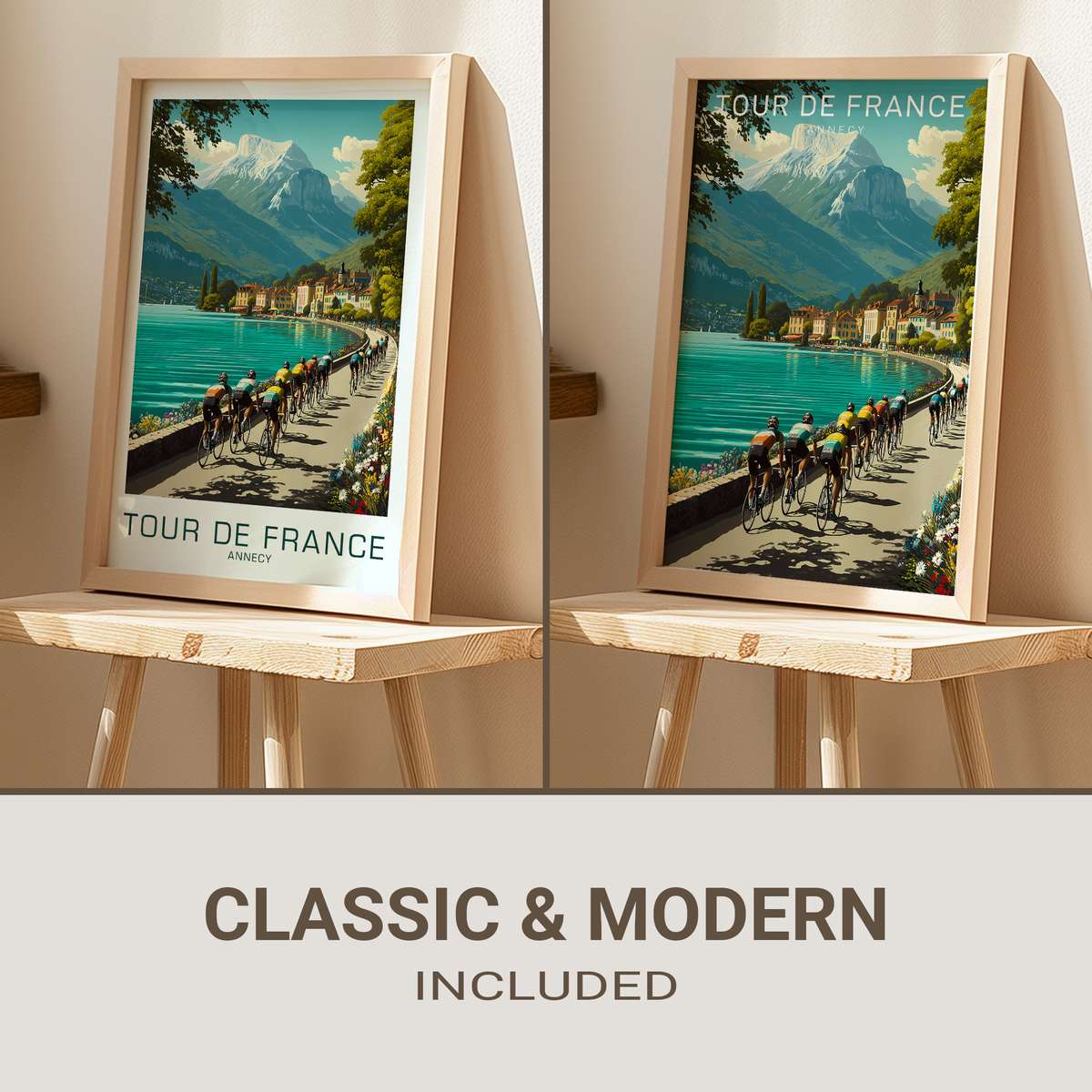
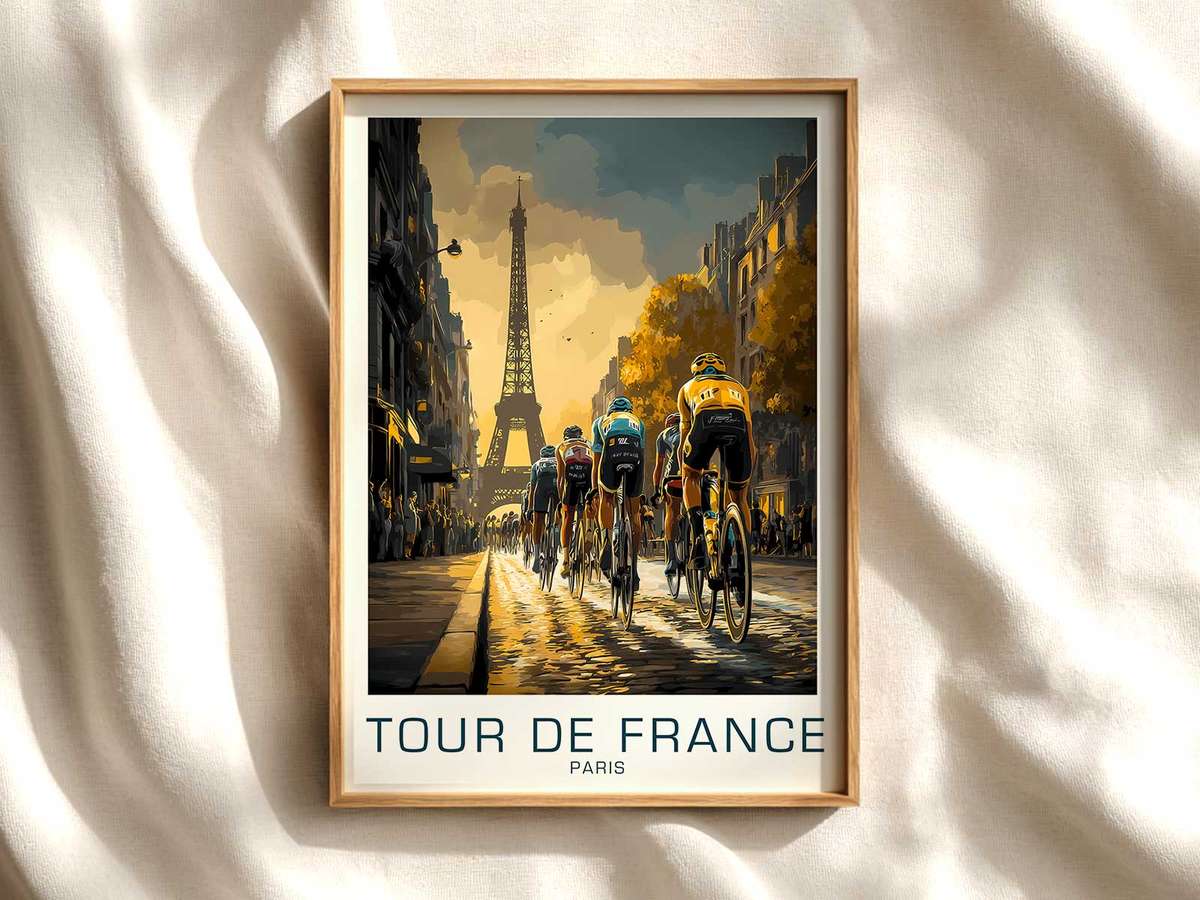
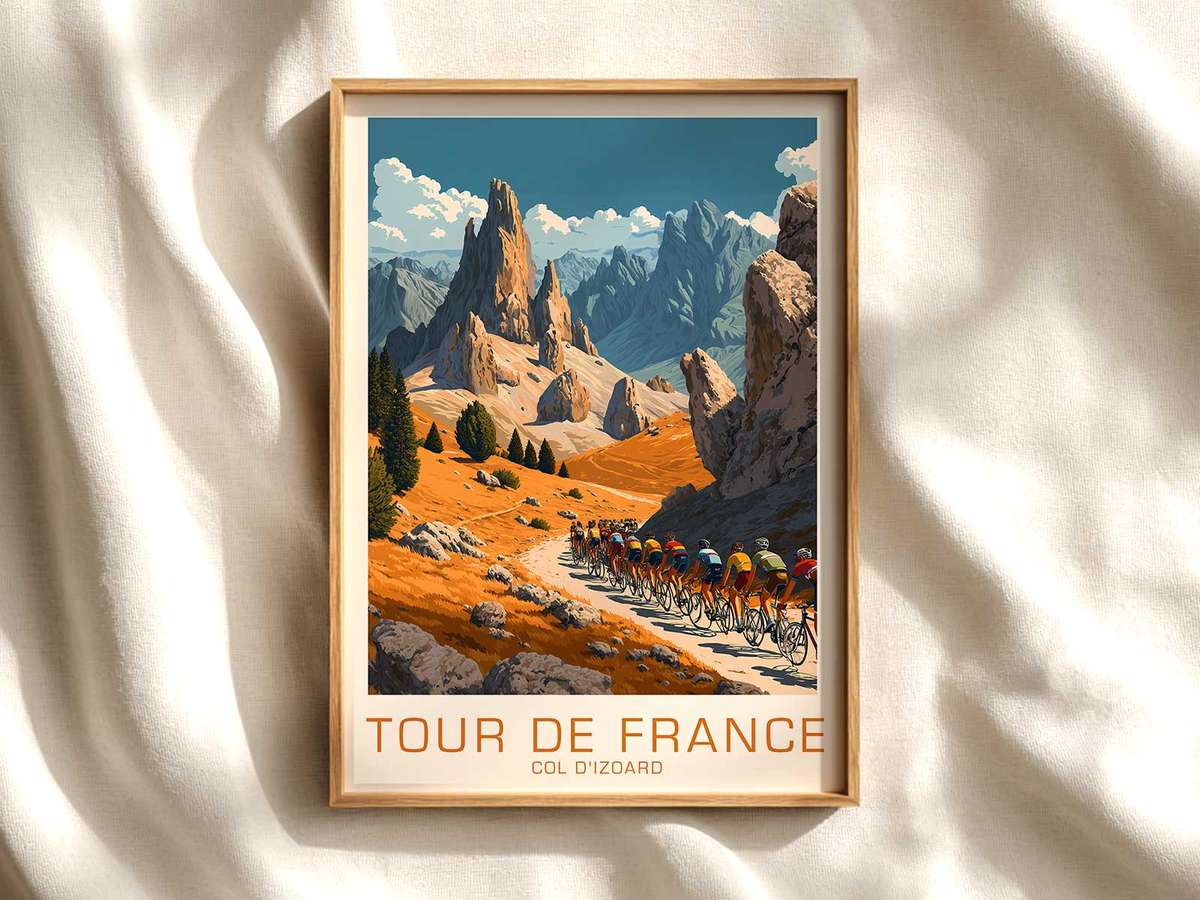
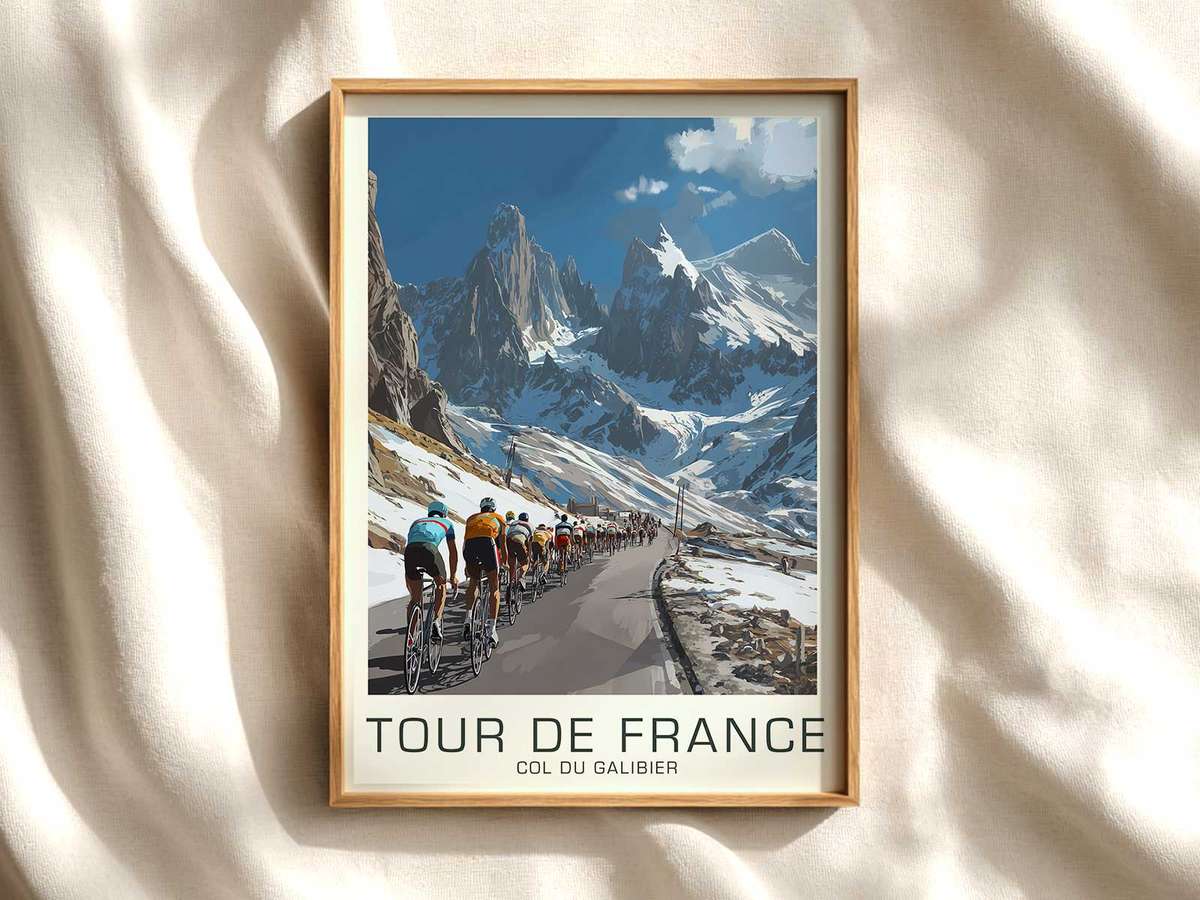
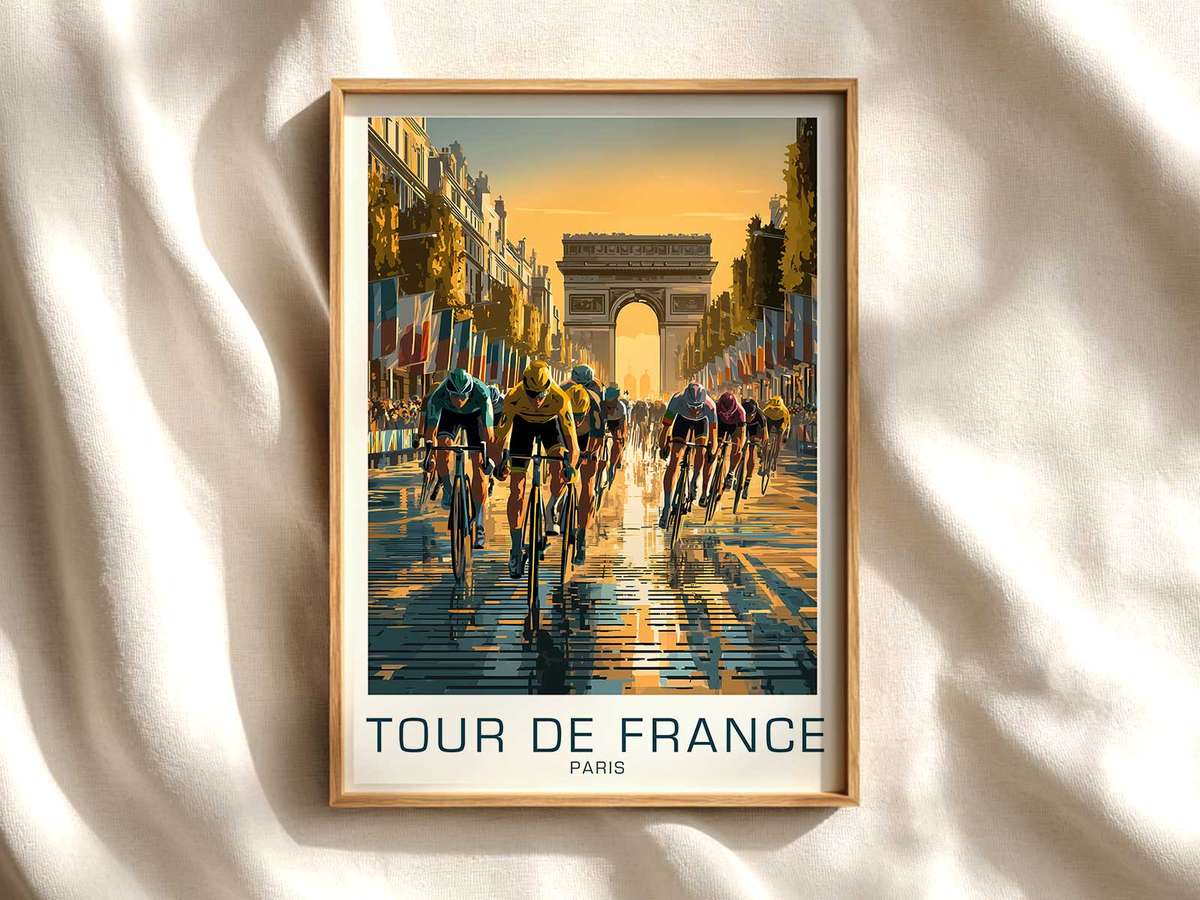
There is a particular hush in images that link Annecy’s alpine light with the visual language of the Tour de France: a restrained palette, an economy of line, and the unmistakable silhouette of a classic racing bicycle. Seen as a piece of wall art, such a poster does more than recall a sporting moment — it summons a layered memory where local place, archival texture and cycling culture answer one another with an almost conversational ease. The image works because it looks lived-in: printed tones have the warmth of a sun-faded flyer, ink edges soften into paper grain, and a period jersey or two gestures to an era rather than declaring it. This is the difference between a retro effect and true heritage—Ineffable wear, carefully considered restrain and visual clues that suggest continuity make the poster feel like a recovered fragment of race memory rather than a pastiche.
What gives this Annecy-themed composition weight on a wall is the way specific visual elements act as memory anchors. The old-style bicycle profile — slender steel tubes, cleat-forward posture, narrow handlebars — reads immediately as the elegant tool of endurance. A shallow, diagonal composition hinting at a lakeside approach or mountain slope sets a mood: not merely motion, but the moral economy of effort and altitude. Classic jerseys or understated period typography do not shout identity; they whisper a shared history that invites the viewer to know more, or simply to pause. In an office, library or quiet studio, that whisper reads as cultural depth rather than sporting memorabilia: it behaves like a piece of local story-telling translated into form.
[IMAGE_INSERT_ARTICLE_01]
Archive aesthetics matter because they offer texture where modern graphics often prefer gloss. Worn color fields, deliberate misregistration, and the suggestion of hand-crafted printing place the viewer within a material genealogy: this is an image that could have been touched, folded, carried in a pocket. The visual restraint — fewer competing graphic elements, a muted color scheme — allows the bicycle and the landscape to occupy the same narrative space. The result is a poster that feels conversational with the room it hangs in; it complements leather-bound books, matte-painted walls, and furniture that values patina, because the picture itself proposes a lived history.
Equally important is how the poster stages the culture of cycling without requiring expertise. You do not need to name riders or recall a specific stage to feel the image’s authority. Small, readable cues — the bend of a leg, the geometry of a frame, the cadence suggested by blurred spokes or a freeze-frame posture — encode the discipline and nobility of endurance. Those cues translate into emotional projection: the viewer supplies their own memories of long rides, of landscapes conquered slowly, or of communal spectator moments at a roadside. For collectors and those curating spaces, that open invitation is valuable: the artwork is specific enough to convey authenticity yet generous enough to accommodate personal association.
Finally, consider why heritage imagery holds decorative precedent over a generic sporting poster. Heritage-led work resists instant literalism; it extends an implied timeline. That extension is what makes such a poster feel display-worthy rather than disposable. When you hang an Annecy-linked Tour image, you are not only choosing a decorative object but accepting a fragment of visual memory that ties place, technology and culture together. It becomes a conversation starter and a quiet proof of taste: the piece signals an appreciation for craftsmanship, for the archival mood of print, and for cycling as a cultural continuum rather than a single headline.
Seen through these lenses, the bike as wall art is more than a motif — it is a compositional anchor for memory. This kind of poster rewards slow looking: the further you lean into its textures and period details, the richer the associations become. Positioned in a reading nook, study, or refined communal room, it brings a nuanced historicity that uplifts the space without ever shouting. In that restraint lies its lasting appeal.