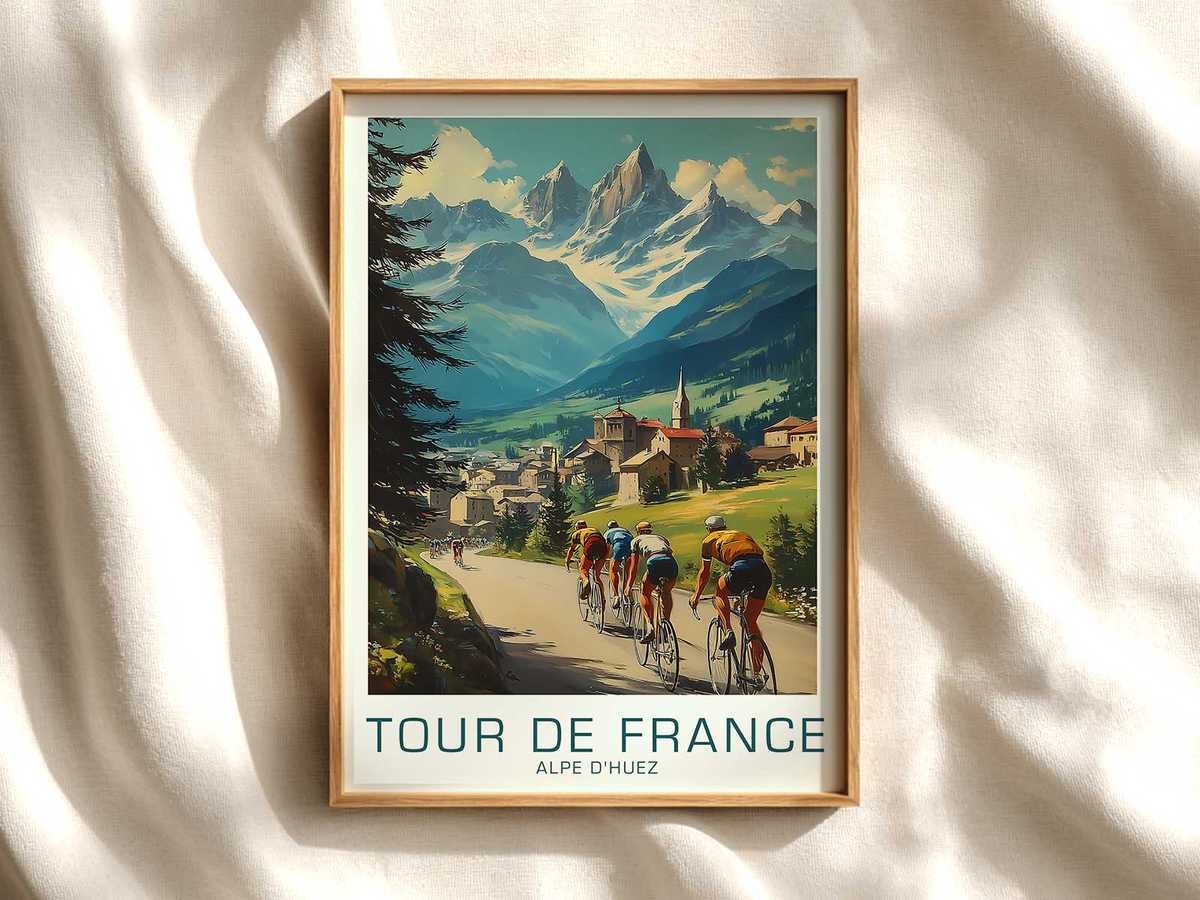
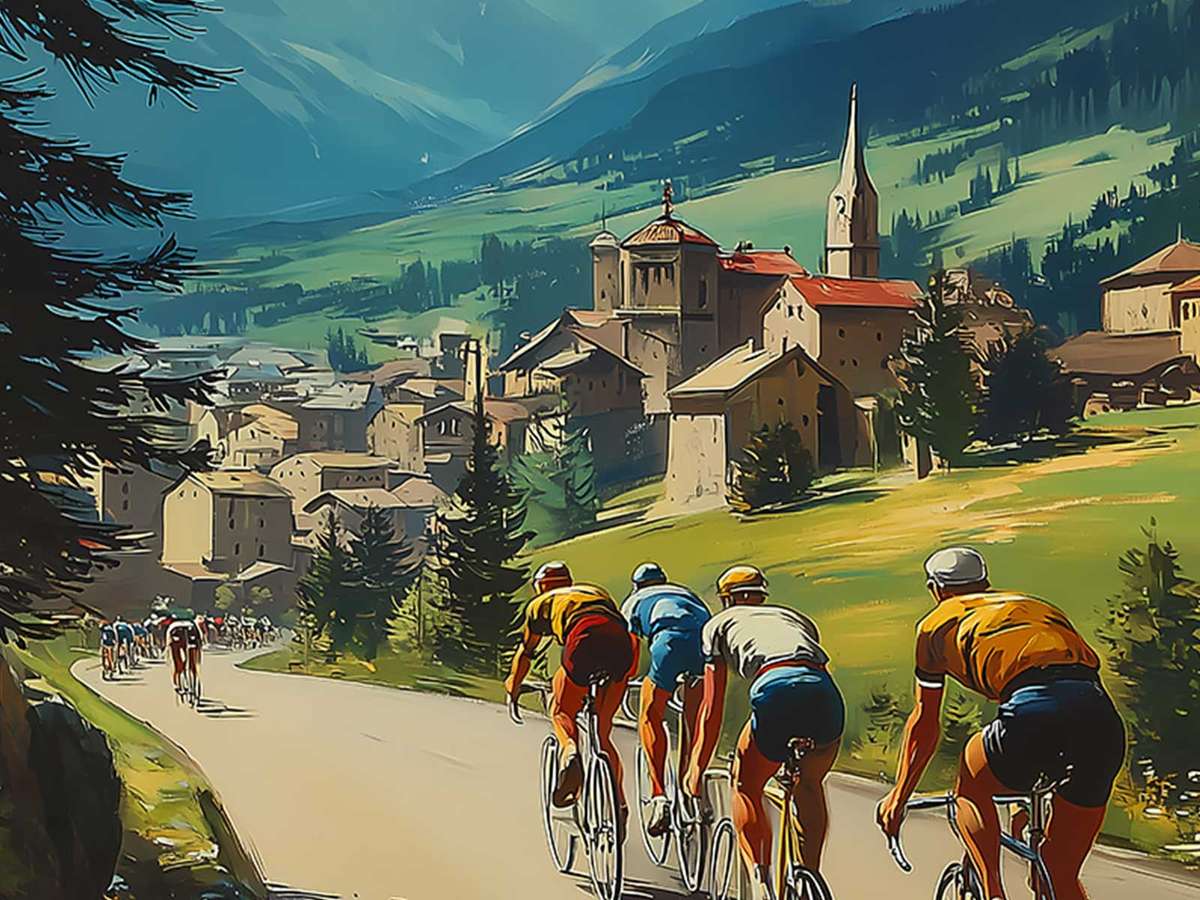
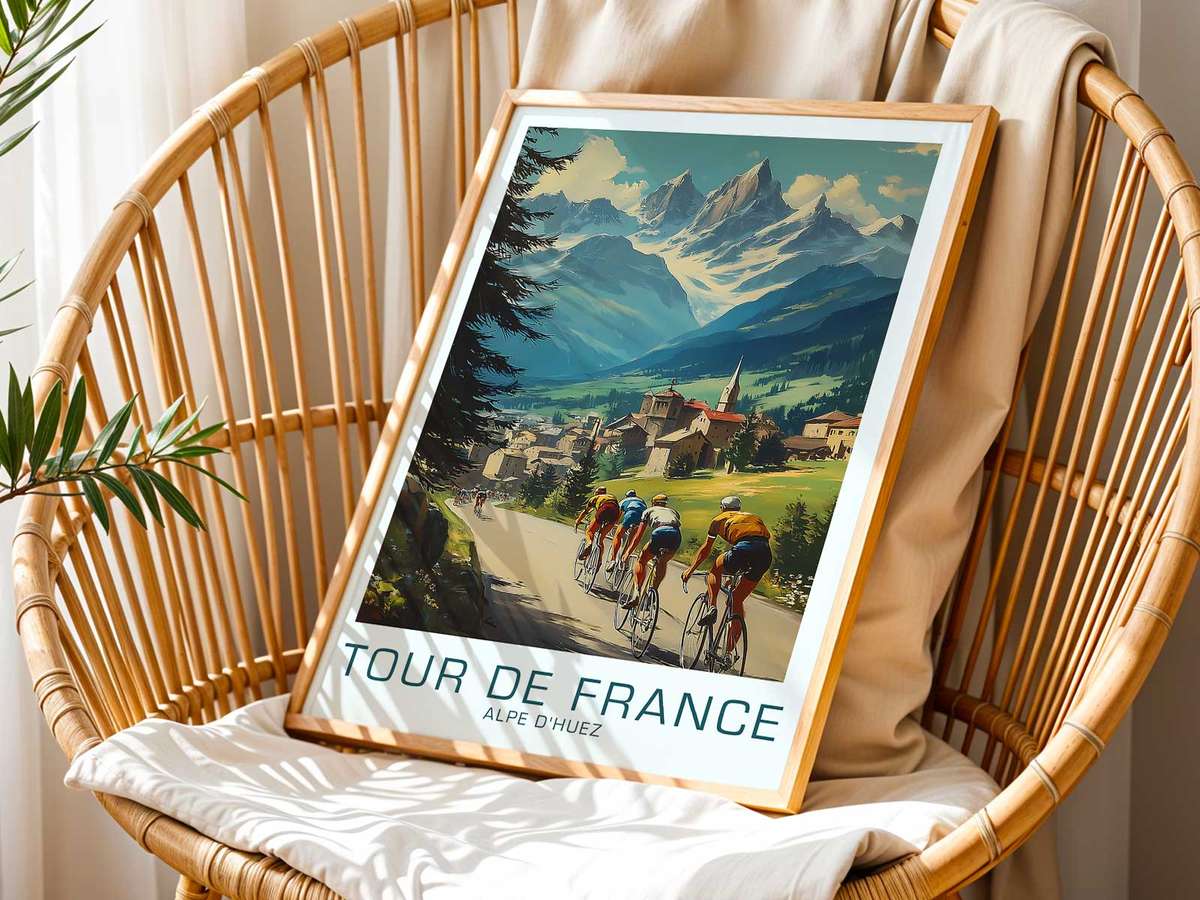
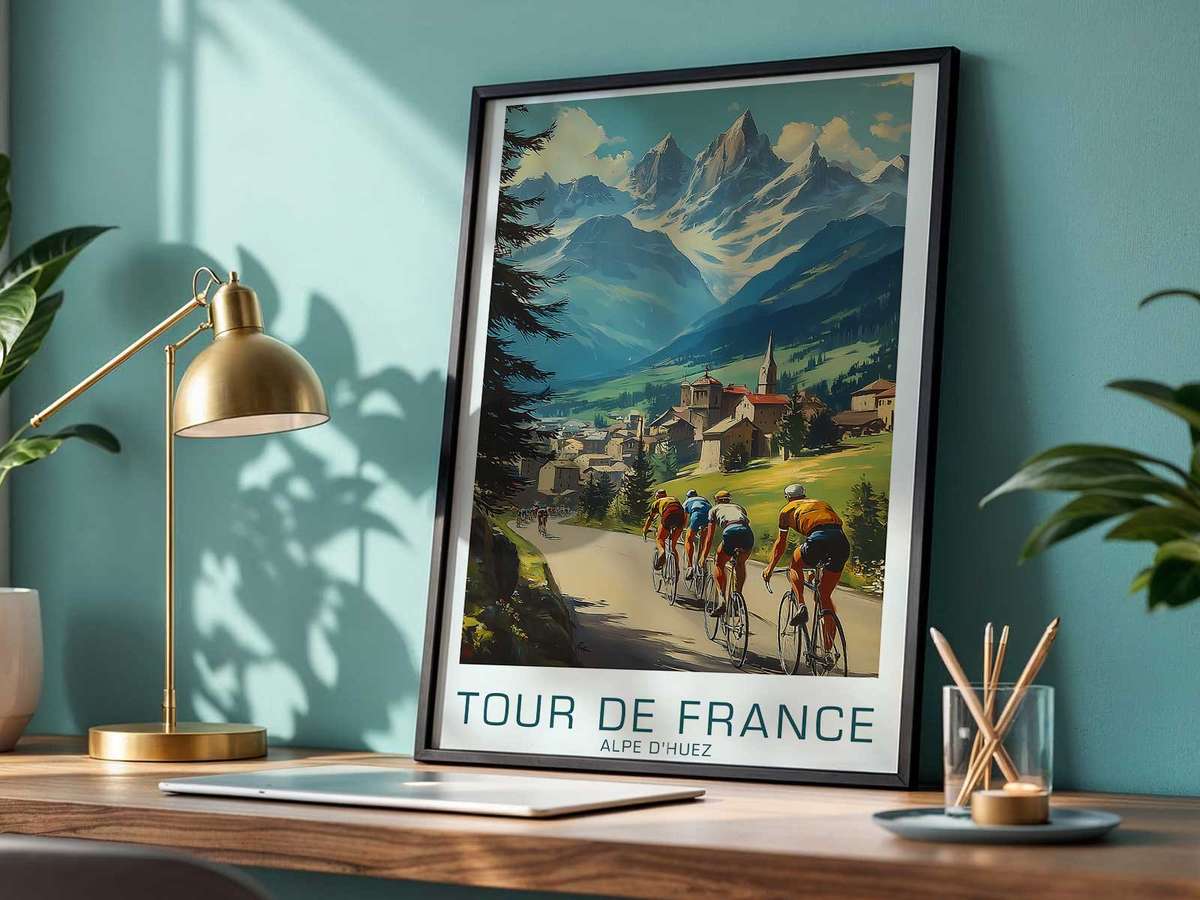
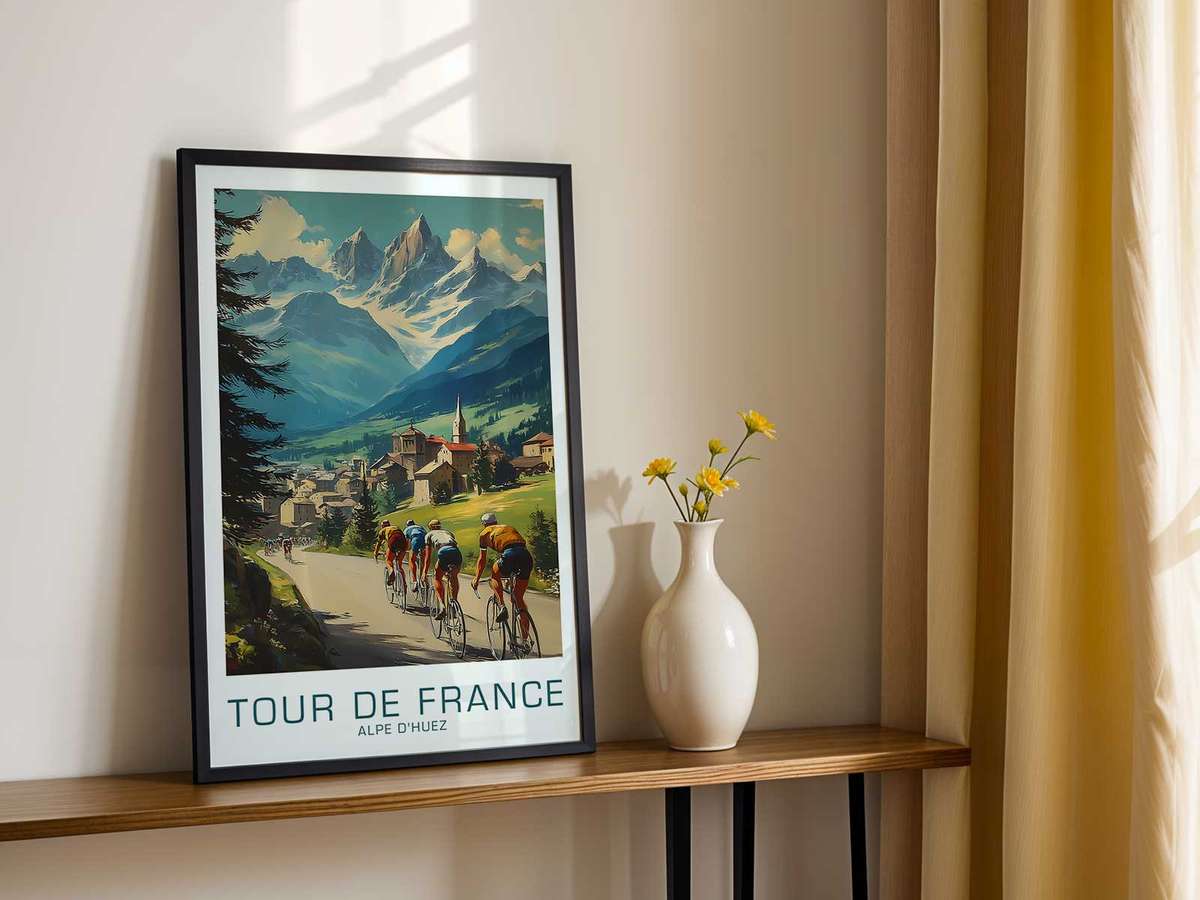
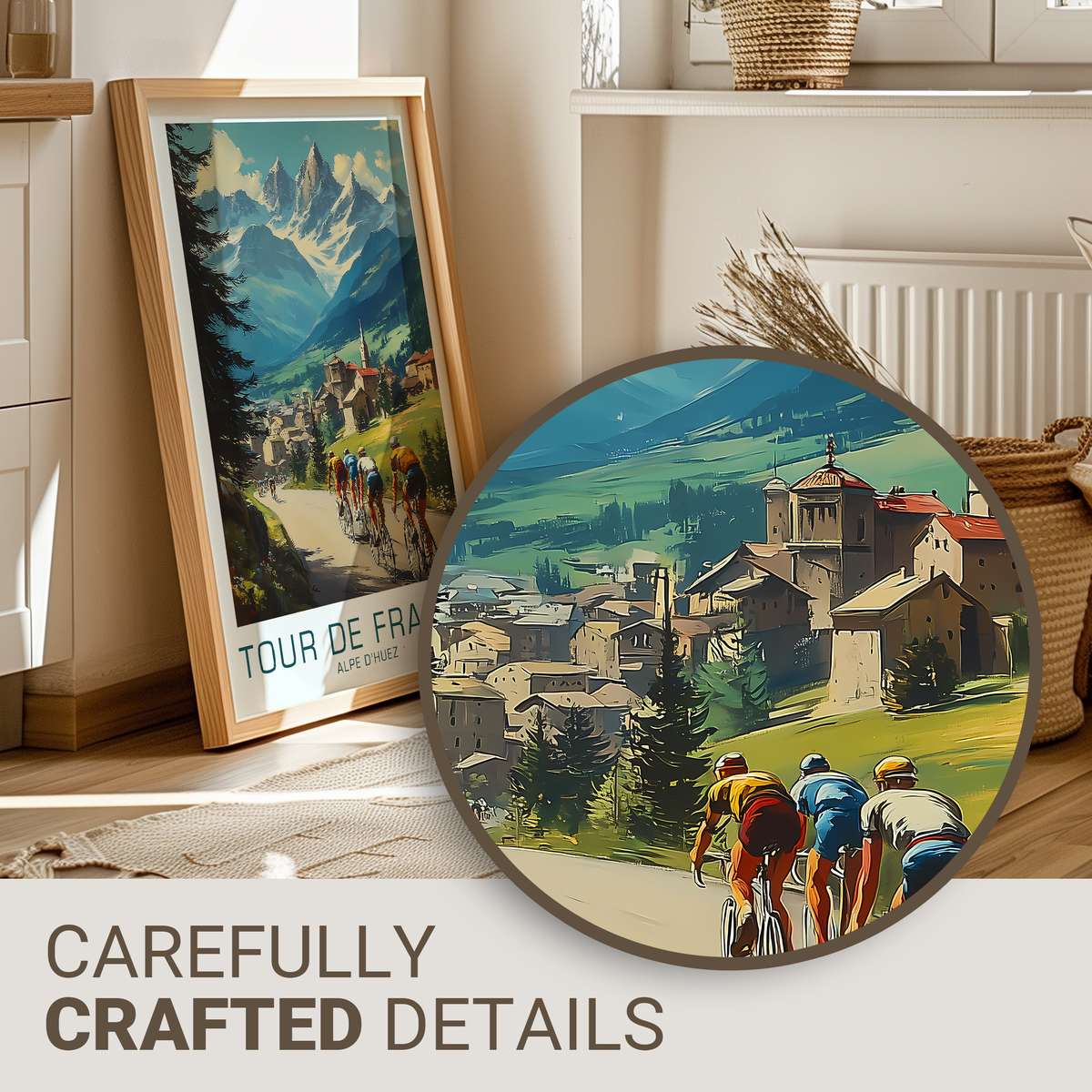
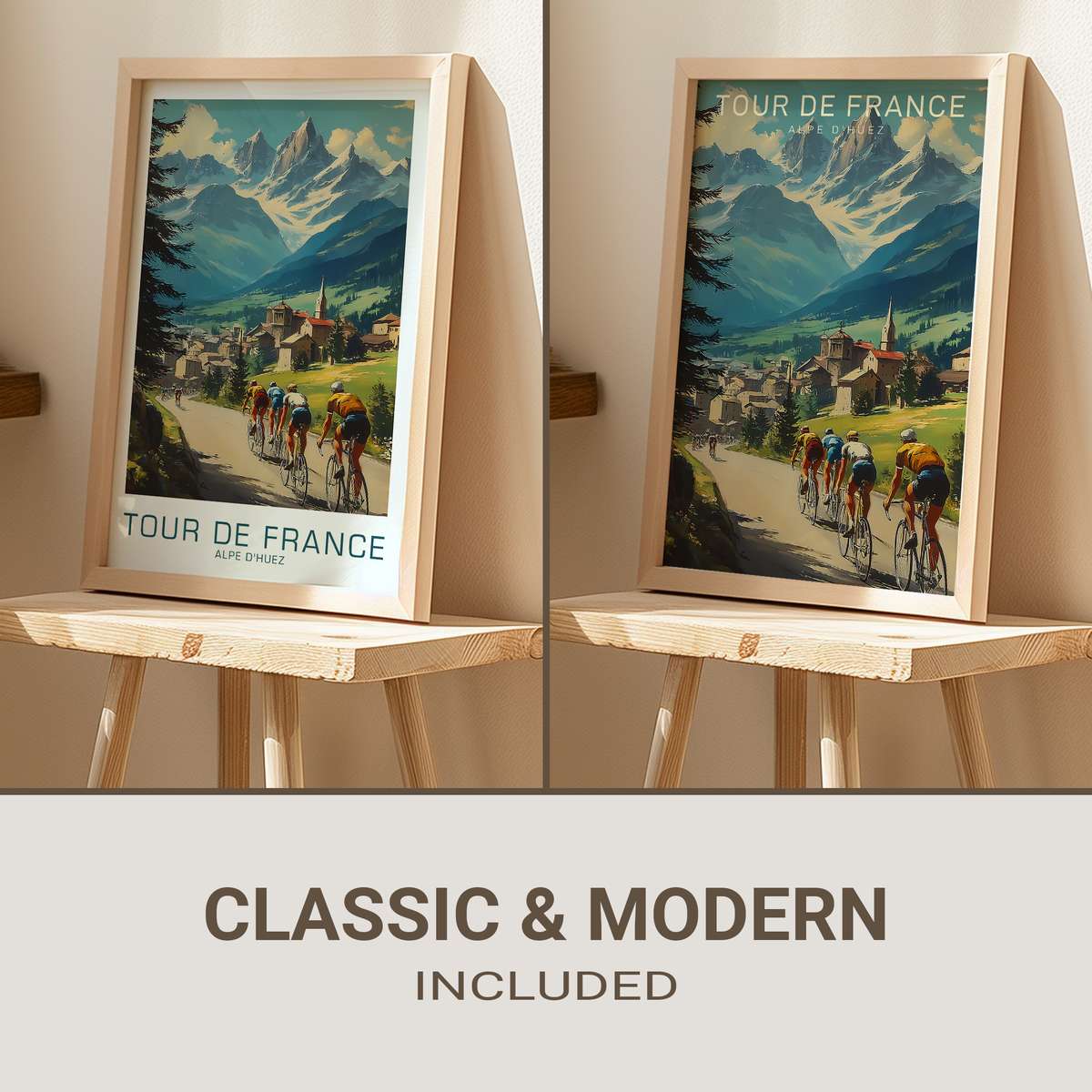
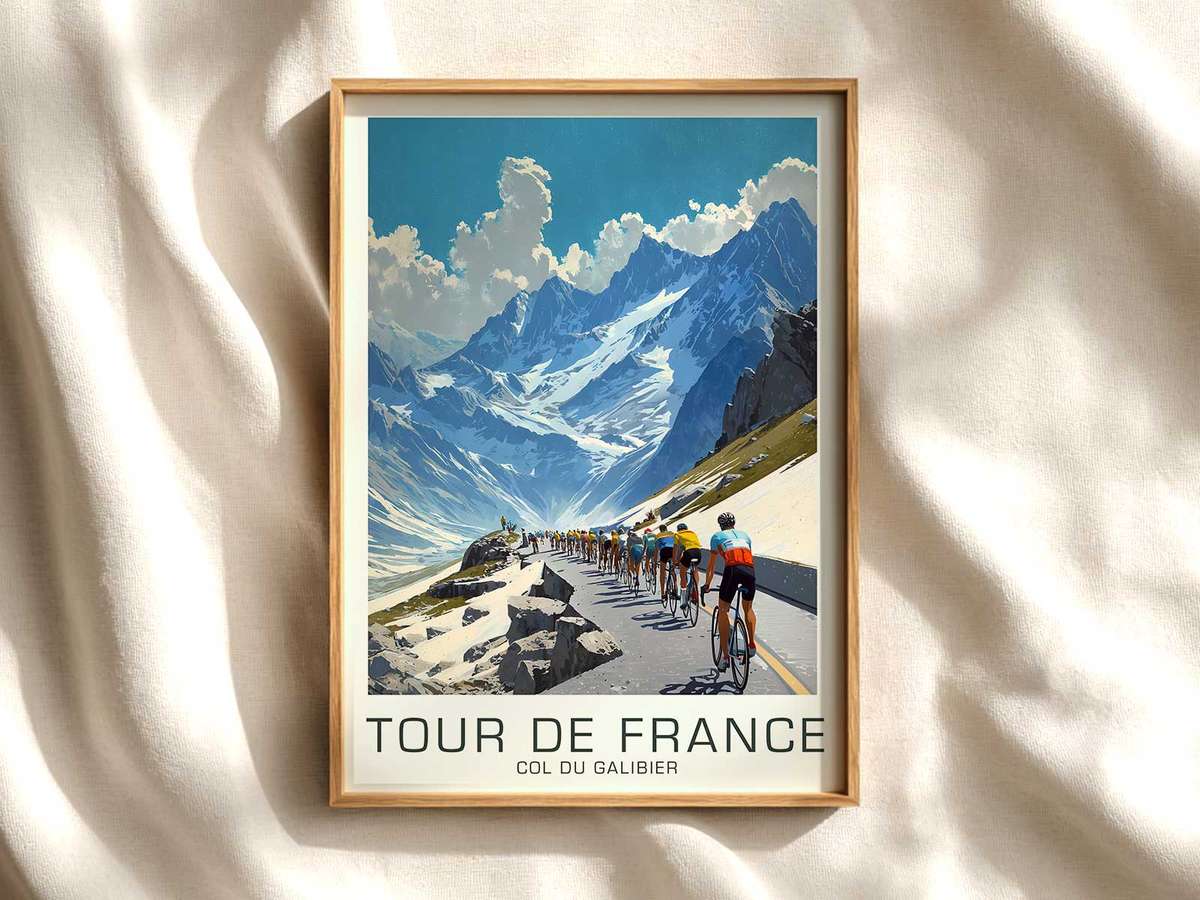
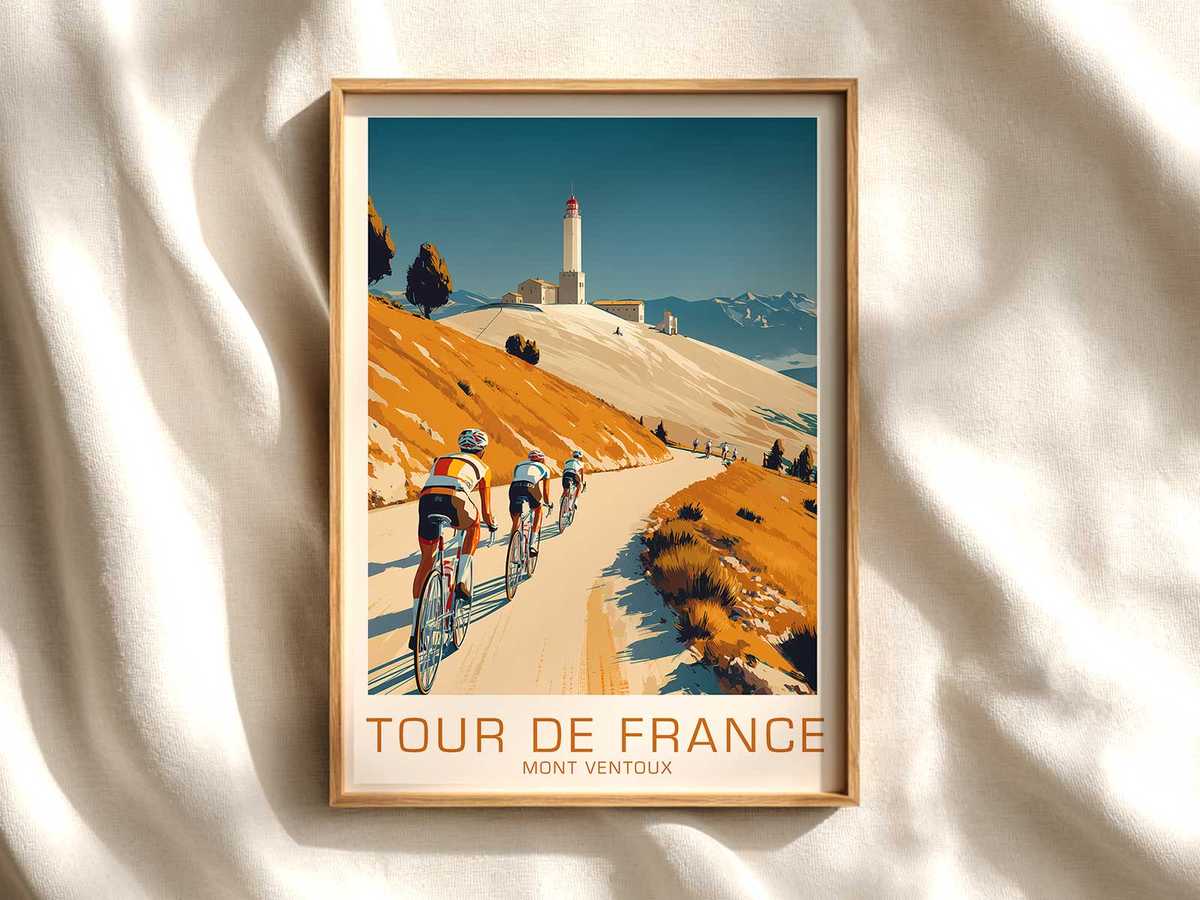
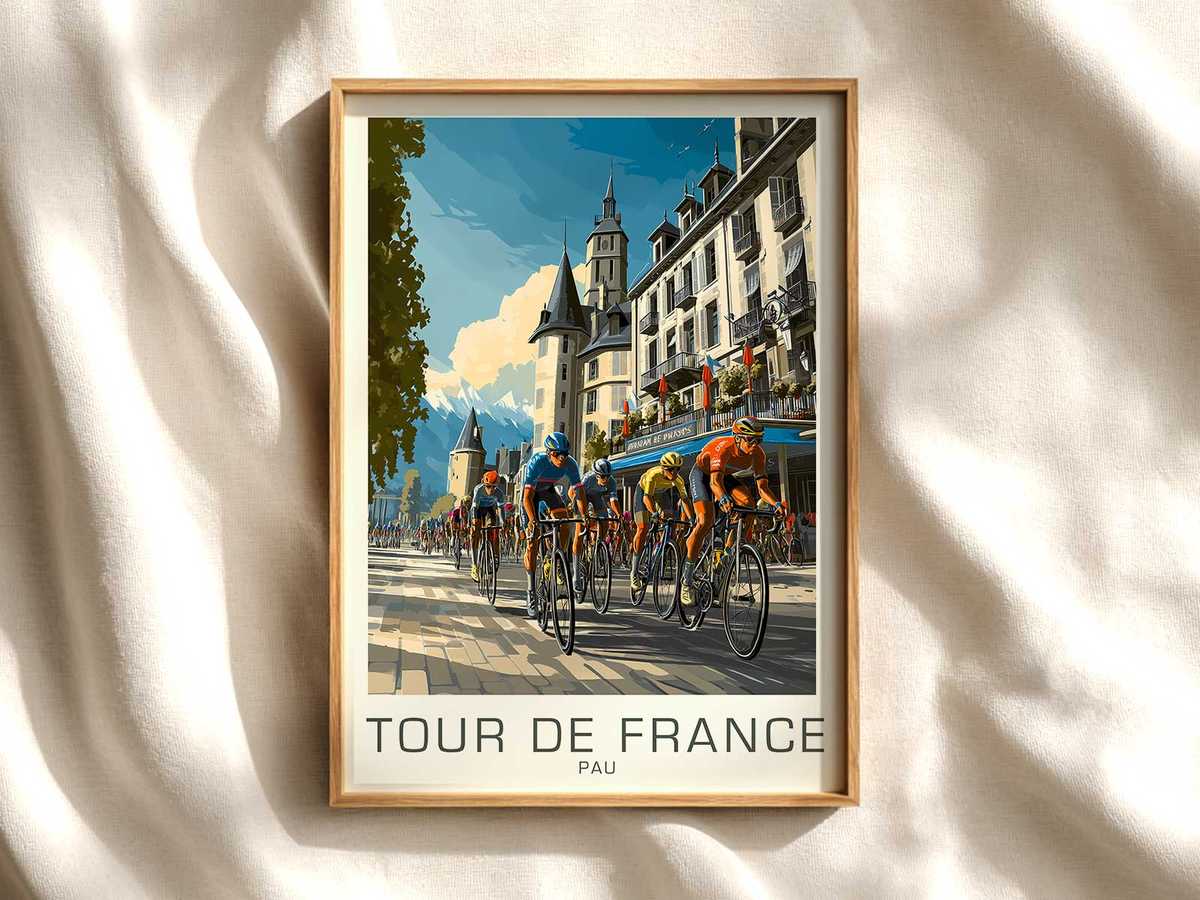
An Alpe d’Huez–centred poster does more than show a climb: it places a single rider at the moral and visual heart of endurance. Stripped of stage results and race telemetry, the image relies on posture, silhouette and the tilt of head and shoulders to turn a moment of exertion into a portrait of will. The road becomes a vertical stage and the cyclist’s body the instrument that scores it.
The first thing that arrests the eye is the gesture. Whether seated, slightly rocking on the saddle, or momentarily standing to drive the pedals, the rider’s shoulders, elbows and hands narrate effort with economy. Elbows tucked, forearms locked, fingers near the hoods: this compact position reads as focus. A slightly forward-tilted head and a downward gaze anchor the athlete to the tarmac, converting what could be anonymous movement into an intimate exchange between flesh and gradient. In poster form these micro-poses are magnified—every muscle length, every compression of the torso, becomes compositional punctuation.
Fatigue in this iconography is not messy. The poster’s visual language often prefers contained suffering: a jaw line set against a pale sky, sweat darkening a jersey panel, a rhythmic cadence suggested by blurred chainrings or repeated curve lines of the bike frame. That restrained reading of fatigue—controlled and dignified—turns exhaustion into aesthetic. It signals endurance not as collapse but as disciplined response. This is why the rider reads as a figure of resilience rather than merely an athlete in pain.
Silhouette plays a decisive role. On mountain roads like Alpe d’Huez, the steep incline and the tight hairpins compress depth; the cyclist’s outline against the climb becomes a graphic device. A single silhouette can carry the whole composition: the handlebars and helmet sketch, the arc of the back, the doubled cadence of calves. When printed as a poster, those shapes produce a strong focal point that organizes negative space—the road, the sky, the distant crowd—around the human form. That economy of shape is what makes these images work as wall art; they read clearly from a distance while revealing texture up close.
The relationship to the road is another essential layer. In rider-led posters the asphalt is not merely setting but interlocutor. The line of the road, the angle of the verge, the gradient suggested by roadside markers or rock faces, all give the cyclist direction and purpose. The rider’s gaze—or the angle of the bike—points the viewer along that route, making the experience of ascent shareable. The poster thus creates a direct, almost tactile rapport: you feel the climb beneath the tyres and the deliberate cadence that propels the figure forward.
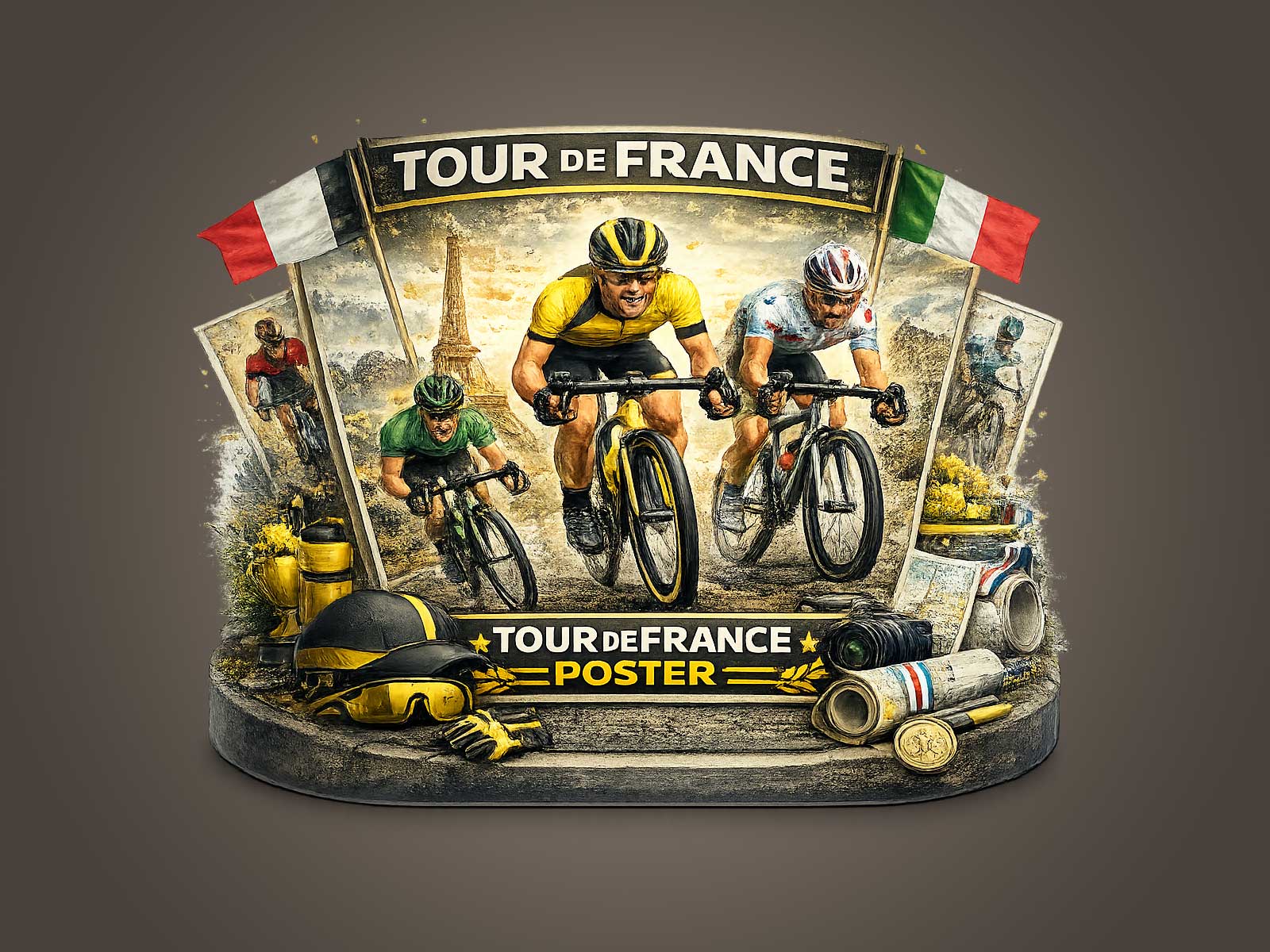
[IMAGE_INSERT_ARTICLE_01]
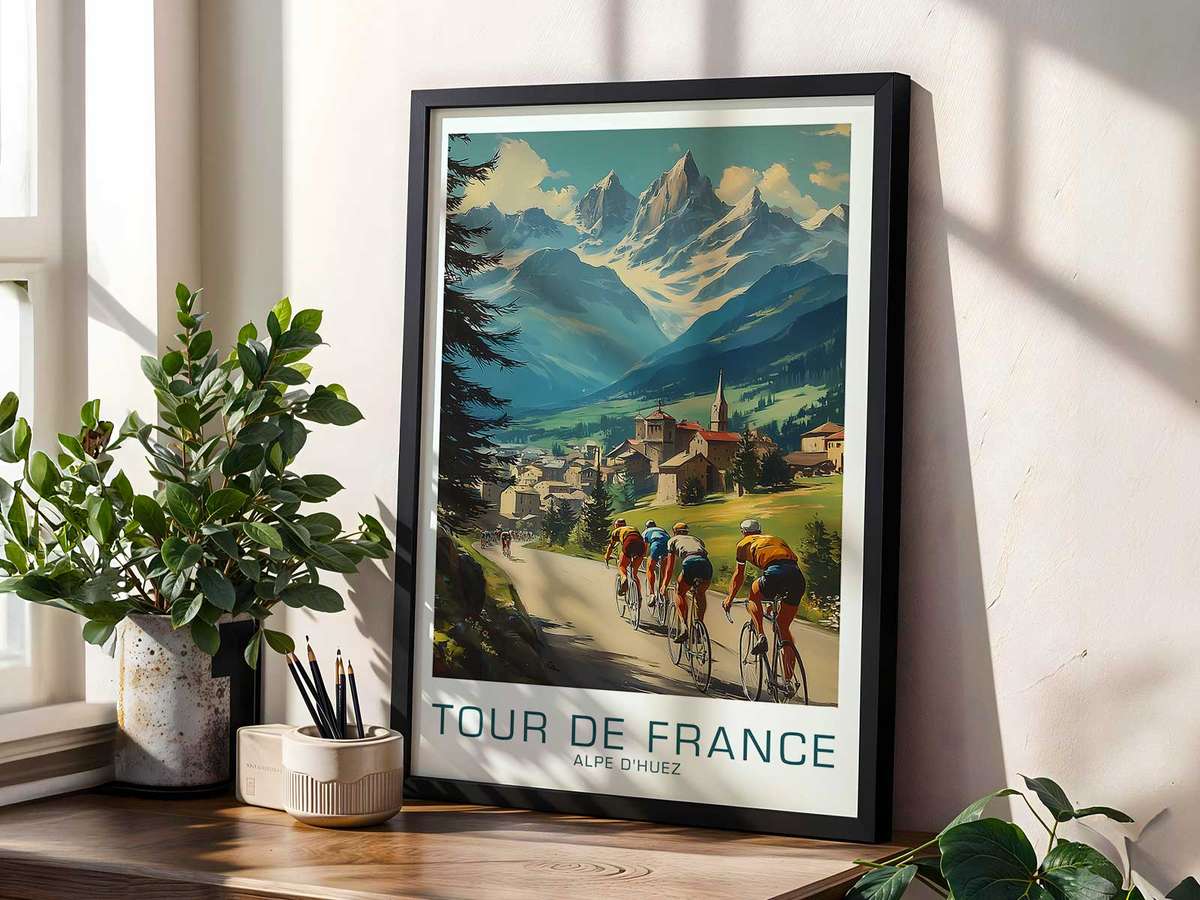
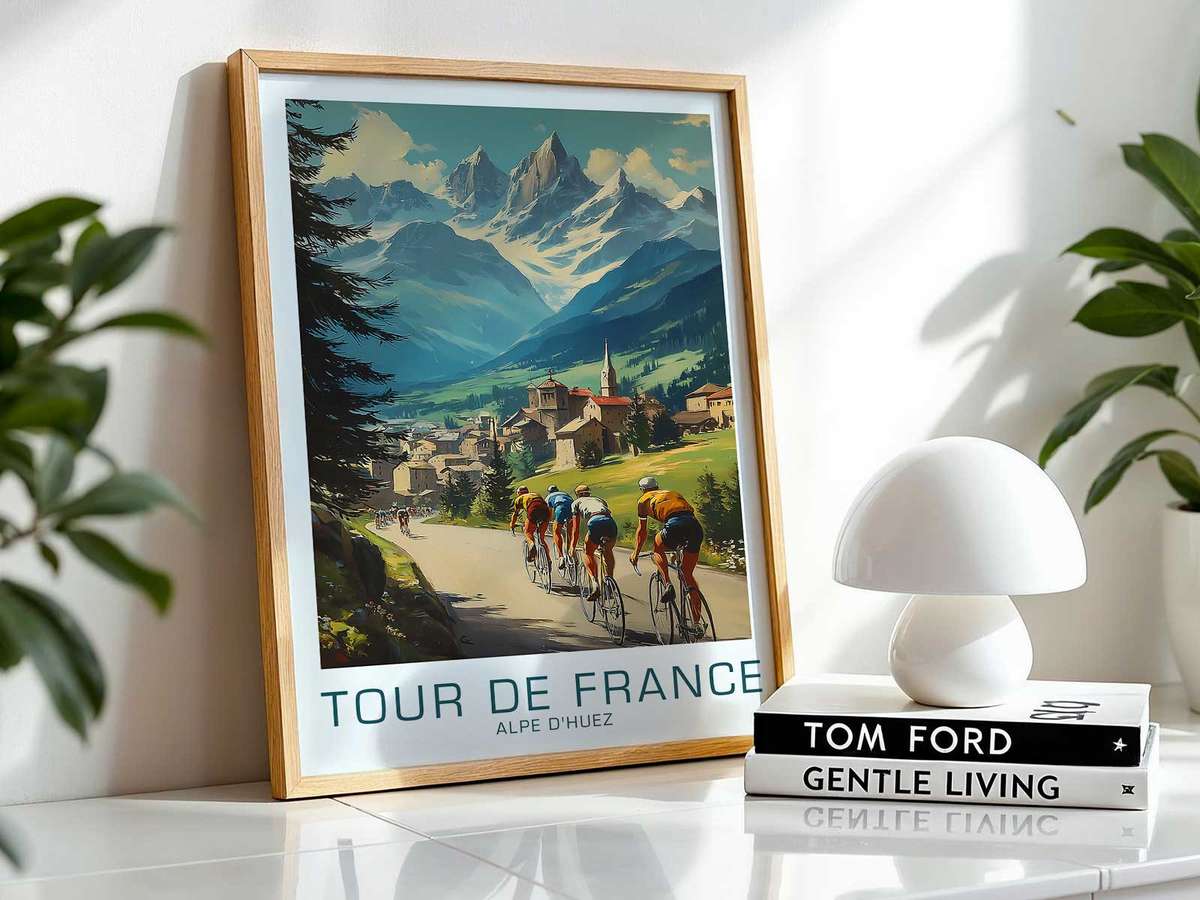
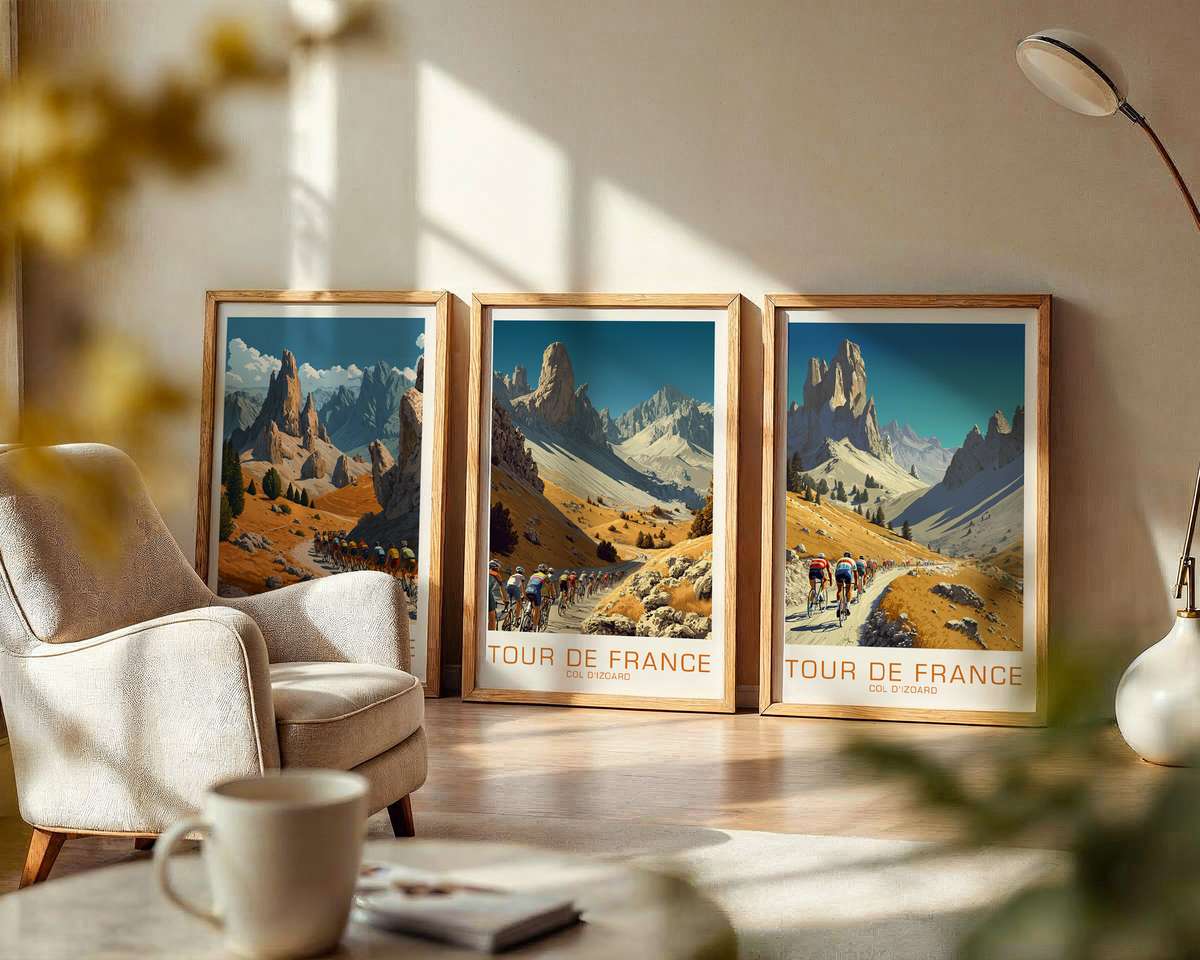
Decoratively, these posters function with subtlety. In a quiet study or a high-ceilinged studio the artwork adds a human axis: a vertical assertion of effort that contrasts with horizontal shelving or soft furnishings. Its presence anchors a room with a narrative of motion—an implied story that asks, quietly, what it takes to keep going. The restrained palette often used in heritage-inspired bicycle posters—muted ochres, deep greys, and single-color accents—lets the body-language read as composition rather than as illustration, lending the piece a premium, contemplative air.
Beyond the purely physical, the rider-as-center image communicates identity. It is less about a specific victory than about temperament: concentration that borders on meditation, pain re-framed as craftsmanship, and a directness of purpose. For viewers, the poster affords projection; you do not need to know the rider’s name to understand the essence of endurance on display. That universality is the visual strength of such works—they invite prolonged looking and personal interpretation without diluting the visual power of a single human figure against a monumental climb.
Seen on a wall, the image becomes an attitude. It asks to be read as an artwork that values process over result, gesture over stat lines. For interior spaces that favour considered objects—private libraries, creative studios, or refined recreation rooms—the poster offers a concentrated narrative of effort and composure, an emblem of human persistence framed in the sharp language of cycling form.