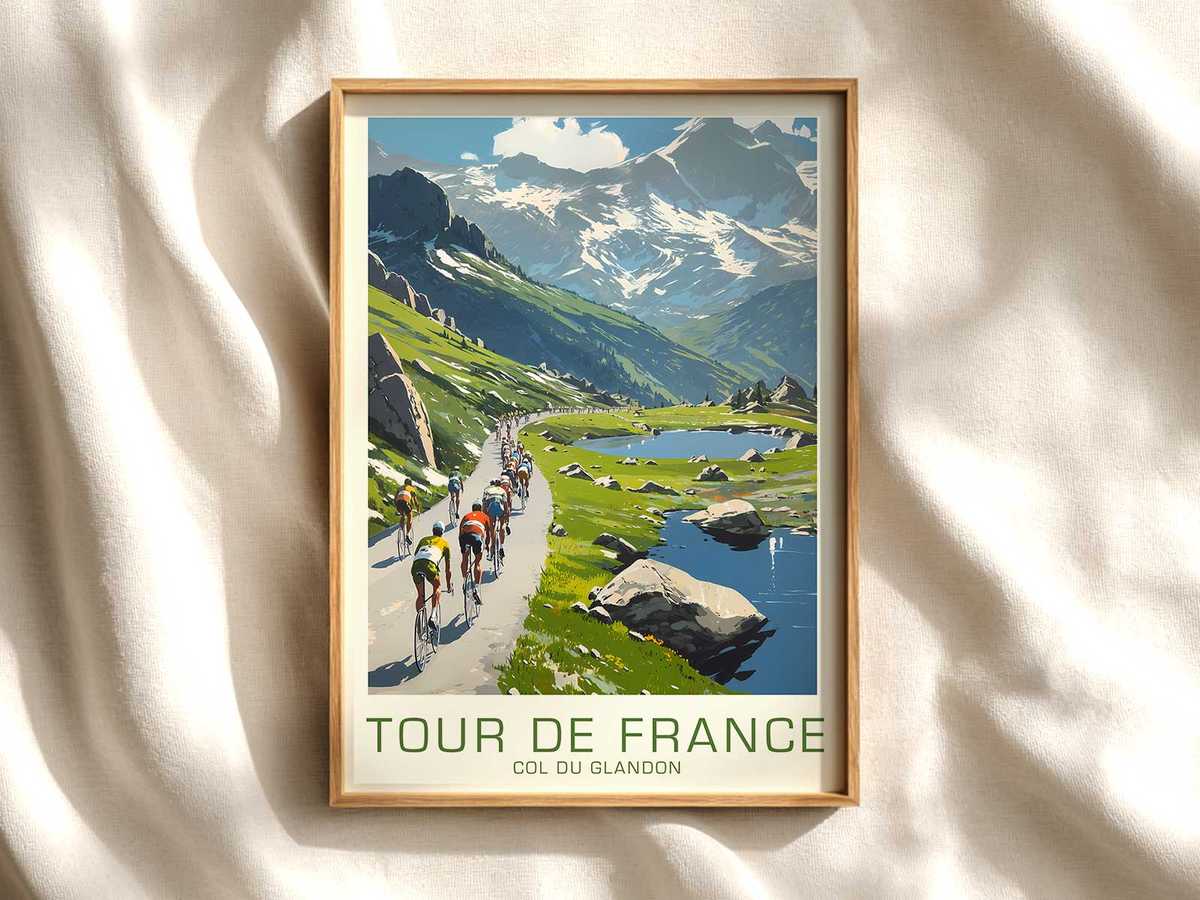
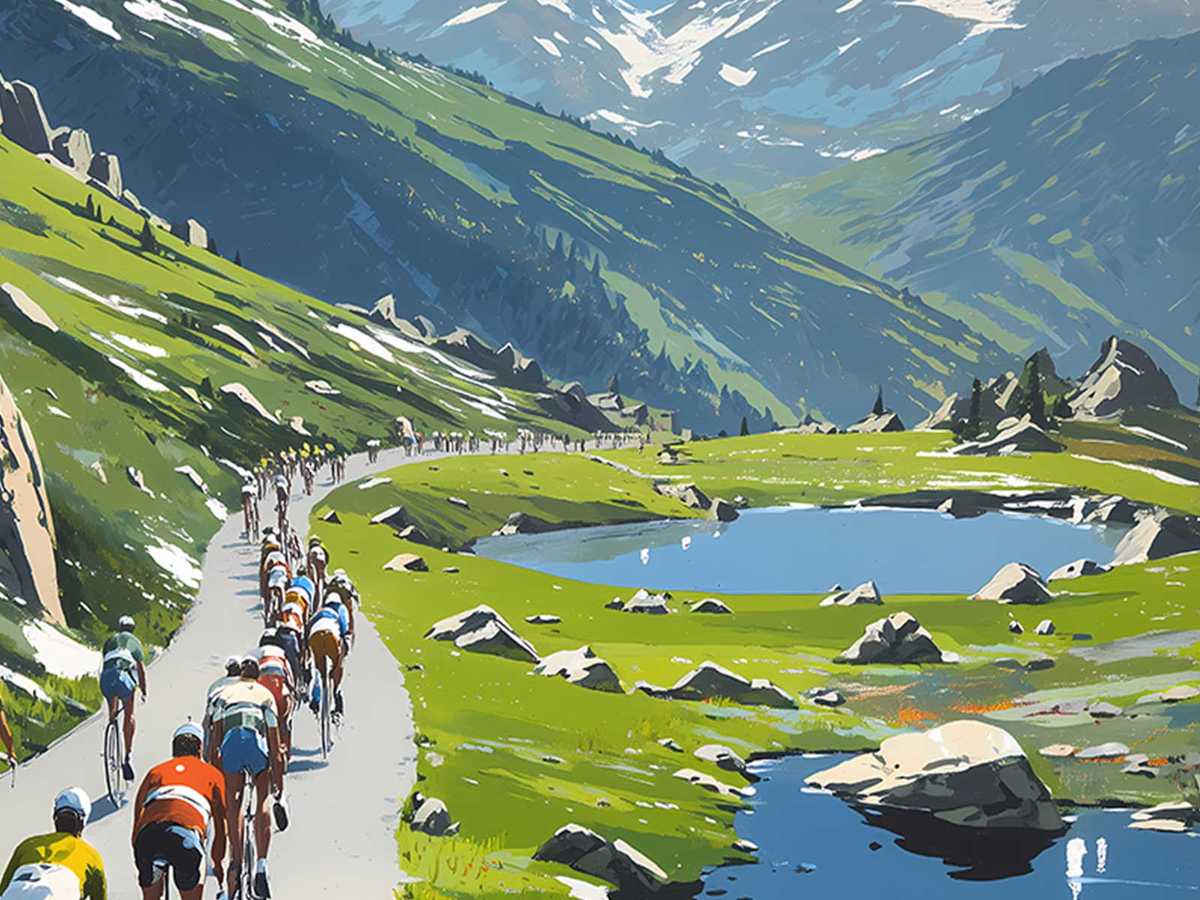
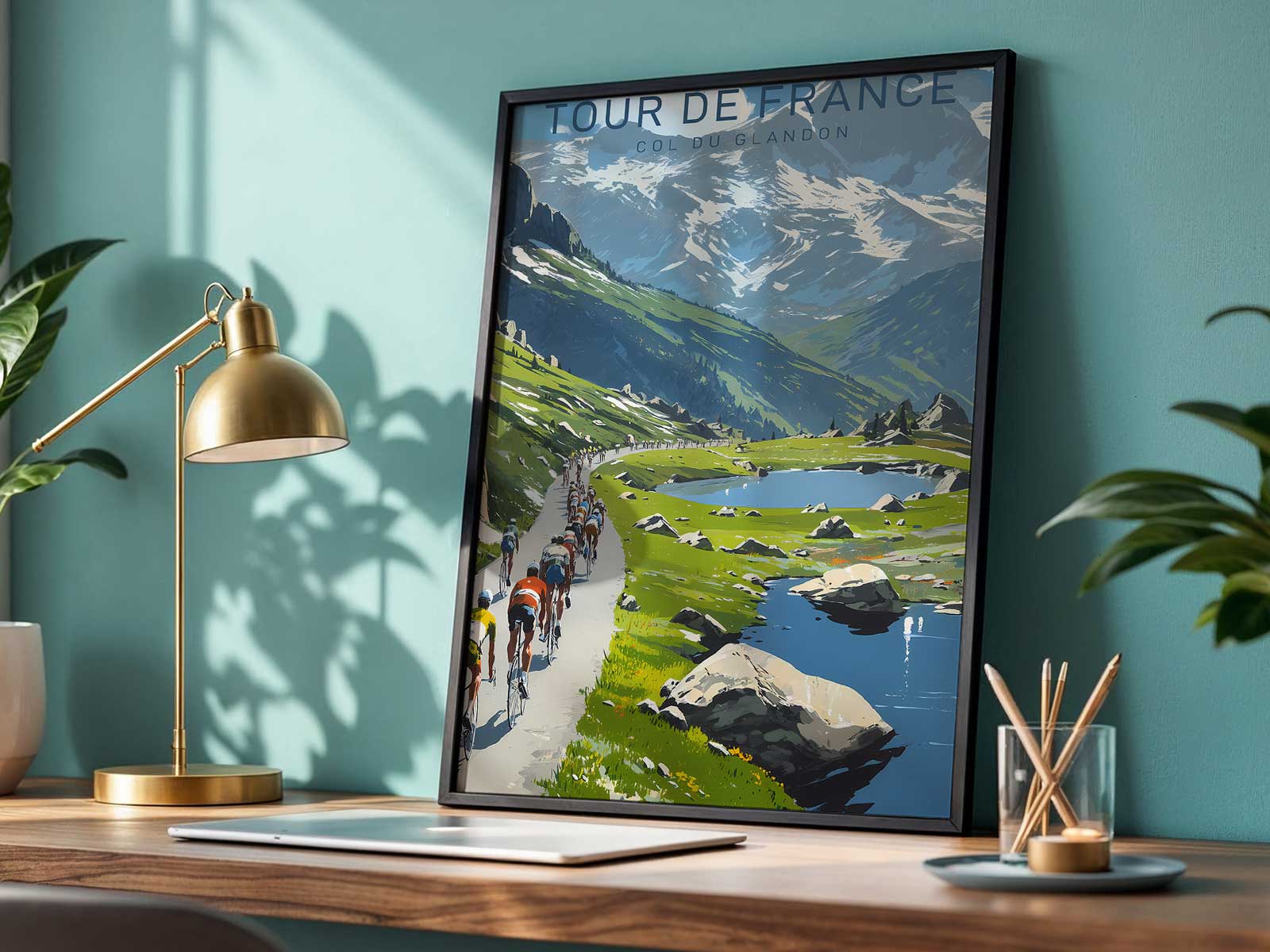
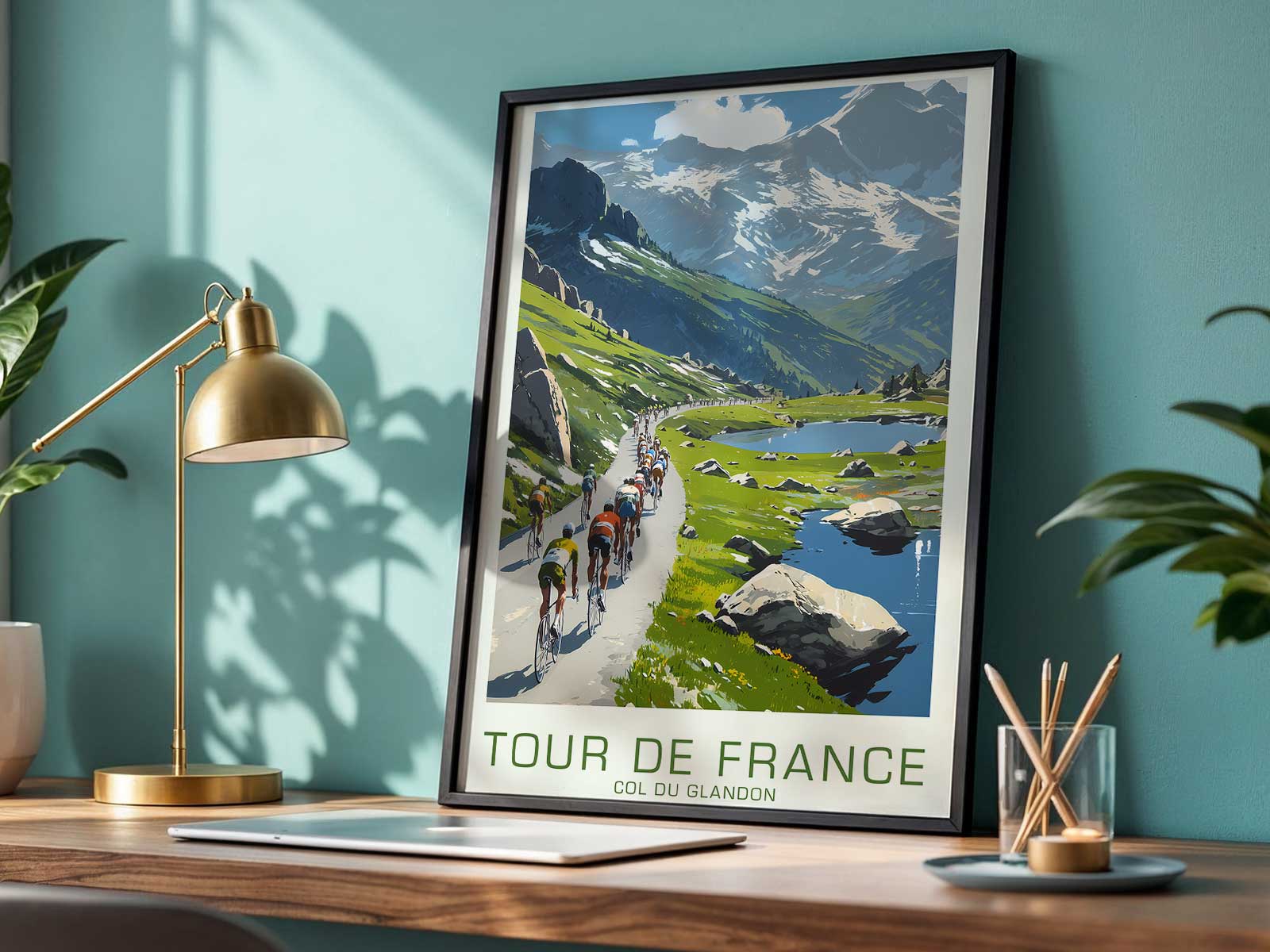
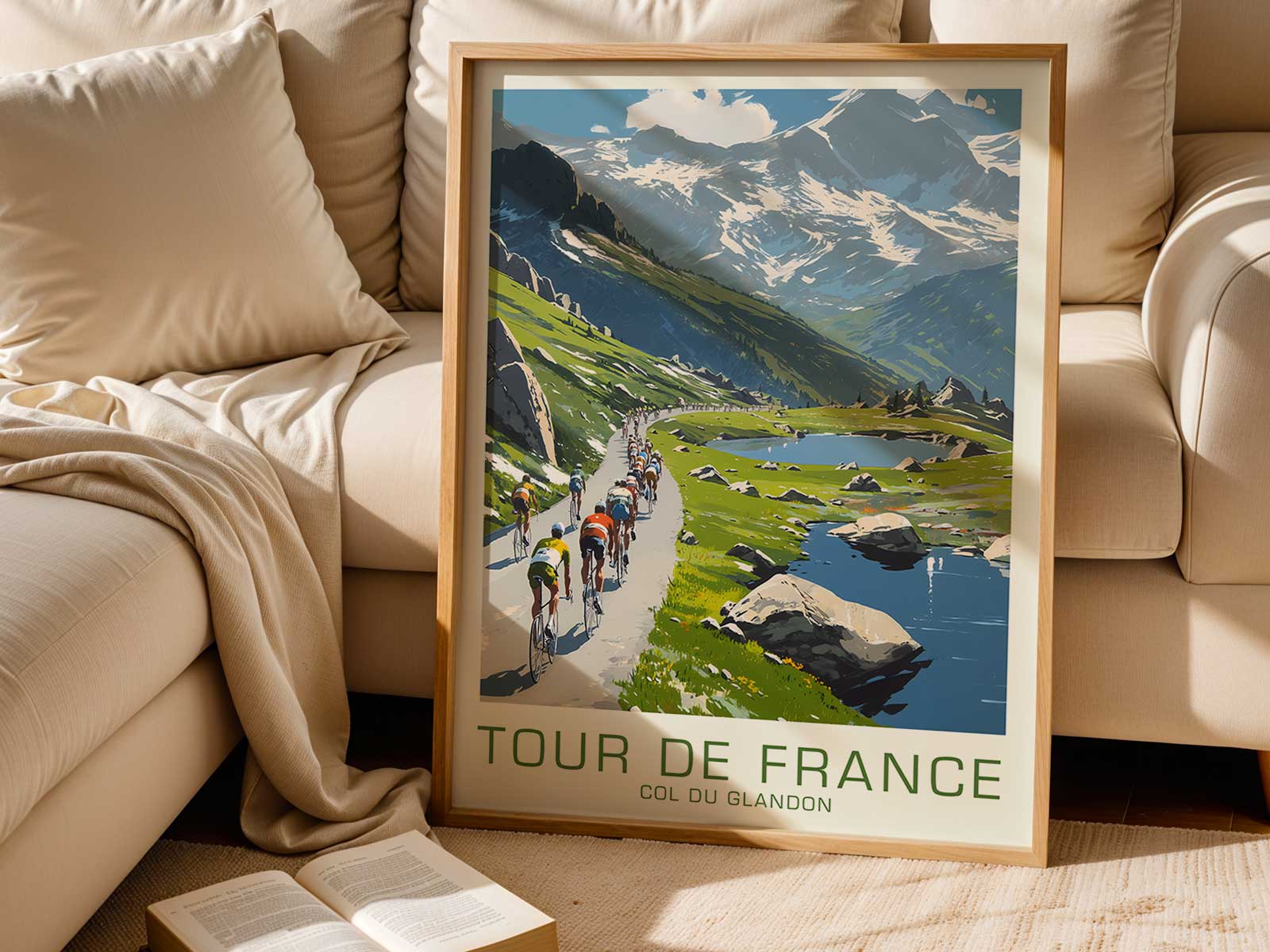
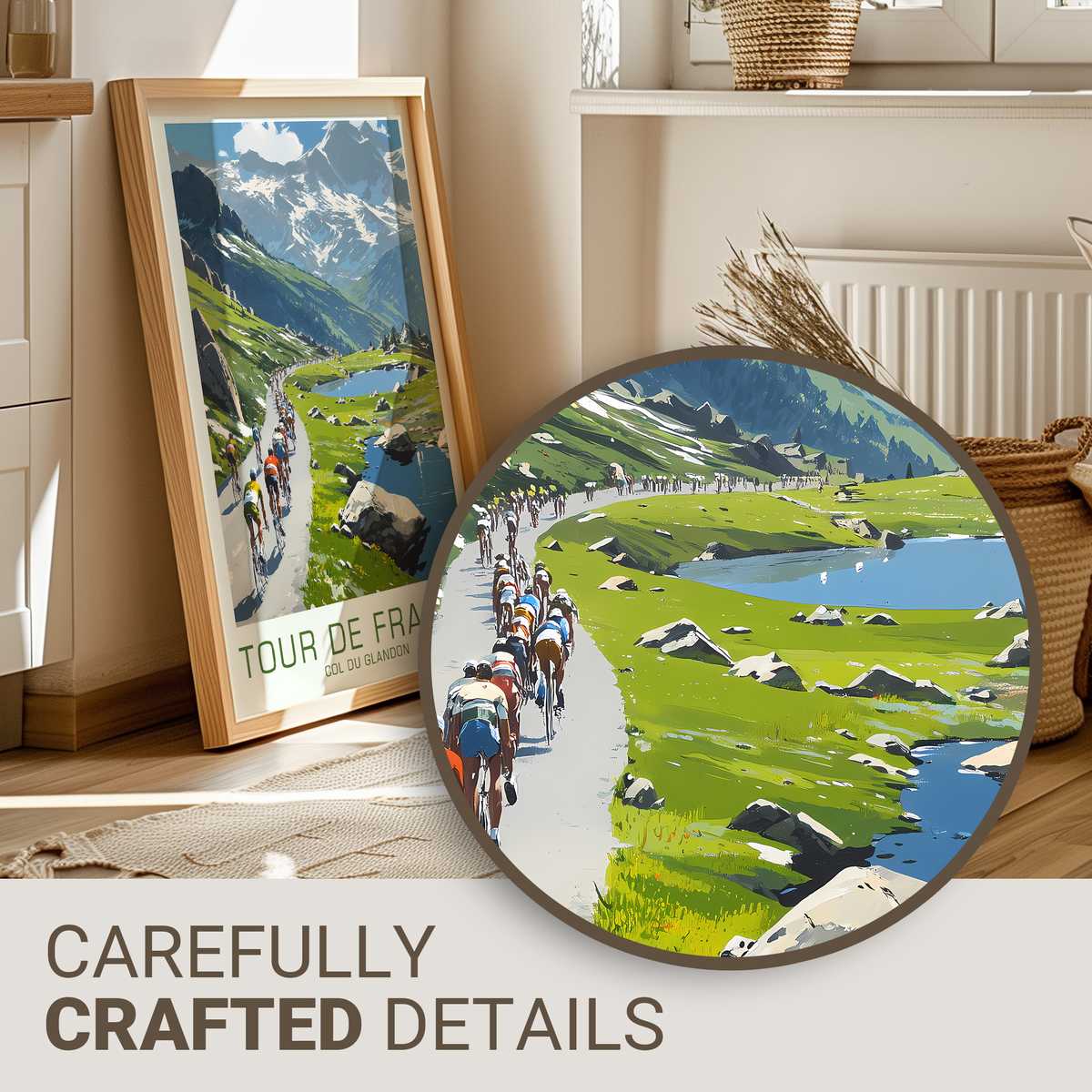
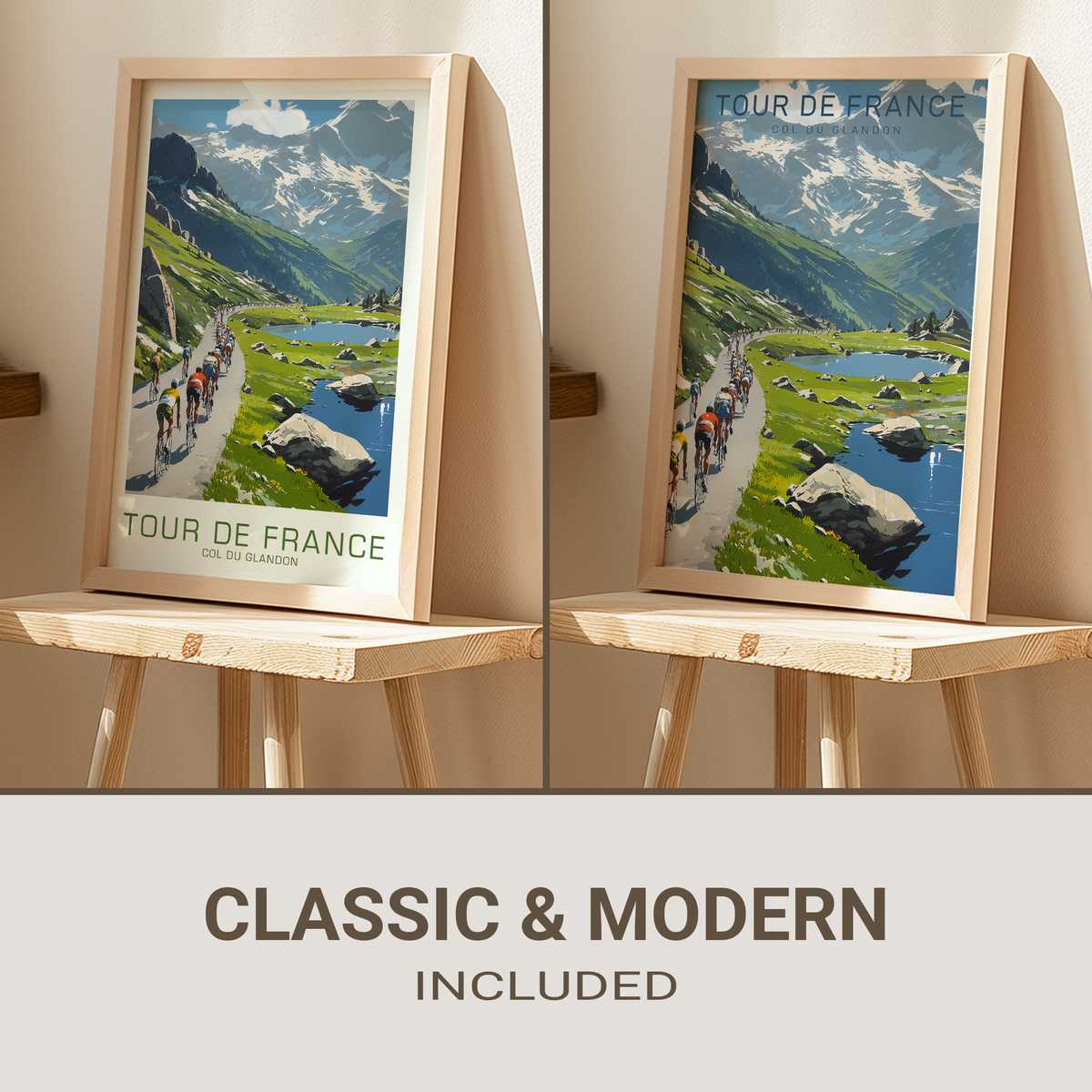
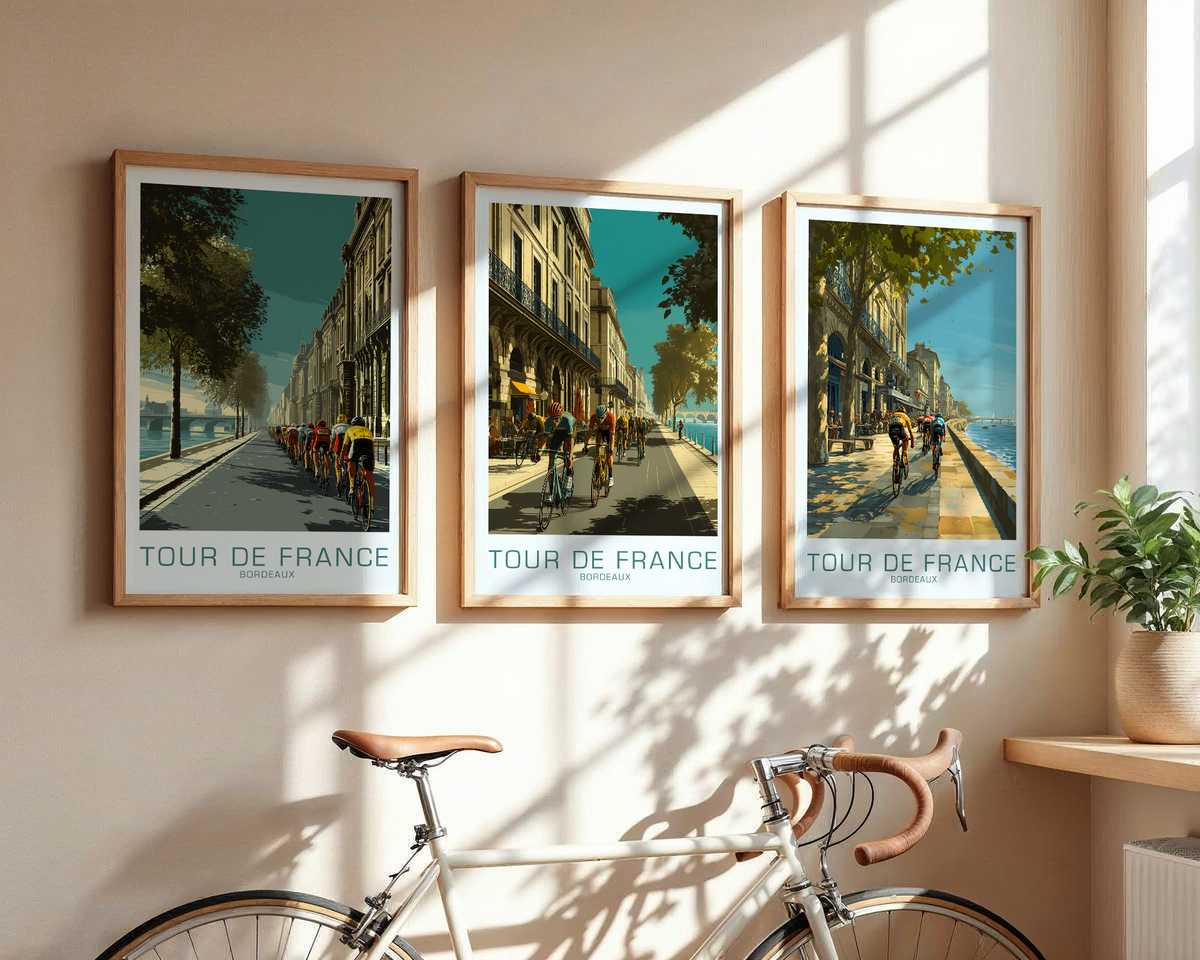
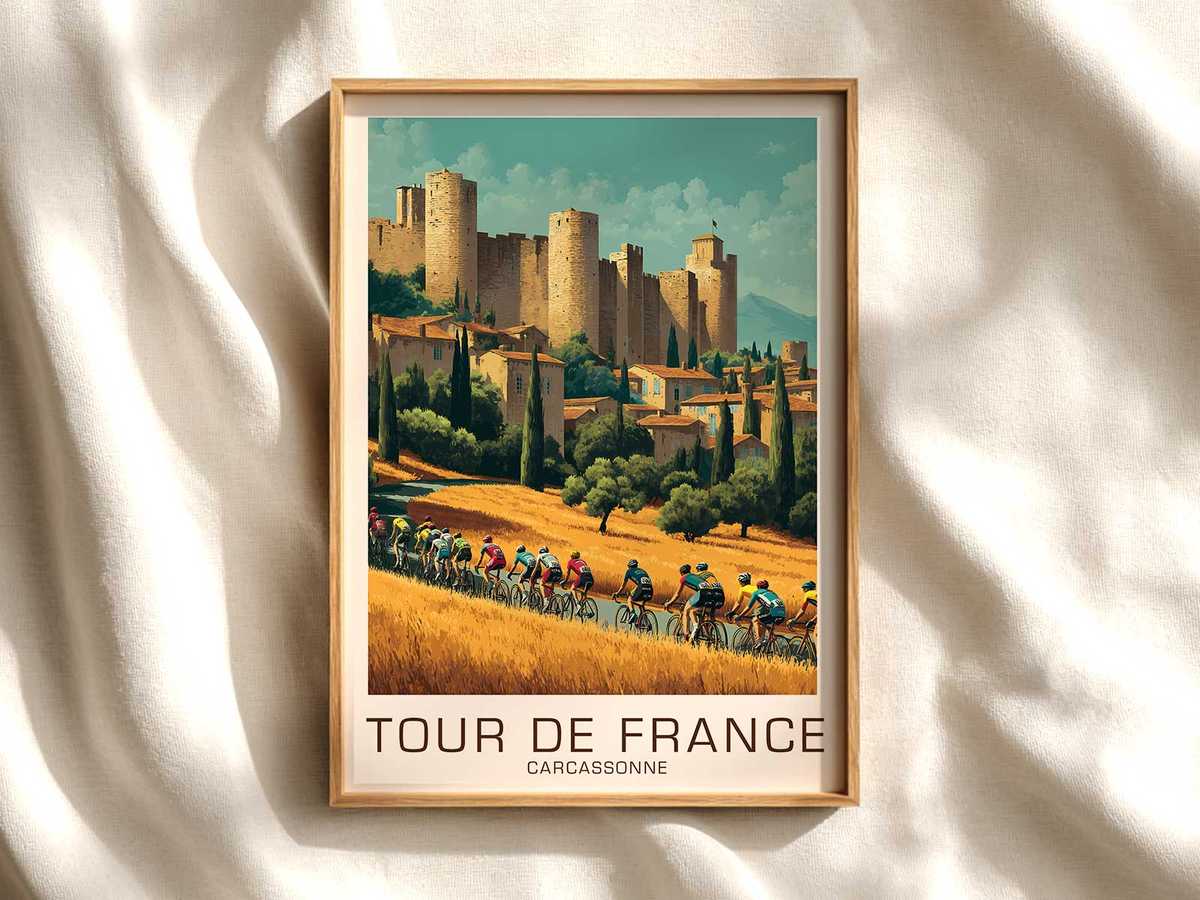
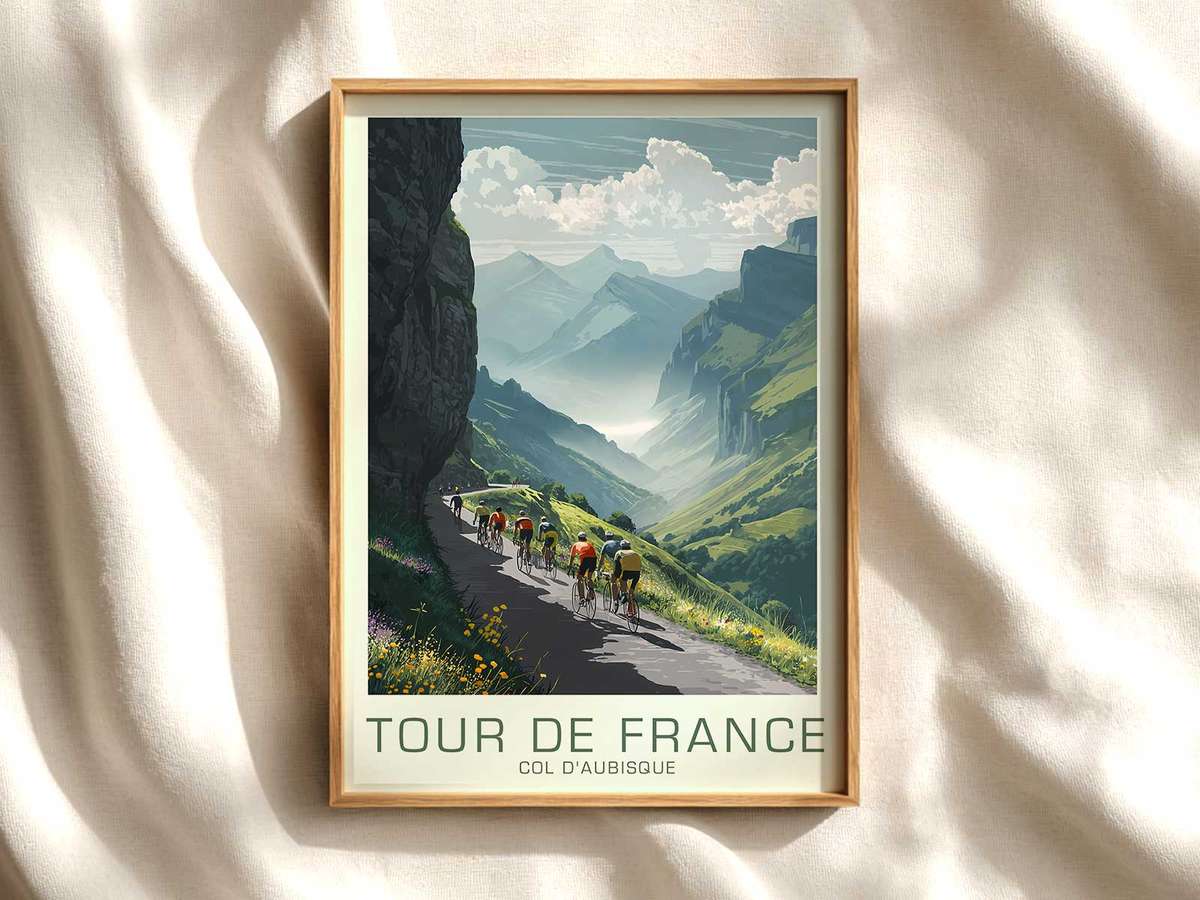
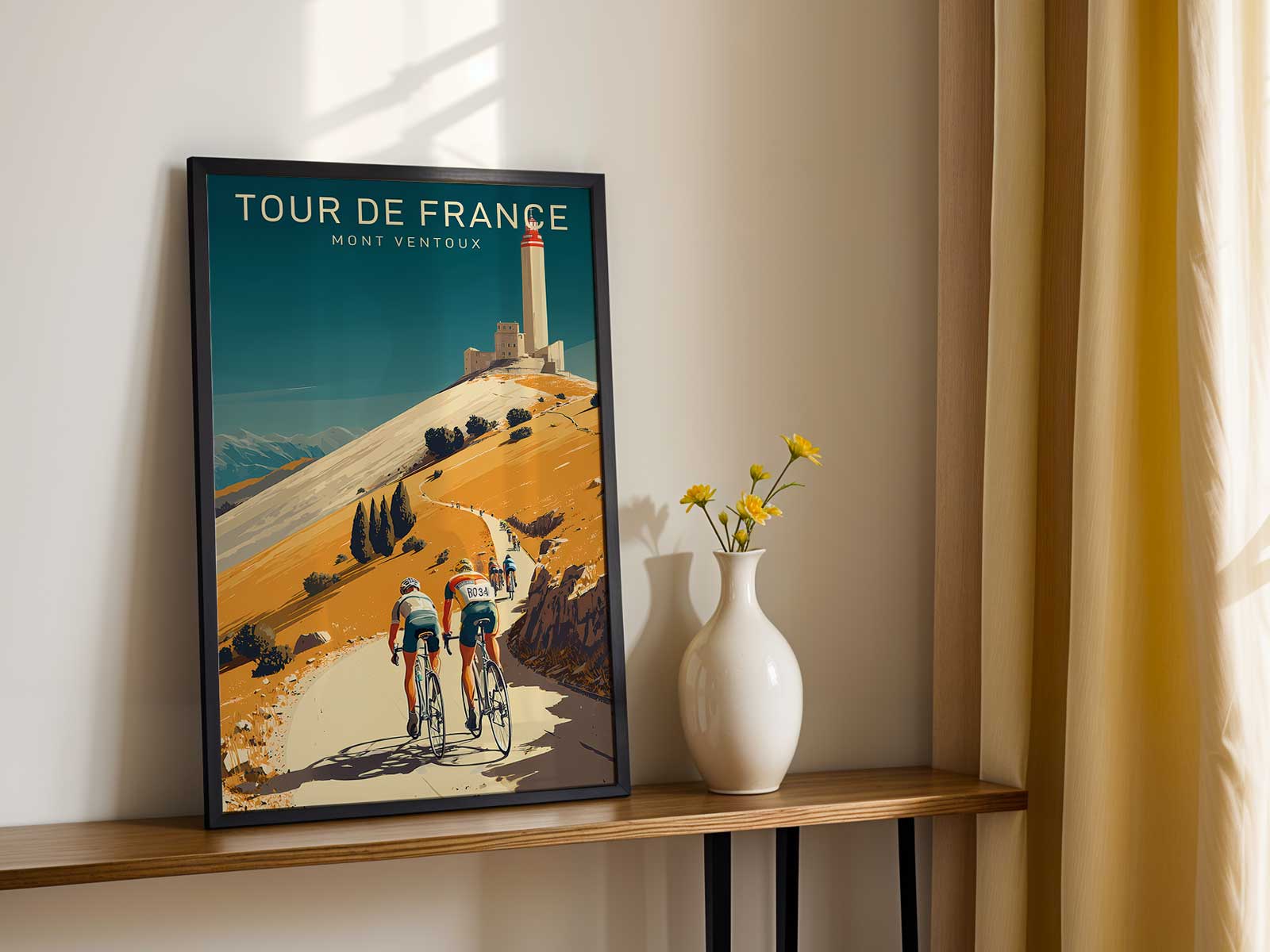
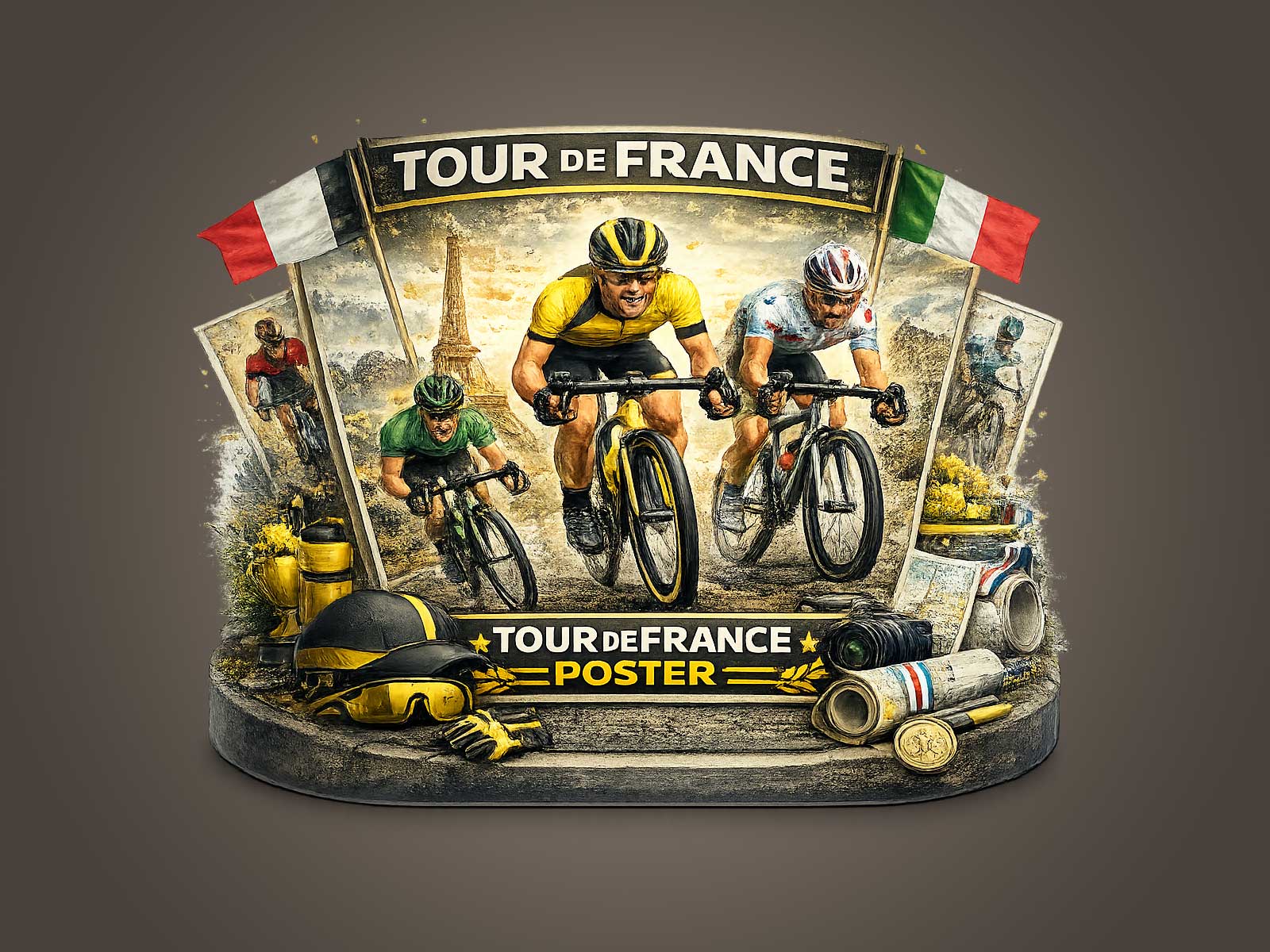
One image can hold the weight of an entire stage when it freezes the exact second a race hangs in the balance. This poster of the Col du Glandon does exactly that: not a landscape study, but a race-instant—muscle, machine and gradient captured where uncertainty and resolve meet. The rider's posture, the road's pitch and the close shadow of rivals together compress minutes of strategy into a single, almost filmic frame.
The strongest implied instant here is a summit attack mid-climb. You see it in the subtle extension of the rider's body, the hands firm on the drops, the cadence caught between a surge and the search for sustainable rhythm. This is neither the clean elegance of a solo time trial nor the explosive chaos of a flat sprint. It is a moment of measured violence: a deliberate increase in power intended to open a gap but delivered with the knowledge that the next corner, the next breath, or the next rival's wheel could undo it.
The Glandon's merciless gradient plays a compositional role as much as a physical one. The road line, rising and curving, pulls the eye upward and implies the altitude yet to be gained. Close proximity of rivals—suggested by blurred silhouettes or a shoulder's width of road—creates instant tactical pressure. In visual terms, that nearness produces depth and narrative: the attacker’s expression (jaw set, neck tendons visible) reads like a short story of fatigue, courage, and calculation. The viewer understands both the risk and the intent without needing scoreboard detail.
[IMAGE_INSERT_ARTICLE_01]
What makes this scene poster-worthy is how it translates kinetic energy into compositional simplicity. Limited palette choices—muted road grey, sun-bleached rock, a flash of team color—focus attention on body language and bicycle geometry. The bike itself becomes a sculptural element: the frame's angle, the rear wheel dug into the road, the chain taut. Those details convey motion even when the photograph is still. A living tension exists between forward propulsion and gravitational pull; between human will and mountainous resistance.
Emotion in a race moment like this is complex. It is not merely triumph or suffering; it is a mixture of calculation and leaving something of oneself on the road. The poster invites projection: the viewer imagines the next pedal stroke, the decision to follow or to let go, the small margins that define careers. That psychological charge is what elevates the image from cycling memorabilia to evocative wall art. It speaks to anyone who has faced a steep hour—athlete or office-worker, reader or designer—and felt the precise mixture of dread and resolve that precedes a decisive move.
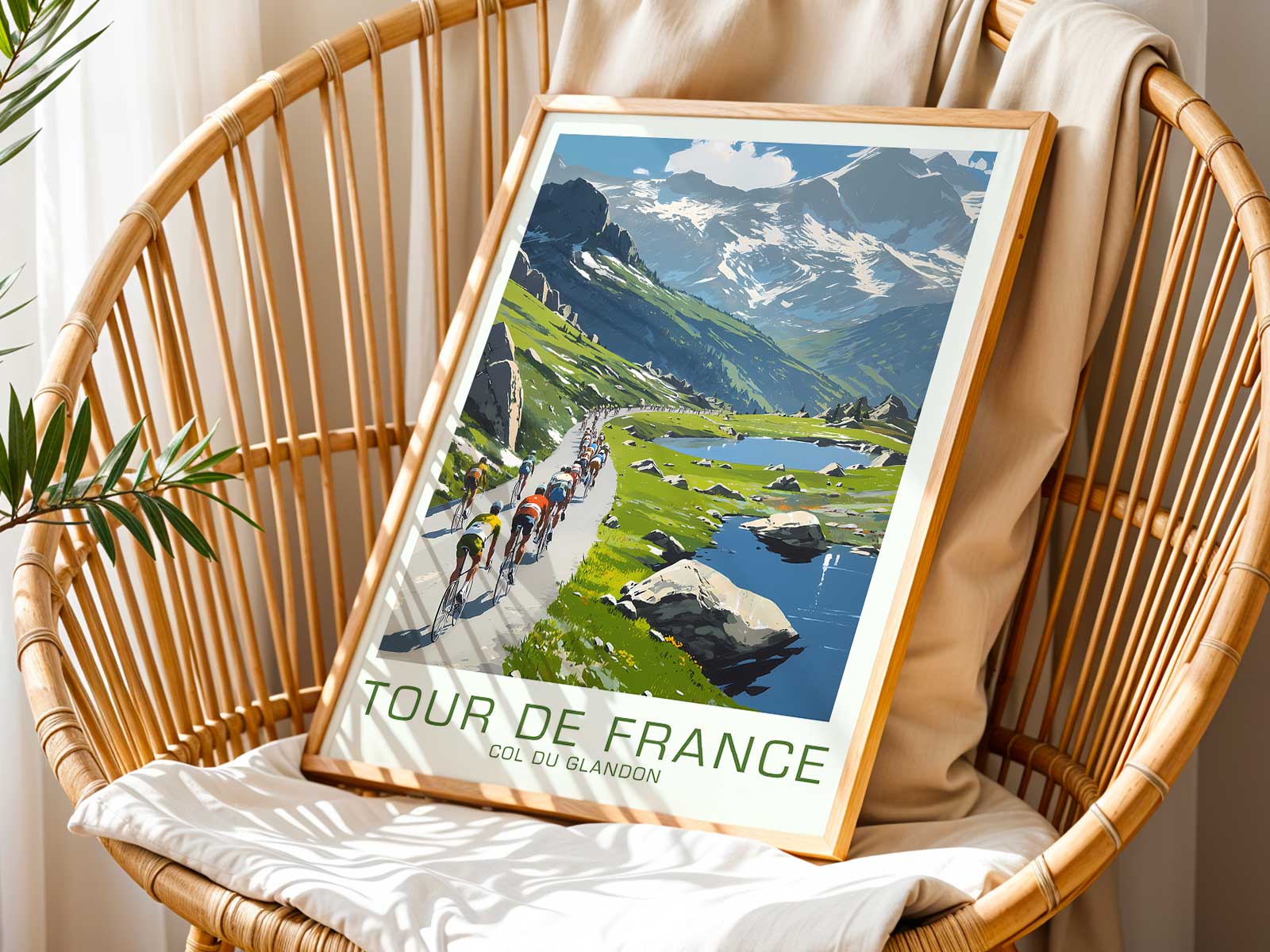
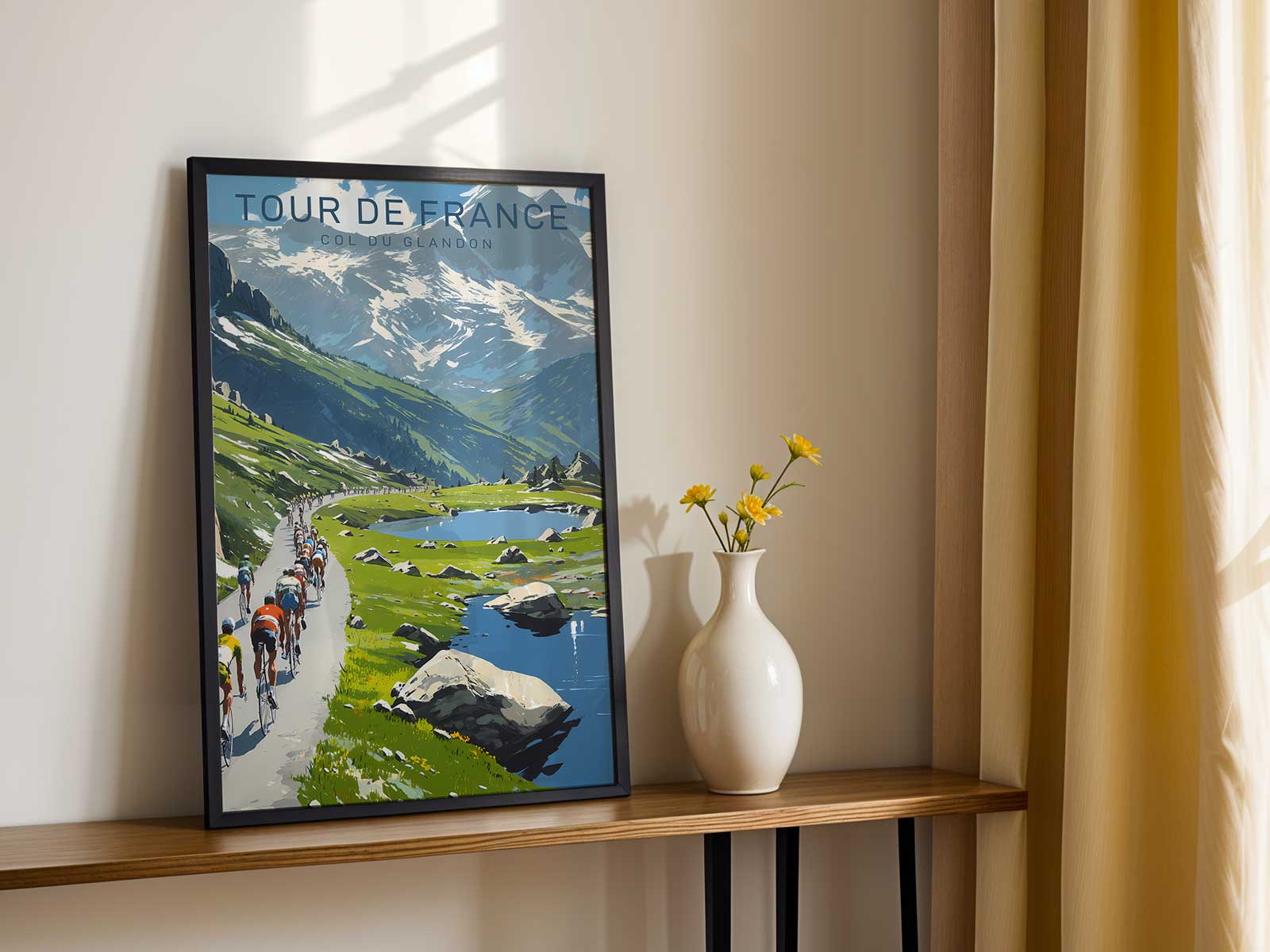
Placed above a study desk, in a living room alcove or a compact training space, this Glandon poster changes atmosphere by offering a quiet, sustained drama. It refuses to be mere decoration because it insists on narrative: a beginning, a point of conflict, an unresolved outcome. The restraint in color and composition makes it compatible with refined interiors, while the story it contains rewards prolonged viewing. It becomes a focal point that does not shout but lingers, prompting conversations about risk, timing and endurance.
Why does such a single second work so well on a wall? Because racing is episodic and the most telling episodes are short. A well-timed attack, a near-miss on a steep pitch, a moment when riders are shoulder-to-shoulder—these compress entire strategies into an instant. The poster of the Col du Glandon gives that instant room to breathe: the eye can trace the line of the climb, the posture of the rider, the implied chase behind. Each observer will map their own narrative onto those signs, and that personal engagement is the measure of its appeal.
In short, this image is powerful not by virtue of being loud but because it makes a single moment rich with context. It honours endurance and decision-making, and does so with visual restraint. For anyone choosing wall art that values narrative intensity over decorative noise, a race-instant from the Glandon offers a compact, cinematic drama that rewards return looks and quiet reflection.