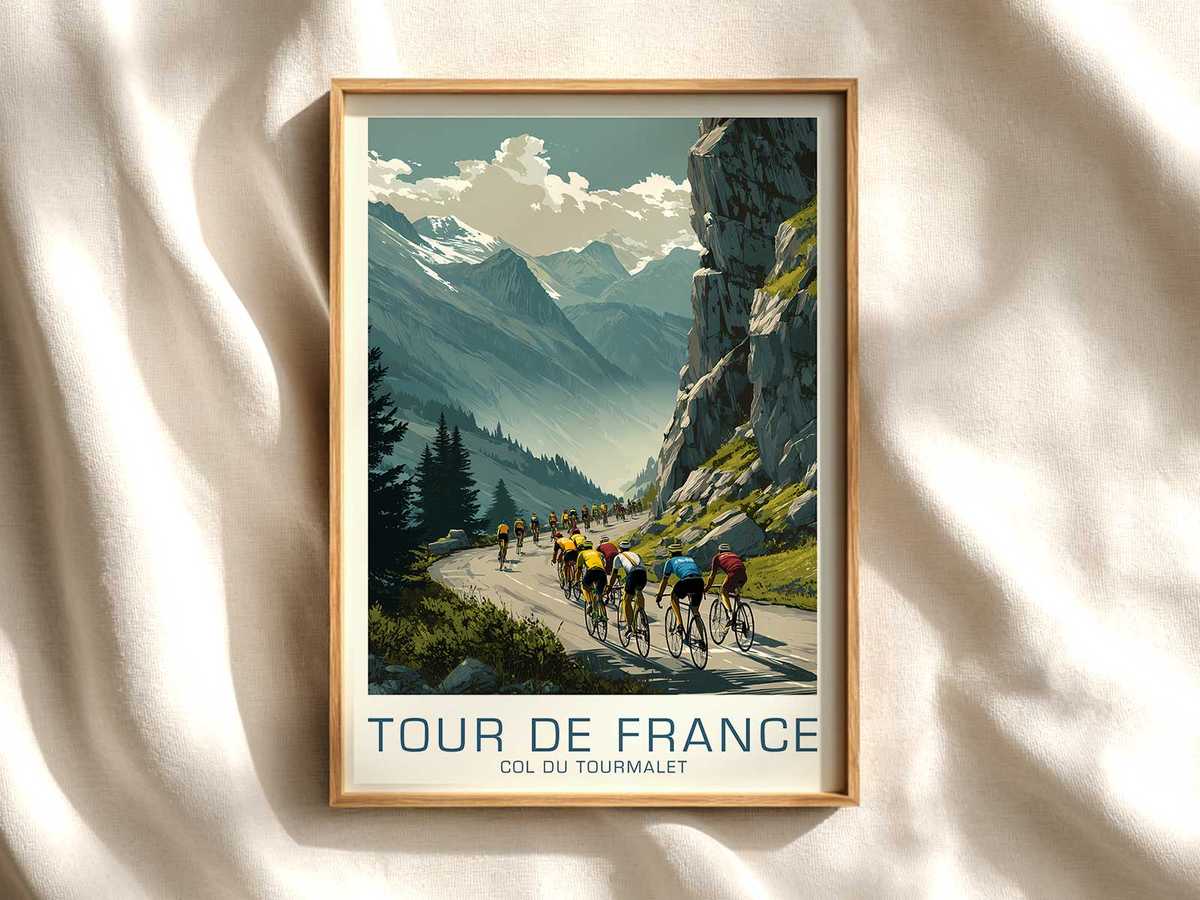
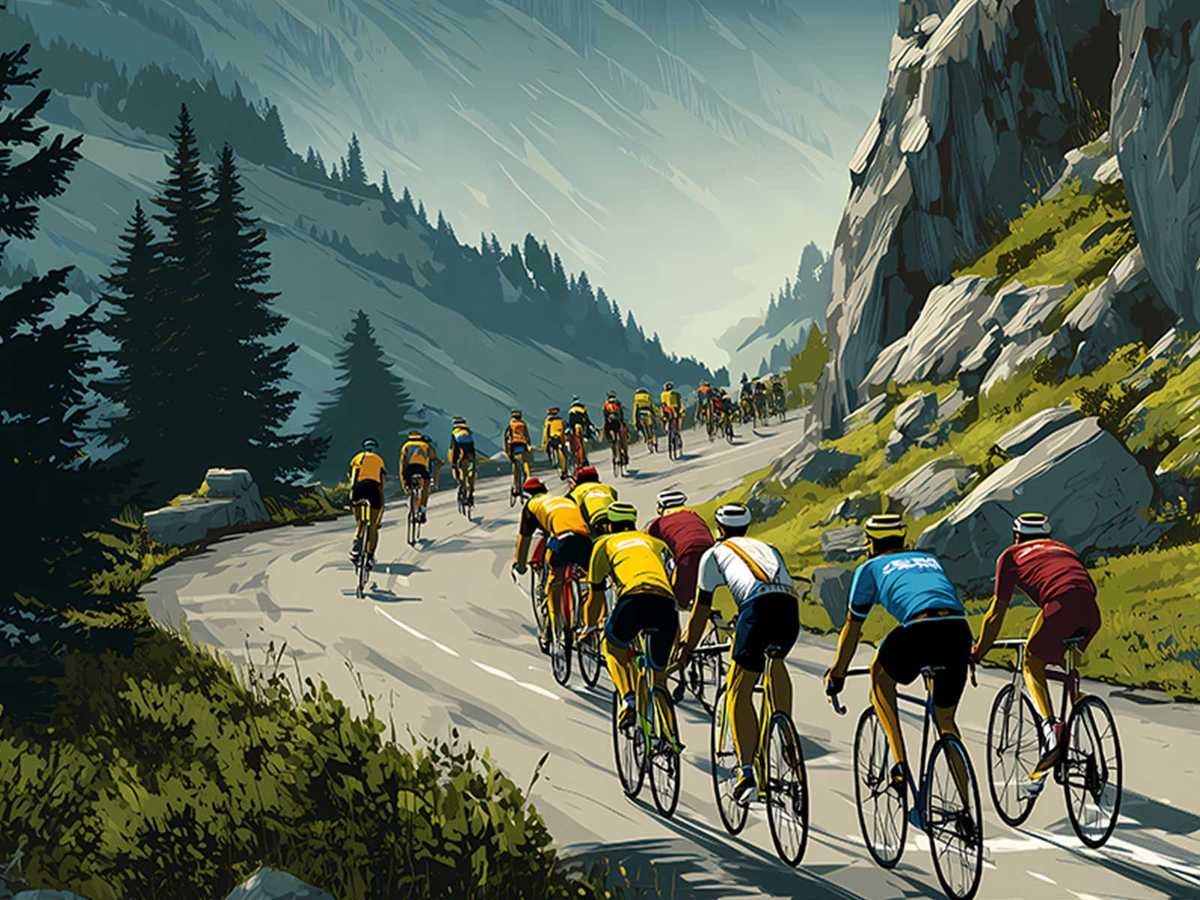
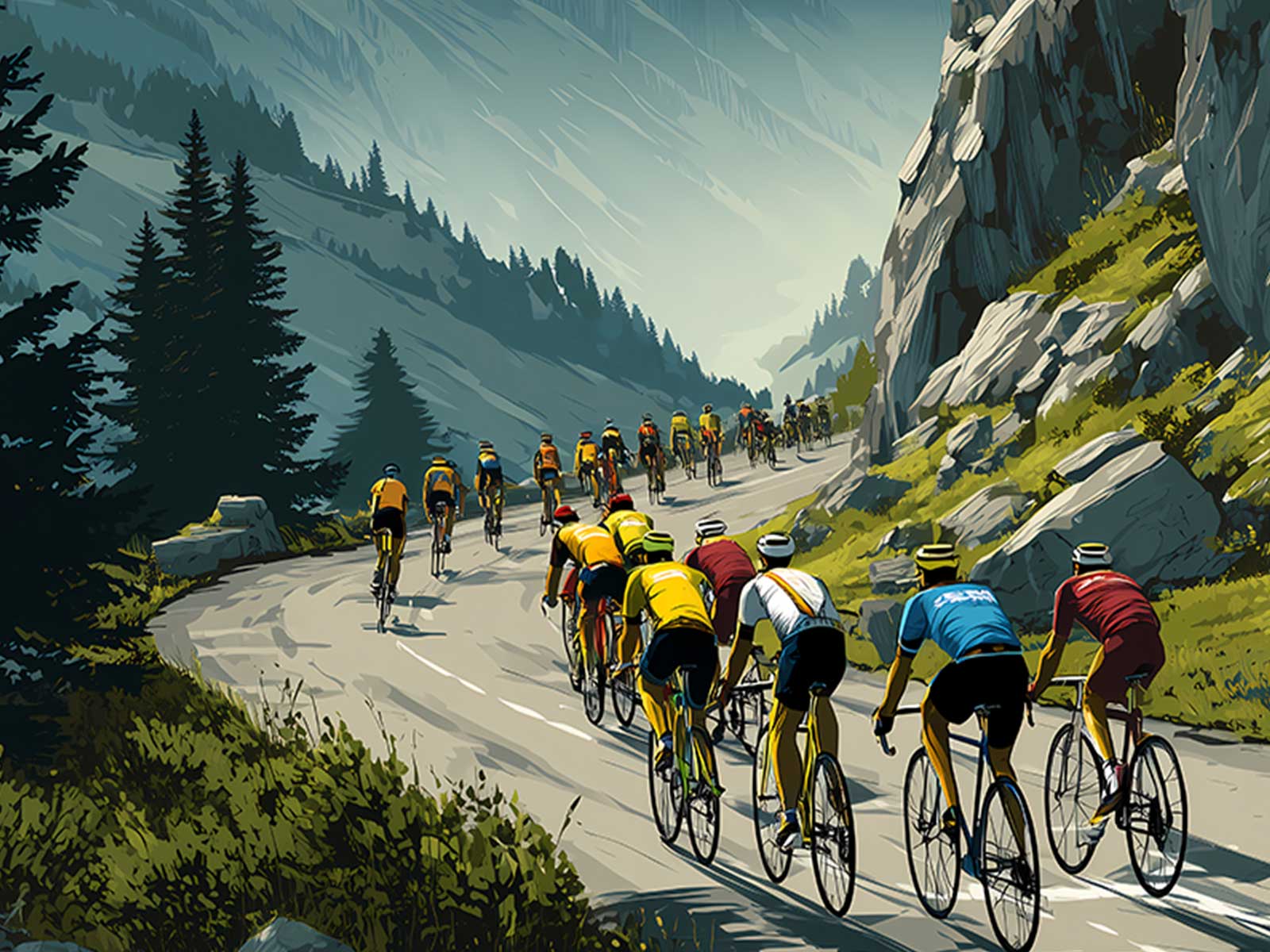
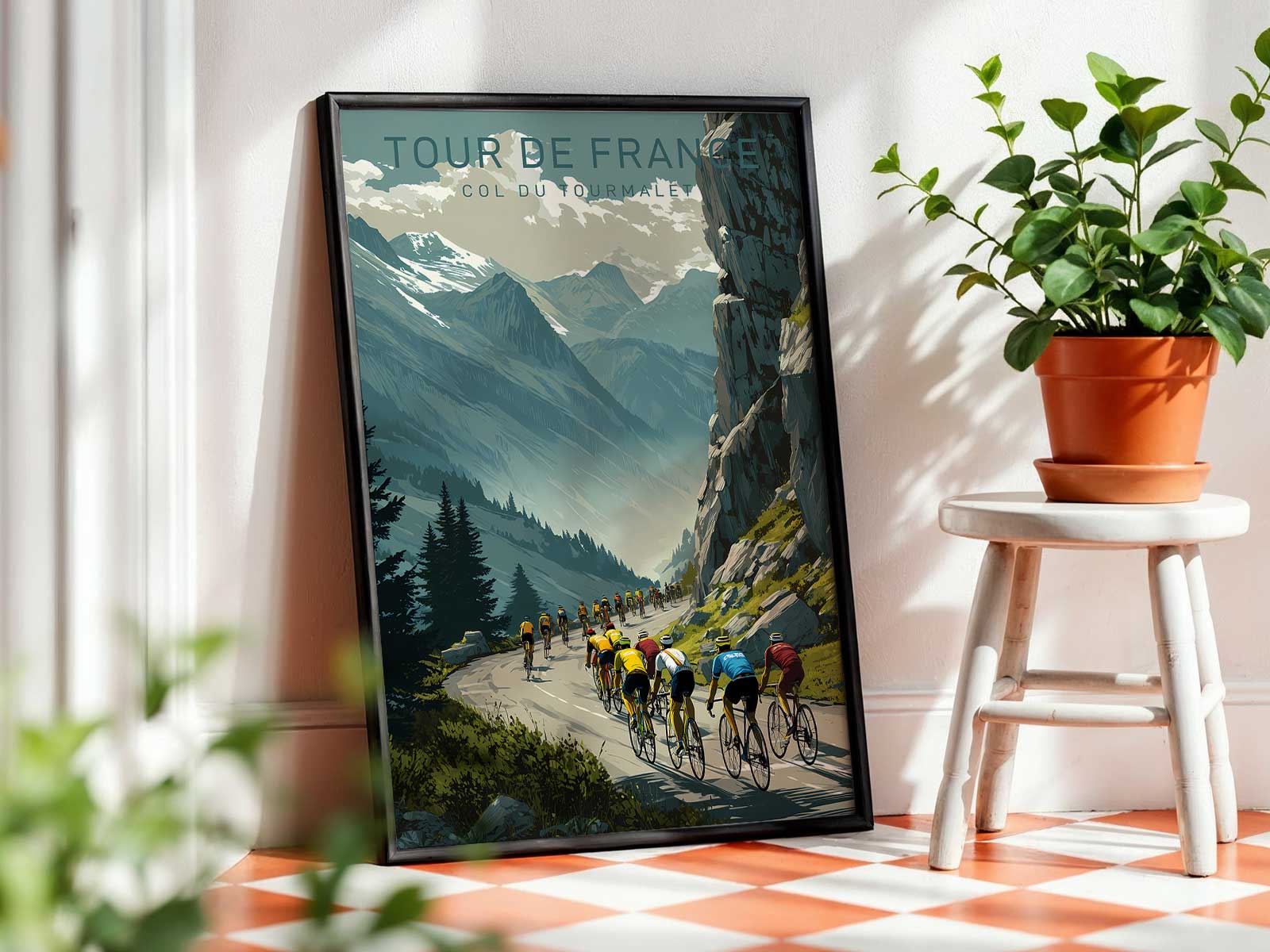
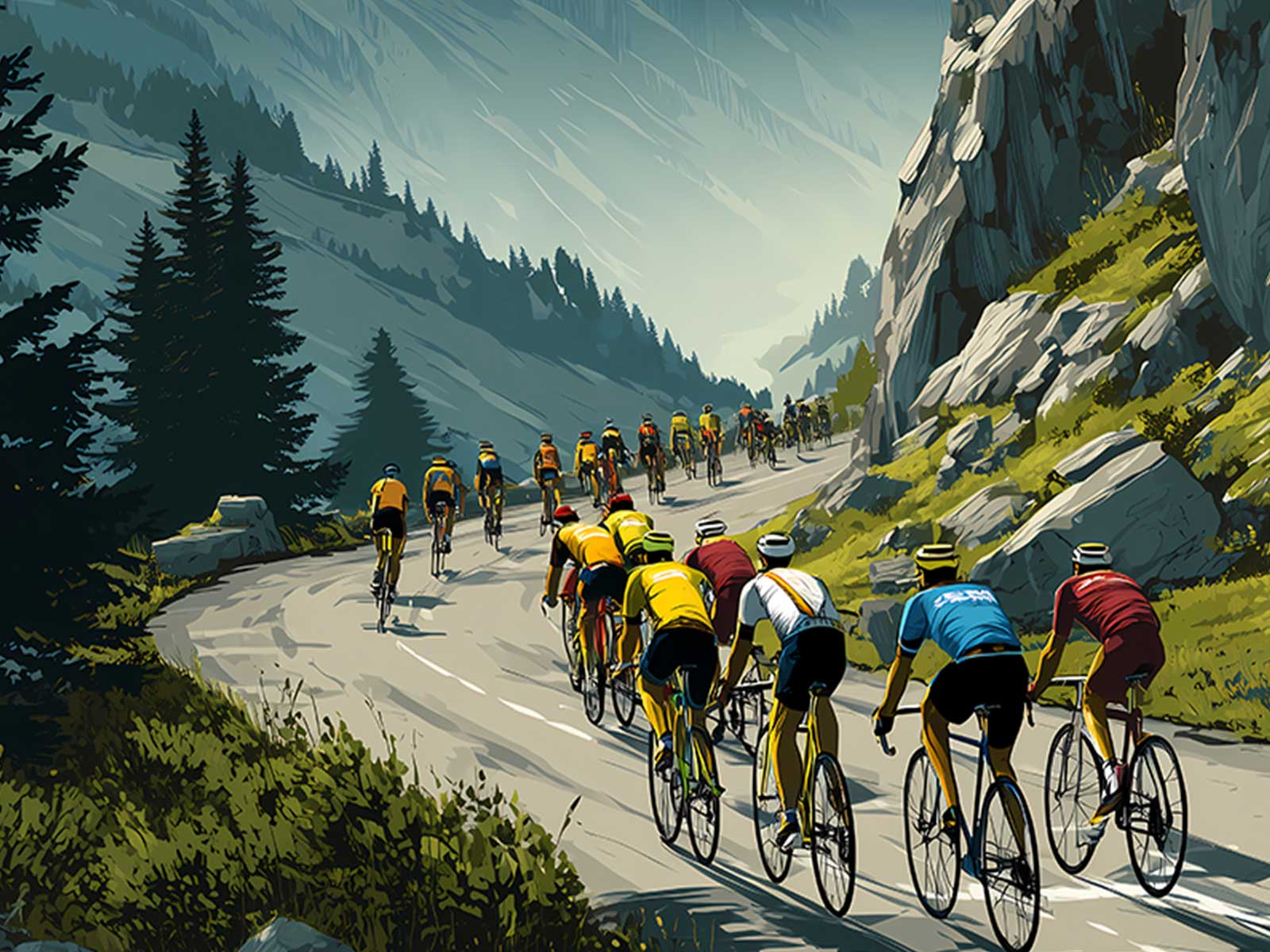
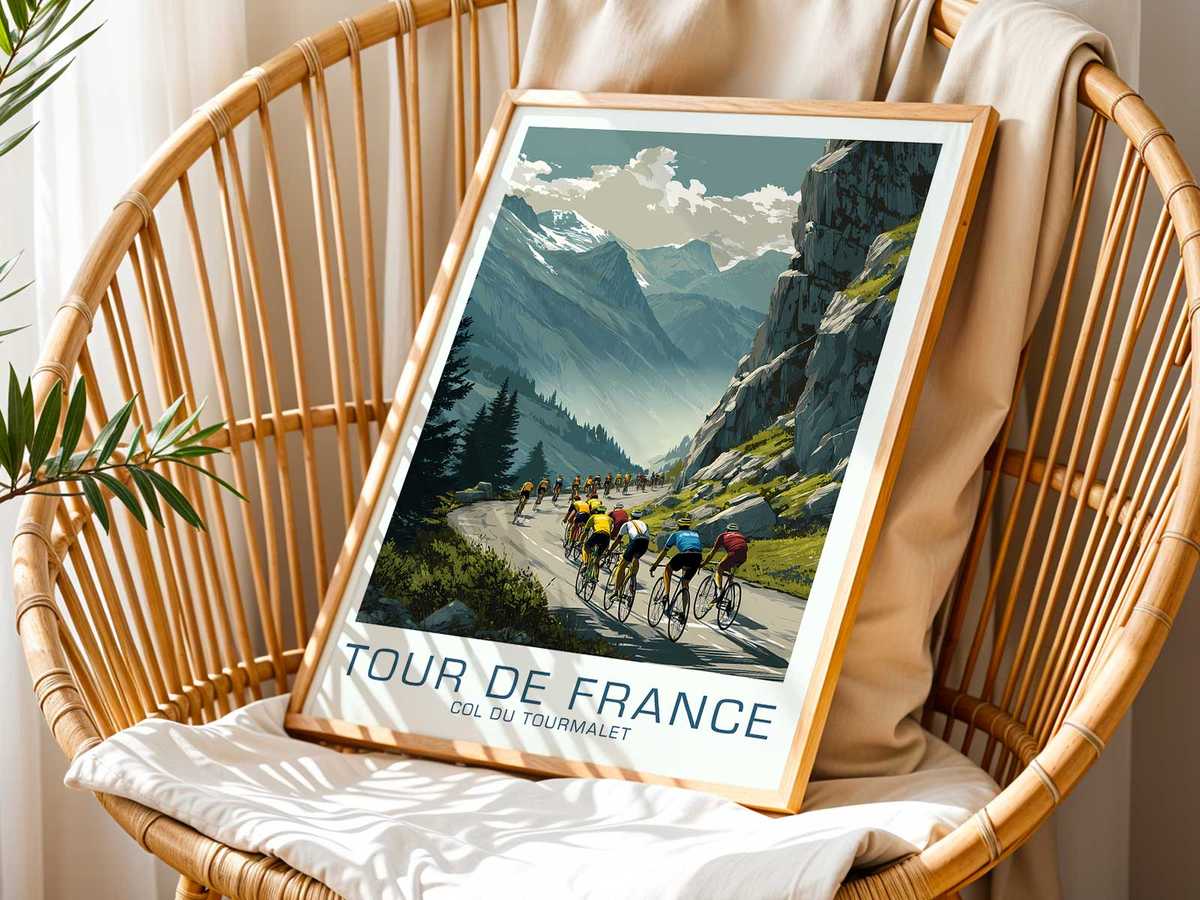
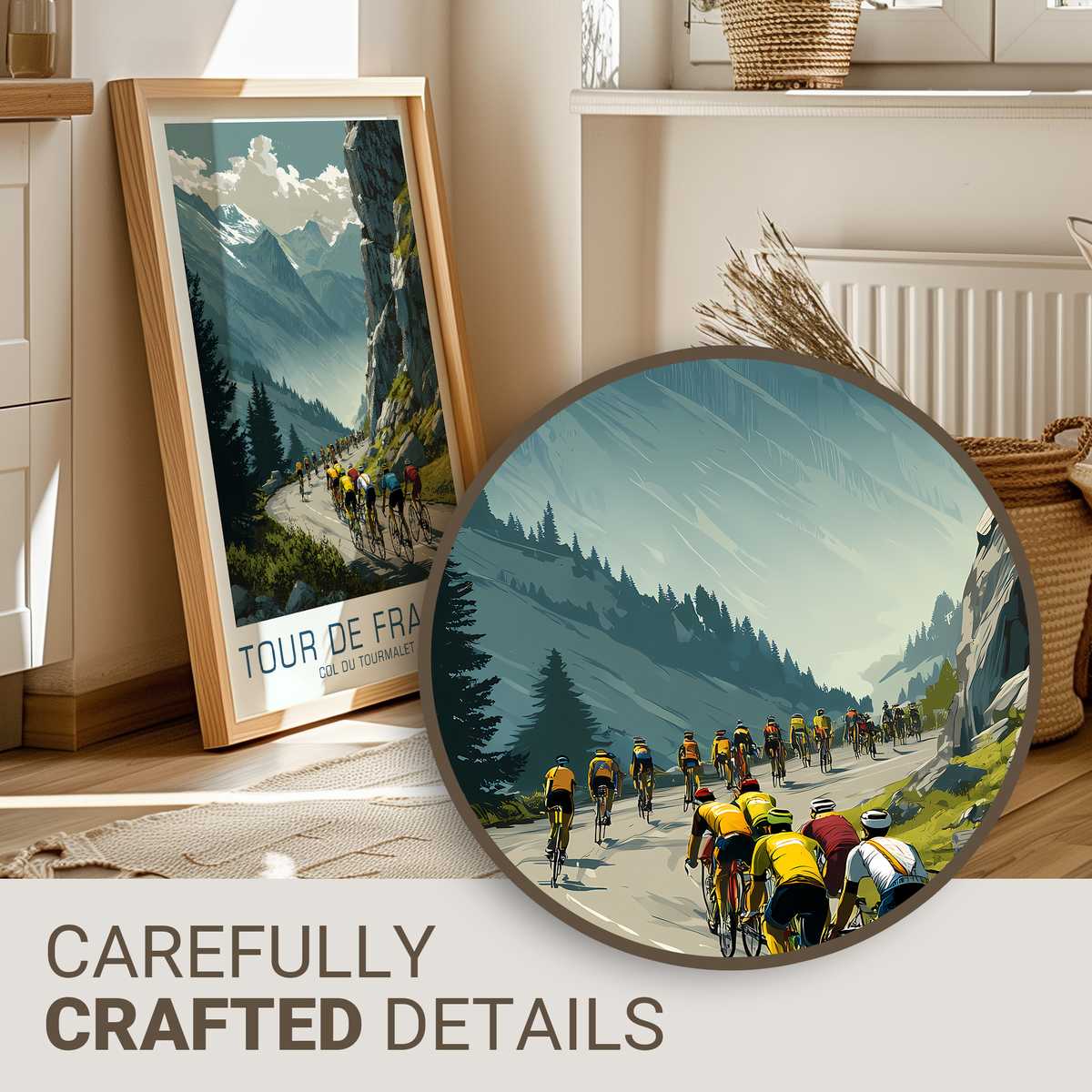
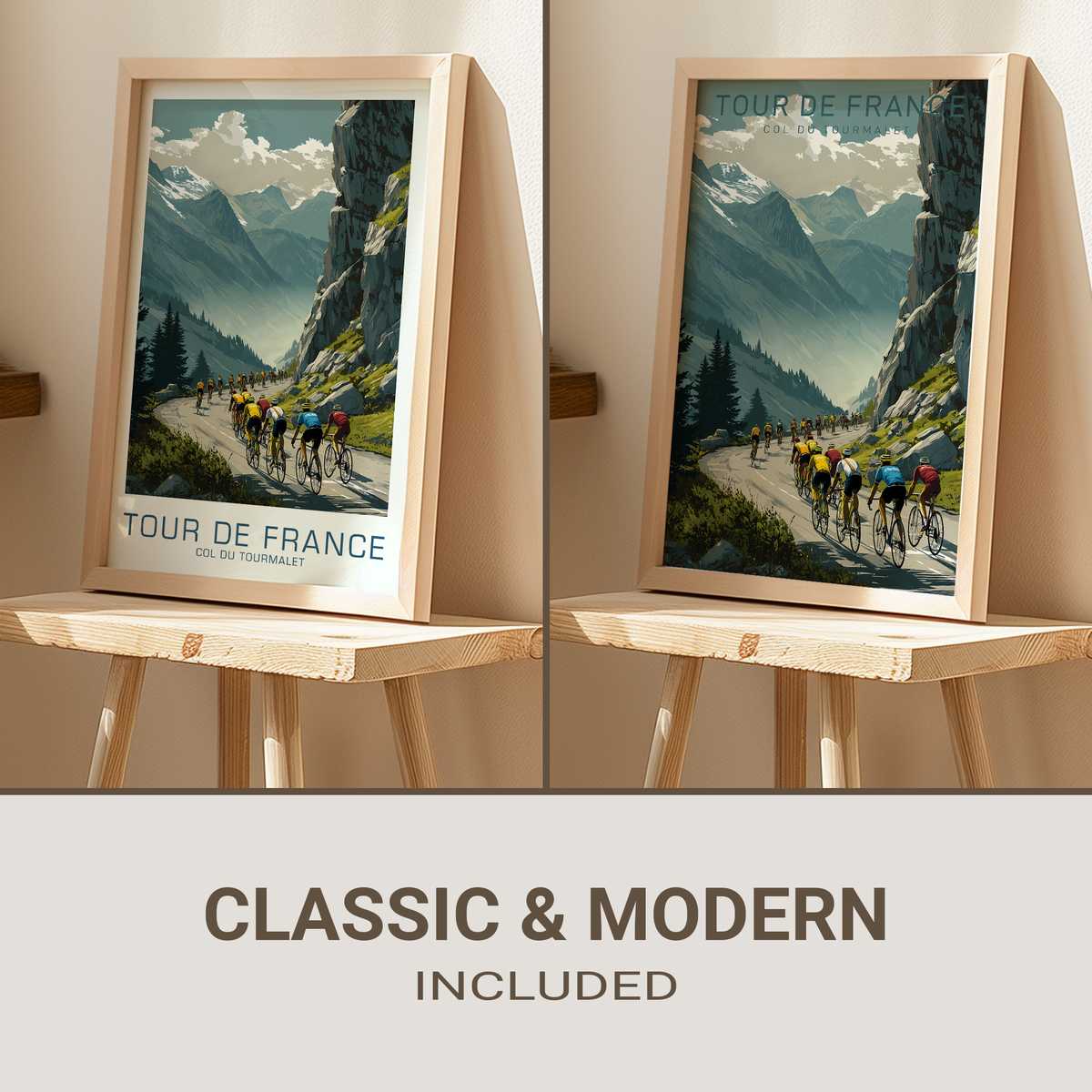
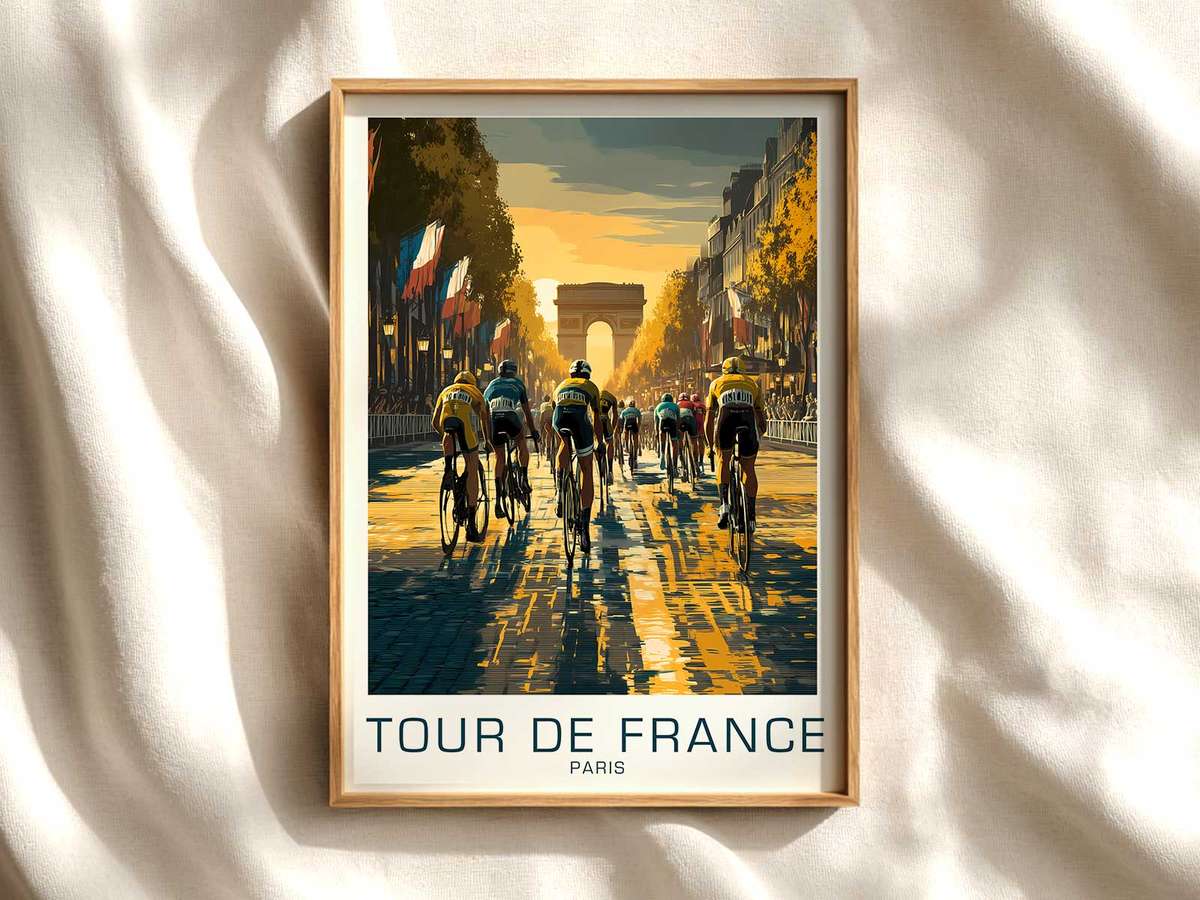
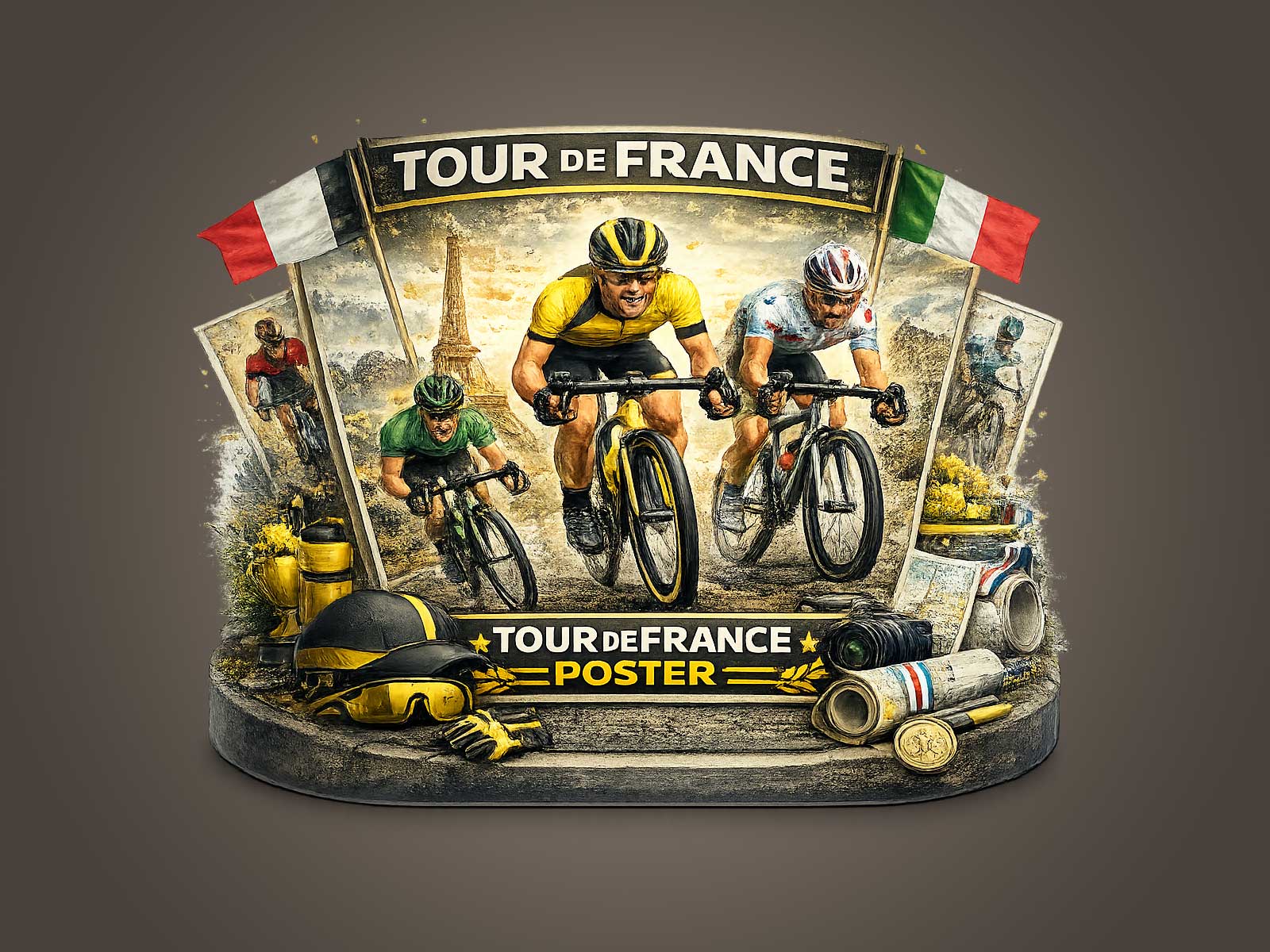
A poster that centers on the Col du Tourmalet does more than show a mountain—it stages a single body in relationship to incline, tarmac and sky. The artwork makes the cyclist the visual and emotional axis: a study in posture, cadence and composure that reads as endurance rather than victory. Rather than narrating placings or results, the image privileges gesture—the lean of shoulders, the angle of elbows, the curve of a back—and lets the spectator understand the climb through the rider’s physical economy.
Seen at a glance, the rider’s silhouette organizes the composition. A bent head, a square jawline, a compact torso and deliberate hand placement on the drops or hoods communicate the work being done. On steep gradients the cyclist often tucks forward, hips pivoting over the saddle while the legs remain metronomic; that regulated violence—power hidden inside rhythm—becomes the poster’s central motif. The eye is drawn not by logos or crowds but by the tension in muscles, the compression of a sprinting frame or the patient torque of a seated climber.
Concentration is visible in small, repeatable signs: a fixed gaze along the road, wrists aligned with forearms, shoulders that neither shrug nor collapse. Fatigue is present but mastered—rolled breath implied by an open collar, a jaw set against pain, a cadence that flutters at the limit. These are subtle cues an artist uses to convert suffering into dignity. The result is a depiction of endurance as a composed act; the athlete is not merely exhausted but intentionally controlled, negotiating each pedal stroke with tactical calm.
[IMAGE_INSERT_ARTICLE_01]
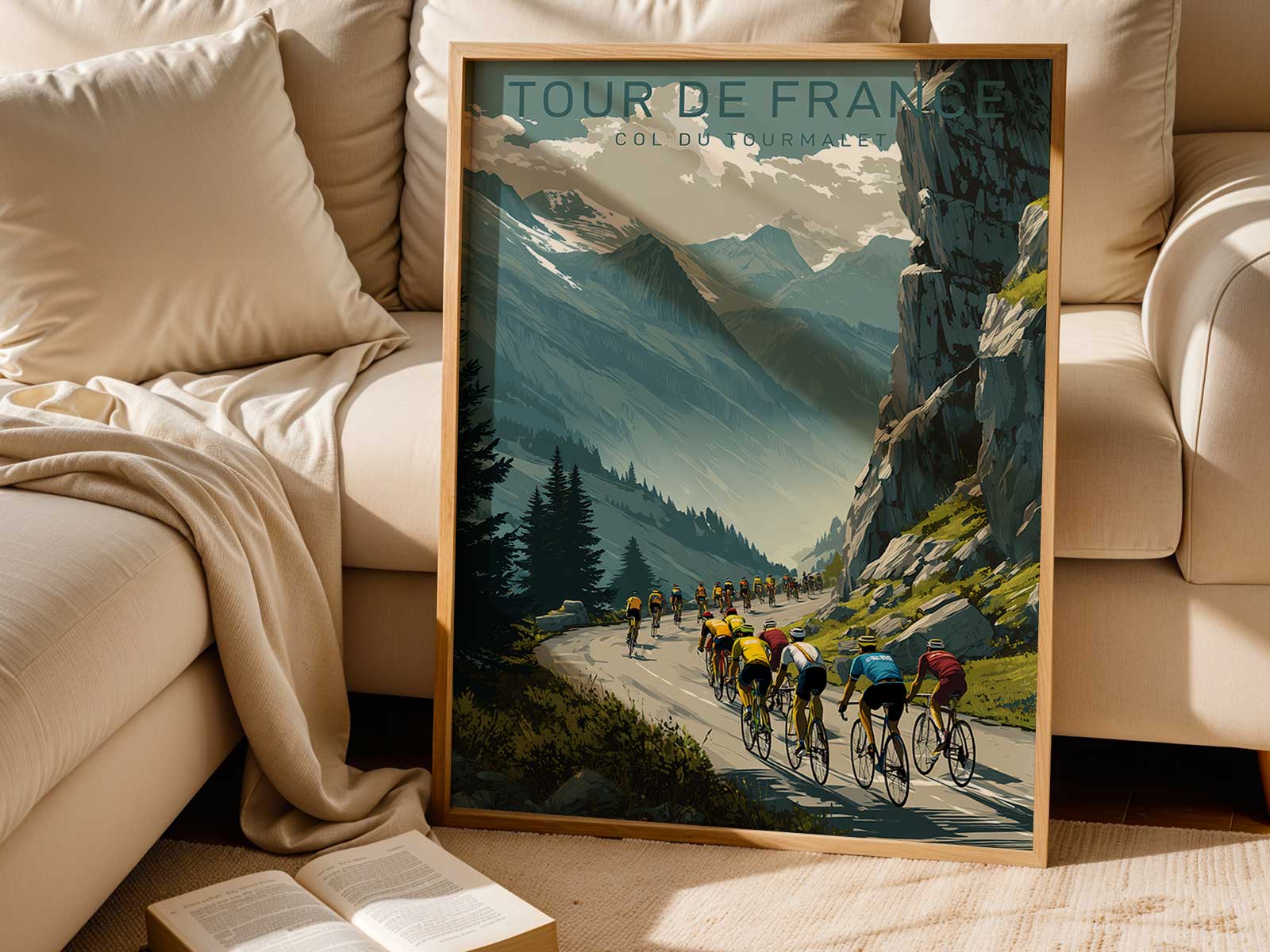
The relationship between rider and road is literal and symbolic. The descending vanishing point of asphalt pulls the subject forward, while the mountain slope frames the upward demand. When the composition tightens around handlebars and forearms, the spectator feels proximity to the experience: the texture of the road, the slack of a jersey in wind, the small, ritual gestures of riders smoothing a sleeve or shifting weight. This proximity makes the poster an immersive object—seen from a sofa or above a desk the image invites a visceral response to motion and resistance.
Color, line and negative space are used sparingly to magnify presence. Muted palettes or a single saturated accent focus attention on form: a dark silhouette against weathered stone, a flash of team color on a sleeve, the pale arc of a wheel. These choices heighten the sense that the rider alone carries narrative weight. The bicycle becomes an elegant counterpoint—an extended shadow, a machine distilled to essential lines—so that the viewer reads the scene as both human and mechanical endurance in tandem.
On a practical level, this kind of poster changes a room by introducing a quiet, concentrated energy. Placed in a study, studio or living room, the image acts as a reminder of sustained effort and refined gesture rather than spectacle. It invites reflection: the posture teaches discipline, the gradient suggests progress, the solitary figure offers a focus that organizes surrounding décor without shouting. The artwork’s desirability comes from that clarity of intent—the ability of one cyclist to define mood and scale within a single frame.
Ultimately, posters that foreground the rider at the Tourmalet transform athletic strain into visual nobility. They ask the viewer to read labor as language: the hands that hold the bars speak of strategy, the cadence speaks of patience, the head-down focus speaks of endurance. For anyone who values composition and human presence, such an image is less about celebrating a result and more about honoring the craft of sustained effort—an offering to rooms that prefer thoughtfulness and form over fanfare.