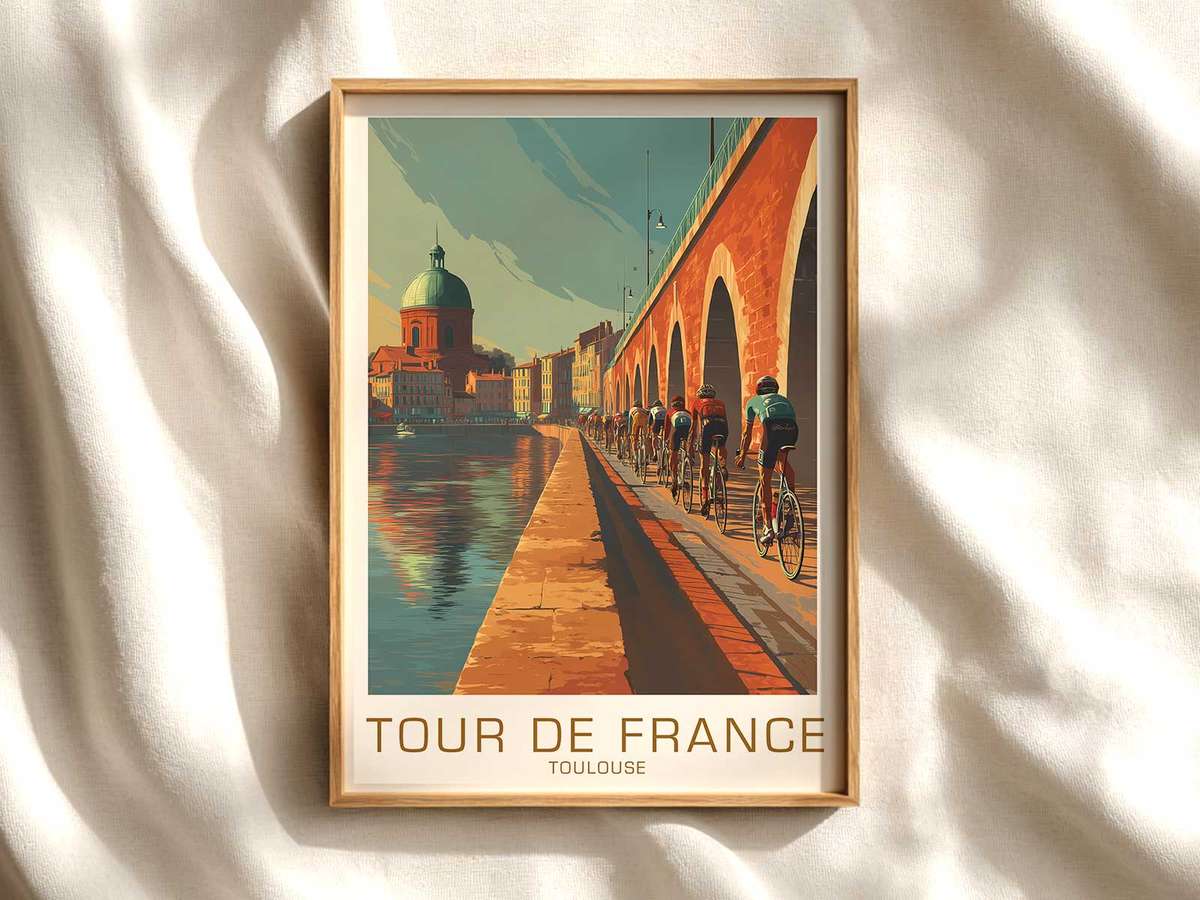
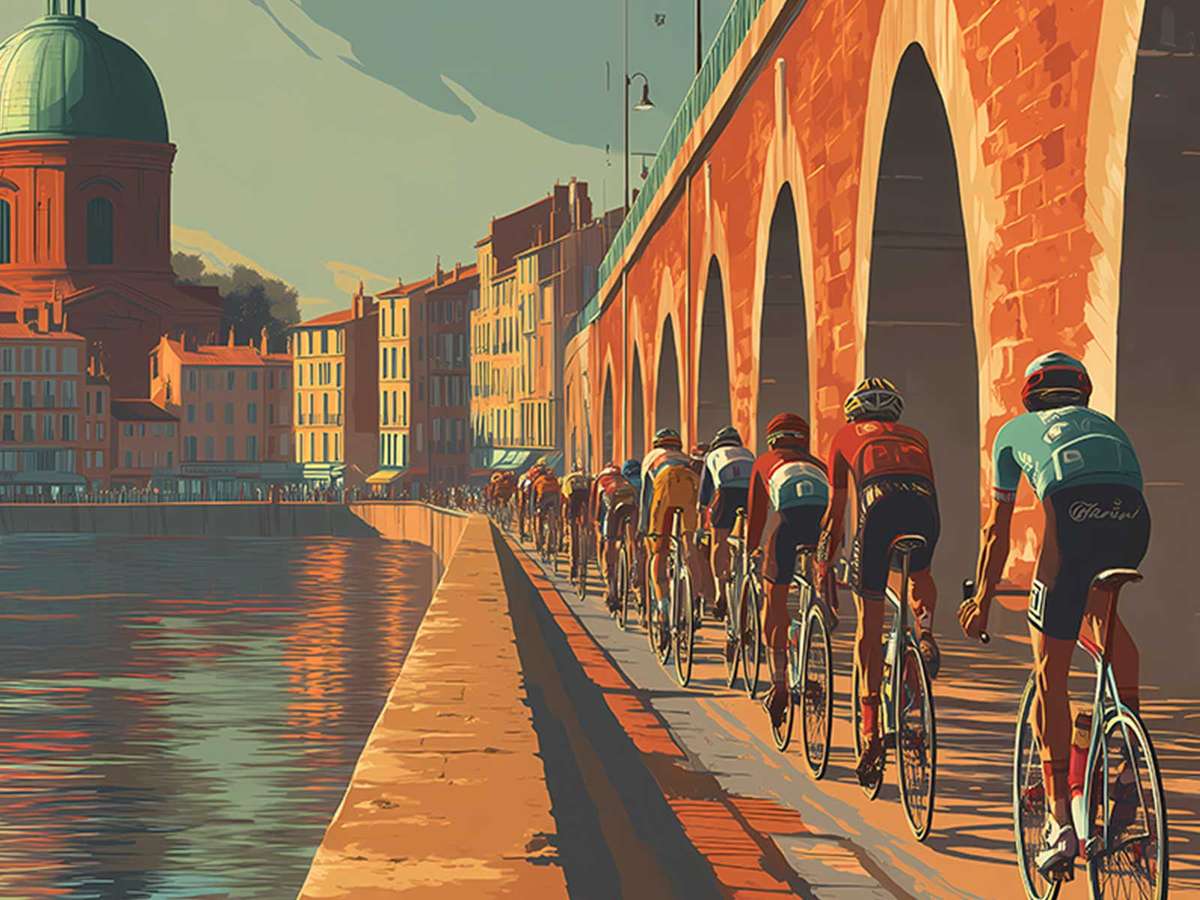
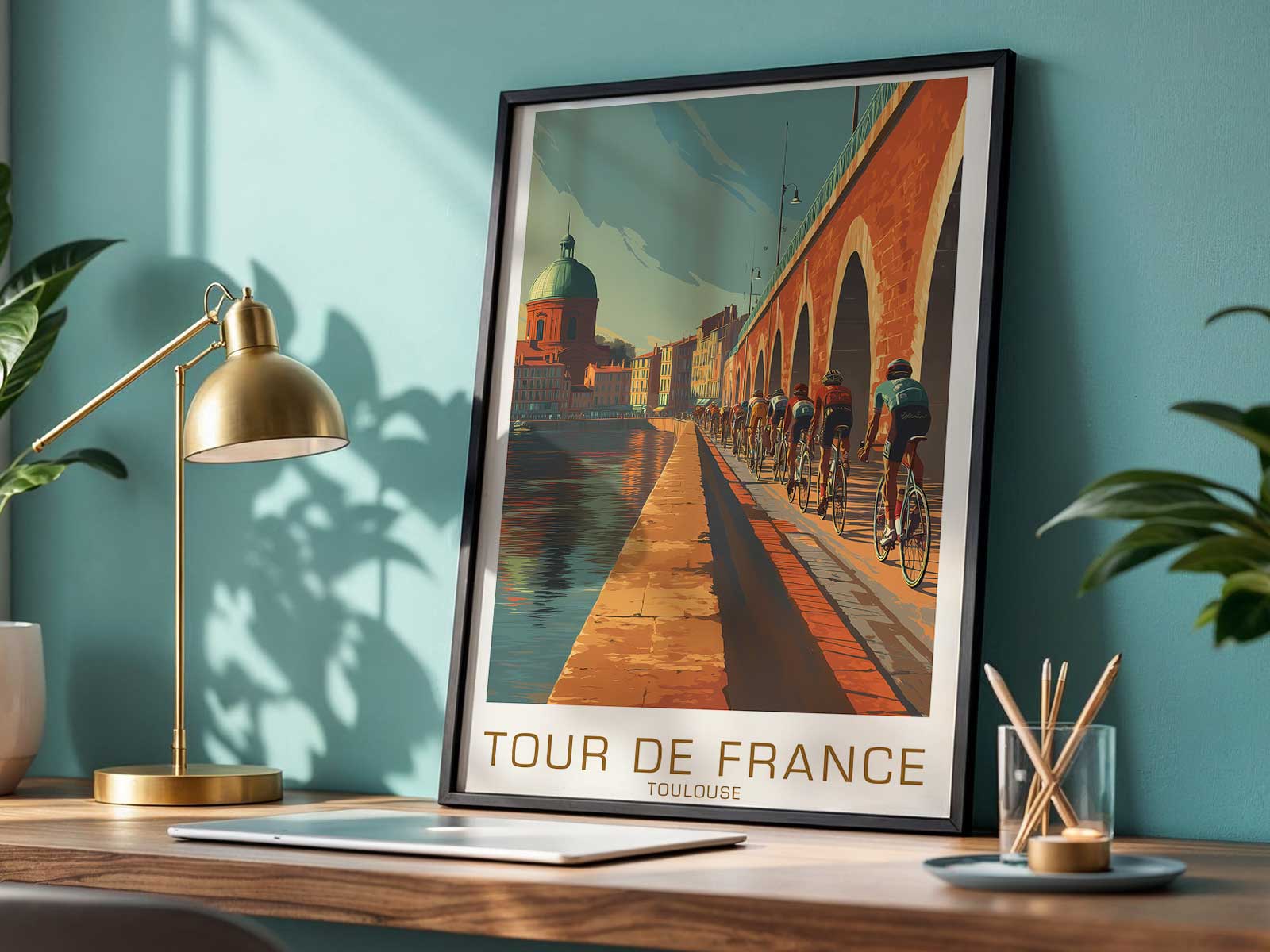
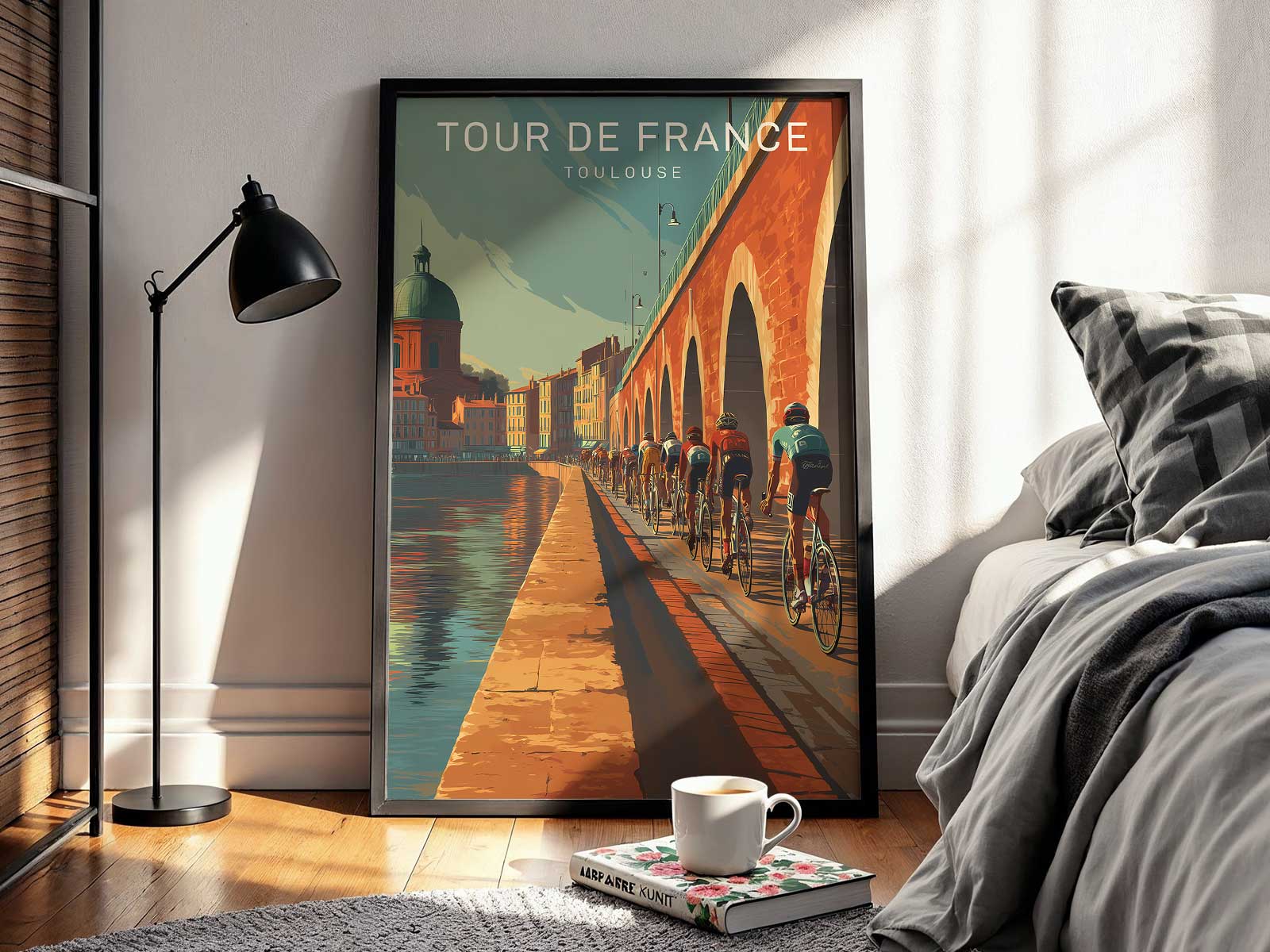
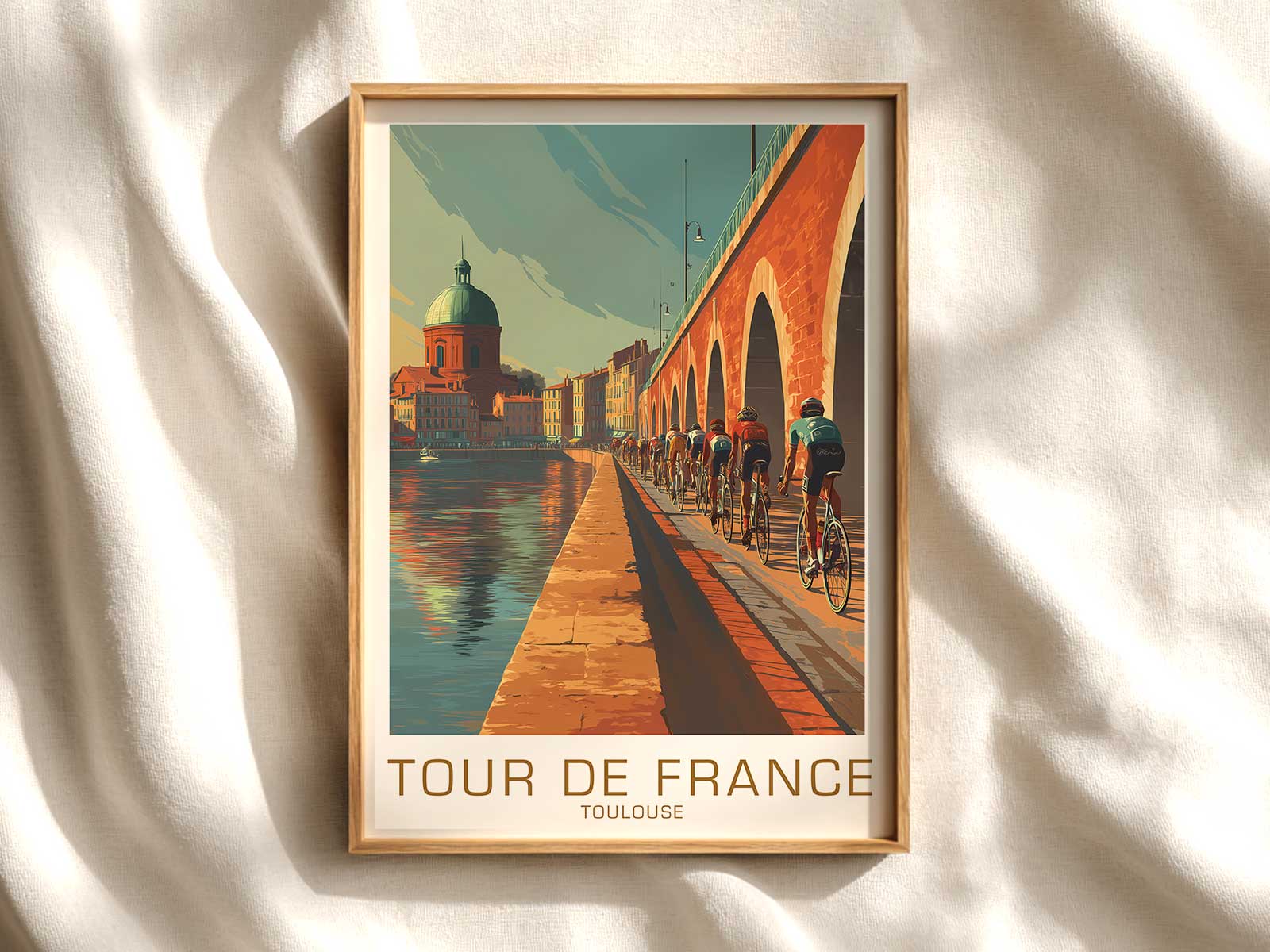
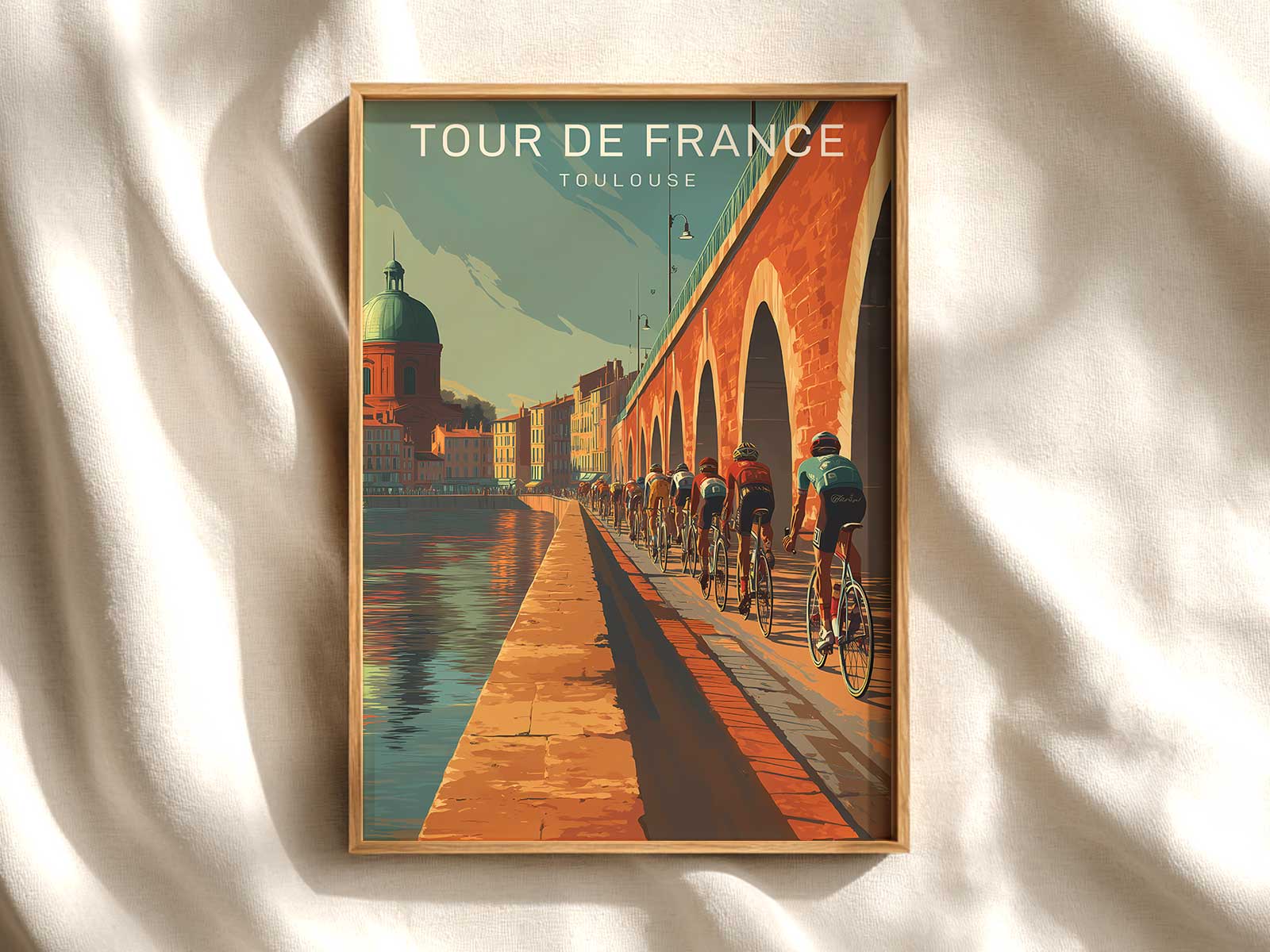
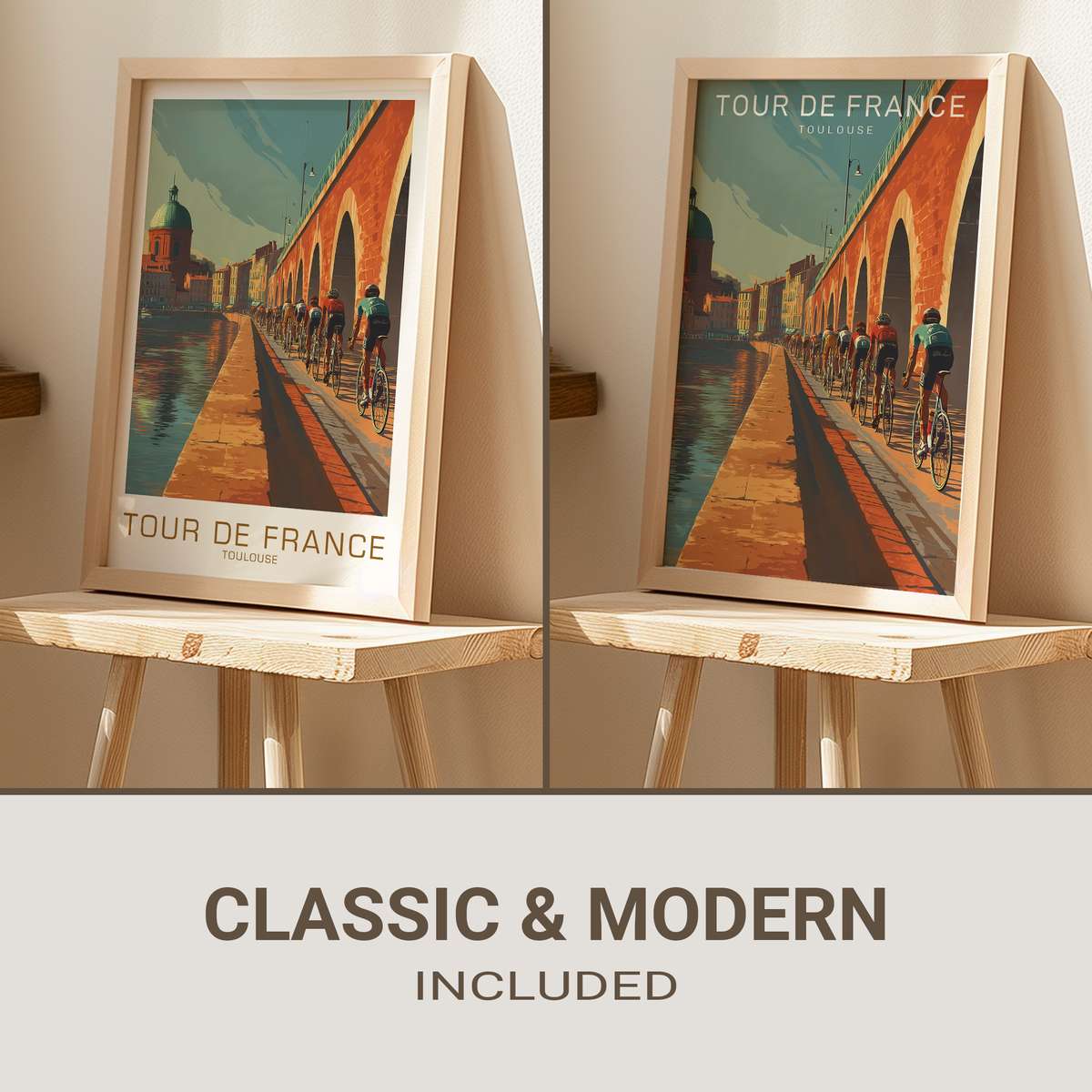
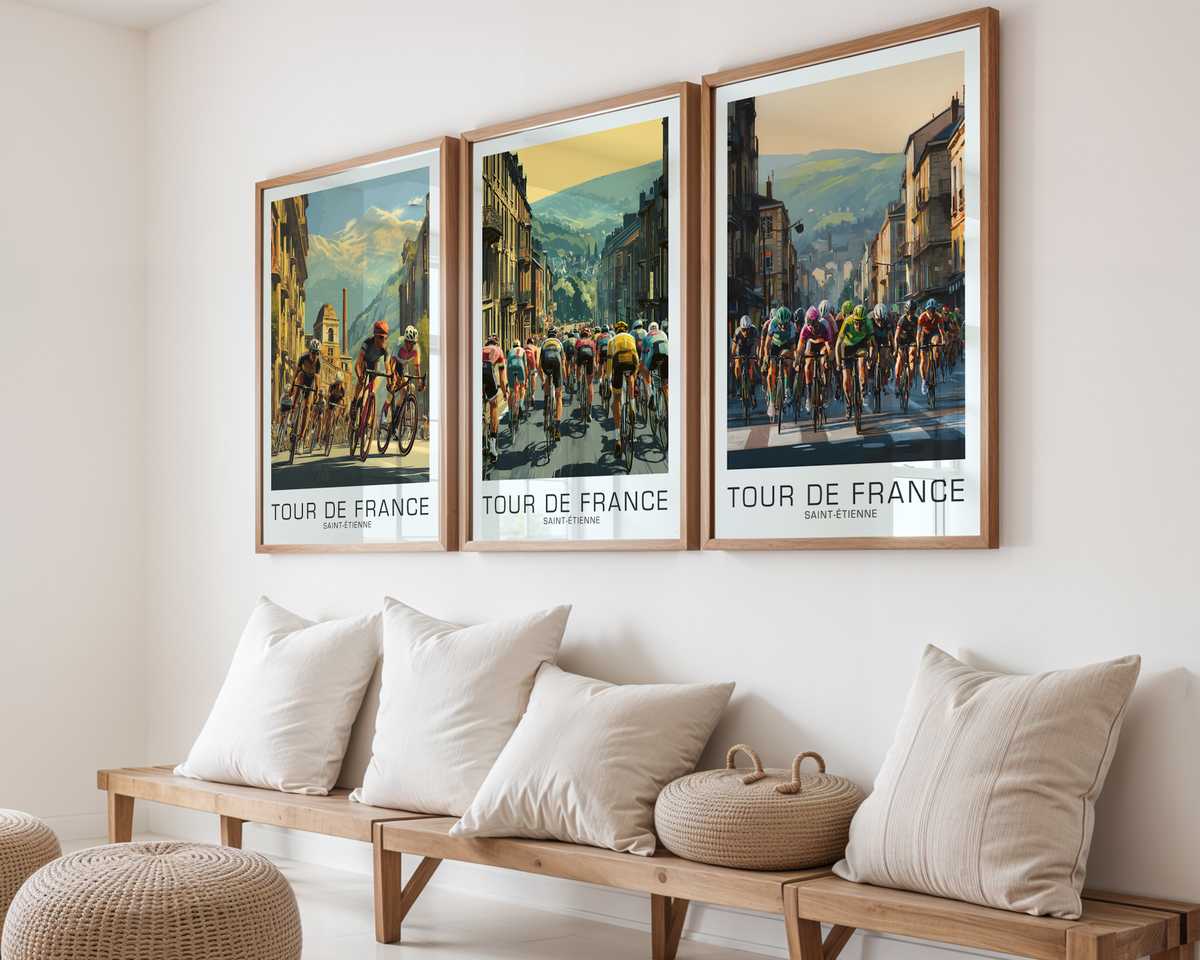
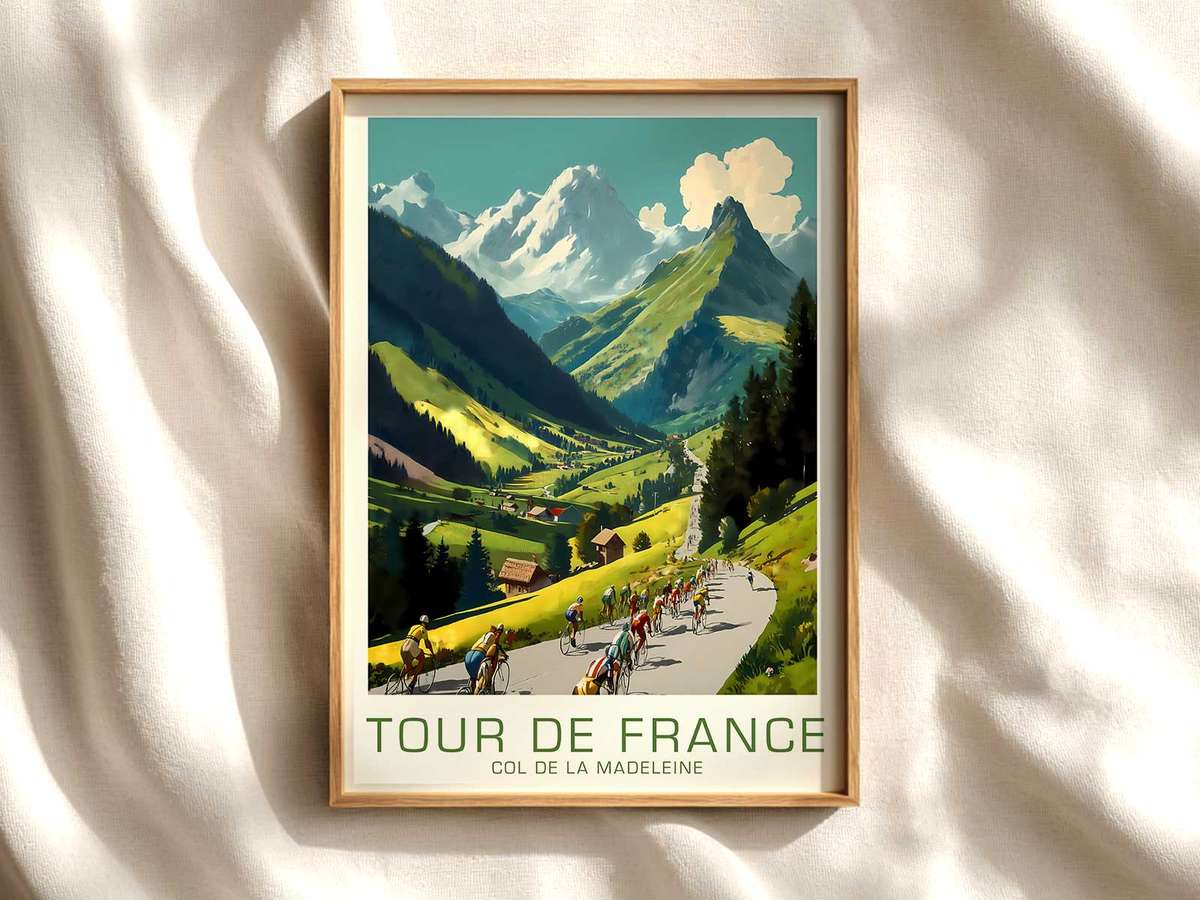
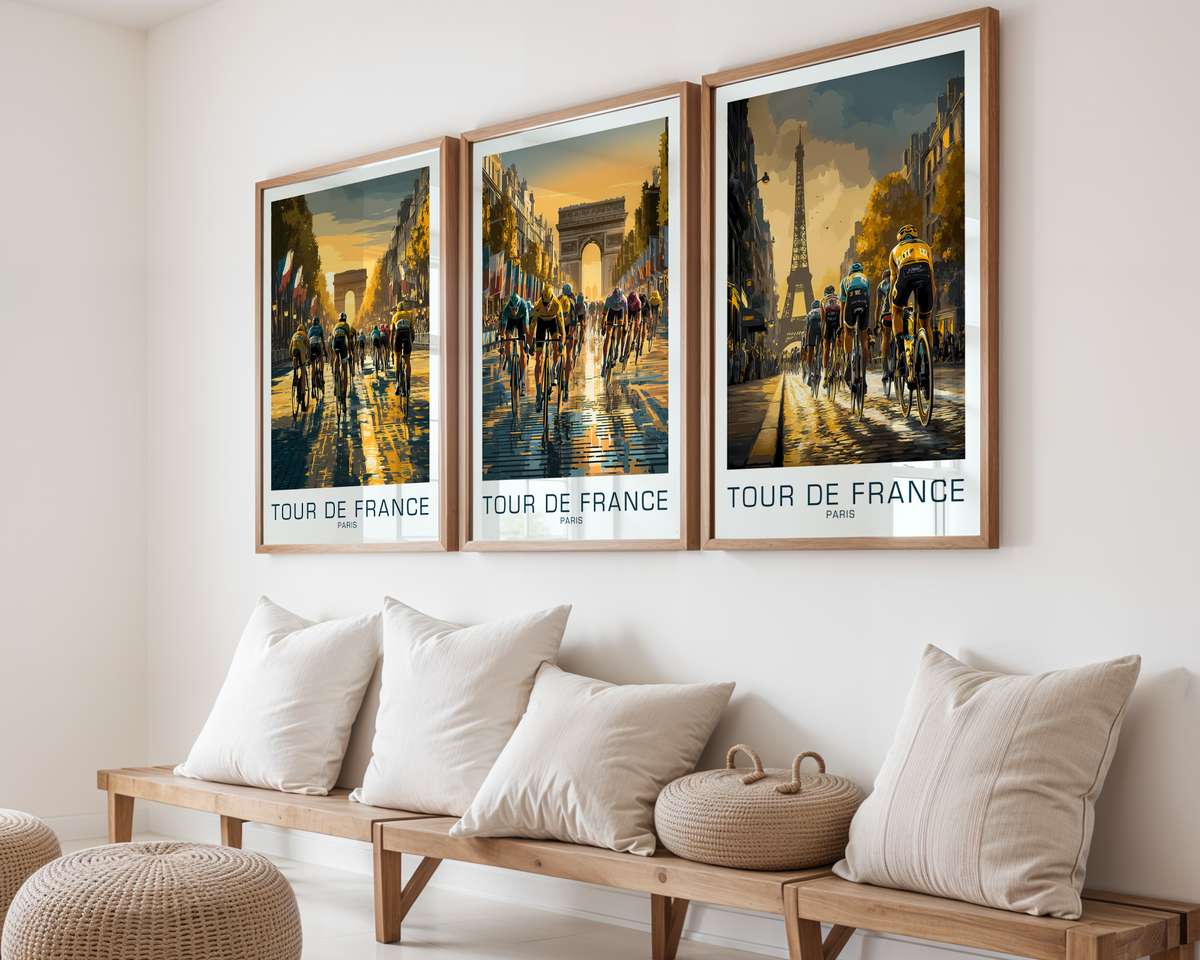
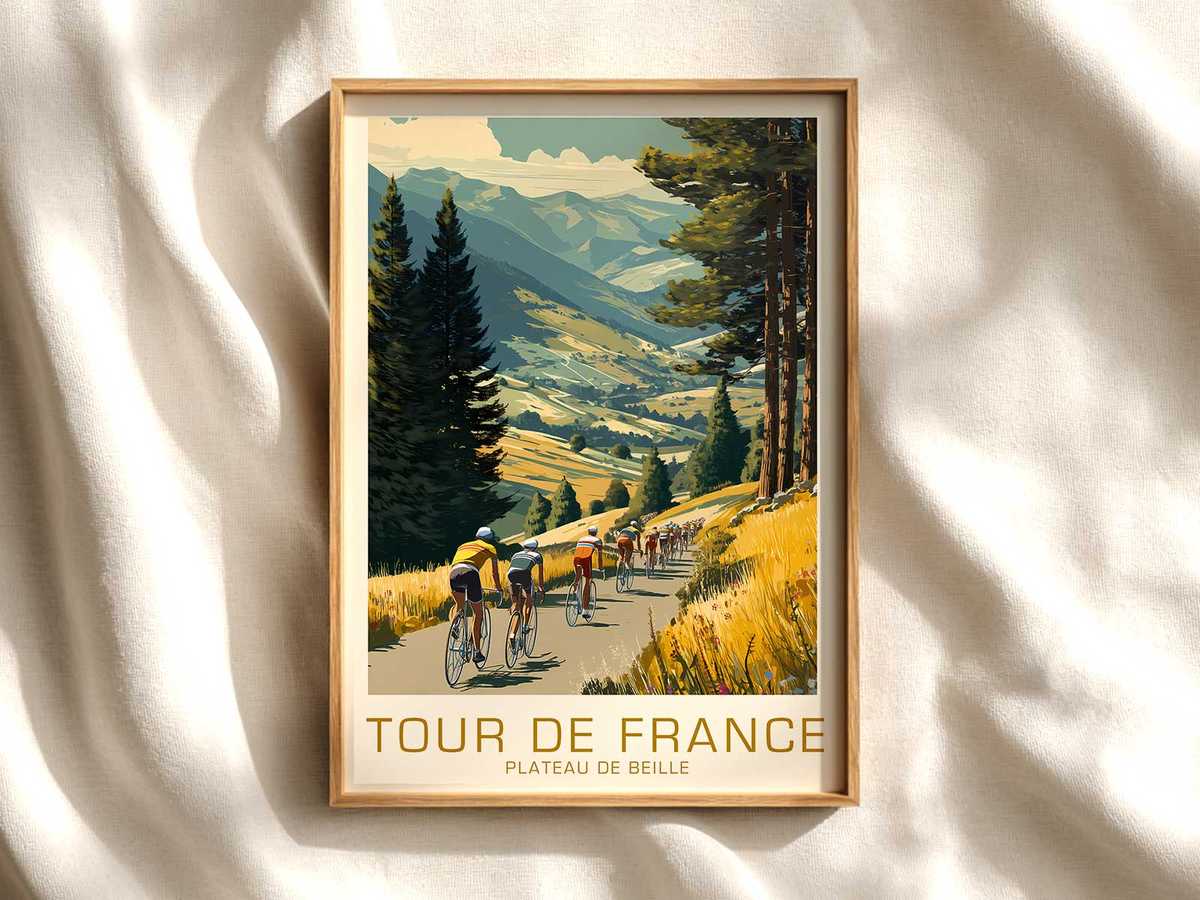
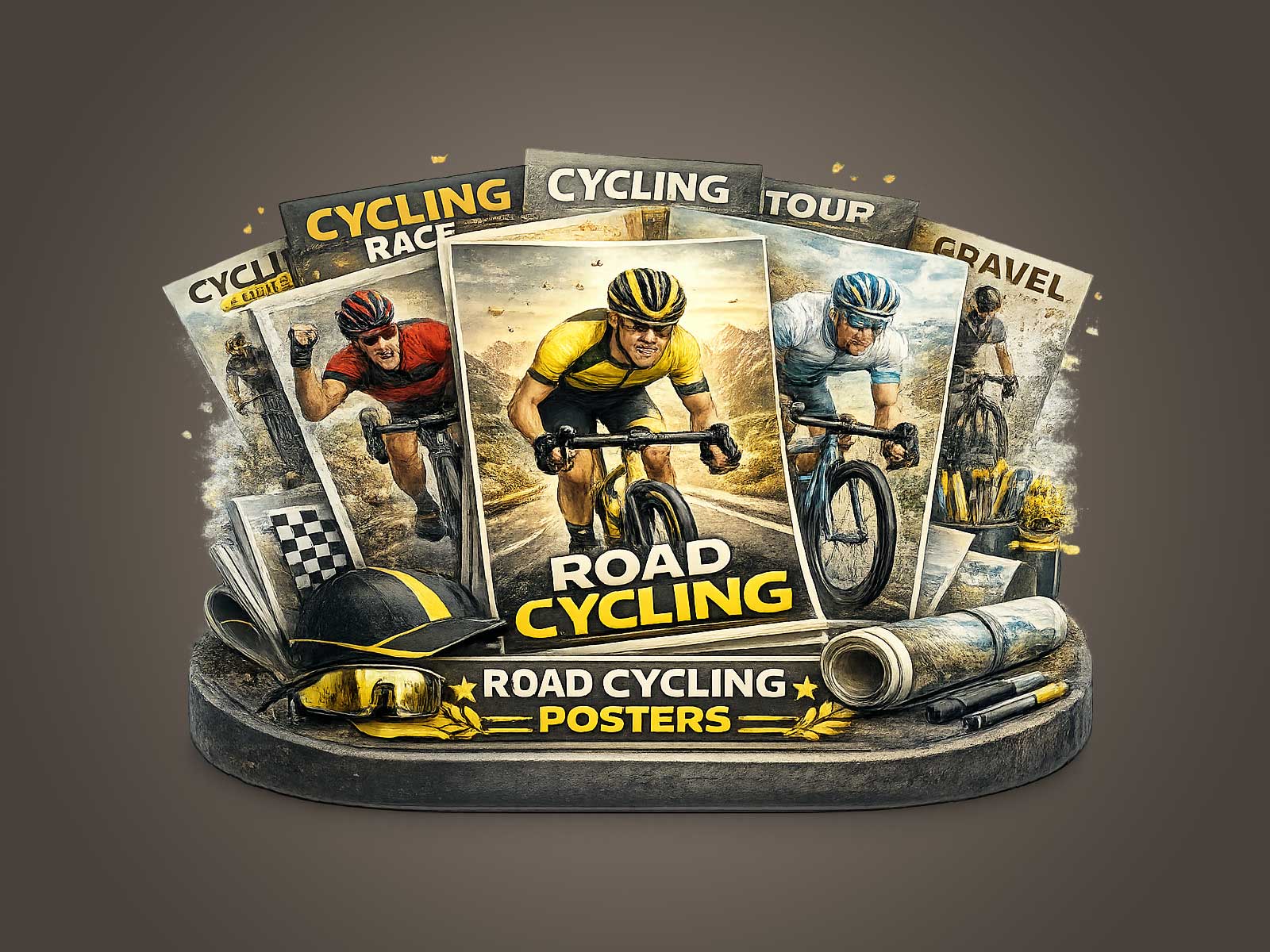
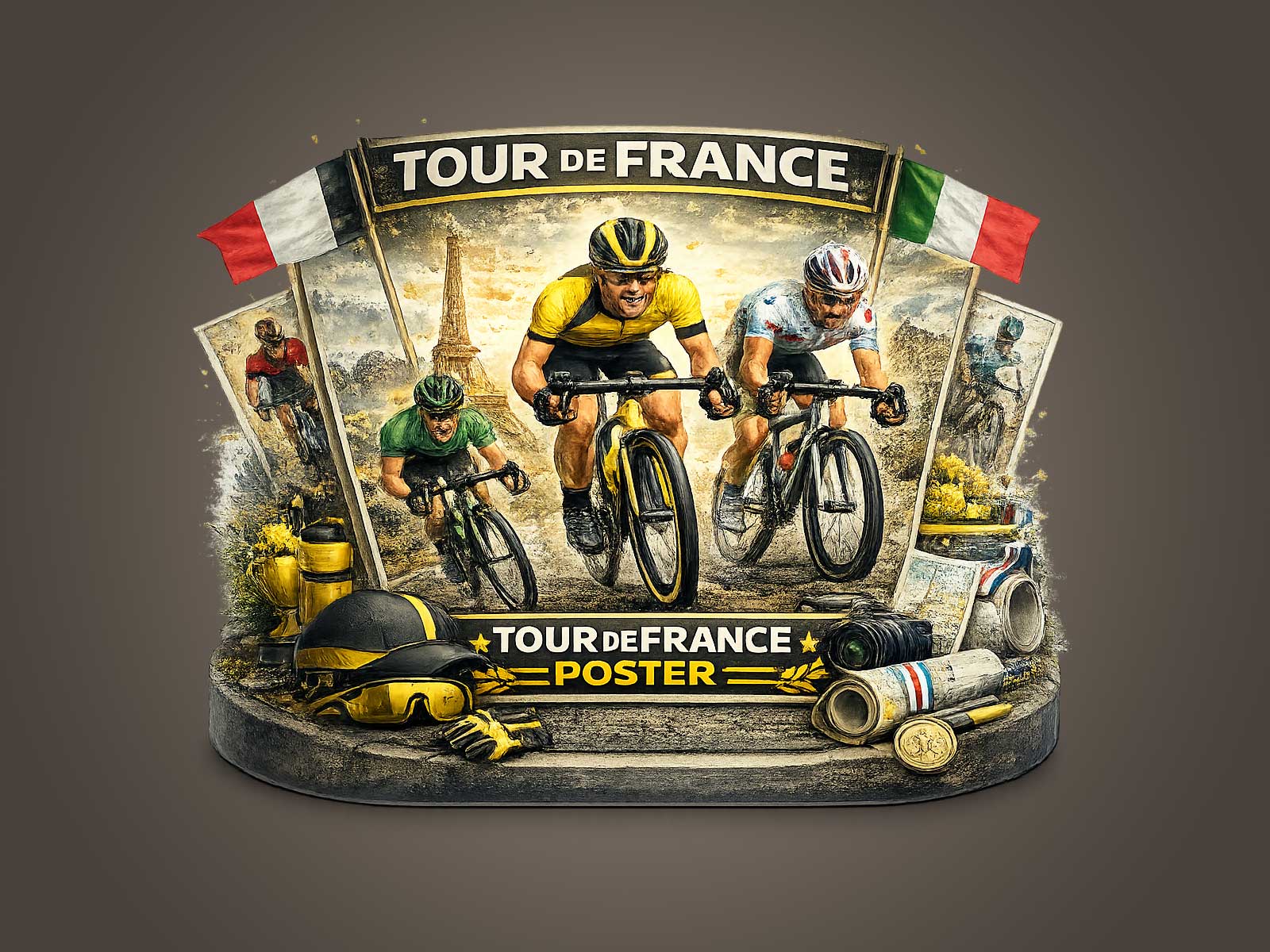
Toulouse is often spoken of as a city of colour and craft, but seen through the eyes of a race photographer or a poster designer it becomes a stage with immediate, legible drama. The city’s low red roofs, the slow sweep of the Garonne, the framed perspective of wide boulevards and tight historic streets together form a vocabulary of lines and planes that a cycling image can use like a composer uses a score. This is an interpretation of place—how road, light and urban texture combine to give a racing scene a sense of purpose beyond the finish line.
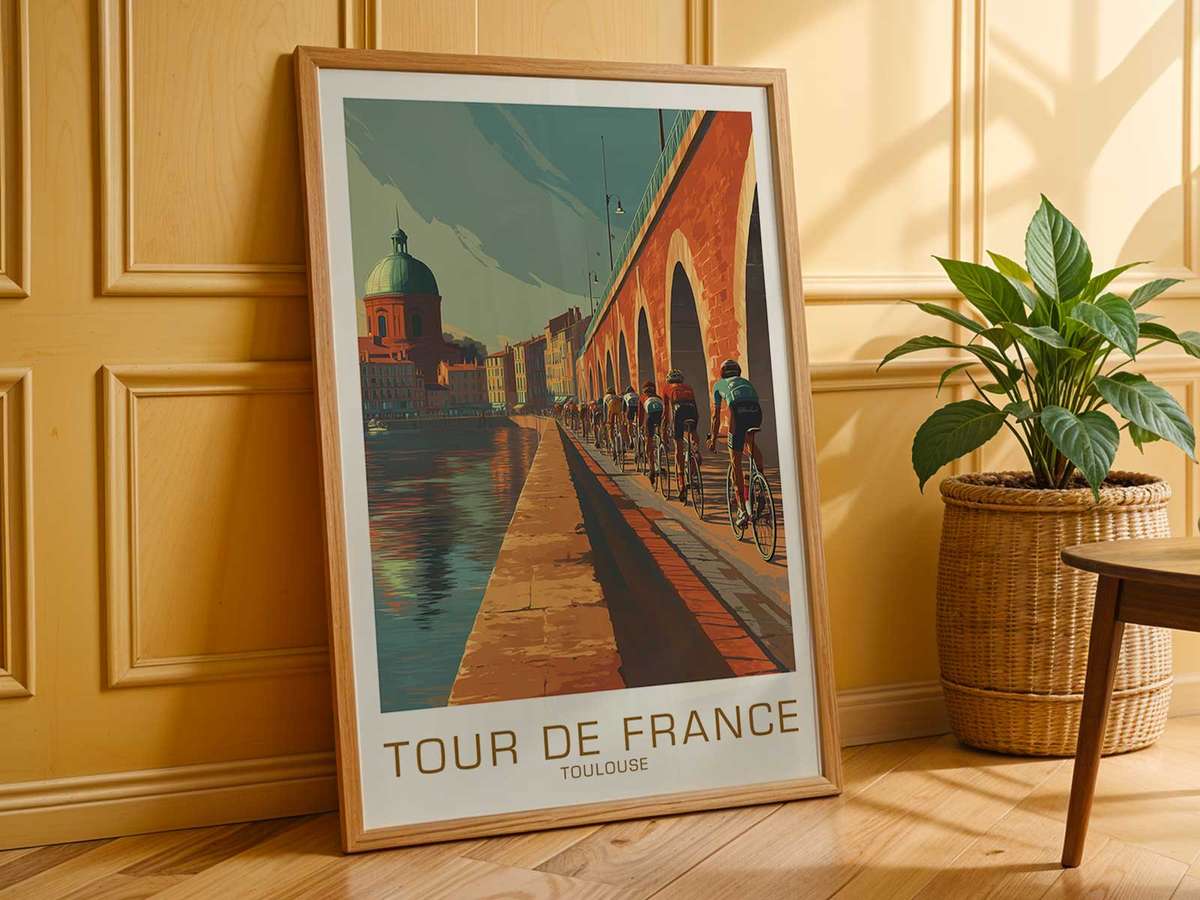
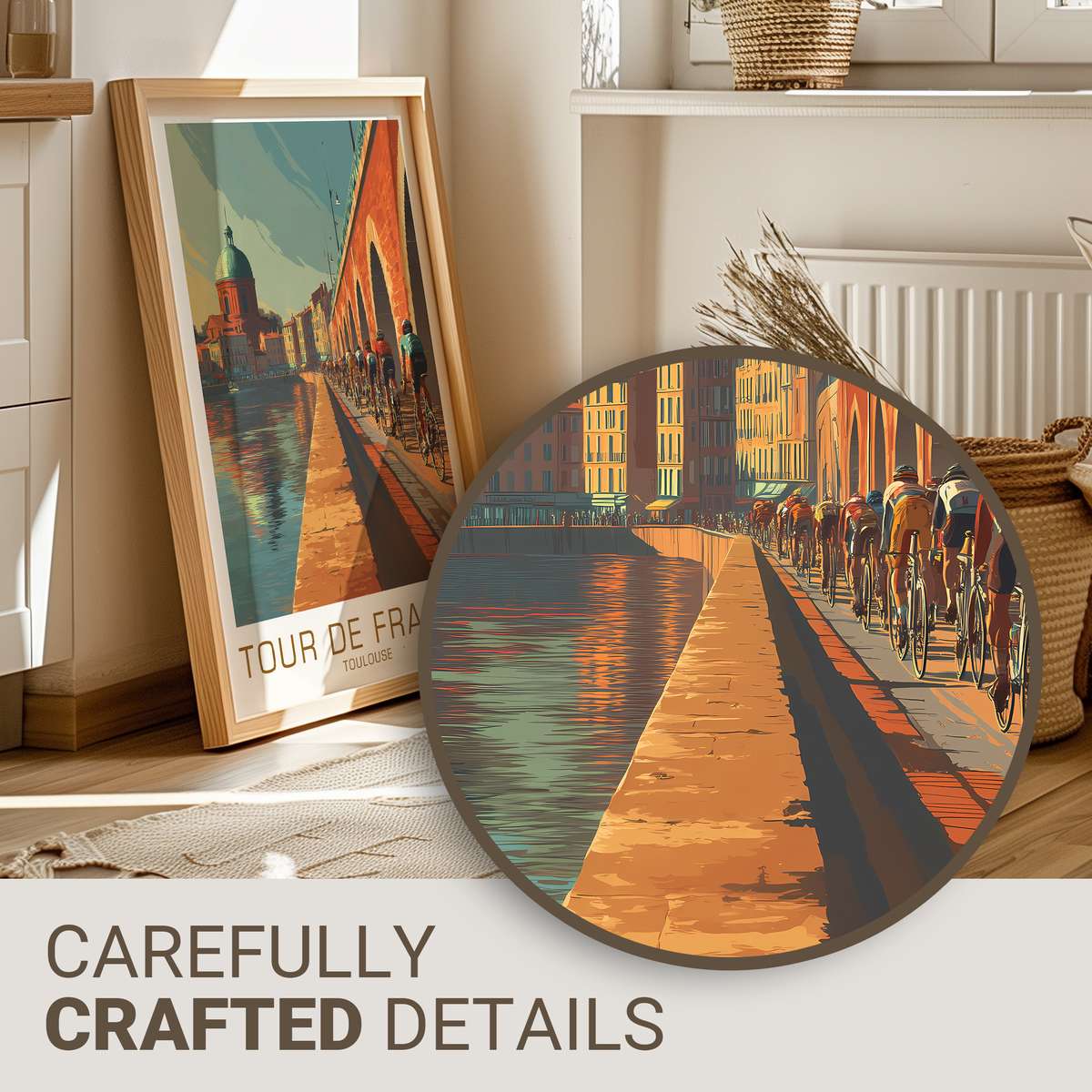
What makes Toulouse visually authoritative as bike wall art is scale played against intimacy. The urban grid and riverbanks provide a measured horizon; ramps and bridges introduce shallow altitudes rather than Alpine vertigo, so a cyclist’s effort reads as precise and human. A single rider on a cobbled ramp, a compact group threading a canal-side avenue, or a peloton bathed in late afternoon amber all convey different narratives, but they share the same compositional strengths: clear directional lines, layered planes of red and ochre, and a predictable play of light that designers can emphasise to create a poster built around place rather than podiums.
[IMAGE_INSERT_ARTICLE_01]
Road texture in Toulouse matters. Narrow medieval streets bring a tight, graphic silhouette to bike frames and rider posture, while broader river embankments allow a sense of motion to breathe. The gentle relief of the surrounding Haute-Garonne countryside gives photographers room to work with depth: foreground architecture, mid-distance riders and a soft, receding skyline. This creates a picture that is legible at a glance—important for any wall piece—because the eye can immediately read foreground action against a calm, recognisable backdrop.
Light is one of the city’s most reliable collaborators. Mornings often produce a cool, diffuse tone along the Garonne, letting colour accents—the polished chrome of a tyre, the saturated jersey—sit like small flames against muted brickwork. Evening light warms the façades and compresses distance; shadows fall across building cornices and pavement furniture, turning incidental details into compositional anchors. In poster terms, that light sculpts a mood: intimate and tactile rather than extreme, the kind of atmosphere that invites close looking from a couch, a studio wall, or a study.
There is also a civic choreography to Toulouse that the Tour temporarily amplifies. Market squares become vantage points, stone bridges pick out silhouettes of cheering crowds, and tram lines cut diagonals across frames. These human elements—clusters of spectators, a child perched on a low wall, a row of flags—are best used sparingly in a poster, as punctuation rather than subject. When included with restraint, they add narrative depth: the race is not only about speed but about the social pulse of a place, the way a community lines up to witness motion and ritual.
Why does stage-led imagery from a city like Toulouse hang so well in living spaces? Because it is both specific and open-ended. The poster suggests a story—a sprint around a tight corner, a solitary breakaway along the river, the hush before a pack arrives—without insisting on a result. That ambiguity lets the image perform in a room: it can read as a study in composure for a home office, a reminder of endurance and place in a living room, or a measured celebration of design in a gallery-like corridor. The city’s palette and geometry mean the artwork sits comfortably alongside contemporary decor while retaining a distinct narrative identity.
Finally, consider memory and heritage. Stage-led scenes anchor themselves in place; the viewer who knows Toulouse will recognise the spatial cues, while the viewer who does not will still appreciate the urban textures and directional clarity. The visual language of road, light and village or city detail transforms a race moment into a portrait of place—an object that holds both the thrill of competition and the calm dignity of a cityscape. That duality is what makes Toulouse-derived bike art quietly irresistible: it is at once a celebration of athletic grace and a study in urban atmosphere, a composition whose value grows each time you linger.