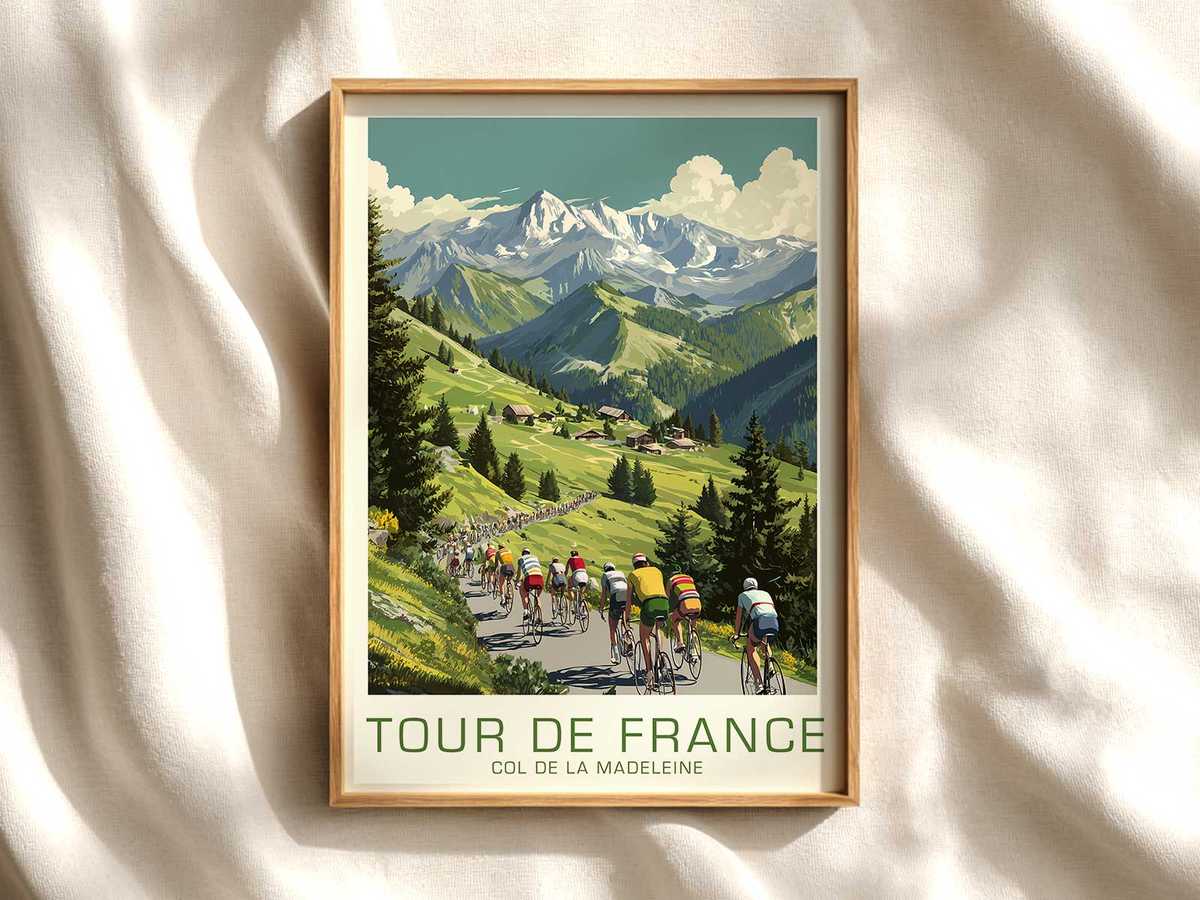
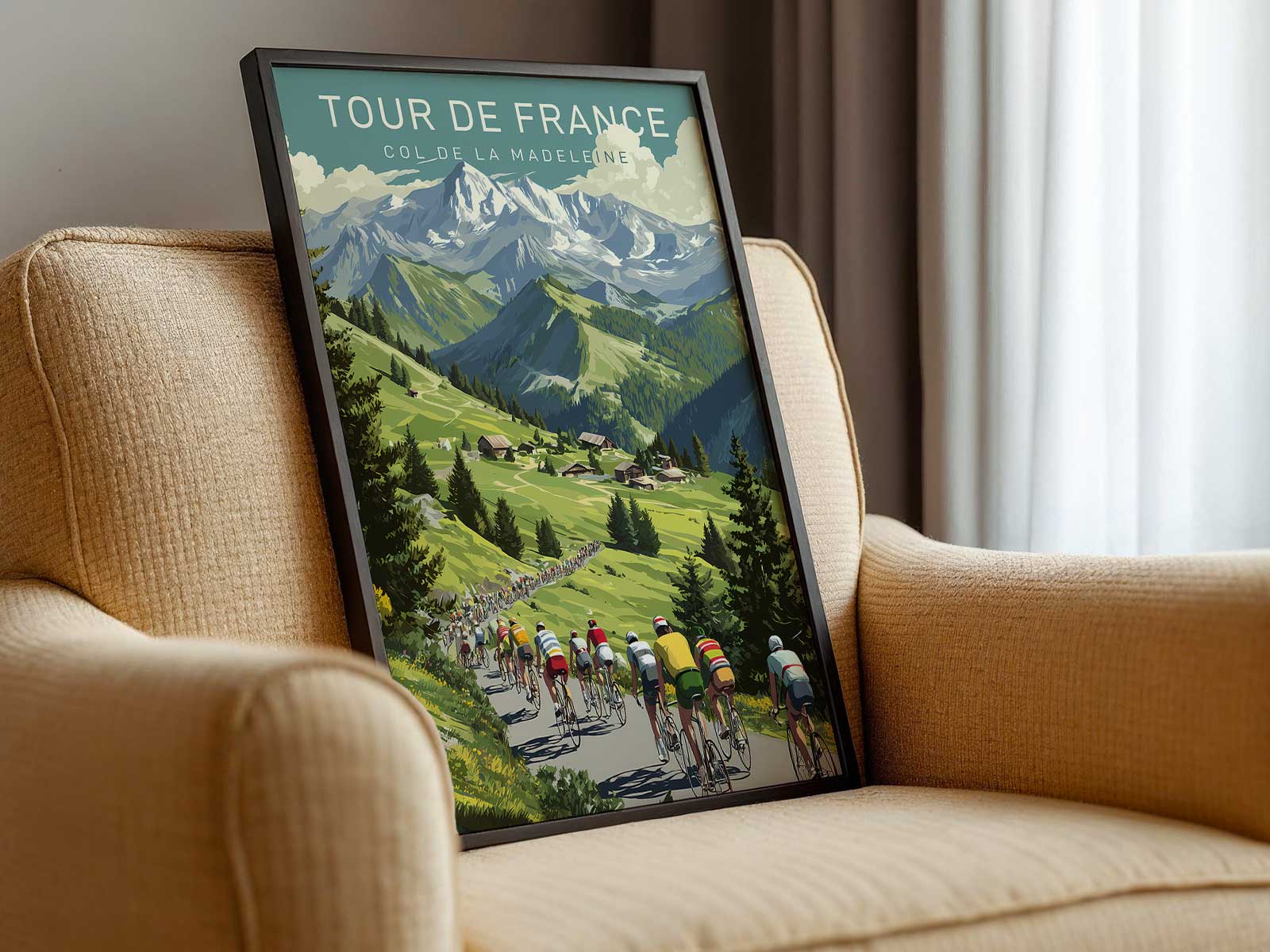
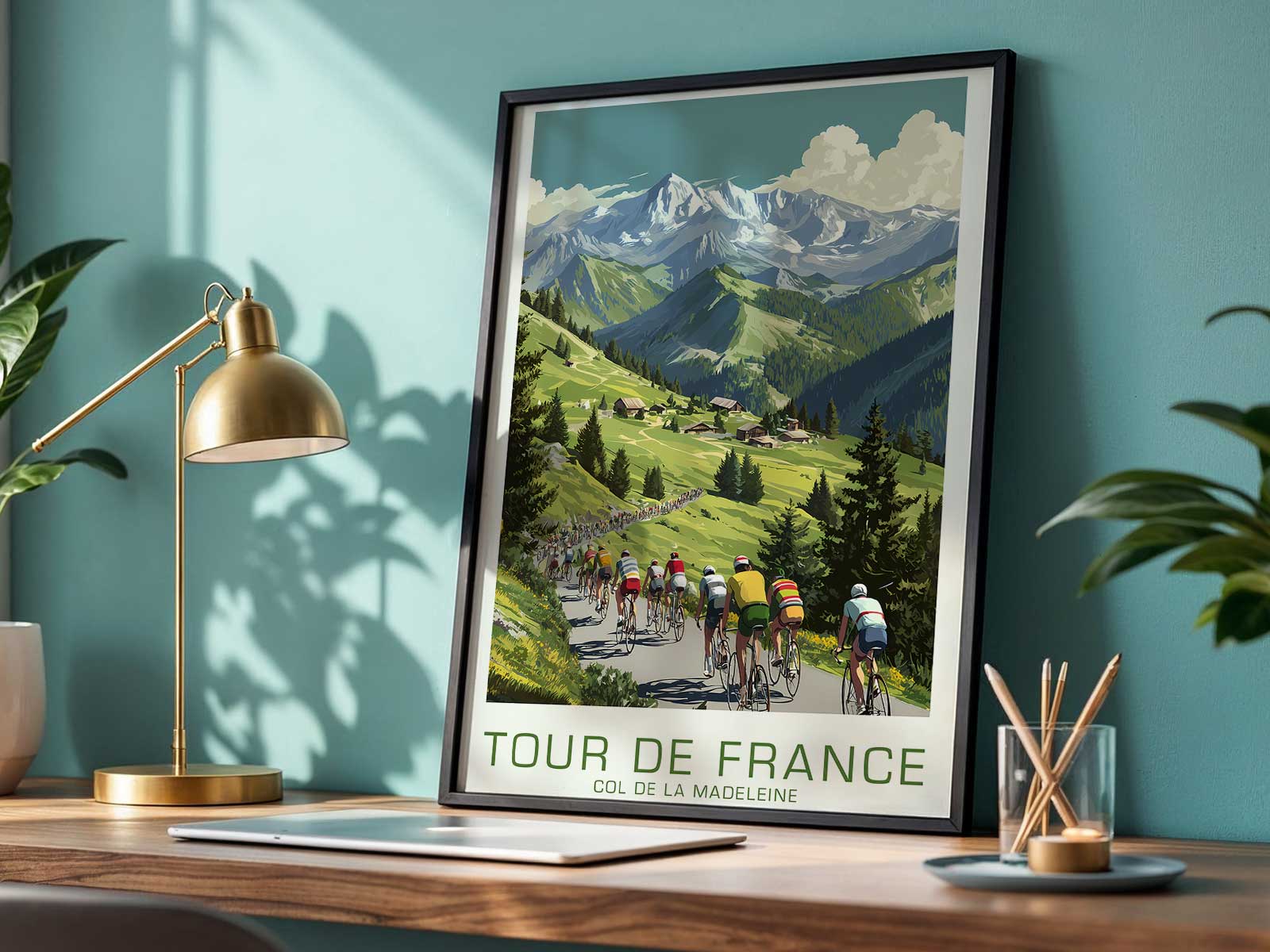
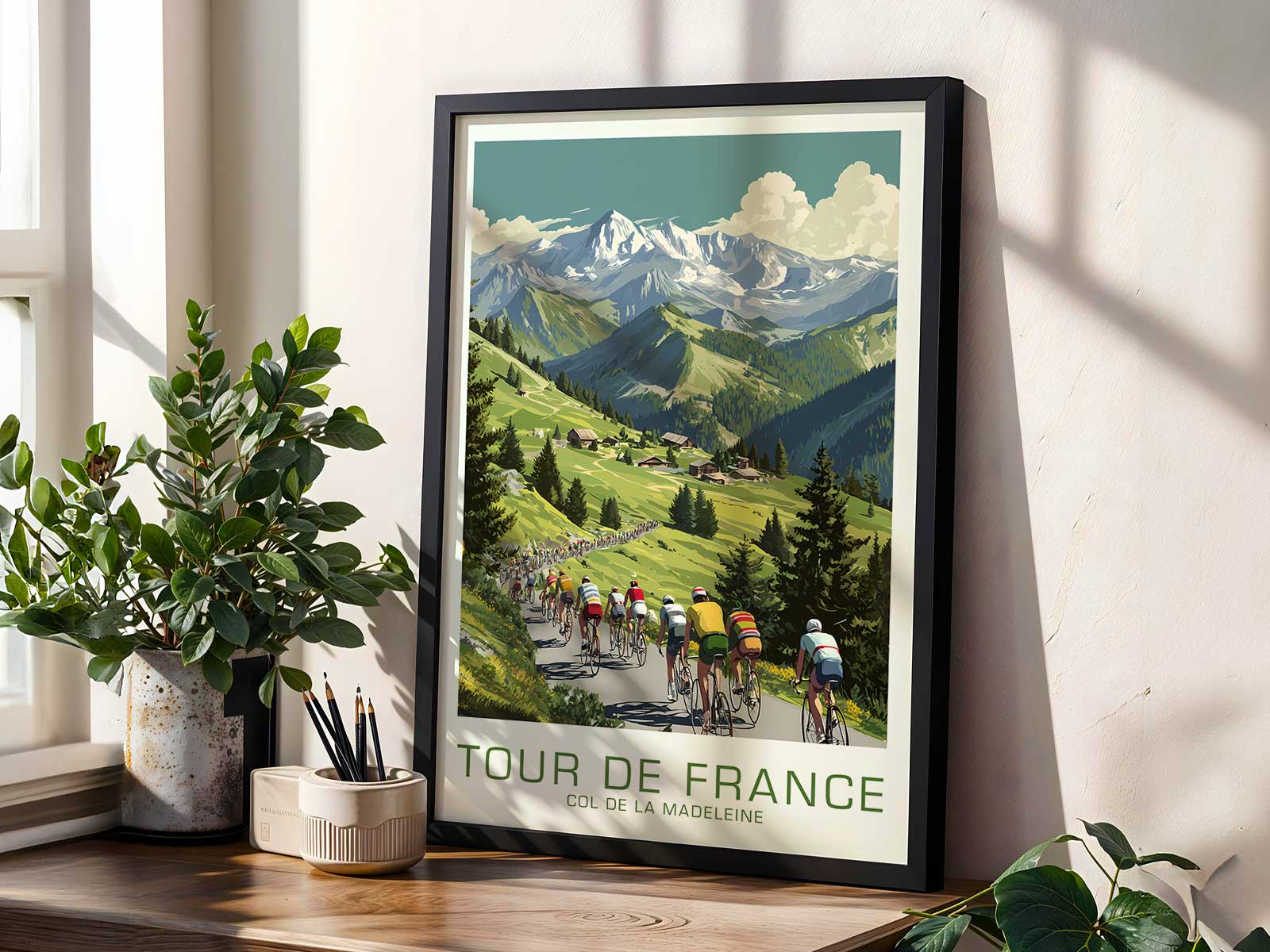
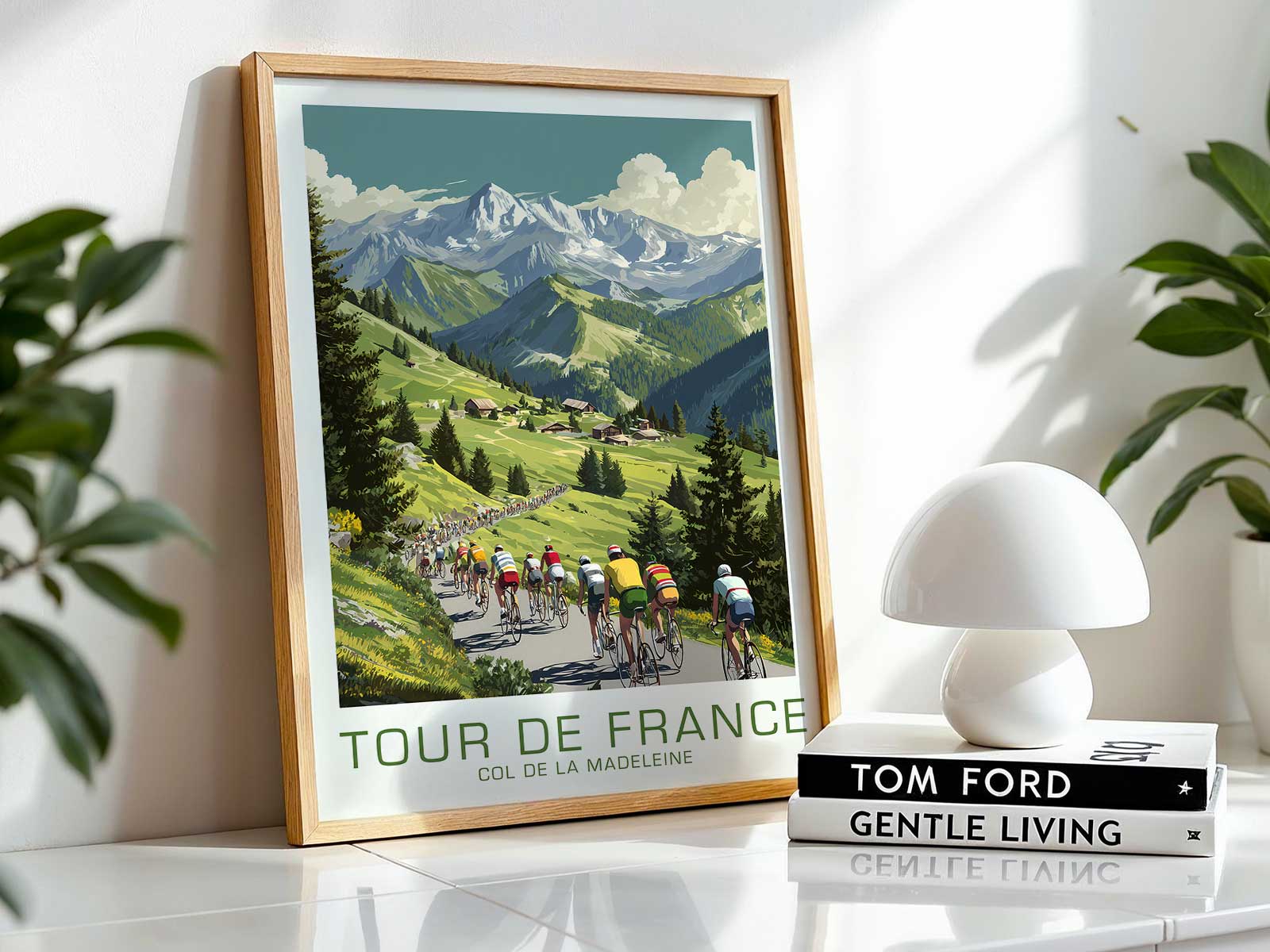
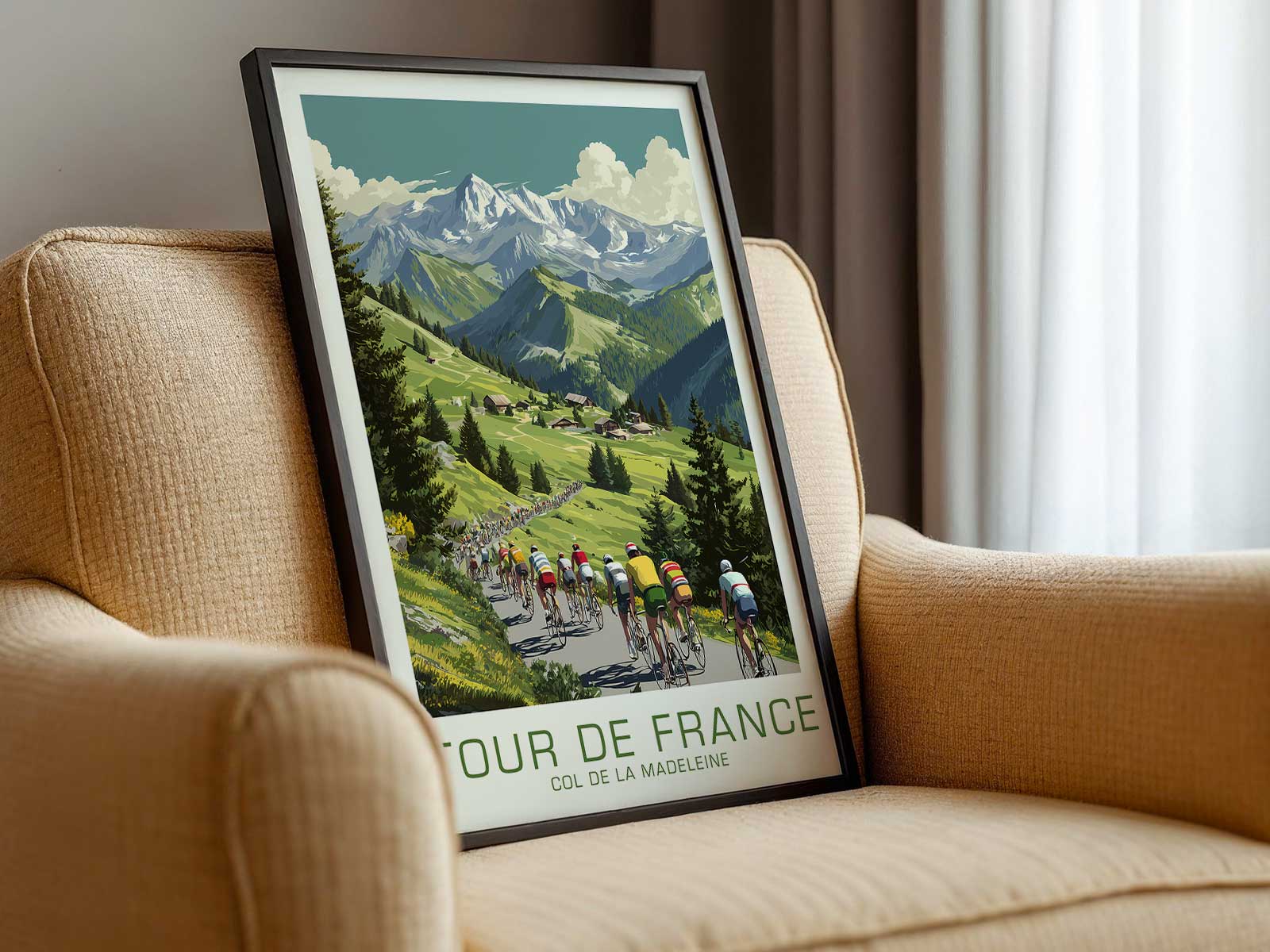
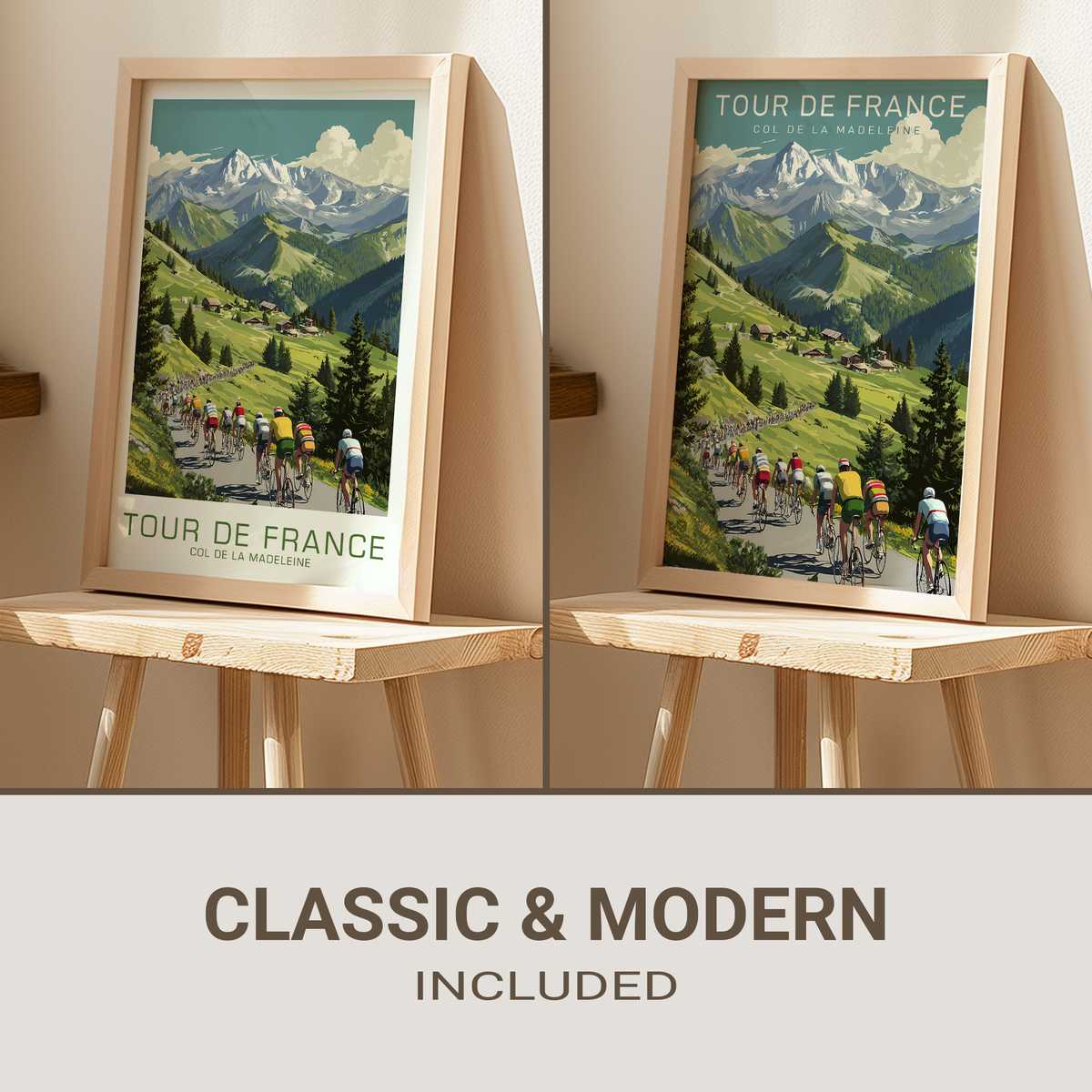
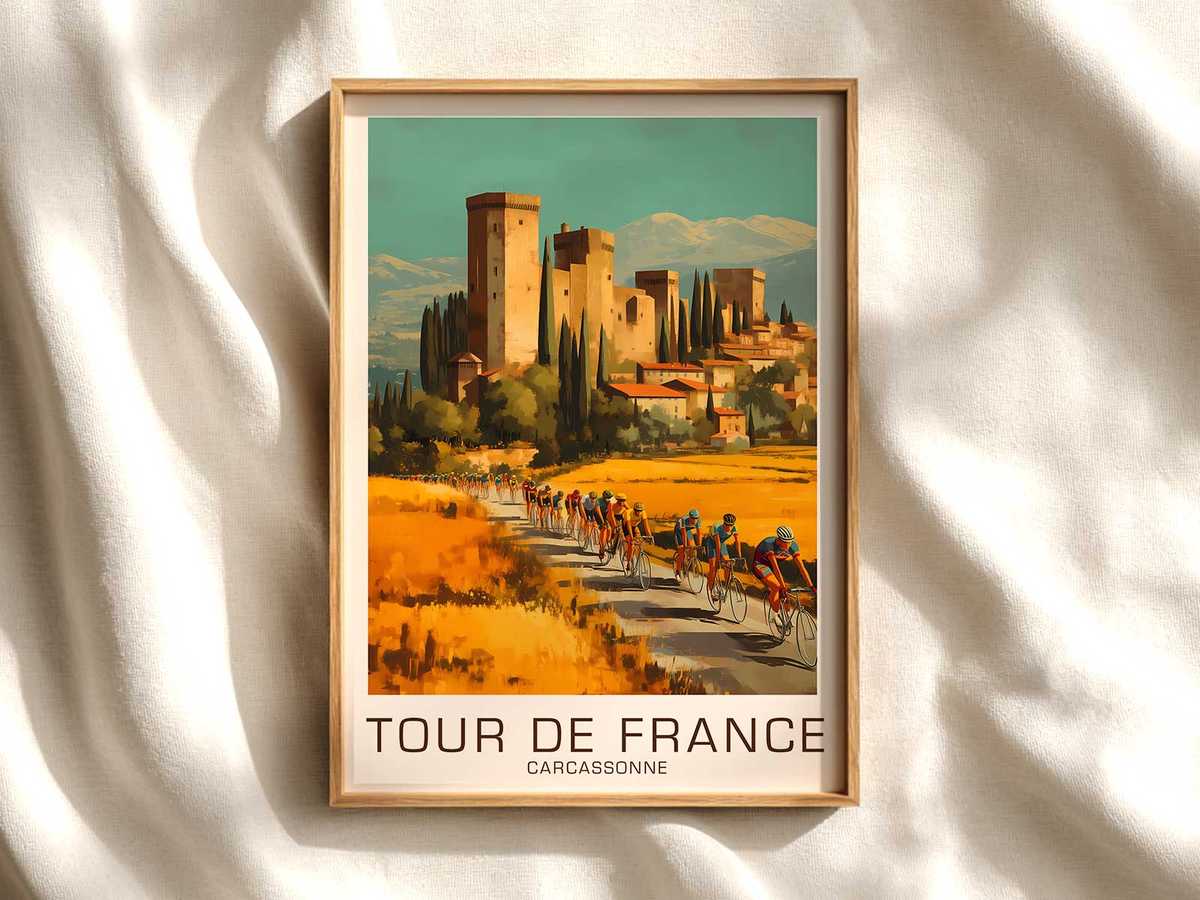
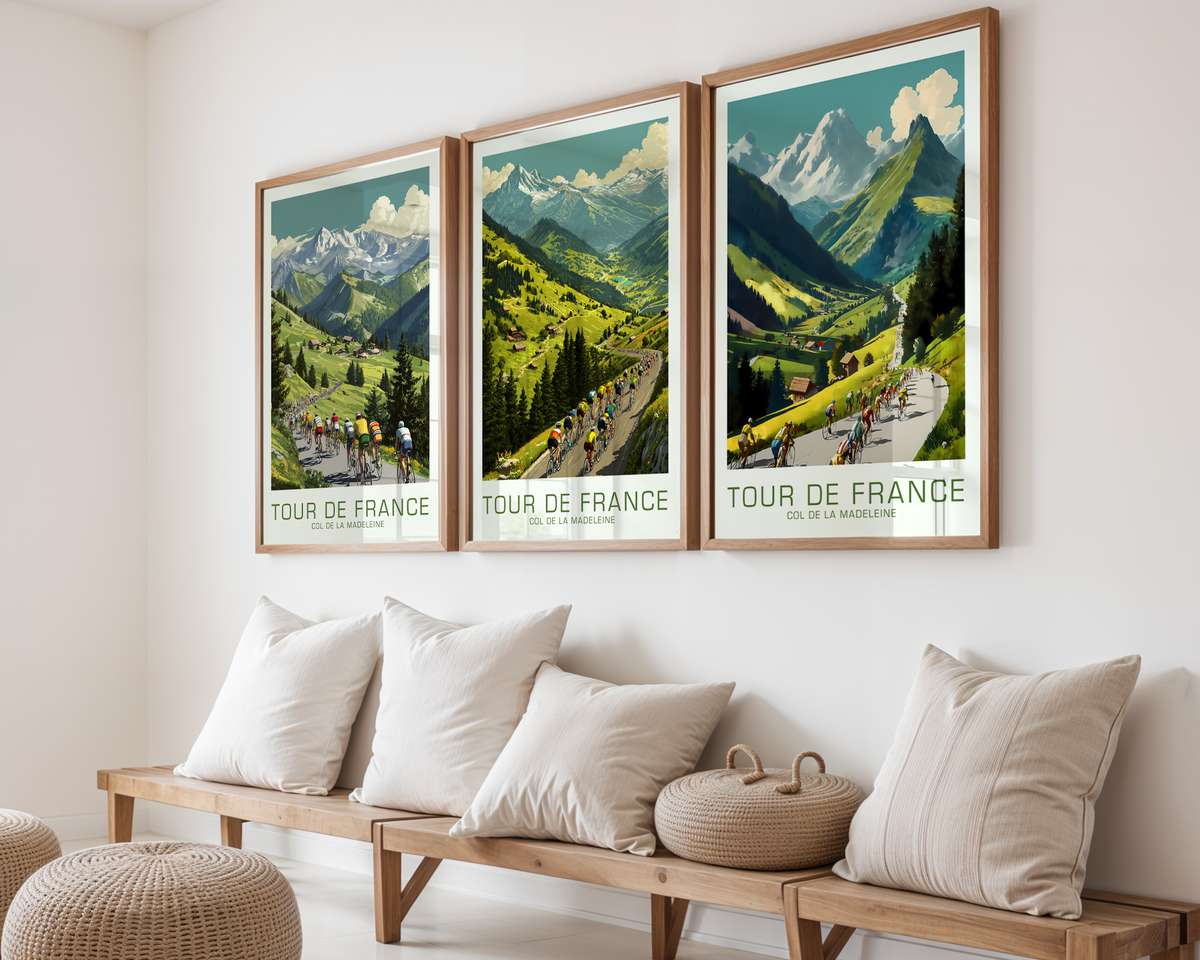
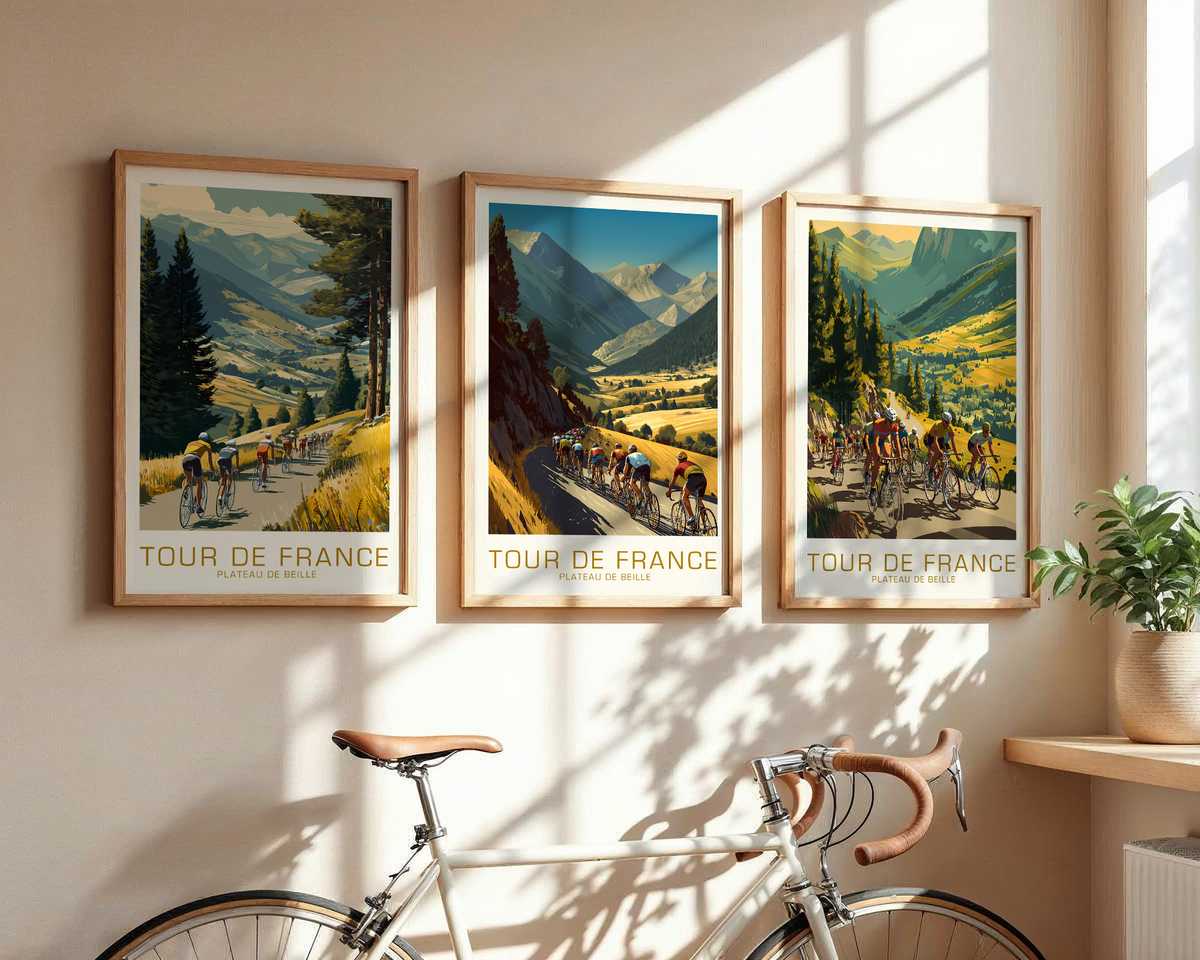
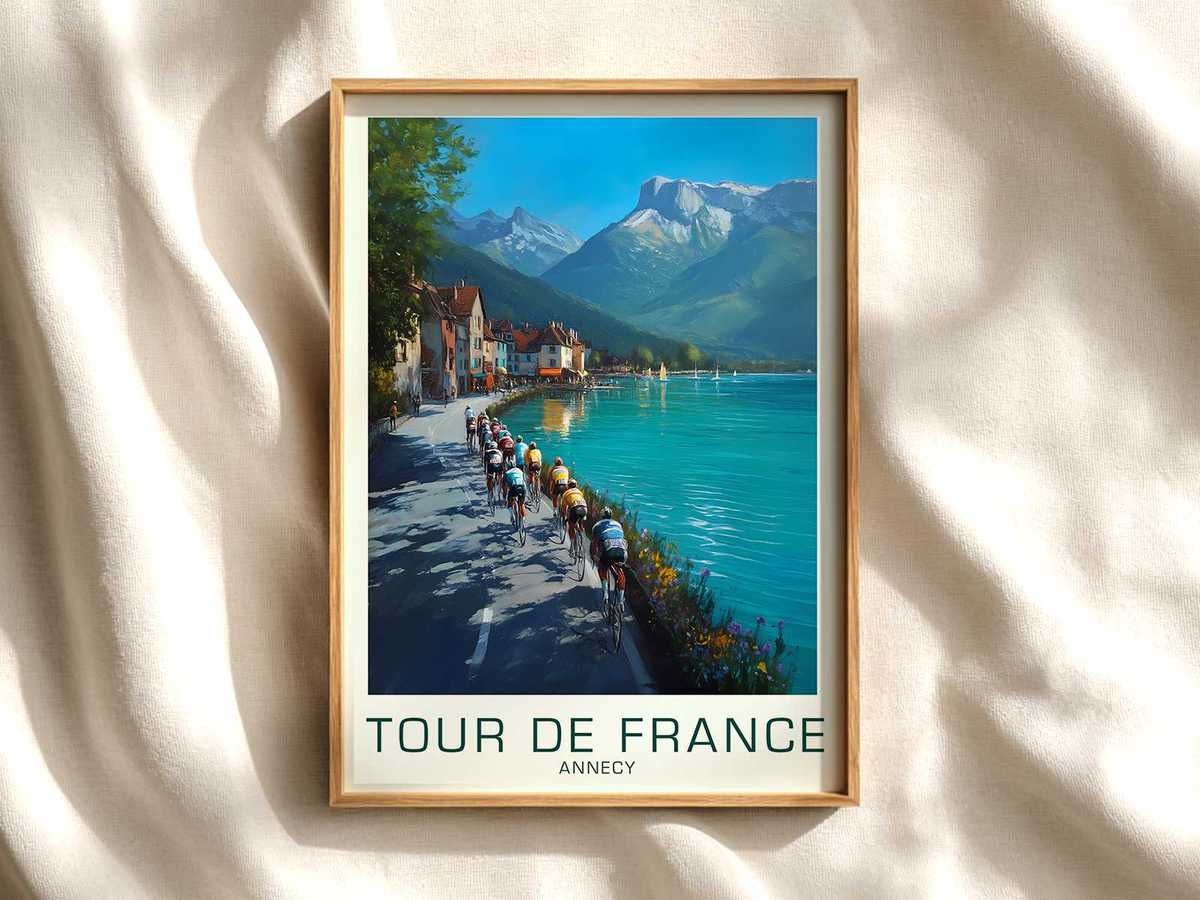
The Col de la Madeleine is not only a location; in a poster it becomes a narrative of ascent. A single framed image can translate the slow geometry of a climb — the road curling away, the slope compressing distances, the rider reduced to rhythm and silhouette — into an atmosphere that makes viewers feel altitude and toil. This is why stage-led Tour de France imagery works so powerfully as wall art: the landscape, the gradient and the light supply all the elements of cinematic drama without needing words or results.
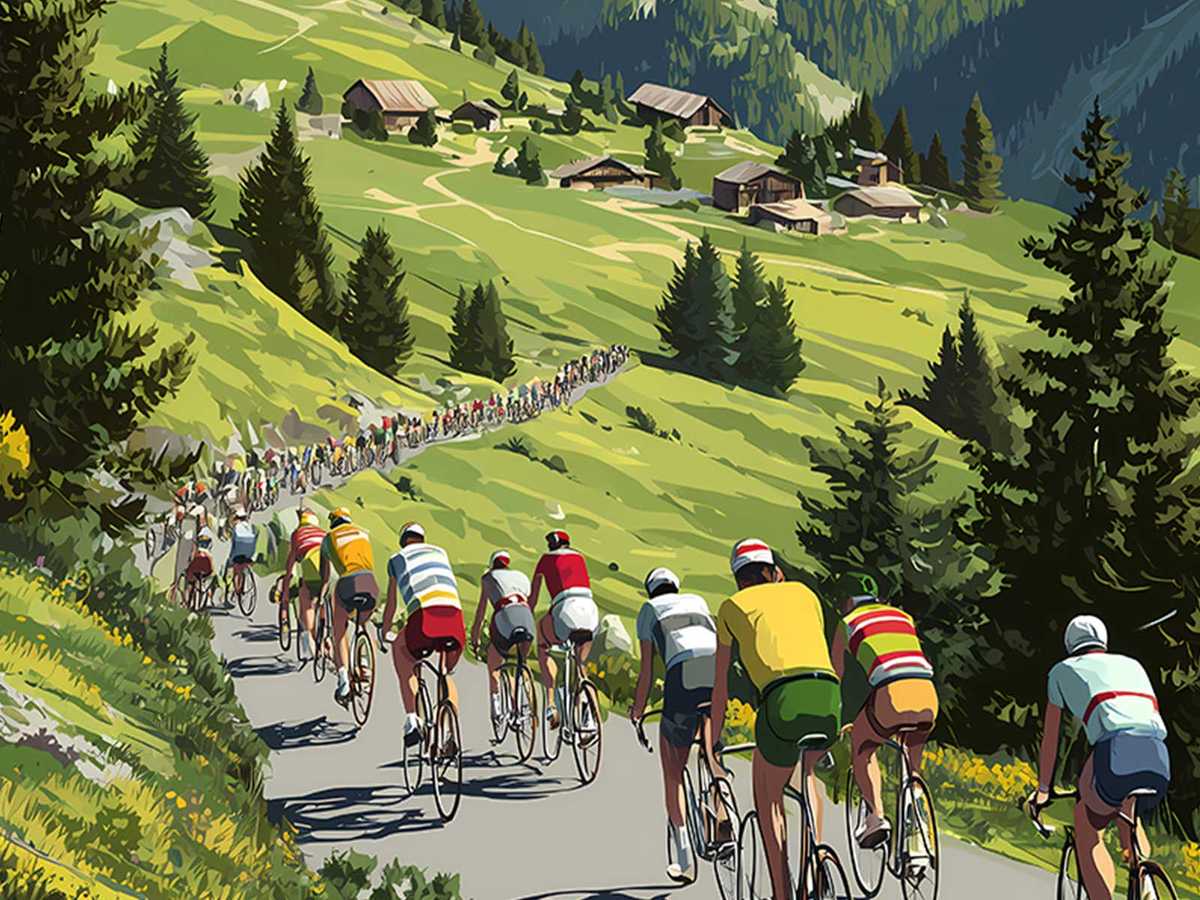
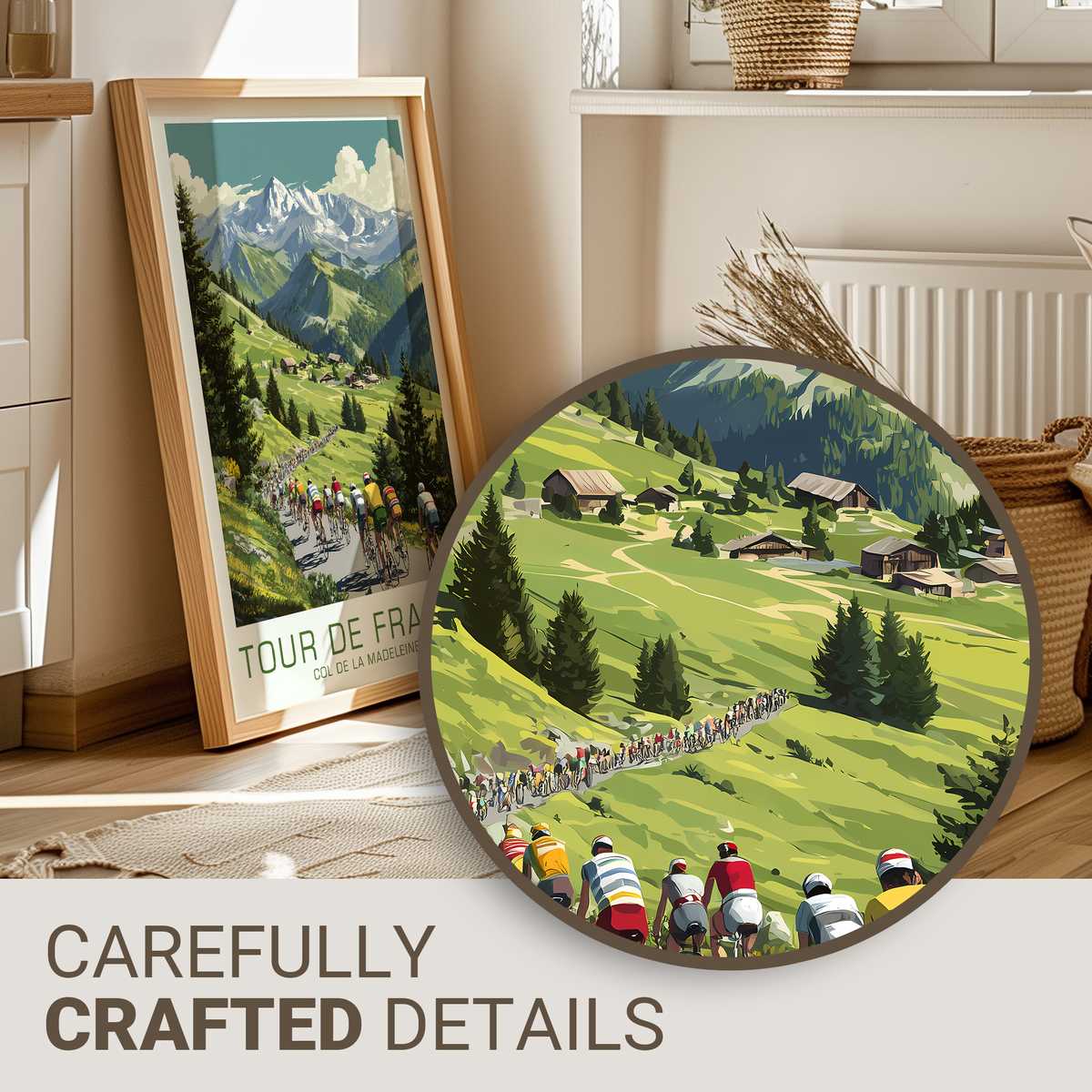
Look at the road first. In images of a high Alpine pass the tarmac is a visual metronome: a narrow ribbon that slices through scree and pasture, marking a human route up a massive geological shape. When the road carries a string of hairpins or a steady upward arc, the poster compresses time — a single frame implies the many minutes of effort needed to conquer that slope. The pattern of guardrails, switchbacks and roadside stones gives a clear sense of gradient; the viewer can almost measure cadence from the way the cyclist’s posture aligns with the asphalt.
Landscape supplies scale. Mountain stages make the rider small to show endurance large. In a well-composed Col de la Madeleine print, the slopes and ridgelines rise behind the figure like tiers of a natural amphitheatre. That relative smallness is the visual shorthand for prolonged effort: the ascent is long, the air is thin, and the human presence insists on continuing. Villages clinging to lower slopes, scattered chalets, or a lone chapel near the pass can appear as tiny punctuation marks that emphasize altitude and remoteness rather than distract from the climb.
[IMAGE_INSERT_ARTICLE_01]
Light finishes the story. Alpine illumination is rarely neutral: it sculpts the road and exposes the gradient. Morning haze softens distant peaks and suggests thin air; late afternoon sun throws long shadows and chisels the rider’s muscles into relief. A poster that uses cool, crystalline light will evoke the clarity and oxygen of high places, while a warmer, low sun will dramatize fatigue and the last push to the summit. The interplay between sky and slope—glowing horizons, sudden cloud shadows, or a band of sun on a roadside meadow—creates the mood of an epic rather than a simple landscape study.
Atmosphere in these images also comes from what is not shown. Sparse roadside crowds, a single commissaire car in the distance, or a faded race banner flapping in wind hint at the Tour’s presence without overwhelming the place. That restraint keeps the composition about the climb itself: the physical contest becomes an almost contemplative human gesture against geological time. The viewer senses the quiet between attacks, the measured breathing, the gear changes, the moments when a rider sets into a sustainable pace that will carry them over the pass.
As wall art, a Col de la Madeleine poster works because it is a place portrait and a performance study at once. In a living room or study it reads like a meditation on effort: its tones and forms invite the eye to travel up the picture, just as a cyclist must travel up the slope. As décor, it rewards close looking — the texture of rocky slopes, the patina of a rural stone wall, the hush of high-altitude grassland — while also offering a strong focal statement from across the room.
Finally, these posters connect with memory and heritage. The mountain road is a stage that has hosted countless narratives, and a single evocative image becomes a repository for imagined or recalled moments of struggle and triumph. That sense—less about a single race outcome and more about the human act of climbing—makes stage-led Tour imagery enduring and display-worthy.
The Col de la Madeleine, captured through road geometry, landscape scale and considered light, shows why the Tour’s mountain stages translate so naturally into compelling, atmospheric wall art.