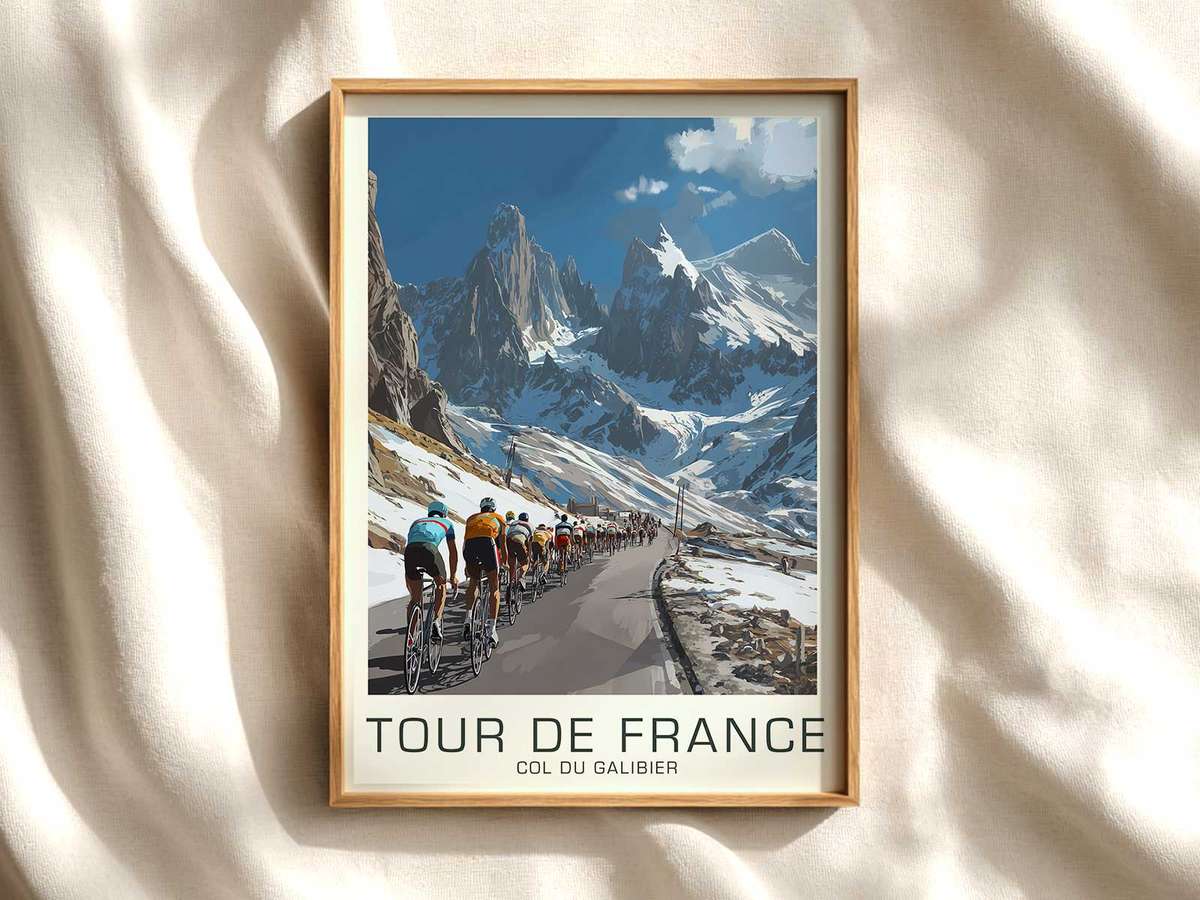
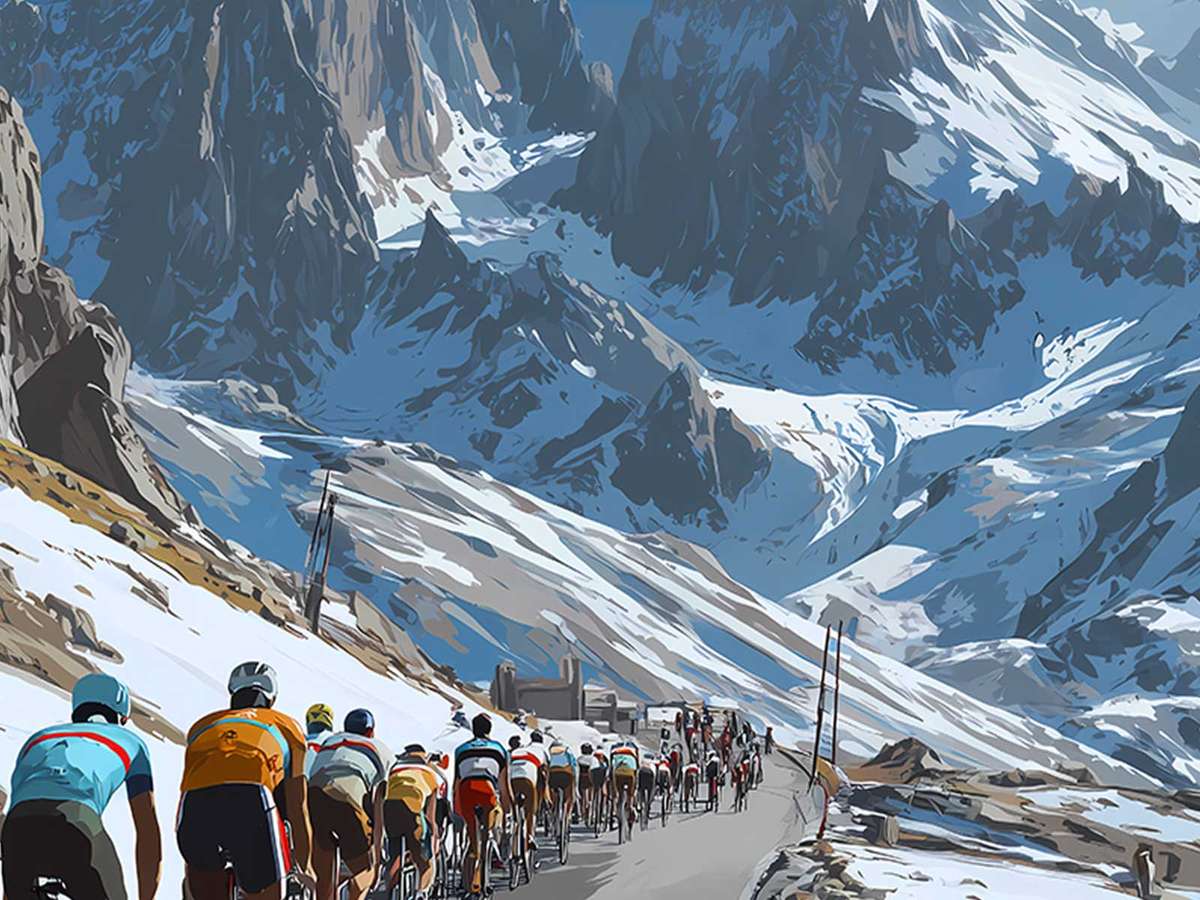
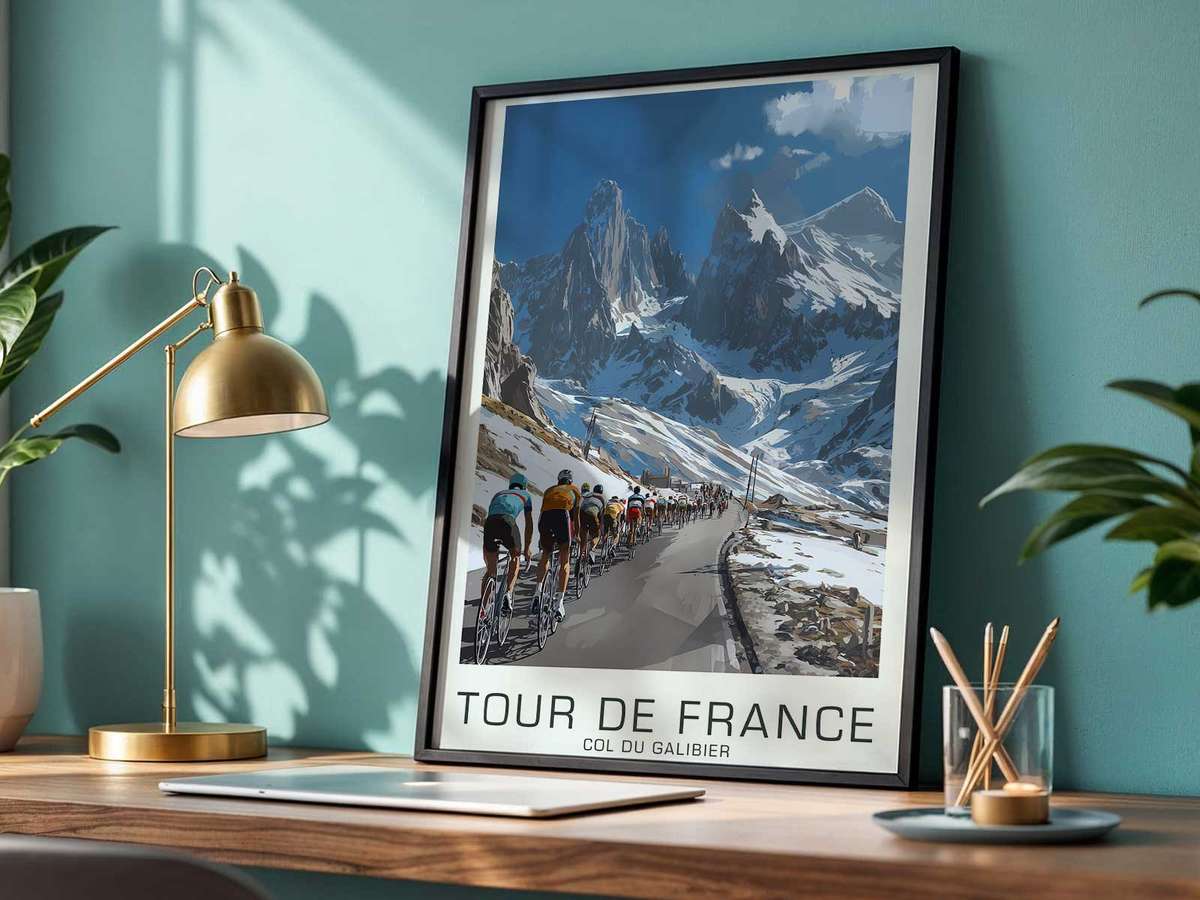
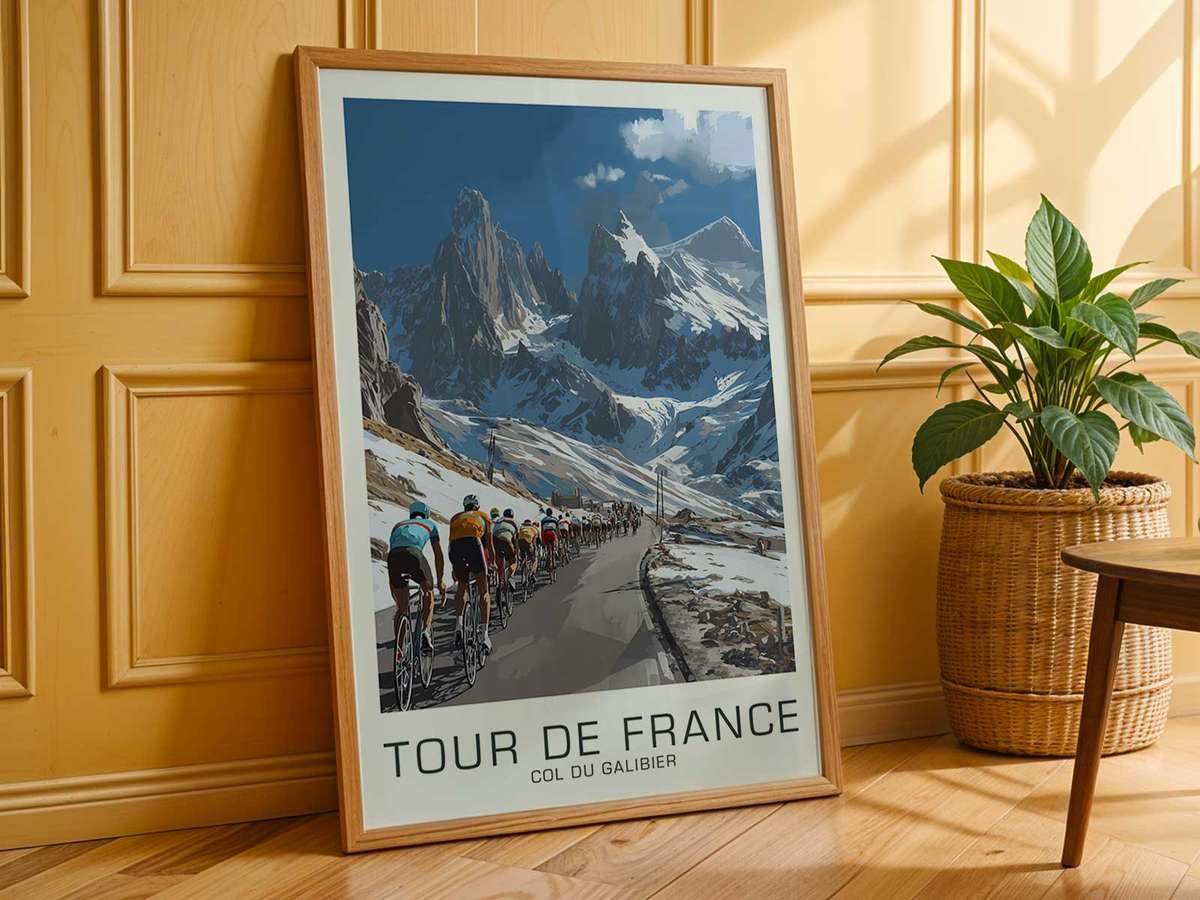
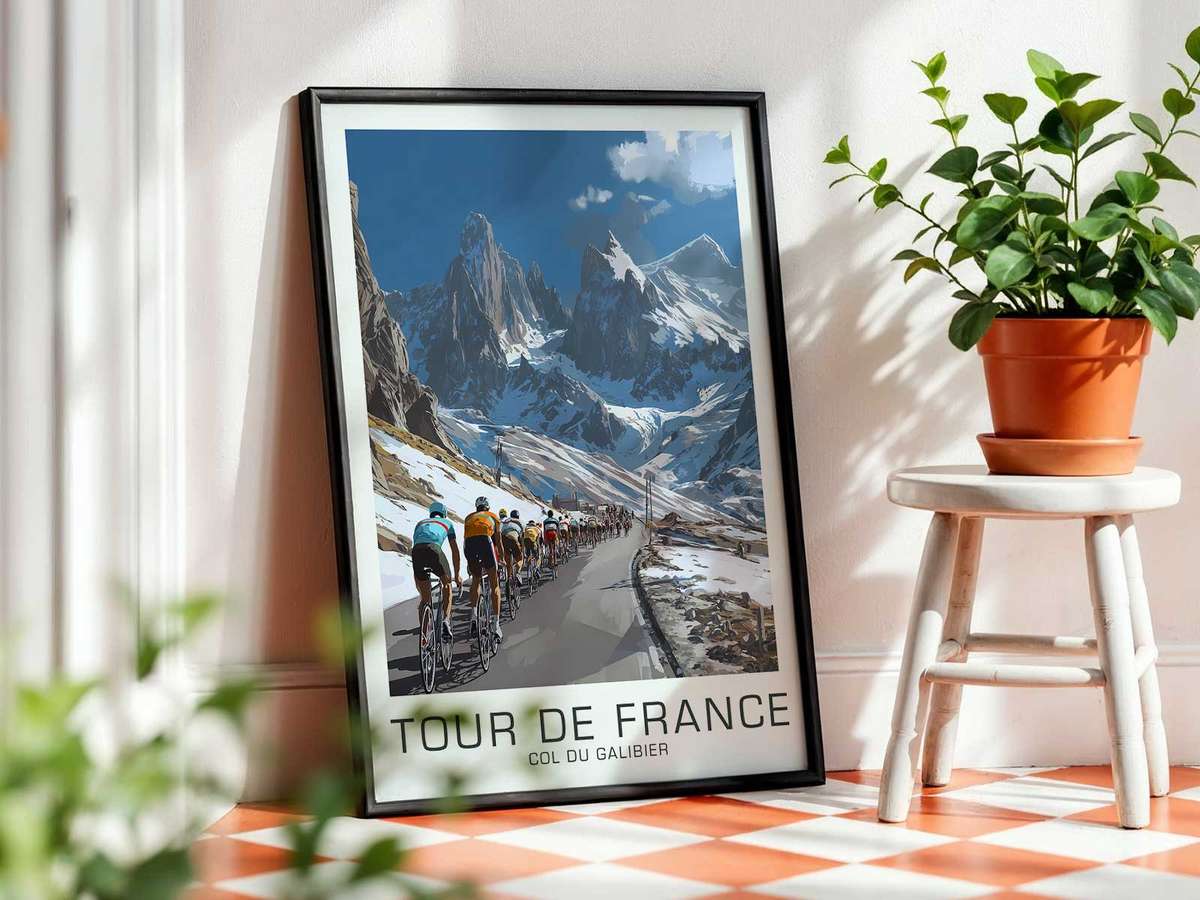
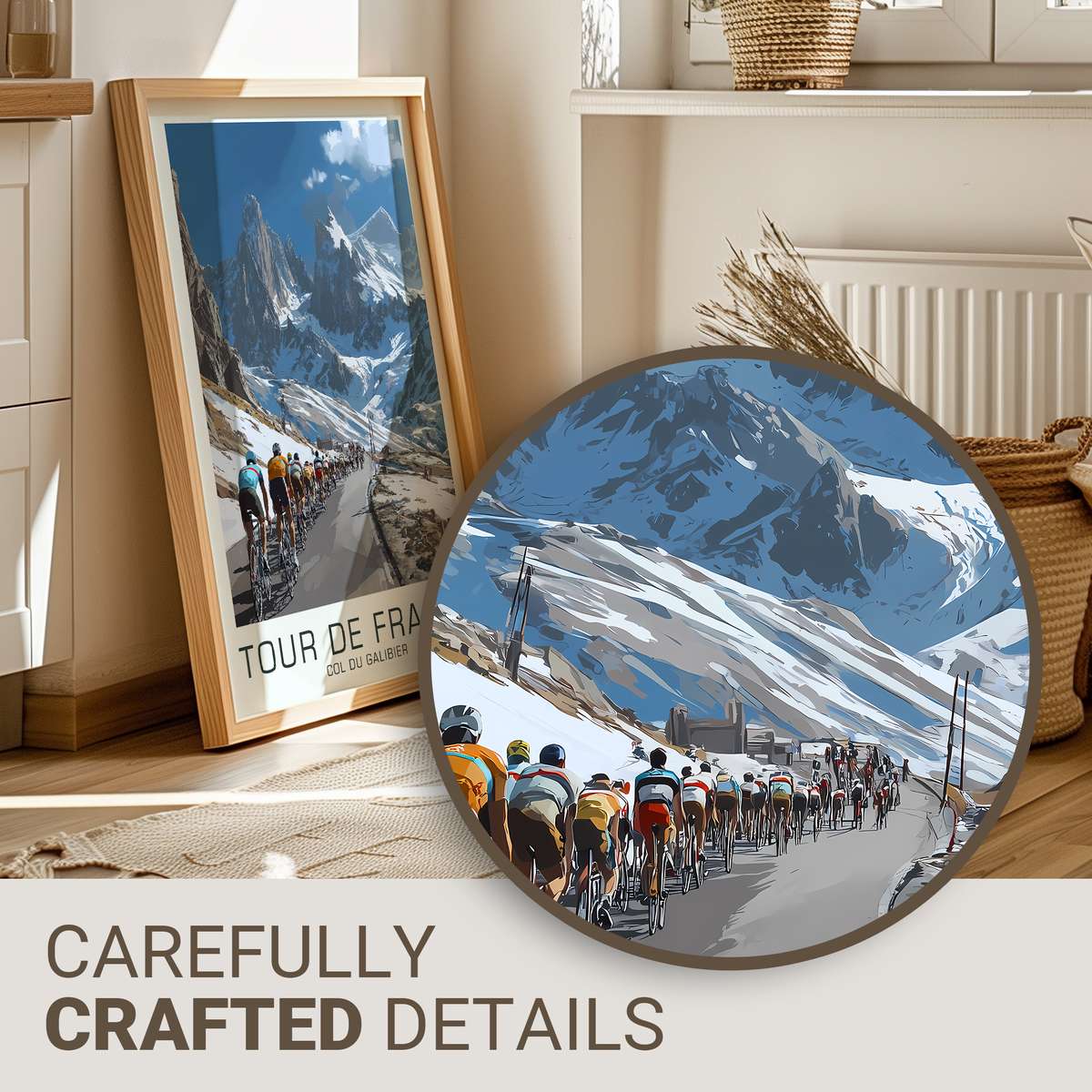
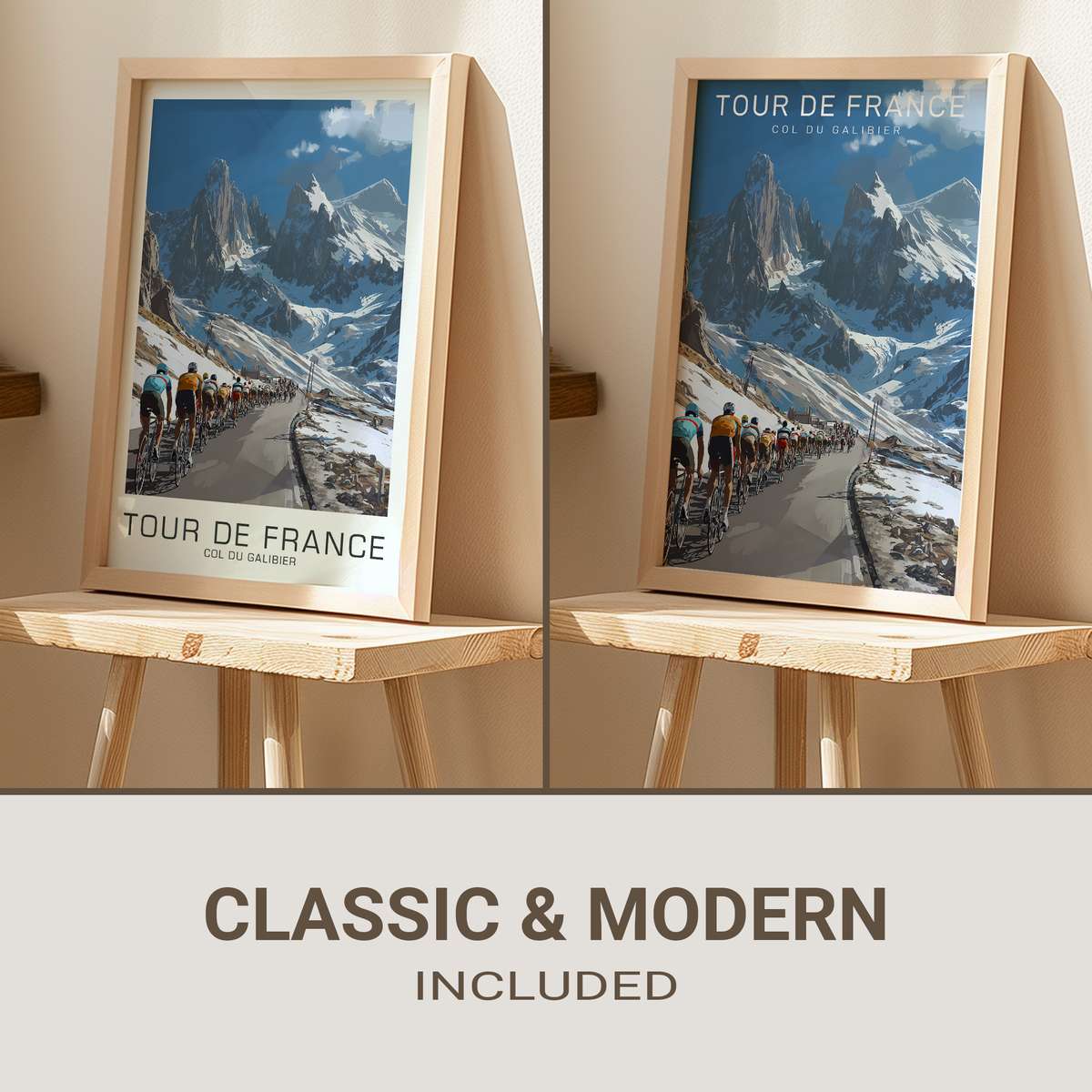
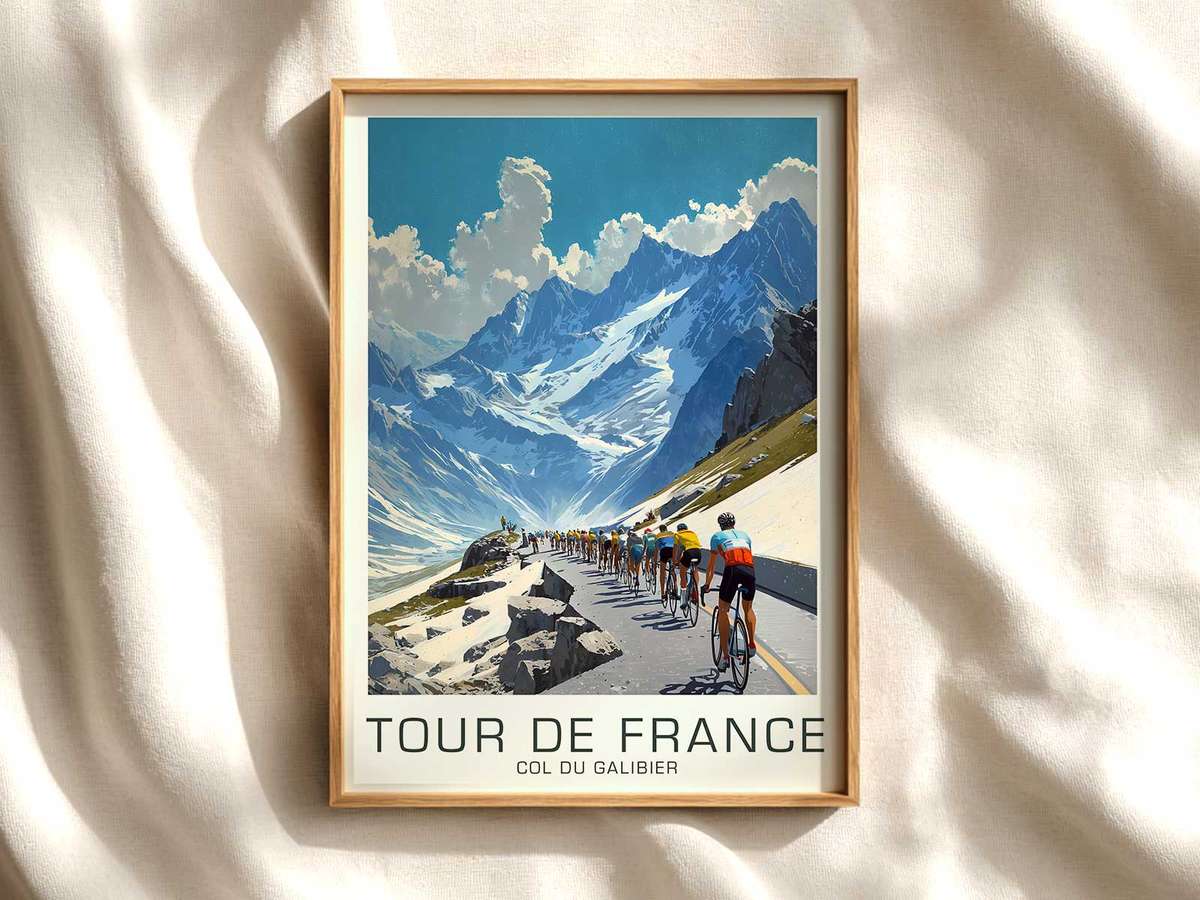
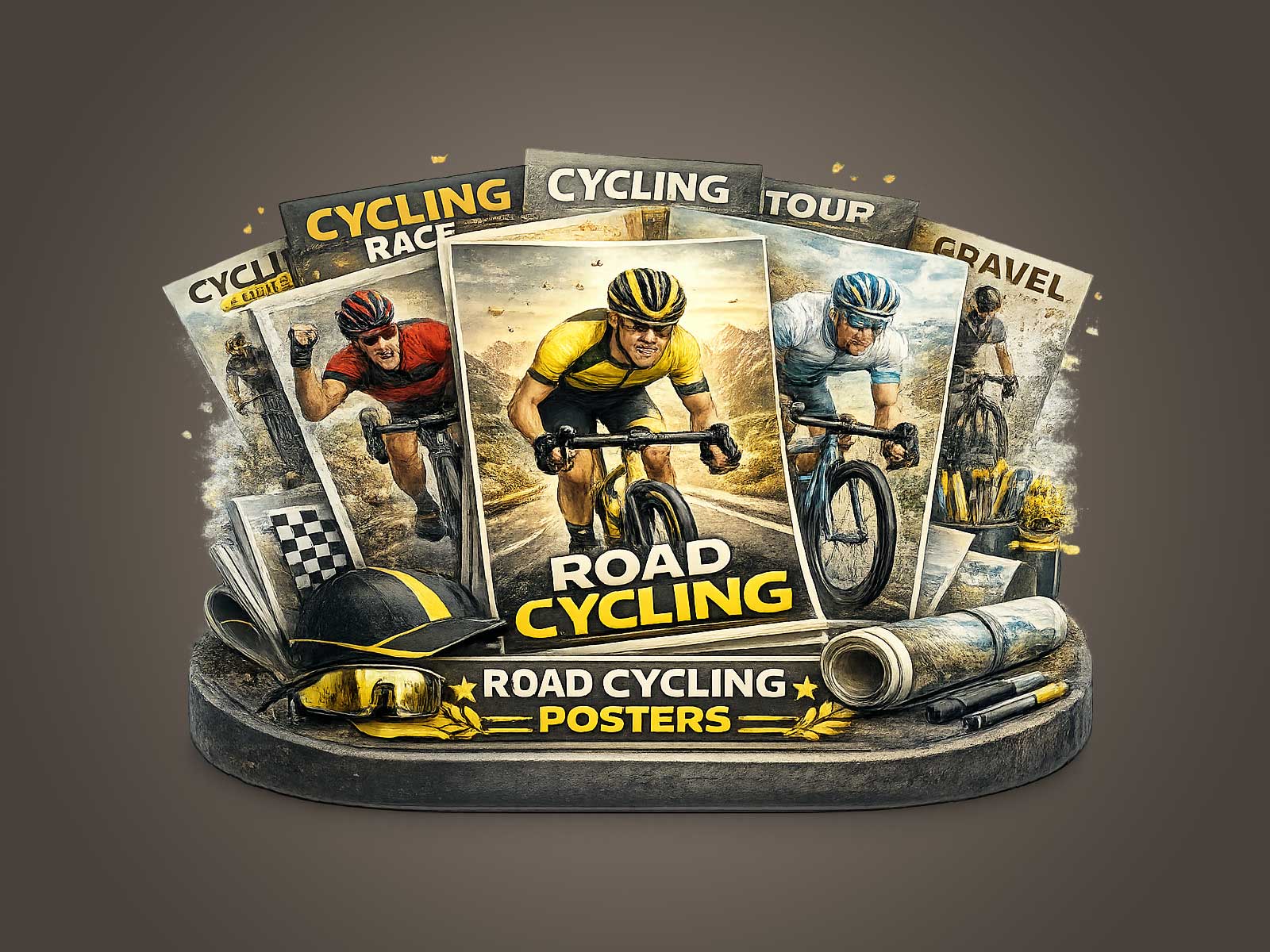
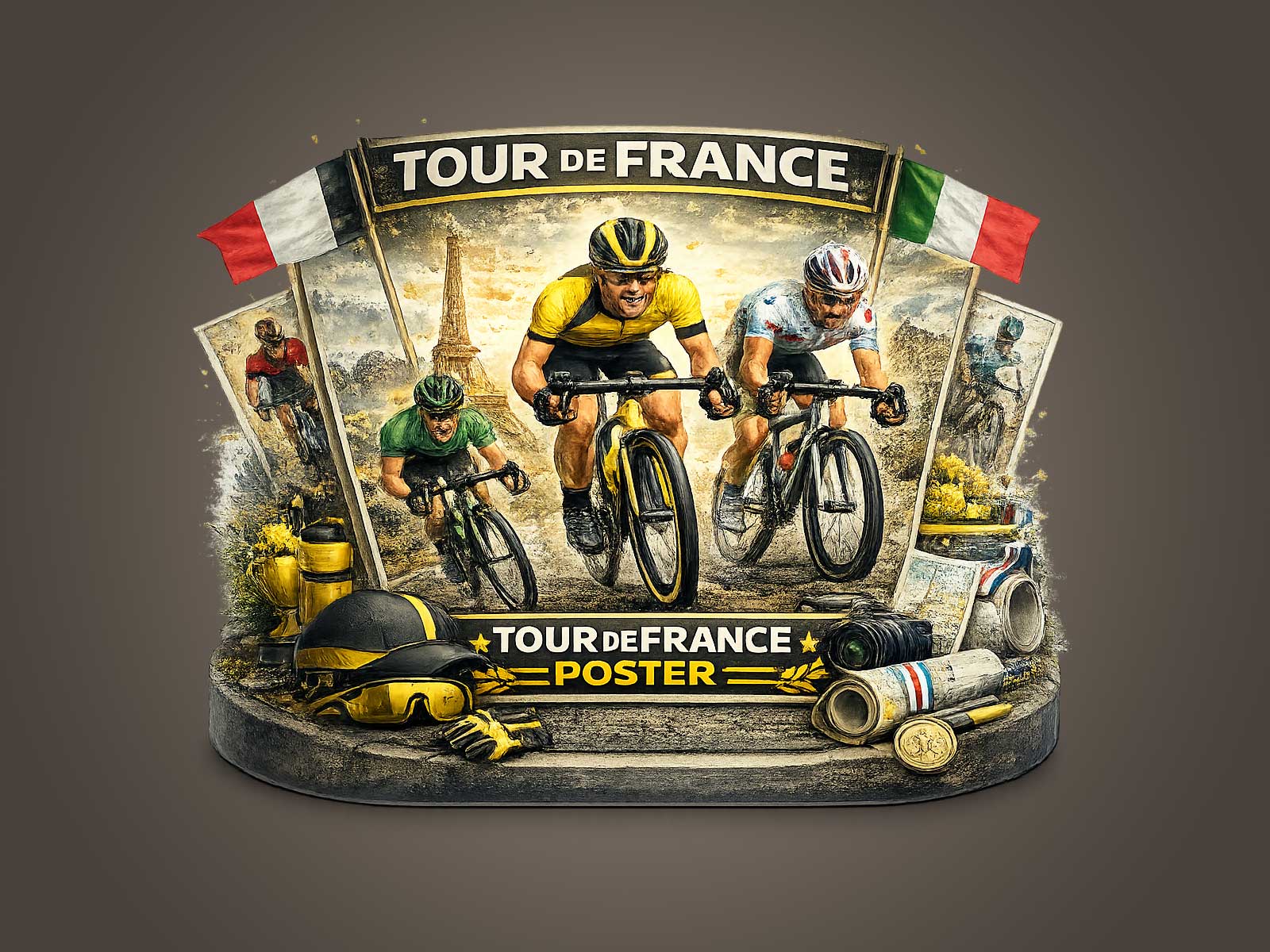
There is an unmistakable charge when a single rider is framed against a high mountain road. This poster, centred on the Col du Galibier, uses the cyclist as its sole narrative engine: not a record of results or a catalogue of victories, but a study of sustained effort made visible. The slope, the pavement, the light on the shoulders and the tilt of the head all conspire to present the rider as an emblem of endurance—composed, exhausted, and relentlessly oriented toward the next bend.
Visually, the piece privileges gesture over biography. The hands on the hoods, elbows slightly splayed, forearms taut—these small signals read like verbs. They tell us the cadence of breathing, the tacit negotiation between body and bike, and the discreet choreography of pacing that keeps the legs turning when fatigue accumulates. The rider’s posture speaks in a language of angles: an open chest that still finds air, a lowered head that channels focus, a seated or standing position that records the precise moment of effort. These are the cues that make the image read as an act rather than an identity card.
Colour and negative space in the composition reinforce that reading. Muted alpine tones, a long stretch of road, and the soft geometry of the mountain create a backdrop that refuses to distract. Instead of crowd scenes or roadside paraphernalia, the environment becomes a stage that amplifies the body’s movement. The road’s incline and the way it recedes under the wheel map the rider’s relationship to distance and gradient—each curve an implicit measure of endurance. The bicycle is elegant but secondary: its silhouette clarifies the human gesture without stealing the scene.
[IMAGE_INSERT_ARTICLE_01]
Reading this poster is an exercise in close looking. The expression of fatigue is controlled, not melodramatic: a jaw set against effort, a brow shadowed by concentration. That restraint matters because it converts suffering into resolve. The image suggests rhythm rather than collapse—an insistence on forward motion that feels noble precisely because it is ordinary and repeated. Viewers project themselves into that cadence: the slow burn of repetition, the tiny technical compromises made to stay efficient, the mental economy of conserving strength.
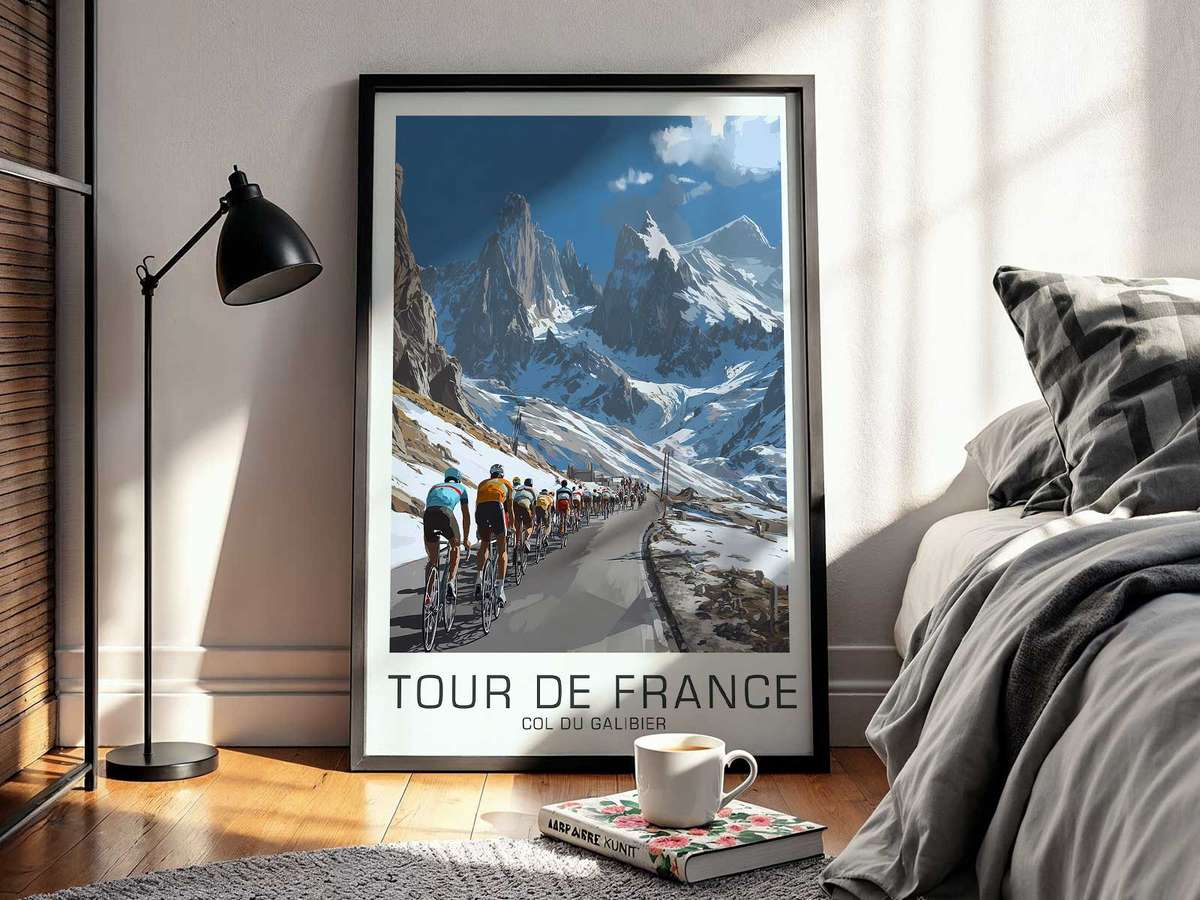
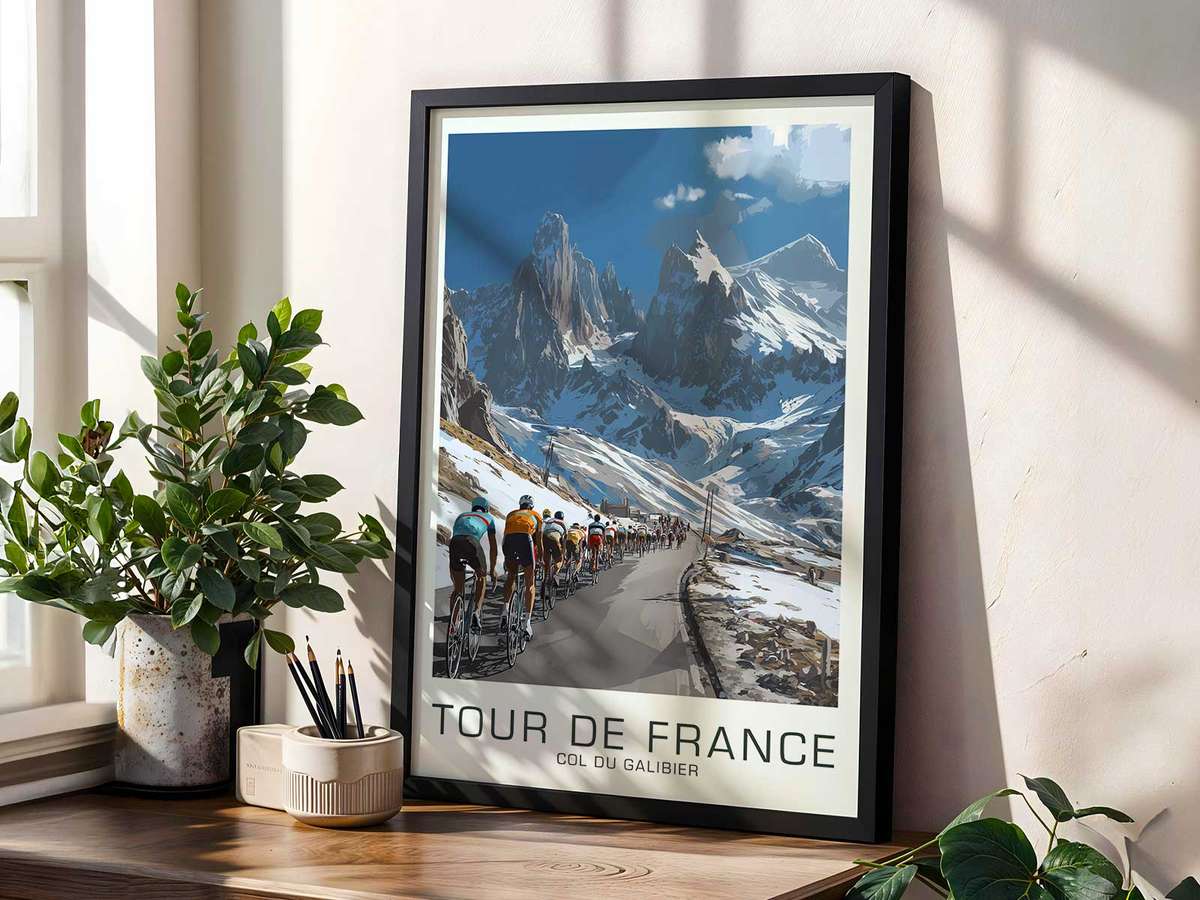
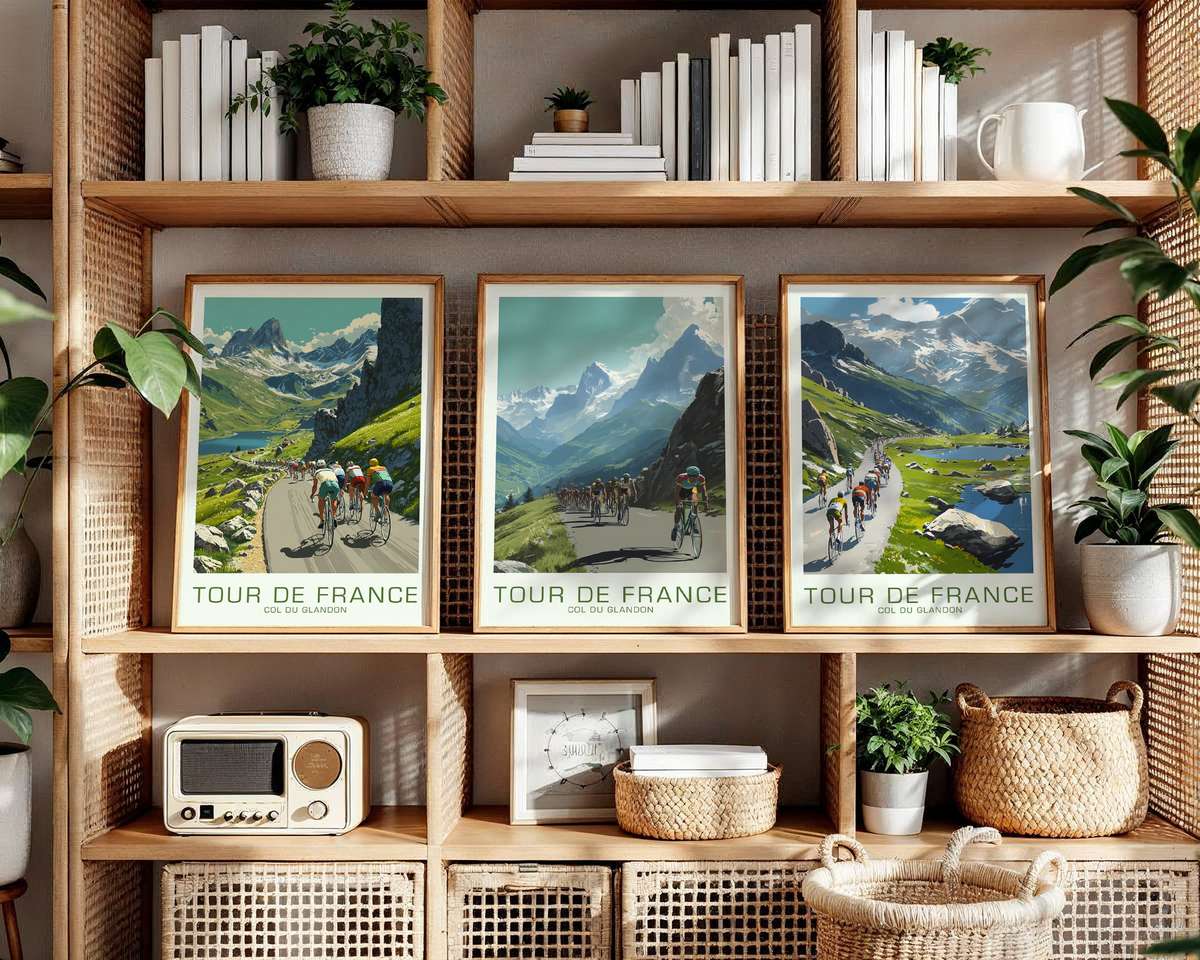
In interior terms, a rider-led composition like this modifies a room by introducing a single, clear axis of tension. In a study or living room the poster offers quiet drama; in a studio or game room it supplies a disciplined focus. It is not spectacle but compression—an athletic posture frozen at the moment when endurance becomes character. The artwork’s presence is architectural: it defines sightlines and mood without shouting, inviting a longer look at the line of a back, the set of the shoulders, the meeting point between tyre and tarmac.
Ultimately, the poster works because it trusts the body to tell the story. There is no need to name victories or list stages: the rider’s silhouette, the cadence suggested by visible muscle tension, and the directness of the road communicate a complete narrative of effort. That visual honesty is what makes this kind of Tour de France image so compelling on the wall—it turns an athletic gesture into a quiet manifesto of endurance, composure, and the intense, wordless focus of a cyclist climbing toward the Galibier’s horizon.