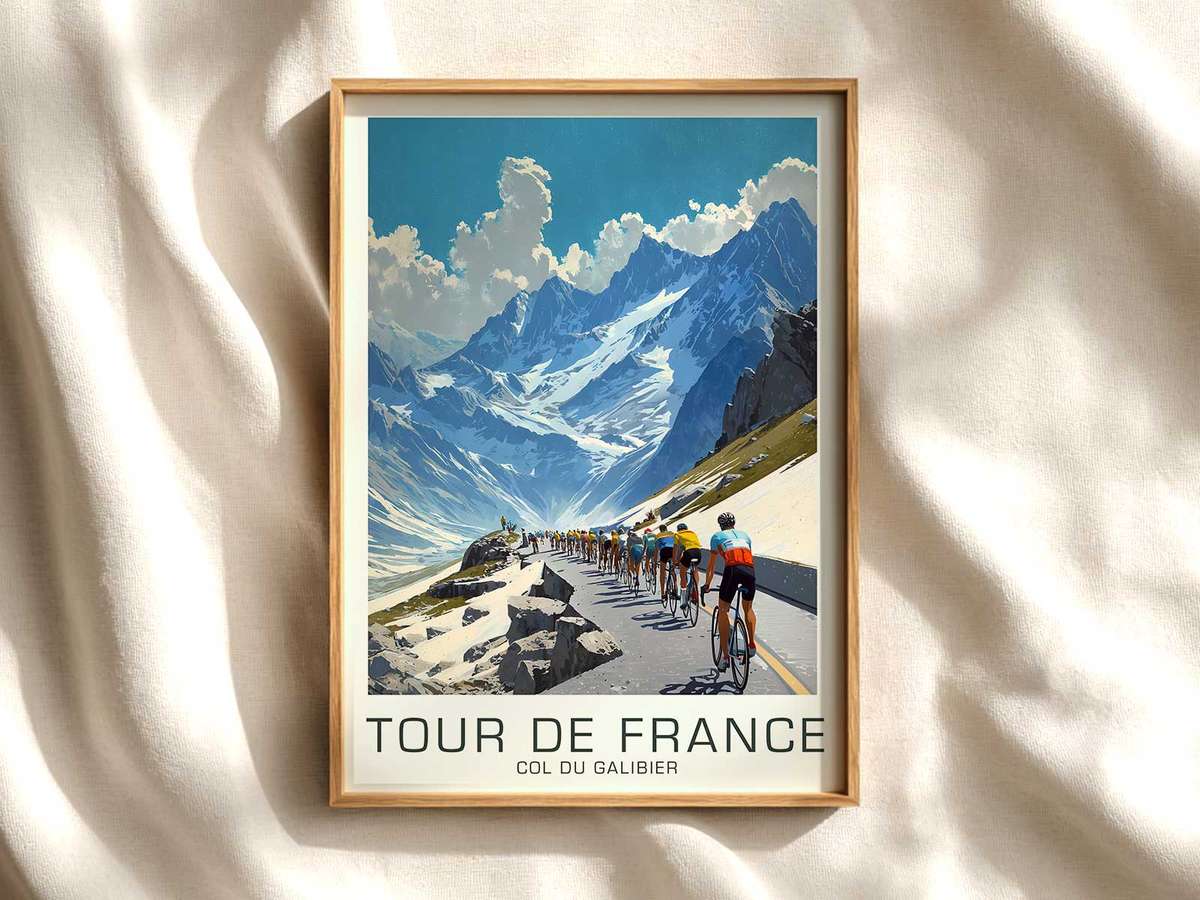
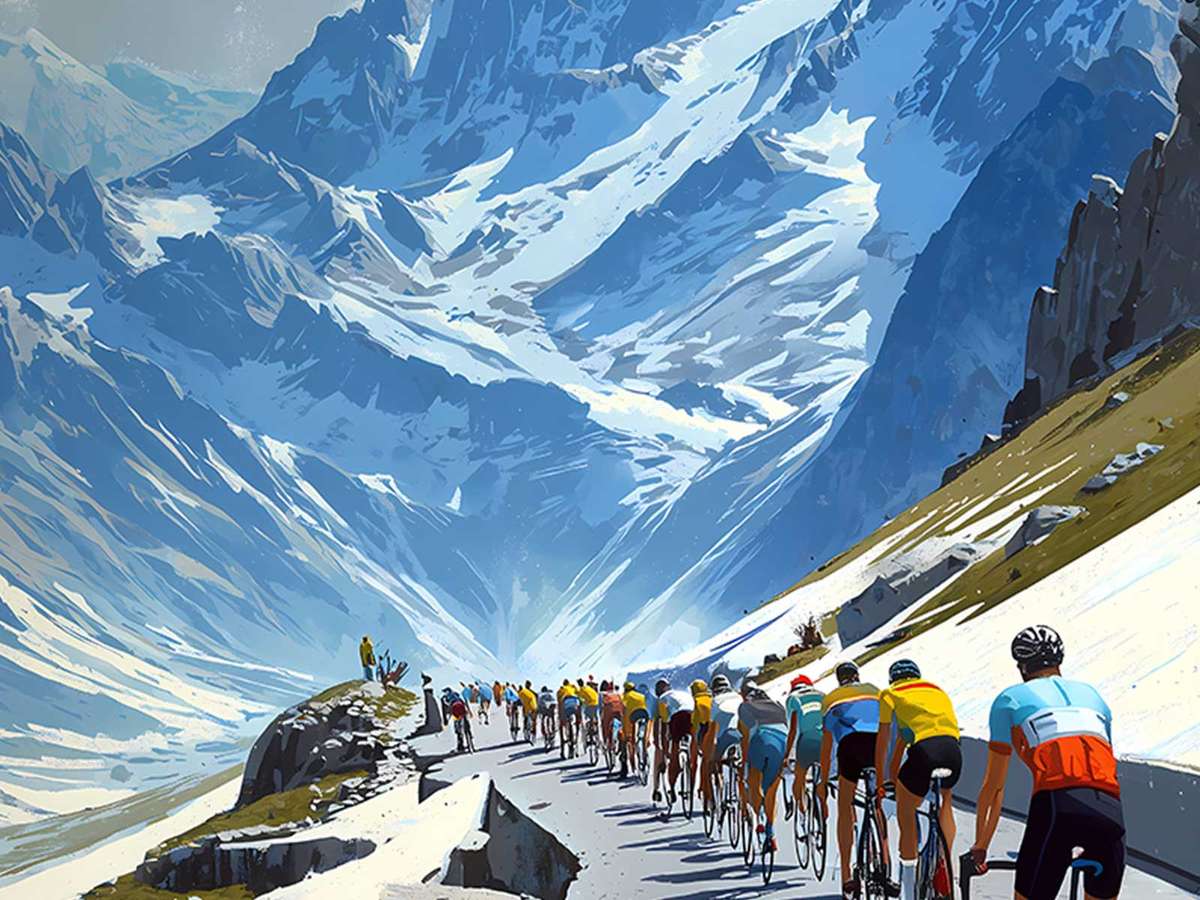
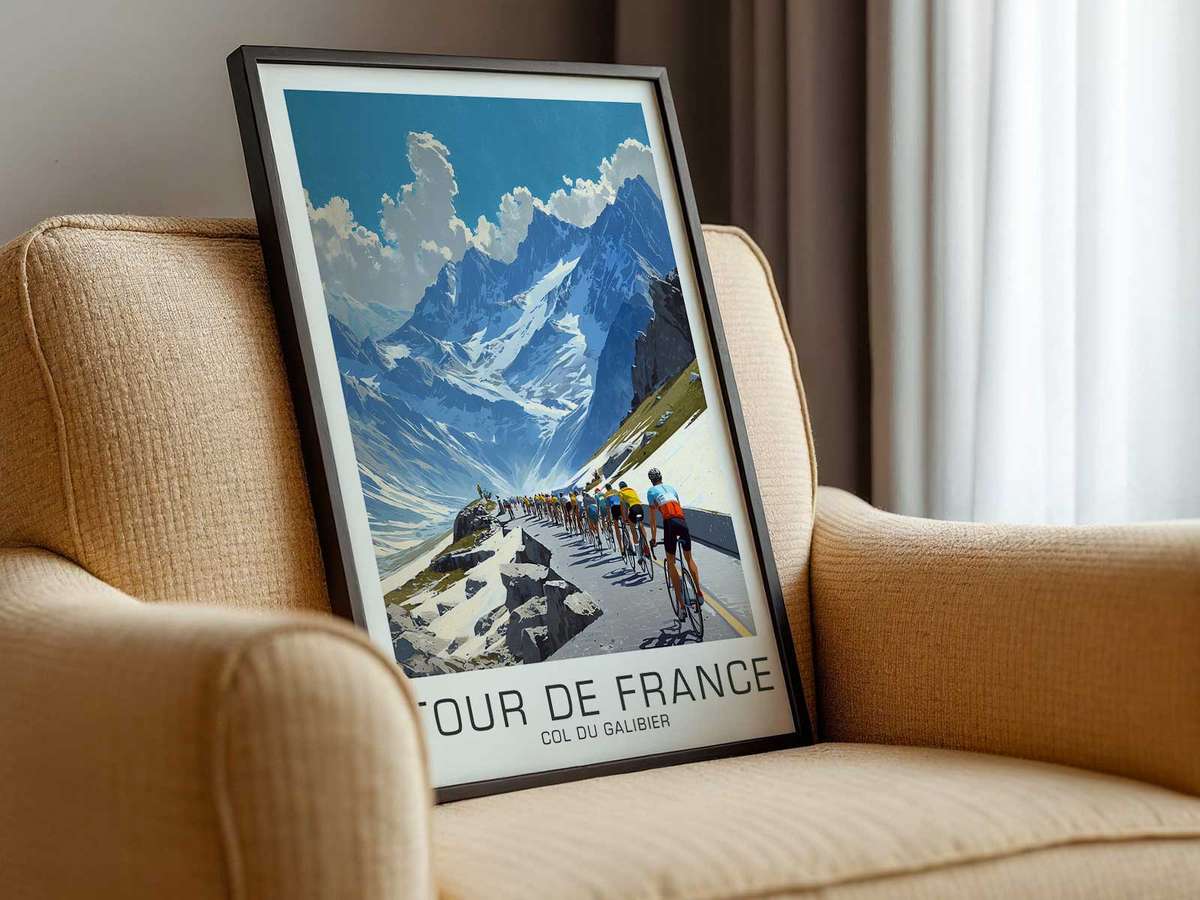
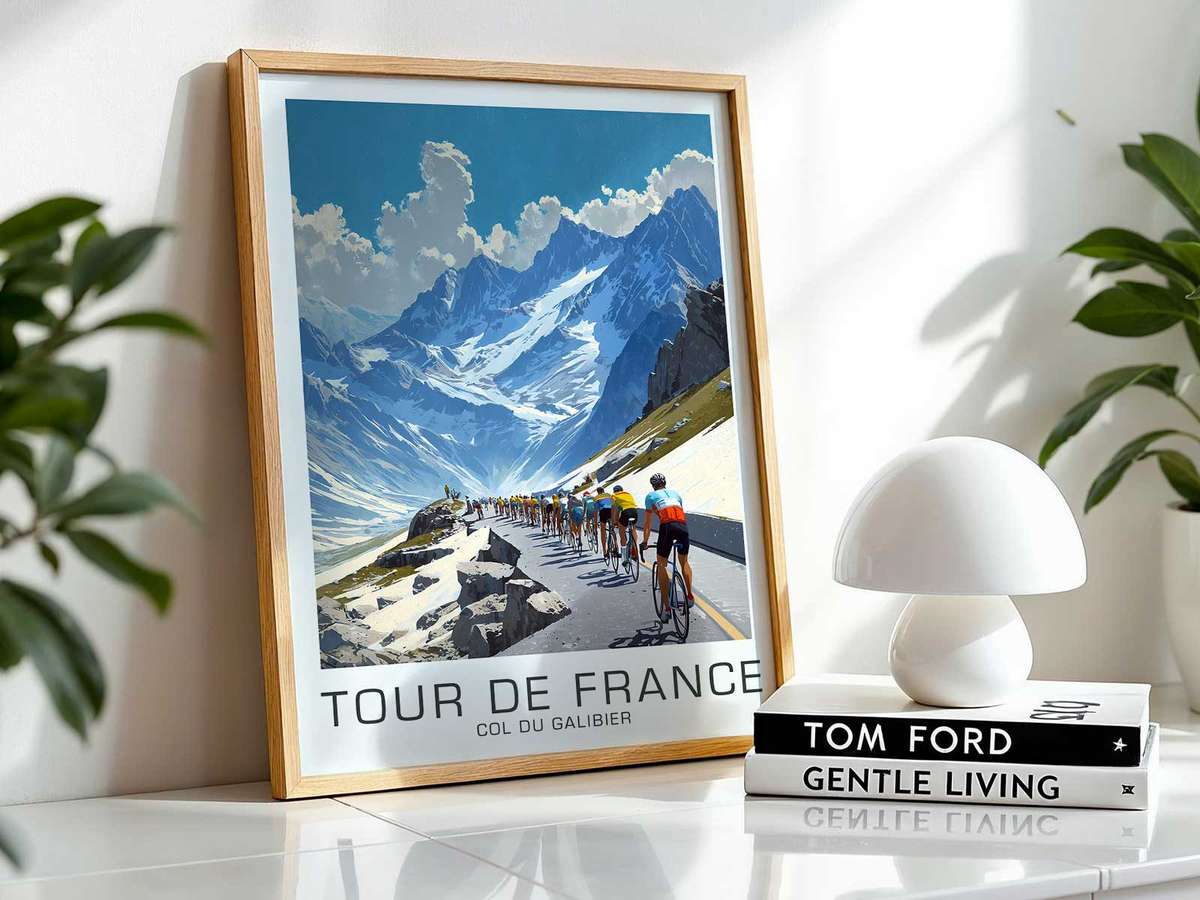
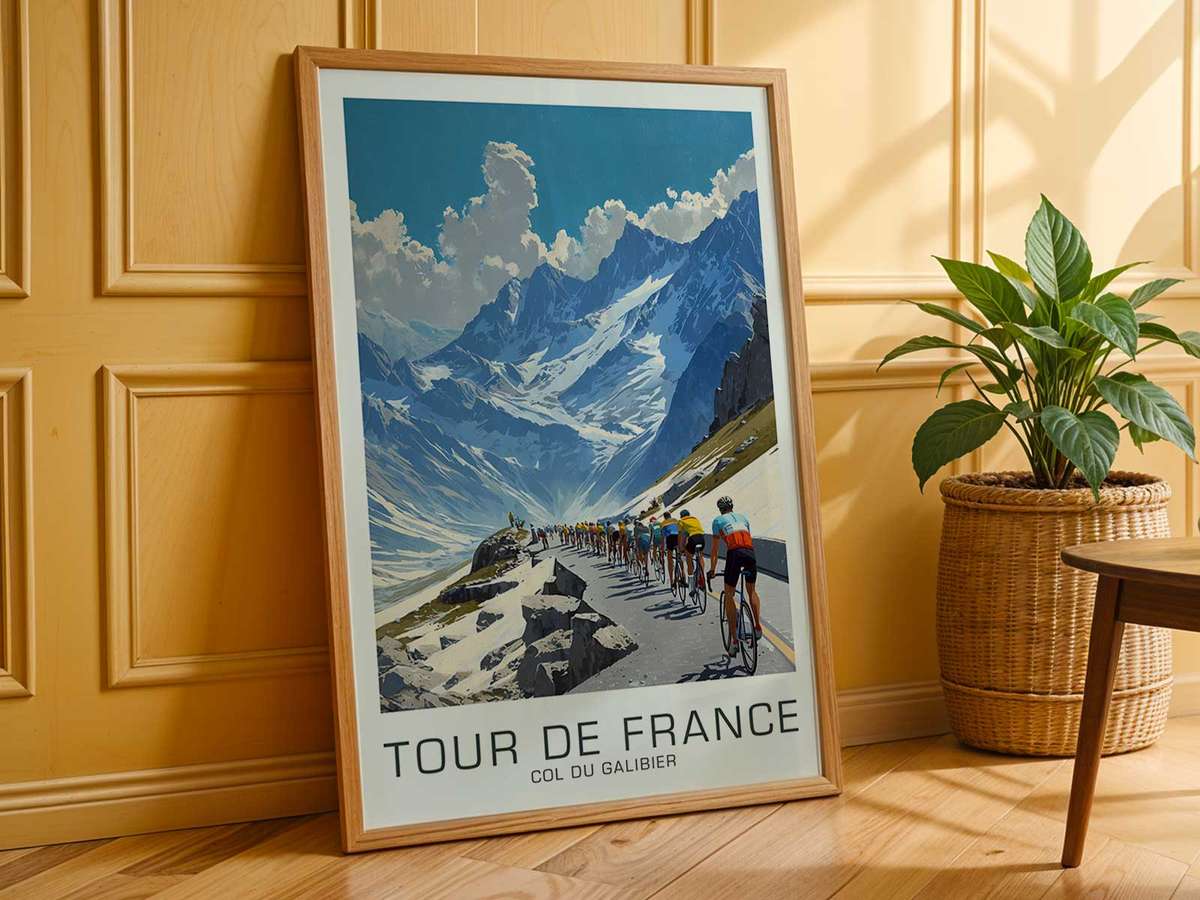
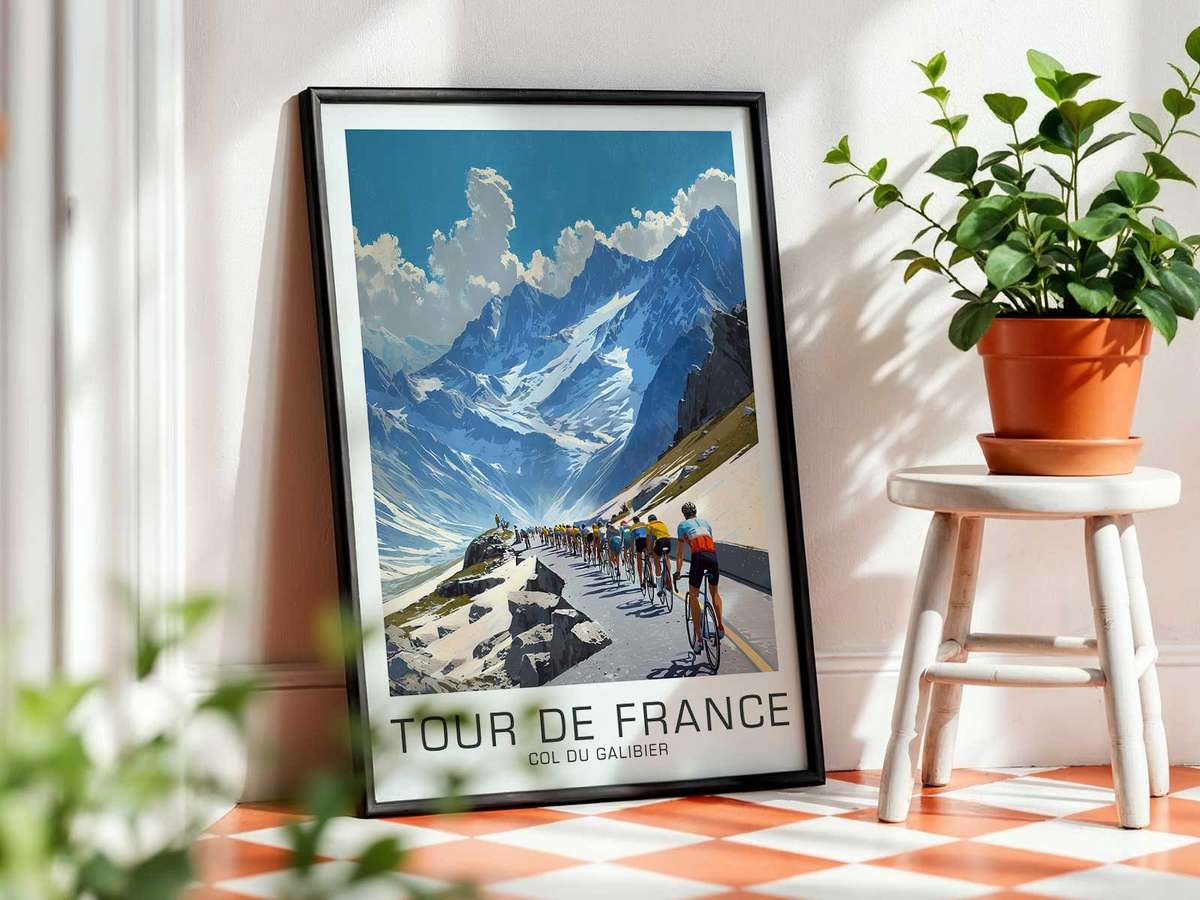
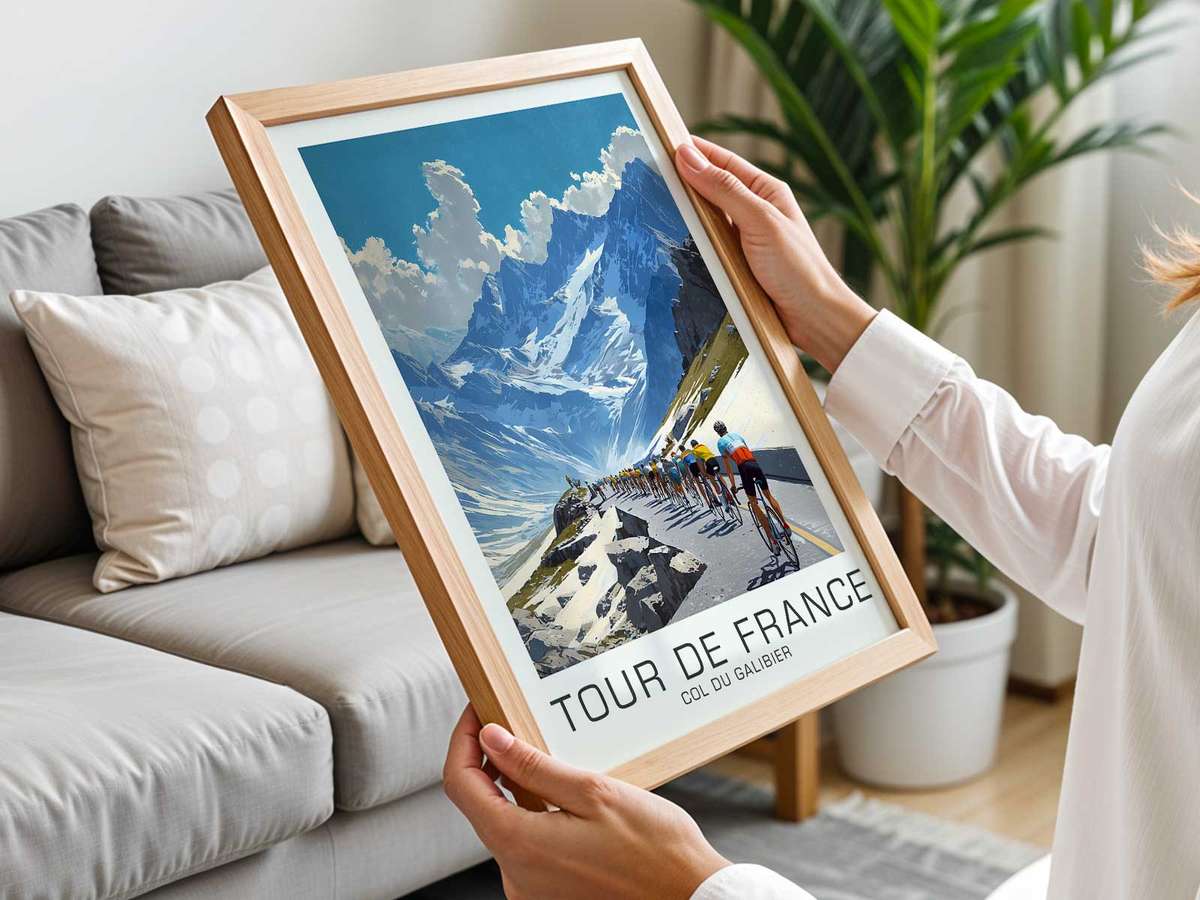
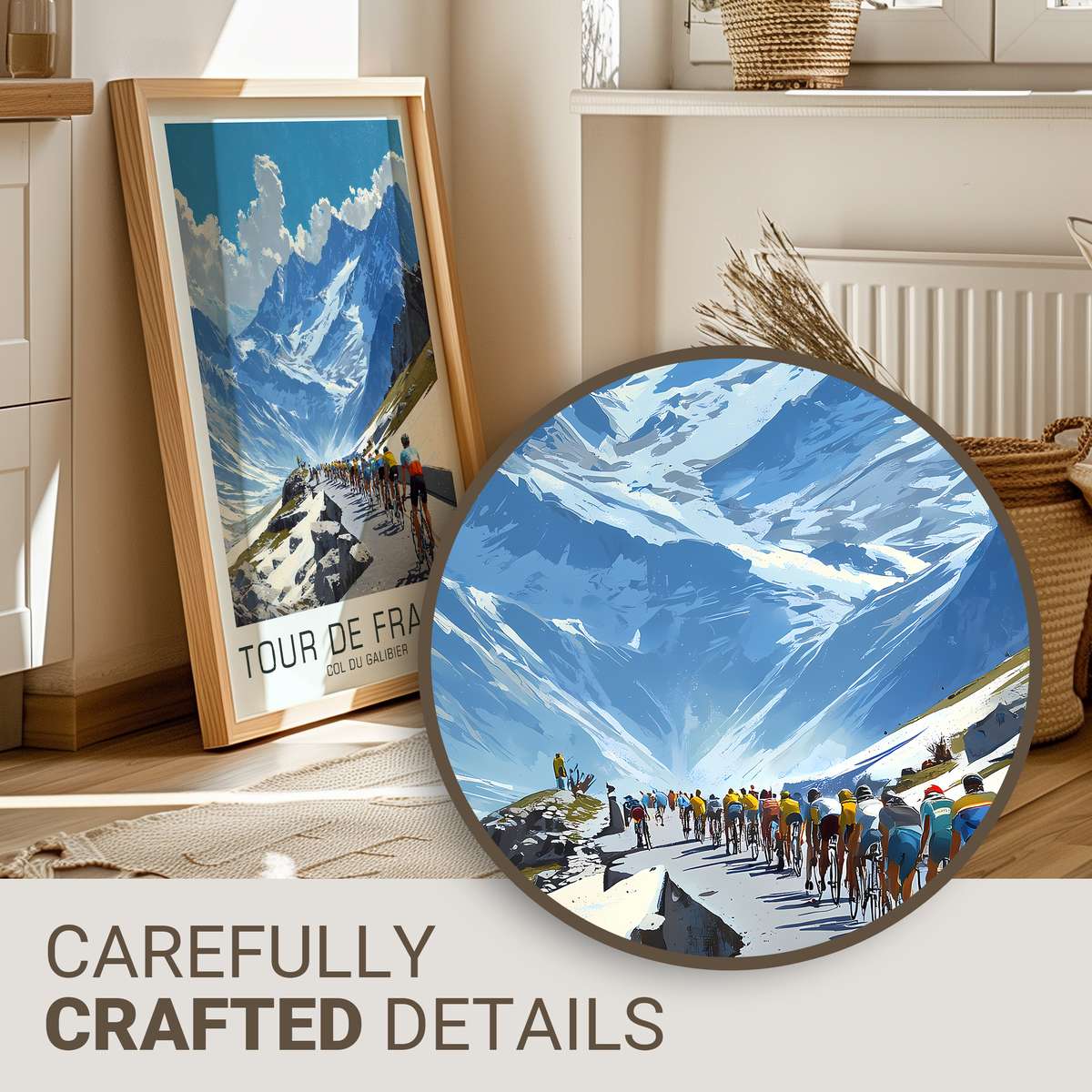
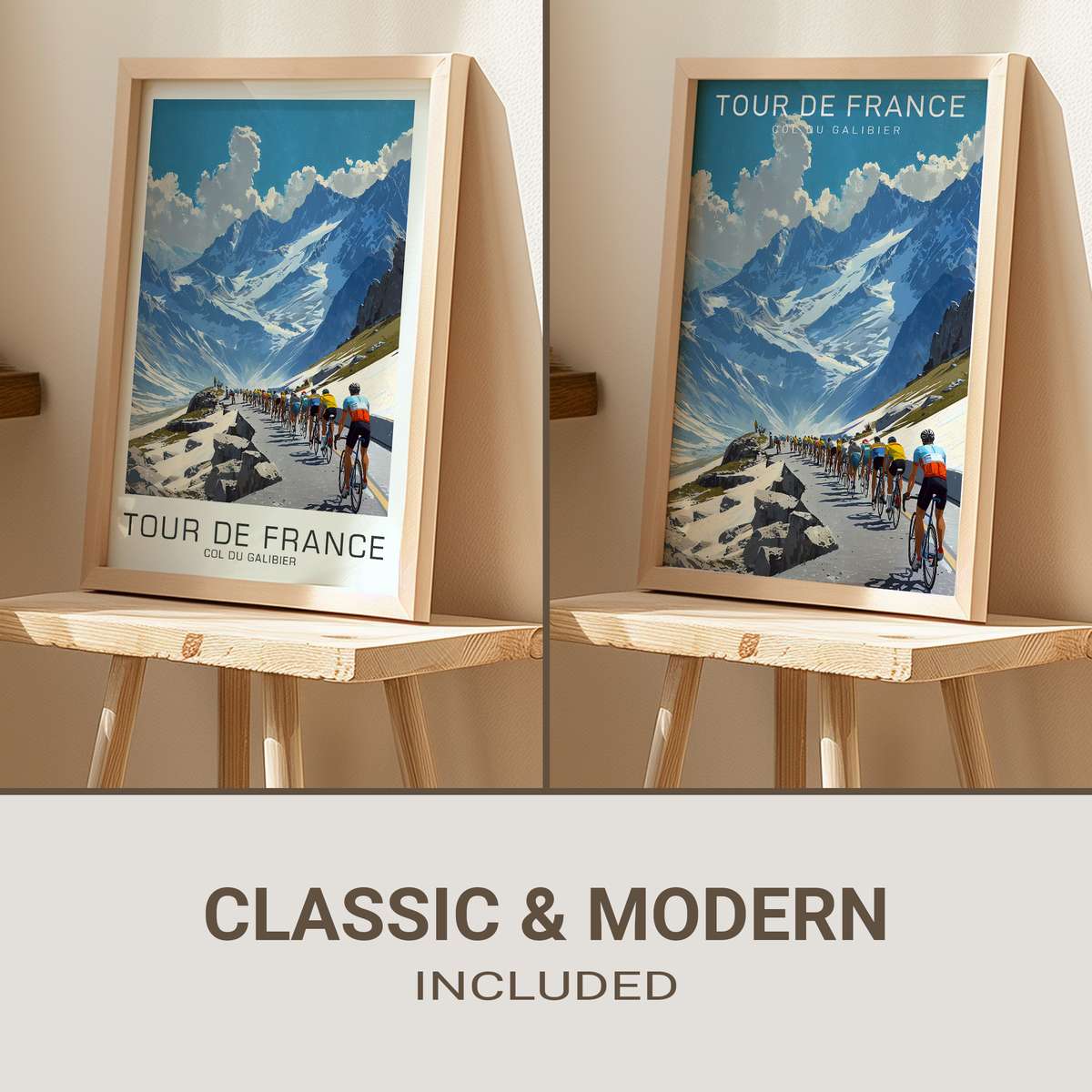
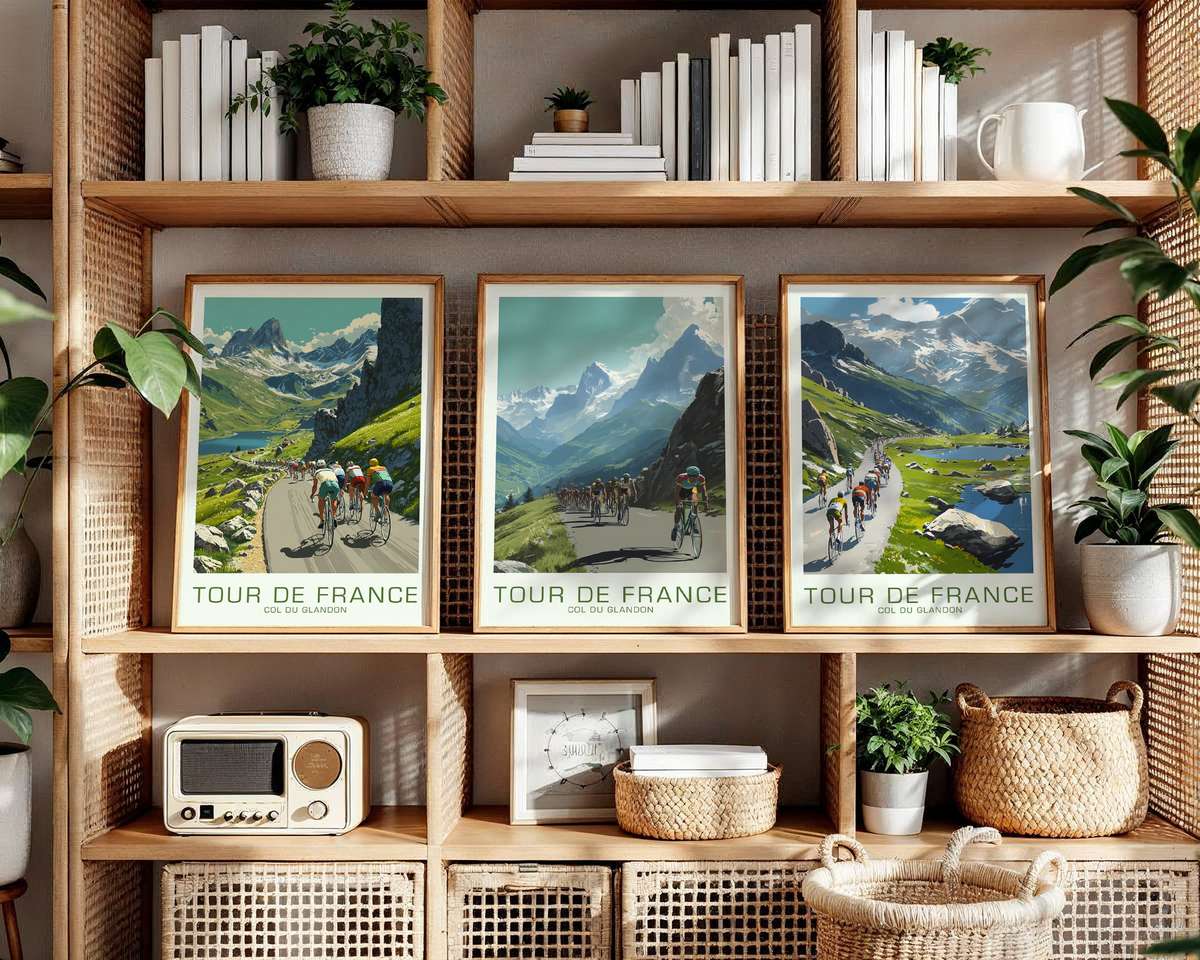
The Galibier image reads like a single stanza of a long poem: a slope, a rhythm of wheels, and a tight group whose edges are fraying under pressure. As a peloton poster this is not a mere photograph of a race; it distils one decisive instant when effort, relief and rivalry converge. The road’s gradient is almost a character — a rising voice that shapes posture, cadence and breathing — and the riders’ spacing becomes the vocabulary of tactics: a gap as a question, a wheel as a promise.
What makes this poster arresting is timing. The composition arrests the moment of choice: the leg that is out of the saddle, the rider whose face drops into concentration, the challenger half a wheel behind measuring the moment before an attack. You can read fatigue in the shoulders and calculation in the eyes. That split-second decision — to bridge, to sit, to push — carries the story of a stage: the invisible ledger of time lost and gained, the cost of a gamble at altitude.
The tension in the frame is physical as much as visual. The gradient compresses perspective so that the nearby rivals loom large and urgent; the air itself in the image seems thin. Tires bite into asphalt, chainrings hum, and the small smear of jerseys becomes a study in colour restraint: a single vivid hue against neutral rock and sky, a cue that guides the eye and anchors the narrative. Close proximity of riders creates a cinematic foreground and background, where a millimetre of space signals both risk and opportunity.
[IMAGE_INSERT_ARTICLE_01]
Seen as wall art, this poster trades on specificity rather than abstraction. The viewer does not simply sense "race drama" — they witness a summit attack or a compressed peloton chase rendered in the language of posture and spacing. That implied action supplies emotional charge: courage to test limits, fatigue transformed into technique, and the tactical quiet before a decisive move. It is an image that invites repeated looking because every glance reveals another tactical thread: who is towing, who is marking, who is about to let go.
Beyond the athletic romance, the aesthetic elements make the piece room-ready. The sloping horizon and restrained palette read well above a hearth, behind a desk or in a study, where the print’s vertical energy complements furniture lines and draws sight upward. The poster’s narrative tension — an attack held at the threshold of success or failure — brings an edge to interiors without resorting to literal exuberance. It rewards contemplation: visitors can admire the bicycle’s elegant geometry, the cadence frozen mid-stroke, and the way shadow sculpts muscle and metal.
Crucially, a race-moment poster like this works because it tells more than a single story; it suggests an arc. From the small evidence in the frame — a clenched jaw, a dropped shoulder, a hand poised near the bars — viewers infer the preceding kilometres of toil and imagine the kilometres still to come. That psychological layering is what makes a sporting instant feel mythic and why the image becomes a focal object in a room: it is both specific reportage and universal drama.
When you choose a peloton poster of the Galibier climb, you are choosing an instant that captures the calculus of racing at high altitude: timing, pressure, and the slim margin between success and surrender. The print holds its power in details — the slope’s angle, the compressed peloton, the riders’ body language — and in the way those details combine to evoke a narrative of endurance and strategic daring. On a wall, the image quietly insists on attention, rewarding the viewer with a story that unfolds again each time it is seen.