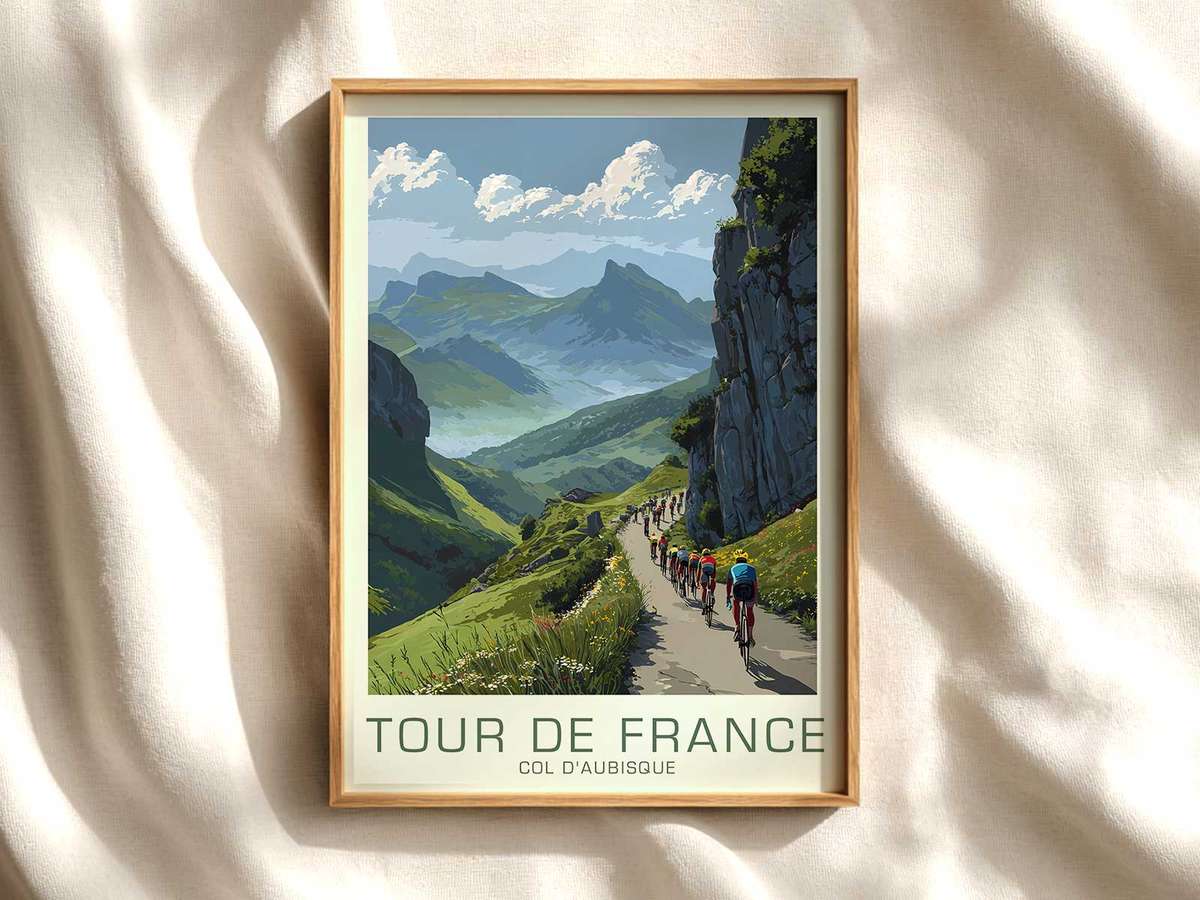
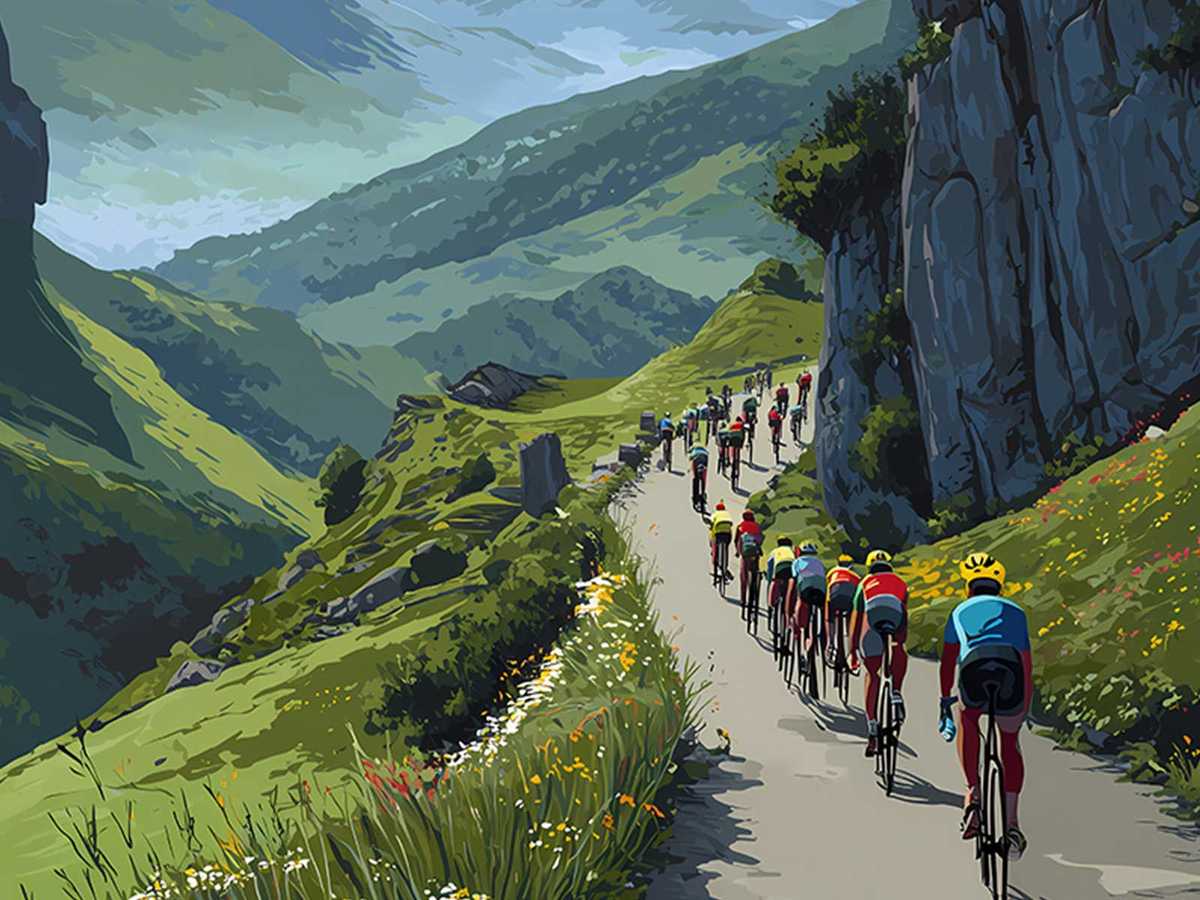
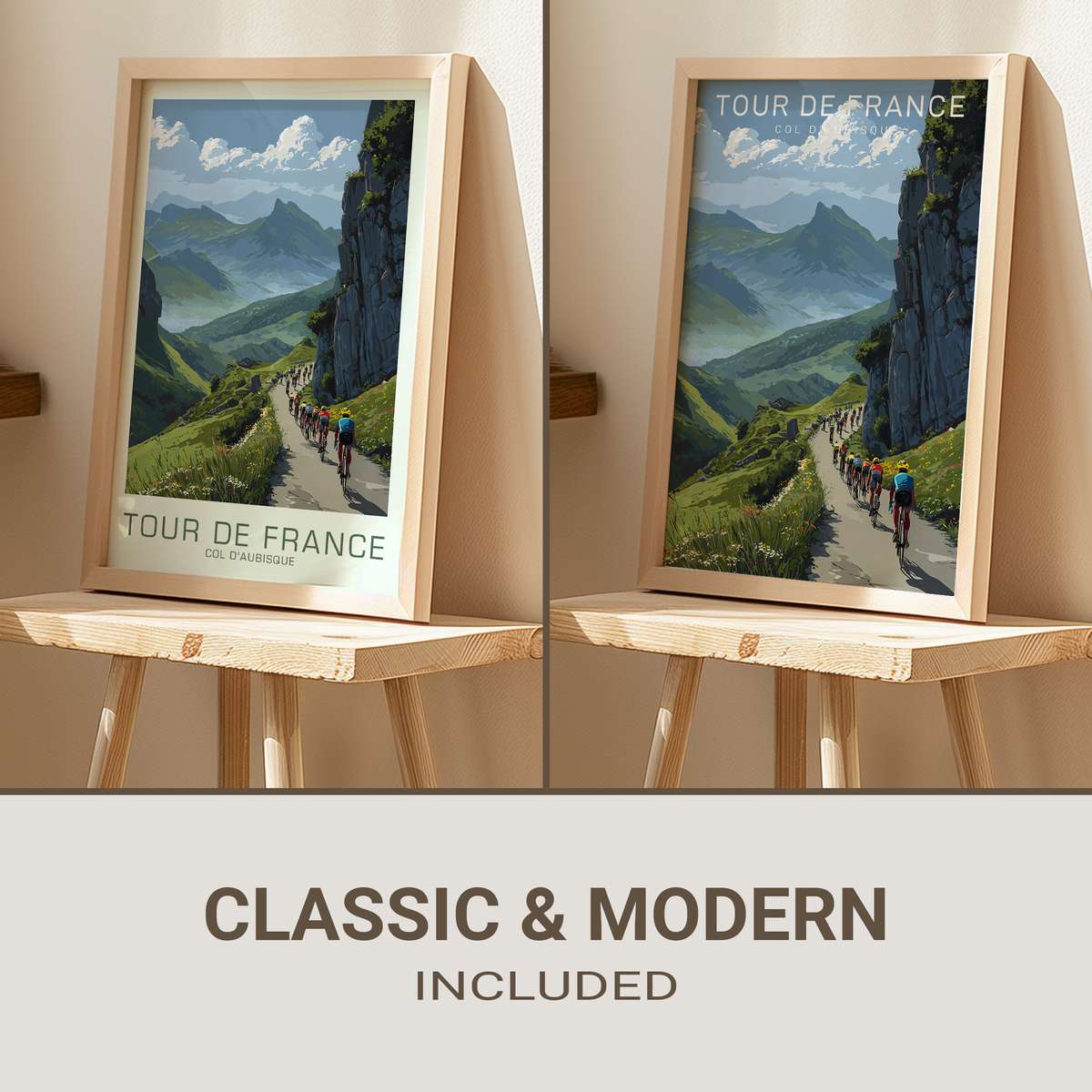
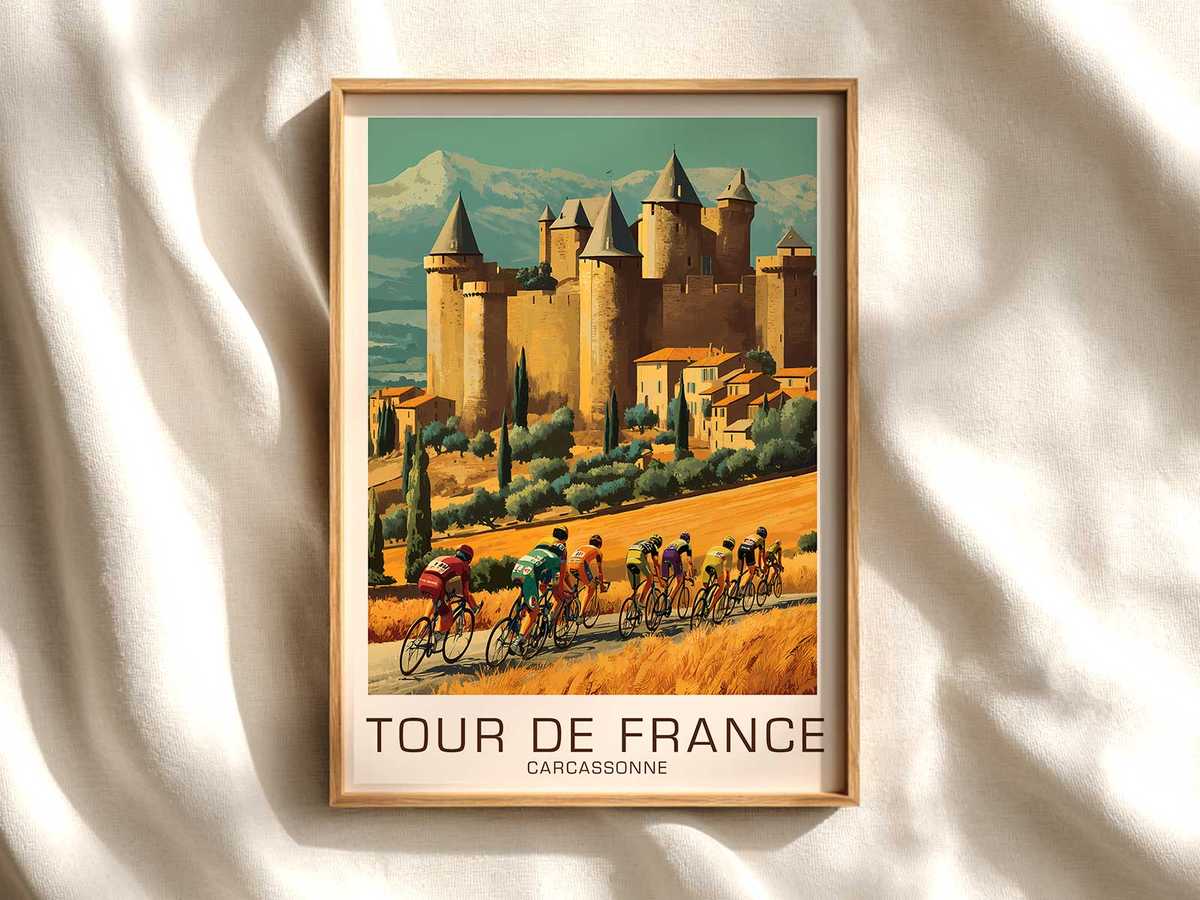
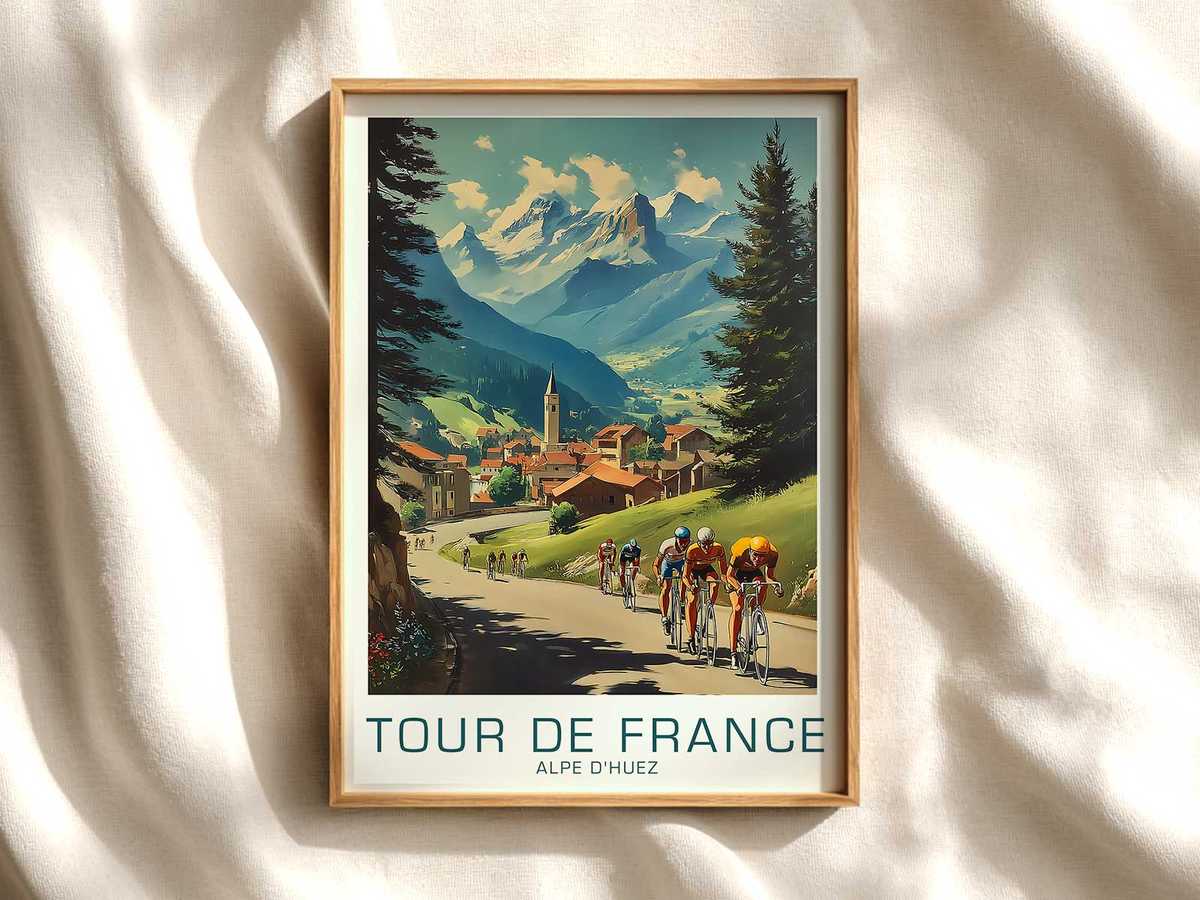
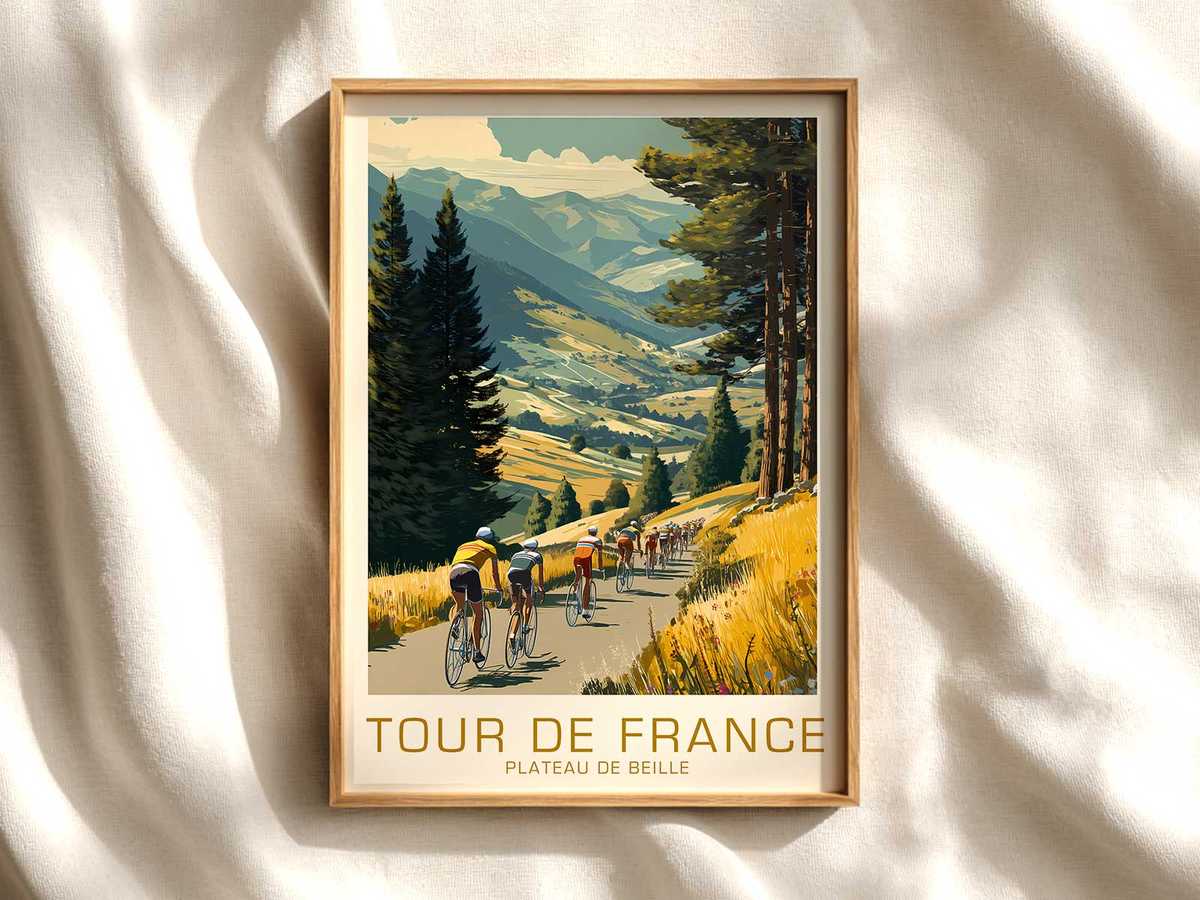
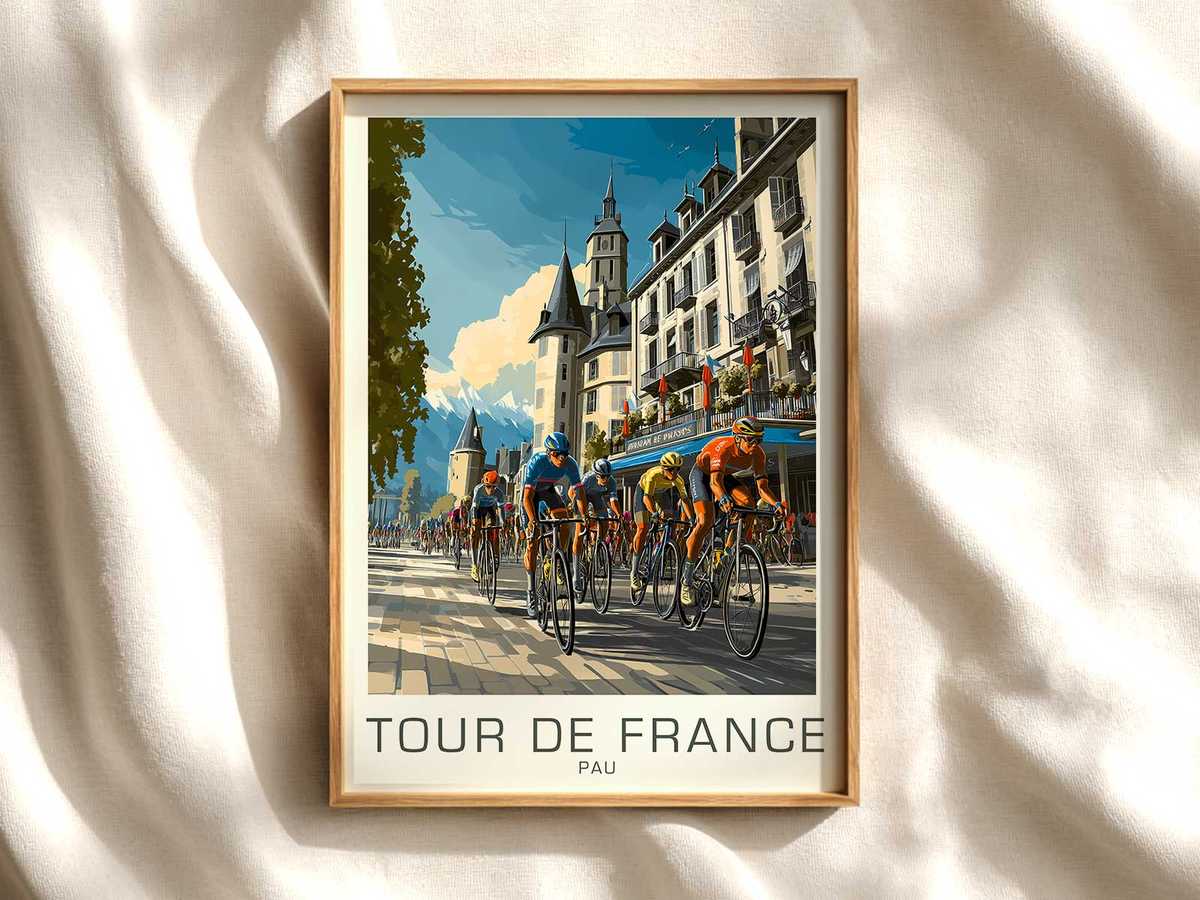
There is a special clarity when a poster centers on a climb like the Col d'Aubisque: the road becomes an axis and the rider becomes the single measure of effort. This cycling print does not narrate placings or stage numbers; it reads the body. The composition privileges the gesture of ascent—shoulders tensed but contained, hands steady on the drops, a seated weight that pushes the rhythm of the pedals—so that the figure reads as endurance incarnate rather than as a sporting statistic.
On a mountain artwork the slope is as much a character as the cyclist. Here the gradient is suggested through line and negative space; the bike's silhouette and the rider's spine create opposing vectors that tell you how the body resists and yields. The head tilt, the compression in the thighs, the subtle rigidity of the forearms: these are the visual clues that translate minutes of suffering into a single, readable frame. That economy of sign is what makes the image emotionally immediate and, for a wall, quietly persuasive.
This kind of poster foregrounds composure under strain. Fatigue is visible but not chaotic—tight cheeks, a precise cadence, breath you imagine rather than see. The athlete’s stance suggests control, an economy of motion that implies experience and discipline. It is less about heroics and more about sustained technique: the way a rider conserves power in the saddle, how elbows soften to accept the road’s rhythm, how the torso becomes a metronome for every revolution. These are the details a viewer reads first and remembers.
[IMAGE_INSERT_ARTICLE_01]
Because the image privileges gesture over result, the rider’s identity is conveyed through posture more than name. A crouched sprint would tell a different story—explosive, short-lived—whereas the uphill seated grind communicates durability and a long, deliberate will. The print captures the visual grammar of endurance: long lines, concentrated angles, and a forward gaze that fixes attention on the ribbon of asphalt ahead. In domestic or professional interiors the piece acts like a study in focus; it sanctions calm ambition without shouting.
Materially, the limited palette and considered contrasts let silhouette do the work. The bicycle becomes an elegant counterpoint to the human form: chainrings and downtube echo the tension in the legs, the thin frame matches the spare economy of the composition. Because the picture avoids clutter—no explanatory text, no visible crowds—the viewer is invited into a private moment of exertion. That privacy is part of the poster’s appeal: it asks the observer to stand close and read the small decisions that make endurance legible.
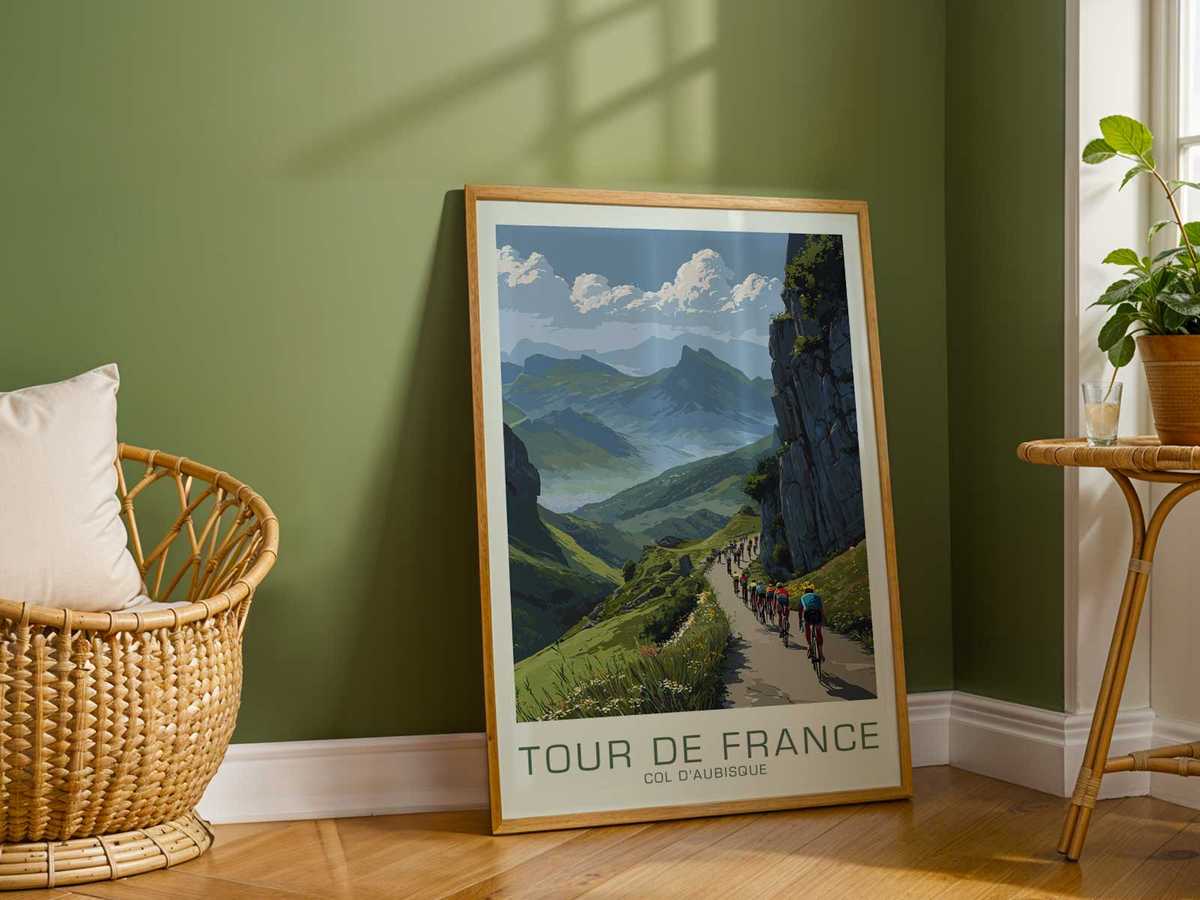
Placed above a desk, in a study, or in a compact living room, this print changes atmosphere by privileging concentration and quiet resolve. It’s not a call to spectacle but an assertion that sustained effort has its own dignity. The artwork’s presence redefines a wall as a place for reflection on restraint, on the slow accrual of effort rather than on instantaneous triumph.
Ultimately, a rider-led Tour image endures because it translates time into posture. The Col d'Aubisque setting gives the body context—road, gradient, horizon—but the visual center remains human: the specific architecture of shoulders, hips and hands that marks a person who knows how to manage pain, pace, and direction. That precise, image-led reading is what makes this cycling print feel both intimate and monumental—a study of endurance you can live with, look at, and return to.