Do you have what it takes to be a professional cyclist?
Ask a simple question — do you have what it takes to be a professional cyclist — and the honest answer arrives fast: maybe, but only if several measurable capabilities and behaviours come together. High VO2max and strong power figures create the engine; coached training, structured racing and repeatable recovery turn that engine into race performance; and tactical, technical and psychological skills decide who survives when the numbers are close.
Quick answer
Physiology sets a ceiling (VO2max, FTP and recovery), but race-ready professionals combine that engine with handling, tactical intelligence and years of competitive exposure. Ordinary recreational riders can improve greatly — whether they reach paid pro ranks depends on genetic ceiling, response to structured training, and successful progression through clubs and development teams.
What this article reveals
- Which physiological markers separate recreational riders from domestic and WorldTour pros.
- Why technique, racecraft and repeatability matter more than a single power test.
- How realistic progression works: clubs → development squads → Continental/trainee opportunities.
What the real standard looks like
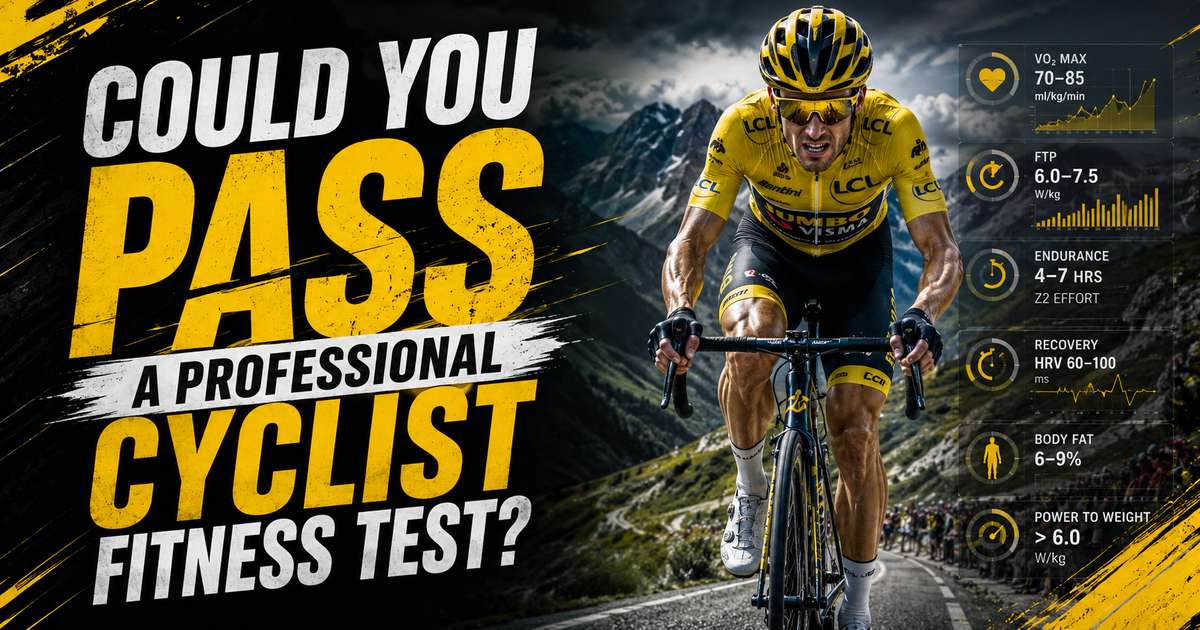
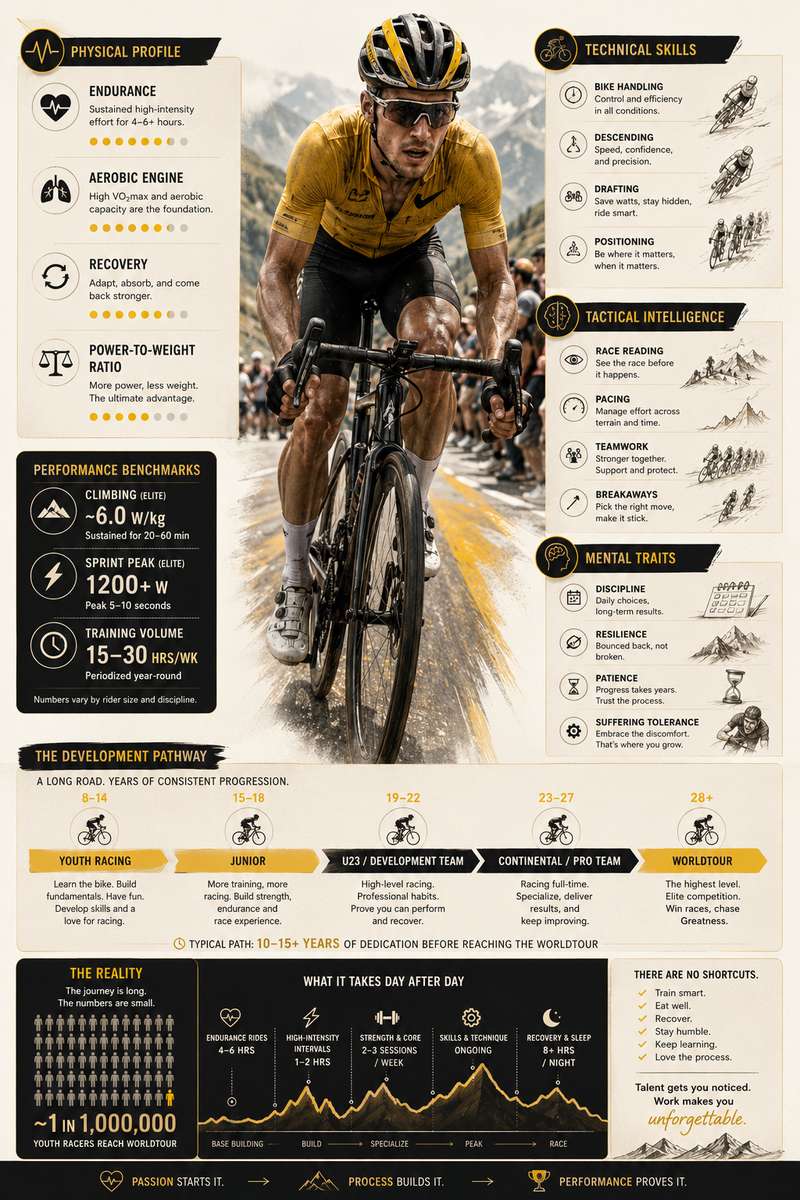
Measured fitness is a clear divider. Verified testing places recreational male cyclists in roughly the 45–55 ml·kg⁻¹·min⁻¹ VO2max range; domestic and Continental pros commonly sit in the mid‑60s to mid‑70s; and top WorldTour performers typically record around 75–85+ ml·kg⁻¹·min⁻¹. Functional Threshold Power (FTP) and power-to-weight are equally important: professionals combine high absolute watts with high W/kg in race-relevant durations.
But these numbers are not a complete verdict. Research and coaching literature emphasise that physiology is necessary but not sufficient: technique, tactical sense, and the ability to tolerate and recover from intense training are crucial to translate lab numbers into race results.
Engine versus skill: why numbers don't tell the whole story
FTP and VO2max describe capacity; race performance depends on how that capacity is used. Two riders with similar lab values can produce very different results if one struggles with positioning, descending, or repeated efforts late in long races. Physiological traits like muscle fibre composition and recovery capacity set potential, while coached practice and deliberate learning shape whether that potential is expressed under race stress.
Fatigue, repeatability and the hidden test of racing
Professional racing is rarely decided by a single maximal effort. Instead, it’s the capacity to repeat hard efforts after hours in the saddle and to recover between days. Studies and coaching guidance highlight that recovery capacity and the ability to tolerate high training loads limit how far a recreational rider can progress. Improving FTP or VO2max helps, but without repeatability and race-specific endurance, results at higher levels will lag.
Technique and racecraft: the non-physiological gap
Bike handling, cornering, descending and peloton positioning are learned skills that significantly alter race outcomes. Tactical abilities — when to follow moves, how to conserve energy in echelons, or how to read a race situation — are typically acquired through structured racing and coaching. The verified sources underline that technical and tactical skills must be developed alongside physiology to compete reliably as a professional.
The pathway: how riders move from club racing to paid contracts
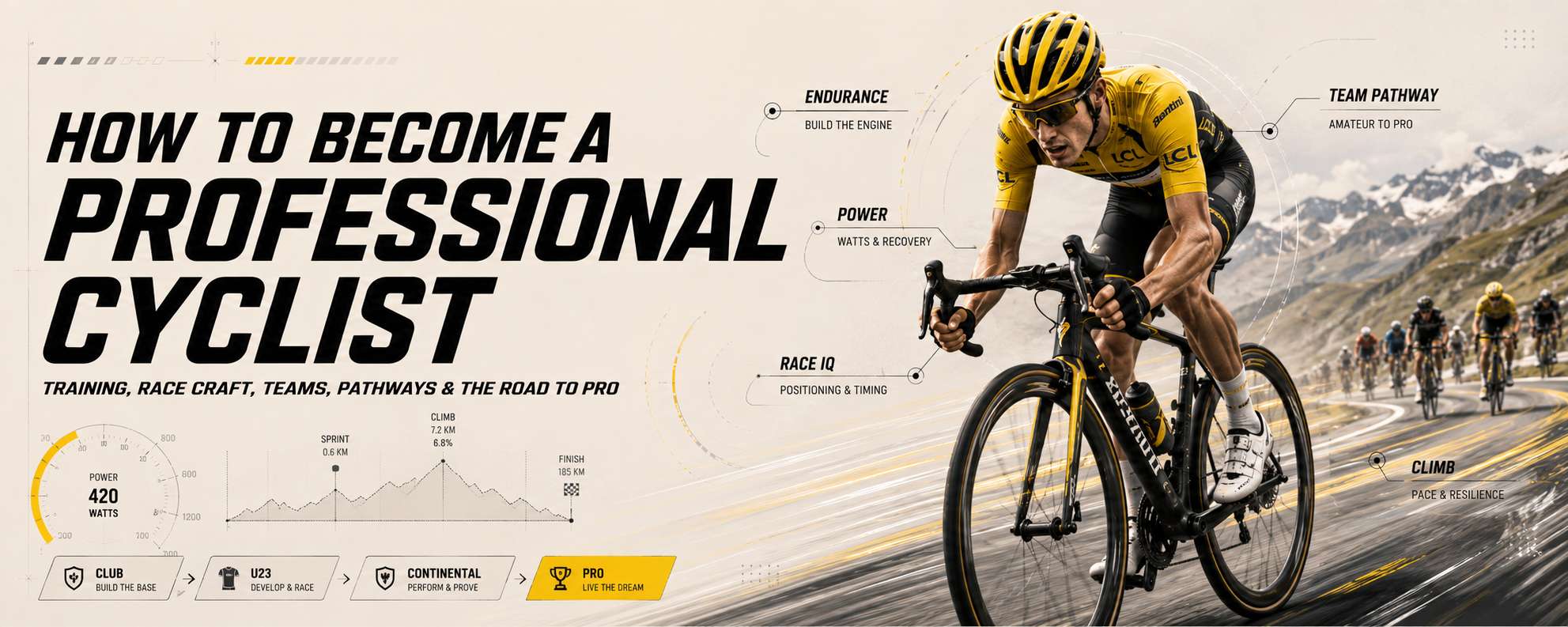
Progression to paid ranks usually follows a sequence: club and national racing, U23 or development teams, Continental squads and trainee (stagiaire) placements. UCI frameworks permit Continental teams to bring trainees and provide official pathways for visibility. Each step raises the competition quality, exposing whether a rider’s fitness, skills and temperament scale with the field.
Results matter, but teams also value consistency, coachability and role suitability. A rider who helps teammates and shows repeatable, race-specific contributions can be more attractive than a rider with a single standout result.
What breaks an ordinary rider first in pro-style races?
When amateurs test themselves against pro demands, three things usually fail first: the ability to repeat efforts after sustained fatigue, the timing and execution of tactical decisions at high speed, and recovery between long, consecutive race days. A rider with solid peak numbers can still be overwhelmed by the continuous demands of pro racing unless their training and competition exposure develops these specific tolerances.
Age and development: timing matters but isn't everything
Physiological capacity and learning curves interact with age. Structured racing experience in formative years accelerates development of racecraft and technical instincts. That said, coaching and deliberate practice can significantly raise markers like VO2max and FTP in adults, but genetic ceiling and long-term exposure to competition often give earlier starters an advantage for very top levels.
Training, recovery and the professional mindset
Mental qualities—goal-setting, discipline, resilience and the ability to follow plans—are trainable and highlighted by coaching resources as defining pro behaviour. Equally important are progressive, structured training and sensible recovery strategies to allow physiological gains to accumulate. The literature stresses that riders who respond well to coaching and manage load effectively are the ones most likely to close gaps between recreational and professional standards.
Realistic tests you can use to assess potential
Rather than chasing one number, look for patterns: consistent improvement in time-trial or hill efforts across a season; the ability to follow and recover from repeated threshold surges inside long group rides; measurable gains from coached training; and improved race results against steadily stronger fields. These signs signal a combination of physiological responsiveness, tactical learning and durability.
Closing interpretation: what the question truly asks
So, do you have what it takes to be a professional cyclist? The verified evidence frames the answer as conditional. High VO2max and strong power-to-weight are foundational and more common among professionals, but they must be paired with repeatability, technical skill, tactical intelligence and a professional mindset. Structured pathways—clubs, development teams, Continental squads and stagiaire placements—exist to test and reveal whether a rider’s combination of traits can succeed at paid levels.
If you are a recreational rider, the practical route is clear: pursue coached, progressive training; race deliberately in increasingly strong fields; learn technical and tactical skills through experience; and measure improvement over seasons. Improvement is real, measurable and meaningful. Turning that improvement into a paid contract requires that your physiological ceiling, training response and racecraft all align at the moments when teams are watching.
Author: Cynthia D.