Are professional cyclists born talented or trained? What science says about…
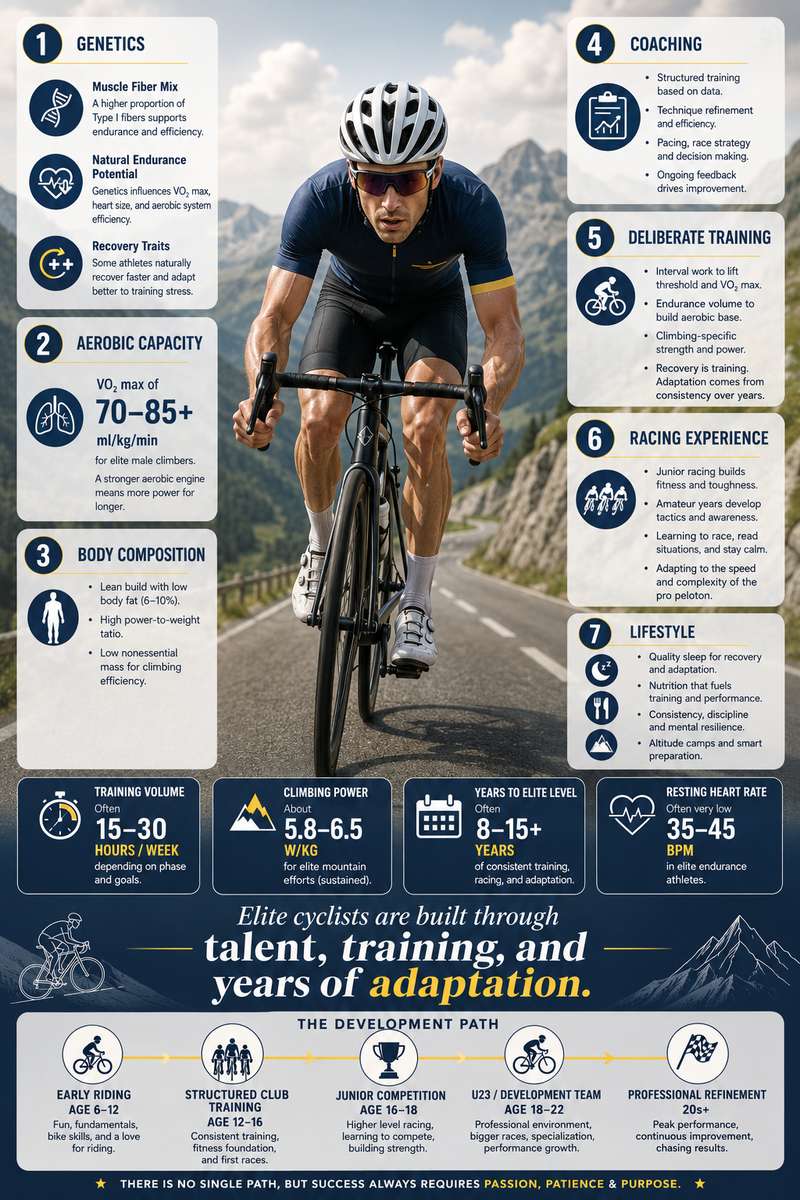
Ask whether professional cyclists are born talented or trained and the short, evidence-based answer is: both. Genetics shape an athlete’s starting engine and how much that engine improves with work; organised training, coaching, racing experience and lifestyle determine whether that genetic potential becomes race-winning performance.
Quick answer
Heritable traits like baseline VO2max and the ability to raise VO2max with training explain a large share of variation between people, but no single gene predicts elite status. Targeted training, body composition, coaching, race experience and lifestyle interactions are essential to convert genetic advantage into professional results.
What this article reveals
- How heritability and trainability of VO2max combine to shape potential.
- Why power-to-weight and efficiency matter for climbers and stage racers.
- Which non-genetic factors (coaching, training distribution, lifestyle, race miles) decide who reaches the pro ranks.
Defining the question: what does "born" versus "trained" really mean?
When fans ask are professional cyclists born talented or trained, they often mean: does DNA alone make an elite rider, or can coaching and hard work make one? The scientific reality sits between those poles. Studies show that baseline aerobic capacity and the ability to improve it with exercise are substantially heritable. But genetics are not a deterministic ticket to the WorldTour; they are part of a wider system that includes training structure, body composition, technique and experience.
Heritability of VO2max and the limits of genetic prediction
Multiple twin and family studies estimate baseline VO2max heritability commonly between roughly 40% and 70%, with central estimates often near 40–50%. That means genetics explain a sizeable portion of differences in maximal oxygen uptake across people, but not all of it. Crucially, genomic research has not identified a small set of DNA variants that reliably predict who will become an elite endurance athlete. In short: genes matter, but they do not single-handedly decide elite status.
Trainability: how much can training change VO2max?
Genetics also influence how much a rider can improve. The HERITAGE Family Study found roughly 47% heritability for the VO2max response to a standardised training programme — in other words, some people gain much more aerobic capacity from the same training than others partly because of their genes. That result explains why two committed riders can respond very differently to the same block of structured training.
The physiological trio and body composition: what racing actually demands
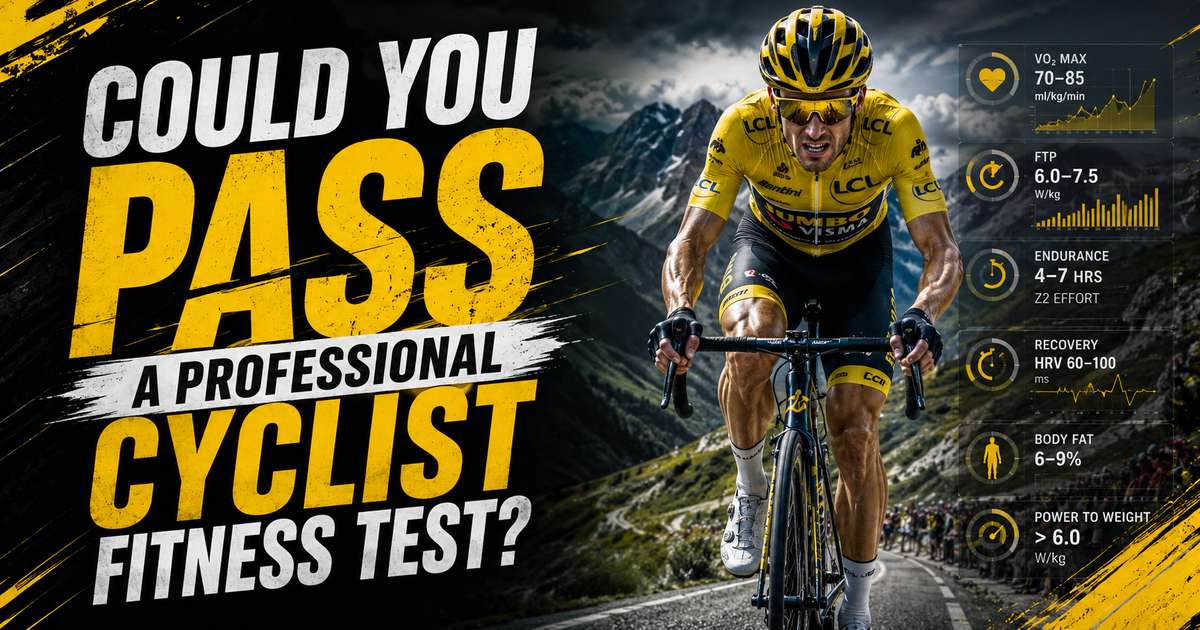
Endurance cycling performance is not a single number. Three interacting physiological traits matter: a high VO2max, a high lactate threshold expressed as a percent of VO2max, and high gross efficiency. Body composition and power-to-weight are particularly critical for climbing and stage racing—elite climbers and professional road cyclists typically show lower body mass/fat and higher power per kilogram than non-elite peers. Those traits combine with the genetic and training influences already discussed.
Training, coaching and the environment: the engine builders
Systematic reviews and meta-analyses show that training distribution, duration and volume significantly affect VO2max and cycling performance in trained riders. That is the practical side of the equation: a rider with favourable genetics who receives high-quality coaching, a deliberate training plan and appropriate periodisation is far more likely to realise potential than an equally gifted rider with poor guidance or inconsistent training. Lifestyle factors — nutrition, sleep, recovery, altitude exposure — are additional environmental levers that shape how training translates to race performance.
Racecraft, technical skills and experience: where training is not just physiological
Aerobic capacity and efficiency create the physiological platform, but winning races requires much more. Technical bike-handling, tactical intelligence, positioning, and the ability to recover across repeated days are learned through racing. Experience teaches when to expend energy, when to hide in the bunch, and how to manage feeds and mechanicals under pressure. Those non-physiological skills materially influence whether physiological potential wins races and secures team attention.
Pathway to professional levels: why genetics plus training still need structure
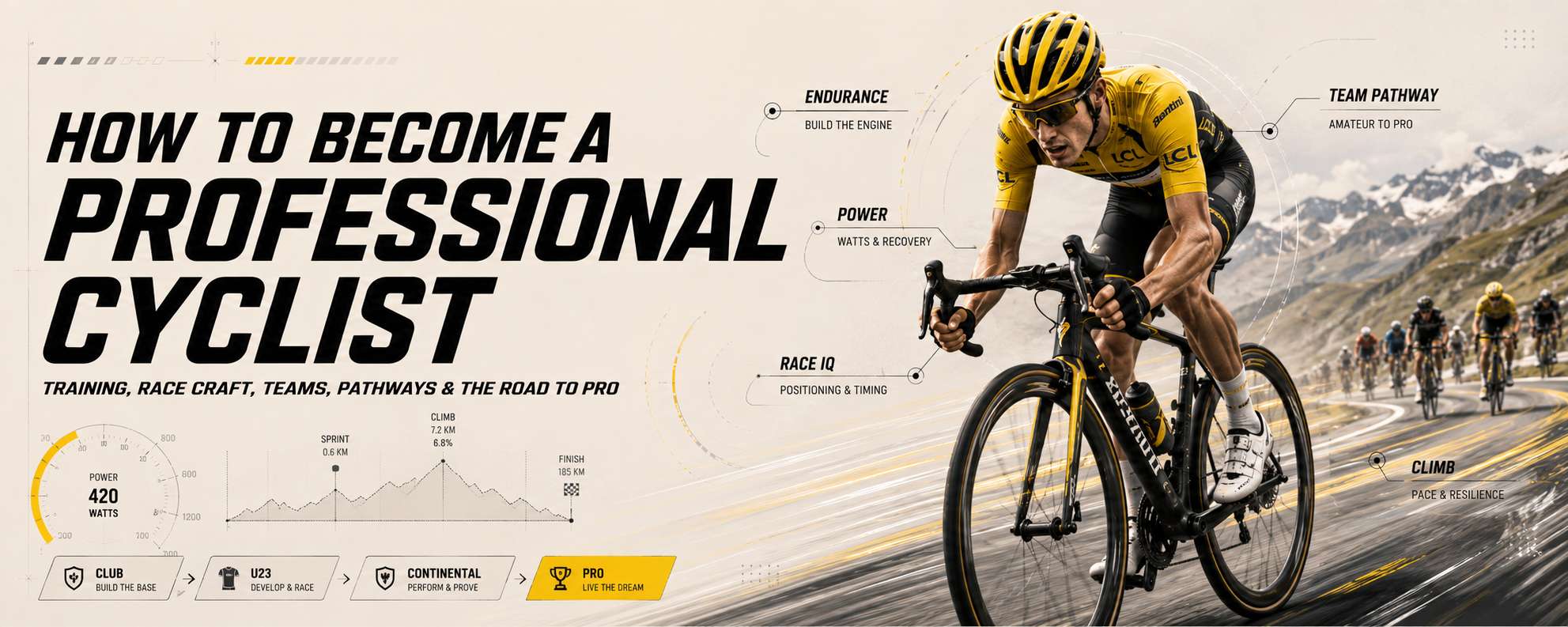
Moving from a strong amateur to a professional role is not just a matter of power numbers. Teams and development systems expose riders to harder races, stronger tactics and longer stages; this is where physiological traits are tested against race intensity, repeatability and tactical demands. Because genetic traits influence both starting capacity and response to training, they affect where a rider begins on this ladder. But structured racing seasons, targeted coaching, and progressive competition are essential to show that a rider’s physiology converts into consistent race value.
Common misconceptions and hidden obstacles
Two mistakes often mislead riders and observers. First, equating a single physiological measure with success: a high VO2max does not guarantee race wins without a high lactate threshold, efficiency, racecraft and suitable body composition. Second, assuming genetics make training pointless: while some elements are heritable, training distribution and lifestyle still have measurable effects on performance, and differences in trainability mean tailored, evidence-based programmes matter.
What teams notice and what you can reasonably test
Scouts and coaches judge a mix of observable and testable traits: consistent race results in progressively stronger fields, technical competence, tactical consistency, and physiological markers that make sense for a rider’s role. Useful, realistic tests focus on repeatability (how a rider performs across days), power-to-weight where relevant, and how a rider responds to structured training blocks — not a single lab value. Because no genetic marker predicts elite status, teams place weight on how athletes apply coaching and accumulate meaningful race experience.
What this means for aspiring riders: realistic takeaways
If you are wondering whether you could become a professional cyclist: examine both sides. Understand whether you have physiological traits that favour cycling (aerobic capacity and favourable body composition for your target role), but also prioritise structured coaching, smart training distribution, progressive race exposure, and lifestyle choices that support recovery. The road to pro ranks requires the interaction of innate traits and the environmental support to develop them — neither side alone is sufficient.
Closing interpretation
Science frames the question simply: genetics provide substantial influence over baseline capacity and trainability, but they do not determine destiny. Converting genetic potential into professional performance requires deliberate training, expert coaching, racing experience and lifestyle alignment. For riders and parents that means being honest about natural limits while investing in the environments and practices that let talent, whatever its origin, reach the road.
Author: Alex R.