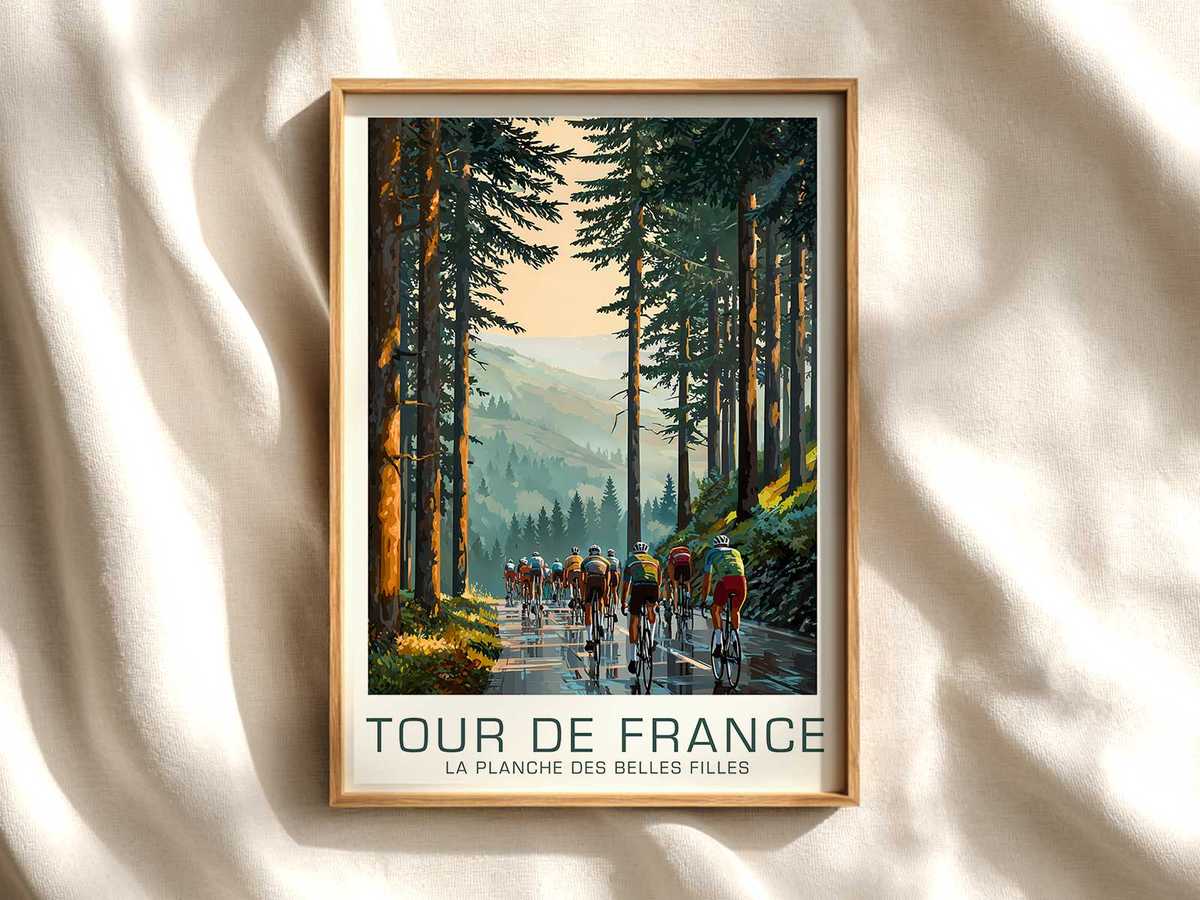
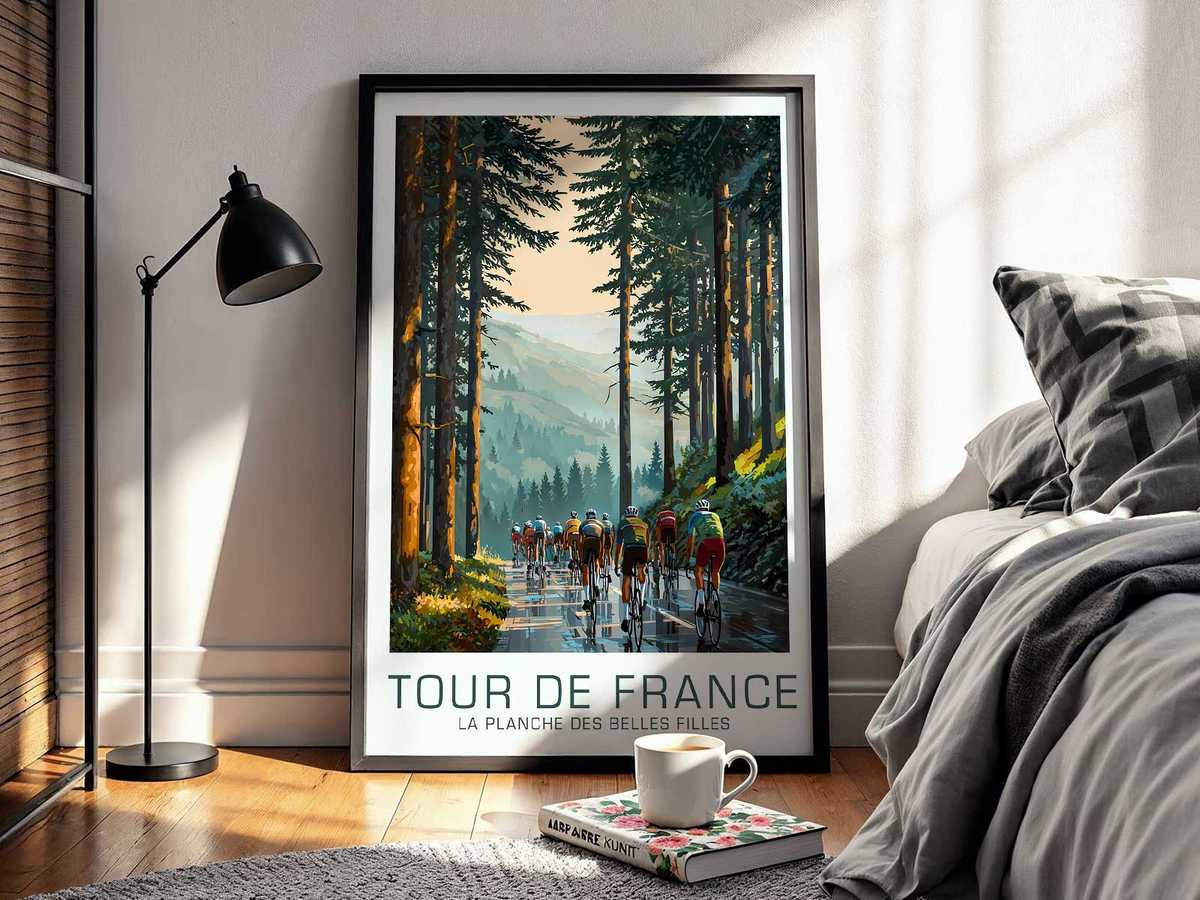
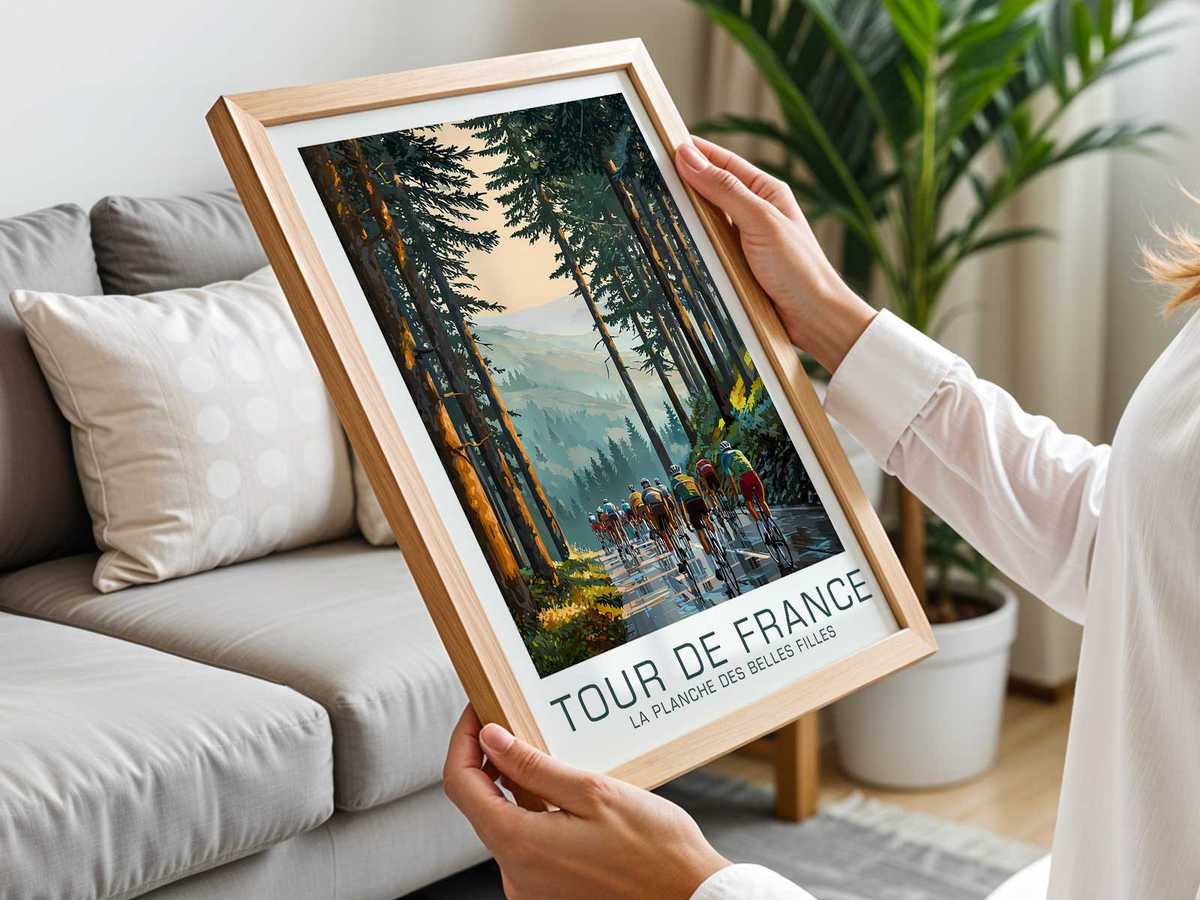
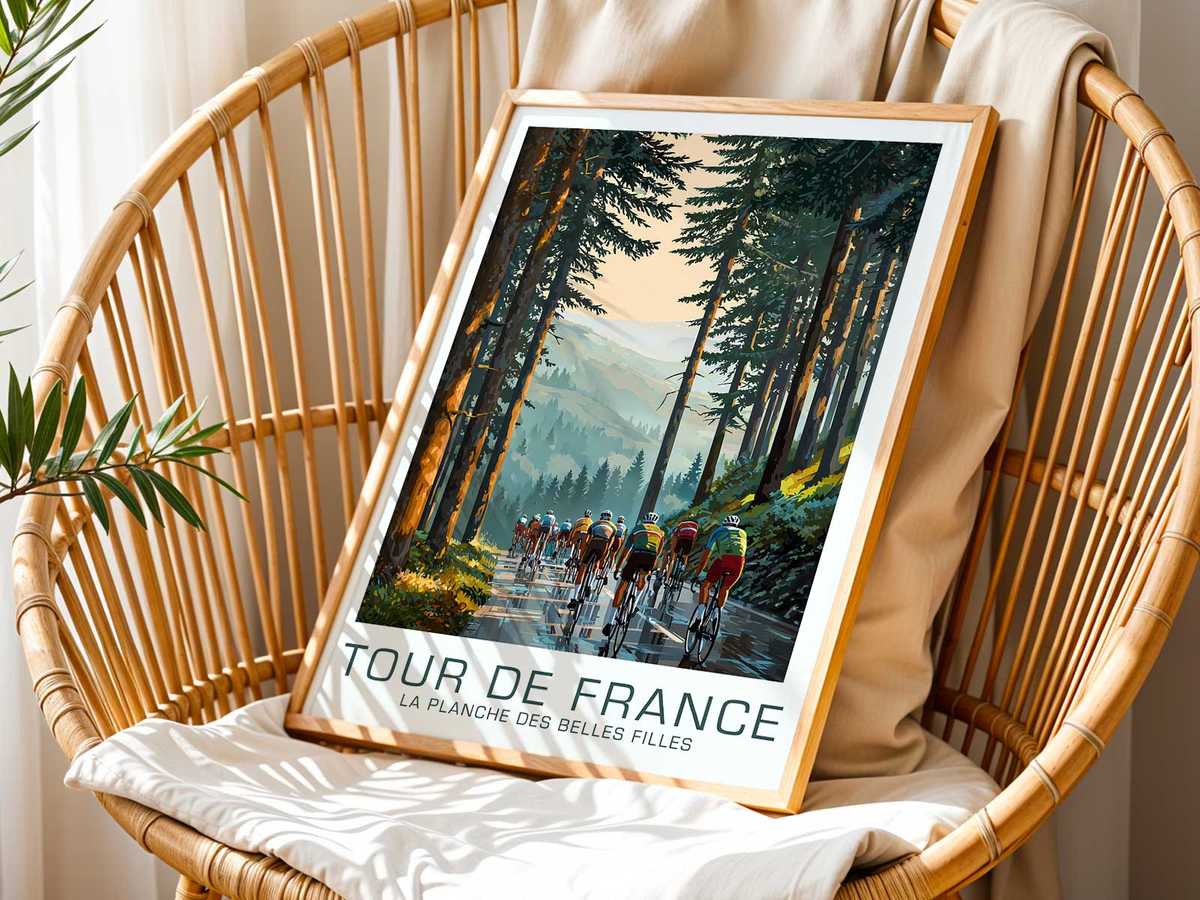
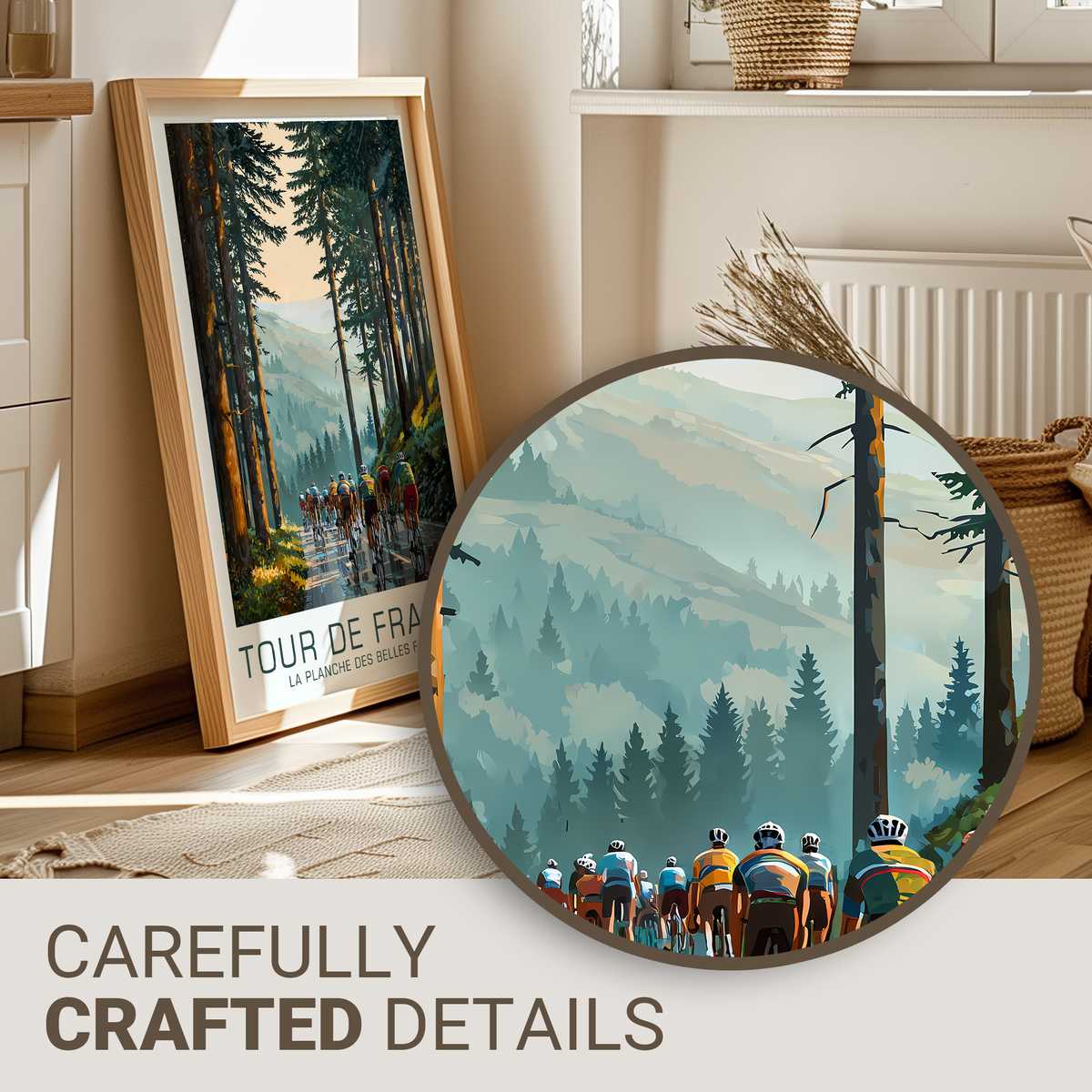
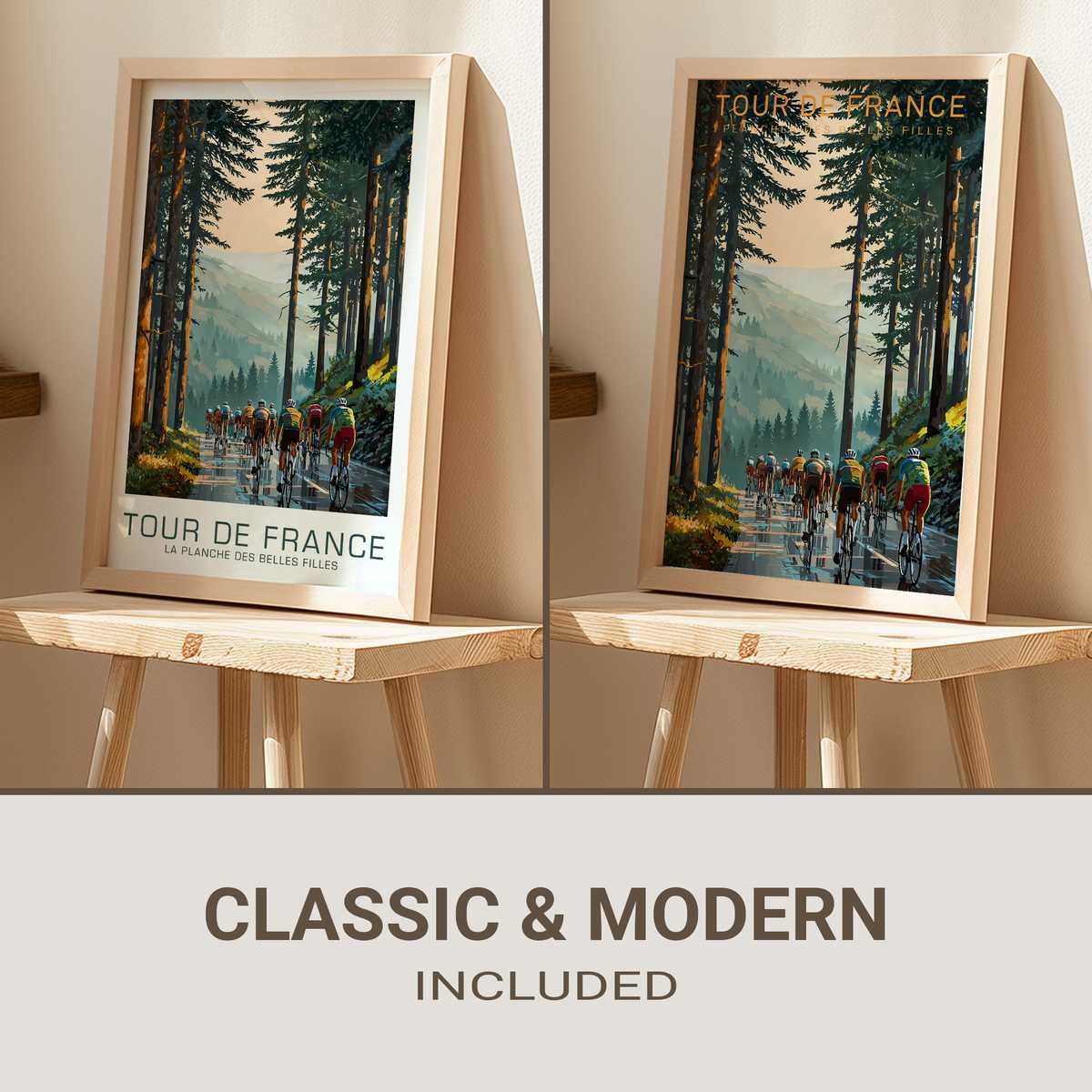
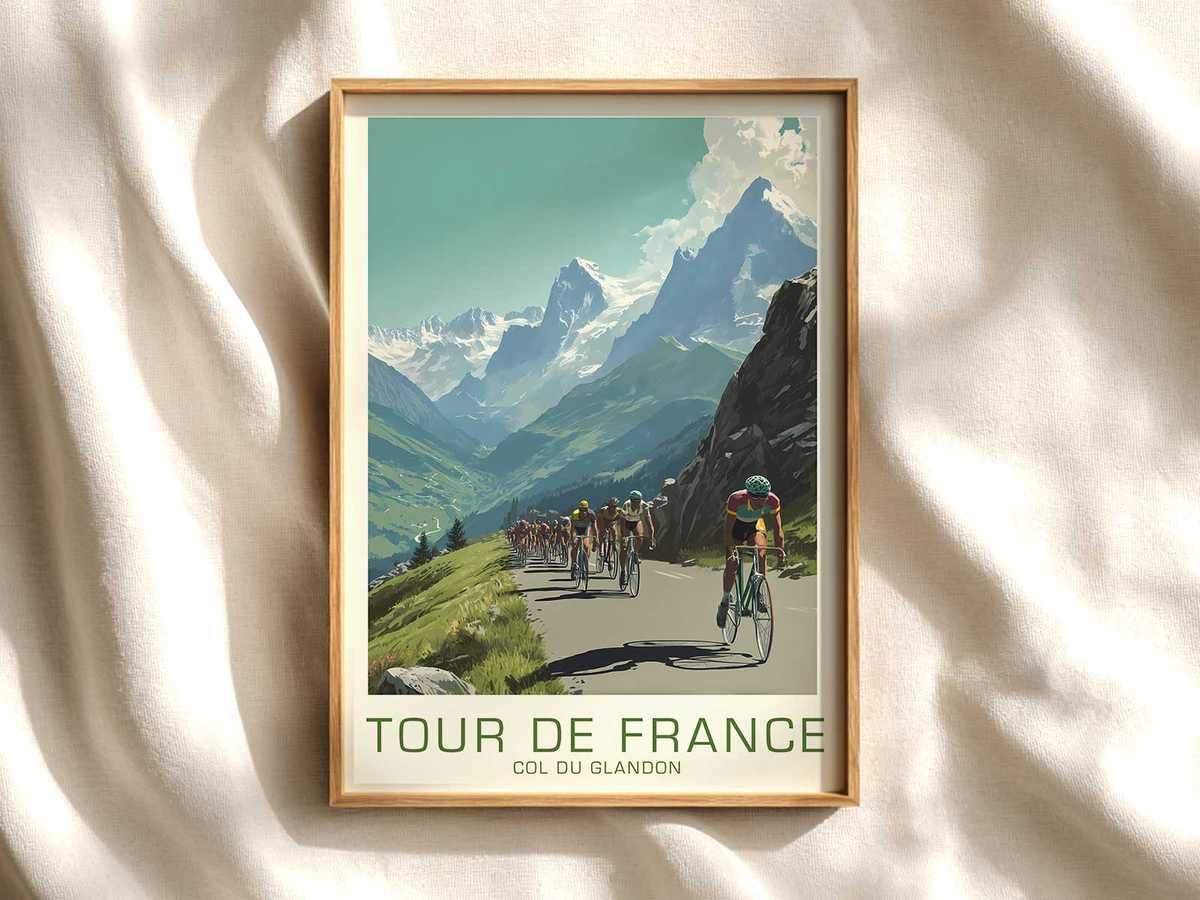
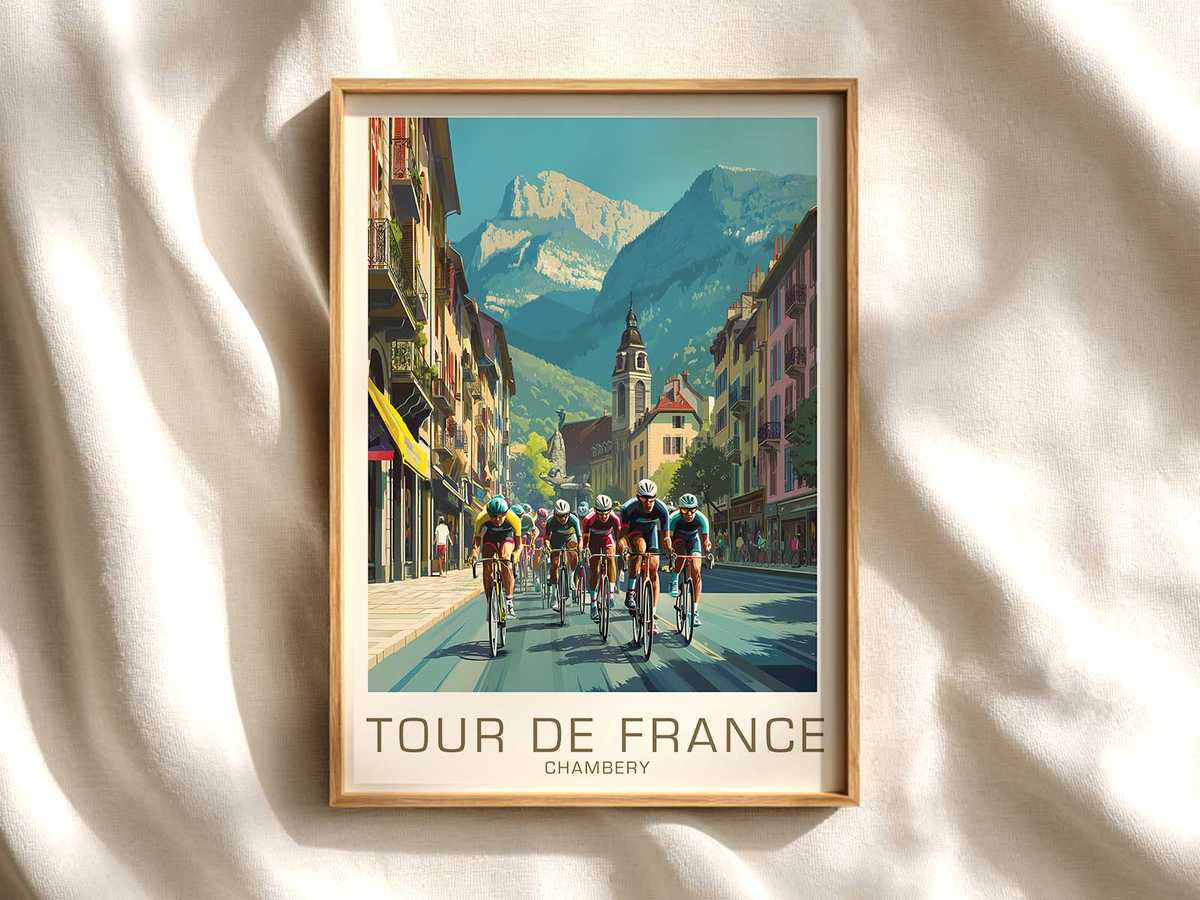
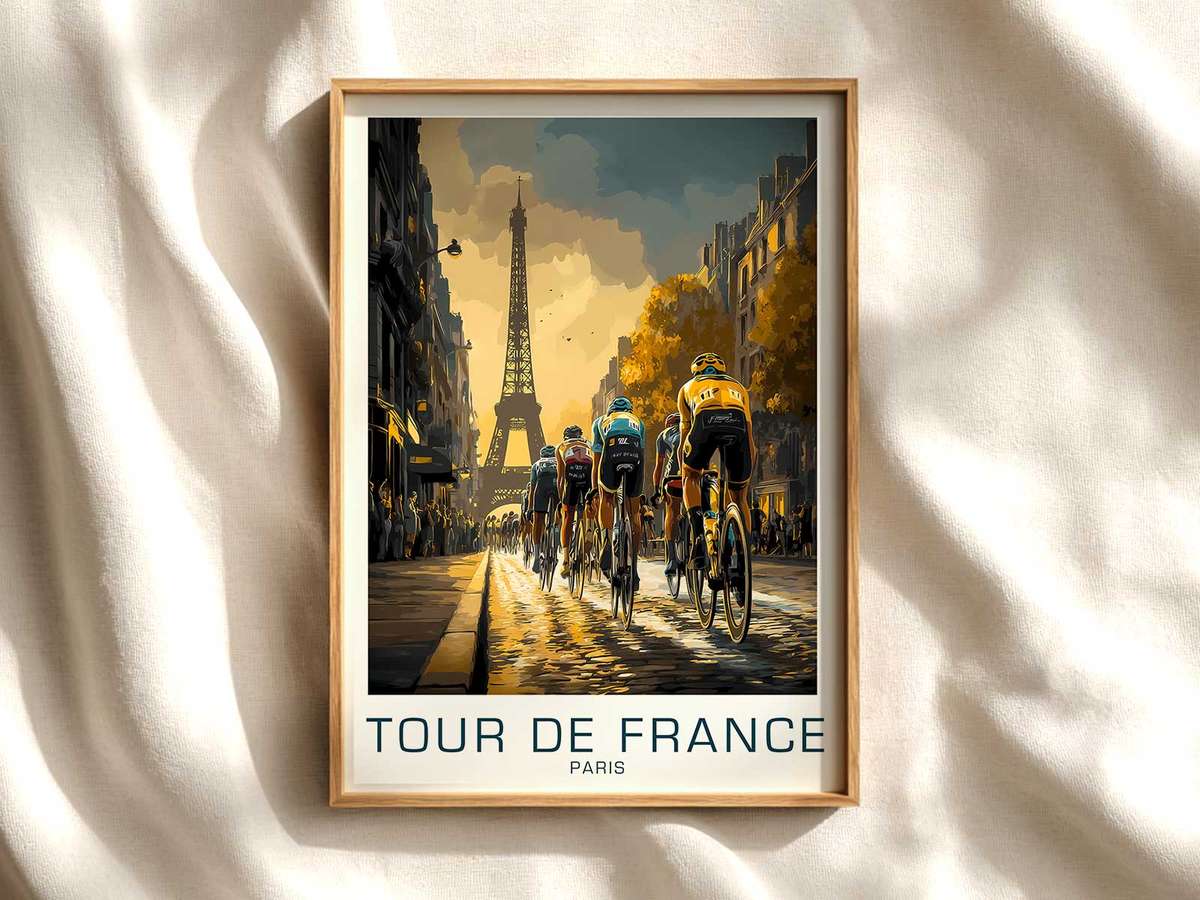
The Planche des Belles Filles is more than a summit on a map; in visual form it becomes a measure of exertion, altitude and narrative. A vintage-style poster focused on this climb distils the hill into three clear storytellers: the pitch of the road, the shaping of the land, and the light that sculpts both rider and horizon. Seen as wall art, the scene reads like a single, eloquent sentence about endurance — an image that translates physical strain into an atmosphere you can feel across a room.
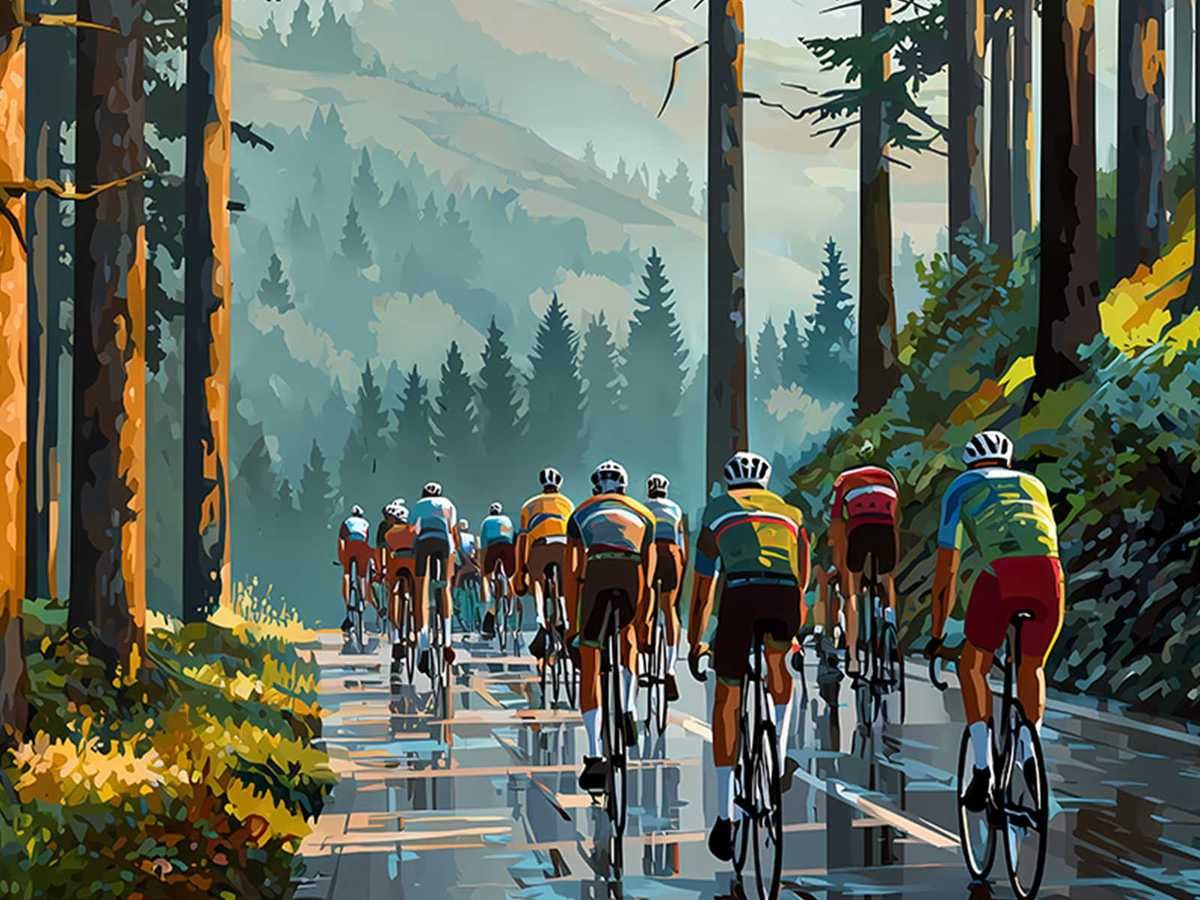
First, the road. The spine of the composition is the slope itself: a narrowing ribbon of asphalt that climbs from foreground to sky, its gradient implied by the tiny, bent figures and the way roadside features compress as they rise. In a vintage aesthetic the road becomes graphic — high-contrast bands of tarmac, stone walls and patchy verge — which makes the gradient legible at a glance. That visible incline is the poster’s emotional fulcrum: it promises effort and rewards the viewer with the visual sensation of forward, upward motion even when the scene is still.
Second, the landscape. La Planche’s surrounding woods, exposed ridgelines and the scatter of a highland village give the artwork scale and texture. Trees cut into the slope create a rhythm of dark and light, while distant valleys suggest depth and altitude. In print, these elements allow the eye to travel from the intimate — the cyclist’s cadence and hunched shoulders — to the panoramic — the sweep of the massif and the thinness of air suggested by softened mid-distance tones. That movement between near and far is what makes a stage poster feel like a place rather than a generic sporting image.
The third element is light. Highland light is paradoxically hard and delicate: it can flatten details with glare or carve the scene with long shadows. A poster that renders this light convincingly makes the climb feel seasonal and time-specific, as if the moment captured were either the cool precision of a morning effort or the parched intensity of a late afternoon push. Warm highlights on bar tape and helmet, cool shadows beneath the trees, and a sky that fades toward the summit all combine to create an atmosphere of epic labor rather than simple spectacle.
[IMAGE_INSERT_ARTICLE_01]
Beyond road, land and light, the human context matters. Small details — a cluster of spectators leaning over a stone wall, a pennant snapping in the wind, the empty chairs outside a mountain auberge — give the poster a lived-in quality. They suggest that the Tour briefly transforms villages into theatres where private routines are interrupted by public strain. The resulting tension between solitude and communal attention is central to why stage-led images feel emotionally rich: they frame a solitary human endeavour within a recognized place, as if the landscape itself were an audience.
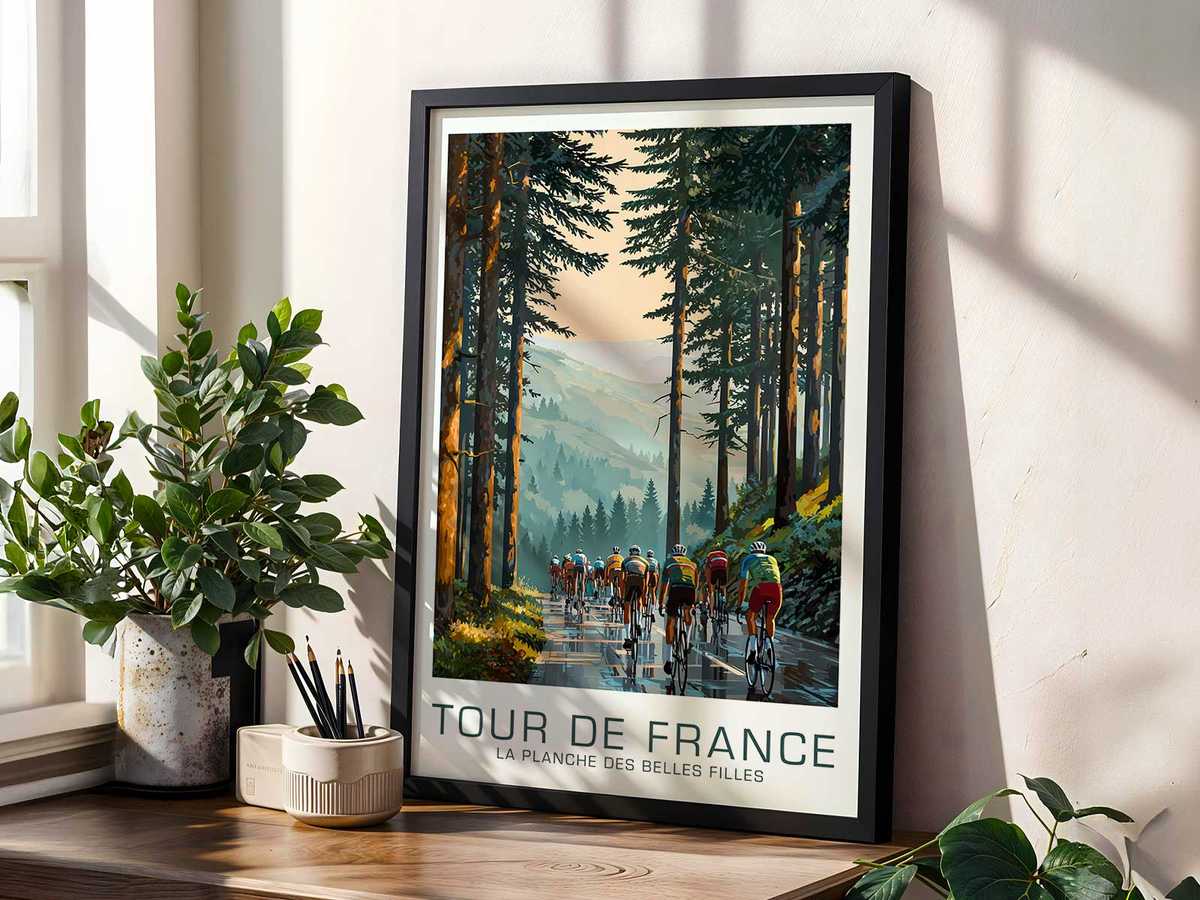
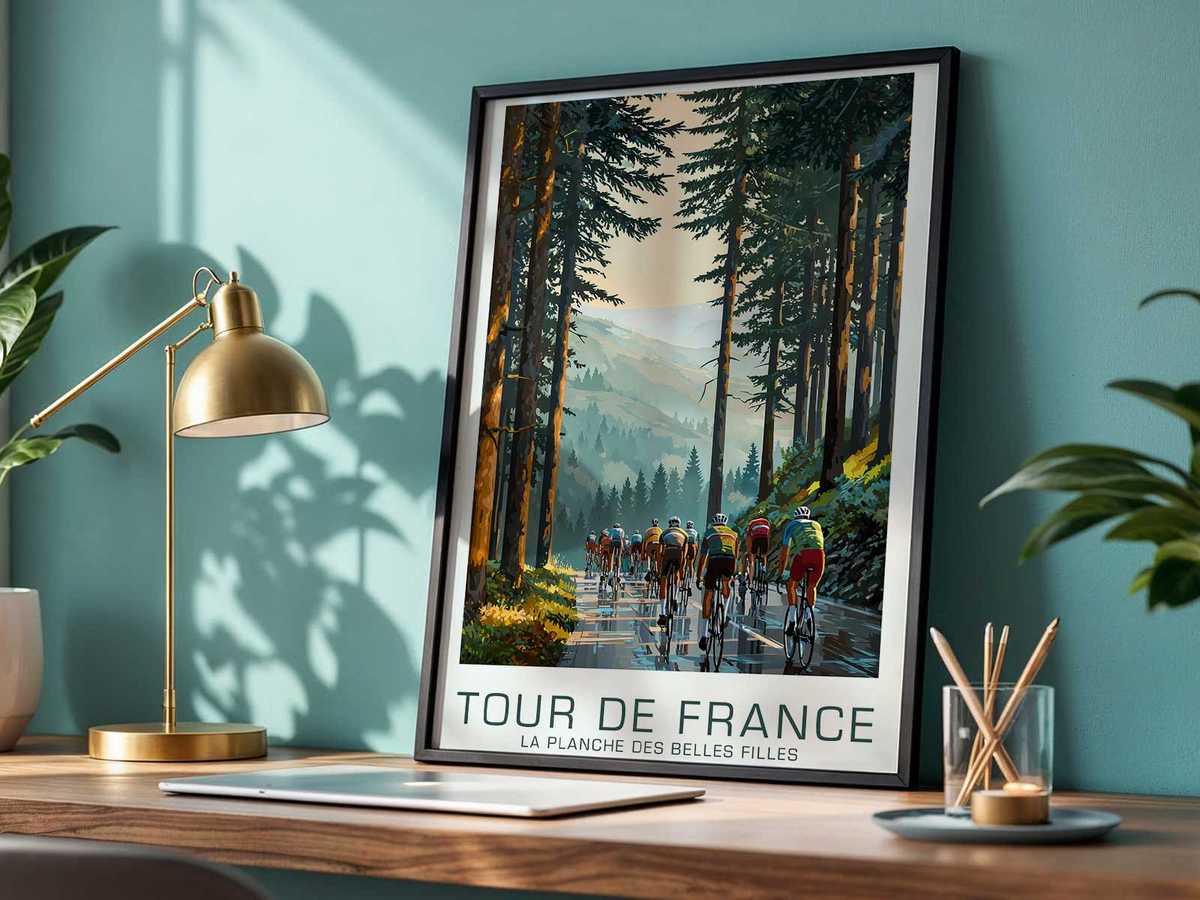
When choosing wall art for a study, living room or studio, a stage image like this functions differently from a portrait of a winner. It offers narrative space. The visual cues — the road’s angle, the compressing perspective, the tonal treatment of light — invite the viewer to imagine cadence, breathing and resistance. Framed and mounted, the poster becomes an architectural accent that moderates a room’s mood: leaner and more purposeful where it hangs, suggesting discipline and quiet drama rather than frenetic action.
Finally, the vintage touch anchors the scene in memory. Rather than claiming documentary accuracy, a heritage-led palette and simplified forms evoke collective recollection of the Tour’s mountain chapters. This makes the artwork less about a single race outcome and more about the archetype of the climb: that compact narrative of ascent, altitude and prolonged effort that has defined so many great stages. Such a poster rewards repeated viewing because each glance returns you to the same elemental sensations — the tug of the slope, the cool of the air, the insistence of pedaling uphill — all condensed into one enduring image.
Decor note: a piece like this sits well above a low credenza or beside a reading chair where its vertical thrust can echo architectural lines; its restrained palette complements natural woods, concrete and soft leathers without overpowering a calm interior.