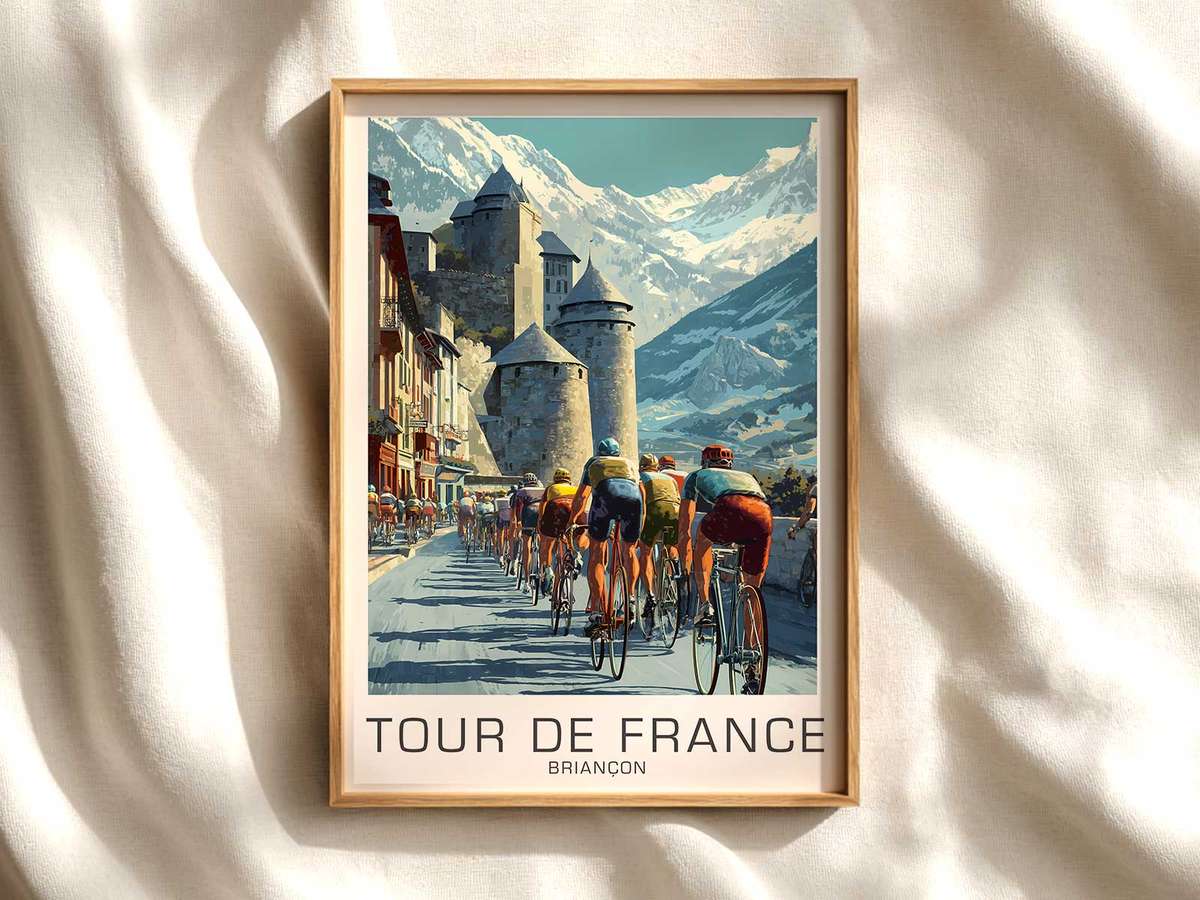
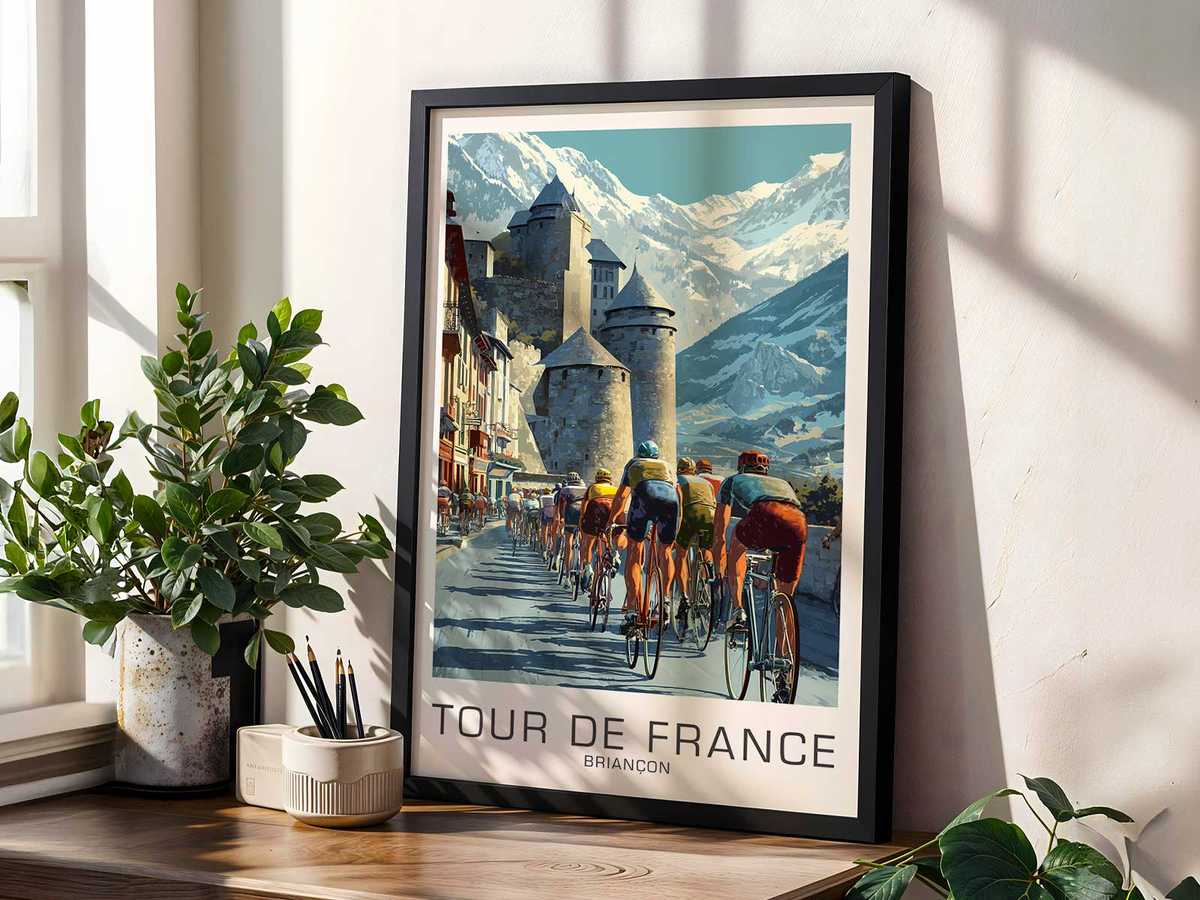
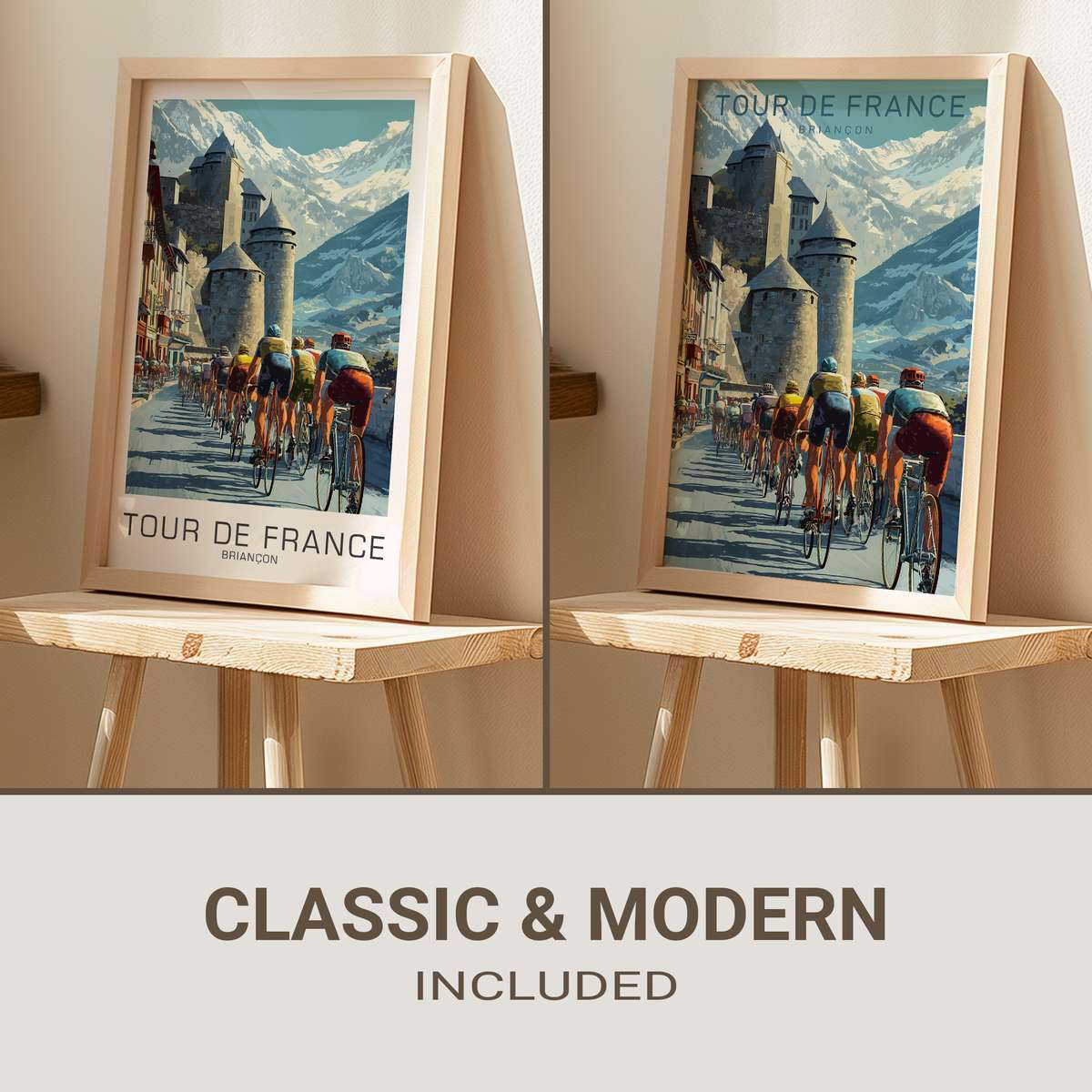
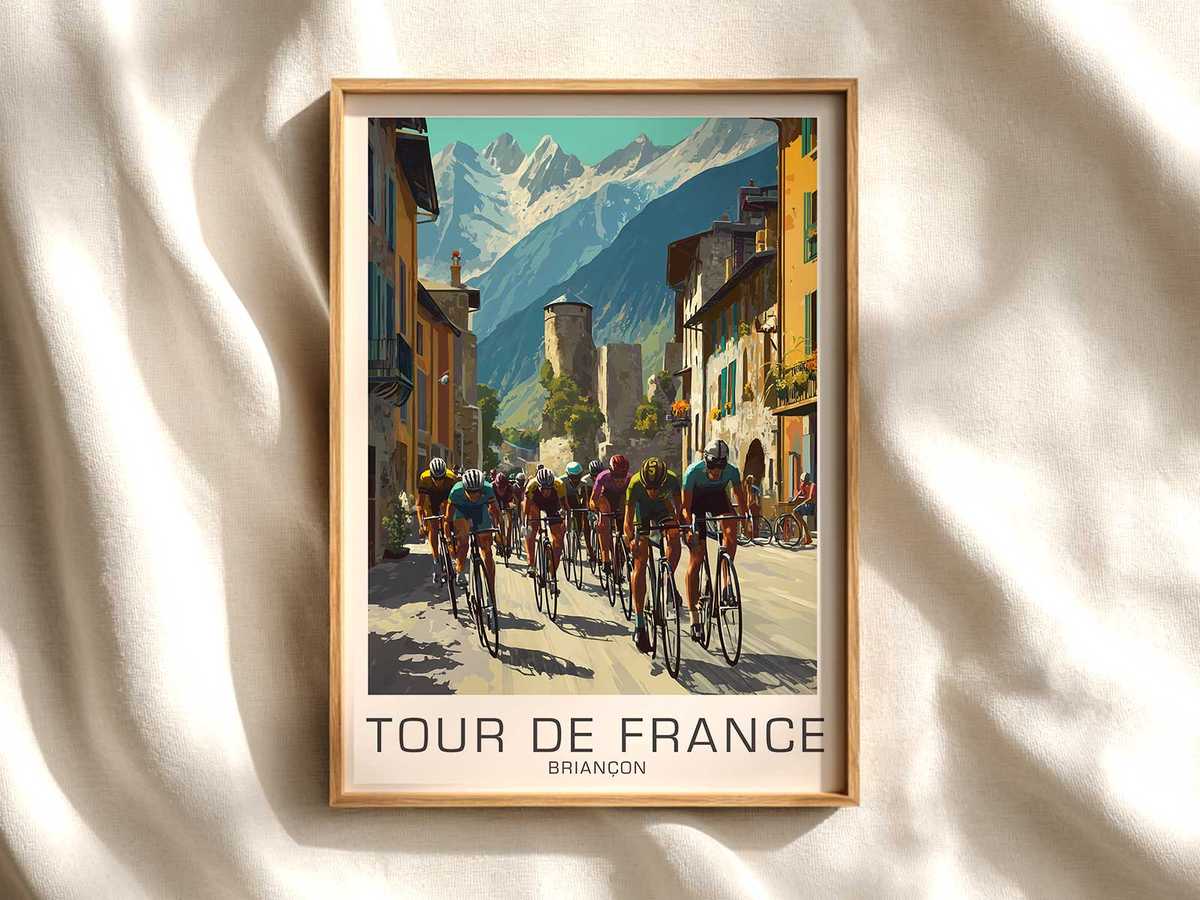
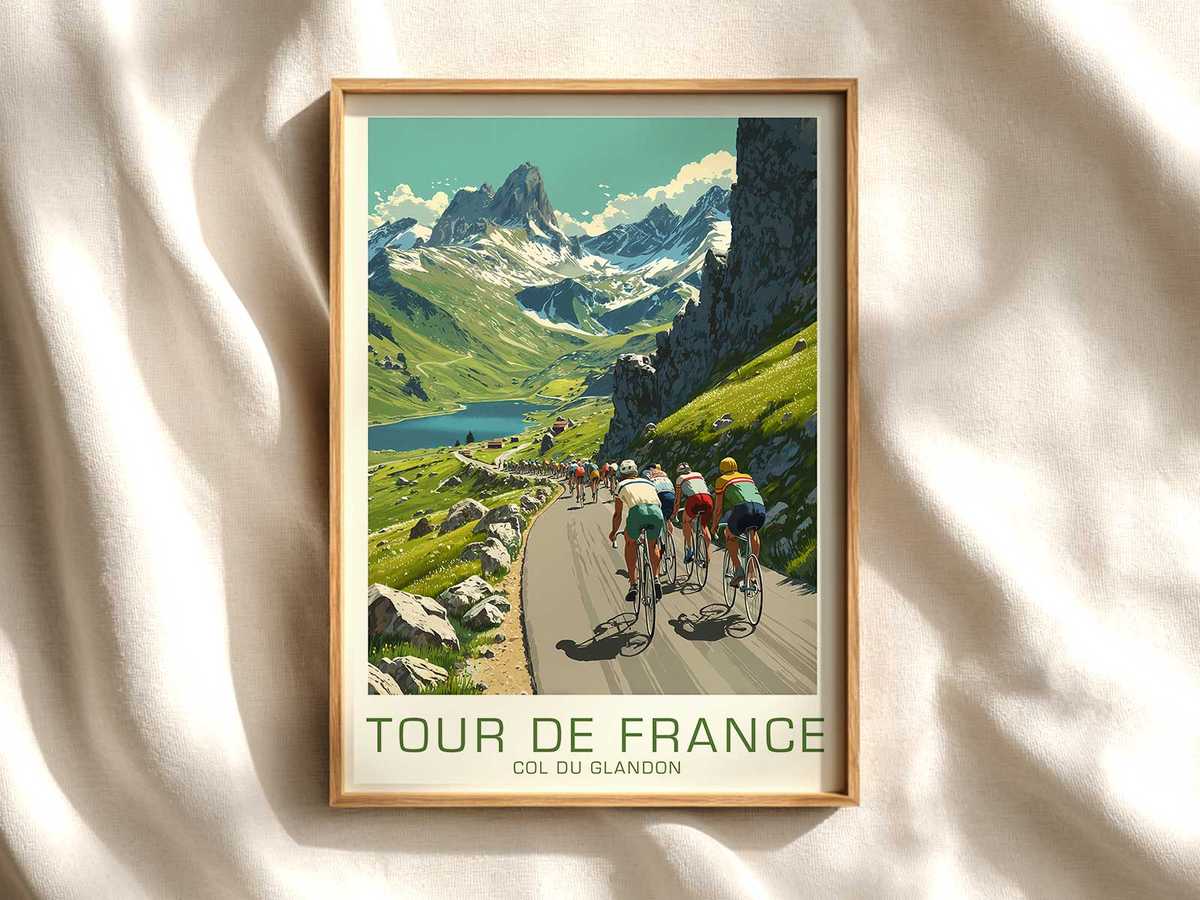
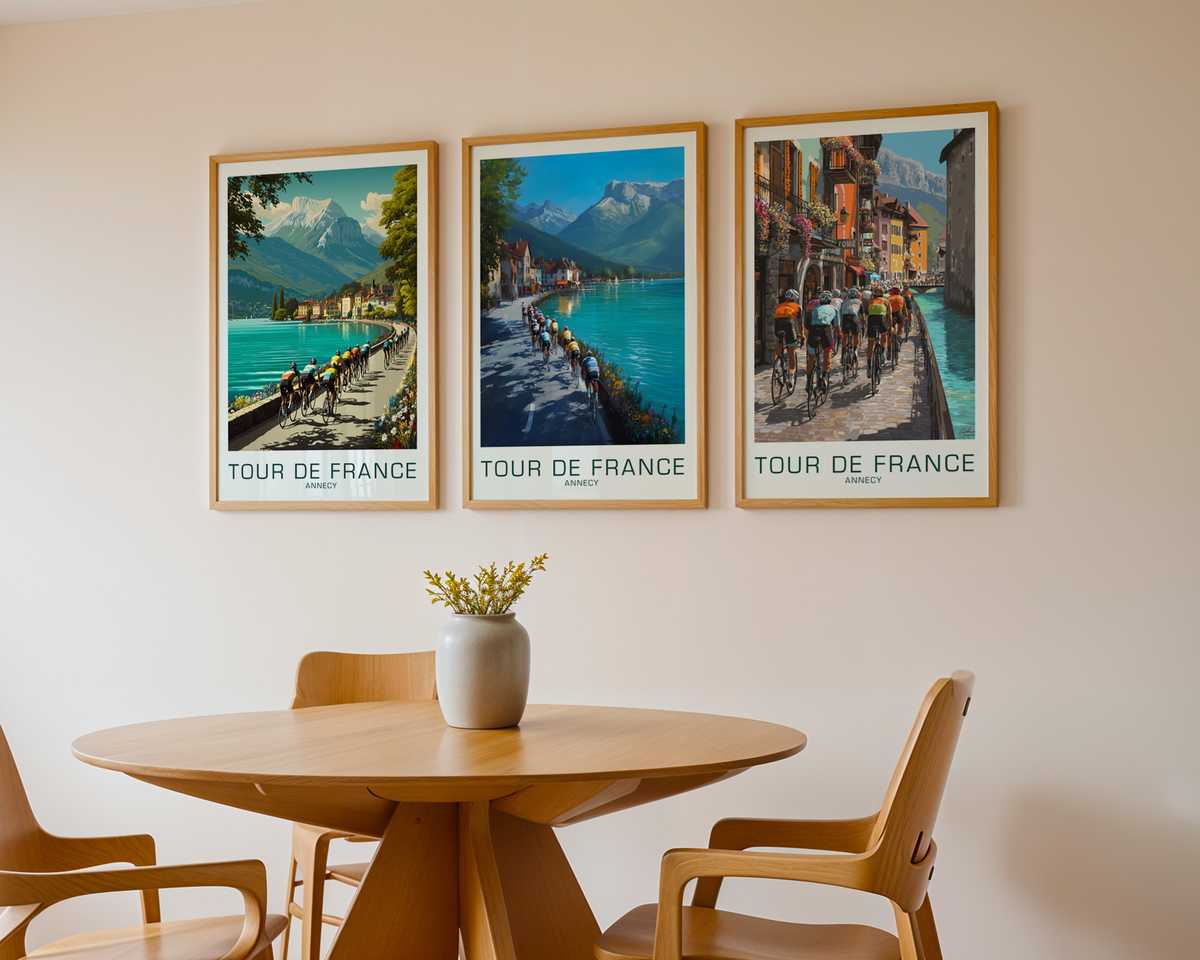
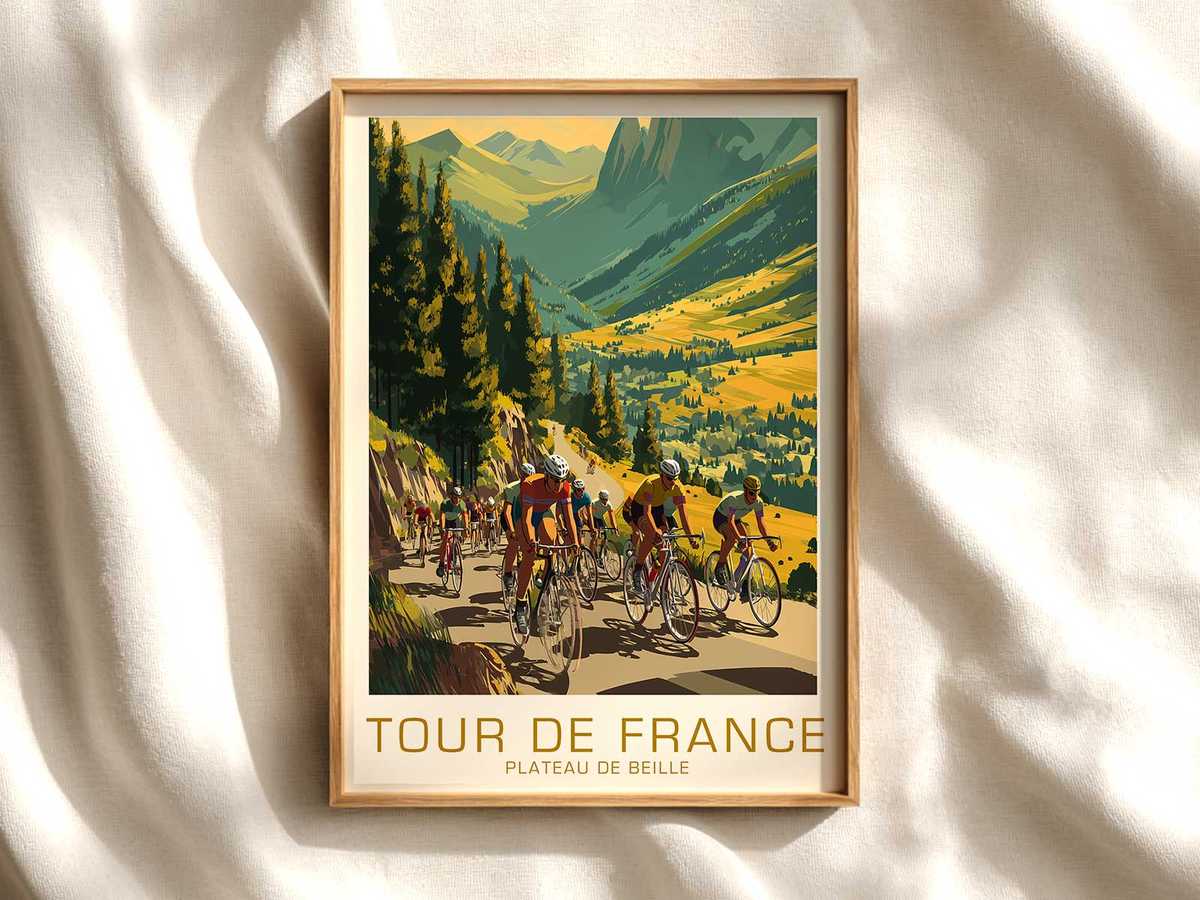
Briançon is more than a waypoint; in the hands of a skilled poster artist it becomes a complete race theatre. The town’s steep terraces, stone façades and the ribbon of road climbing out of the valley compose an instantly legible scene for anyone fluent in cycling imagery. A bicycle frame art print that centres Briançon reads first as place — altitude, gradient and town geometry — and only then as sporting drama. That ordering is what makes the image feel refined and worthy of a wall.
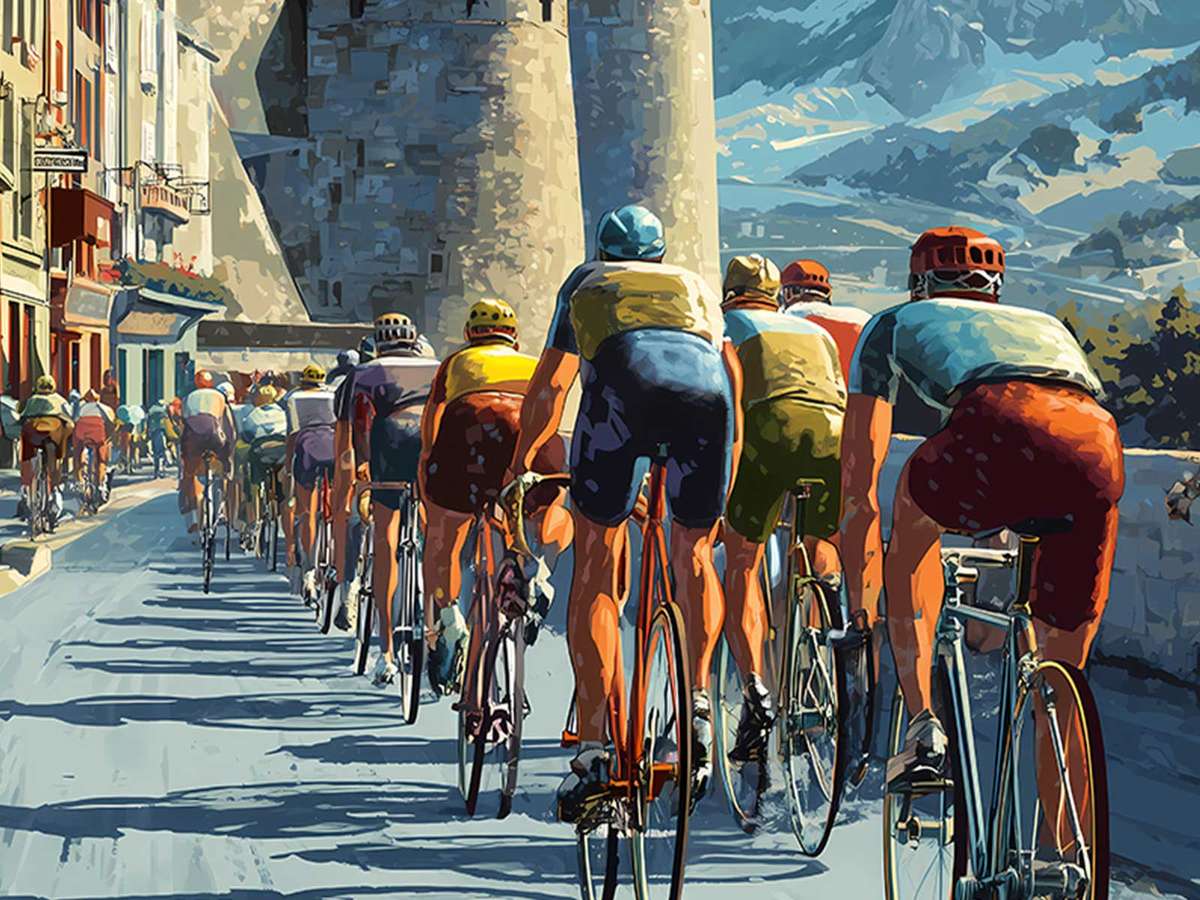
Visually the appeal is structural. Narrow streets give way to sharp alpine slopes; rooftops cascade like contour lines; a single hairpin or a clipped row of trees can tell you immediately whether the kilometre is easy or cruel. When composed for wall art, these elements become shorthand: the pitch of the road communicates effort, the contrast between sunlit stone and blue shadow suggests time of day, and the proportion between rider and mountain fixes the emotion. The print’s creator uses scale and restraint so the road’s rhythm — gentle sweeps, sudden bends, a final steep pitch — reads from across a room.
Light is the silent narrator. Midday glare on pale limestone, long evening shadows in a valley, or a cloud-filtered morning all alter the mood of the same corner of Briançon. A poster that chooses one of these moods lets the viewer occupy the moment; it feels like an instant salvaged from a stage, a memory of wind and altitude. The subtle palette of mountain light — muted ochres, cool greys and the cold blue of high air — keeps the image elegant and avoids the clutter of literal documentary detail. That restraint is part of the artwork’s desirability: it invites lingering rather than shouting for attention.
The town’s urbanity matters as much as its slopes. Stone terraces, fortified gates and narrow promenades give the image texture and human scale. When a framed bicycle silhouette is placed in front of weathered walls or beneath a string of cheering spectators, the print becomes an interplay between endurance and place. Crowds are suggested rather than depicted in full; a line of small figures, a scatter of flags, or a flash of colour behind a bend is enough to imply the race without turning the poster into a photo-reportage piece.
[IMAGE_INSERT_ARTICLE_01]
Road architecture — guardrails, retaining walls, hairpins — operates like stage direction in a poster. Their shapes guide the eye through the composition and echo the cadence of the rider: a long open climb suggests steady tempo and loneliness; a compressed, steep alley suggests sudden attack or sprinting desperation. For a collector this is important: the image communicates a single narrative about effort and place, so it performs well above a sofa or in a study where mood matters more than facts.
Beyond pure form, there is memory. Briançon stands for alpine resilience in cycling imagination: the idea of altitude arriving at a town that itself feels perched, fortified and exposed. A poster that captures that feeling does two things at once — it celebrates the bicycle as noble object and preserves a sense of place that viewers can return to. That layered reading makes the print more than decoration; it becomes a trace of a stage atmosphere you can hold on the wall.
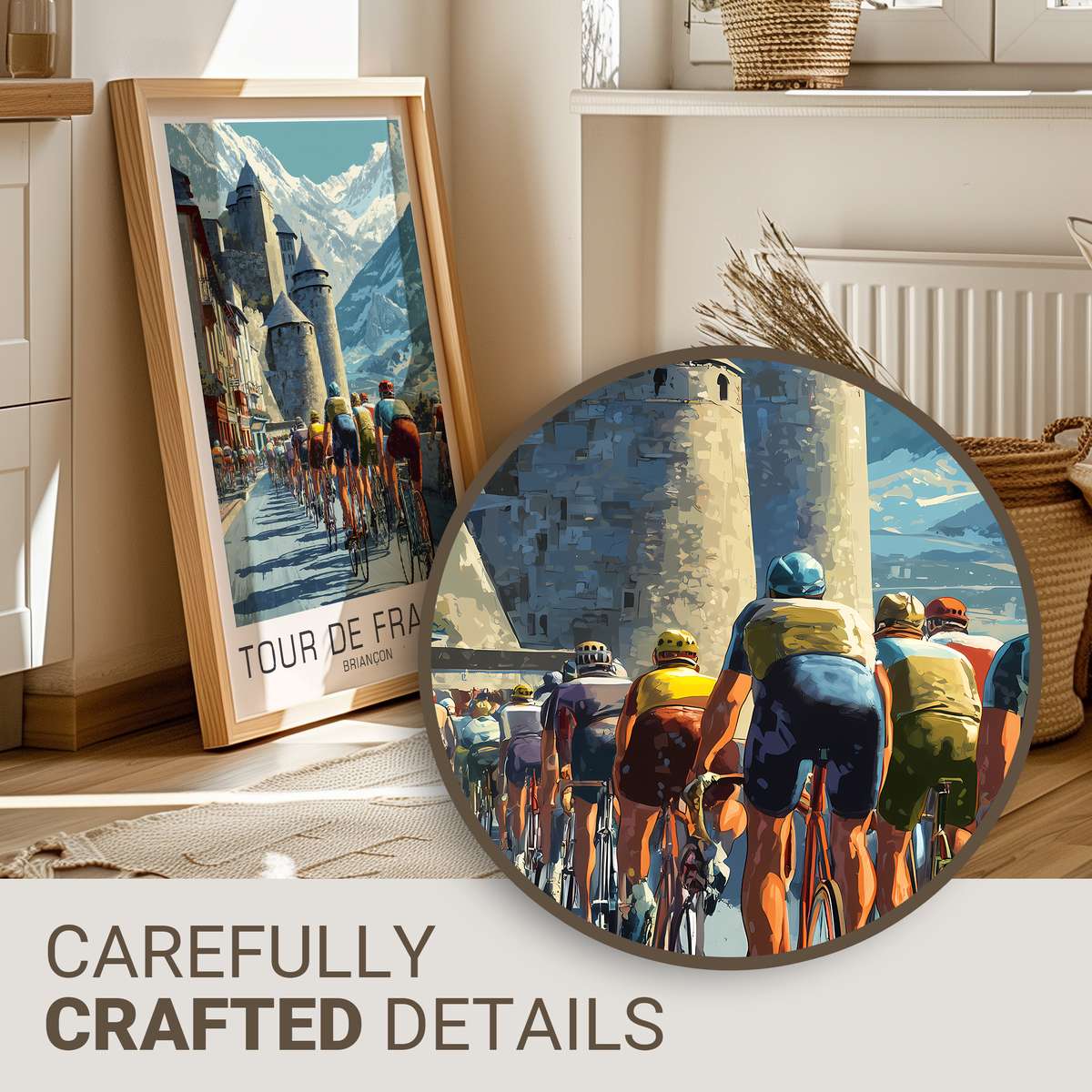
Finally, consider how such an artwork changes a room. In a muted living room the print adds a vertical energy — a suggested climb that lifts the eye. In a study it provides a quiet narrative of concentration and pace. Framed simply, it reads like a study in light and line; framed with deeper matting, it becomes a window onto a particular hour of a mountain day. Either way, the success of Briançon as bicycle frame art depends on the artist’s ability to prioritise place: the road, the light, the town and the altitude all work together to make the scene immediately readable to anyone who knows the language of climbs.
Author: