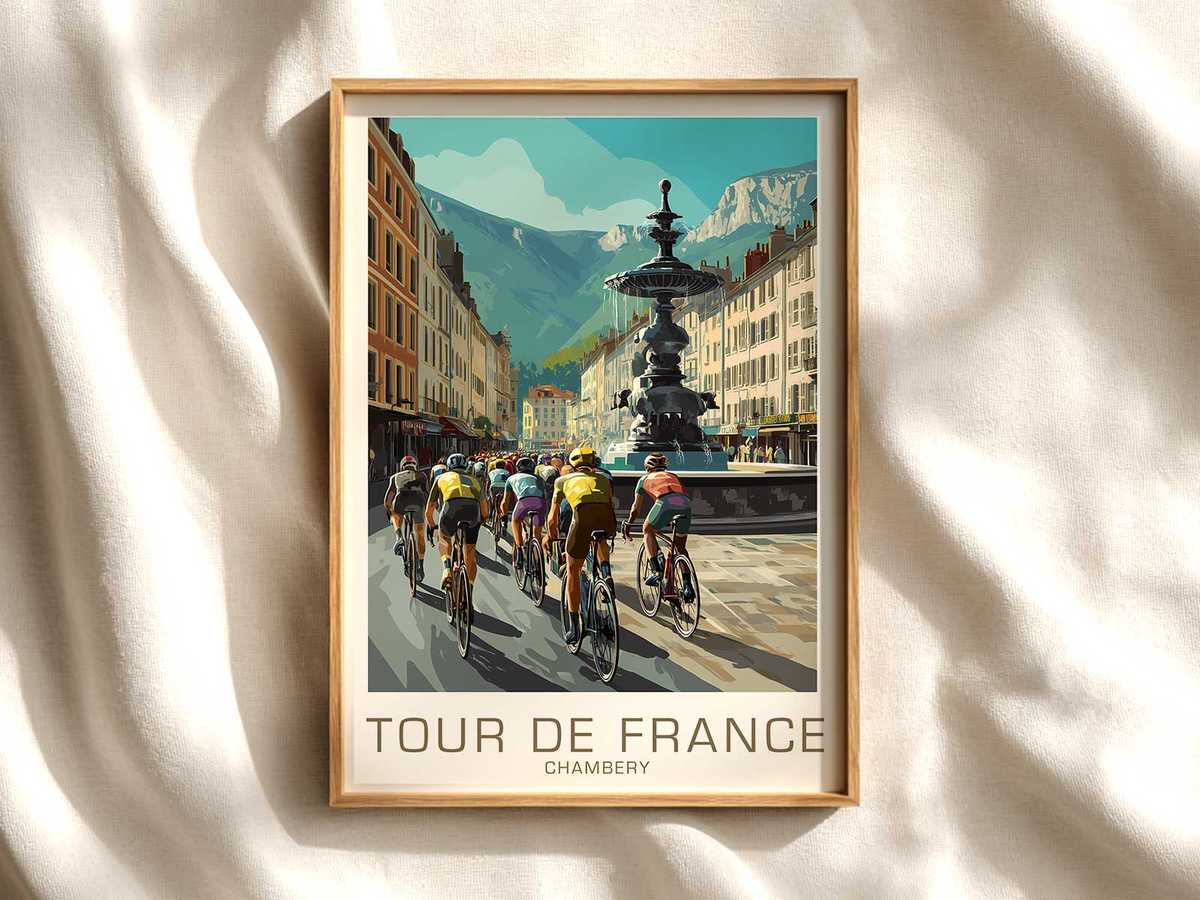
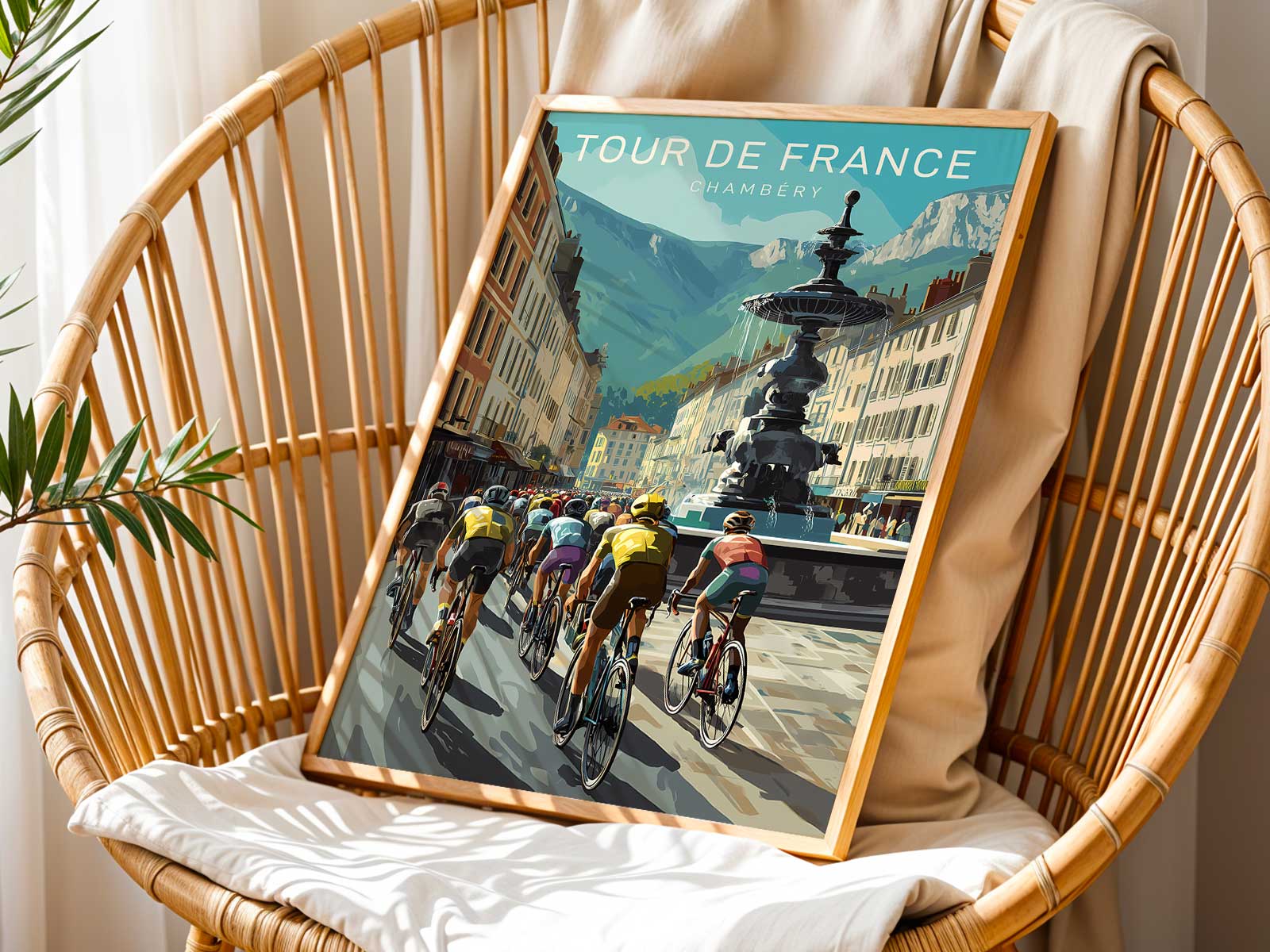
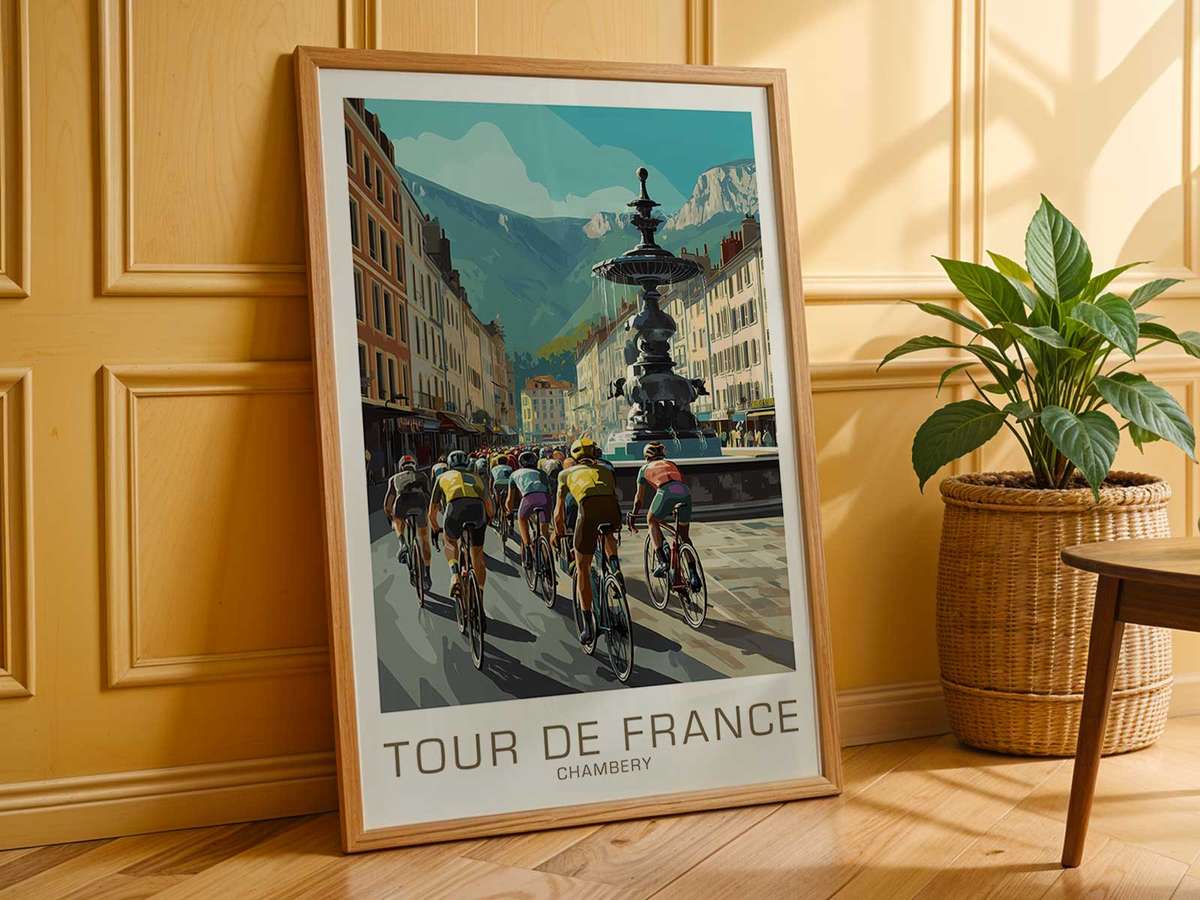
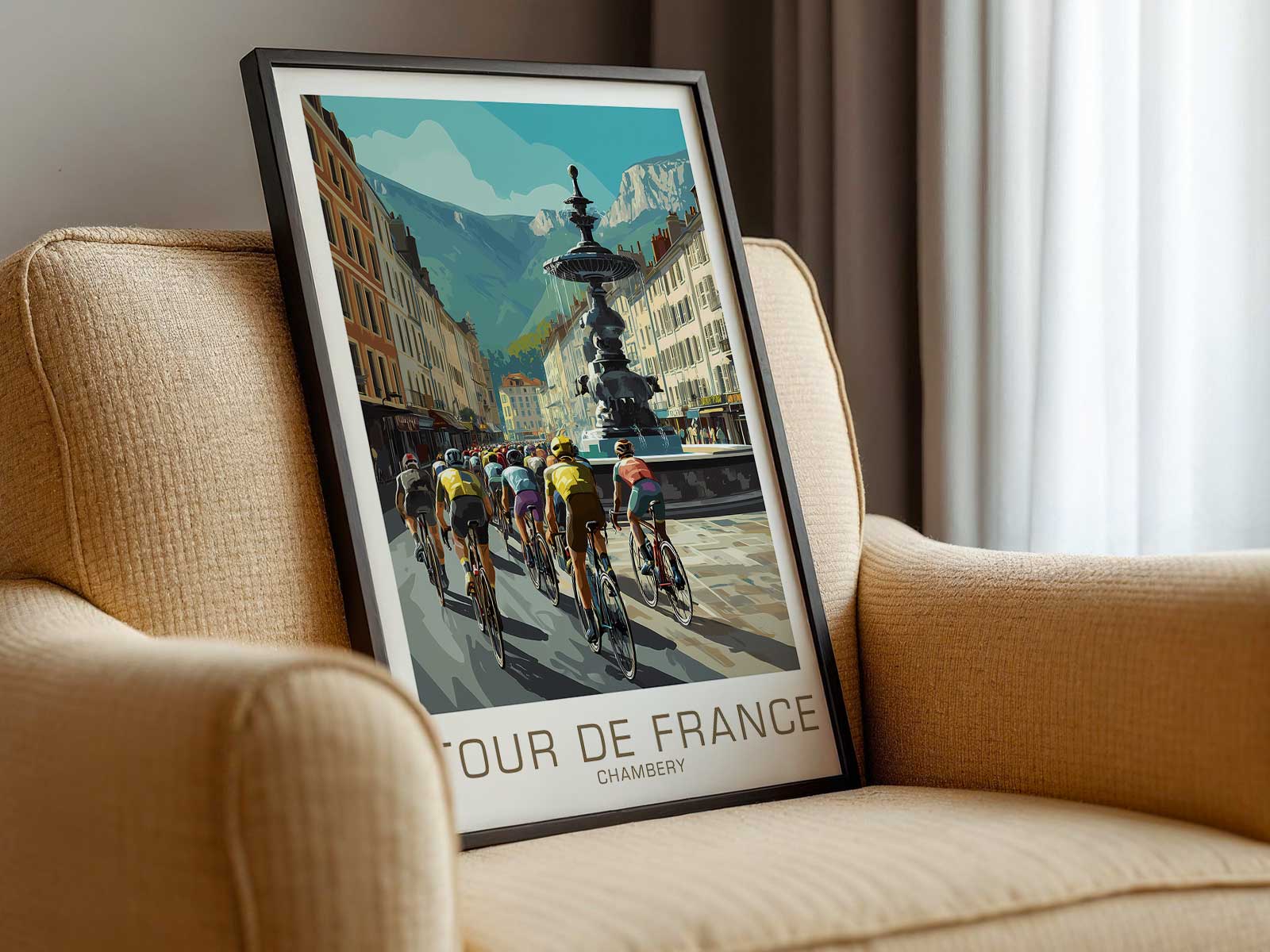
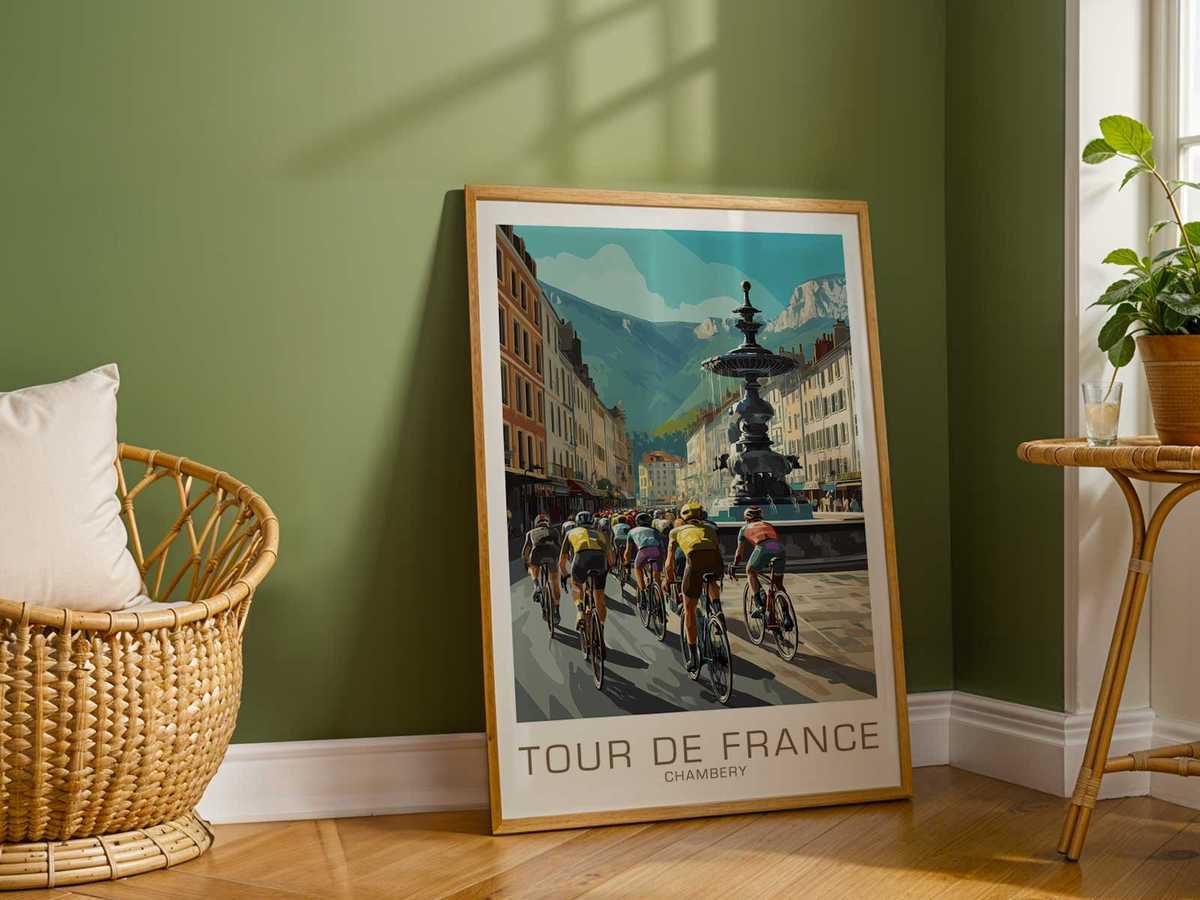
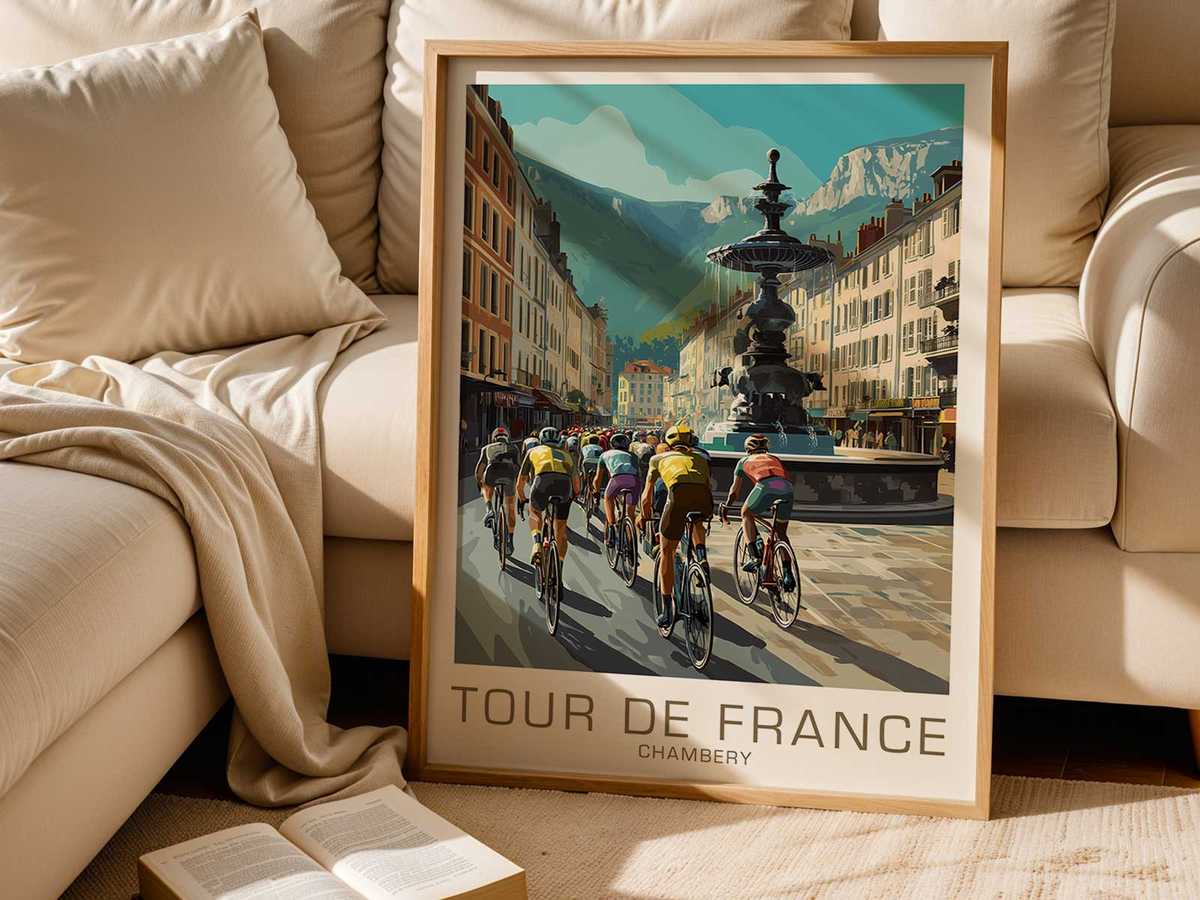
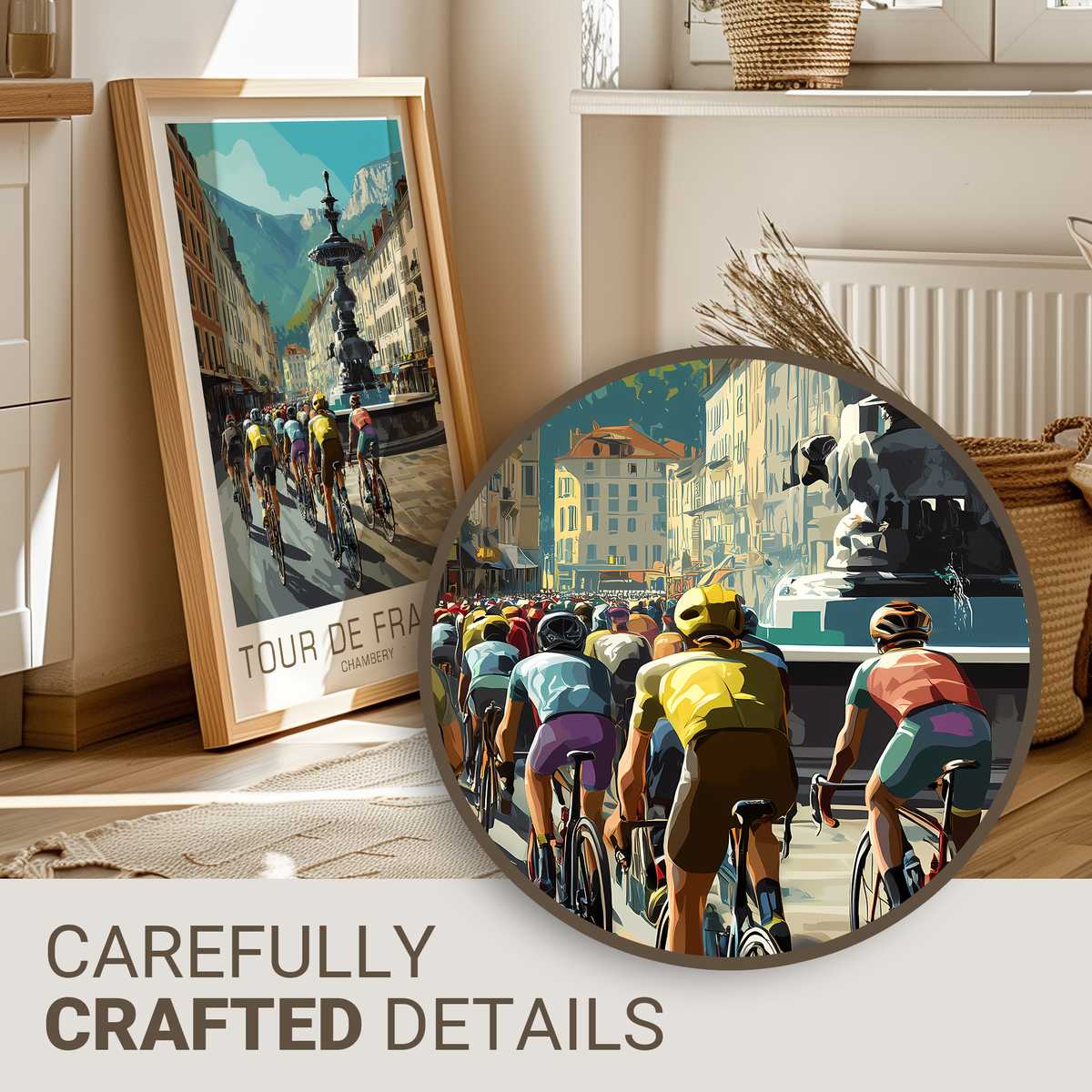
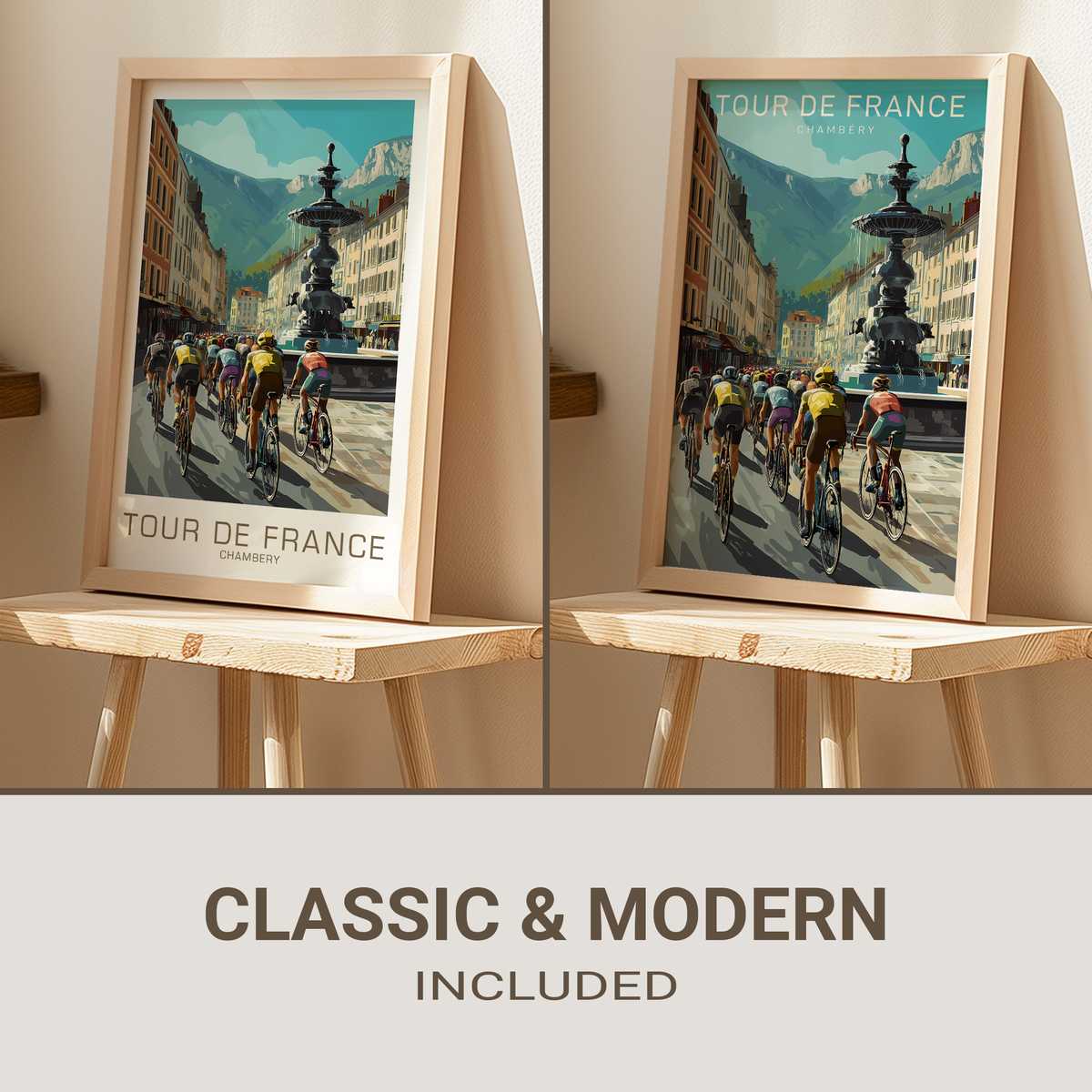
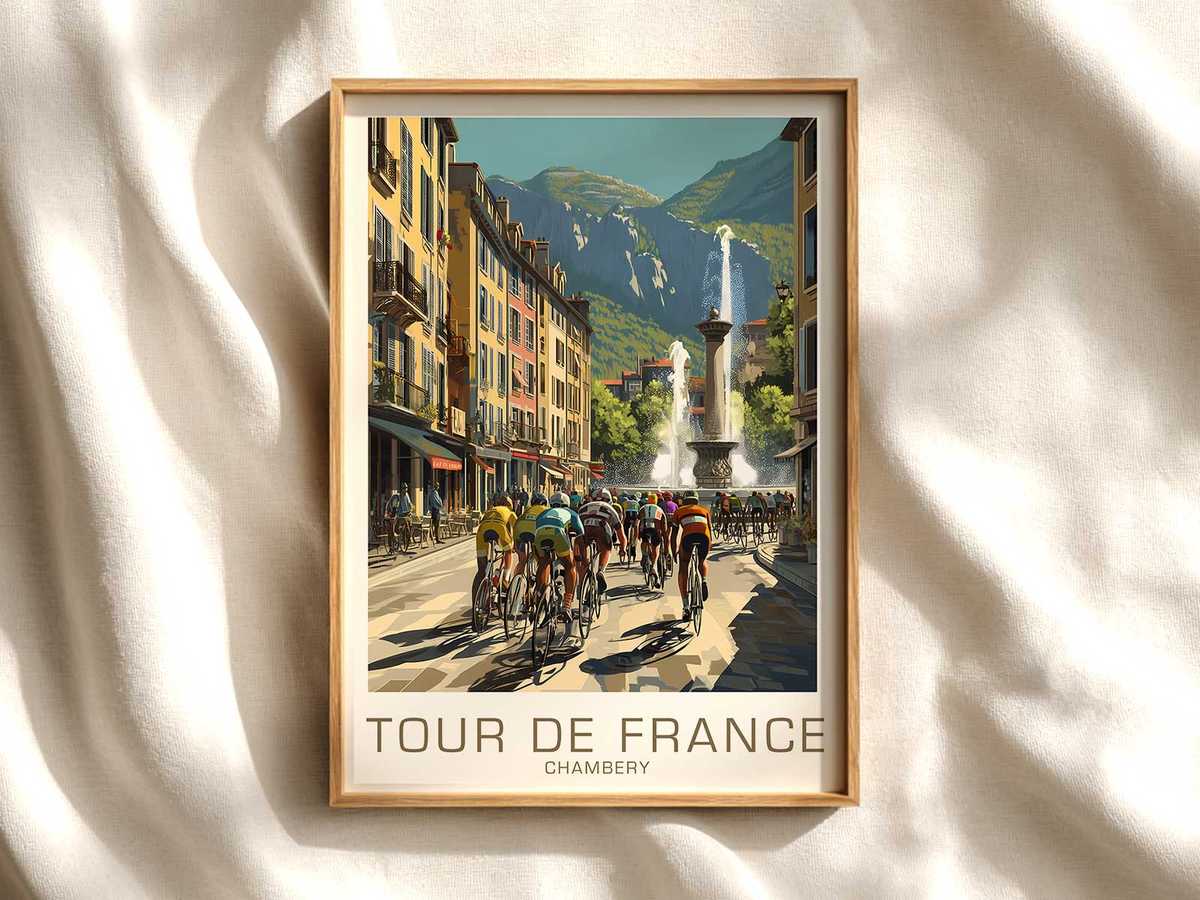
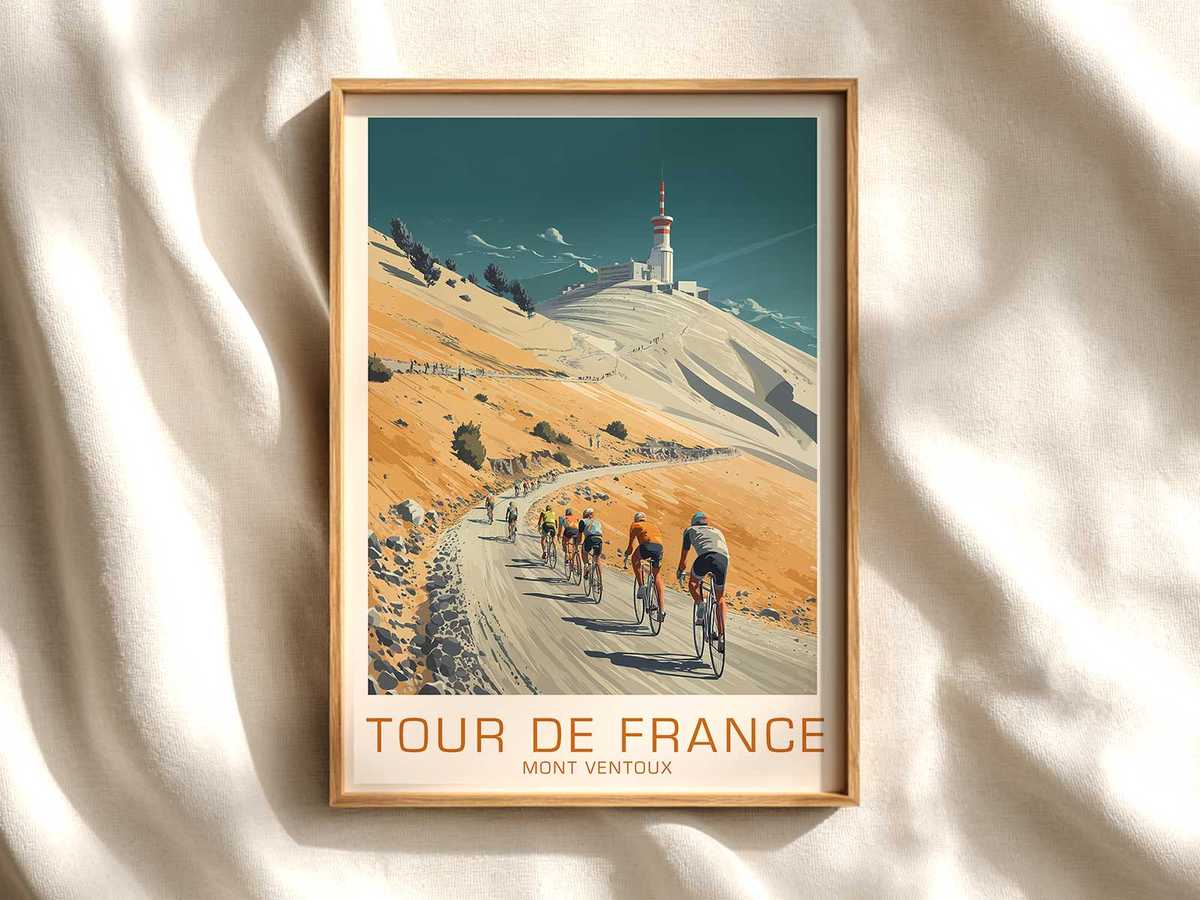
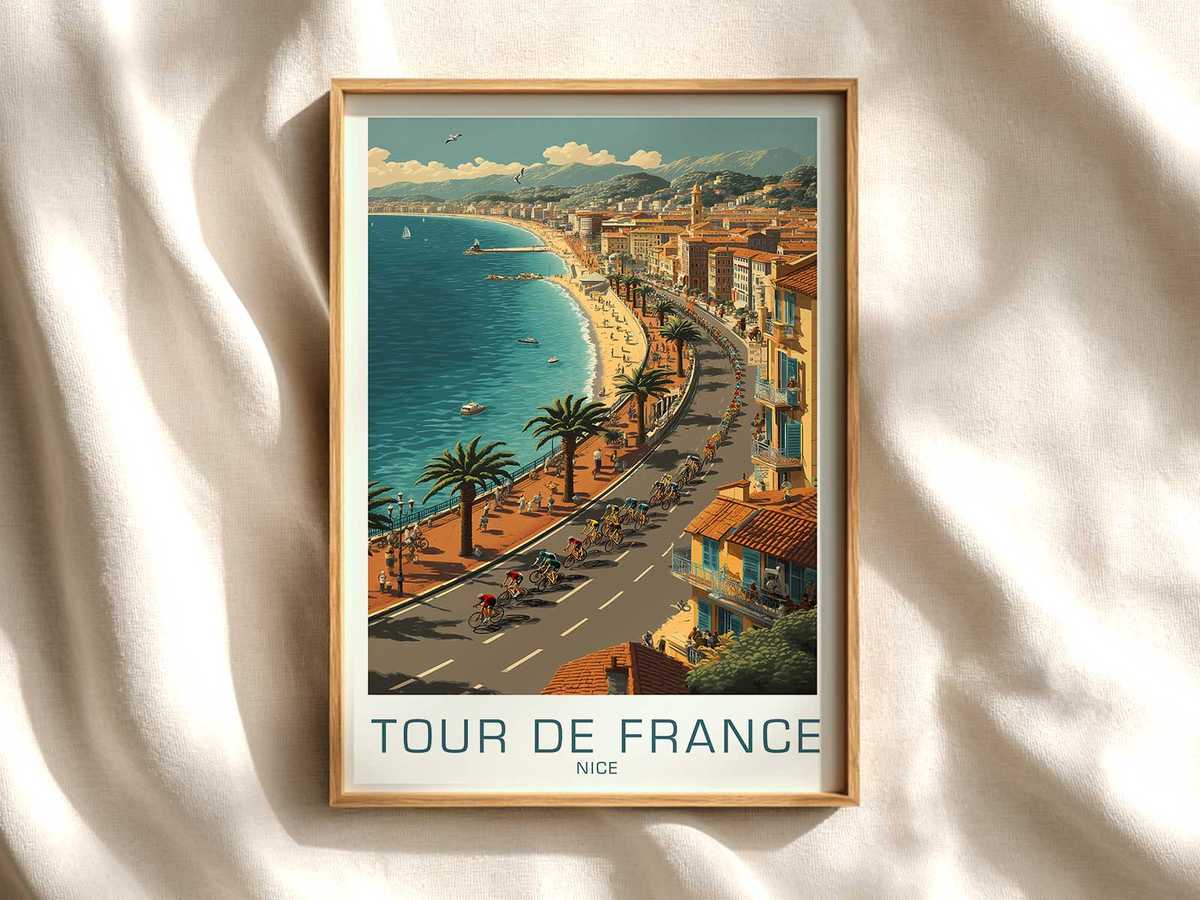
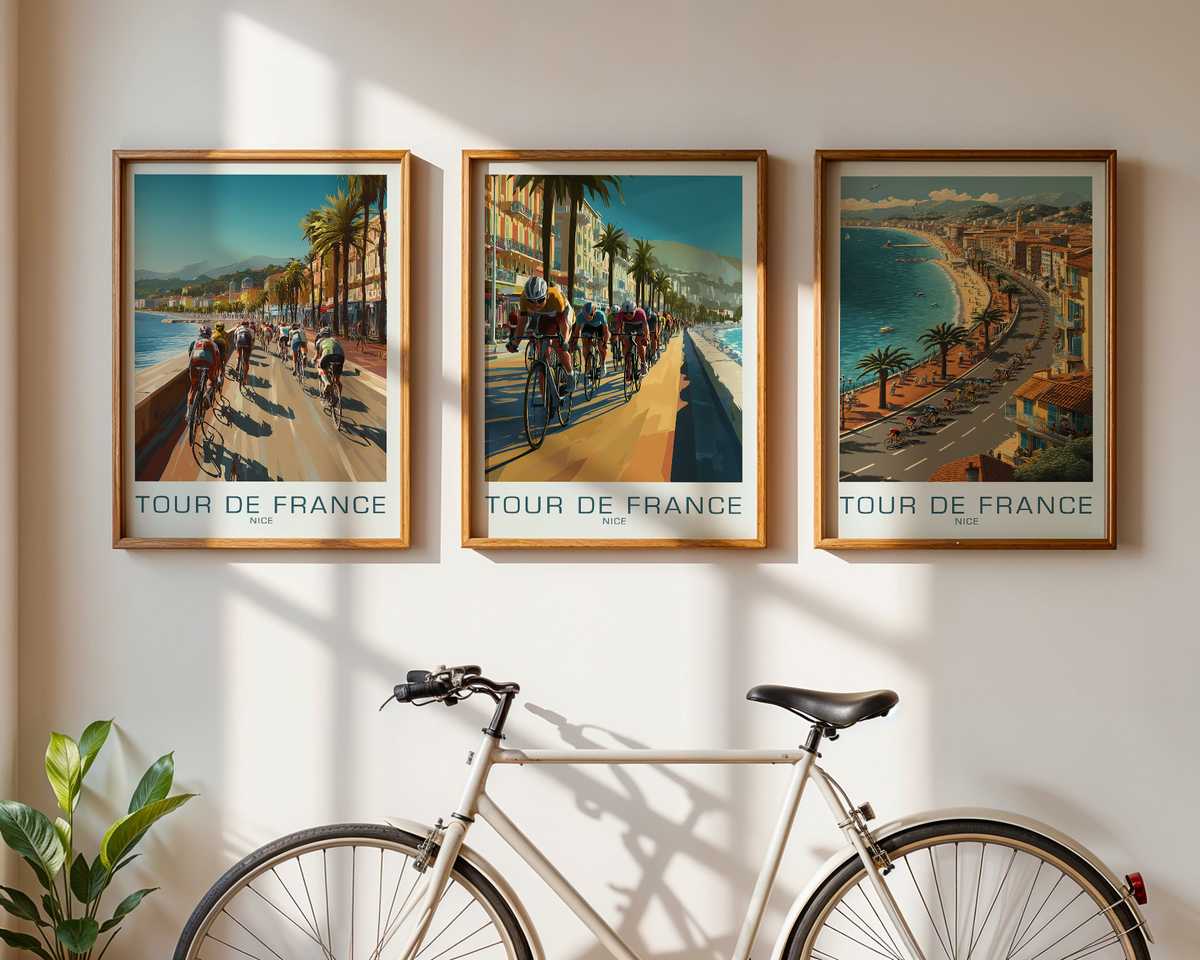
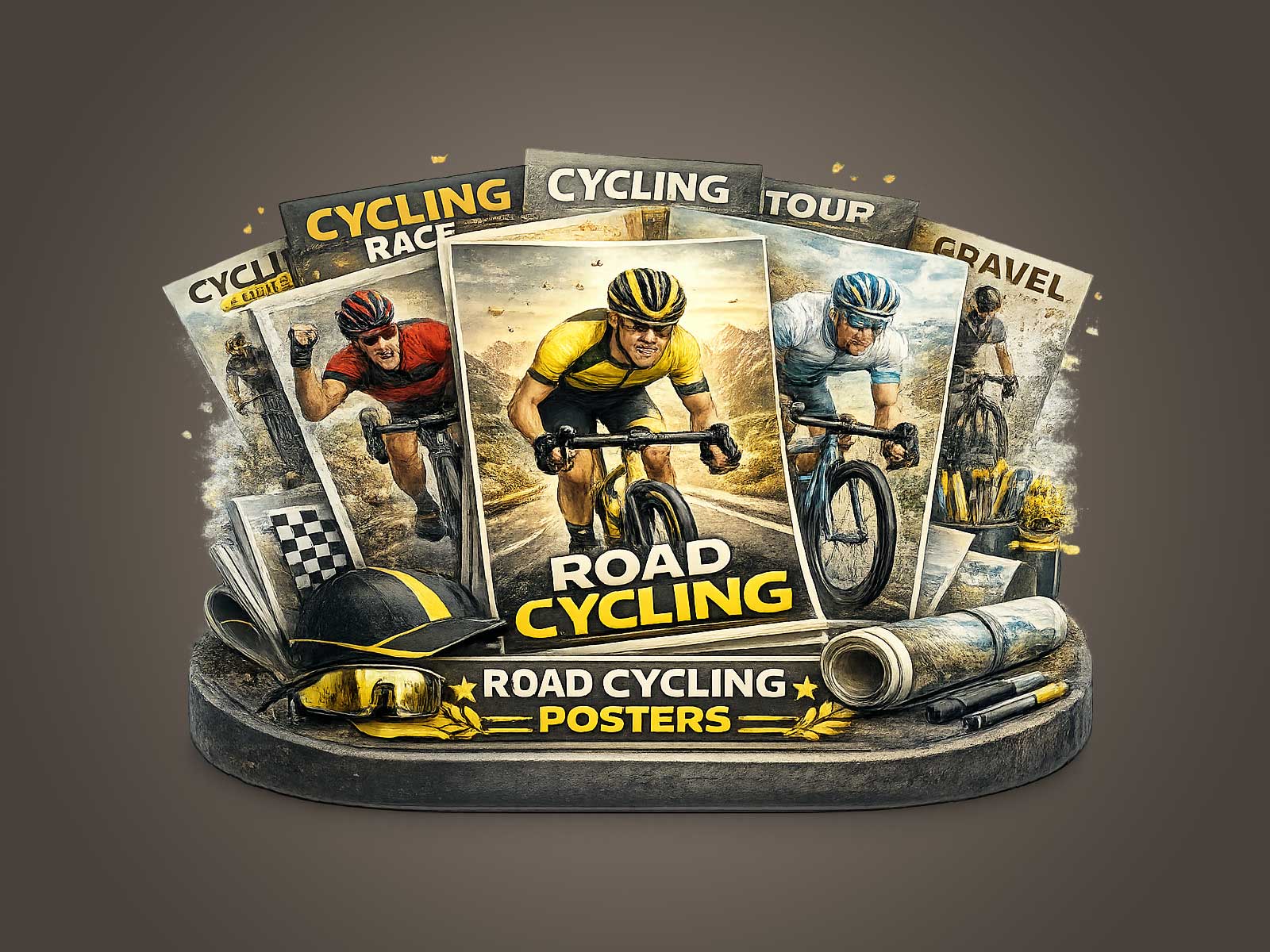
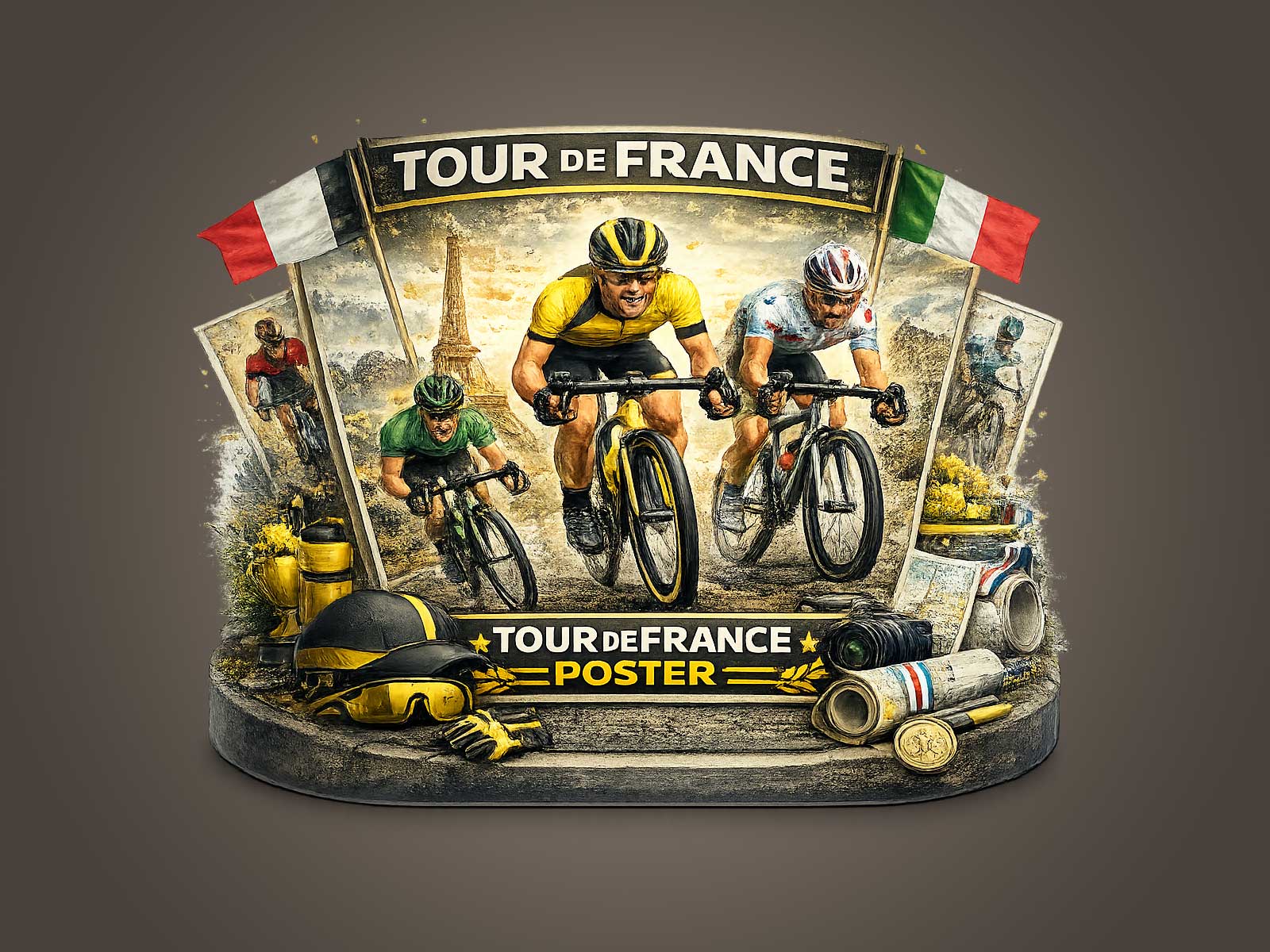
There is a singular quiet that vintage cycling imagery brings to a wall: not loud nostalgia but the soft accumulation of time. A poster linked to Chambéry reads that quiet in layers — the textured wash of an old print, the restrained palette that suggests sun-faded paper, the silhouette of a classic racing bicycle and the hint of a regional road curving toward the horizon. Together these elements lift the image beyond mere sporting illustration into a piece of cultural memory where local heritage, archive aesthetics and cycling culture answer one another with natural affinity.
The first signal that an image carries heritage is its material feeling. Colours are intentionally muted, never aggressively retro; ochres and washed blues suggest oxidation and sunlight rather than a deliberate throwback trend. Paper grain and a slightly mottled surface read as print artefact rather than simulated texture, and any period typography is handled with restraint — period-minded letterforms that echo posters once tacked to town halls and cafés, not cartoonish hand-me-downs. This is the visual language of memory: signs that time has touched the object and, in doing so, made it morally and visually weighty.
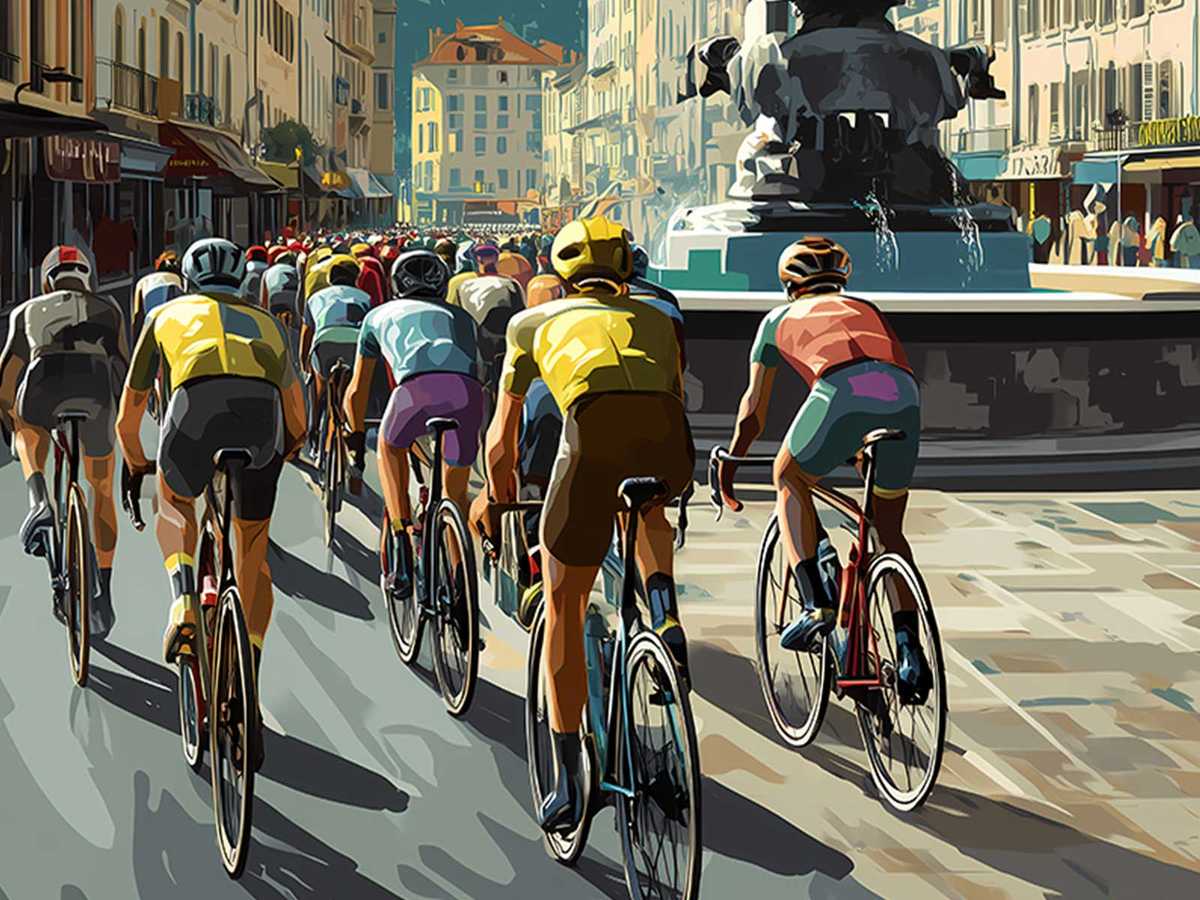
Iconography matters. The classic racing bicycle — downtube shifters, slim steel frame, leather saddle — is more than a prop; it is an anchor for collective recall. When the rider’s posture is captured in cadence, or when a wheel’s rim and spoke geometry read clearly against a pale sky, the image conveys the craft of cycling: mechanical elegance, human effort, and the visual nobility of endurance. Such specificity gives the poster decorational seriousness. It does not merely suggest cycling; it embodies a way of racing that belonged to a particular era of the Tour and to the towns that watched it pass.
Chambéry, evoked in the scene rather than declared by facts, becomes a local stage for these narratives. The town’s topography and architectural fragments — a sliver of a tiled roof, the suggestion of an alpine slope — function as cultural shorthand. They tether the image to place, and place is crucial: heritage-led wall art thrives when it does more than show an athlete; it implies a geography of memory, the small civic rituals that surround a race, the cafés and spectators who made the event communal. This localised context transforms the poster into something akin to a fragment of social history rather than a decorative sport print.
[IMAGE_INSERT_ARTICLE_01]
The emotional force of such an image is subtle but persuasive. Unlike bright, modern race photography that freezes action, an archival-styled poster invites projection. The worn edges and softened contrasts suggest stories beyond the frame — conversations in a market square, the slow approach of a peloton, the hush of an uphill stretch. For interiors, that translates into atmosphere: a study where concentration and contemplation are welcome, a sitting room that prizes the lived-in look, or a collectors’ wall where objects are chosen for narrative density rather than novelty.
Collector appeal here is not about rarity claims but about curatorial intelligence. A well-composed heritage poster holds visual counterpoints — the economy of its palette, the measured placement of type, the interplay between figure and landscape — that reward repeated viewing. It becomes a piece that anchors a room rather than competes with it, offering a quiet conversation partner to leather-bound books, a classic lamp, or an era-appropriate bicycle frame on display.
Finally, the poster’s power lies in its intimacy with time. It does not attempt to be a documentary record; it reads like a memory rendered visible. That reading is what gives bicycle wall decor its deeper decorative value: it offers owners not only an object of taste but a touchstone of continuity — a reminder that cycling culture is woven into place, ritual and visual history. In choosing such an image for the wall, you invite a slow, layered gaze that rewards familiarity and asks the room to listen to its particular kind of quiet heroism.
Author: