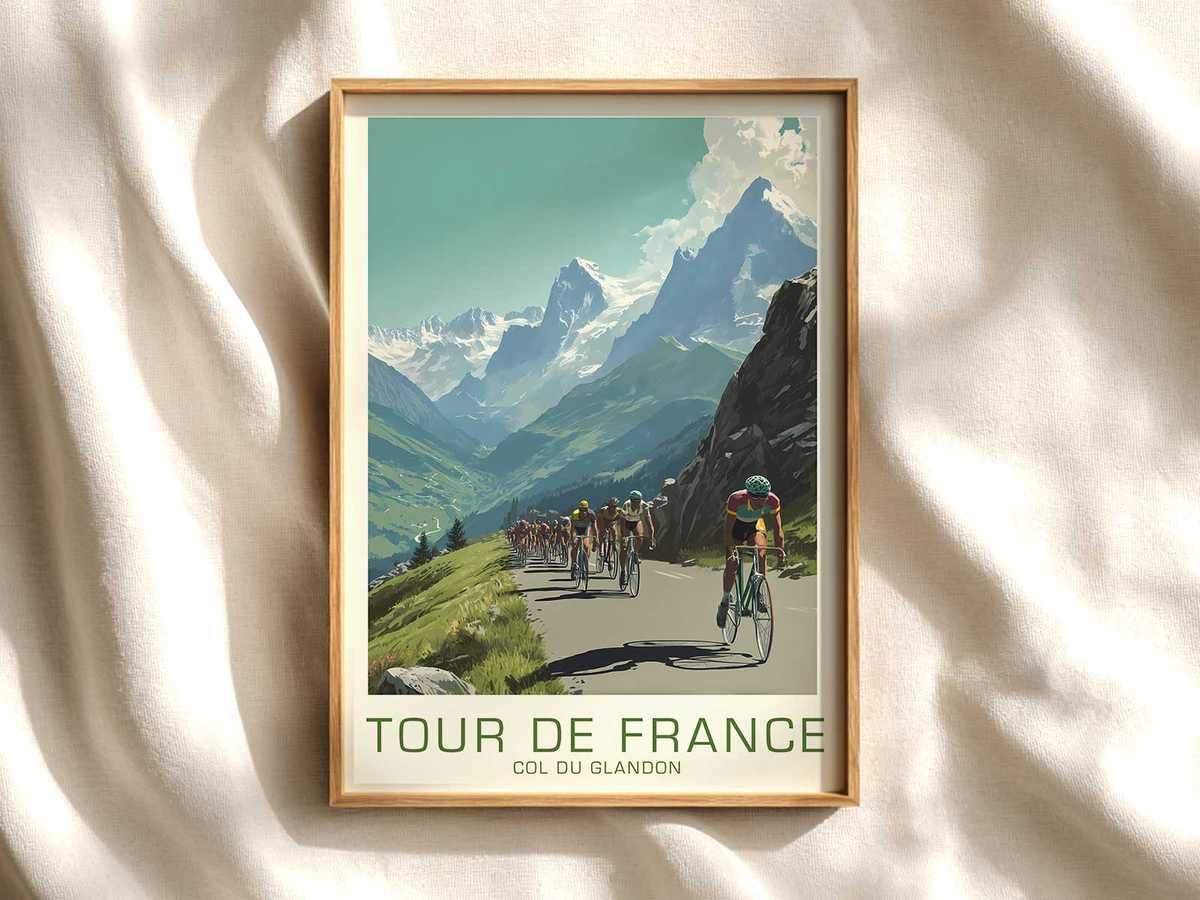
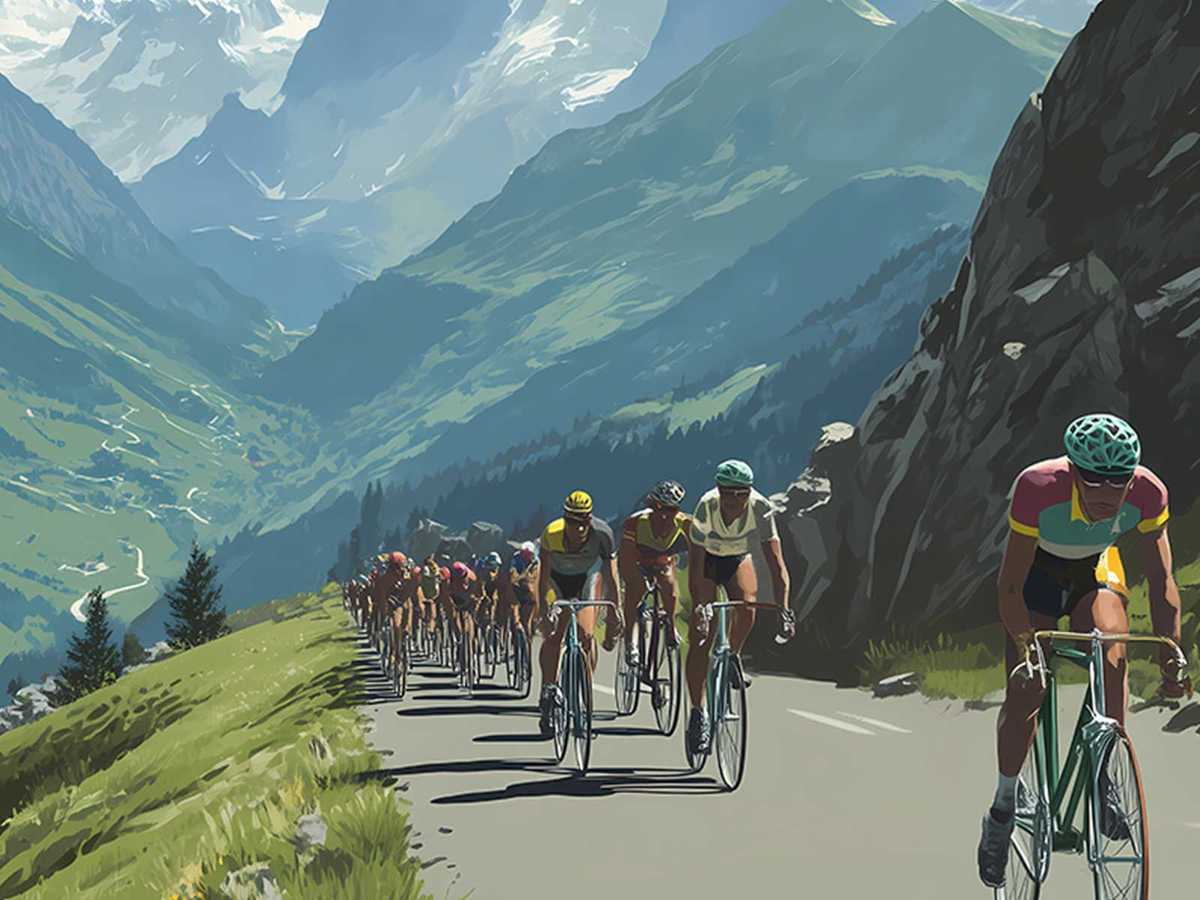
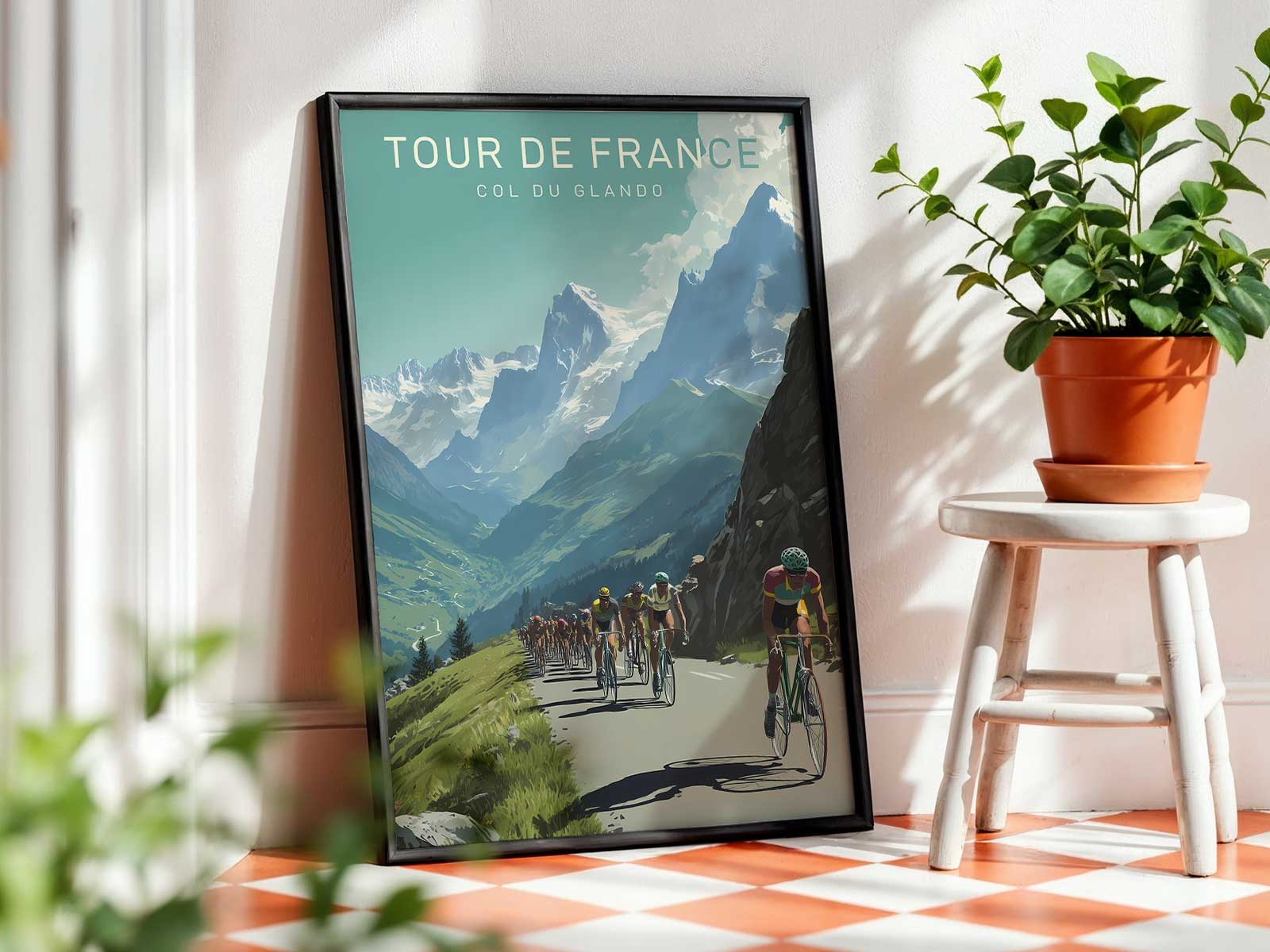
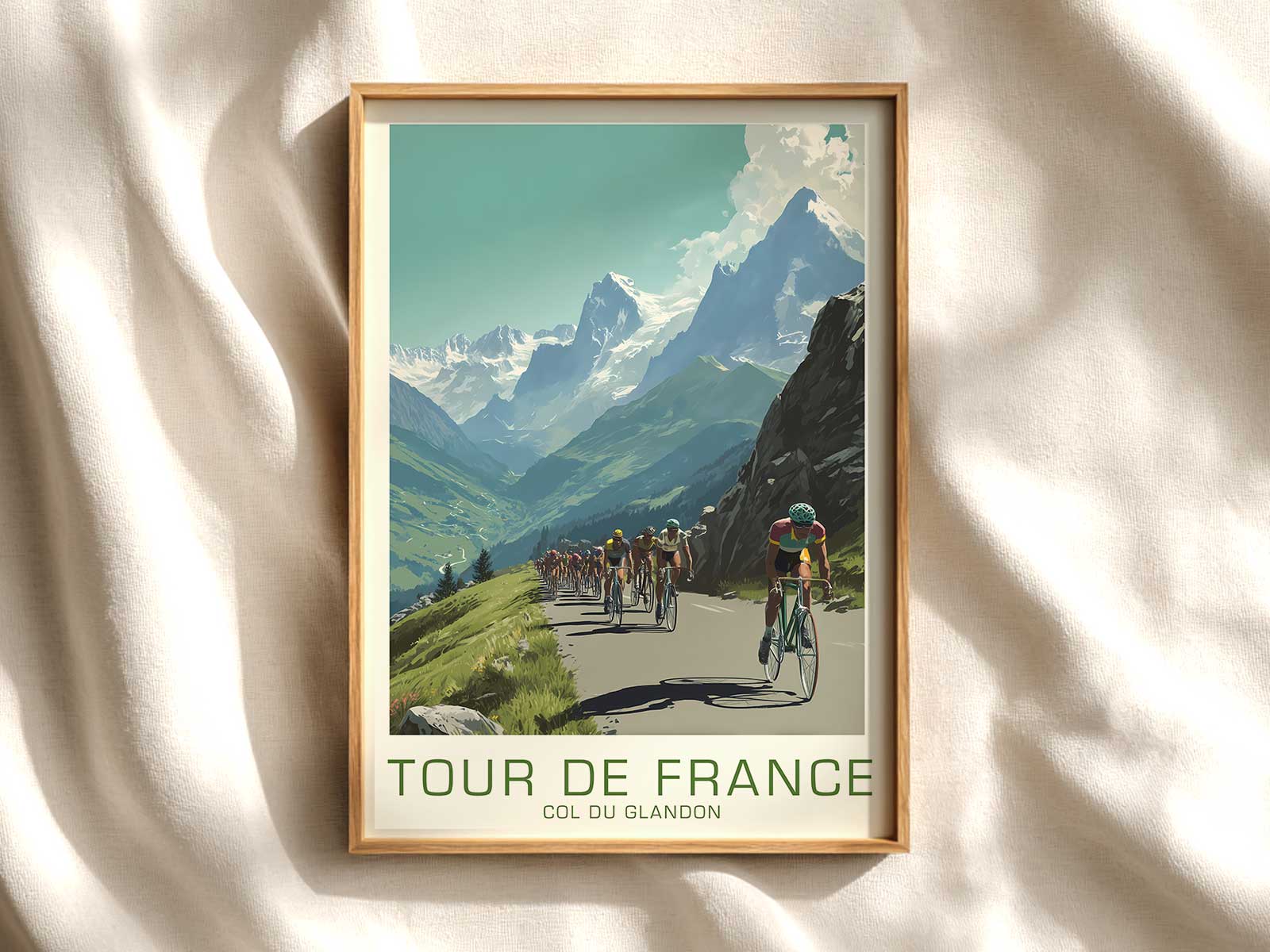
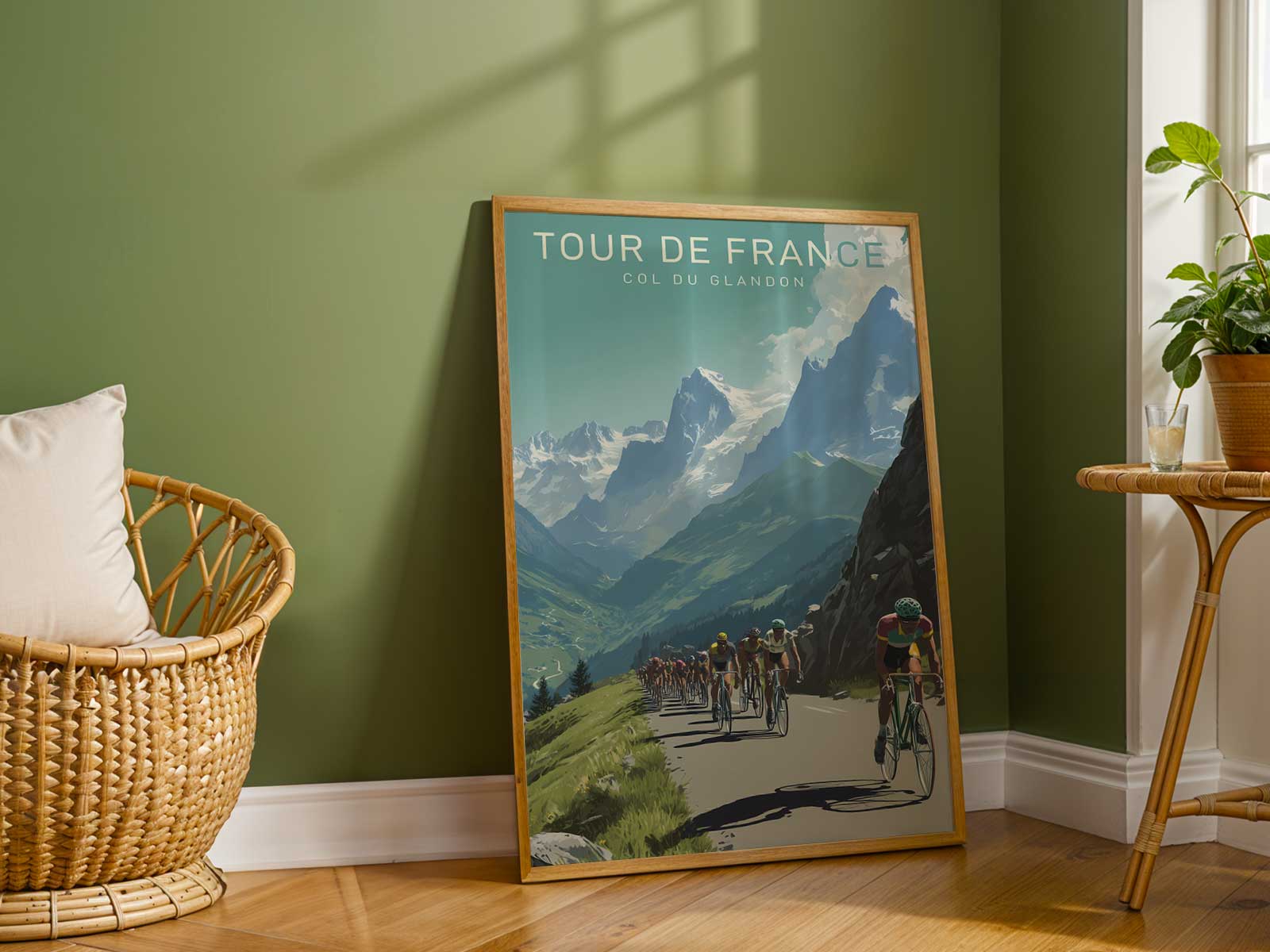
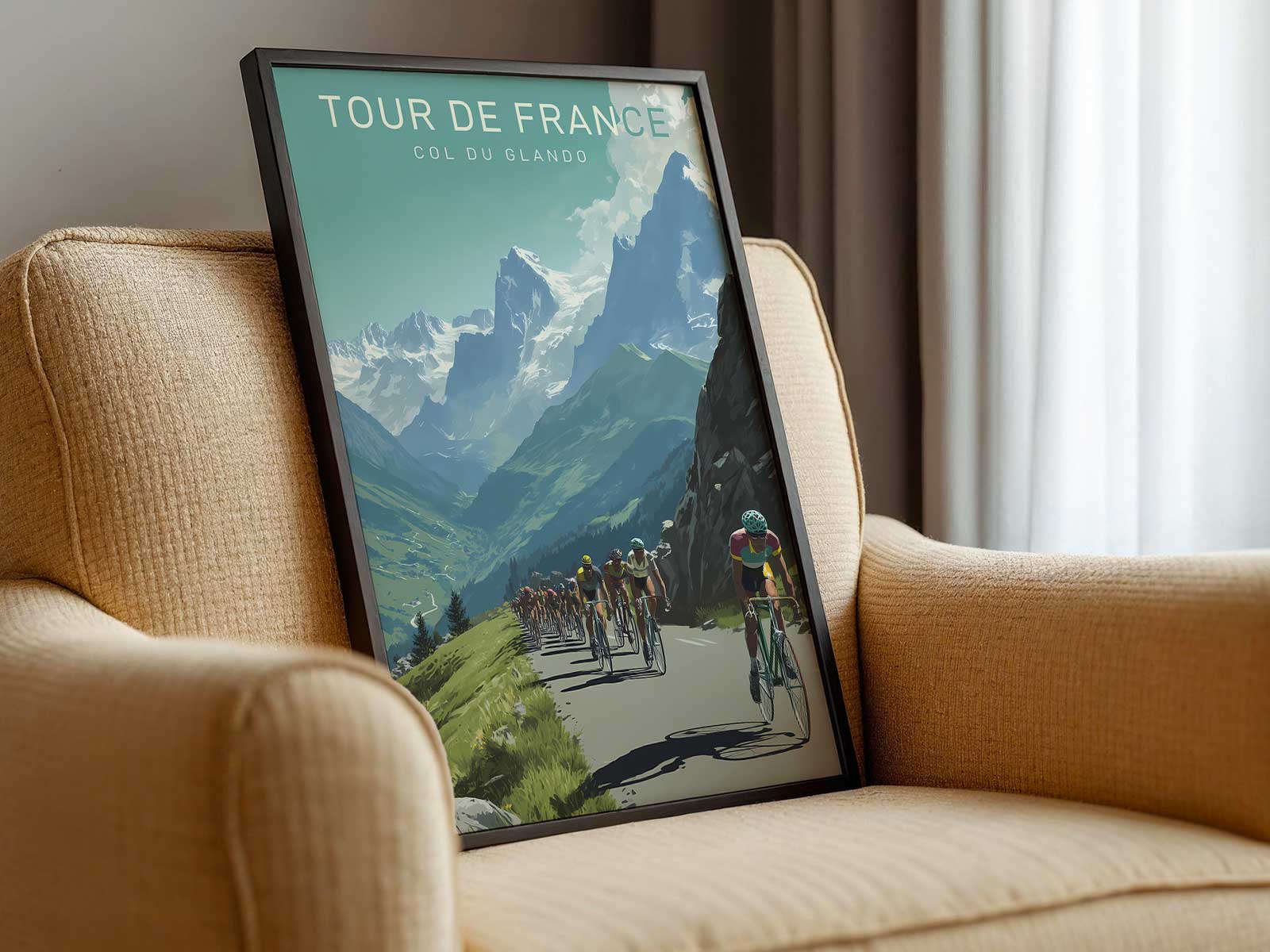
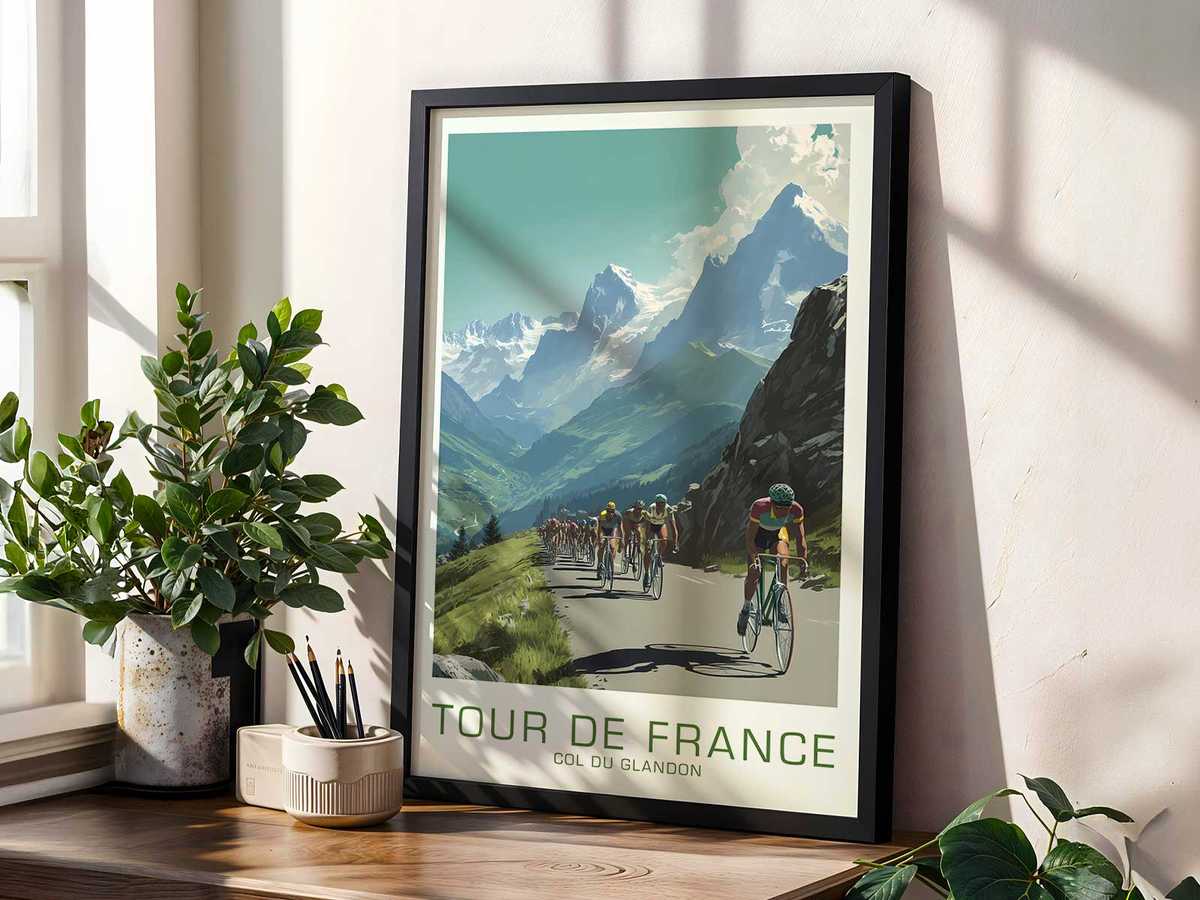
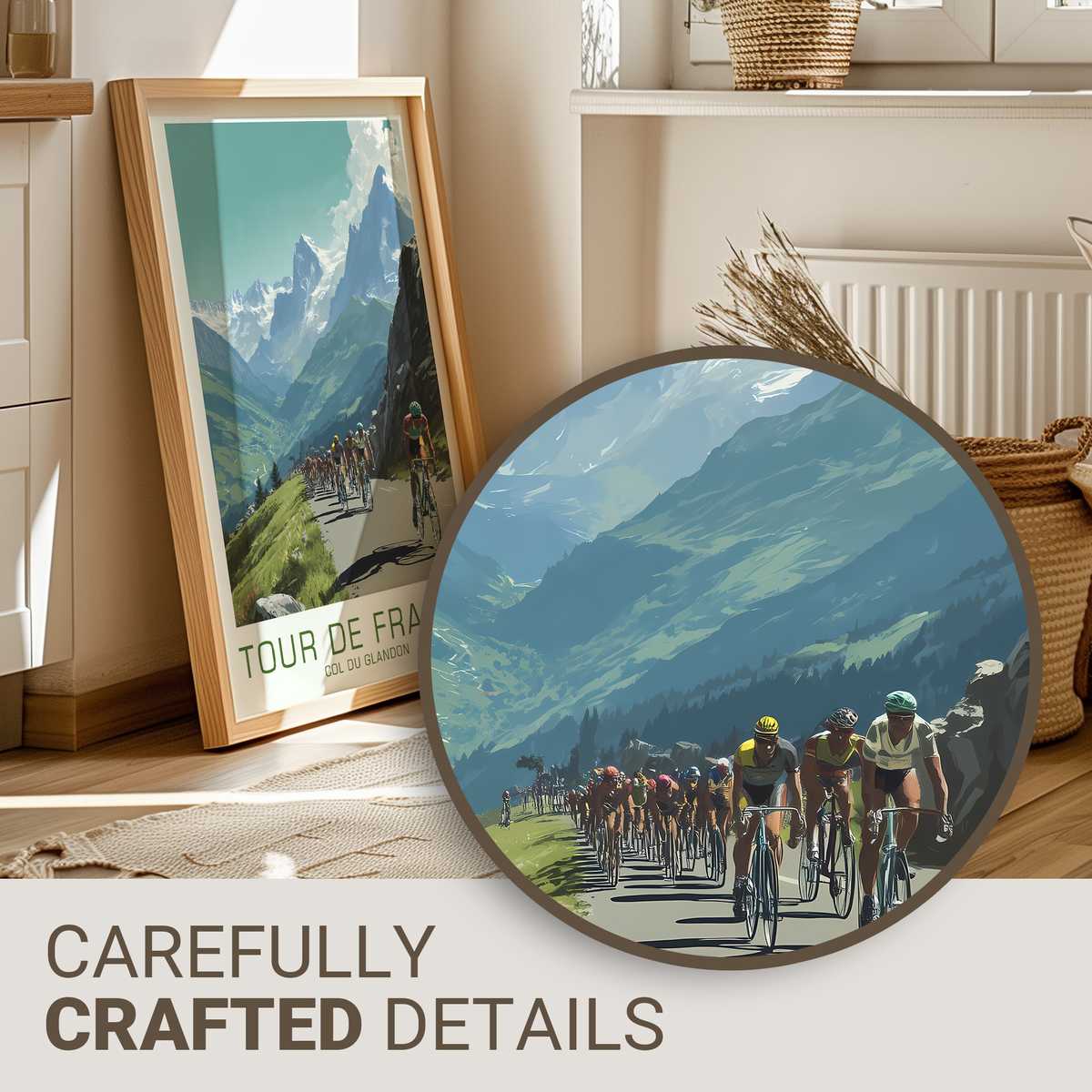
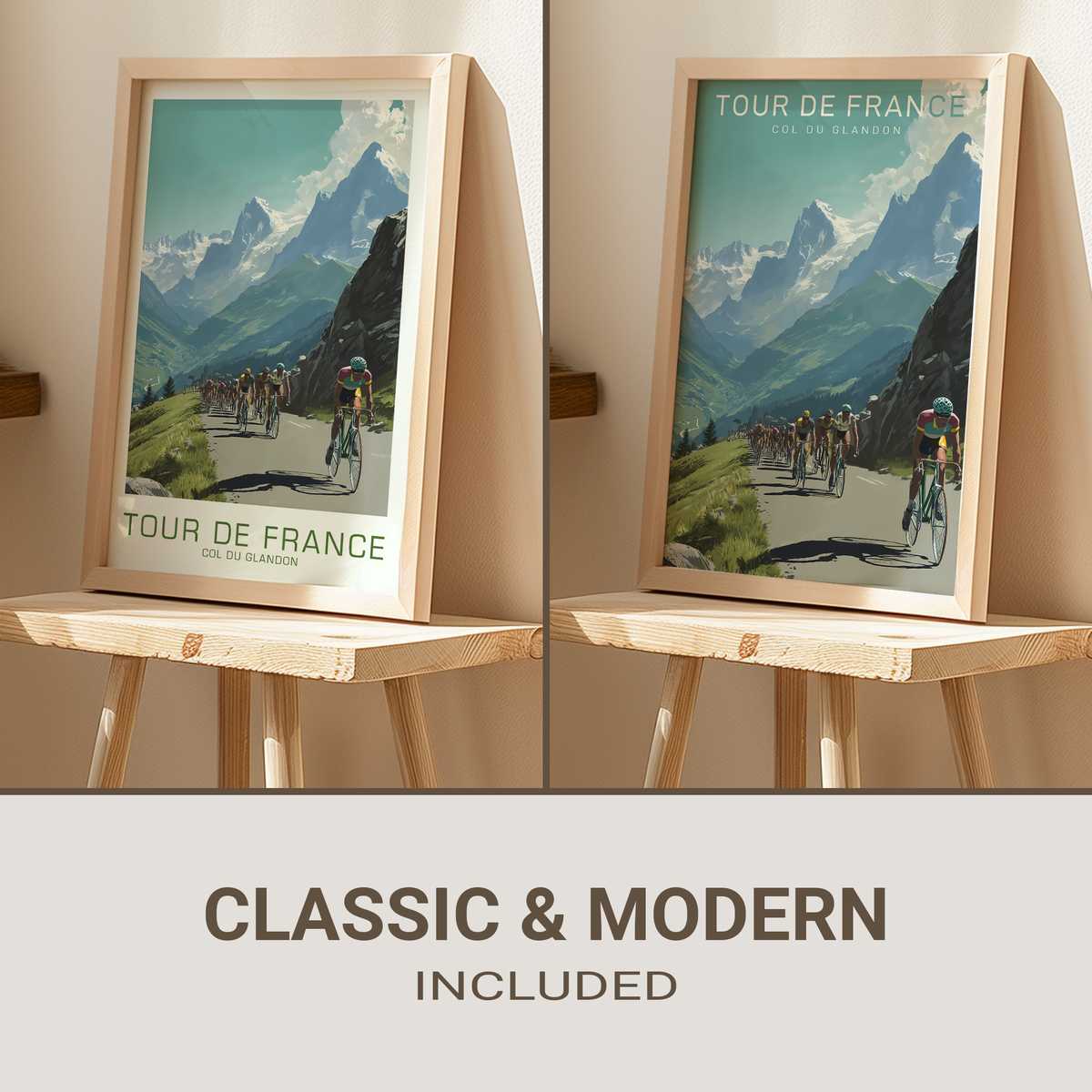
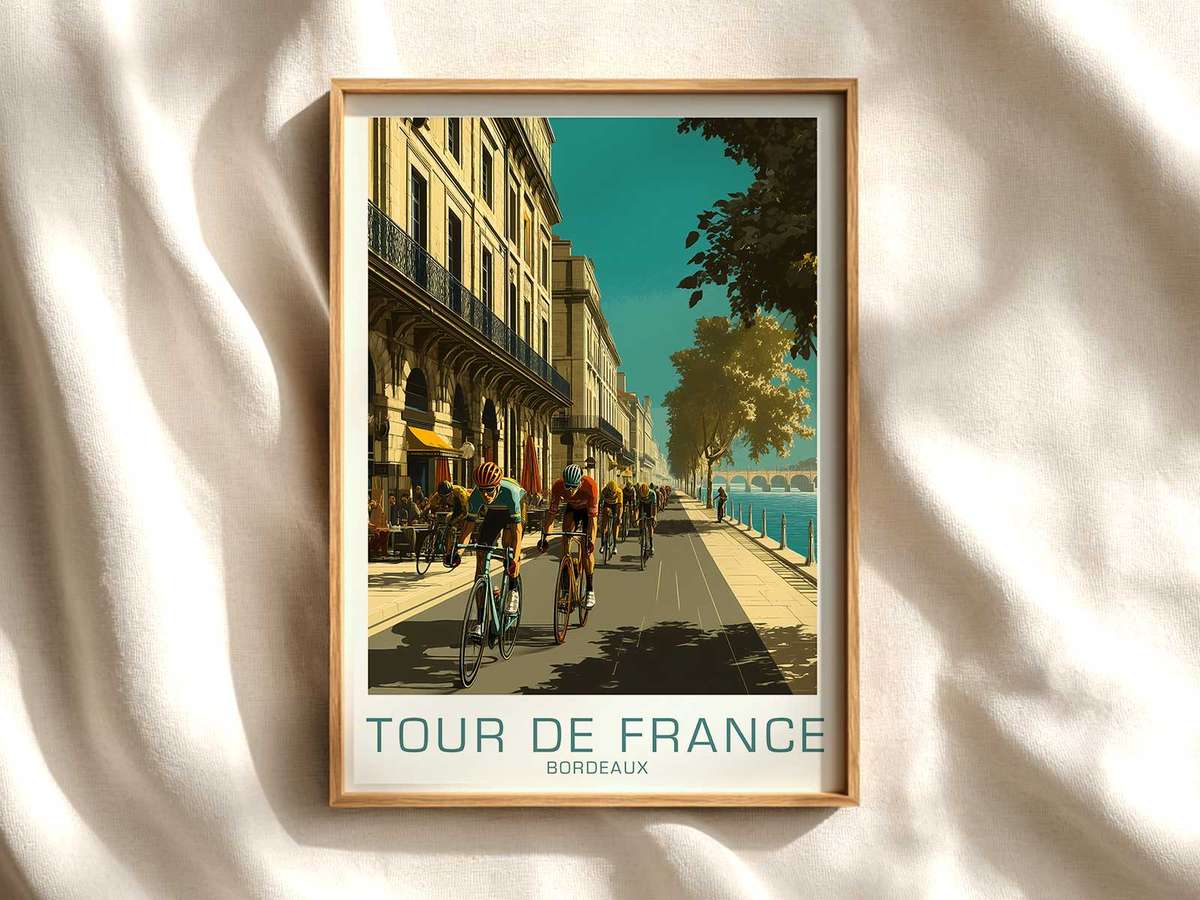
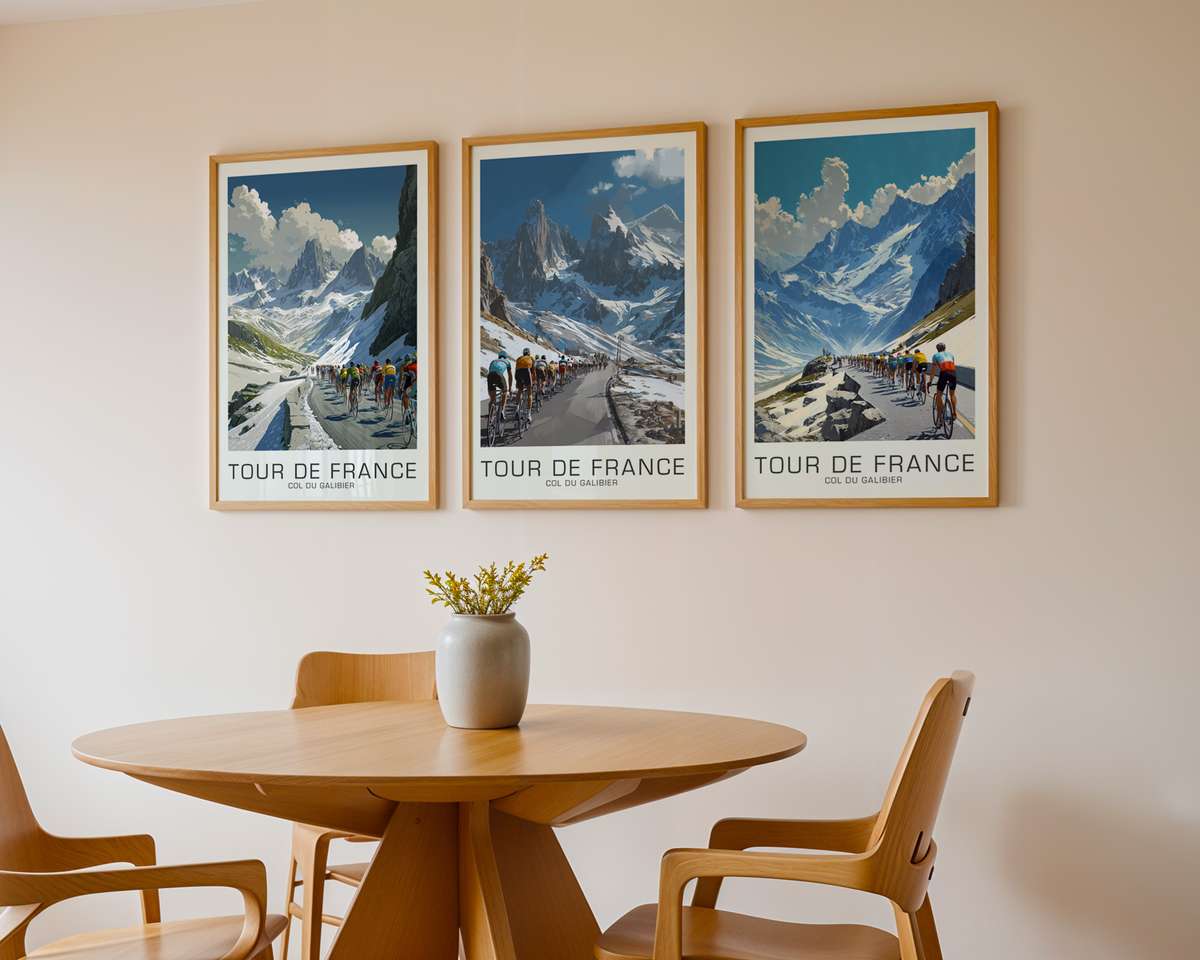
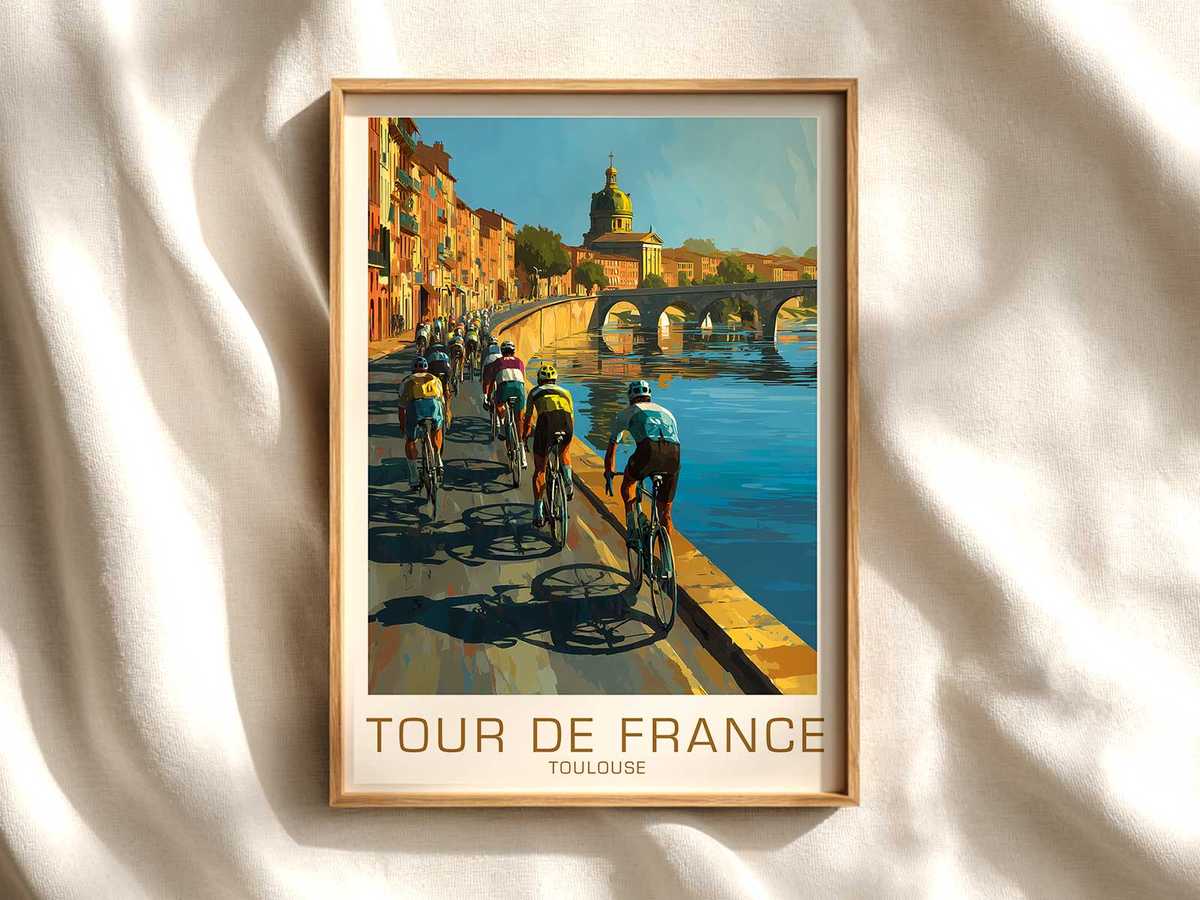
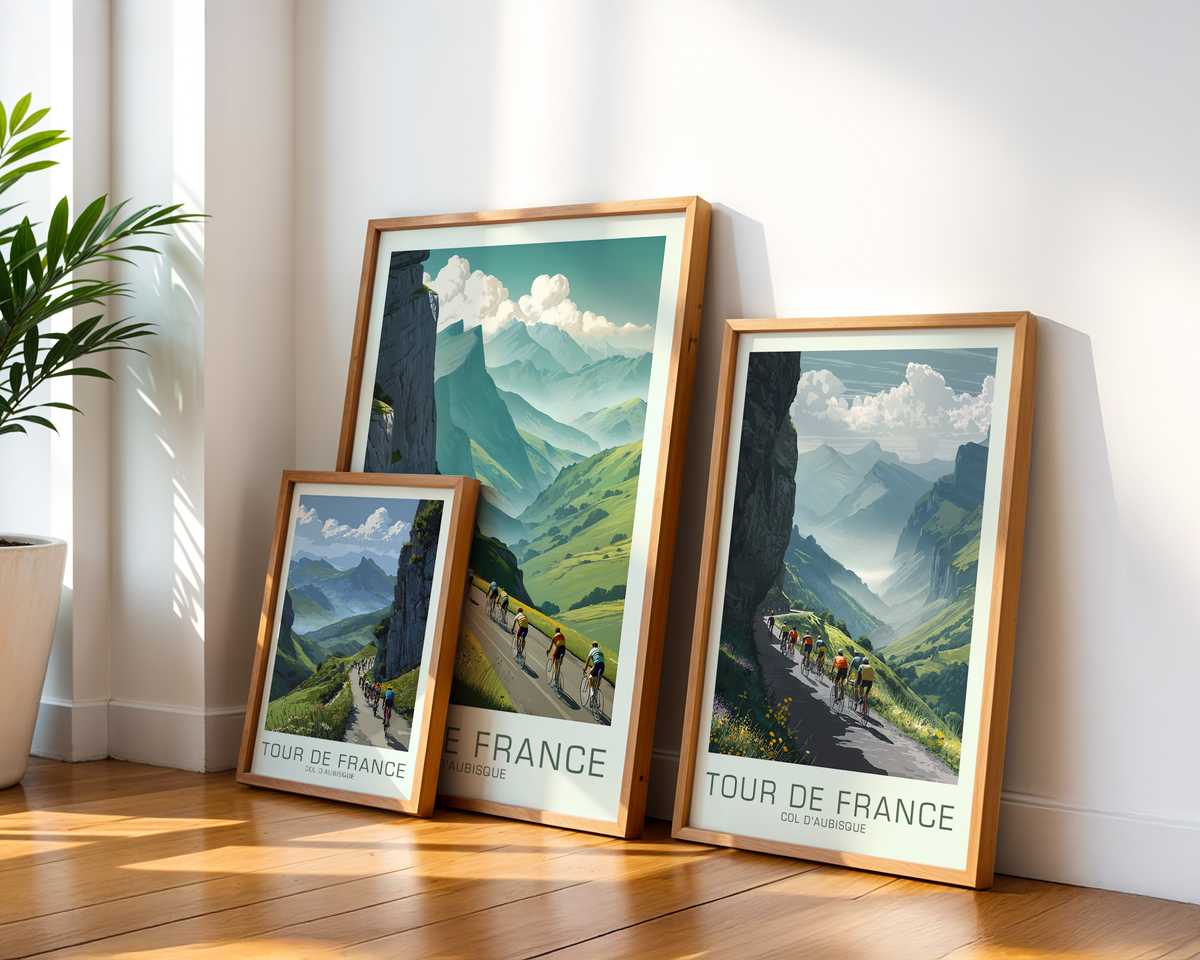
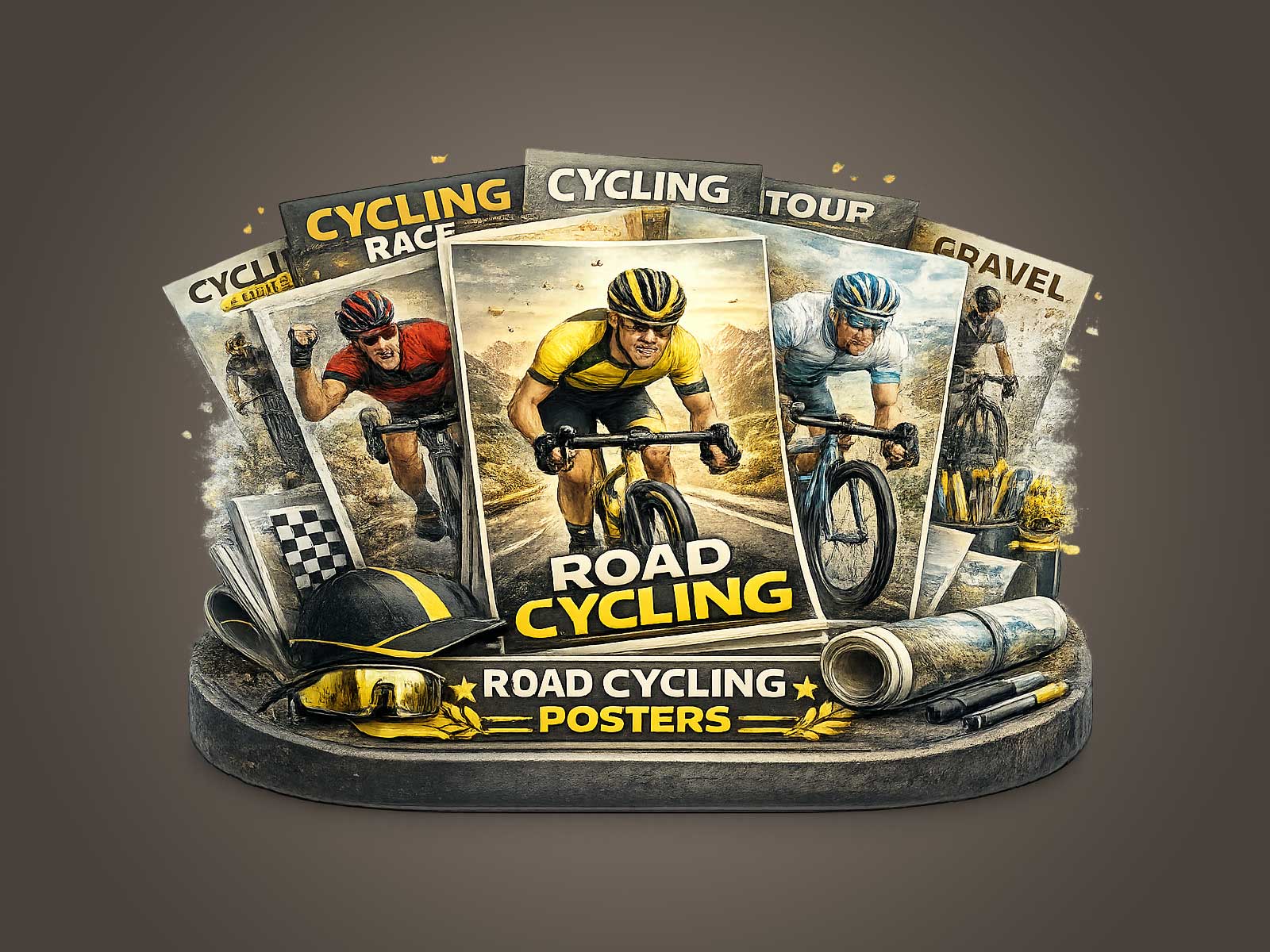
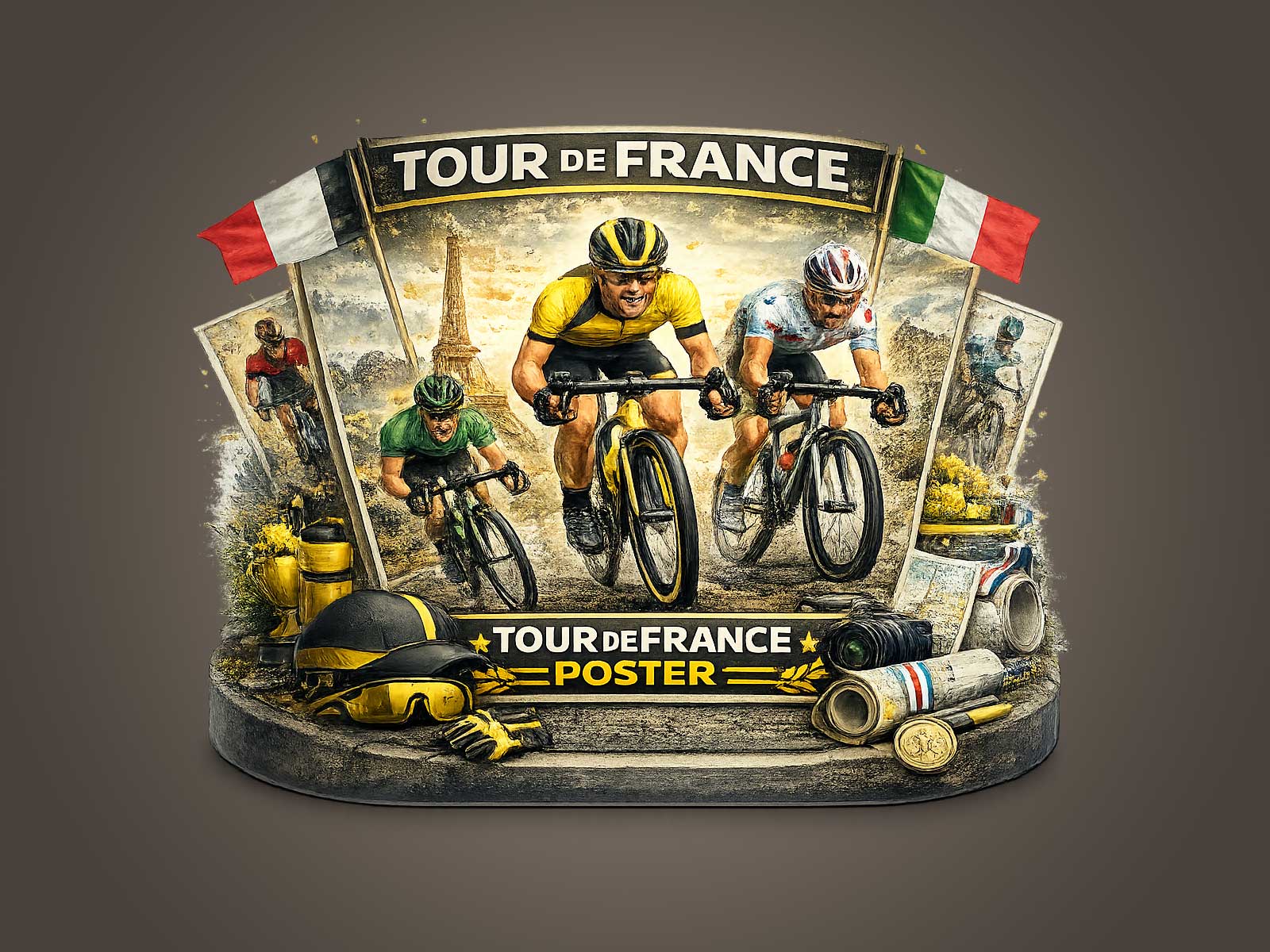
A poster centred on the Col du Glandon becomes more than a landscape: it is a portrait of endurance. Here the rider is the compositional and emotional pivot. The road’s angle, the bike’s silhouette and the rider’s posture work together to translate hours of climbing into a single, compressed image. This is wall art that asks you to read gesture rather than results — to understand the race through shoulders, cadence and the particular geometry of effort.
What anchors the piece is the rider’s body language. On a steep pass like the Glandon, a climbing posture is specific and recognisable: low hands, compact torso, a slight extension through the pedal stroke that hints at controlled power. The poster chooses those signals over scoreboard narrative. Eyes fixed down the line or forward over the handlebars, the rider’s head tilt and shoulder tension tell us where concentration lives. Fatigue is present but managed — not collapsed pain, but measured cost. That tension becomes a visual rhythm, repeated in the curve of the back, the angle of the knee and the bite of the wheel on the asphalt.
Silhouette matters. Reduced to shape and shadow, the cyclist reads like a sculptural study: helmet, bent arms, narrow torso, the diagonal of the bike frame echoing the slope. In this register, colour is often restrained so the viewer attends to form. A muted palette allows the negative space of sky and road to emphasize the human outline; light falling across a shoulder or a thigh becomes shorthand for exertion. The result is an image that feels architectural and intimate at once — a monument to movement small enough to hang above a desk.
[IMAGE_INSERT_ARTICLE_01]
The poster makes the act of climbing legible. Cadence is suggested by the posture of the feet and the compression of the legs, each stroke implied by a frozen arc. Hands gripping the drops or resting on the hoods convey different registers of effort: aggressive, grinding, or economy-preserving. These micro-gestures are the language of the sport, and when captured cleanly they tell a complete story without a single number or name. You recognise endurance because you can read how the body negotiates gravity and distance.
Beyond technical cues, the image carries a narrative of identity. One cyclist in frame can embody resilience — the lone agent negotiating an indifferent landscape — or quiet resolve, depending on how the photographer frames the horizon and crops the scene. The closeness of the subject to the viewer matters: a tight crop invites empathy with each strained muscle, while a slightly wider composition positions the rider within the climb’s severity. Either choice defines the mood of the room where the poster lives.
In interiors, this kind of cycling wall art functions like a carefully chosen object: it sets tone without shouting. In a study it suggests focus and sustained labour; in a living room it offers a quiet, sculptural energy; in a training space it becomes an emblem of steady work. The poster’s power lies in specificity — in the precise reading of gesture and the way posture translates a race into a human act. That is why the image resists cliché and avoids generic hero-worship: it asks the viewer to witness process rather than to admire results.
Finally, the visual nobility of endurance is persuasive because it is empathetic. Anyone who has pushed through a hard hour recognizes the grammar of effort: the clenched jaw, the measured breathing, the economy of motion. A Glandon-centred poster makes those signs beautiful and legible. It turns a moment of strain into a lasting study of composure and intent, an image that rewards close looking and quietly changes the feel of a room.
Decor note: display with clean frames and neutral surrounds to let the rider’s silhouette and the road’s geometry hold the space.