Miguel Indurain: How His Training Shaped a Tour de France Dominance
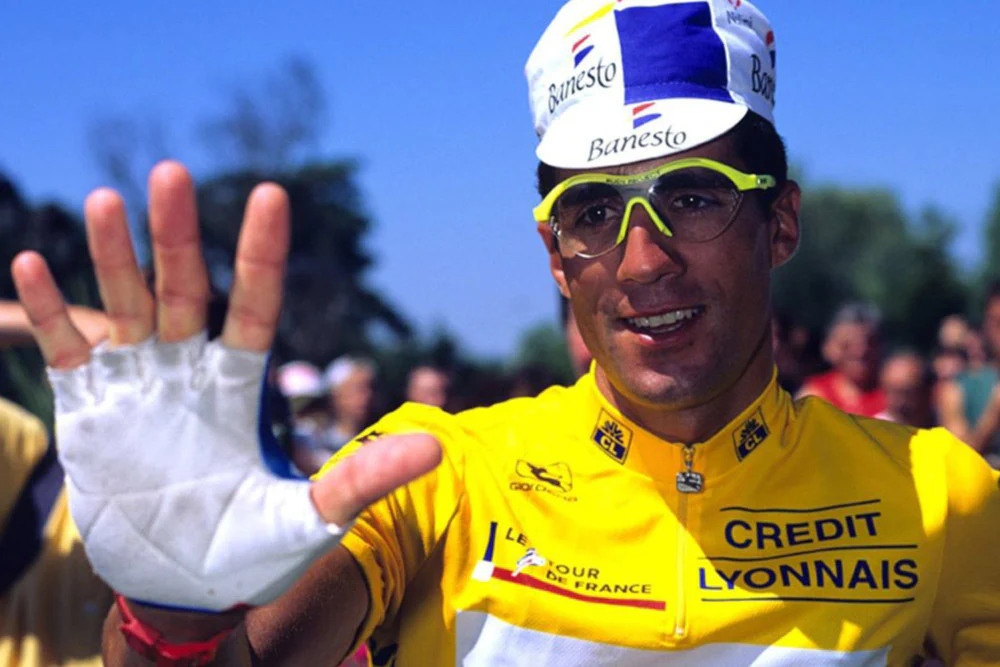
Miguel Indurain’s five consecutive Tour de France victories (1991–1995) read like a textbook on how preparation builds a race profile. His results and contemporary analysis show a rider whose training emphasised extreme sustained aerobic capacity and time-trial mastery, then converted that base into controlled riding across three weeks.
Editorial summary
Indurain paired a remarkable aerobic engine with a conservative, economy-first race style: gain decisive seconds in individual time trials, conserve in the peloton, and neutralise attacks in the mountains through steady control rather than constant aggression.
What you will learn here
- How physiological strengths map to a time-trial-first Tour strategy.
- Why aerobic capacity and sustained power define three-week control.
- How conservative peloton behaviour and recovery combine with TT output to protect a lead.
The training profile at a glance
Miguel Indurain’s public profile and retrospective physiological work point to one clear training identity: an emphasis on prolonged high-aerobic output and time-trial preparation. Contemporary reporting and later physiological testing describe him as a rider with unusually high VO2 values and large absolute oxygen uptake, traits that support long, sustained power efforts.
Endurance base and seasonal load
Academic reviews and post-retirement testing indicate Indurain possessed an exceptional aerobic base. That kind of physiology typically comes from long, steady endurance blocks and structured progression across a season. While exact diaries aren’t publicly documented, the physiological indicators — sustained aerobic capacity and capacity for long time-trial efforts — imply training that prioritised volume and long-duration threshold work to build repeatable endurance for multi-day races.
Climbing, time-trial preparation and race role
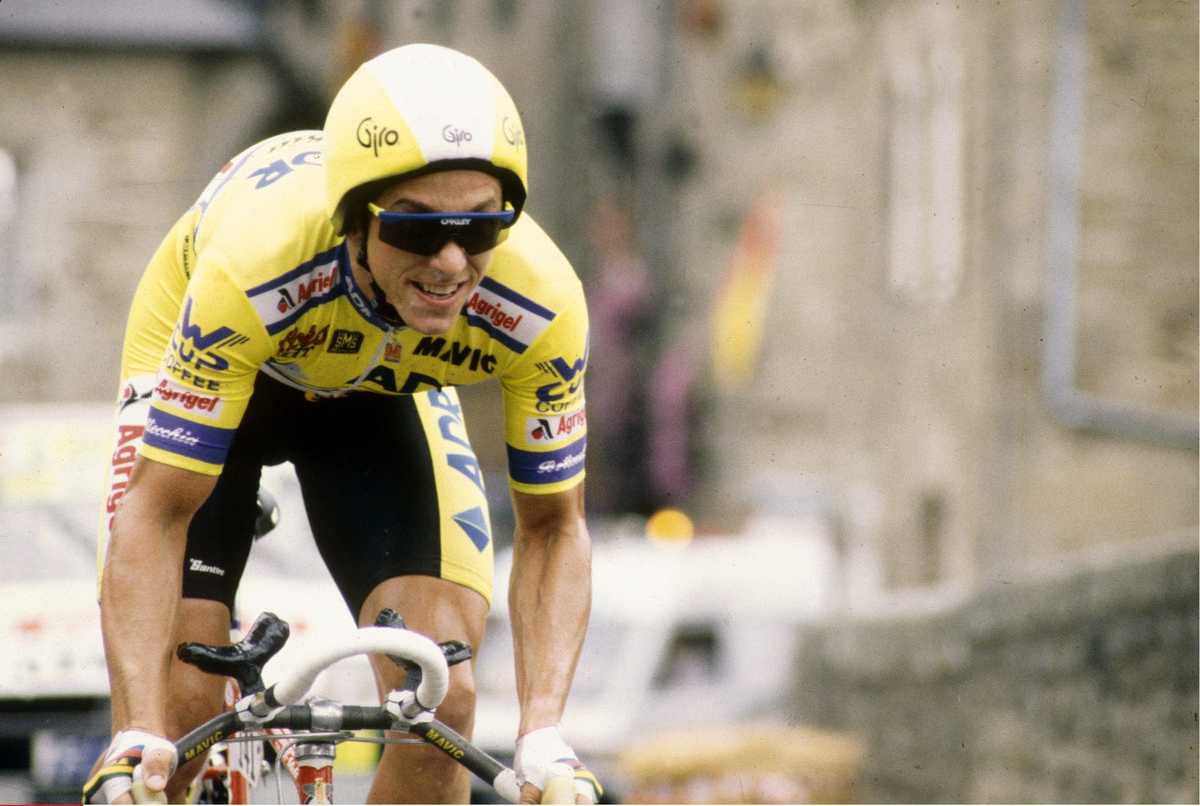
Indurain was foremost a time-trialist: contemporary press emphasised that he would win large margins in individual time trials and then control the race in the mountains. Training for that profile puts a premium on producing very large sustained efforts in the TT position and on practising pacing and aerodynamic tolerance. His race behaviour — conservative in the peloton, decisive in time trials — is the direct tactical expression of that preparation.
Strength, mobility and recovery
Public sources do not document Indurain’s exact strength or recovery routines in detail. What is verifiable is the outcome: physiological tests and race longevity consistent with excellent recovery capacity across long stage races. For a rider who relied on sustained efforts and three-week control, maintenance work and efficient recovery between stages would have been essential, even if specific protocols are not recorded in the available material.
Recovery, fuelling and stage-race survival
Press coverage from his era highlights a tactical conservatism in the peloton that preserved energy for timed efforts. That behaviour, combined with superior aerobic capacity, functioned as a practical recovery strategy during three-week races: stay sheltered and economise when not delivering maximal power, then apply sustained output where it counts. Contemporary accounts therefore link his fuelling and in-race behaviour to an overall model of energy management rather than repeated, aggressive attacks.
How the training changes through the year
There are no public, detailed week-by-week plans for Indurain, so seasonal specifics must be inferred from physiological outcomes and race planning. A TT-specialist Grand Tour contender typically builds a long aerobic base early in the season, integrates threshold and sustained-pace work closer to the target races and includes final sharpening focused on pace tolerance in the time-trial position. Indurain’s results and lab reports are consistent with such a progression, though exact session lists are not available in the public record.
What the preparation reveals about the rider
Viewed through training and physiology, Indurain was a rider who traded volatility for control. His extraordinary aerobic markers and ability to produce long sustained efforts made him lethal against the clock; his race habits show a deliberate discipline to conserve energy and protect margin over three weeks. That pairing — raw aerobic power plus tactical economy — is why his time-trial gains could be defended in the mountains without needing to attack constantly.
The Tour de France demands in physical terms
The Tour requires repeatable high-end aerobic performance, tolerance of long sustained efforts, and recovery across consecutive long stages. Indurain’s physiological profile — high VO2 and large absolute oxygen uptake seen in research and retrospective tests — supplied the physical substrate for long time-trial efforts and for controlling race tempo day after day. Contemporary reporting that describes his ‘robotic’ efficiency simply reflects how that physiology translated into a race-winning Grand Tour approach.
Why this training picture matters
Indurain’s career offers a clear lesson for readers who study the intersection of training and racing: a specific physiological advantage, cultivated with targeted preparation, determines not just where a rider attacks but how they choose to ride across three weeks. His legacy is not only the five Tours but also an instructive example of how time-trial focus, aerobic development and tactical energy economy combine to win Grand Tours.
Author: Cynthia D.