Greg LeMond: The Grand Tour All-Rounder — Time Trial, Endurance and Tactical…
Greg LeMond is best read, in Tour de France terms, as a Grand Tour all-rounder whose career blended elite time-trial ability, sufficient climbing and the tactical intelligence to convert marginal gains into overall victory. This article focuses on the concrete racing qualities that made LeMond a three-time Tour winner (1986, 1989, 1990) and explains how those traits played out in stage-race contexts rather than offering a broad biographical portrait.
FIRST READING OF THE RIDER
LeMond’s defining identity in Tour terms is practical and performance-driven: an all-rounder who could win individual time trials and hold his own in mountains and three-week endurance contests. Contemporary reporting and later analysis characterise him as more than a specialist — his career produced the specific combination of sustained stage-race consistency and repeated ITT excellence that a GC rider needs.
CLIMBING SHAPE AND EFFORT STYLE
Available sources frame LeMond as having climbing capacity adequate for Grand Tour success rather than the single-minded explosiveness of a pure high-mountain specialist. In practical race terms this meant he could follow or limit losses on decisive climbs and rely on steady, sustained efforts across mountain stages to protect or build a GC position. His climbing ability was the complementary half to his time-trial engine: not portrayed as a pure climber but clearly fit enough to contest three-week general classification outcomes.
TIME-TRIAL AND SOLO ENGINE
Where LeMond unmistakably stood out was in the individual time trial. Statistical databases and race histories confirm multiple ITT wins and high placings across his career. The 1989 penultimate-stage individual time trial is the clearest demonstration: over 24.5 km he overturned a substantial deficit to Laurent Fignon and won the Tour by eight seconds. That performance combined superior pacing under pressure with the tactical use of then-advanced aerodynamic equipment (notably aero bars and a streamlined helmet). Analysts cite the 1989 ITT as a landmark example of how a rider’s raw time-trial power, pacing intelligence and marginal equipment gains can decide a Grand Tour.
POSITIONING, PELOTON IQ, AND STAGE MANAGEMENT
LeMond’s results and contemporary reportage point to a rider who understood where his strengths lay and managed stages accordingly. The practical implication of his profile is straightforward: defend and limit losses where terrain and rivals’ strengths demanded, then use time trials and steady stage-race consistency to accumulate advantage. The decisive 1989 ITT episode underlines race intelligence: LeMond and his team prepared for a situation where solo power and equipment would produce a net gain when the draft disappeared.
THREE-WEEK DEMANDS AND FATIGUE-RESISTANCE
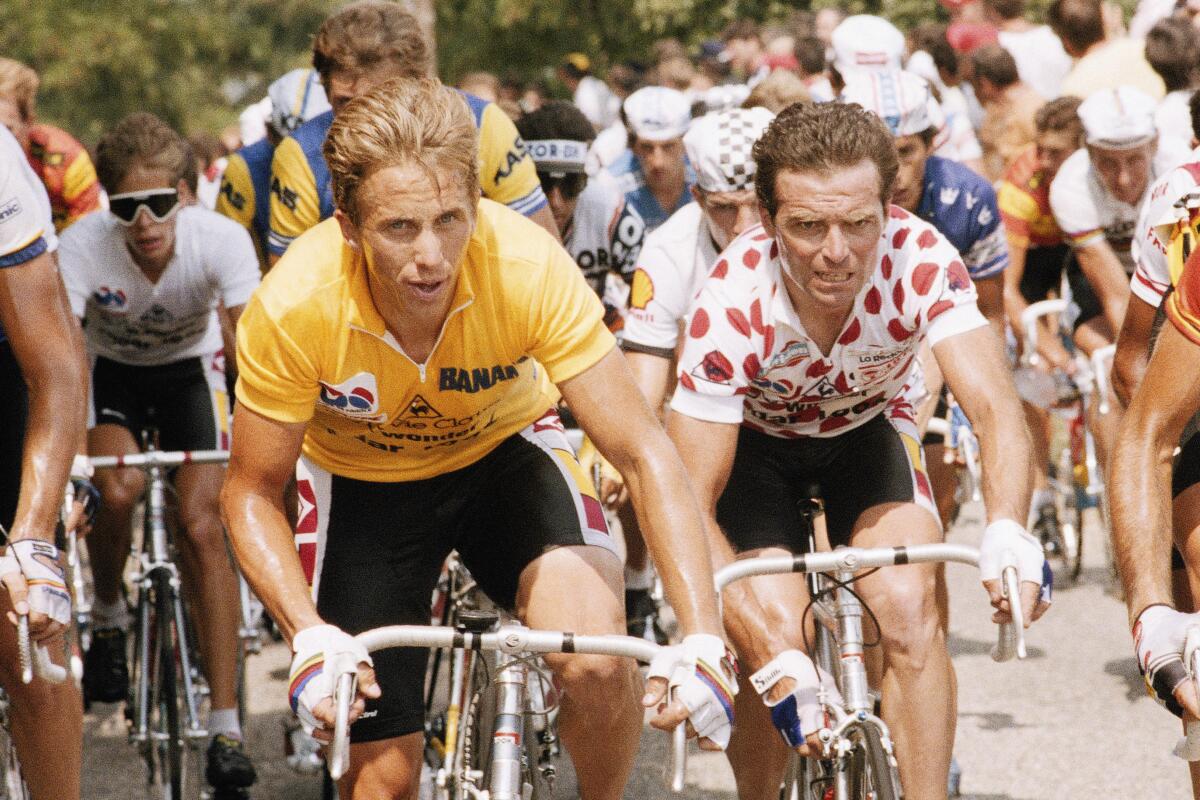
Winning three Tours (1986, 1989, 1990) indicates a capacity for recovery and cumulative consistency across multiple editions of a three-week race. Sources describe LeMond as possessing the endurance and stage-race competence necessary to remain competitive across varied terrain and repeated long efforts. This pattern — combining repeated ITT performance with sustained form through three weeks — is a core element of his Grand Tour profile.
TEAM ROLE AND STRATEGIC VALUE
LeMond’s role within a team is best understood through outcomes: a rider whose time-trial strength and general consistency made him a true leader for overall classification ambitions. Analysts and race reports identify his tactical and technological decisions — notably around aerodynamics in 1989 — as integral to his strategic value. In team terms that profile translates to a leader who could rely on teammates to protect position and set up moments where his solo engine and race intelligence were decisive.
WHY THIS RIDER MATTERS IN TOUR TERMS
Greg LeMond matters because he embodies the Grand Tour balance: not a caricatured climber or pure time-trialist but a rider who integrated both qualities and used tactical intelligence to turn marginal gains into overall victory. The 1989 Tour remains a textbook case: equipment choice, pacing and raw time-trial power combined to overturn a multi-stage deficit. For students of modern Tour racing, LeMond’s profile underlines two persistent lessons — the decisive value of the solo engine in general classification contests, and how strategic marginal gains can outweigh single-stage heroics.
Quick takeaway:
- Rider-type: Grand Tour all-rounder (time-trial specialist with sufficient climbing and stage-race endurance)
- Signature strength: elite individual time-trialling and tactical use of marginal gains
- Why it mattered: three overall Tour wins and a historic penultimate-stage ITT that reshaped thinking about equipment and strategy
Understanding LeMond in these terms clarifies how a rider can win the Tour through the controlled combination of solo power, endurance across three weeks and race intelligence — not merely through mountain dominance or sprinting brilliance. His career remains a practical template for how time-trial strength and strategic preparation integrate into Grand Tour victory.
Author: Cynthia D.