Tour de France Stage 9: How a Galibier-style Midweek Climb Turns Fatigue into…
Stage 9, when it arrives across many Tours, sits in a curious tactical pocket: the race is no longer fresh but not yet rigidly decided. When organisers place a classic pass such as the Col du Galibier inside that early-week window, the combination of accumulated tired legs, a climb with historical weight, and clear selection potential produces a specific set of choices for riders and teams. This piece explains the route logic and race mechanics behind that moment — how the climb’s identity, rhythm, and legacy invite ambitious offensives while exposing where danger and opportunity truly lie.
FIRST READING OF THE STAGE
At first glance a Stage 9 that includes a climb like the Col du Galibier announces itself as a high-Alpine test. Galibier is one of the Tour’s classic high passes, rising to roughly 2,642–2,658 m depending on source and carrying the Souvenir Henri Desgrange monument when it is included on the route. Its mere presence signals a day where altitude, gradient and heritage combine to sharpen racing. The profile reads as a transfer from controlled early kilometres into a prolonged, physically and mentally demanding ascension — a climb that has repeatedly been used to create separations and long-range moves in Tour history.
RHYTHM, SEQUENCE, AND ENERGY FLOW
A mid-first-week Alpine passage shapes a distinctive energy curve. The race often moves through a relatively moderate opening allowing breakaway attempts as teams weigh their resources. As the peloton approaches Galibier the tempo typically ramps: sustained power is required to stay in contact, but riders must also manage reserves for repeated efforts that follow. Journalistic analysis of such stages emphasises that accumulated fatigue from the opening week changes how riders allocate energy — threshold efforts are costlier and short accelerations can have outsized consequences.
Two practical implications follow. First, smaller teams or opportunists judge the early rhythm to send riders up the road, banking on reduced chase cohesion later. Second, GC teams calculate how much to spend policing the approach: too much effort before the climb will leave leaders vulnerable on the final ramps; too little allows a dangerous group to escape.
CLIMBS, GRADIENTS, AND SELECTION POINTS
Galibier’s real influence is in its sustained gradient and altitude. Historically it has produced decisive selection because its length and steady climbing expose differences in endurance and acclimatisation. Past Tours show that long climbs at altitude turn normal race patterns into tests of attrition: the field is thinned not by a single explosive kilometre but by cumulative strain.
That selection logic explains why Galibier has been the launchpad for solo moves and GC shifts across multiple editions. When the climb is on a Stage 9 template, the crucial kilometres are often the middle and upper sectors where small gaps can become permanent as riders run out of matchsticks to respond.
DESCENTS, TECHNICAL ROADS, AND ROAD FEEL
While Galibier is famed for its climb, descents and road character matter to how a Stage 9 unfolds. Descending after a high pass can favour riders willing to press small advantages gained uphill, and it can also allow a reduced group to reorganise and extend a gap. Historically, stages that include Galibier have combined selective climbing with descents that reward both brave handling and tactical cohesion. Race reading must therefore consider both the physical cost of the ascent and the mechanical or confidence-related risks that follow on the drop.
WIND, EXPOSURE, AND PELOTON FRAGILITY
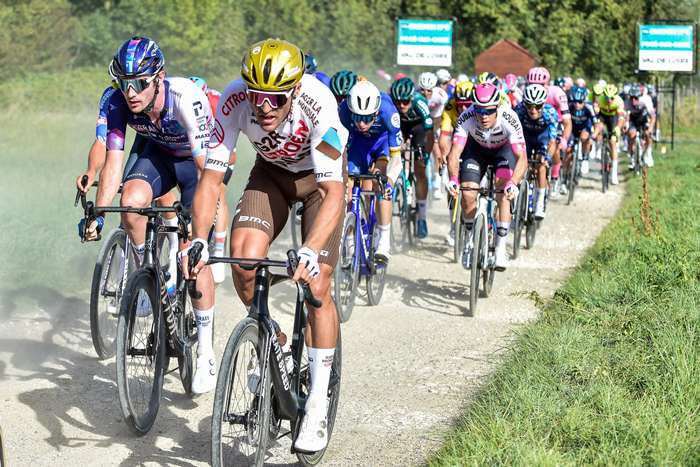
Open high-Alpine roads can magnify the peloton’s fragility. Analyses of midweek mountain passages emphasise that when legs are already tired, environmental stressors such as crosswinds or exposed plateau sections will more easily produce splits. The combination of fatigue and exposure lowers the threshold for a successful acceleration to create lasting gaps: a well-timed push on a windy stretch or an exposed approach to the climb can be as decisive as an attack on the gradient.
BREAKAWAY, GC, OR SPRINT?
A Stage 9 with Galibier archetype naturally offers two competing scripts. On one hand, the profile is attractive to breakaway specialists and ambitious domestiques: accumulated fatigue makes a long-range move more plausible because sustained control from GC teams is expensive. On the other hand, the stage carries genuine GC risk — Galibier has historically produced solo-winning moves and GC-controlling efforts — so teams with overall ambitions must consider whether to invest in chase or to conserve their leaders.
This tension dictates race control dynamics. If GC outfits decide that the day is not worth full containment, a strong breakaway gains latitude. If instead they fear time losses on a climb of heritage and selectivity, expect rigid policing and a high-tempo approach that crushes opportunists before the summit.
HISTORY, MEMORY, AND STAGE LEGACY
Col du Galibier’s heritage matters beyond nostalgia. It famously carries the Souvenir Henri Desgrange monument and has been a repeated site of race-defining moments since its first uses in the Tour’s early decades. Historical examples demonstrate the climb’s capacity to produce decisive outcomes: stages including Galibier have delivered solo winners and reshaped general classification gaps. Those memories shape rider psychology and team strategy — the climb is treated not just as another ascent but as one that can change a week.
WHY THIS STAGE MATTERS
A Stage 9 that arrives when fatigue is beginning to show rewards calculated ambition. The Galibier-style climb concentrates selective power, altitude stress and heritage into a test that is neither raw opening-week freshness nor end-of-race finality. For spectators the pass reads as spectacle; for riders it is a ledger of energy expenditure and risk. The true decision point is tactical: will teams police and neutralise, or will opportunists seize the reduced cohesion? The answer determines whether the day produces a controlled sprint for glory, a brave breakaway, or a GC-altering ascent that lingers in Tour memory.
In short: Stage 9 with a Galibier-class climb converts accumulated tiredness into tactical opportunity. It favours riders who balance measured power with the nerve to attack when rivals’ responses are most expensive.
Author: Alex R.