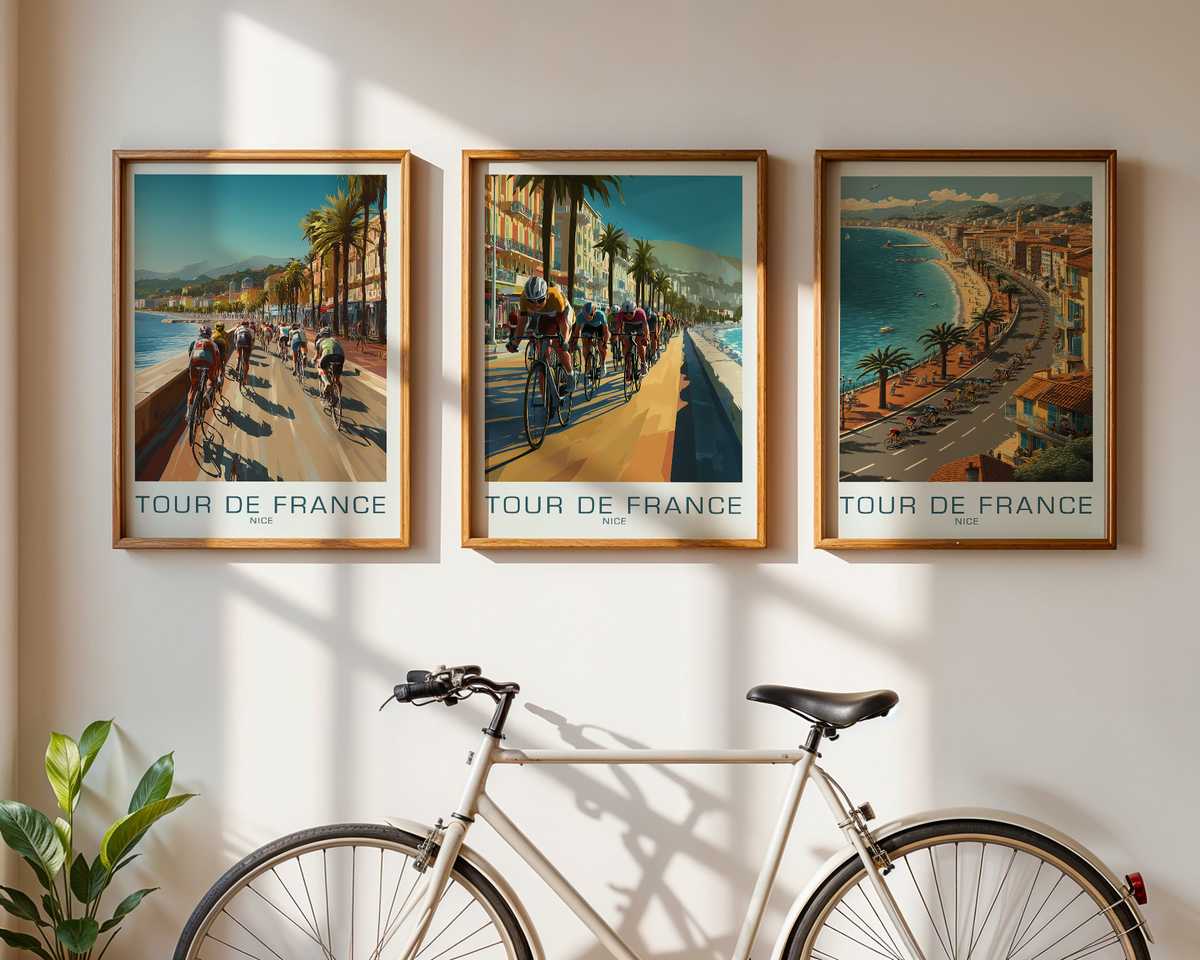
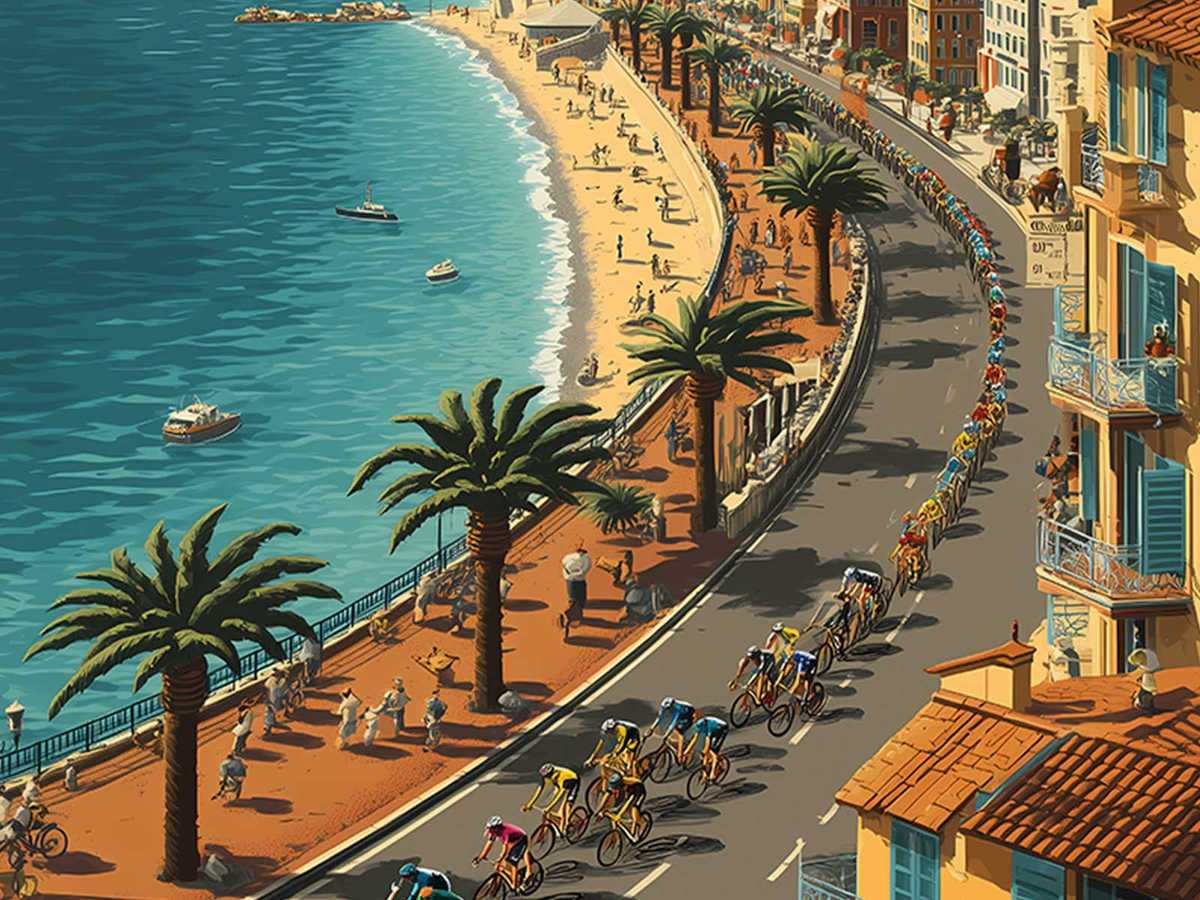
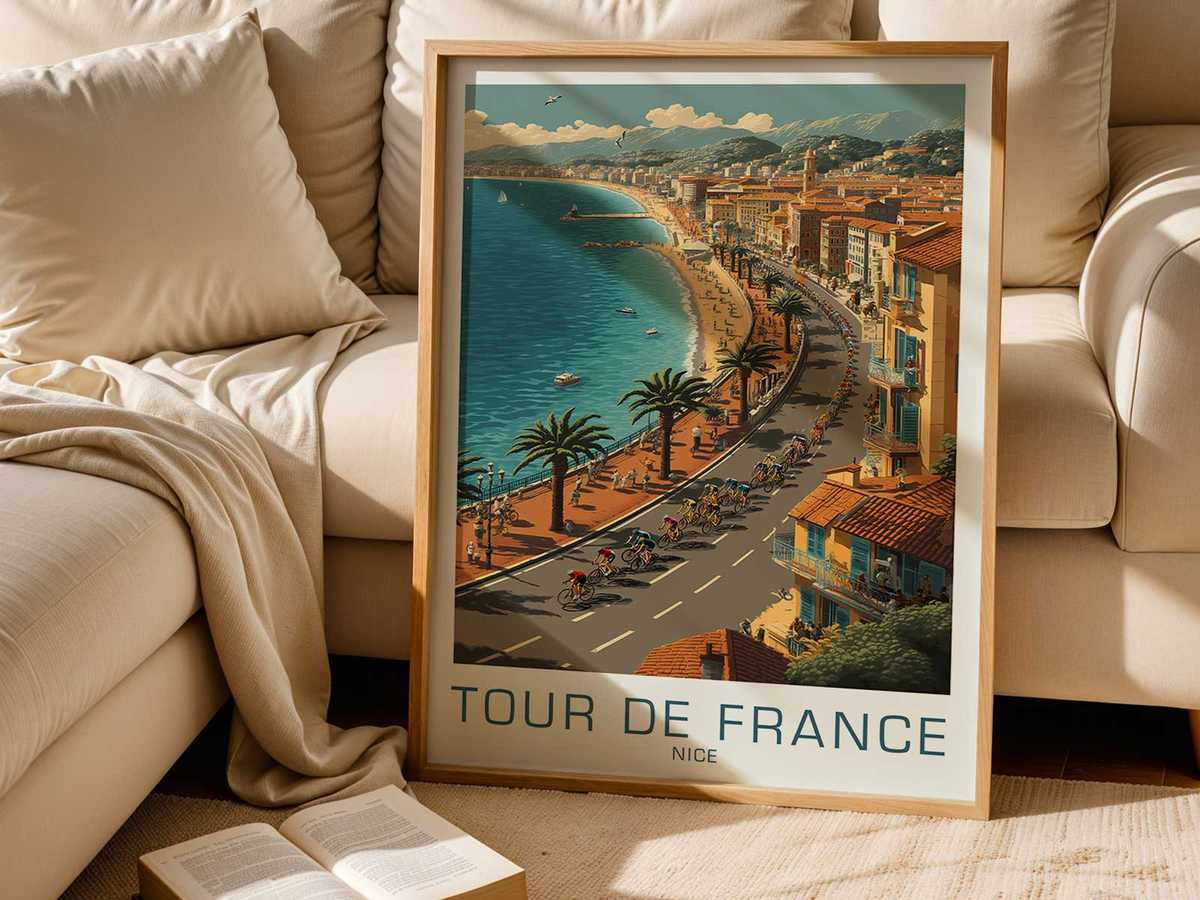
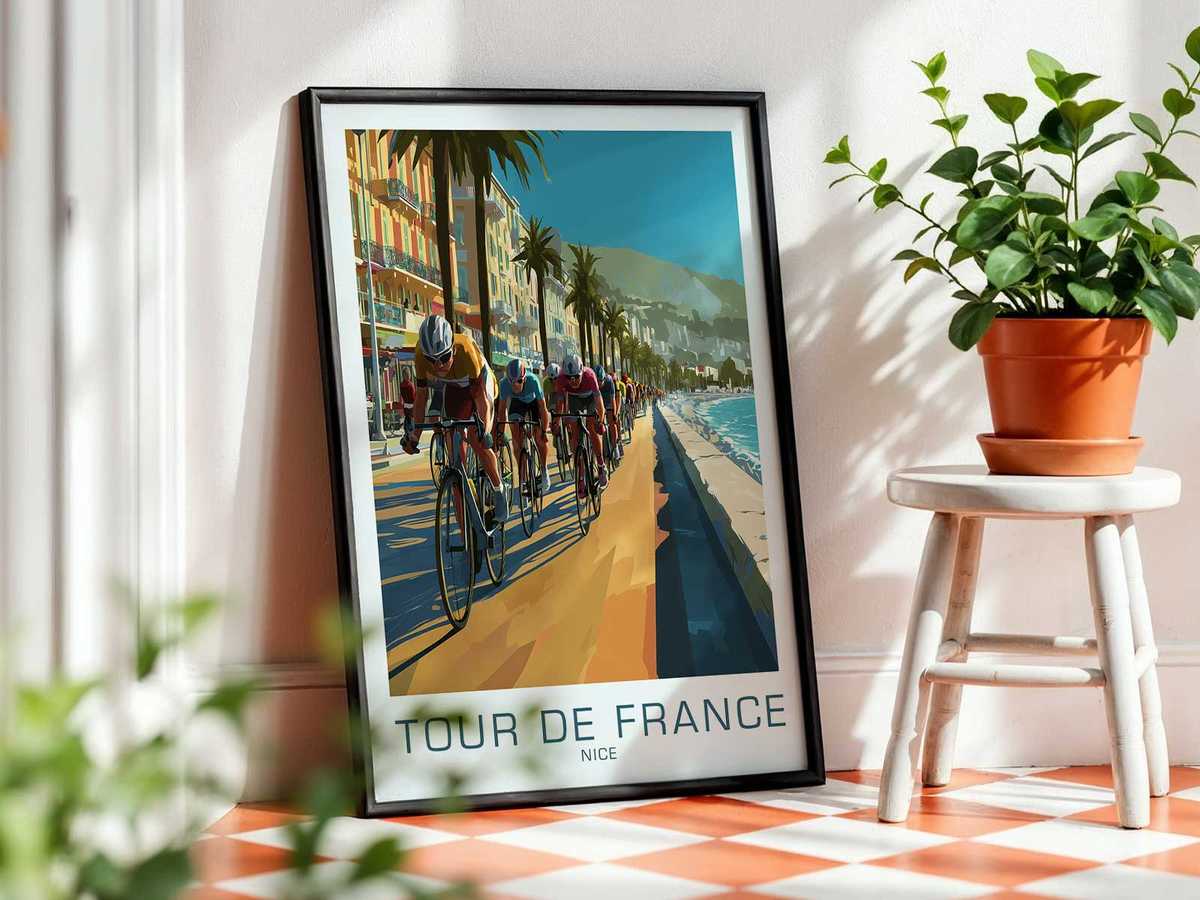
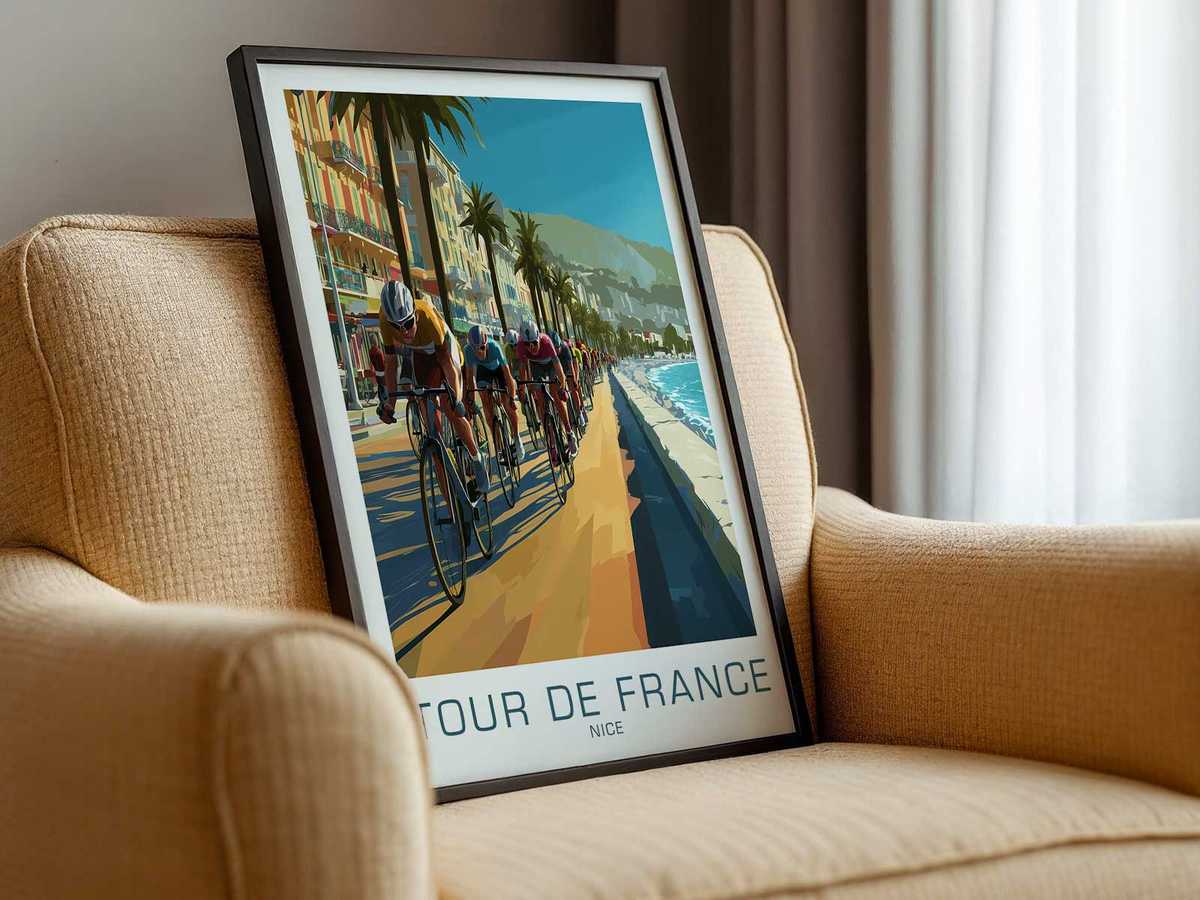
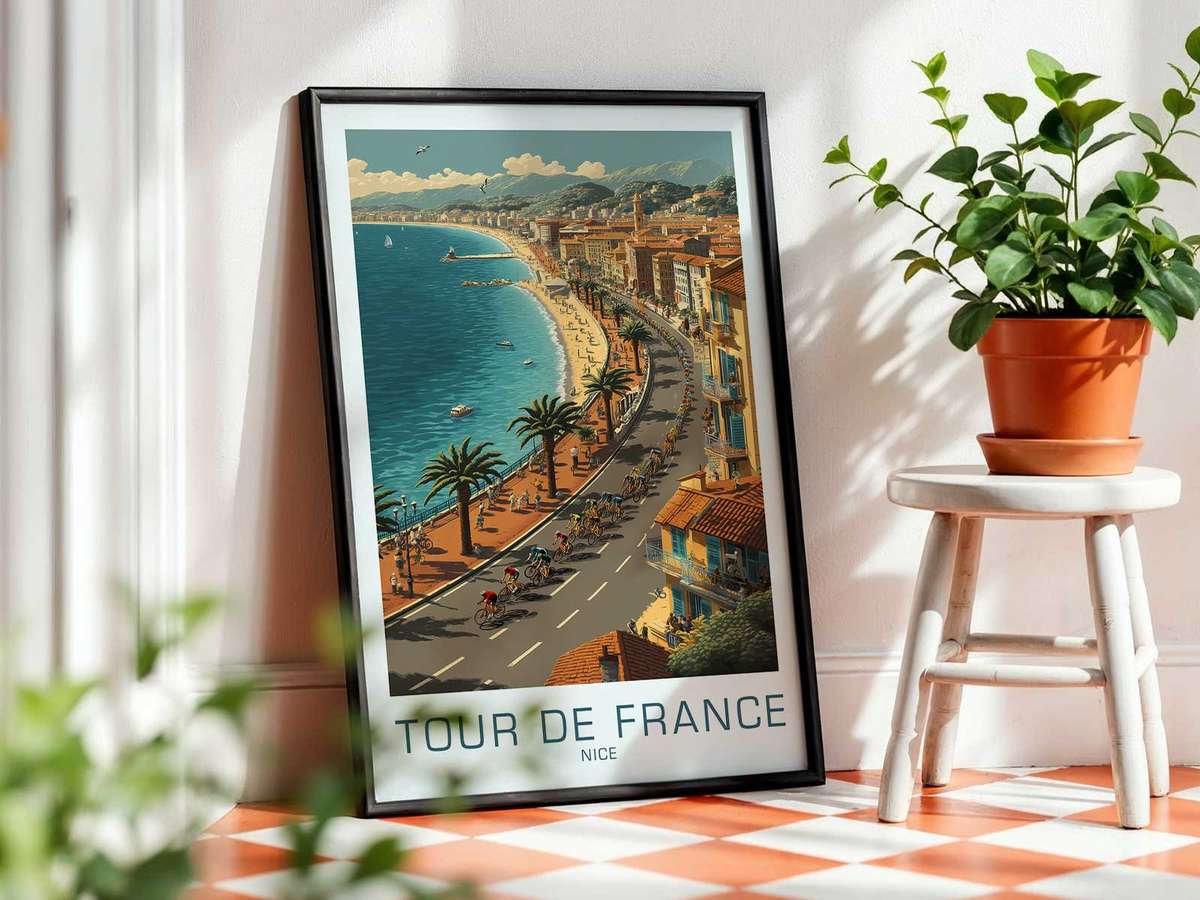
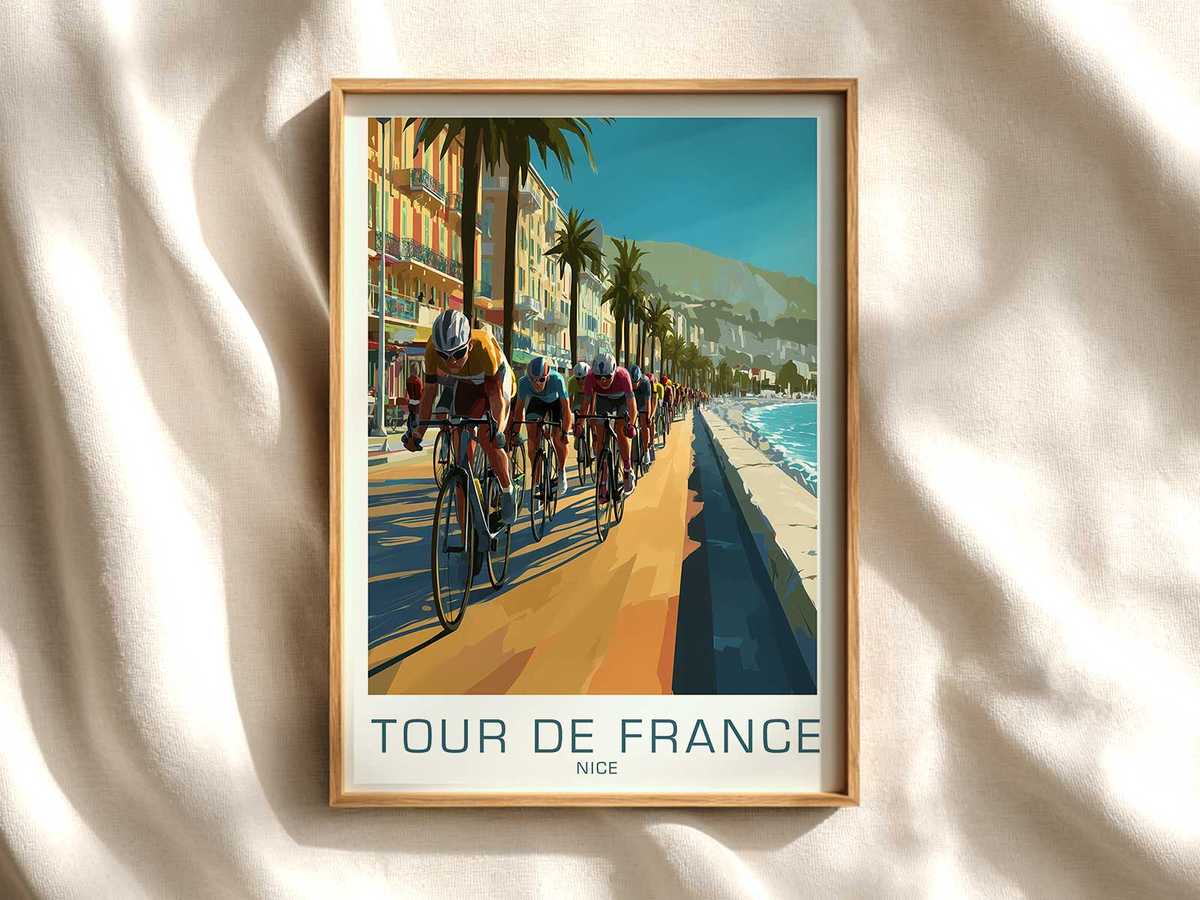
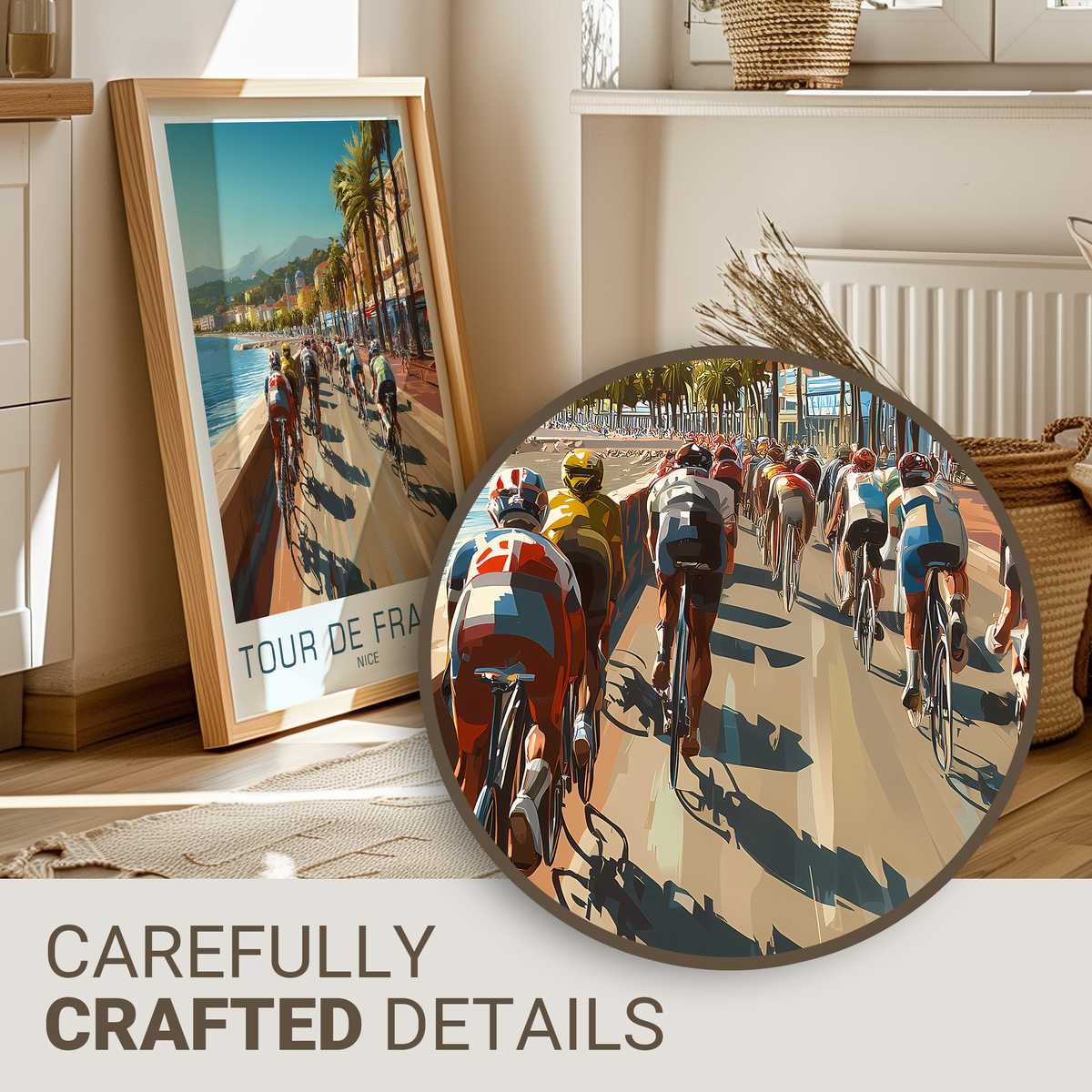
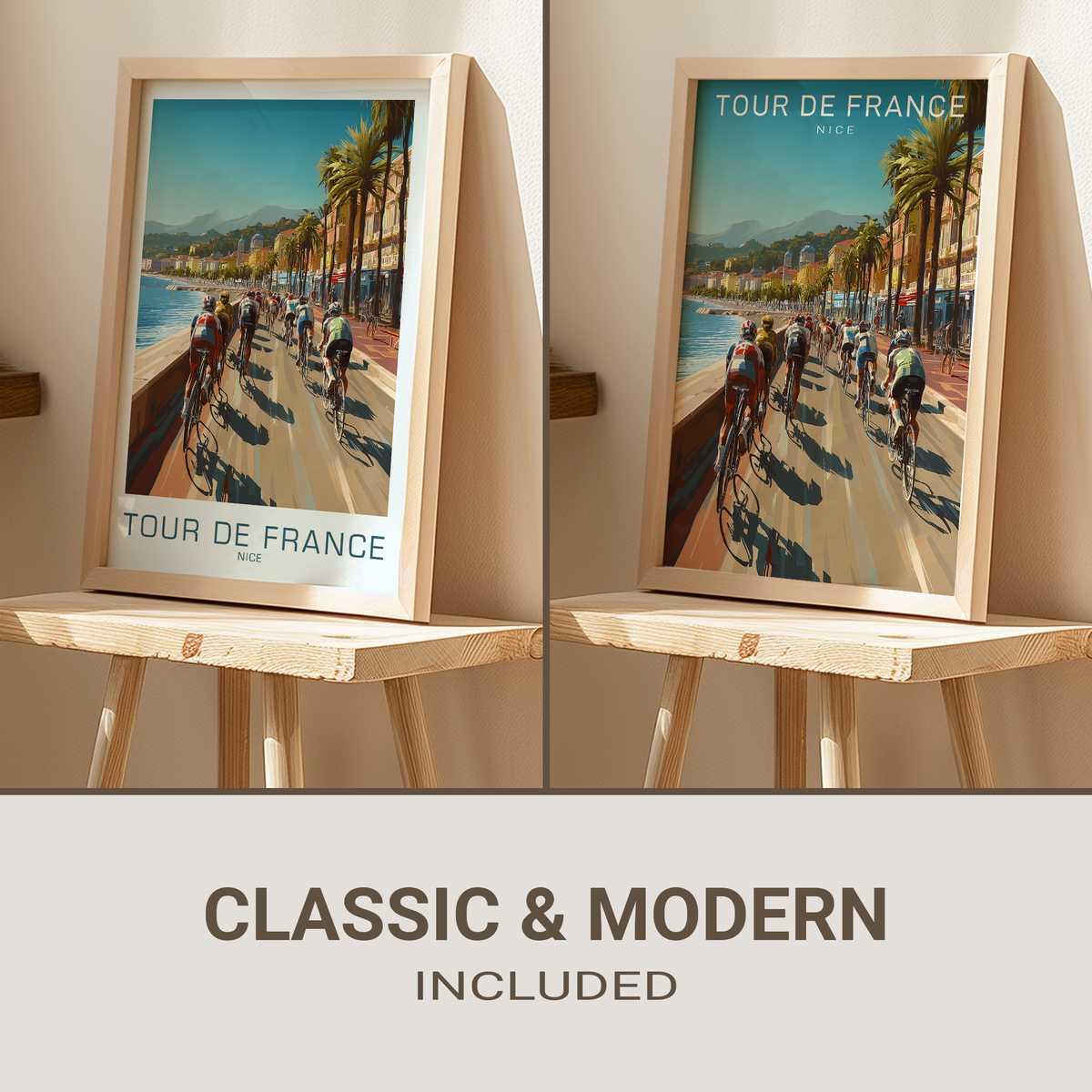
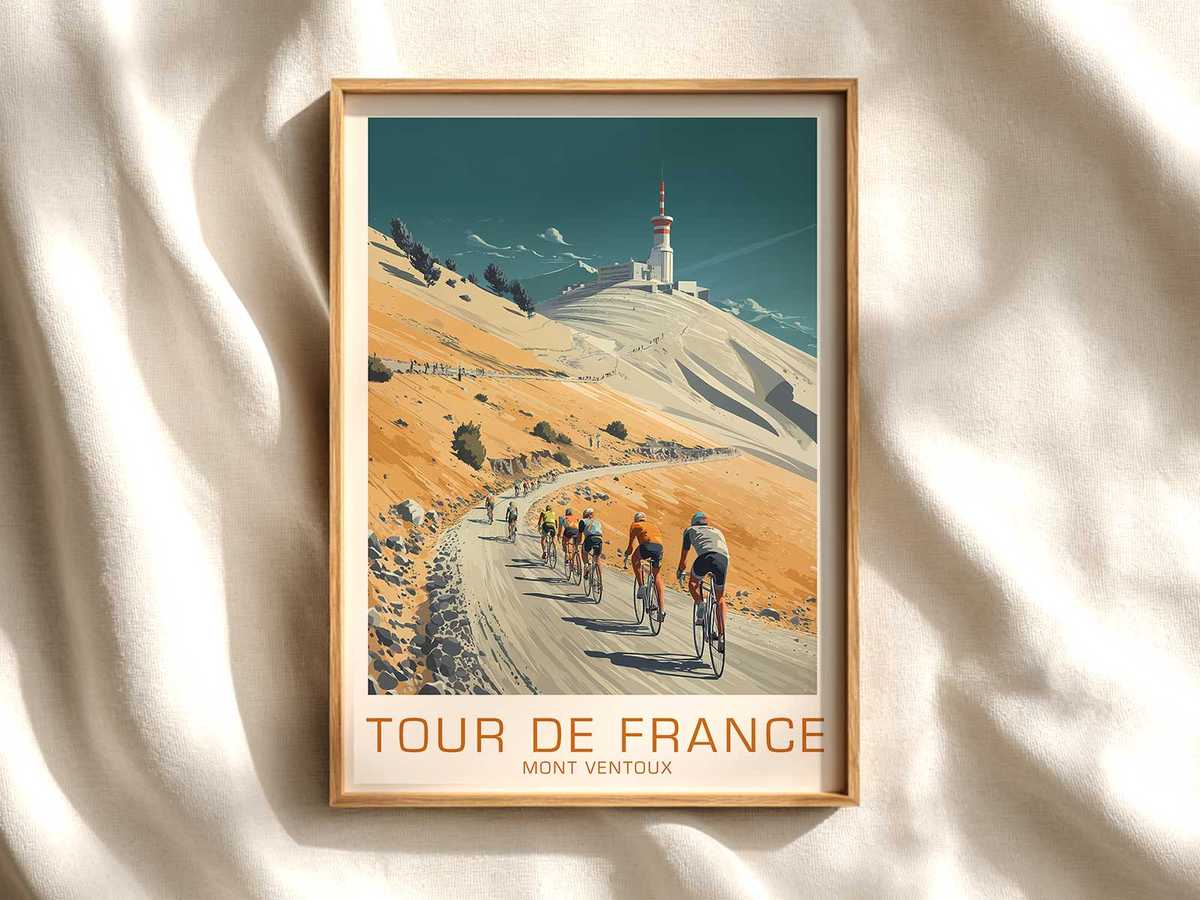
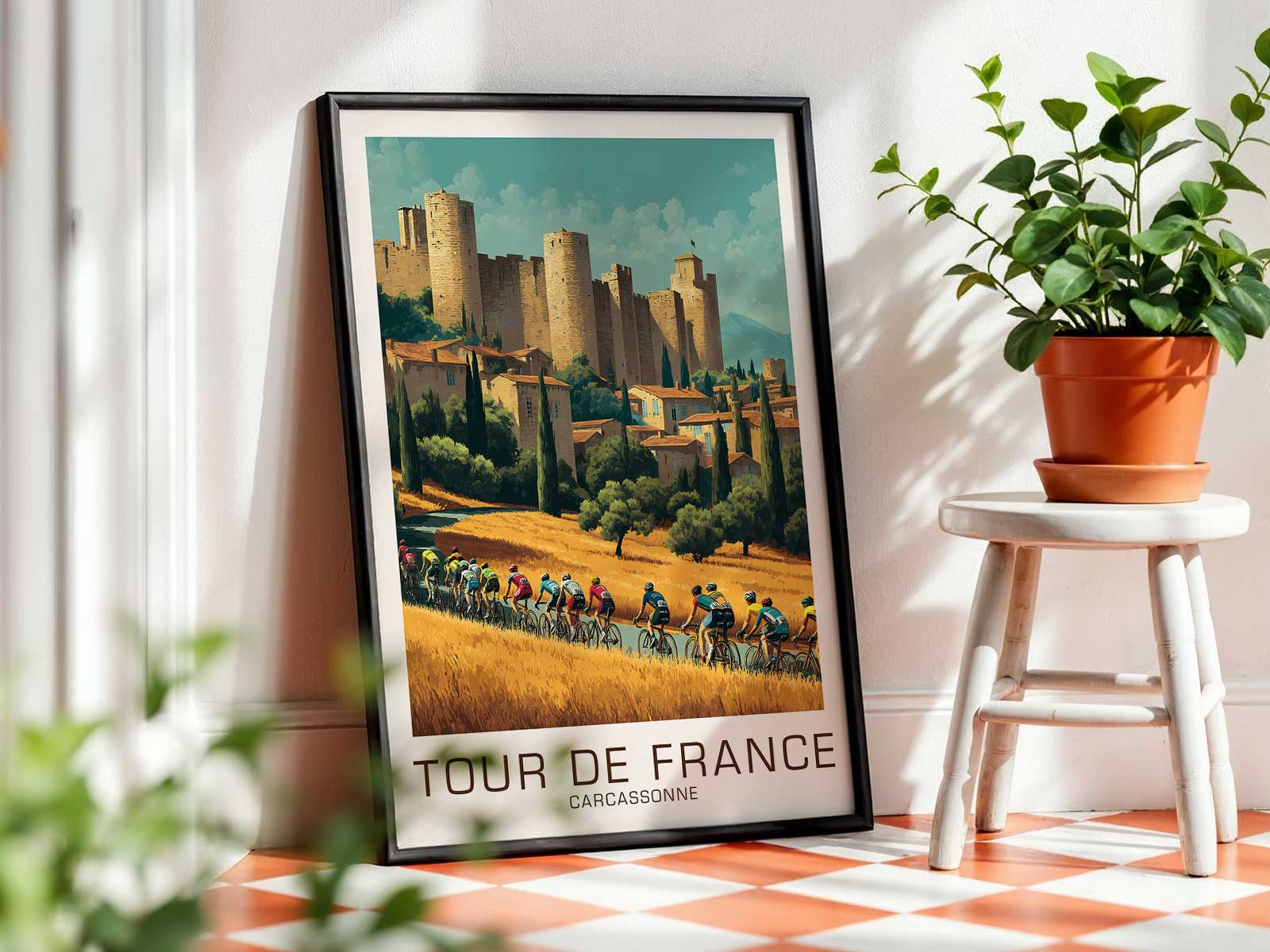
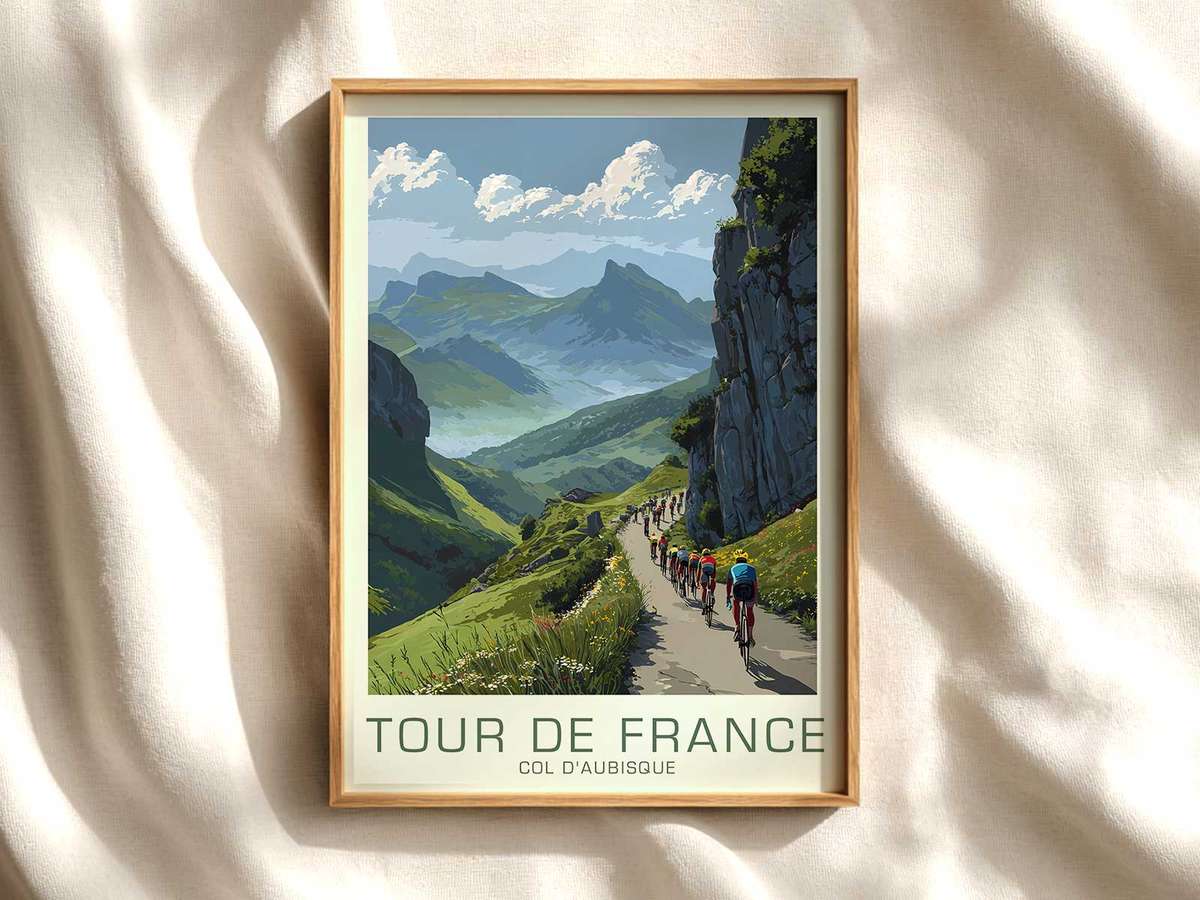
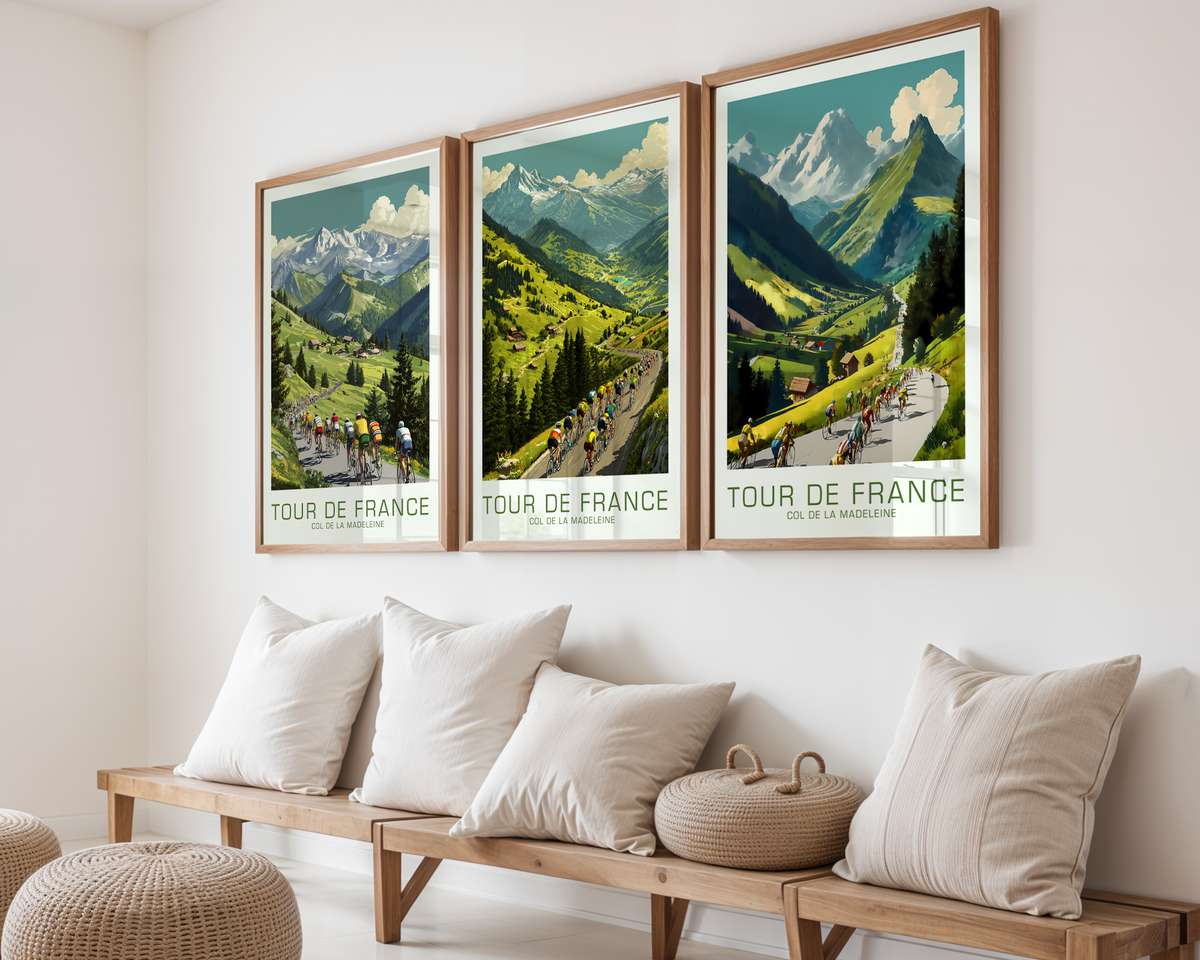
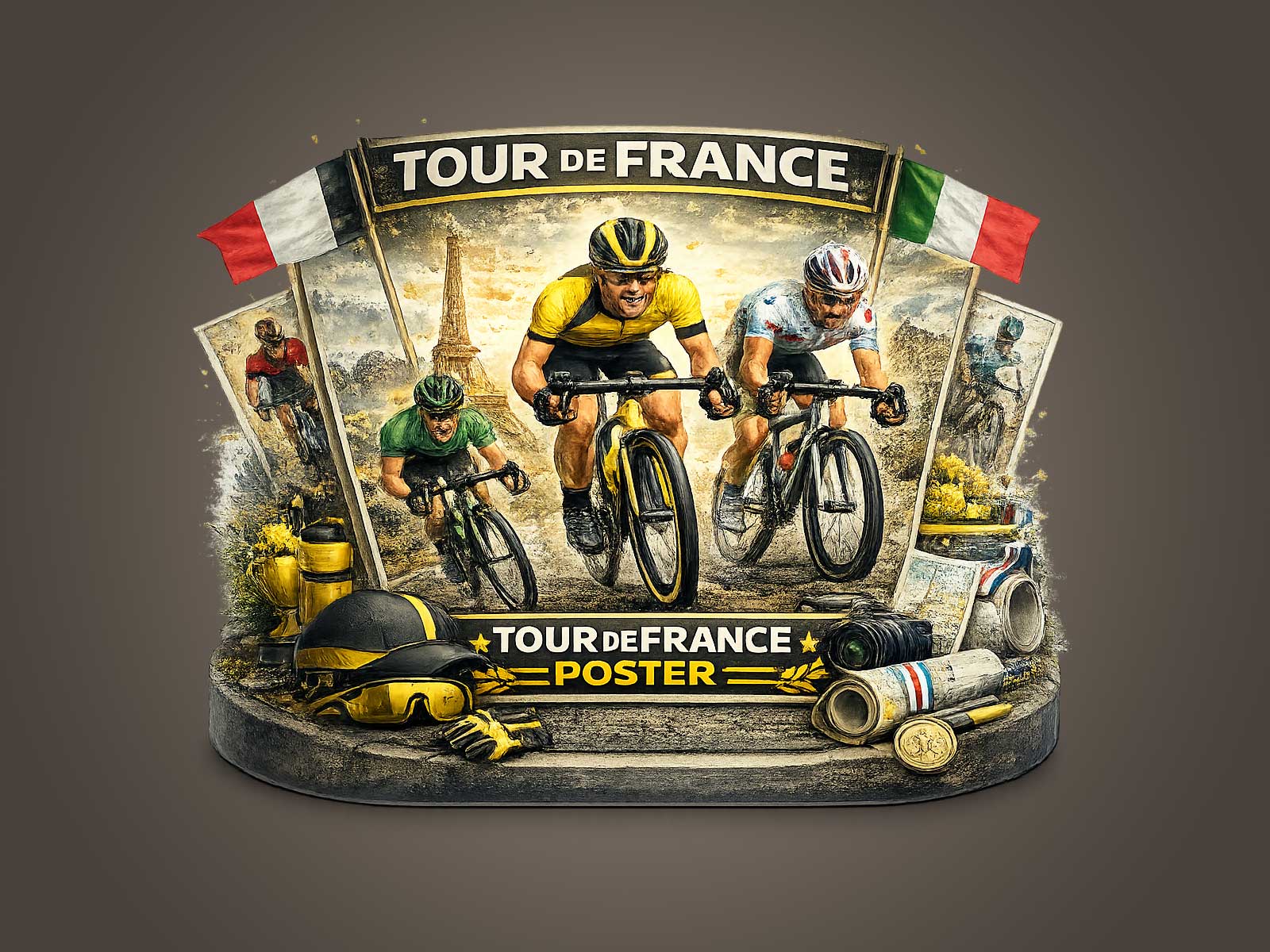
When a Tour de France poster takes Nice as its visual anchor, it does more than show a place: it translates collective memory into an object meant for the wall. That transformation depends on a deliberate use of heritage language — restrained palettes, worn paper texture, period typography and visual cues drawn from travel and municipal posters long held in libraries and archives. These are not mere retro effects; they are visual strategies that place the race inside a continuing cultural story, connecting contemporary viewers to a layer of civic and sporting identity associated with Nice.
The factual trail for this reading is visible in several places. Major libraries and archives preserve original Nice travel posters and municipal images, establishing a repertoire of shapes, colours and typographic approaches that designers reference when creating sport or city-themed posters. Meanwhile, organisers of the Tour de France regularly produce poster-style promotional artwork that names Nice in route materials, and institutional practices such as Grand Départ poster competitions show how poster imagery is formally used to frame host-city identity. Together these strands show that a Nice-centred Tour poster participates in an existing visual tradition rather than inventing a style from whole cloth.
An effective heritage-led poster borrows archival codes without pretending to be an archive piece. The patinated look — a limited, slightly muted palette, subtle paper grain, and edges that suggest handling and time — evokes the texture of originals preserved in collections. Period-minded typography and a classic bicycle silhouette signal an era while remaining legible and composed. The result is an image that reads as memory: the city name becomes an anchor for recollection, the cyclist or road becomes a mnemonic device and the printed surface itself suggests continuity between past and present.
[IMAGE_INSERT_ARTICLE_01]
Why does this feel deeper than a simple retro flourish? Because the heritage reading positions the poster as evidence of cultural practice: archives and dealers show that Nice posters exist in historical chains, ASO materials show organisers use poster imagery to stage the race-city relationship, and public competitions underline the civic role of poster design. When a poster signals those references subtly — through restrained colour, archival warmth and historically inflected typography — it invites the viewer to read the image as part of a longer conversation about place, tourism and sport.
On a wall, the appeal is tactile and narrative rather than purely decorative. The silhouette of an older racing bicycle or the suggestion of a classic jersey posture offers a quiet projection: not a literal history lesson, but a visual promise of endurance, route memory and the formal elegance that older equipment and race photography convey. In interiors such as studies, reading rooms or collector-focused spaces, that promise reads as cultivated restraint — the poster anchors an atmosphere that privileges time, craft and continuity.
Collectors and designers who work with Nice imagery often choose neo-vintage or patinated treatments because they mediate between authenticity and modern production. Libraries and archives provide the primary vocabulary, while commercial reproductions and contemporary poster briefs demonstrate how those visual codes are reapplied and reinterpreted. That process yields posters that feel rooted: they look as if they belong to both the civic history of Nice and the institutional story of the Tour de France without claiming archive provenance or historical exactitude.
Ultimately, a heritage-led Tour de France poster that uses Nice as its anchor succeeds when it balances atmosphere with clarity. It must evoke archival warmth and the social weight of place while preserving the compositional discipline that makes a poster work as wall art. The result is an image that offers more than nostalgia: it provides a visual condensation of memory, a tasteful historical whisper that rewards both intimate viewing and long familiarity.