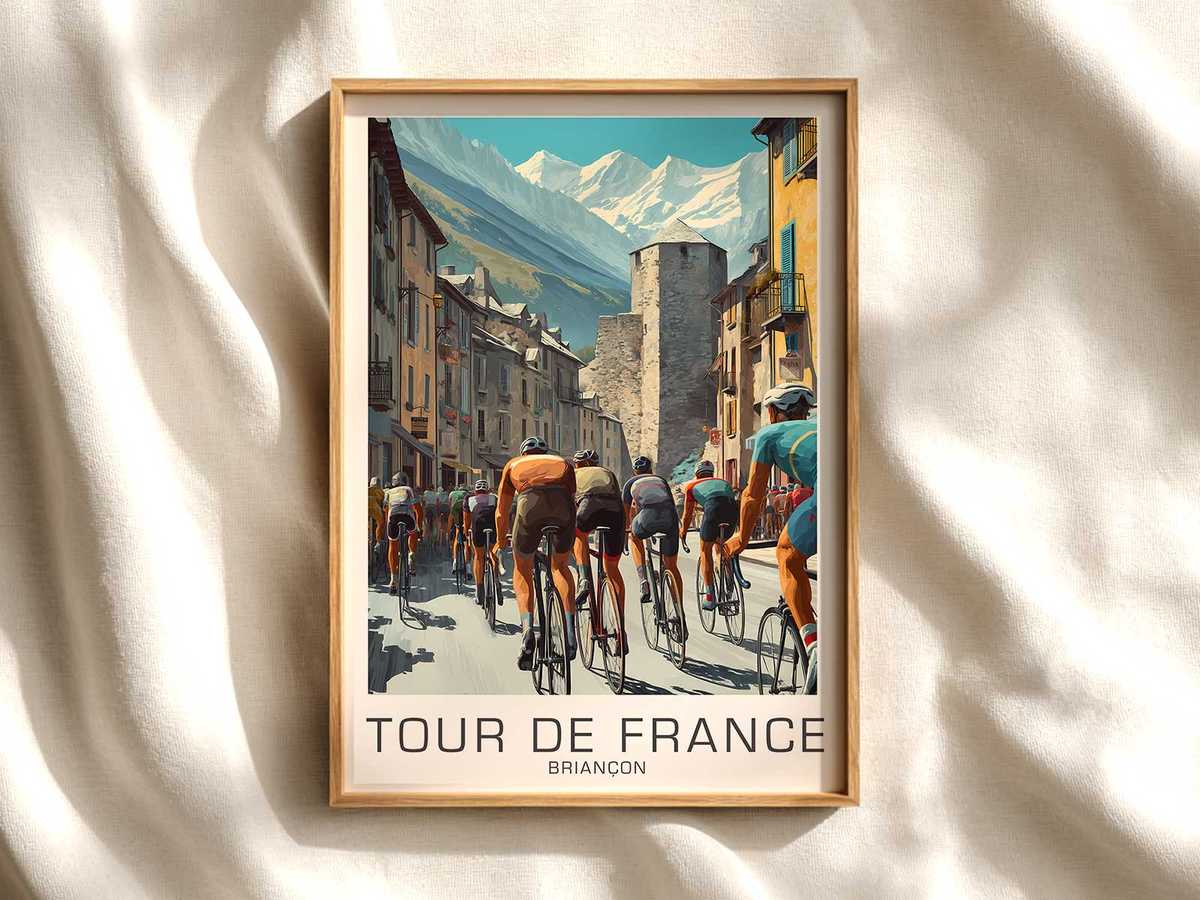
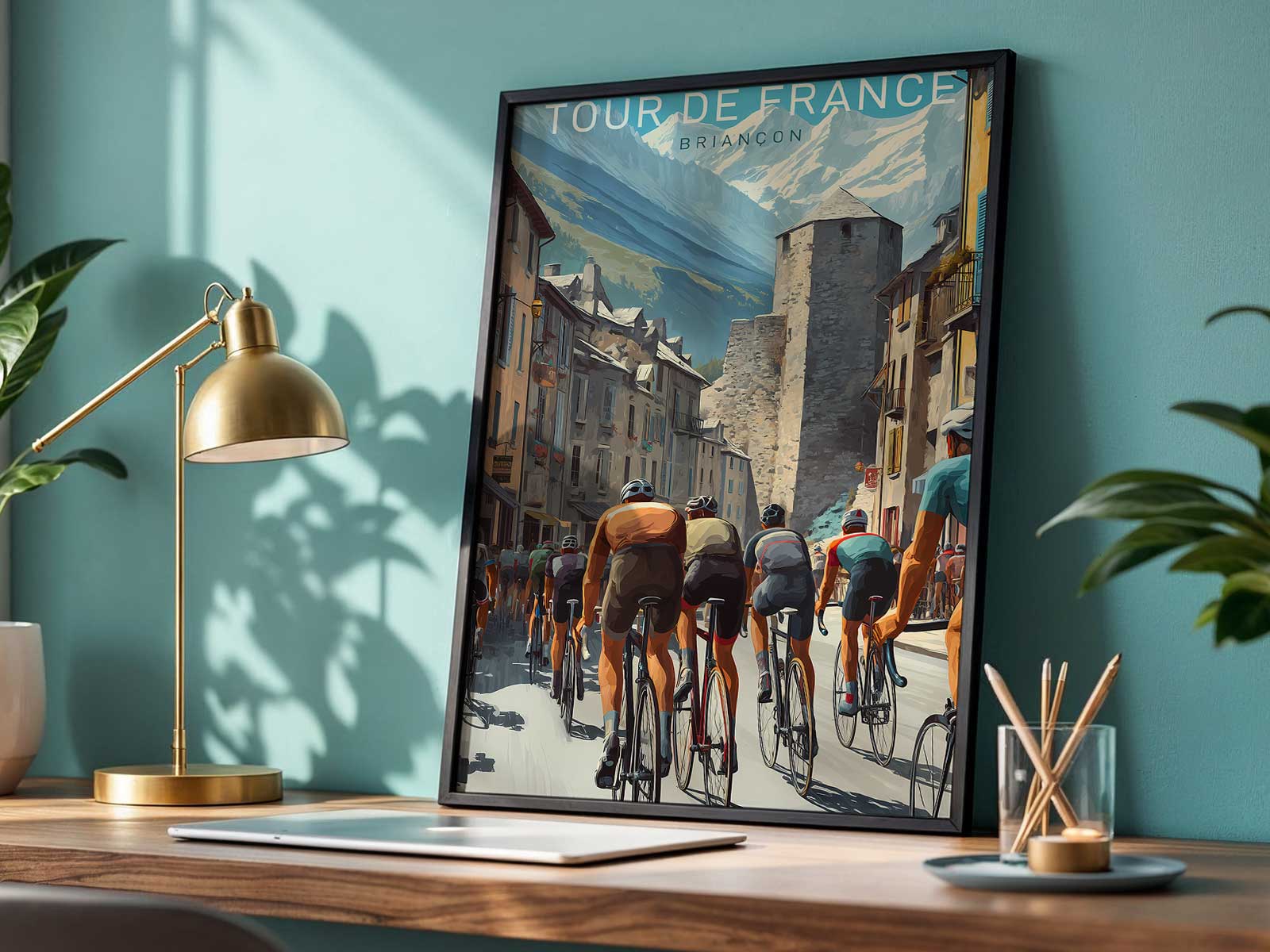
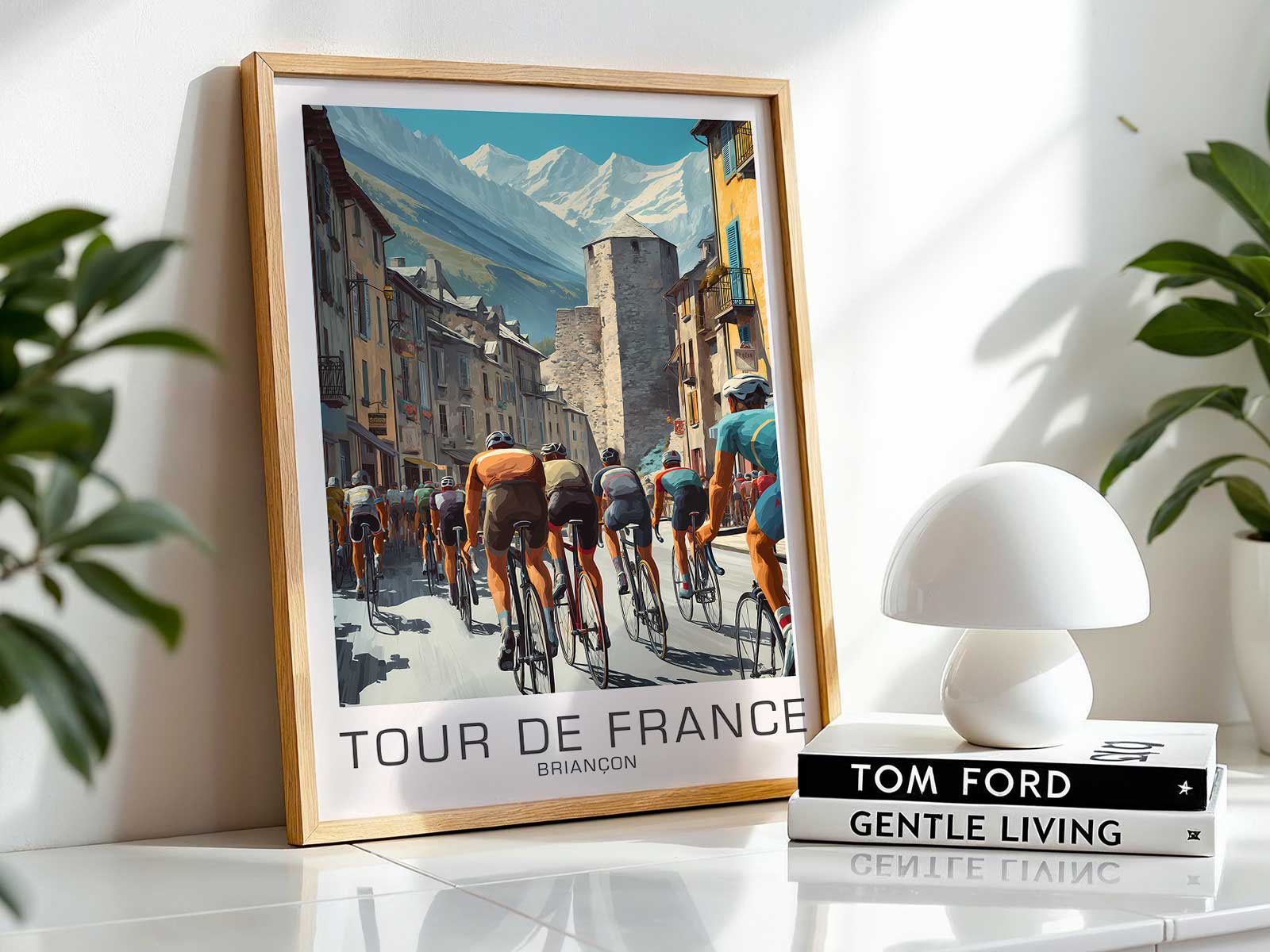
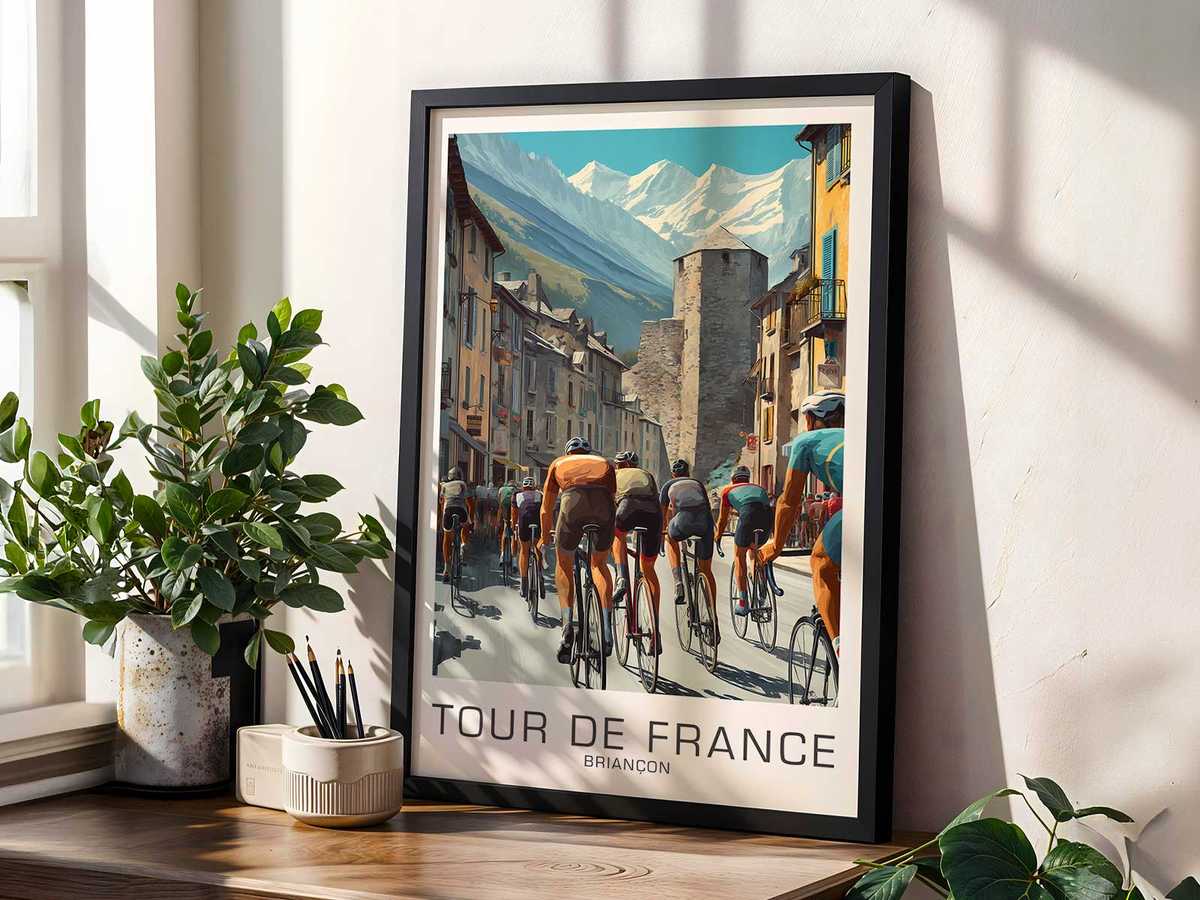
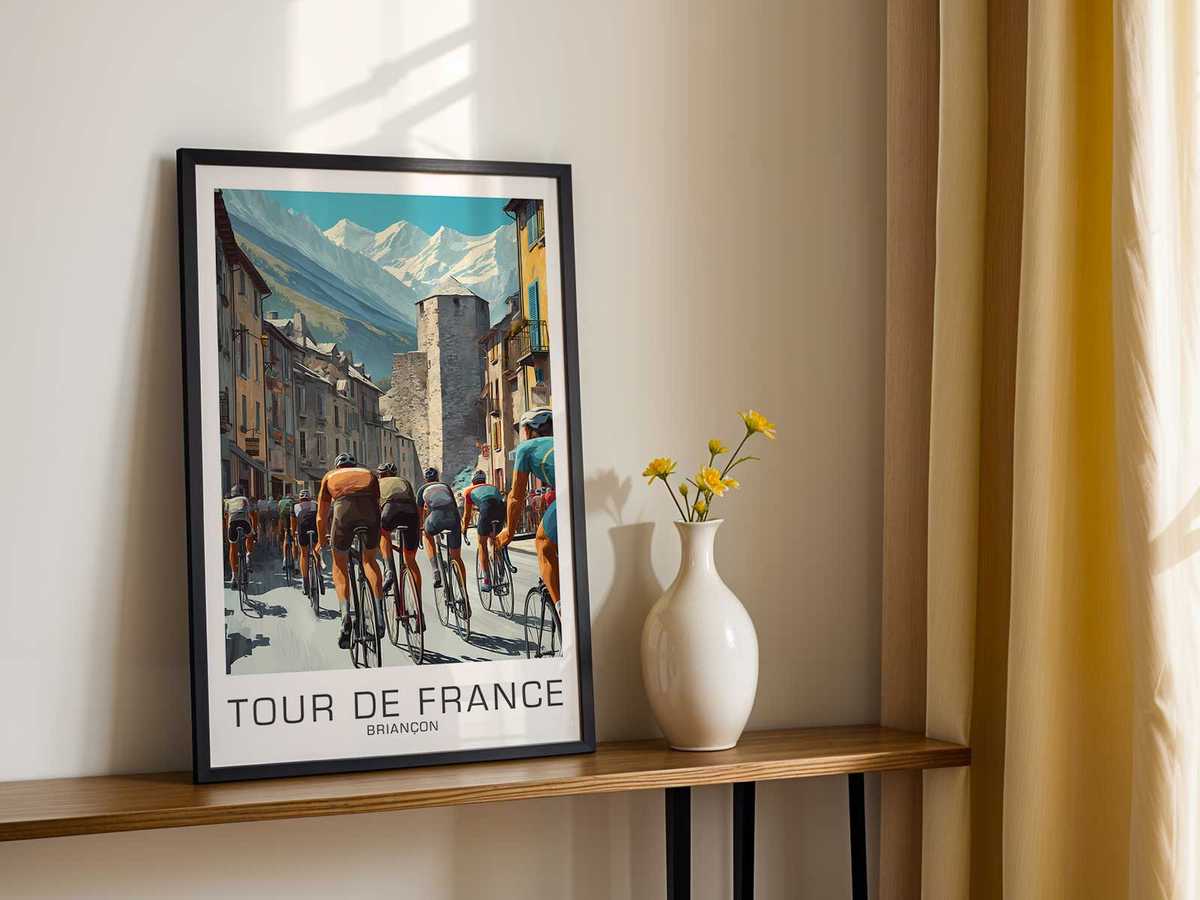
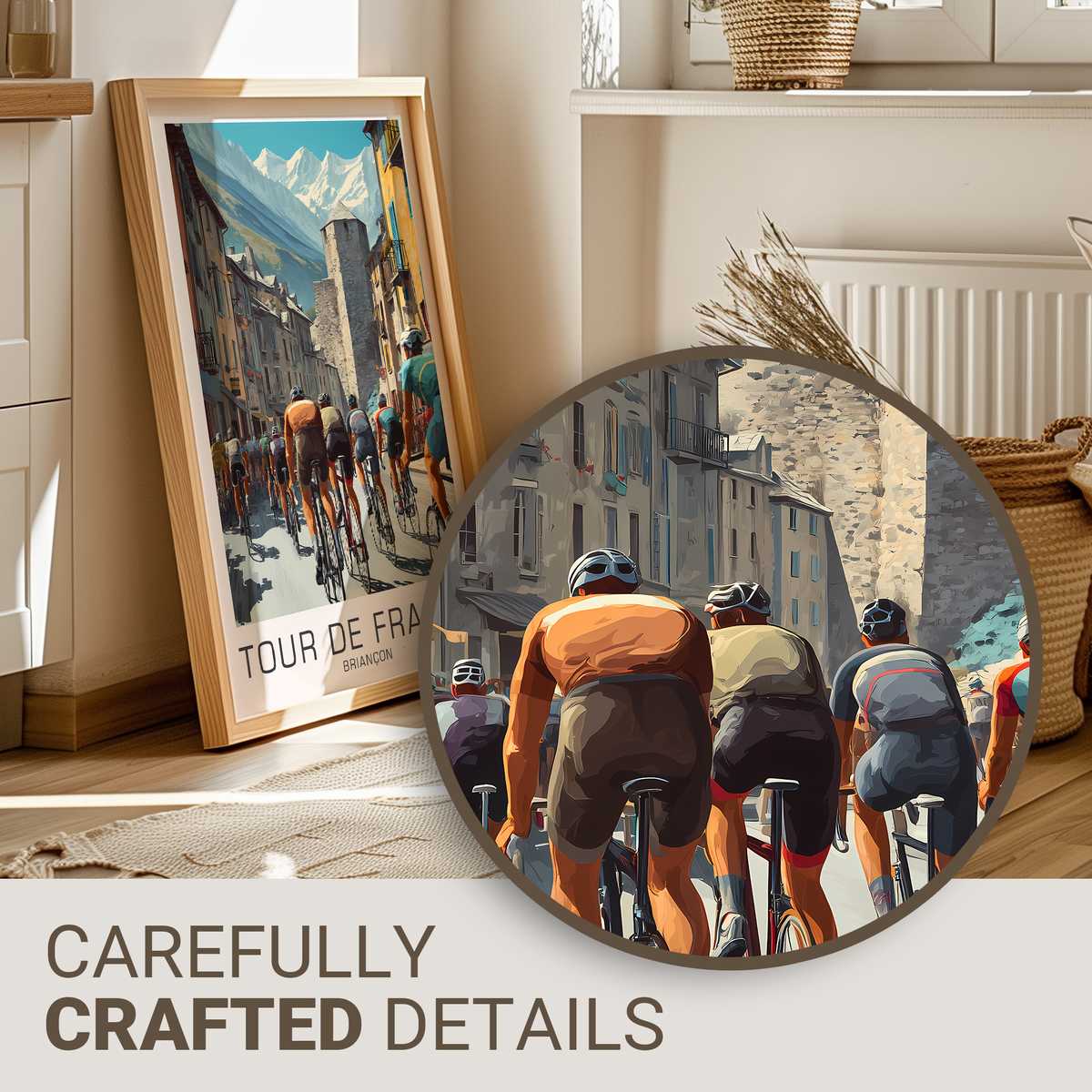
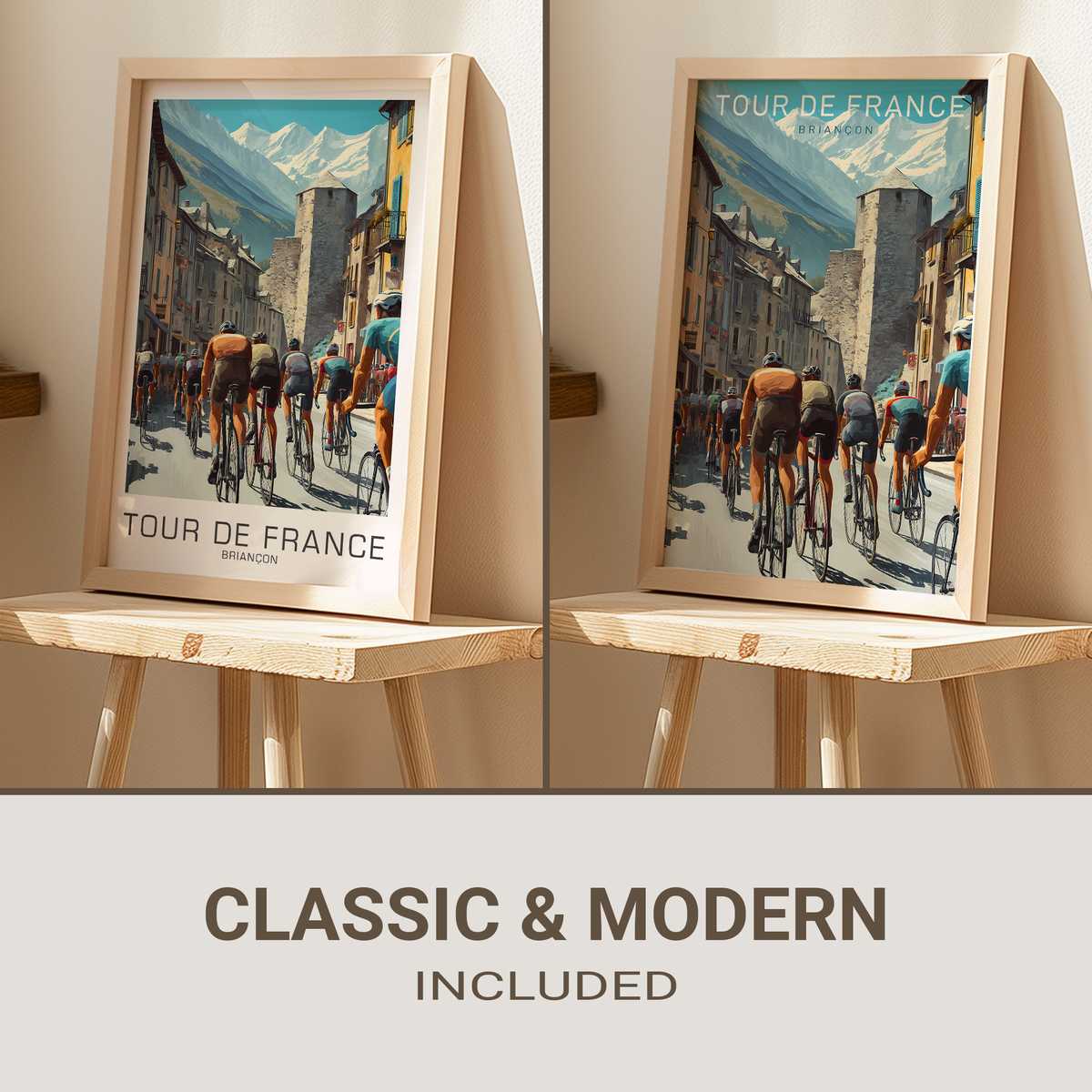
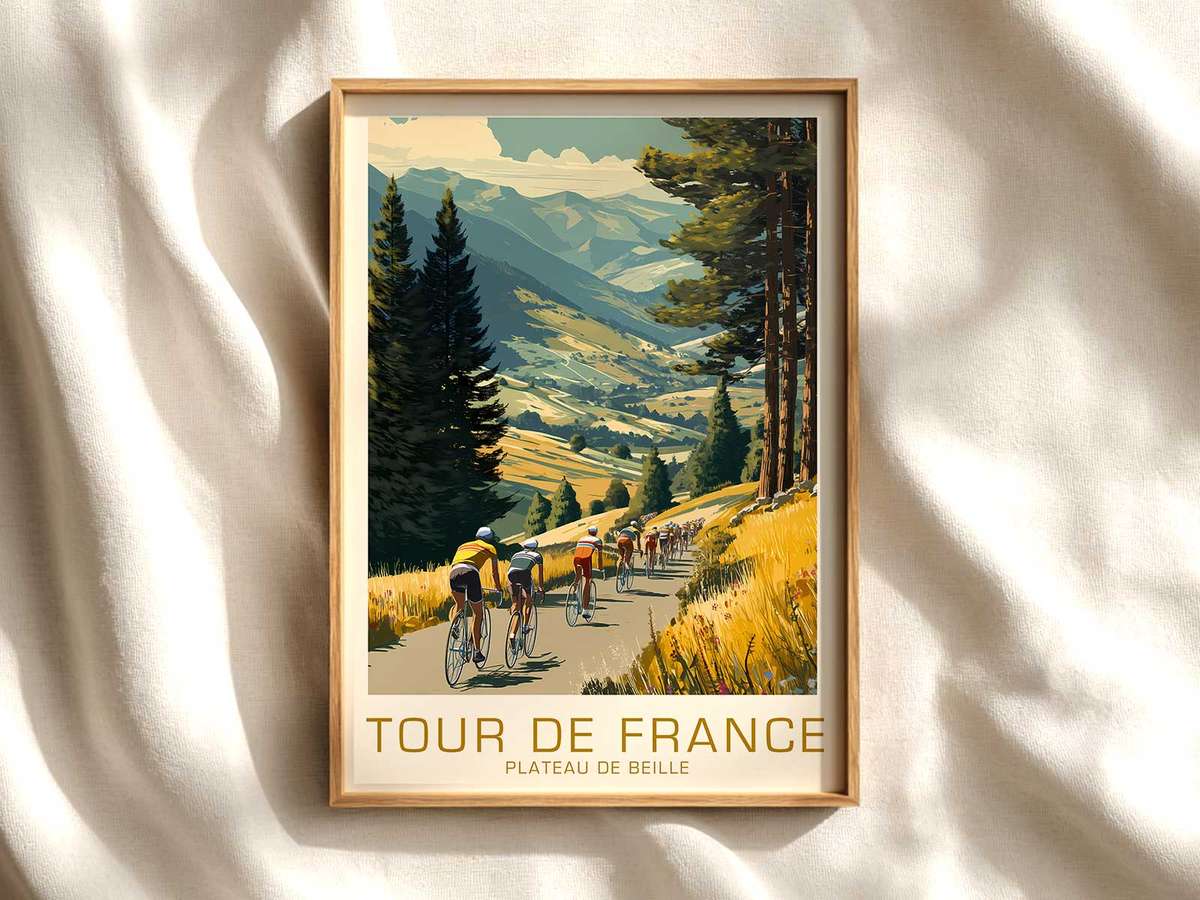
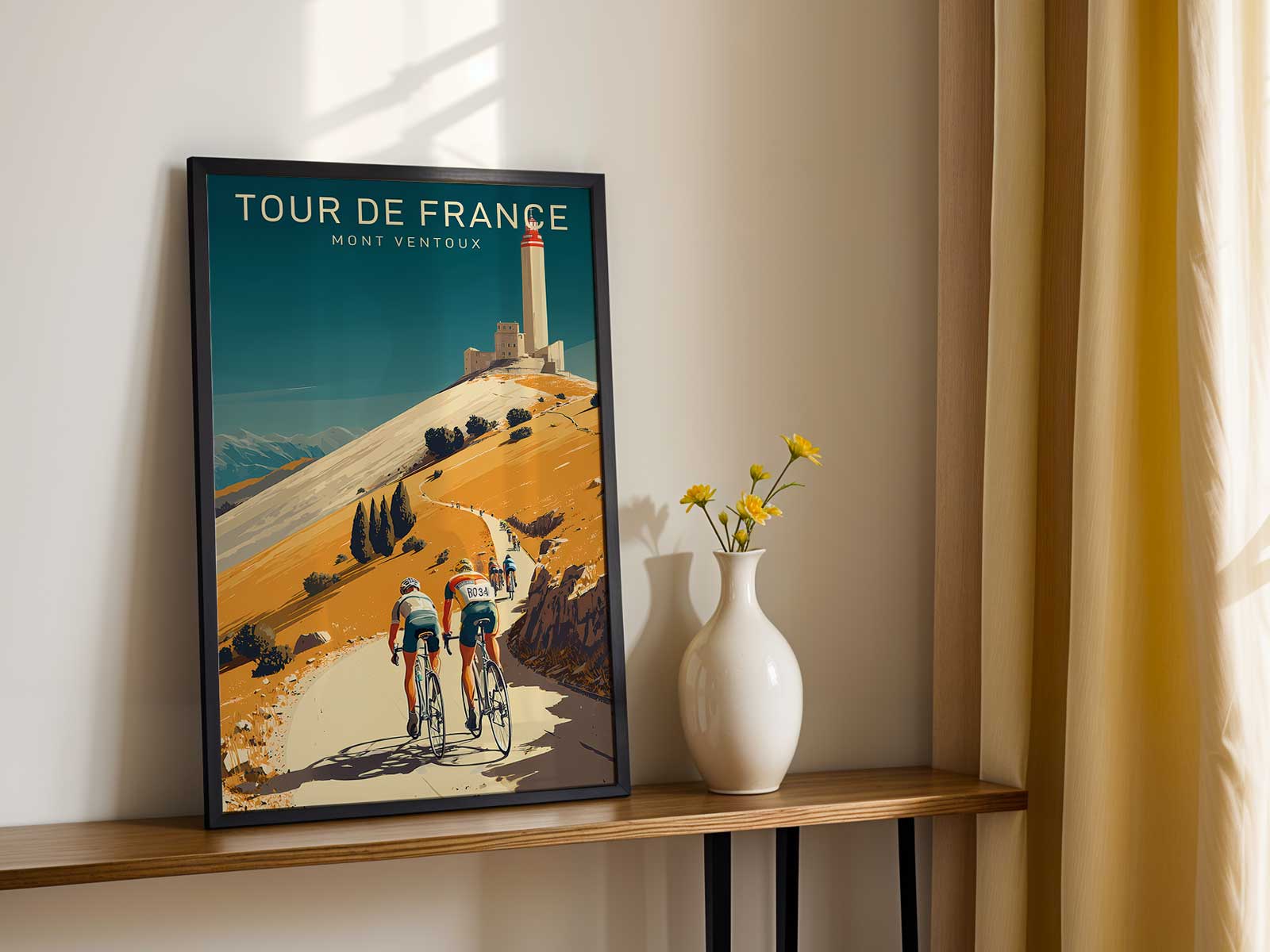
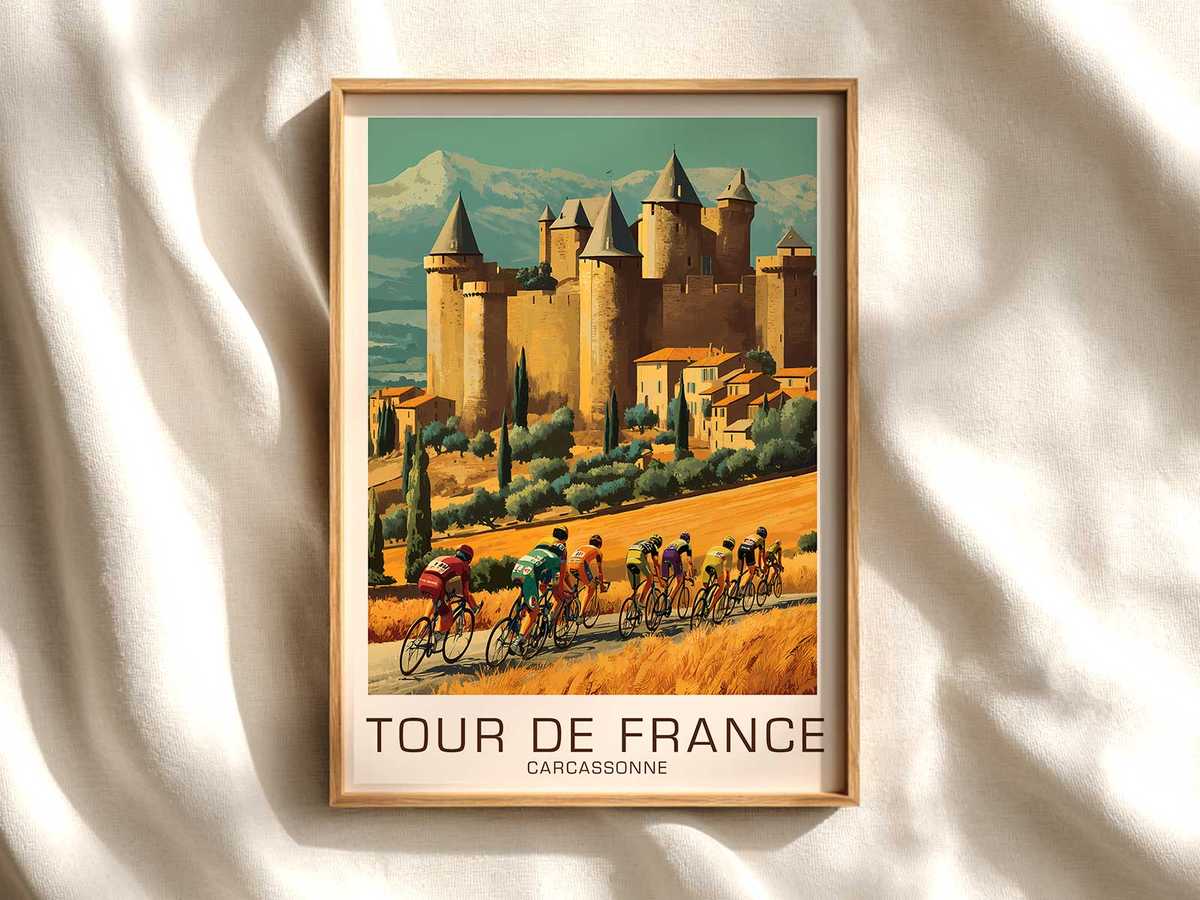
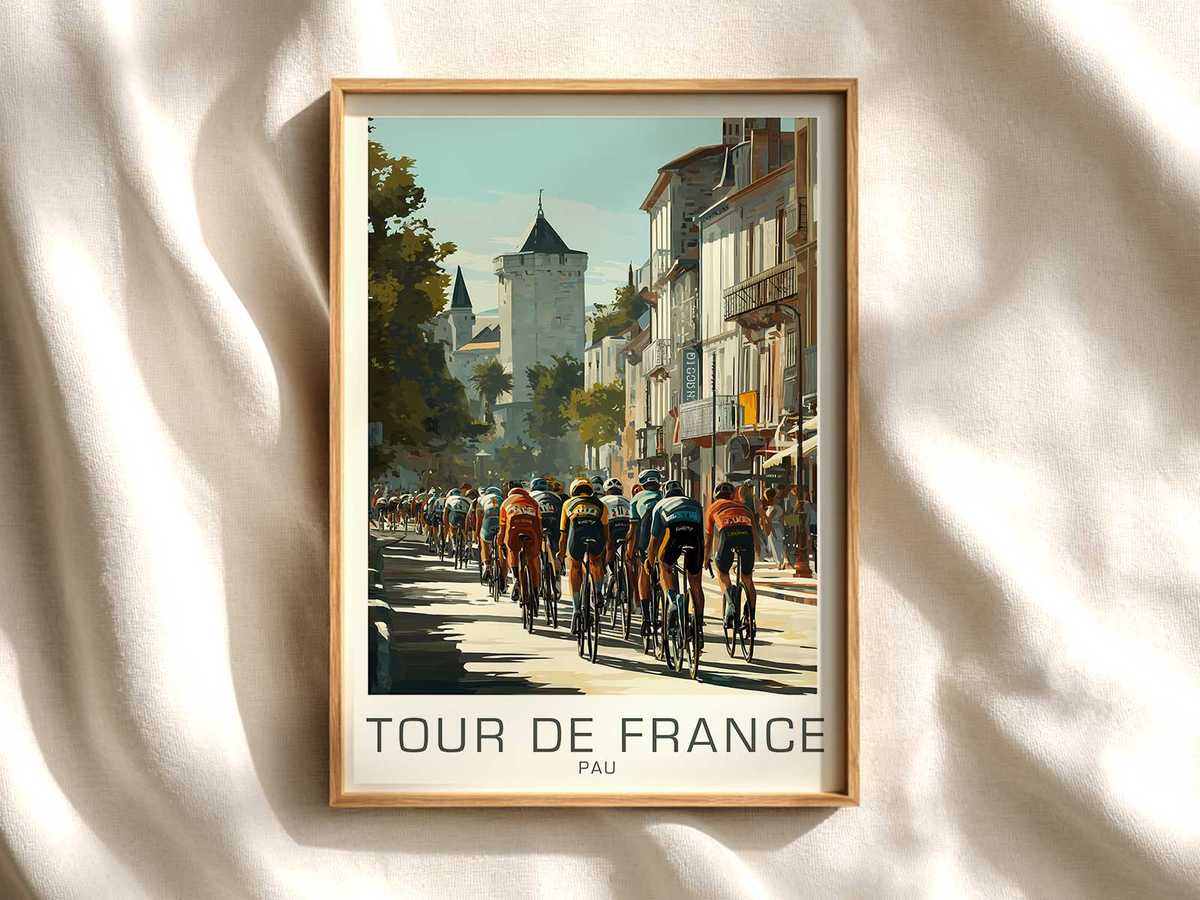
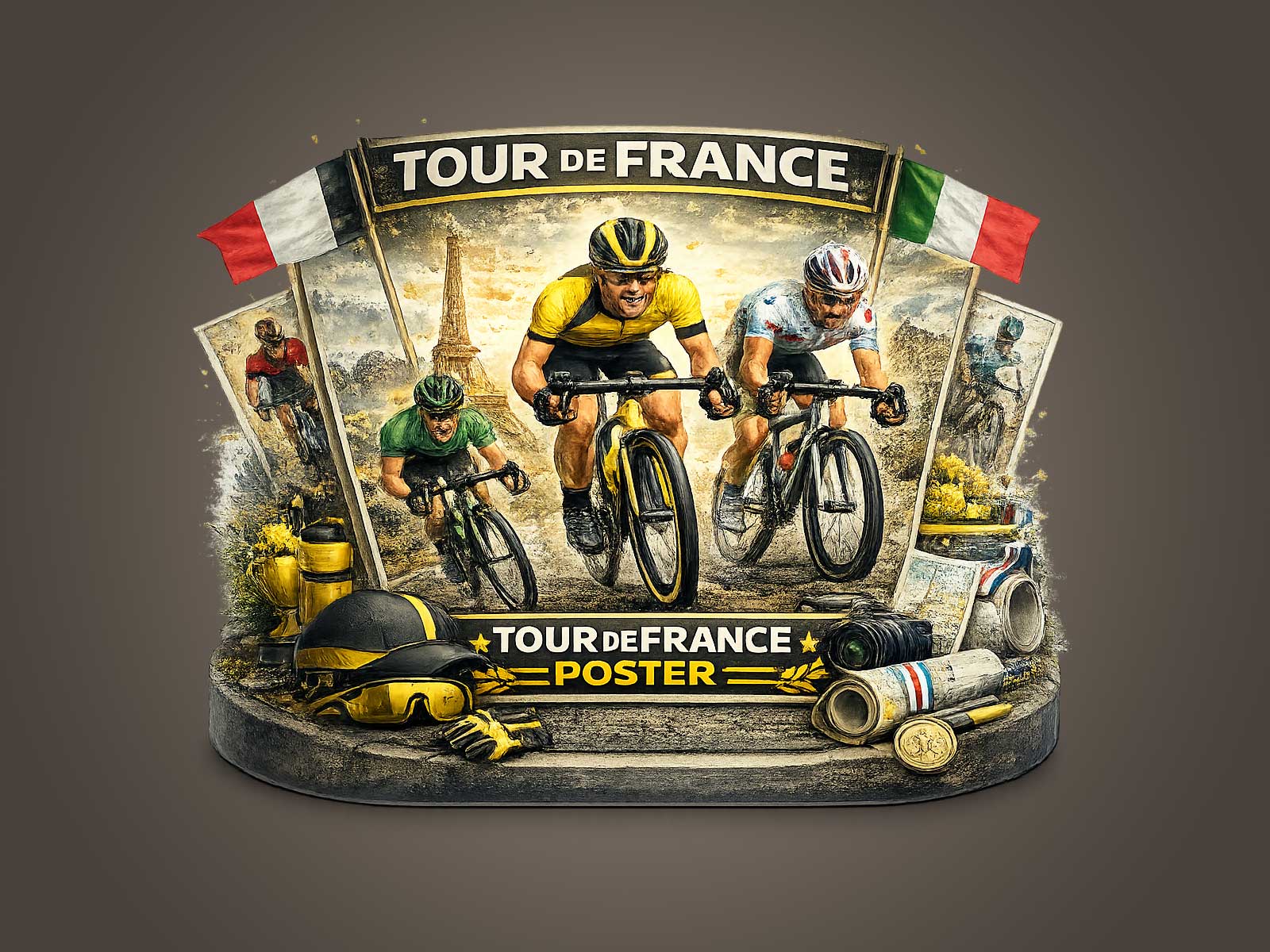
The image of a mountain approach to Briançon, read through a vintage graphic language, does something quiet but decisive to a wall: it reframes a sporting moment as a piece of cultural memory. As bike frame wall art, this kind of poster is not simply illustration; it is an invitation to slow-looking. Narrower palettes, worn paper tones and the unmistakable silhouette of an older racing bicycle combine to make the viewer feel the weight of place — a pass, a village, a road — rather than just a stage of competition.
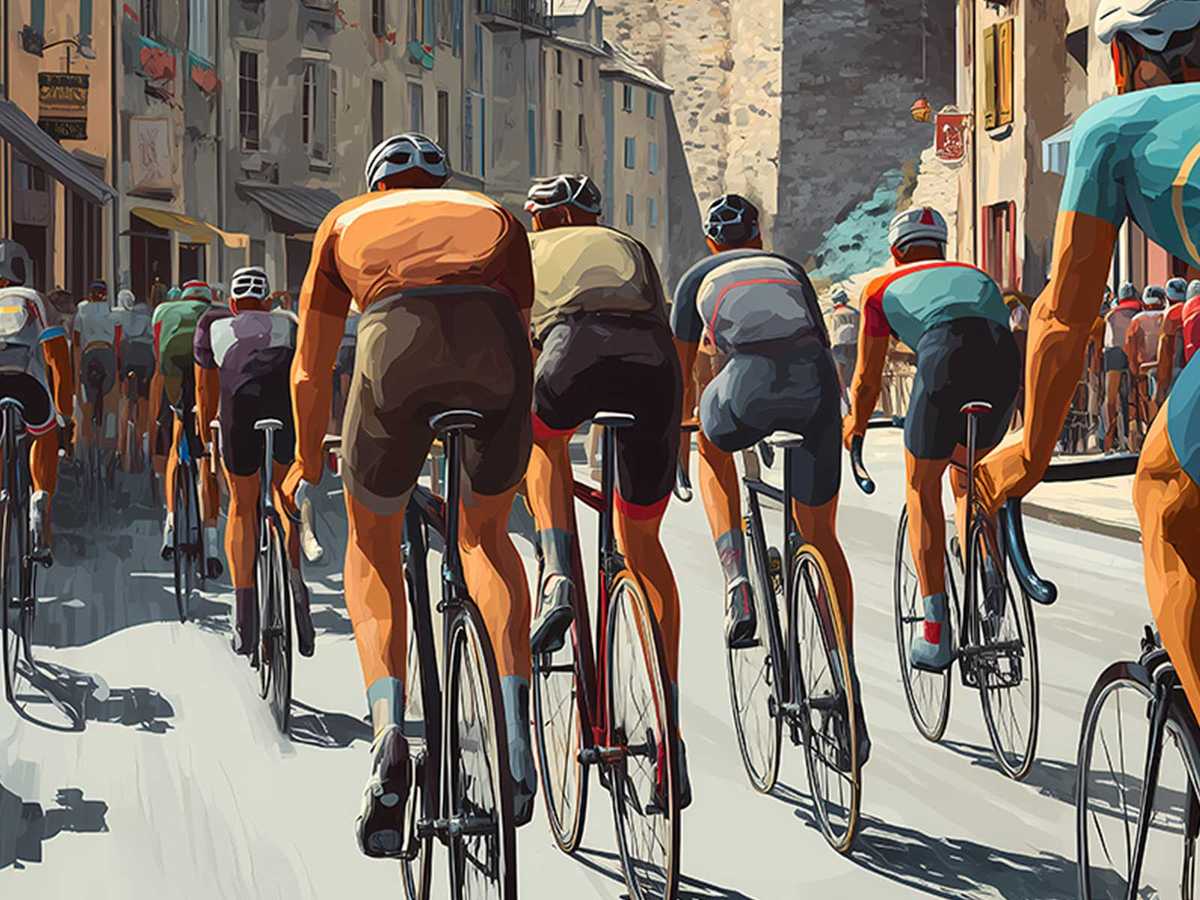
What makes a Tour-related image read as heritage is often less about precise facts than about visual cues that ground it in an era. Muted inks and the slight yellow of aged paper suggest print processes of an earlier age. Period typography or hand-drawn lettering, even when not exacting archival reproduction, signals a particular graphic discipline: measurements and layout that belonged to posters made for towns and local fairs. Classic jerseys and the slim diamond of a steel frame silhouette give the cyclist a sculptural, almost iconic presence; posture and pedal cadence become compositional elements rather than raw performance data.
There is an emotional economy to these images. A single climber bending over the bars, the slope hinted at by converging road lines, and a low horizon populated by distant alpine roofs form a minimal narrative — effort, route, belonging. That economy is what transforms the poster from ephemeral souvenir into something that works within interiors. In a study or reading room, the picture reads like a fragment of a larger story: a local community that witnessed the race, the seasonal rhythm of spectators, the quiet pride of a mountain town threaded through generations.
[IMAGE_INSERT_ARTICLE_01]
Collectors and design-minded buyers respond to the tactile suggestions in such prints. The suggestion of halftone dots, the way colours sit slightly off-register, or a deliberate limitation of palette all point to a craft that predates digital sheen. These are visual signals of authenticity of feeling: as if the poster has already lived a life on a café wall, picked up dust and conversation. That implied history adds decorative depth — the picture anchors a room with narrative possibilities rather than decorative noise.
Visually, the poster’s strength often lies in restraint. Instead of loud action or a crowd shot, the image focuses on compositional elements familiar to riders and non-riders alike: the geometry of a bike frame, the rhythm of spokes, the contrast between clothing texture and landscape stone. Such restraint gives the piece a quiet elegance; the bicycle is read as object and symbol, its lines echoing furniture silhouettes or bookshelves, making it easy to integrate into curated interiors without overwhelming them.
Heritage-led cycling art also benefits from a cultural continuity that contemporary graphics sometimes lack. Older visual language carries the echoes of shared stories — regional pride, the drama of climbs, the slow accumulation of small heroic acts — and presents them in a form that respects time rather than trading on novelty. That is why a Briançon-inspired poster can sit comfortably in a library or office: it suggests reflection and endurance, qualities that resonate beyond sport.
When considering bike frame wall art with a Tour heritage angle, look for the signs that allow the image to work as both artifact and décor: considered composition, period-minded colour restraint, the graceful silhouette of vintage equipment, and an archival print warmth. These elements make the poster readable at a glance and rewarding on repeated viewings. More than decoration, the poster becomes a memory device — a framed prompt that invites the eye to return, to imagine the climb, the road surface under rubber, and the quiet village waiting above the switchbacks.
Author: