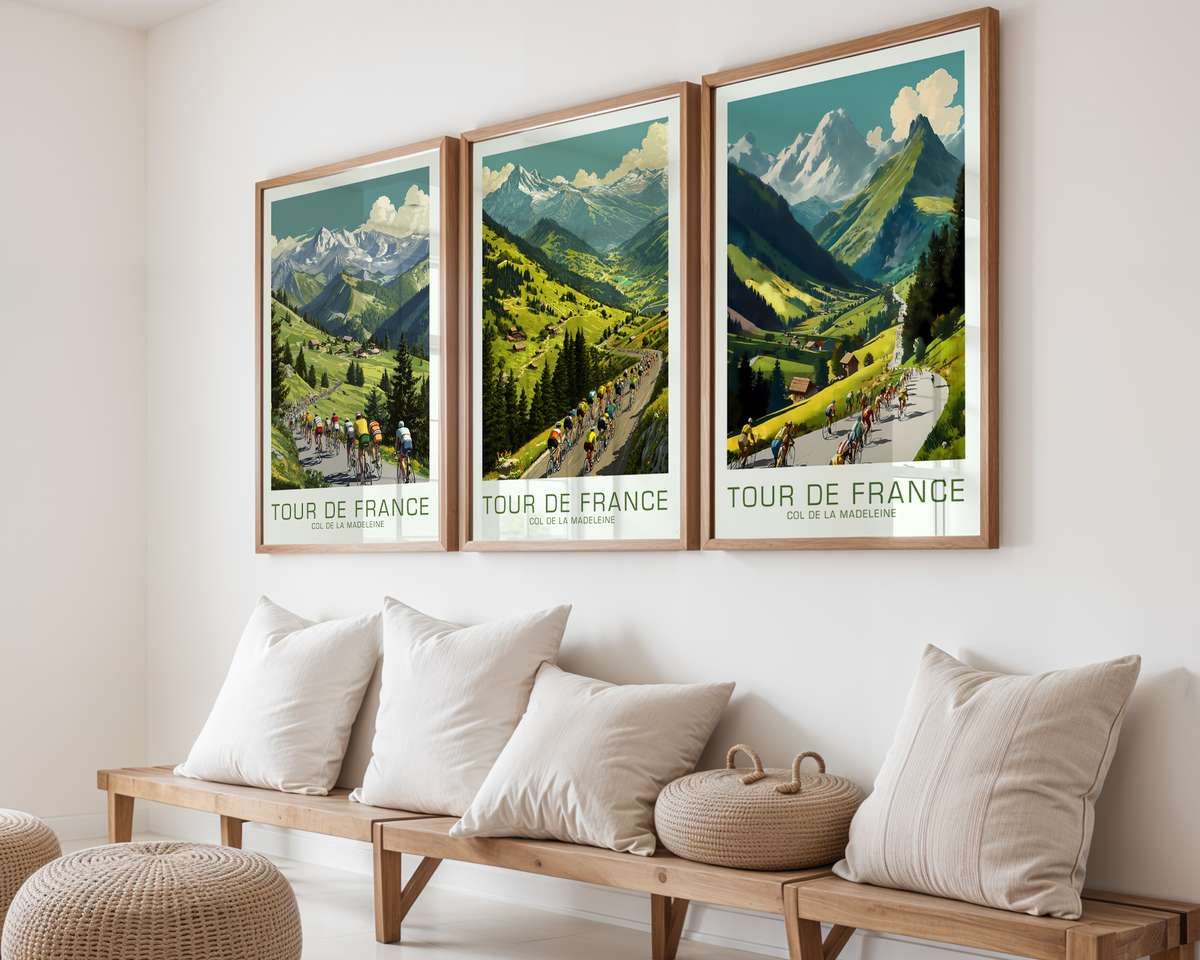
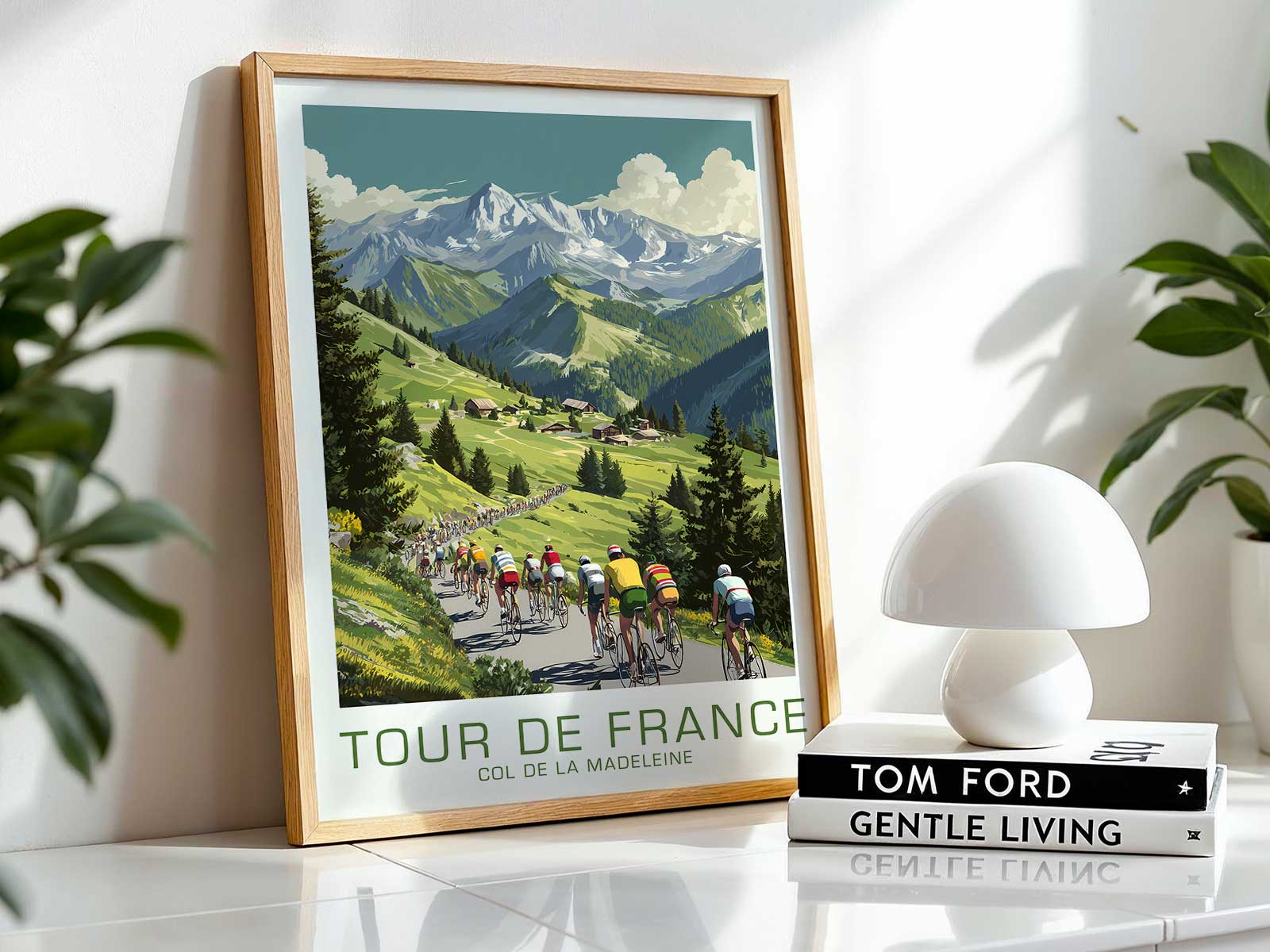
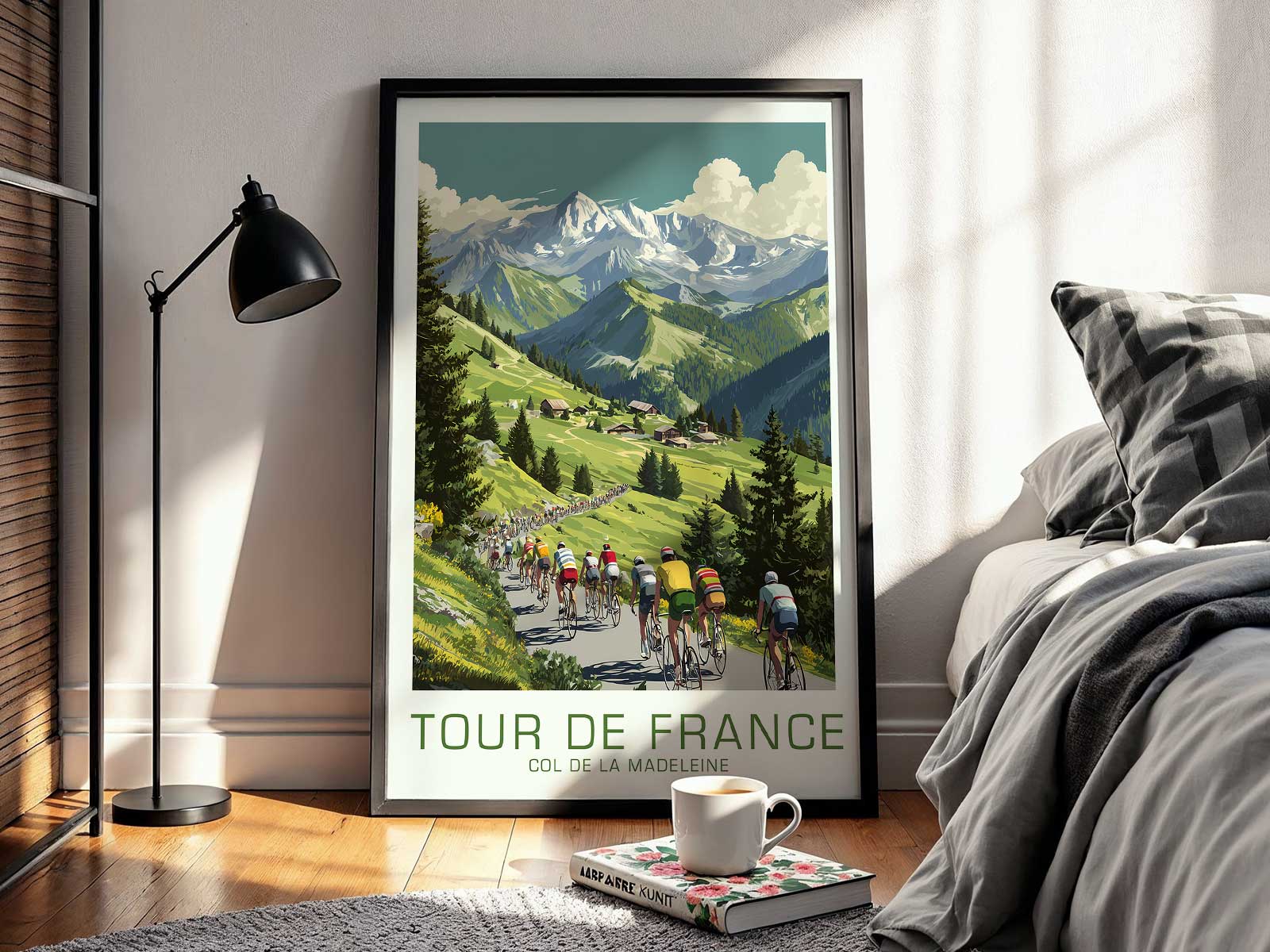
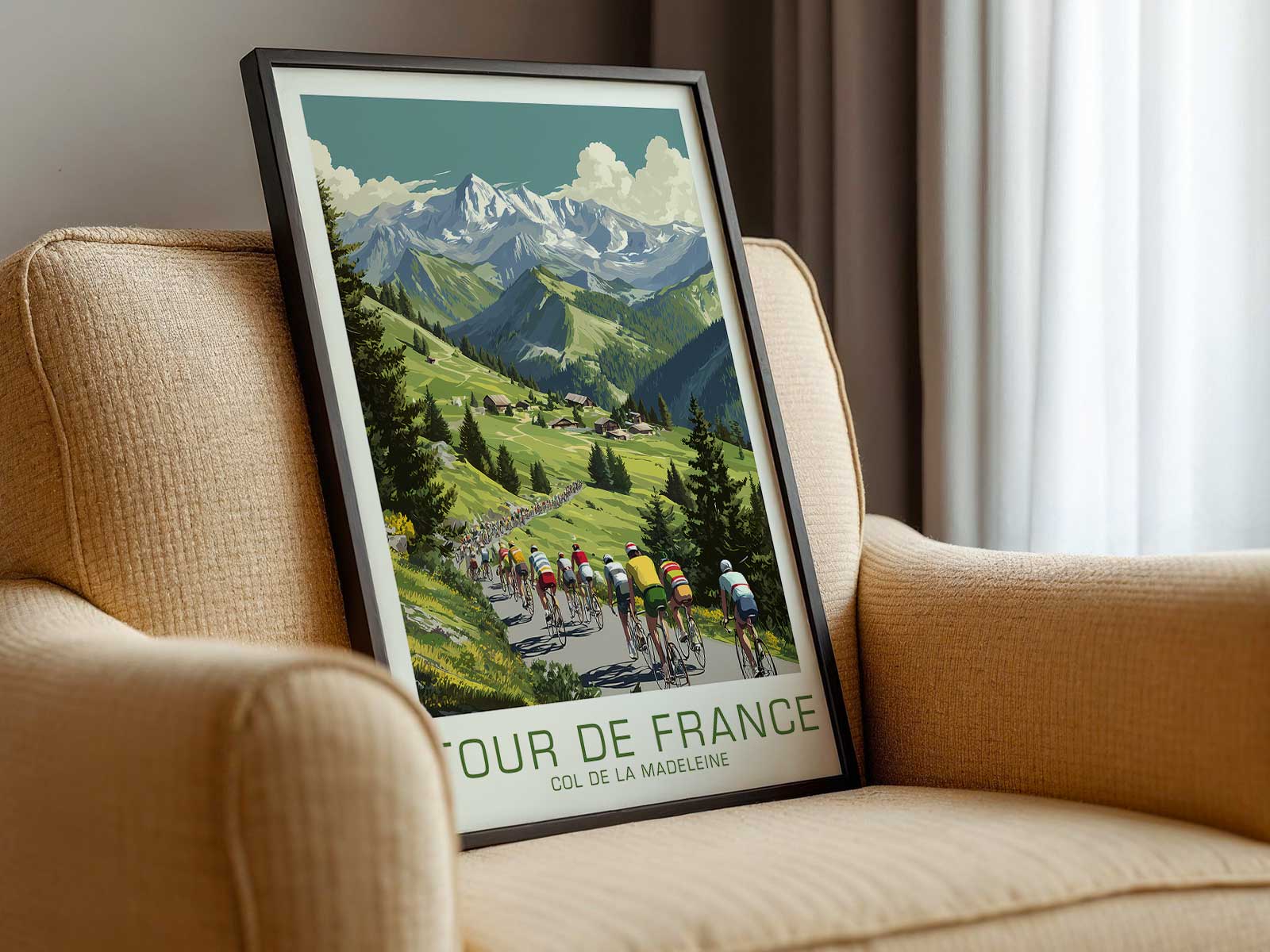
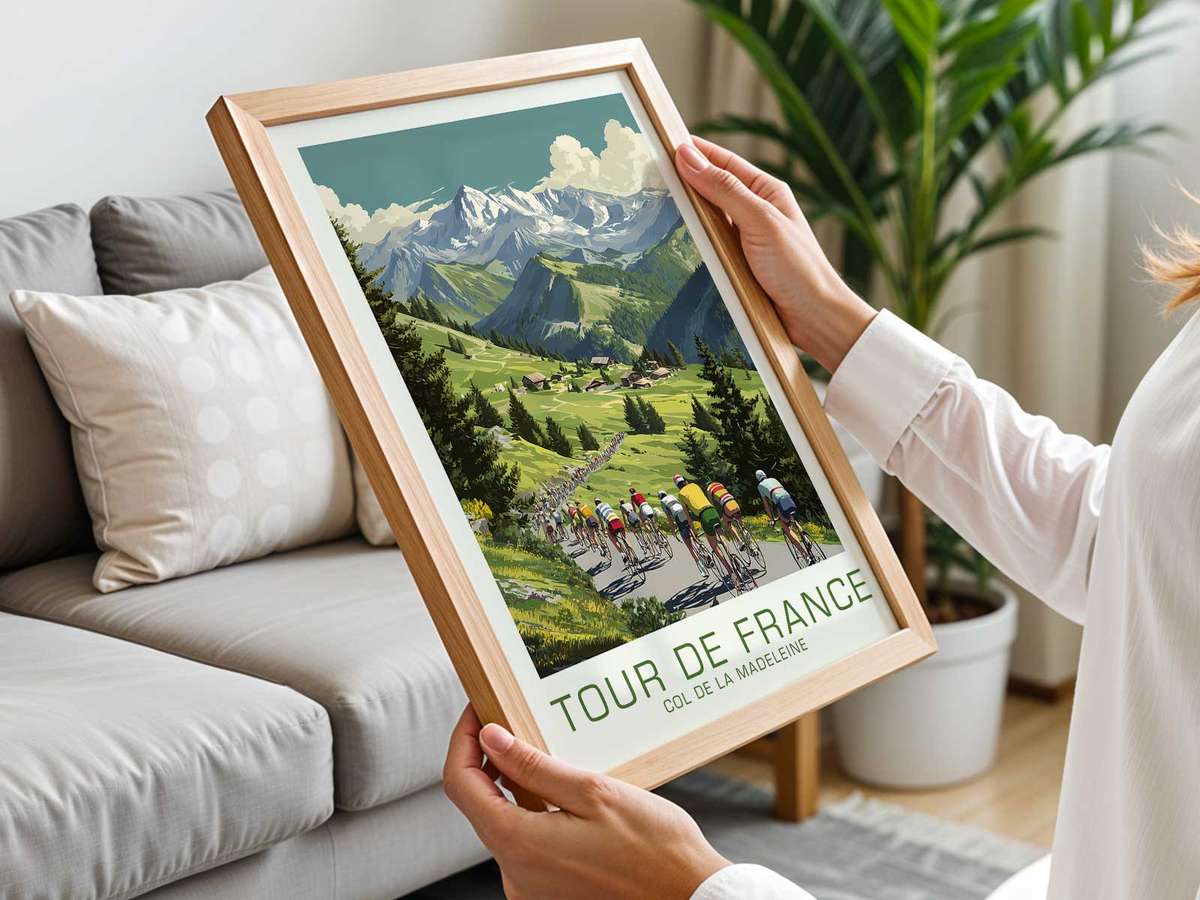
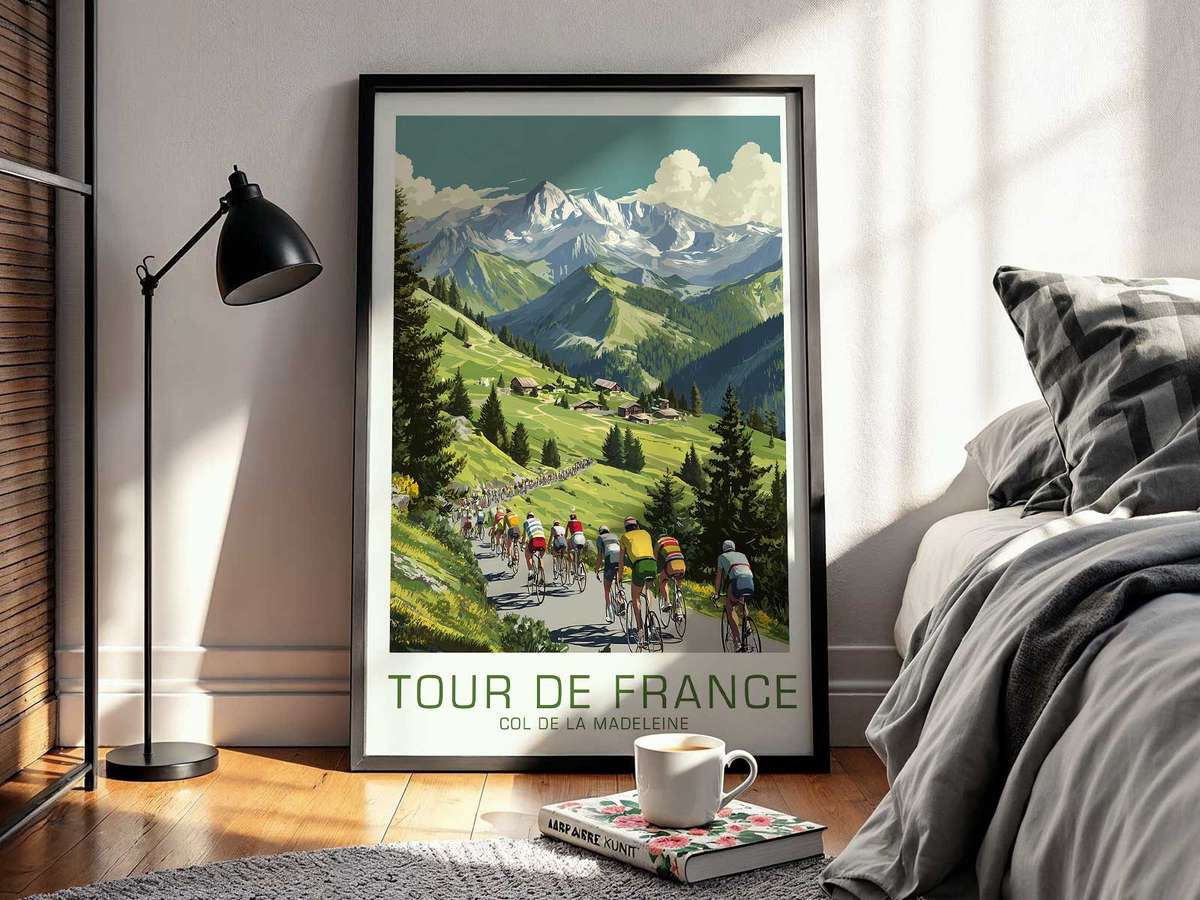
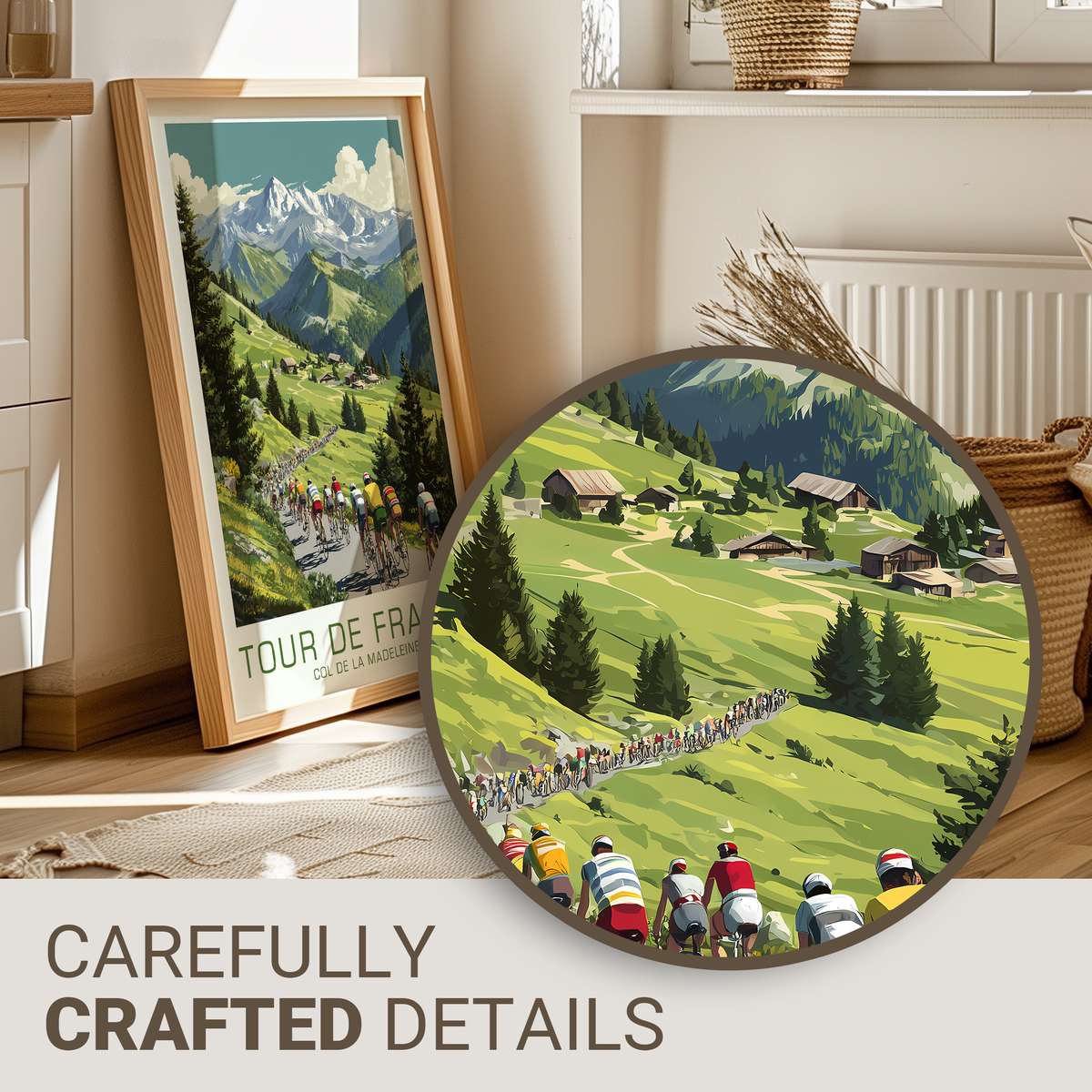
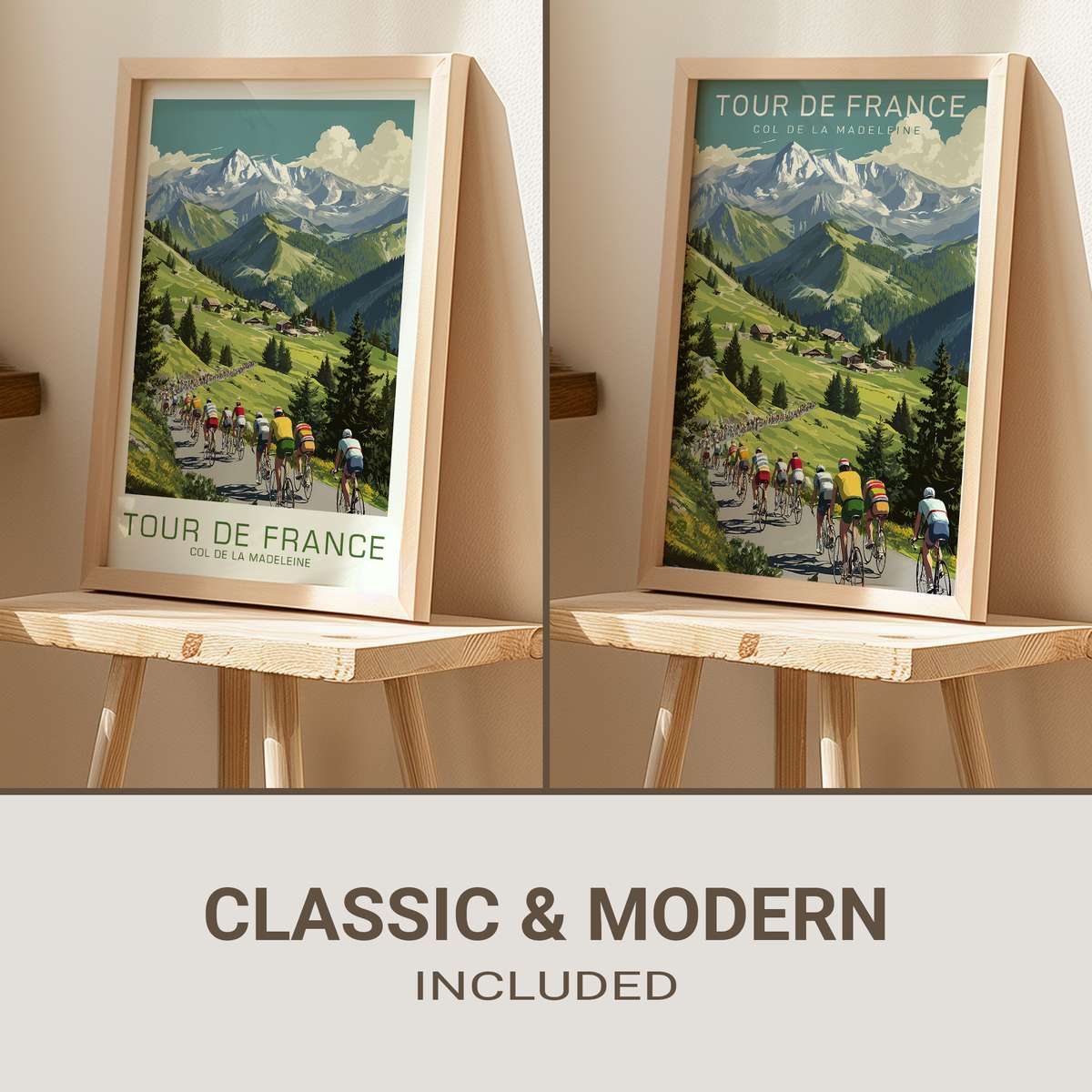
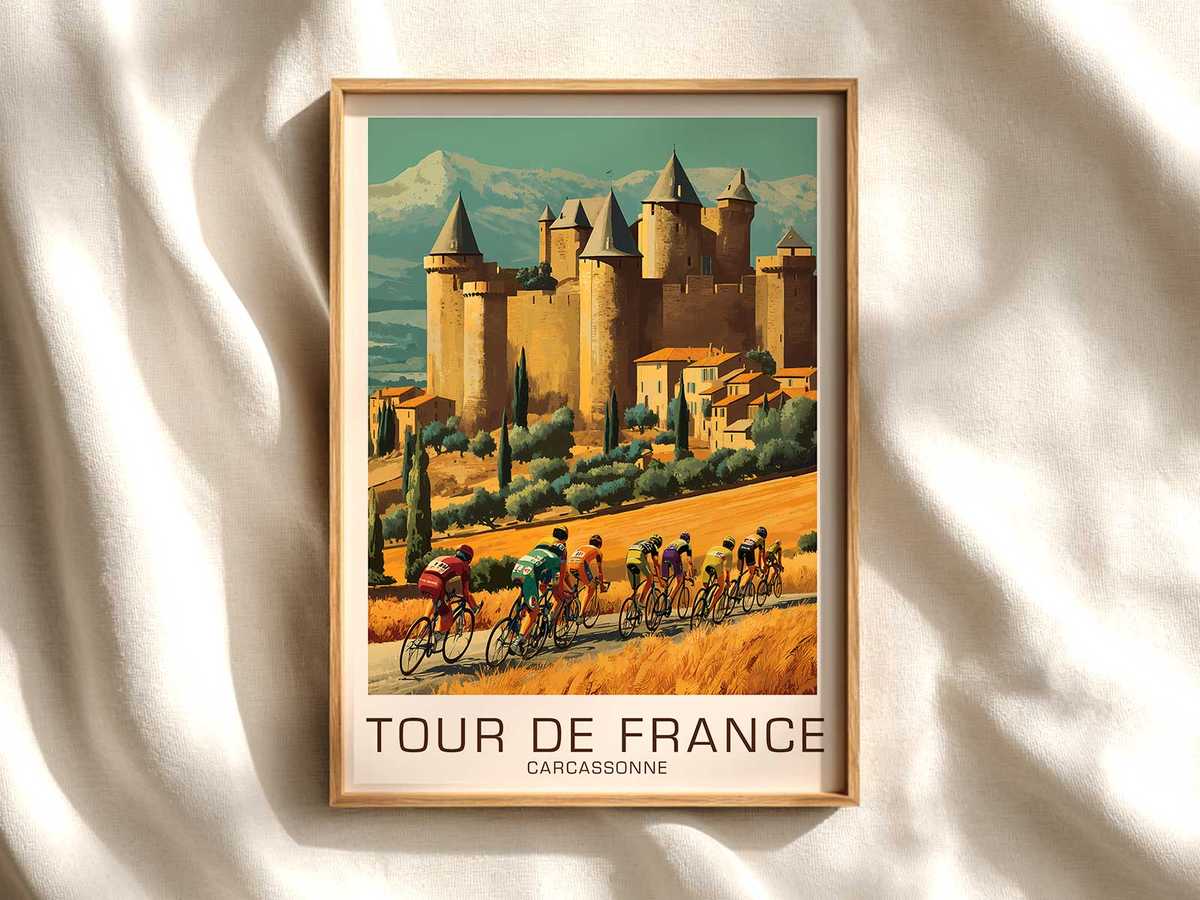
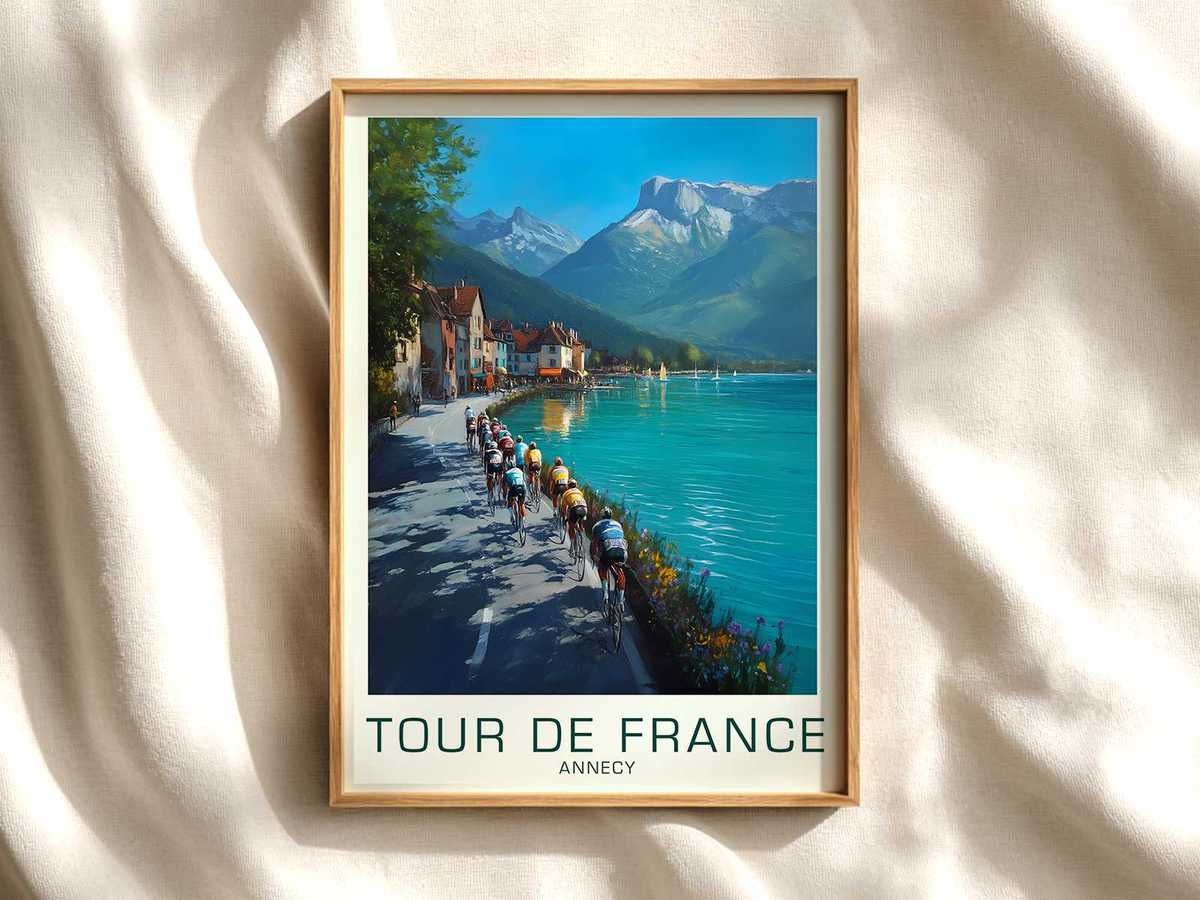
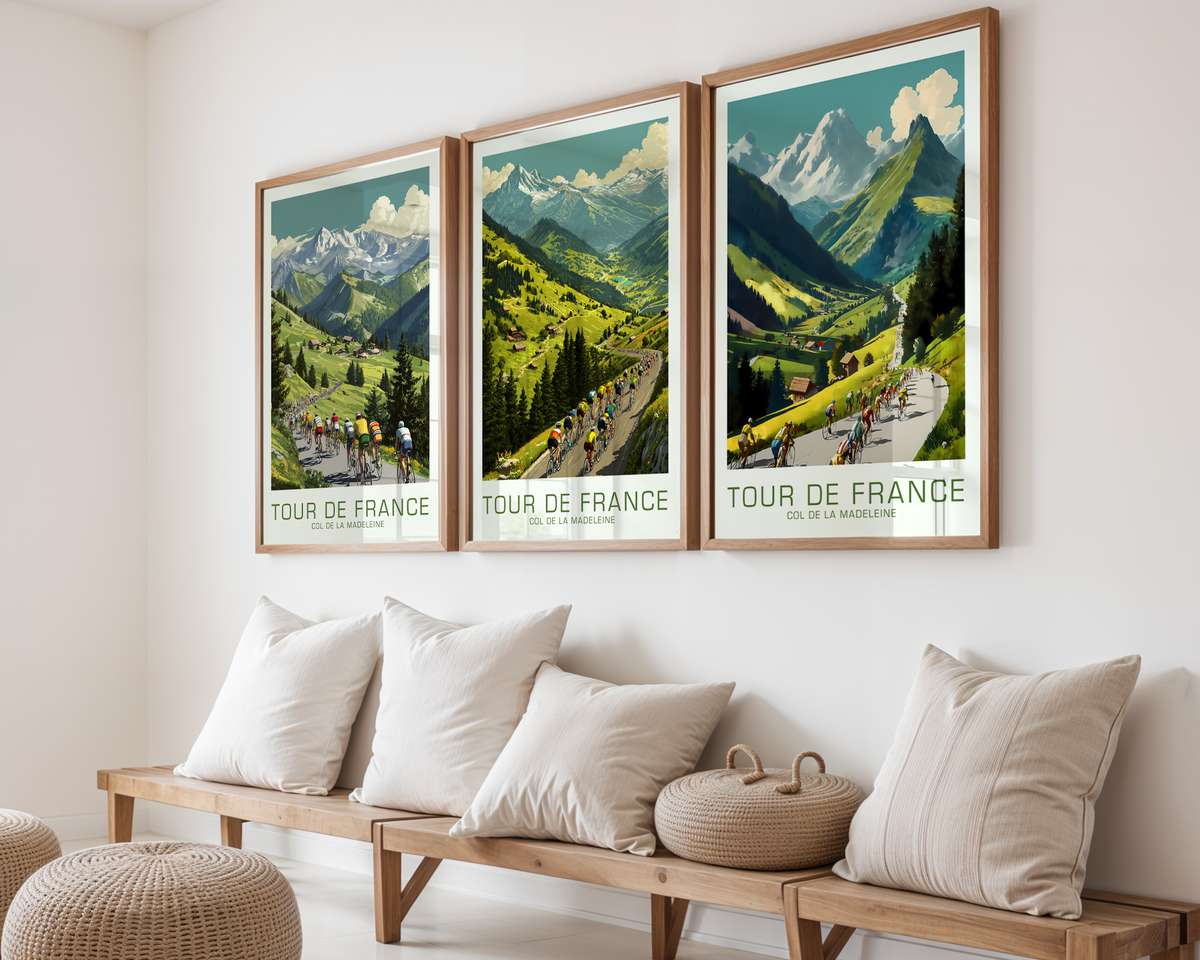
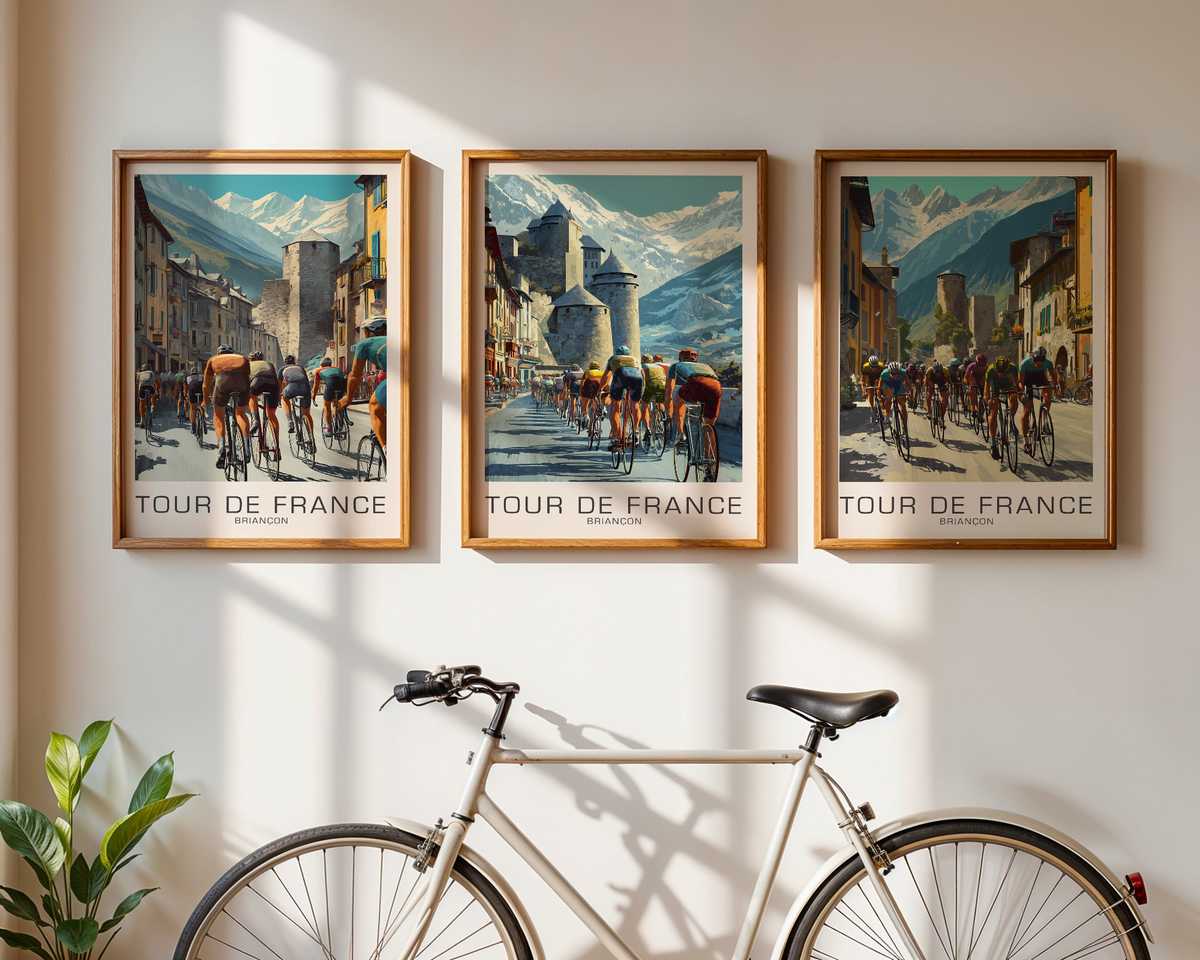
The Col de la Madeleine is more than a name on a map; in a vintage cycling poster it becomes a concentrated sensation of climb, altitude and sustained effort. A successful poster does not need riders shown in detail to convey struggle—the road, the gradient of the slopes, the sweep of the ridgeline and the way light falls across alpine meadows do most of the work. By arranging these elements with calm precision, an artwork translates the physical drama of a mountain stage into something elegantly cinematic and instantly readable on a wall.
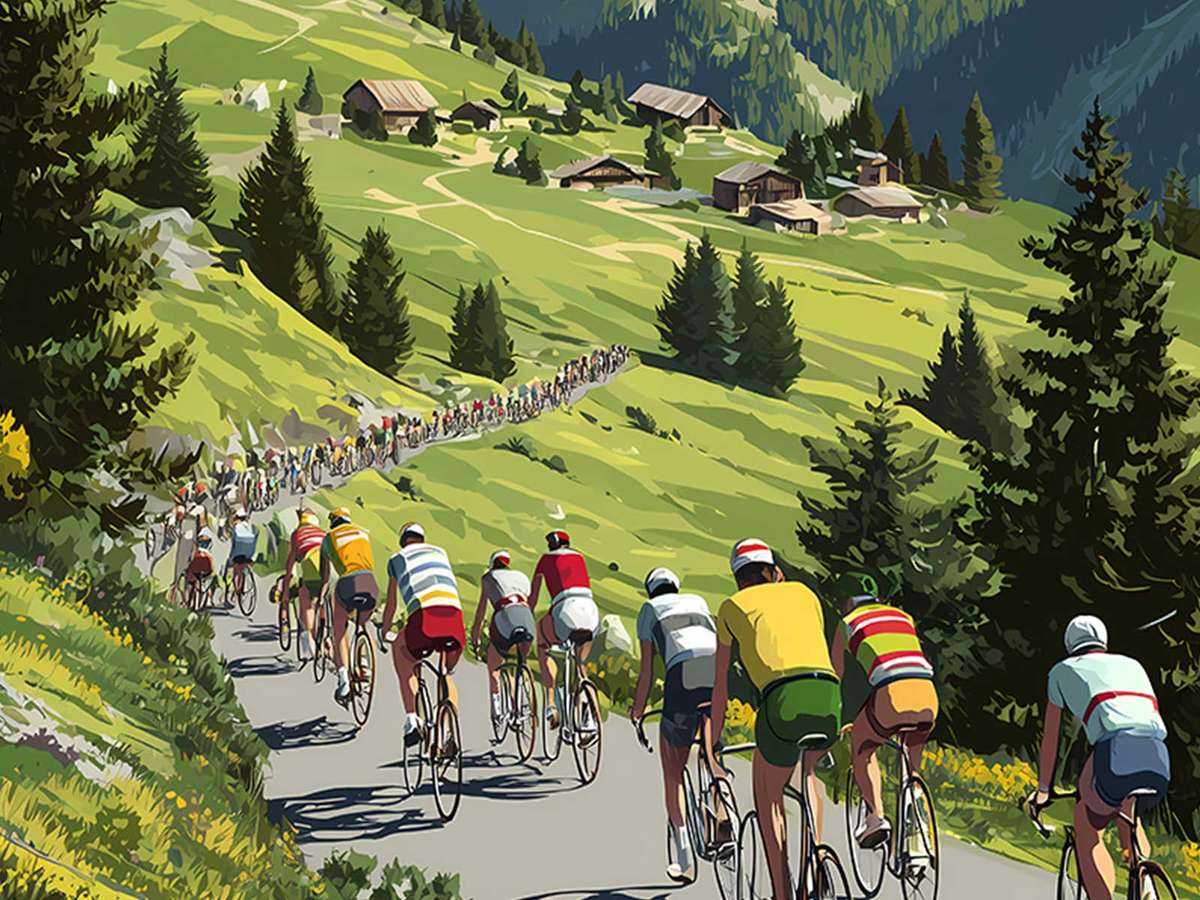
Look first at the road. In poster form the route is a compositional spine: a ribbon of tarmac that narrows into the distance, snakes around hairpins and climbs through terraces of rock and scrub. The curve and grade tell a story of effort—the steeper pitch, the tighter bend, the thin guardrail backed by a void. These geometric cues allow the viewer to feel the exertion without a single wheel in motion. The road becomes a line of tension across the print, an implied journey whose endpoint is the summit and whose middle is famously relentless.
Landscape and altitude give the scene its scale. Alpine slopes rising above the valley create a household-sized monument: distant peaks hazed by higher air, nearer pastures cut into steep terraces, and small villages clinging to lower slopes. A poster artist exploits these planes to suggest size—foreground rocks and roadside markers, midground switchbacks, and the pale blue of high sky. Altitude is communicated through atmosphere: a cooler palette, crisper shadows, and the striping of alpine light that flattens details at distance. That visual shorthand is what convinces the eye that this is truly high country, and therefore harder, lonelier and more heroic.
Light is the final sculptor. Morning or late afternoon sun throws long shadows that emphasize the slope and the texture of rock; a backlit ridge produces a silhouette of the pass against a still, crystalline sky. Warm tones on the nearest stones and cool blues in shaded gulleys create a visual rhythm that mirrors the rider’s alternating pain and brief relief between efforts. A single shaft of sun through cloud can single out a roadside shrine, a solitary chalet, or the crest itself—these little illuminations act like narrative highlights and invite the viewer to linger on the image as a personal memory of the climb.
[IMAGE_INSERT_ARTICLE_01]
Villages and roadside features anchor the drama in human scale. A cluster of stone houses, a weathered café terrace or a line of cheering spectators sketched as small, almost abstract strokes turn the Alps from an anonymous backdrop into a place with history and emotion. In a poster these elements are often understated but deliberate: they suggest local character and the ephemeral festival the Tour brings—bunting, flags, and clustered crowds that seem to emerge from the landscape itself. The contrast between human warmth and the indifferent vastness of the mountain is a powerful emotional chord.
On a domestic wall, a stage-led image like this works because it carries narrative and atmosphere at a glance. It is decorative without being decorative-only; the picture invites imagination—of early starts, of long climbs, of time measured in gradients and breath. In an office it can tighten focus and inspire effort. In a living room or study it imparts calm grandeur, a reminder of journeys and the patient accumulation of meters gained. The vintage aesthetic—muted inks, restrained palette, and thoughtful composition—adds a tactile nostalgia that softens the mountain’s severity and makes the poster simultaneously heroic and intimate.
Ultimately, the Col de la Madeleine in poster form is successful because it trusts visual essentials: road, slope, light, and landmark. Together they create an atmosphere of epic ascent that is both literal and emotional. The image does not need to recount results or name winners; it simply replays the sensation of climbing—a prolonged, beautiful, and slightly perilous act—and makes that feeling into an object you can live with every day.