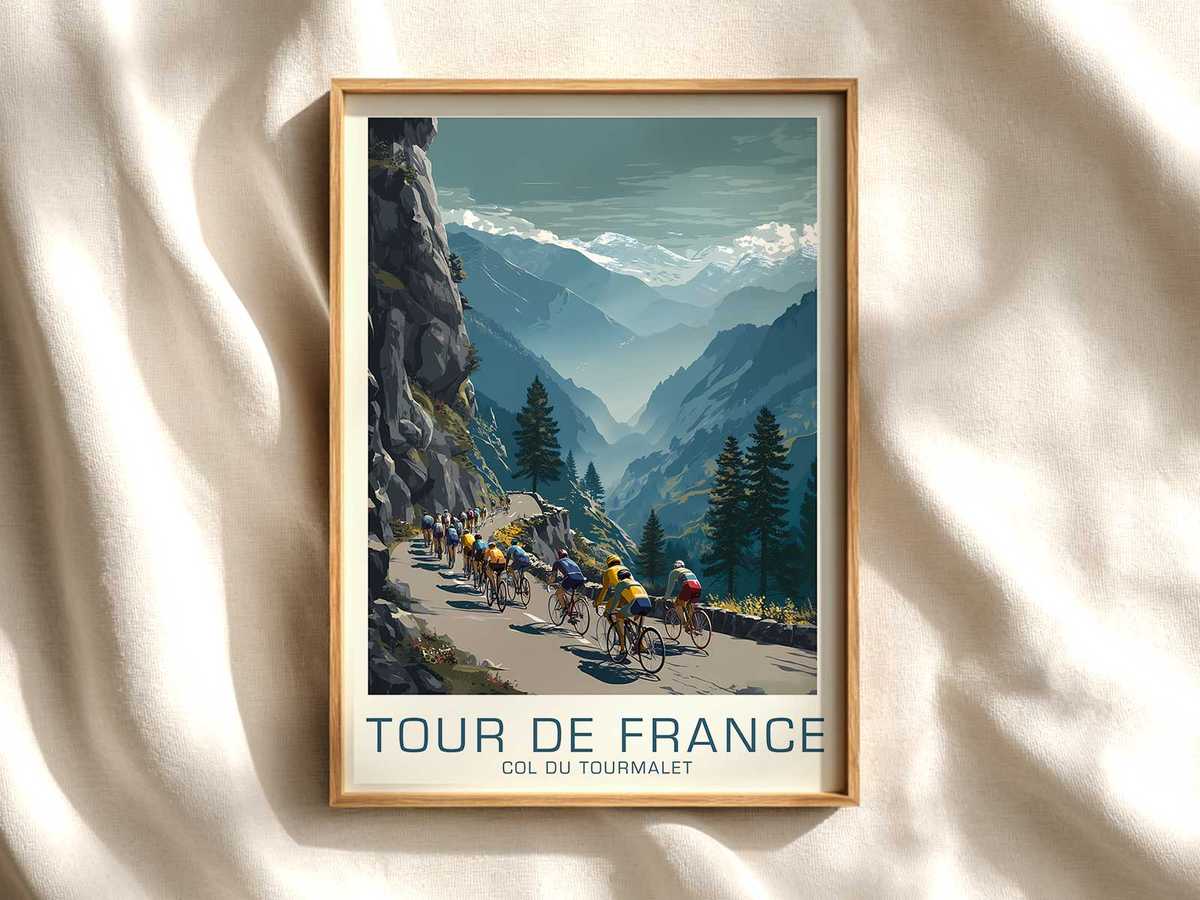
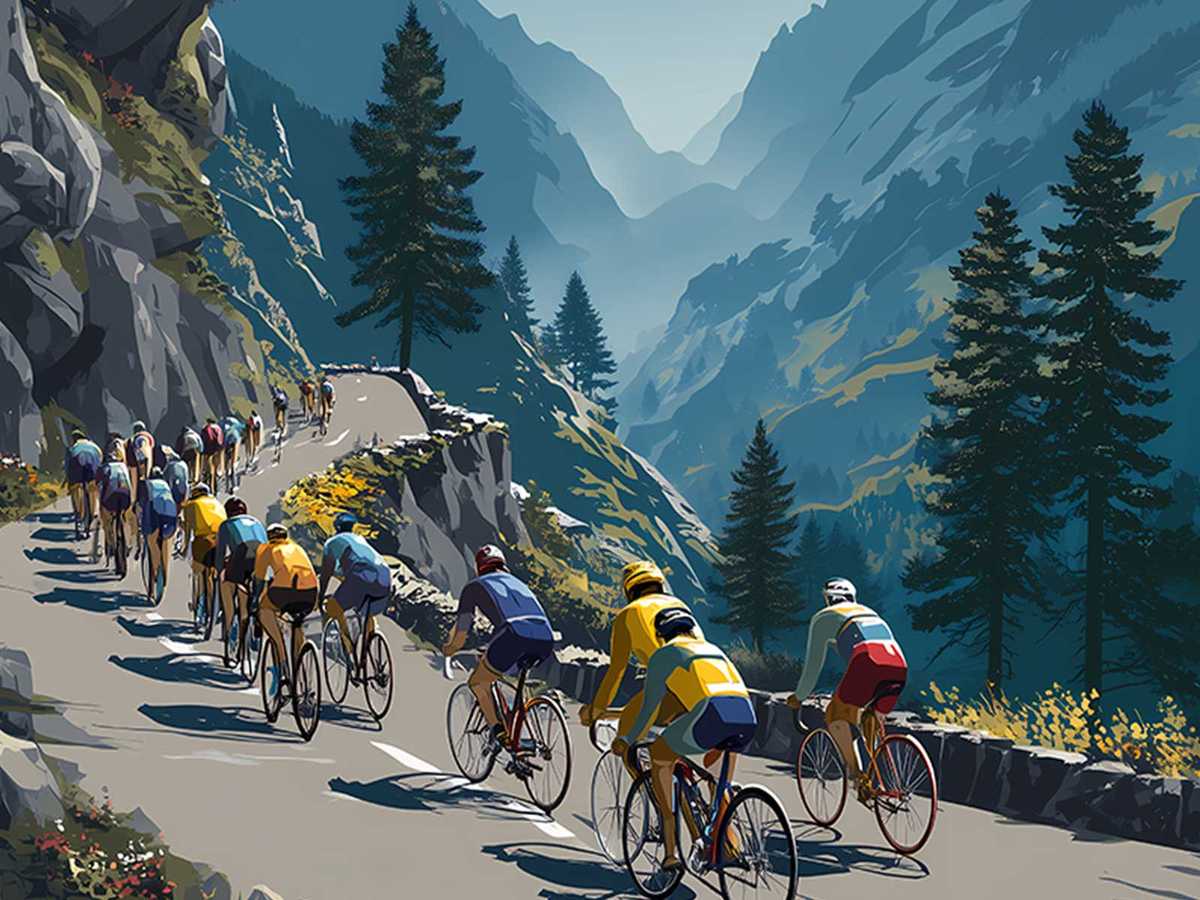
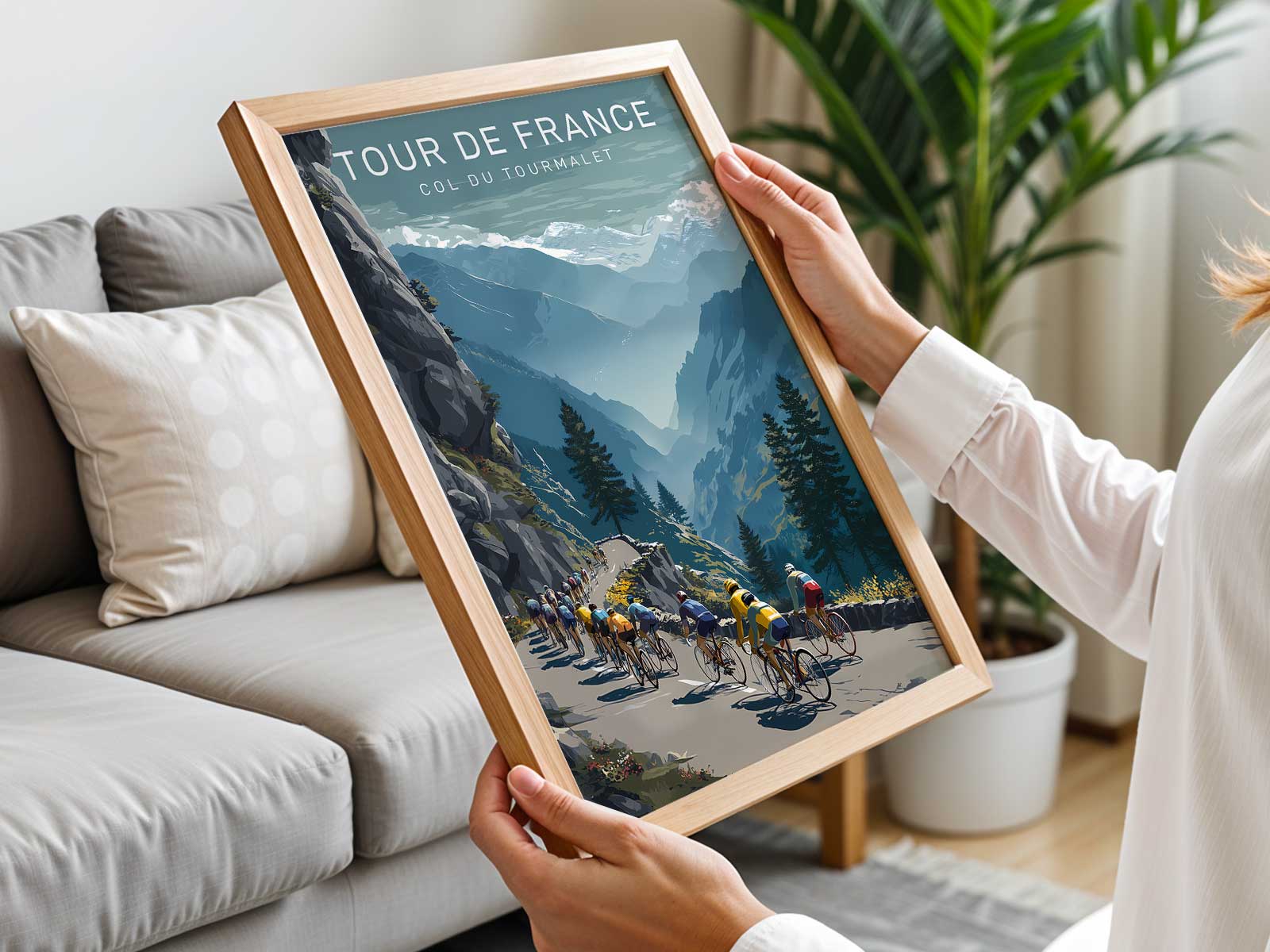
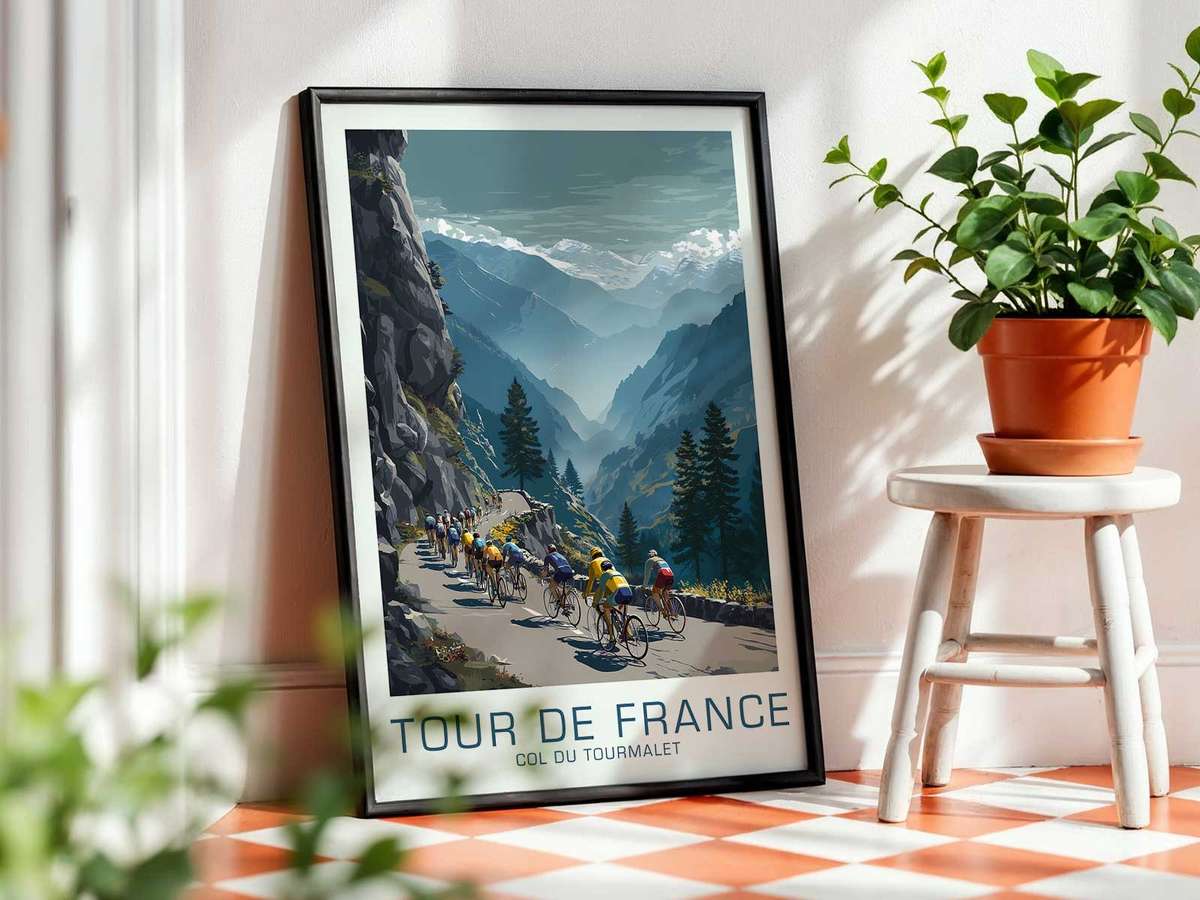
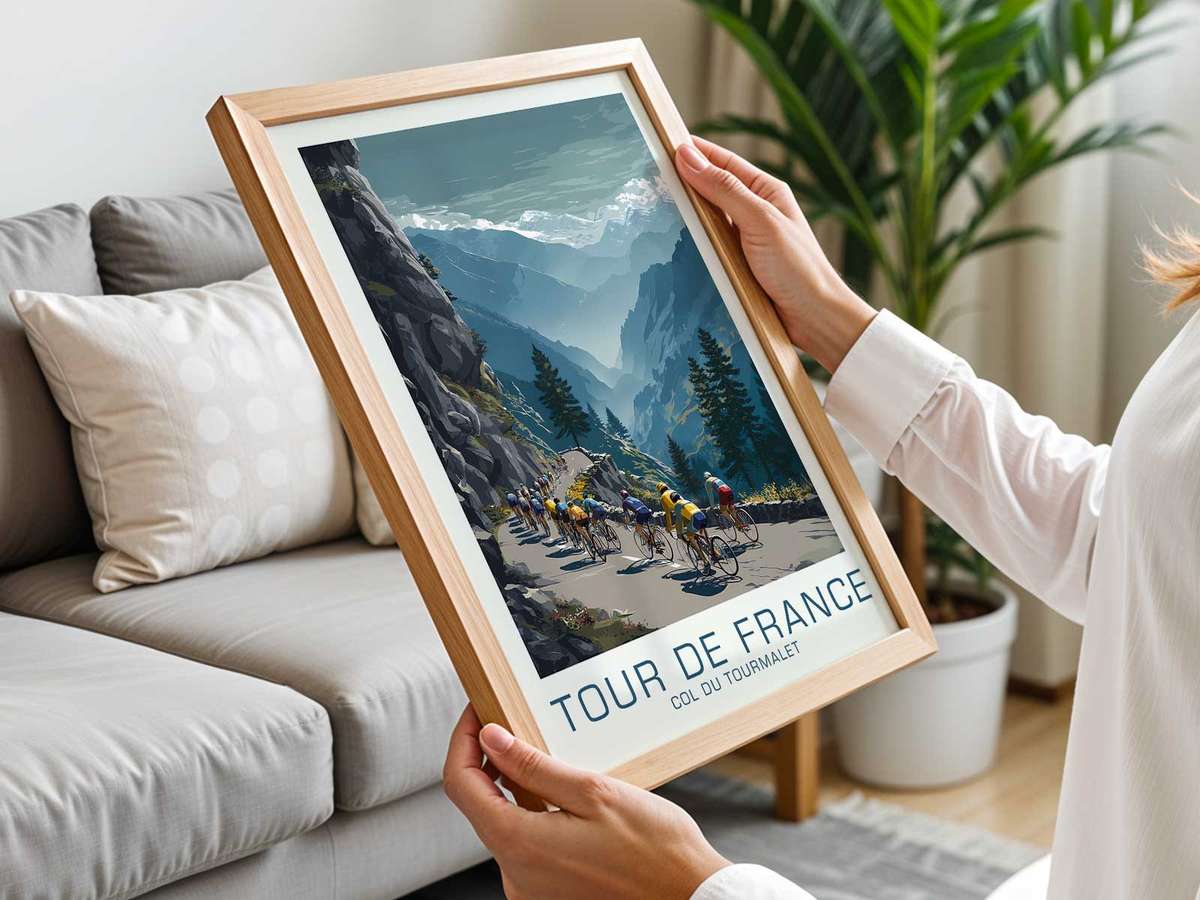
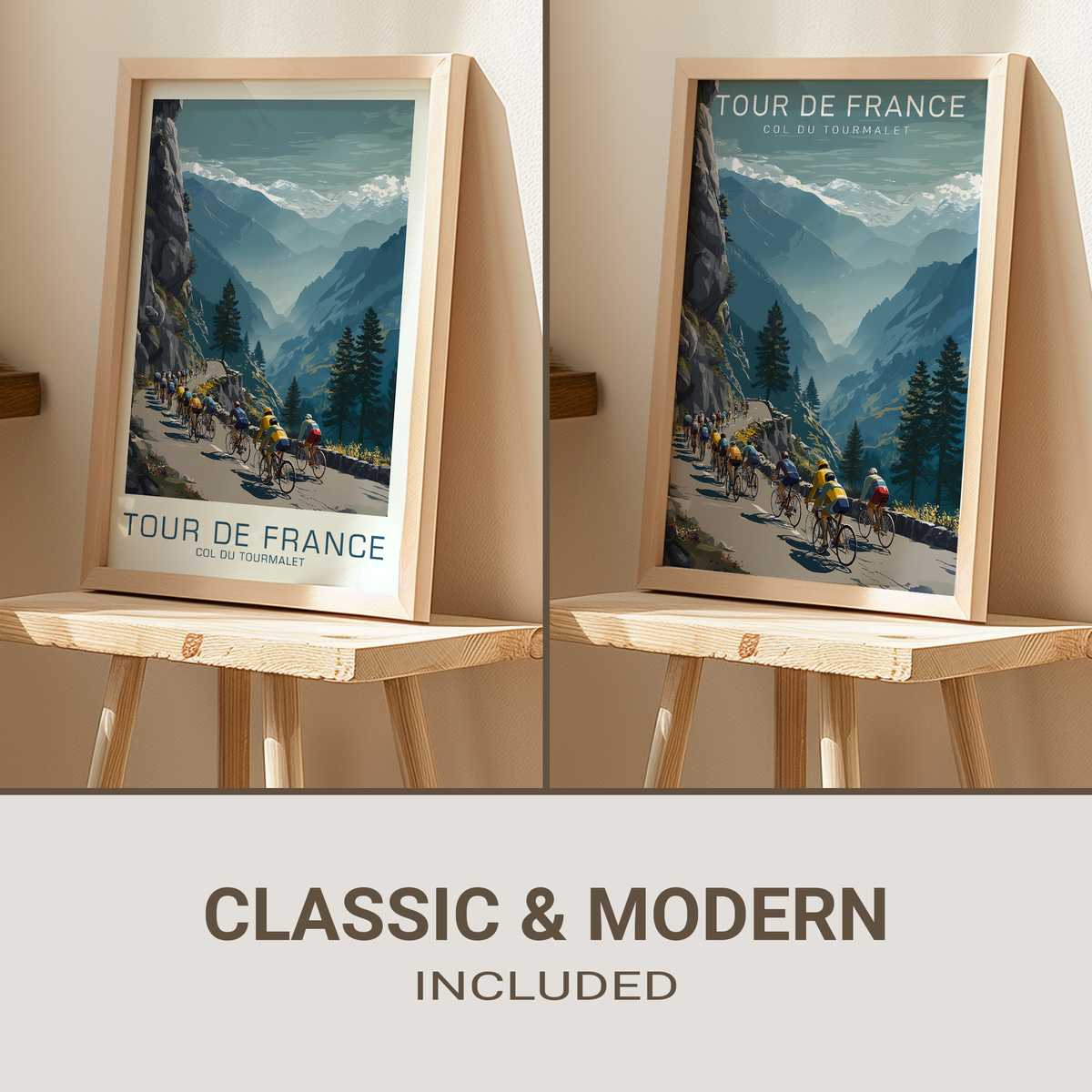
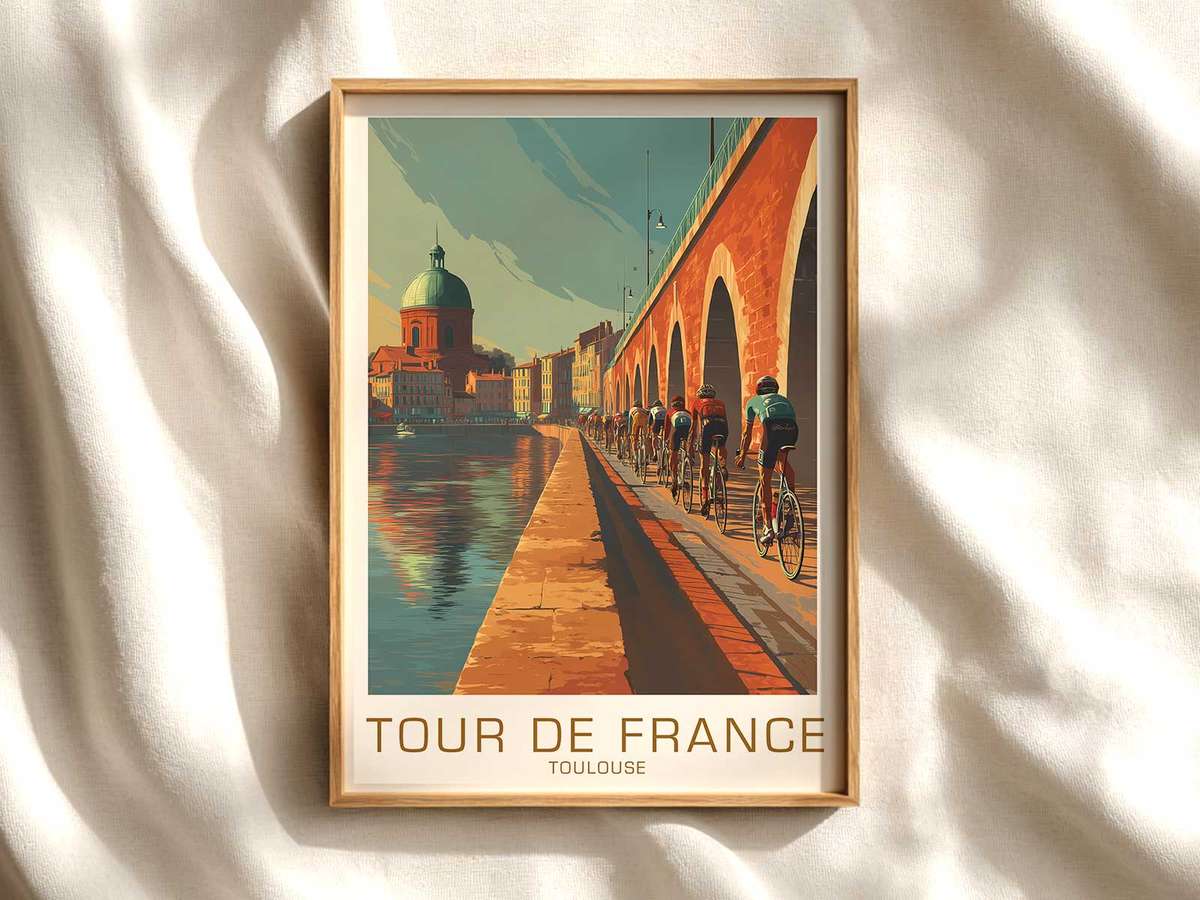
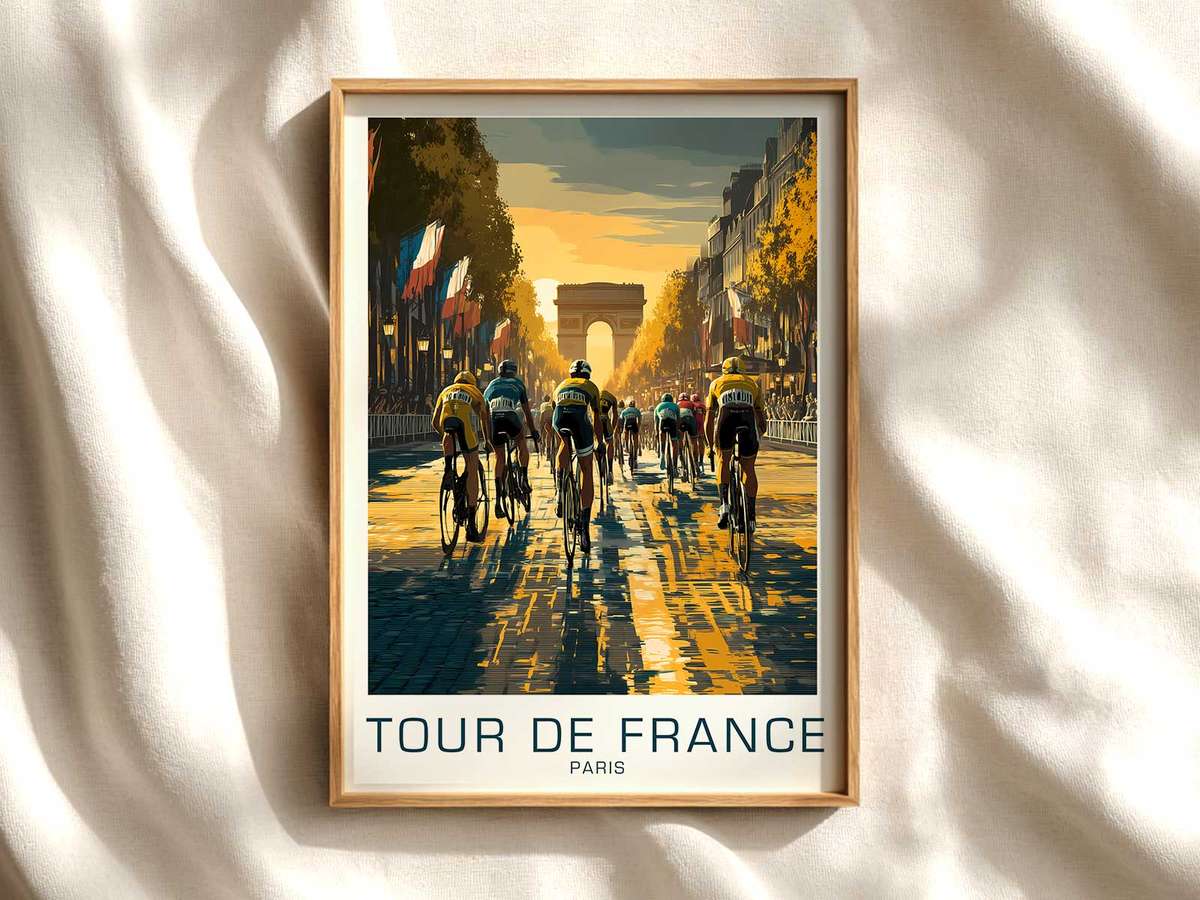
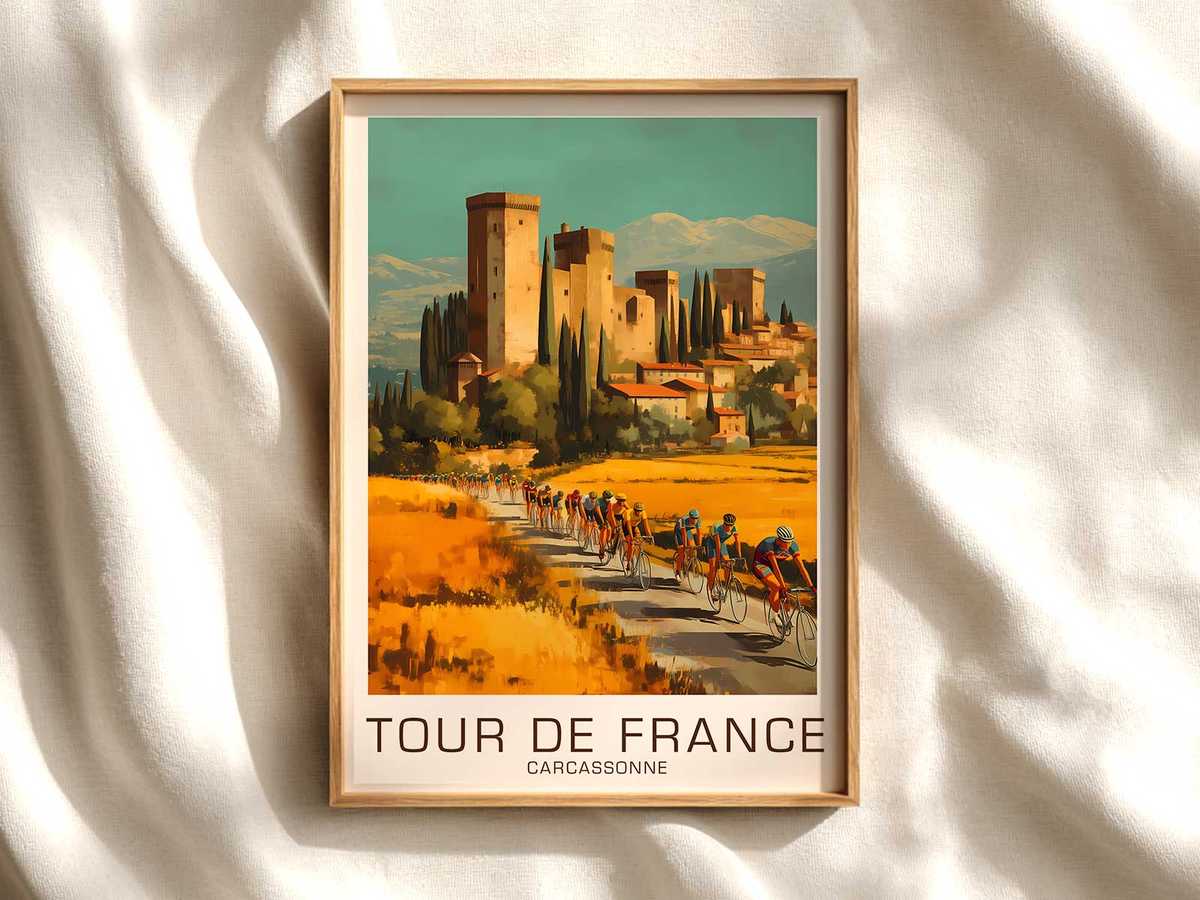
The Col du Tourmalet is not just a name on a route sheet; it is a compositional device. An old cycling poster that centres this famous climb translates the drama of a grand stage into a single visual argument: slope, skyline and surface tell the story of effort long before riders appear. Seen as art, the mountain becomes a stage protagonist — its road a rhythm, its altitude a tonal key, its villages and rocks the supporting cast that give the image narrative weight.
Begin with the road. In classic posters the sinuous ribbon of asphalt is more than a line: it is a measured statement of gradient and time. A long, rising road that narrows into the distance compresses hours of climbing into one instant. Tight switchbacks imply repetition and tactic; a steady, unbroken incline suggests endurance and mental solitude. The viewer understands cadence and strain because the road’s geometry reads like a score: a rising melody of bends and hairpins that anticipates the physical story beneath the paint.
Light and altitude shape the emotional temperature. High mountain light is thin and crystalline, and a poster that captures that clarity turns rock and sky into visual contrasts — hard shadows on limestone, pale terraces of scree, a horizon that seems improbably close. Sometimes the palette is restrained: a cool blue for distant ridgelines, warm ochres for roadside walls, and a washed sun that flattens distance into a layered plane. That interplay of clarity and compression suggests height: the air feels cooler, the exposure greater, and the effort more heroic because the light makes every contour legible.
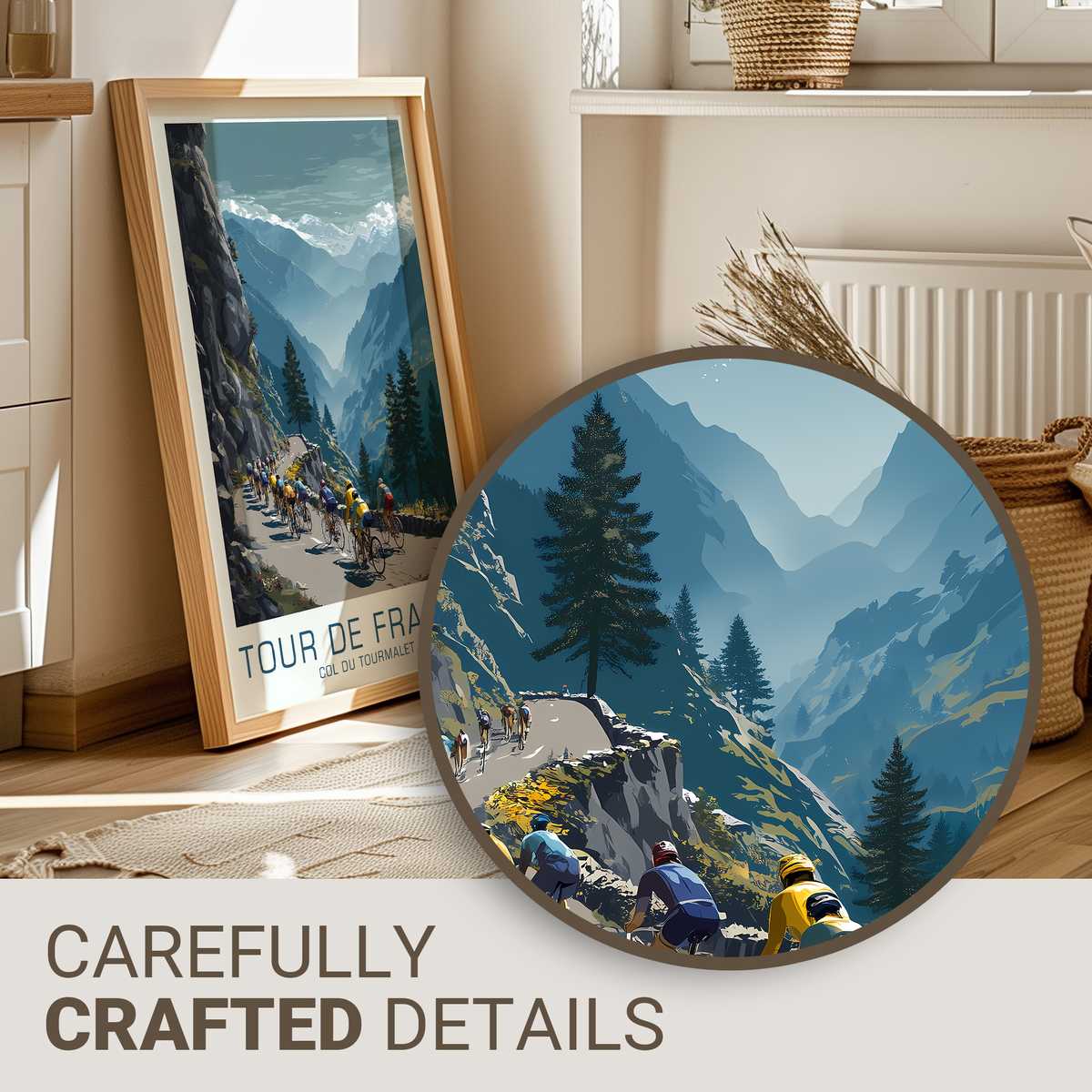
Landscape texture and village detail anchor the elevation story in human scale. A tiny chapel on a crest, a scatter of stone houses, a weathered signpost or a lone tree tell you how vast the climb is by comparison. These small elements give the viewer reference points for the slope’s length and for the solitary work it demands. In posters, the village is often rendered in modest tones so that it reads as a punctuation mark: brief respite, communal memory, the place a race crosses into myth rather than just geography.
[IMAGE_INSERT_ARTICLE_01]
The crowd — when it appears — is never merely decorative. A cluster of spectators framed along a hairpin or a low stone wall implies anticipation and rhythm: the hush before the peloton, the shout at the decisive moment, the marrow-deep focus of people who have come precisely to witness endurance. Even a few simplified silhouettes can convey proximity and danger: narrow roads, passionate onlookers, the fragile collision of speed and geology. Posters that hint at spectatorship add social texture to what might otherwise be a pure landscape study.
Composition determines whether the image reads as a study of place or as an emblem of heroism. A foreground bicycle silhouette, the bent back of a lone climber, or simply the geometry of the road all shift the poster’s voice. When the work leans on place, it celebrates the Col du Tourmalet as a location whose curves and crags possess their own grandeur; when it leans toward heroism, the same elements become metaphors for stamina and personal trial. The most compelling prints keep that balance intact: the terrain asserts itself, and human effort is allowed to be both small and monumental within it.
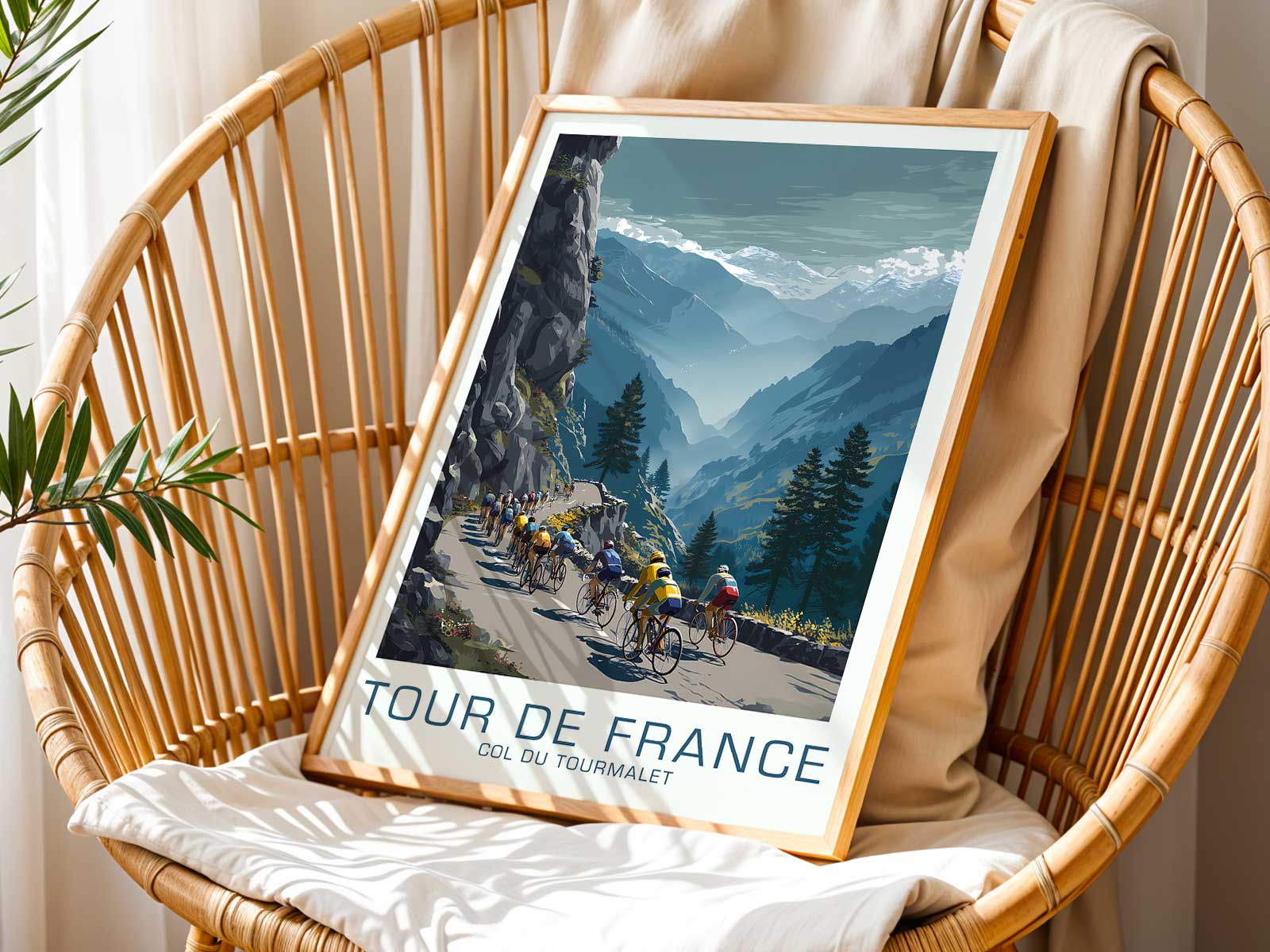
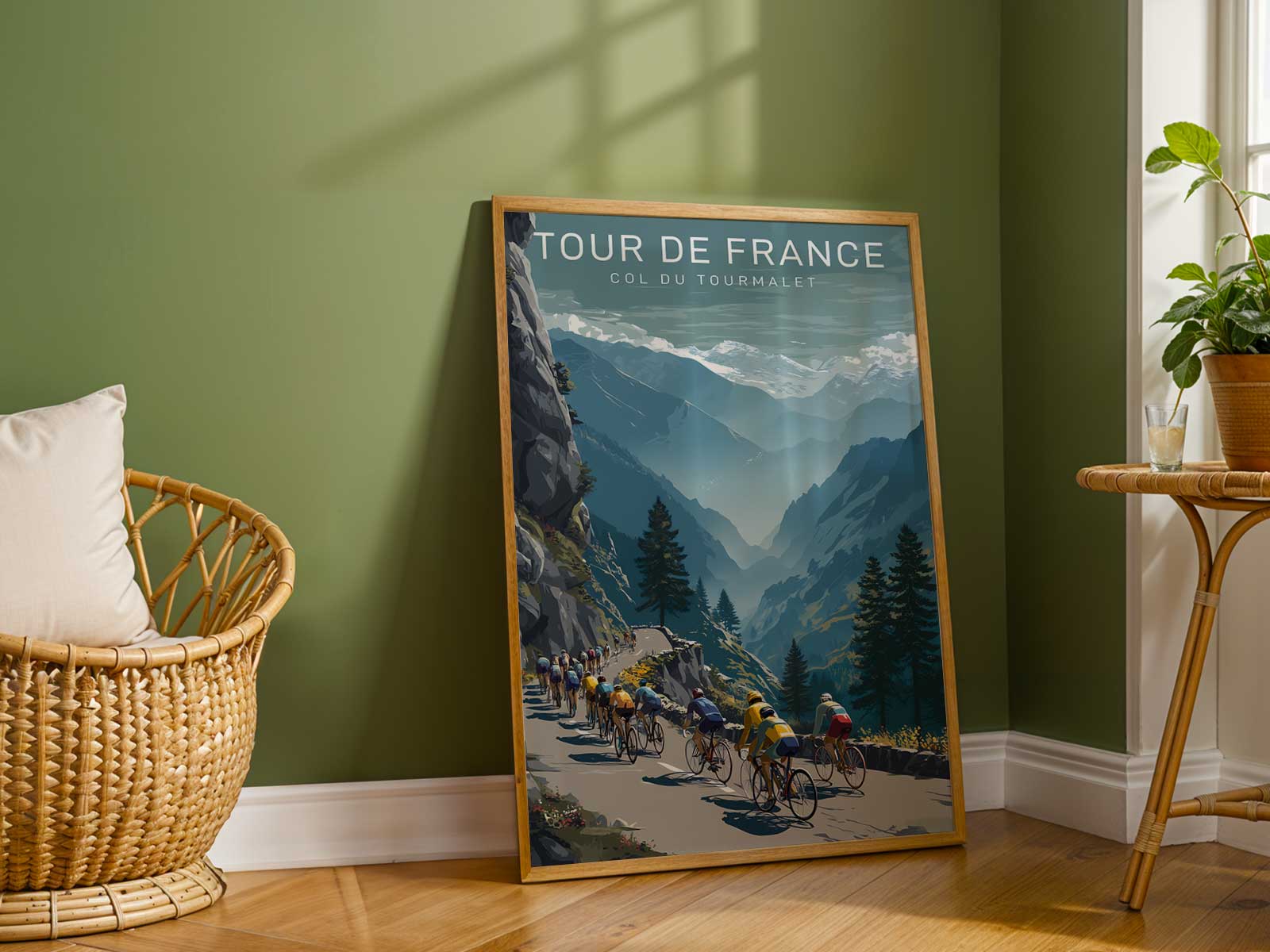
Finally, consider how such a poster functions in interior space. Hung in a living room, studio, or office, the image acts as a quiet proposition about values — persistence over speed, landscape over spectacle, the considered drama of long climbs rather than the snap of sprint finishes. The restrained palette and architectural composition make these posters highly adaptable to refined décor: they read as landscape paintings that carry the added narrative pleasure of knowing there is a race, a route and a story behind the view.
In short, a well-crafted Col du Tourmalet poster does what the best stage photography and illustration do: it condenses time, distance and human will into a single, resonant scene. Road, light and landscape are the tools; altitude and effort are the subject. Together they create an atmosphere of epic ascent that is as memorable on a wall as it is on the mountainside.