Raymond Poulidor: A Career of Resilience and the Making of a Tour de France Icon
Raymond Poulidor remains one of cycling’s most studied figures: not because he conquered the Tour de France overall, but because his career — long, successful and often defined by near-misses — produced a rare cultural legacy. This article traces Poulidor’s development from his entry into the professional ranks to the moments and rivalries that fixed his place in French cycling lore.
Editorial summary
Raymond Poulidor (born 15 April 1936, died 13 November 2019) turned professional in 1960 and built a long career through the 1960s and 1970s. Known as "Pou-Pou" and "the eternal second," he never won the Tour de France overall but finished on the podium eight times and claimed seven Tour stage victories, while taking major wins such as Milan–San Remo (1961) and the Vuelta a España (1964).
What you will learn here
- How Poulidor’s professional timeline shaped his race identity.
- Which results and rivalries anchored his cultural status.
- Why repeated near-misses at the Tour made him uniquely popular in France.
EARLY ROOTS AND FIRST RACING STEPS
Raymond Poulidor was born on 15 April 1936 in Masbaraud-Mérignat, Creuse, in central France. The verified record begins to follow him closely once he entered the professional ranks: Poulidor turned professional in 1960, marking the start of a career that would span the 1960s and well into the 1970s.
THE MOVE TOWARD THE HIGHEST LEVEL
Poulidor's professional debut in 1960 placed him into an era of cycling that included dominant contemporaries. Across the 1960s he established himself quickly with high-profile victories, notably Milan–San Remo in 1961. By 1964 he had added a Grand Tour overall victory at the Vuelta a España, consolidating his status among the leading riders of his generation.
THE ERA THAT CHANGED EVERYTHING
The 1960s and early 1970s were formative for Poulidor’s identity. Racing against figures who often dominated headlines, he nevertheless compiled a remarkable palmarès: a Grand Tour win, a Monument classic, and a prolific list of victories and top results across many seasons. His lengthy career — with major professional activity stretching from 1960 into the mid-1970s — allowed him to remain a visible presence as cycling moved into the modern television era.
TOUR DE FRANCE MOMENTS THAT DEFINED THE STORY
Raymond Poulidor never won the Tour de France overall, but his record on cycling’s biggest stage is extraordinary in other ways. He finished on the Tour podium eight times (1962, 1964, 1965, 1966, 1969, 1972, 1974 and 1976) — a record number of podiums for the race — and he won seven individual Tour stages during his career. Those repeated high placings, combined with stage victories across years, shaped a narrative of consistent excellence without ever capturing the yellow jersey for the final overall win.
RIDER TYPE AND RACE IDENTITY
Poulidor’s results show the profile of a complete and durable road racer: capable in one-day classics (Milan–San Remo), able to win stages in Grand Tours, and consistent enough to contend across three-decade-spanning seasons. His career totals — widely reported as well over a hundred professional wins in various summaries — underline a rider whose reliability and versatility produced many victories even if the Tour de France overall title stayed out of reach.
MENTORS, RIVALS, AND DECISIVE RELATIONSHIPS
Poulidor raced in an era defined by other dominant figures; this sporting context mattered to how his career was received. His repeated podiums at the Tour were often cast against more victorious rivals, and that competitive landscape helped frame his public image. The contrast between Poulidor’s near-misses and the grand winners of his age amplified his narrative within French public life.
HOW THE RIDER IS SEEN TODAY
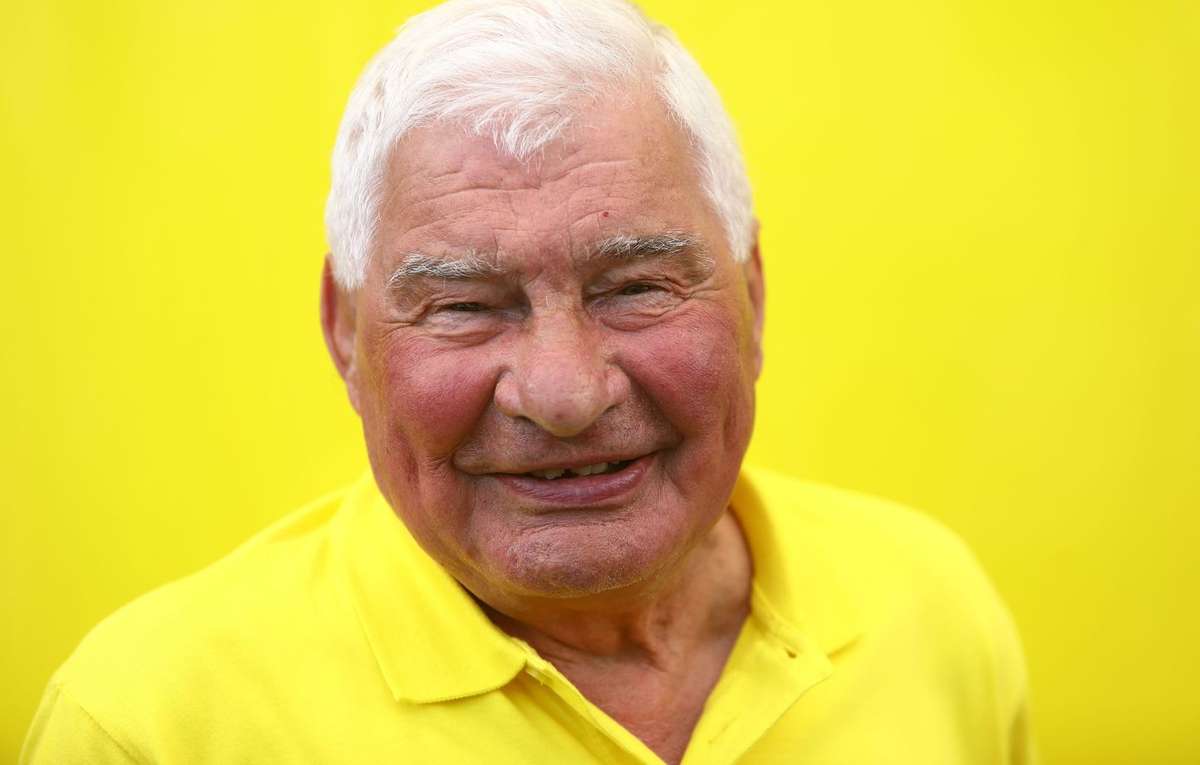
Raymond Poulidor’s cultural legacy in France is as notable as his race record. Nicknamed "Pou-Pou" and widely described in media as "l’éternel second" (the eternal second), he became an emblem of resilience and popular affection. Media obituaries and features following his death on 13 November 2019 emphasized how his personality, longevity and the drama of repeated near-successes made him deeply beloved — often more so than purely dominant champions.
WHAT THE CAREER ARC REVEALS
Poulidor’s trajectory underlines a clear thesis: a long, successful professional life can create as powerful a sporting legacy as a single supreme victory. Turning professional in 1960 and racing into the mid-1970s, he combined a Monument win, a Grand Tour overall win and sustained Tour de France prominence. His eight Tour podiums and seven stage wins tell a story of persistence and high-level consistency; his widespread popularity shows how sports narratives are shaped equally by public perception as by trophies.
Author: Eric M.
Raymond Poulidor: born 15 April 1936, Masbaraud-Mérignat; died 13 November 2019. Key verified facts used throughout this article include his professional start in 1960, Milan–San Remo (1961), Vuelta a España overall (1964), seven Tour stage wins, and eight Tour de France podiums.