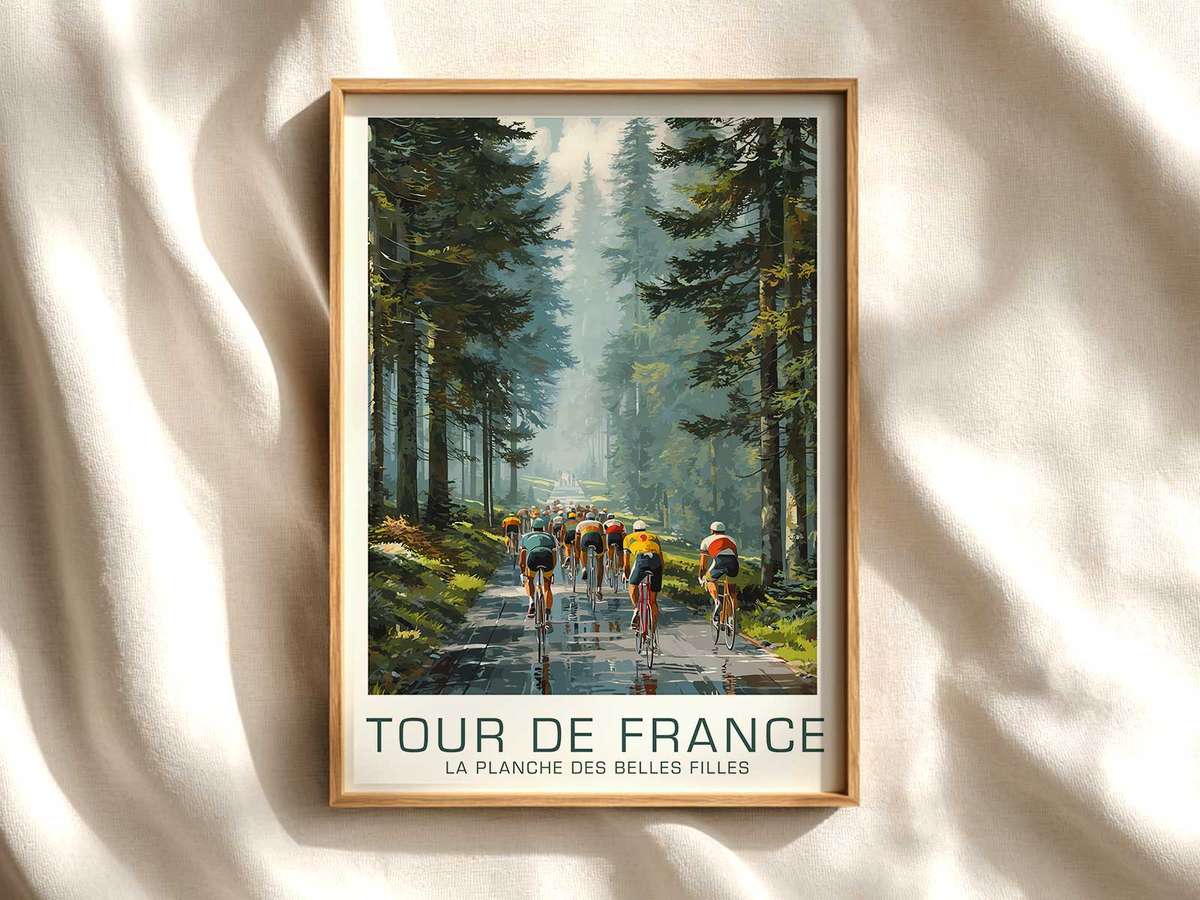
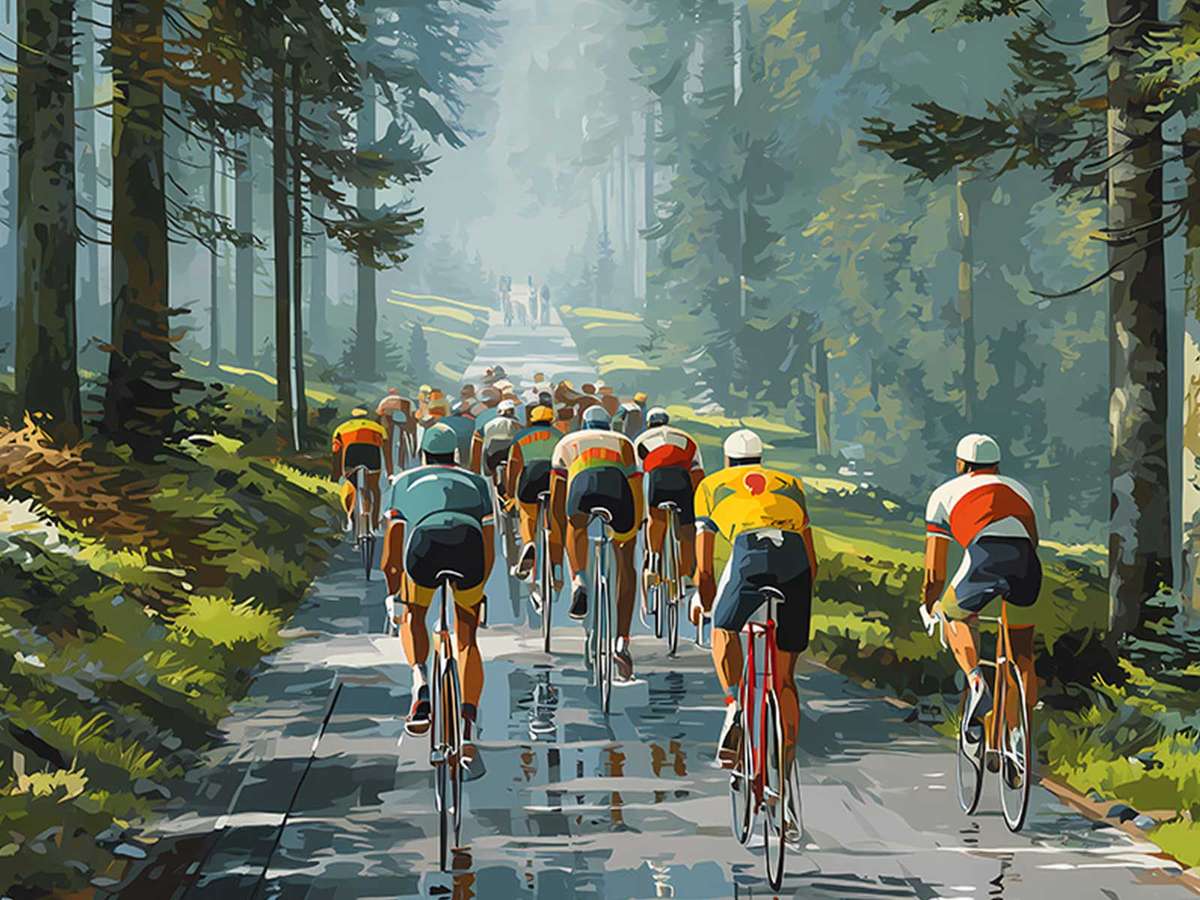
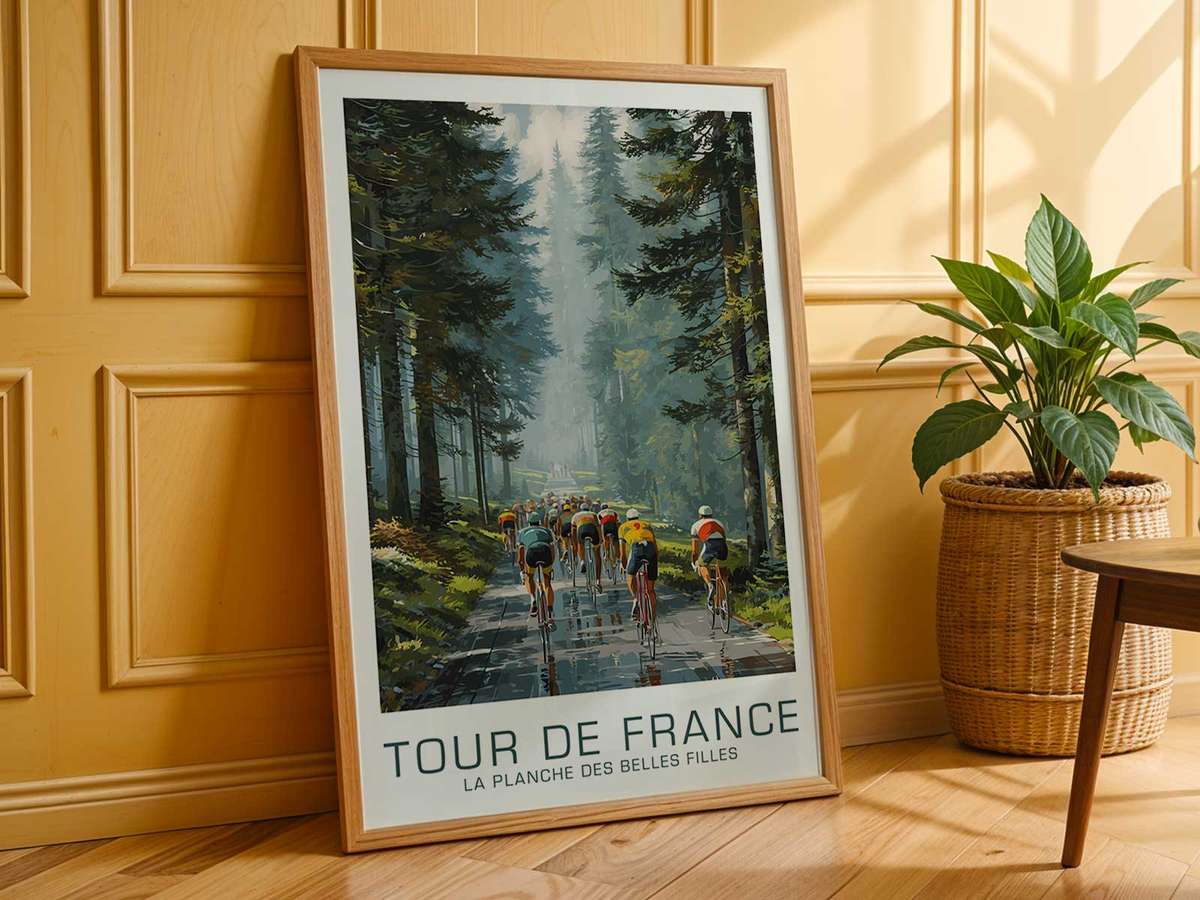
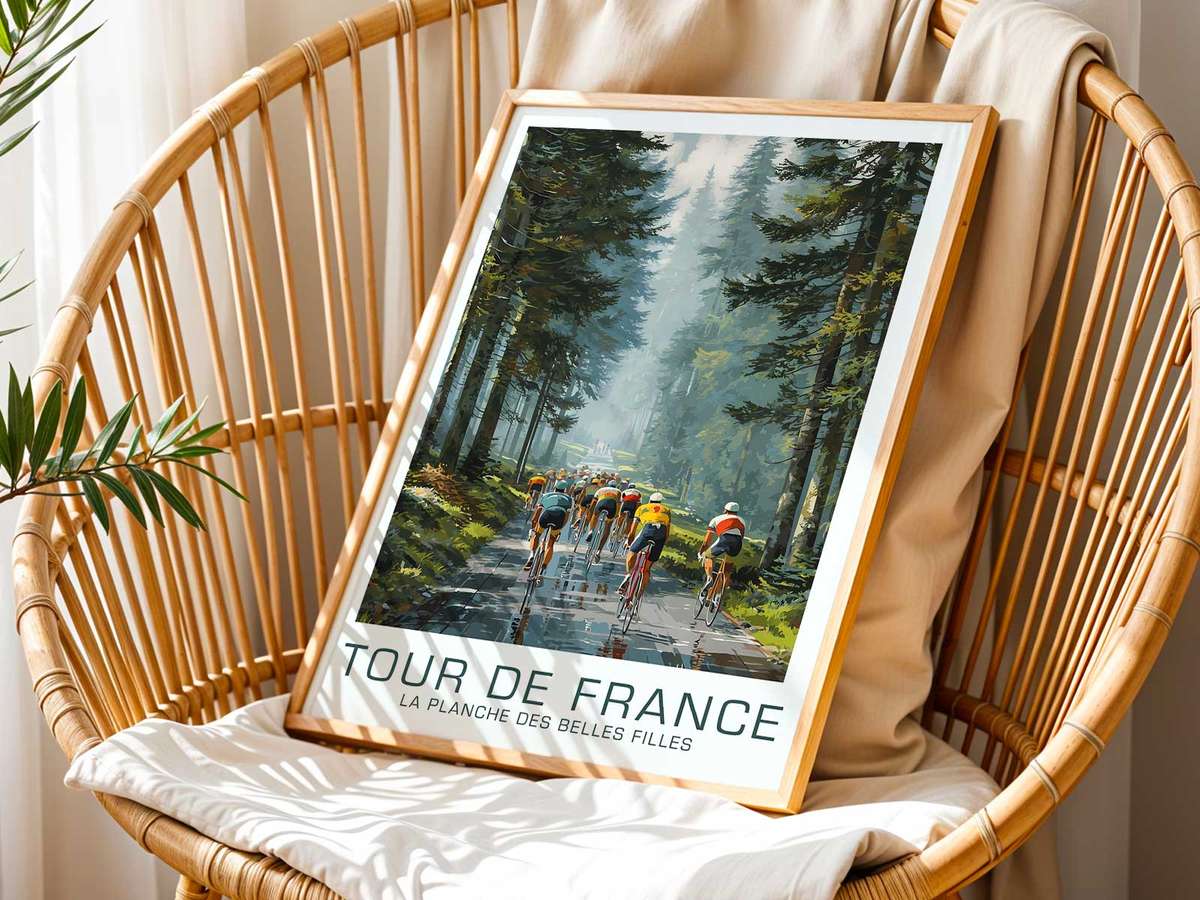
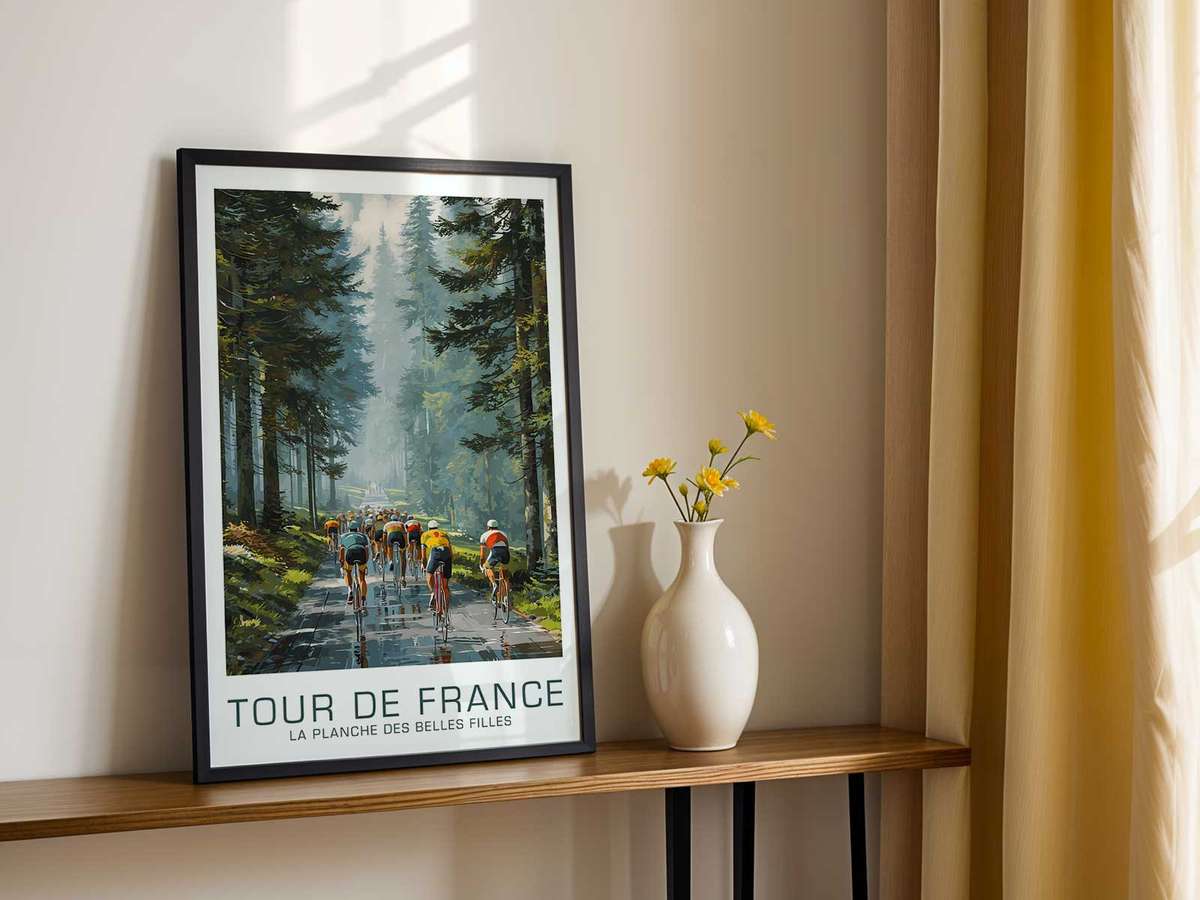
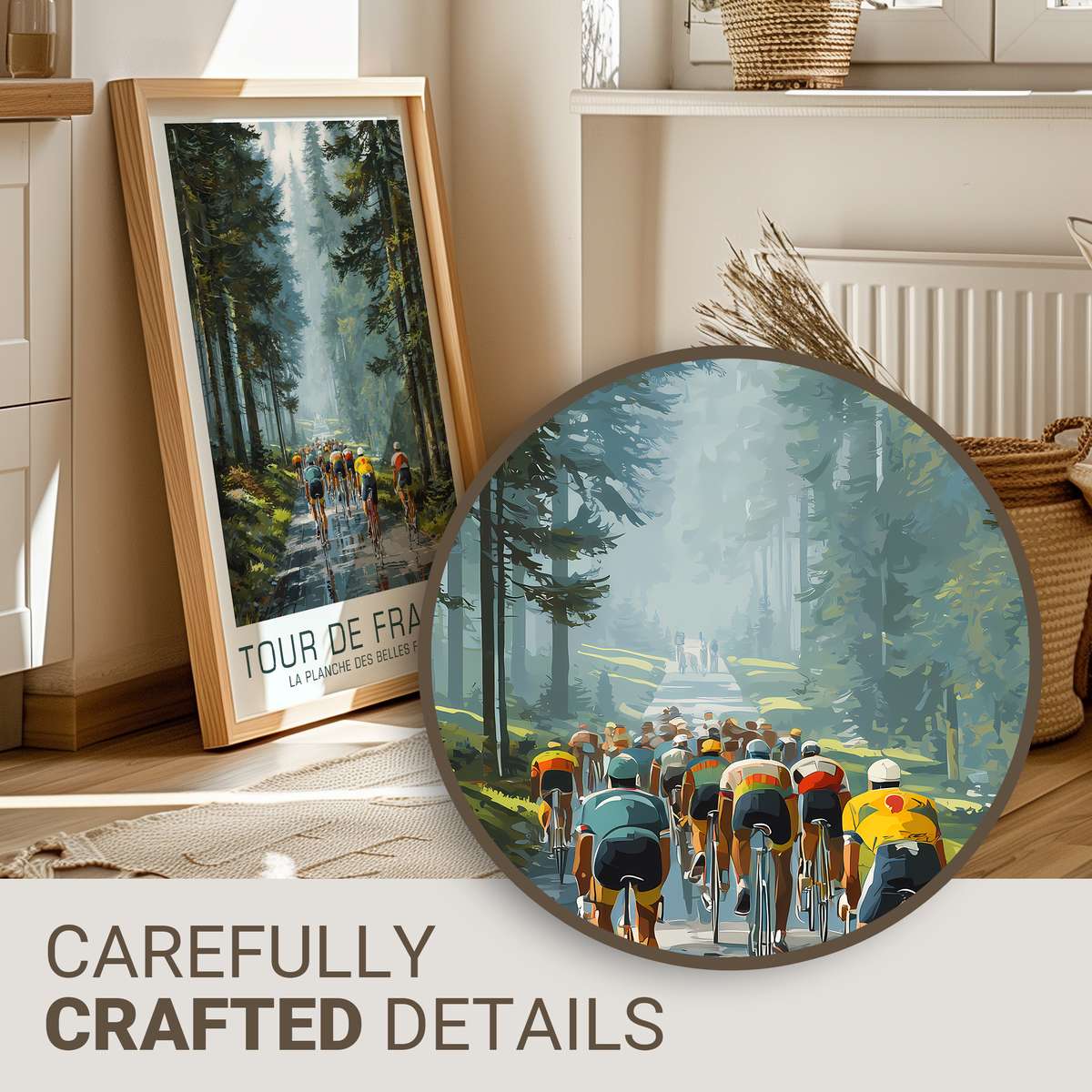
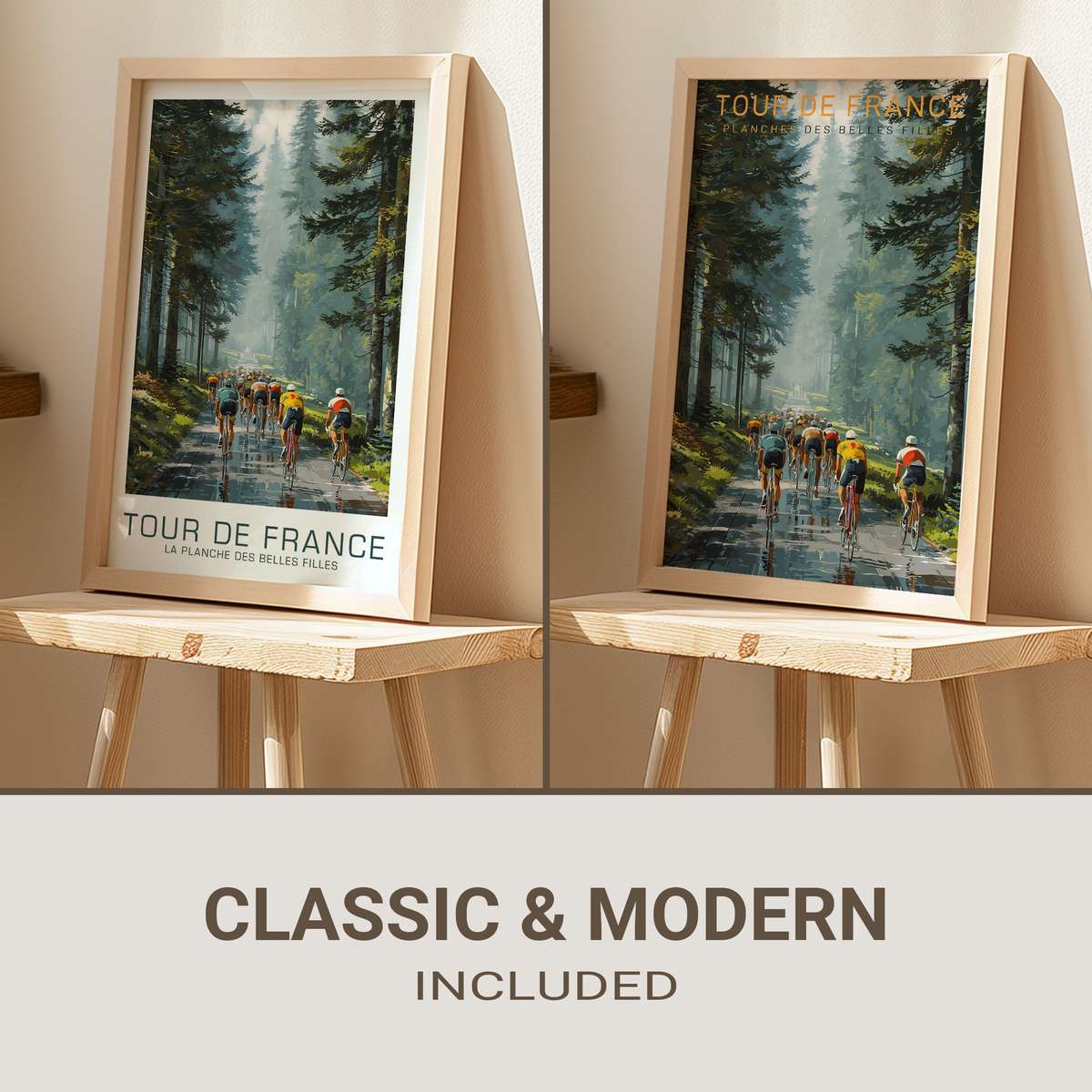
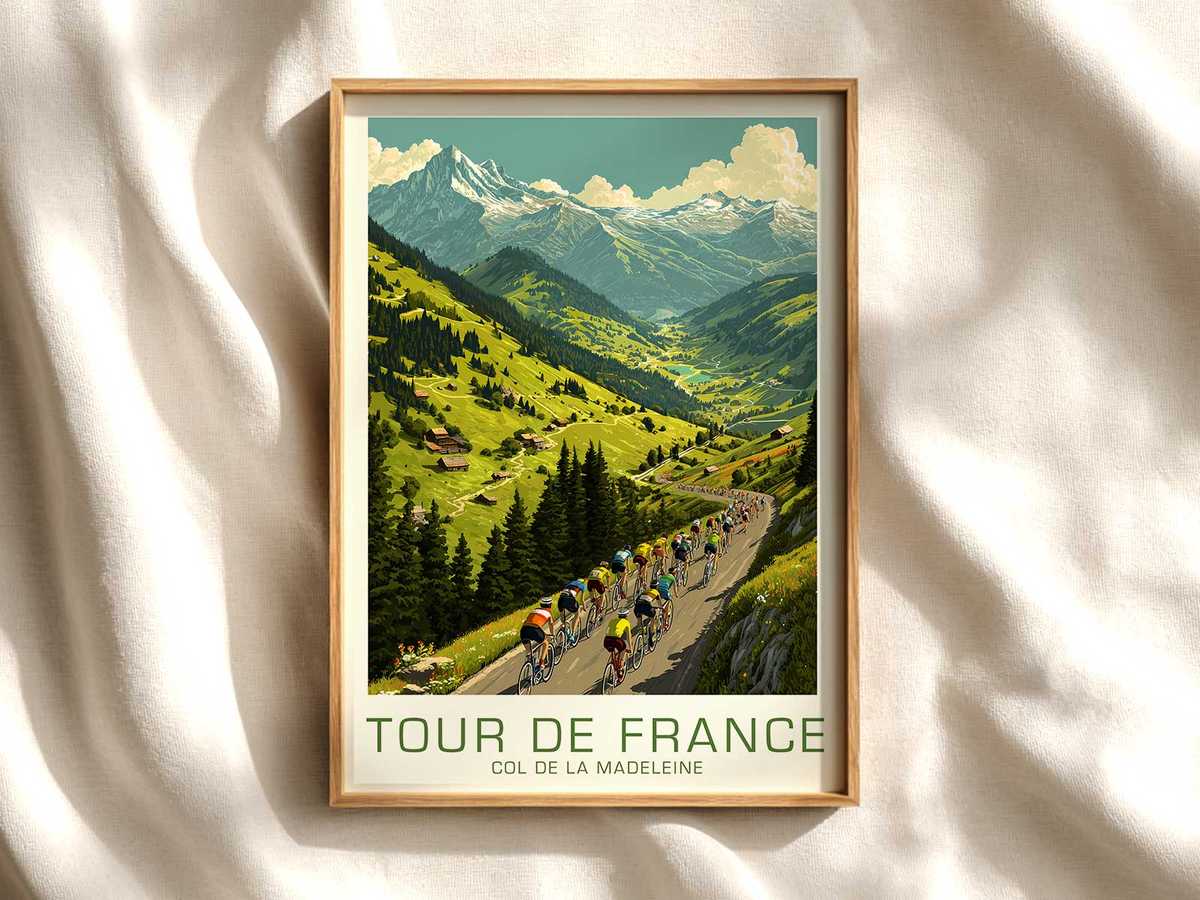
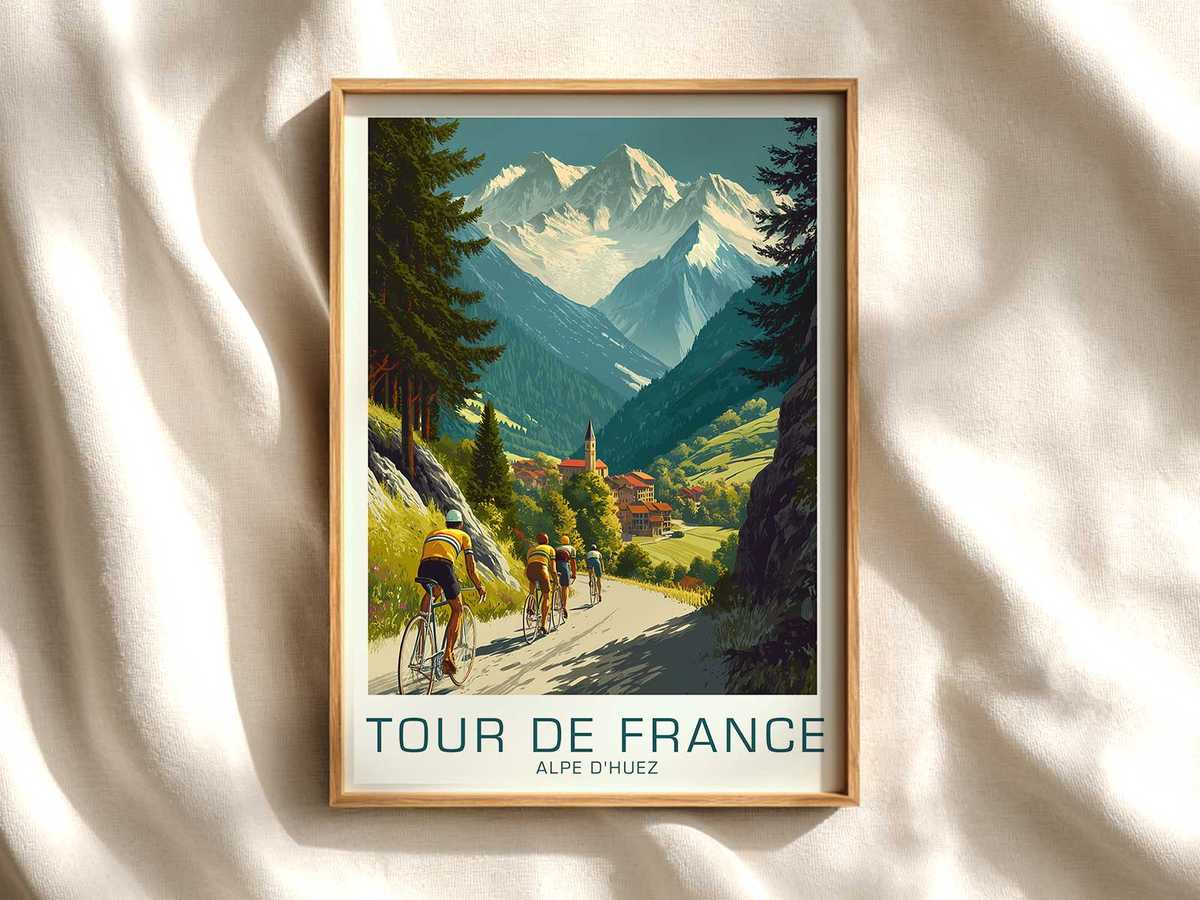
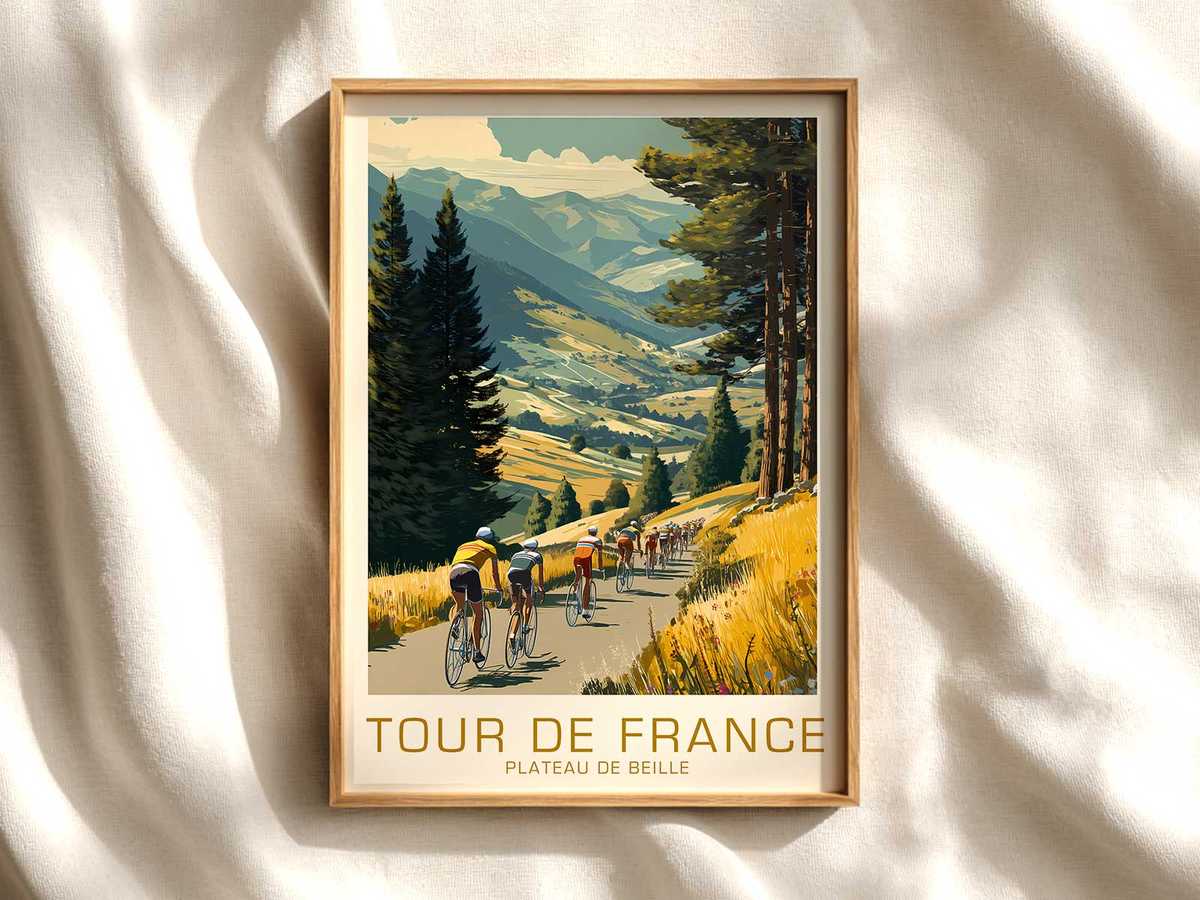
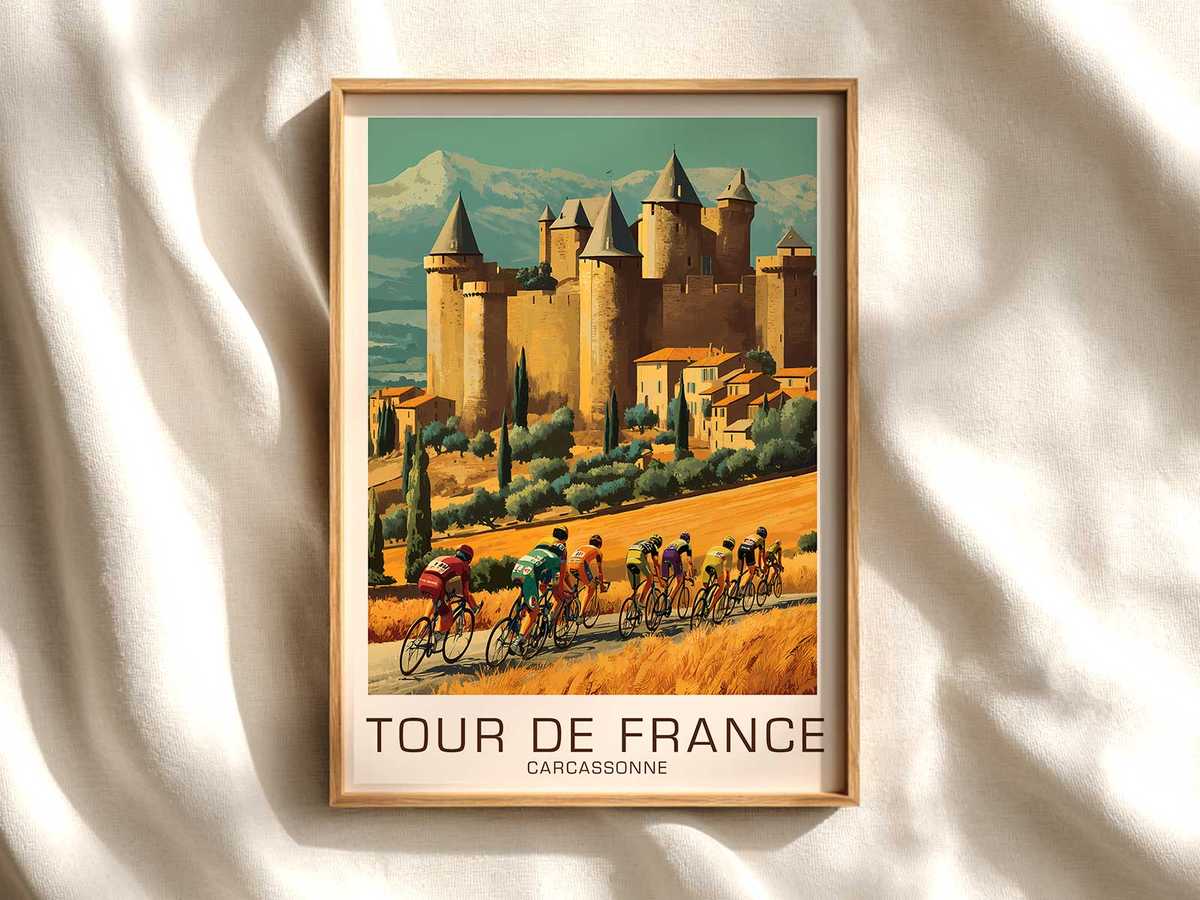
Some cycling images advertise victory; others make endurance visible. This poster, centered on La Planche des Belles Filles, chooses the latter. It places a single rider — not a result, not a team logo — at the visual heart, and lets posture, cadence and the road’s incline narrate the story. The composition treats the cyclist as a figure of sustained labour: shoulders compressed over the bars, jaw set against a rising gradient, hands reading the pavement. Those are the cues the human eye translates into effort and resolve.
Close observation of the body language is how this artwork earns its presence on a wall. The rider’s back is a taut plane; hips and knees register rhythm rather than spectacle. Elbows tuck in to reduce pitch and reveal concentration over theatrics. Whether seated into the climb or briefly rising to leverage a turn of speed, the gesture is disciplined. That economy of motion — a repeated, almost metronomic push on the pedals — is what turns athletic strain into visual poetry. The poster privileges that repeated gesture: a study of cadence and controlled fatigue rather than a chronicle of who crossed the line first.
Light and negative space around the figure amplify the sense of isolation that mountain riding creates. The road becomes a horizontal directive, a line that both grounds and tests the body. When the rider’s gaze is fixed on the tarmac, the viewer senses a direct rapport between eyes, handlebars and surface: a practical intimacy that reads as resilience. Shadows cast by helmet and frame sharpen silhouette, turning a cycling position into an iconic outline that holds up at poster scale and across different interior palettes.
[IMAGE_INSERT_ARTICLE_01]
Because the composition emphasizes gesture over biography, the bicycle becomes an instrument of motion rather than a product to be catalogued. The saddle-to-handlebar vector, the hands’ placement and the angle of the torso explain how force is applied, where fatigue concentrates and how the rider manages it. That visual grammar explains endurance better than captions or statistics; it communicates the sustained negotiation between rider and climb that defines La Planche des Belles Filles in collective cycling imagination.
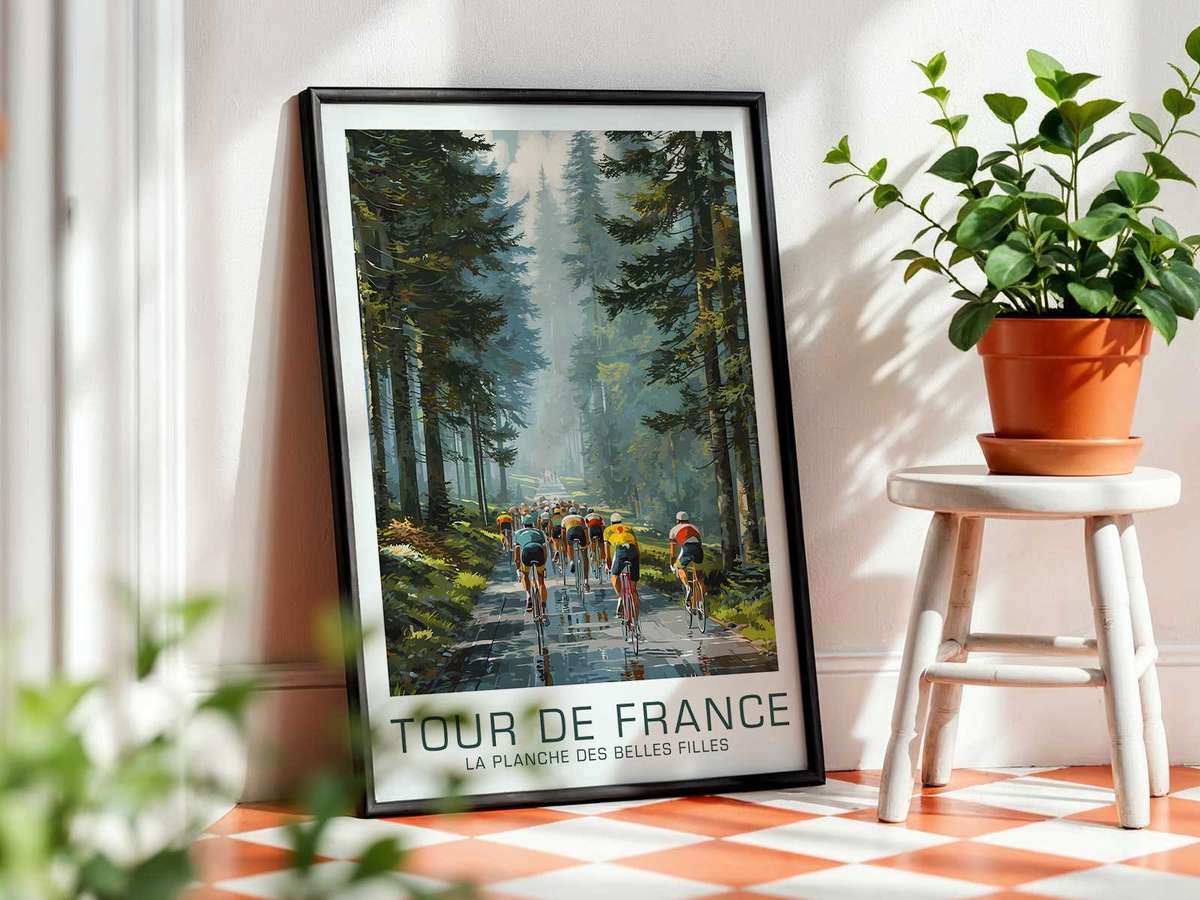
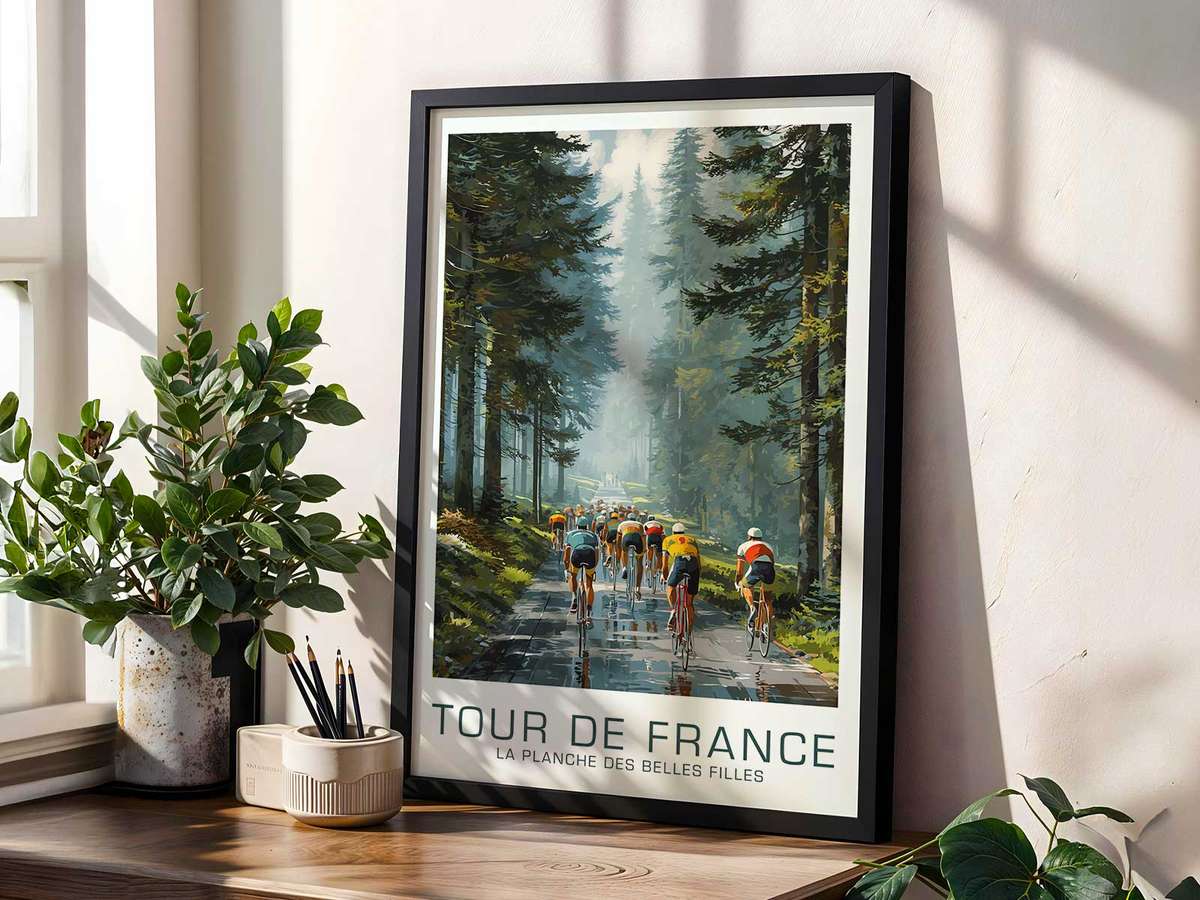
In a room, this poster functions as more than decoration. It brings a contained dramatic tension — the compressed effort of uphill racing — that suits focused spaces: an office where deliberate work meets soft adrenaline, a studio where long attention is required, or a living area curated around a restrained, athletic aesthetic. The image’s compositional restraint and tonal control make the work compatible with contemporary interiors: it draws attention without demanding it, offering a moment of endurance to return to throughout the day.
Ultimately, the poster’s power lies in its readable human form. The rider’s posture tells a whole narrative of training, temperament and momentary suffering managed with composure. That is why rider-led Tour imagery endures: it distills a complex athletic identity into posture and presence, and it invites the viewer to inhabit a single, revealing instant of the race. This poster is less about celebration and more about witness — a quiet homage to the hard, repetitive art of climbing where one disciplined body defines the atmosphere of the scene.