Jean Robic: From Compact Climber to 1947 Tour Hero — Tracing the Career That…
Jean Robic (10 June 1921 – 6 October 1980) remains one of the Tour de France’s most vivid post-war figures. A compact, aggressive climber and the surprise winner of the 1947 Tour—the first edition after World War II—Robic’s trajectory from early professional years to a defining Tour victory shaped how French cycling remembered the race in the era of reconstruction.
Editorial summary
Jean Robic was a professional from 1943–1961, known for his small stature, combative climbing and a dramatic overall win in the 1947 Tour de France. His victory and style anchored his cultural place in the post-war Tour narrative.
What this breakdown covers
- Key career anchors from Robic’s pro debut to late career span (1943–1961).
- How his physical profile and riding style formed a clear race identity.
- The 1947 Tour de France as the defining turning point and its broader significance.
EARLY ROOTS AND FIRST RACING STEPS
The verified records provide clear biographical anchors: Jean Robic was born on 10 June 1921 and launched a professional career that lasted from 1943 to 1961. While detailed archival accounts of his very earliest amateur clubs and local results are less centralized, the span of his professional years sets the frame for a rider whose formative racing took place during and directly after the wartime period—an era that shaped the opportunities and competitions available to a generation of French cyclists.
THE DEVELOPMENT YEARS
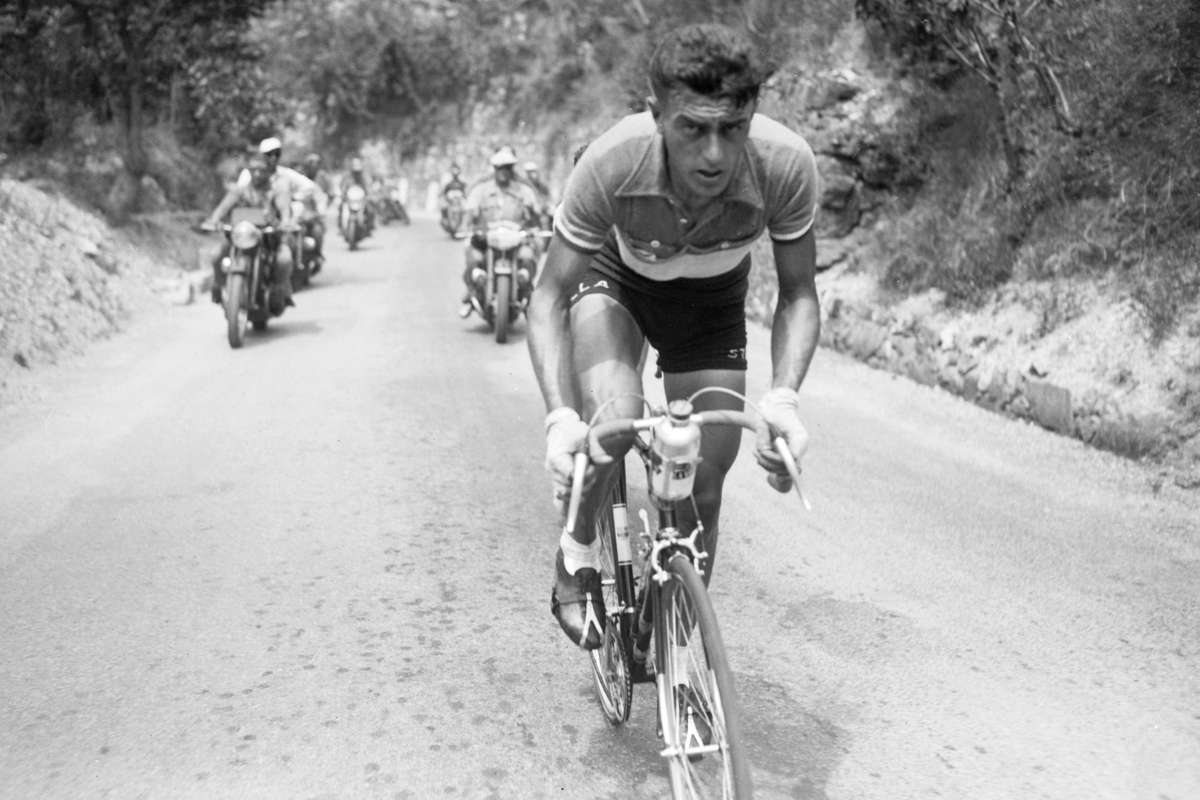
Robic turned professional in 1943. Across the 1940s he established himself on the national scene, developing the attributes that defined him: a small frame (around 1.61 m, approximately 60 kg) and an aggressive approach in the mountains. Those physical and stylistic traits translated into a rider profile suited to the steep, selective climbs that often decide Grand Tours.
RIDER TYPE AND RACE IDENTITY
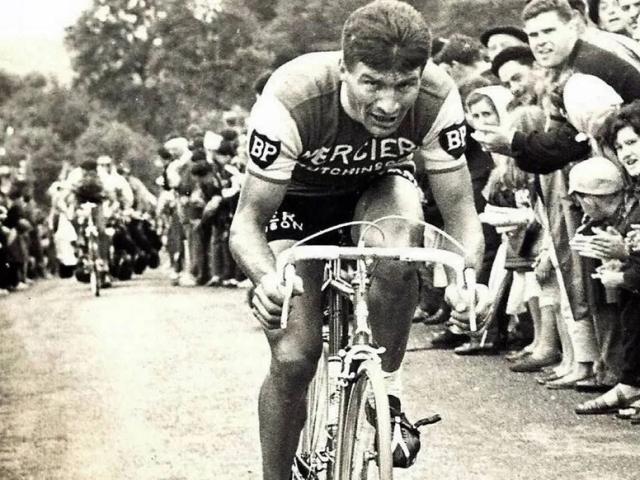
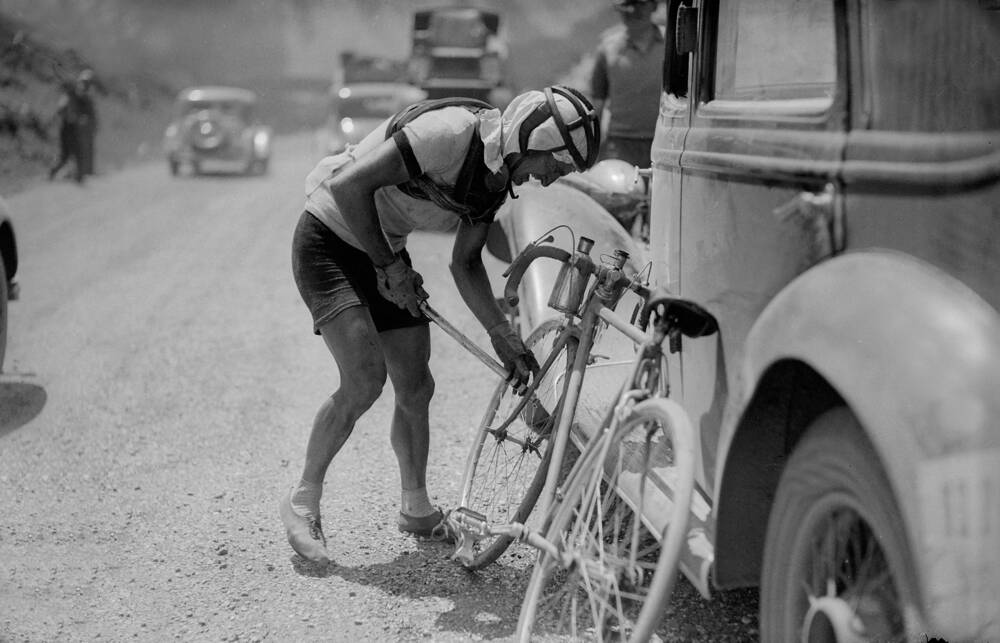
Contemporary and retrospective accounts characterise Robic as a combative climber. His stature made him light and explosive on steep gradients; the nickname 'Biquet' (Kid goat) and media descriptions underline the perception of a scrappy, tenacious racer. He was also notable for wearing a leather crash helmet after fracturing his skull in 1944—an image that feeds into the hard-edged persona reported in cycling press and profiles.
TOUR DE FRANCE MOMENTS THAT DEFINED THE STORY
The definitive turning point in Robic’s career was his overall victory in the 1947 Tour de France. That edition—held 25 June to 20 July 1947 over roughly 4,642 km and 21 stages—was the first Tour after World War II and carried exceptional symbolic weight for France and the sport.
Robic won the general classification and finished the race ahead of Édouard Fachleitner (2nd) and Pierre Brambilla (3rd). The final official total recorded Robic’s winning time as 148h 11' 25". His victory is remembered for dramatic late-stage developments: Robic did not spend the whole race wearing the yellow jersey and secured overall victory through decisive time gaps toward the race’s close—an outcome emphasised by contemporary press coverage.
THE ERA THAT CHANGED EVERYTHING
The 1947 Tour occupies a special place in Tour culture because it represented both a sporting return and a national resurgence. Robic’s triumph in that context did more than add a name to the palmarès; it made his image part of the post-war Tour narrative. French and international media have repeatedly described the 1947 edition as dramatic, with Robic’s comeback-style victory cementing his status in cycling memory.
MOVES, TOURS AND CAREER SPAN
Beyond 1947, Robic rode many editions of the Tour de France across the late 1940s and 1950s; verified records list participations in 1947, 1948, 1949, 1950, 1951, 1952, 1953, 1954, 1955 and 1959. He accumulated multiple stage victories over the course of his career. His professional tenure ran from 1943 until 1961, giving him nearly two decades on the professional circuit and allowing his 1947 success to sit within a long racing life.
HOW JEAN ROBIC IS SEEN TODAY
Modern cycling histories and French sports media portray Robic as a key figure of the immediate post-war era: the tenacious climber whose 1947 win carried symbolic as well as sporting value. Profiles in outlets such as L'Équipe and retrospective coverage cite both his physical profile and the dramatic nature of his Tour victory in explaining why Robic remains a memorable name in Tour lore.
WHAT THE CAREER ARC REVEALS
Robic’s arc fits a clear thesis: a rider whose physical attributes and combative style made him a specialist in climbing and late-race opportunism, and whose single most significant achievement—the 1947 Tour win—transformed personal success into cultural symbolism. Because the 1947 edition was the first post-war Tour, Robic’s victory did more than settle a race; it helped anchor a narrative of recovery around the event and ensured his place in collective memory.
Author: Alex R.