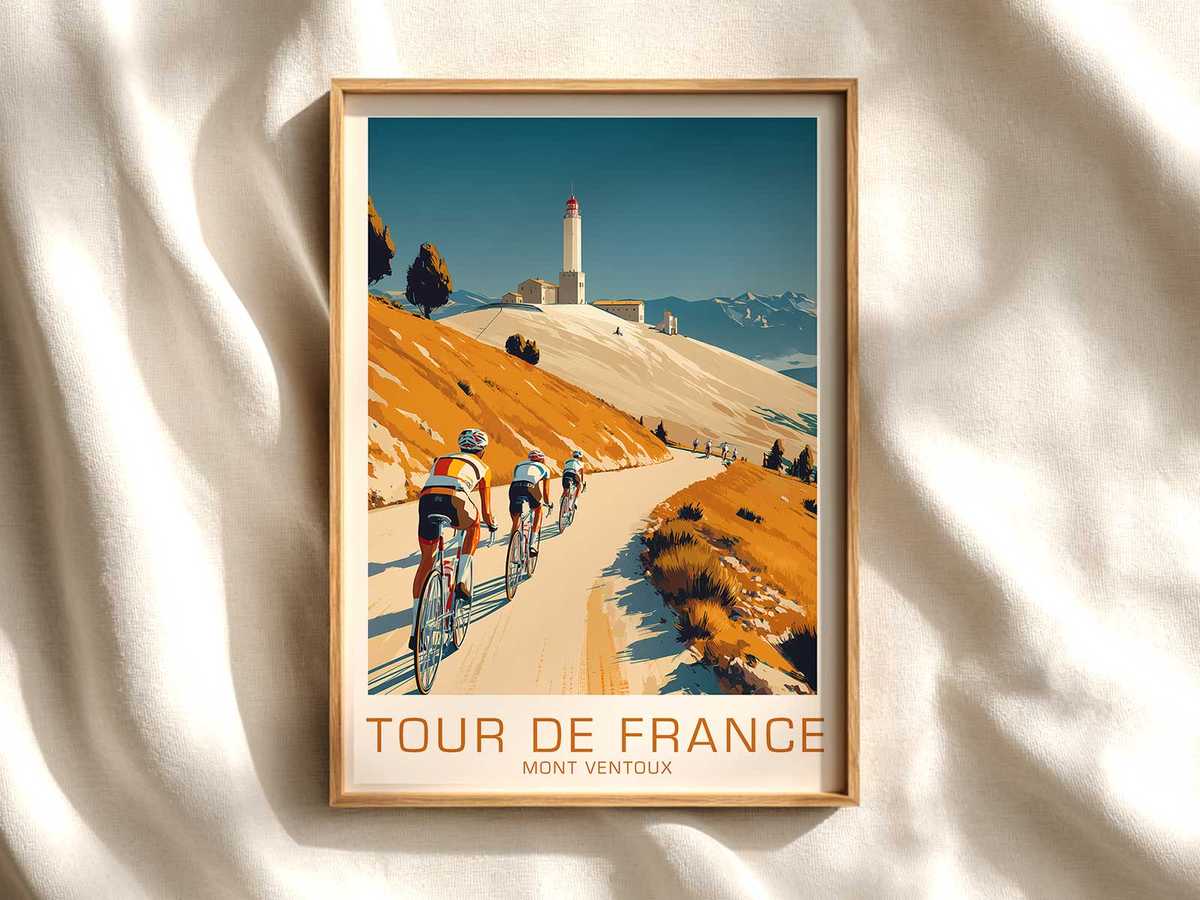
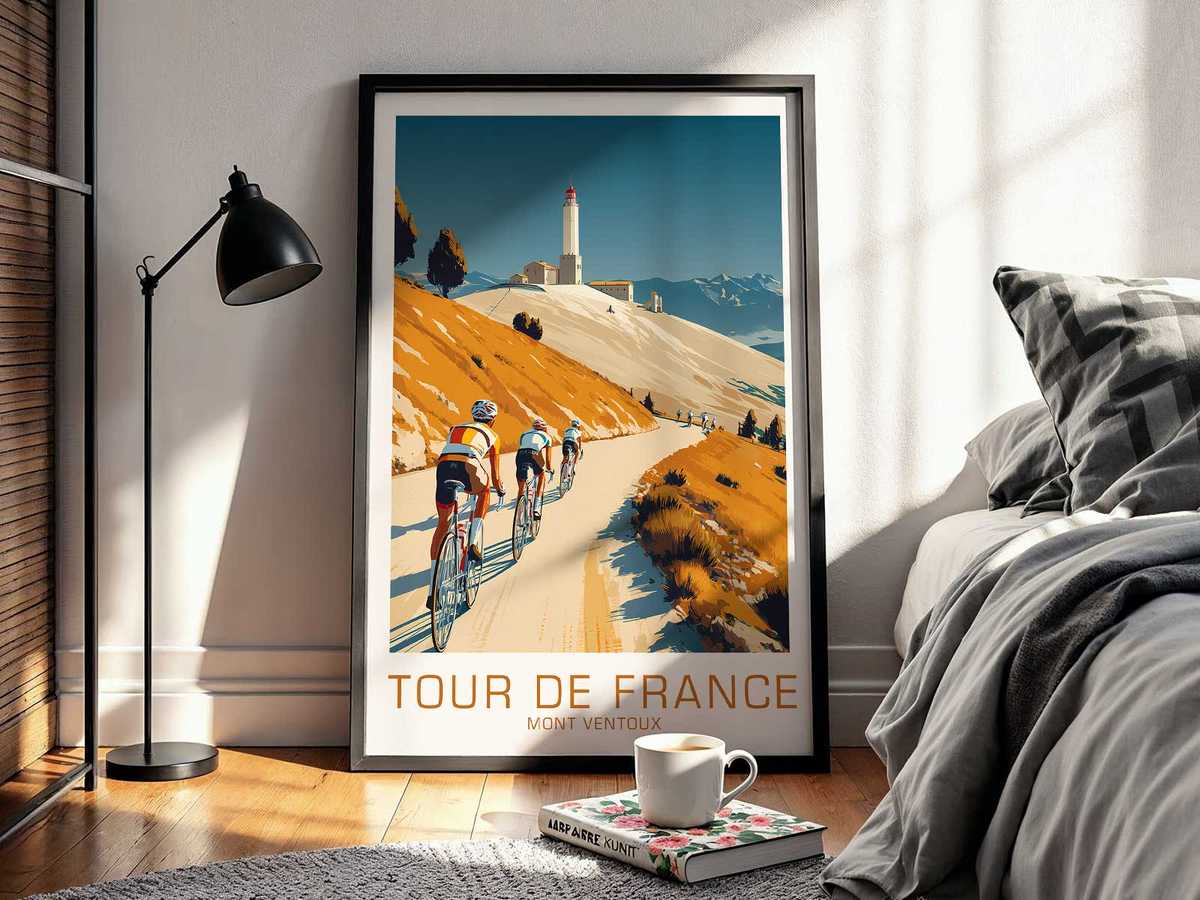
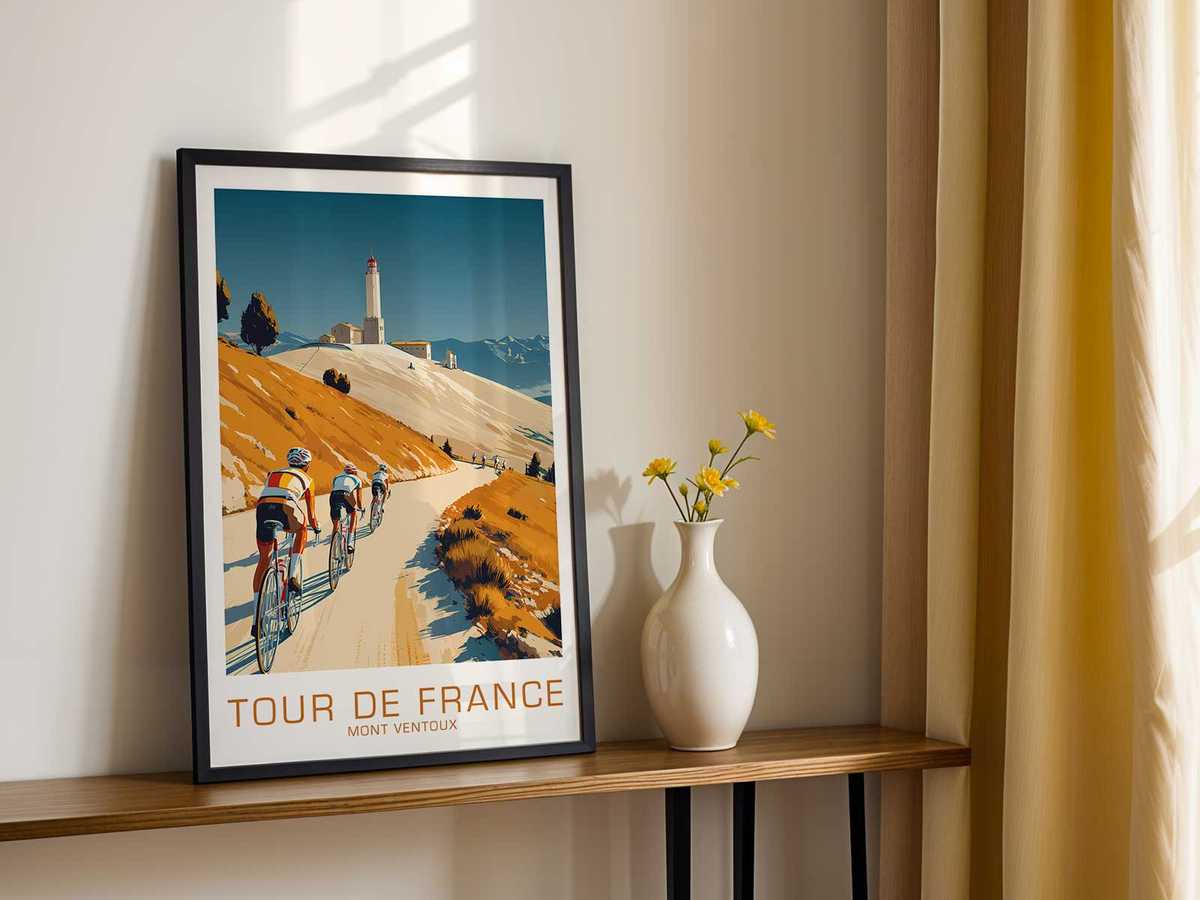
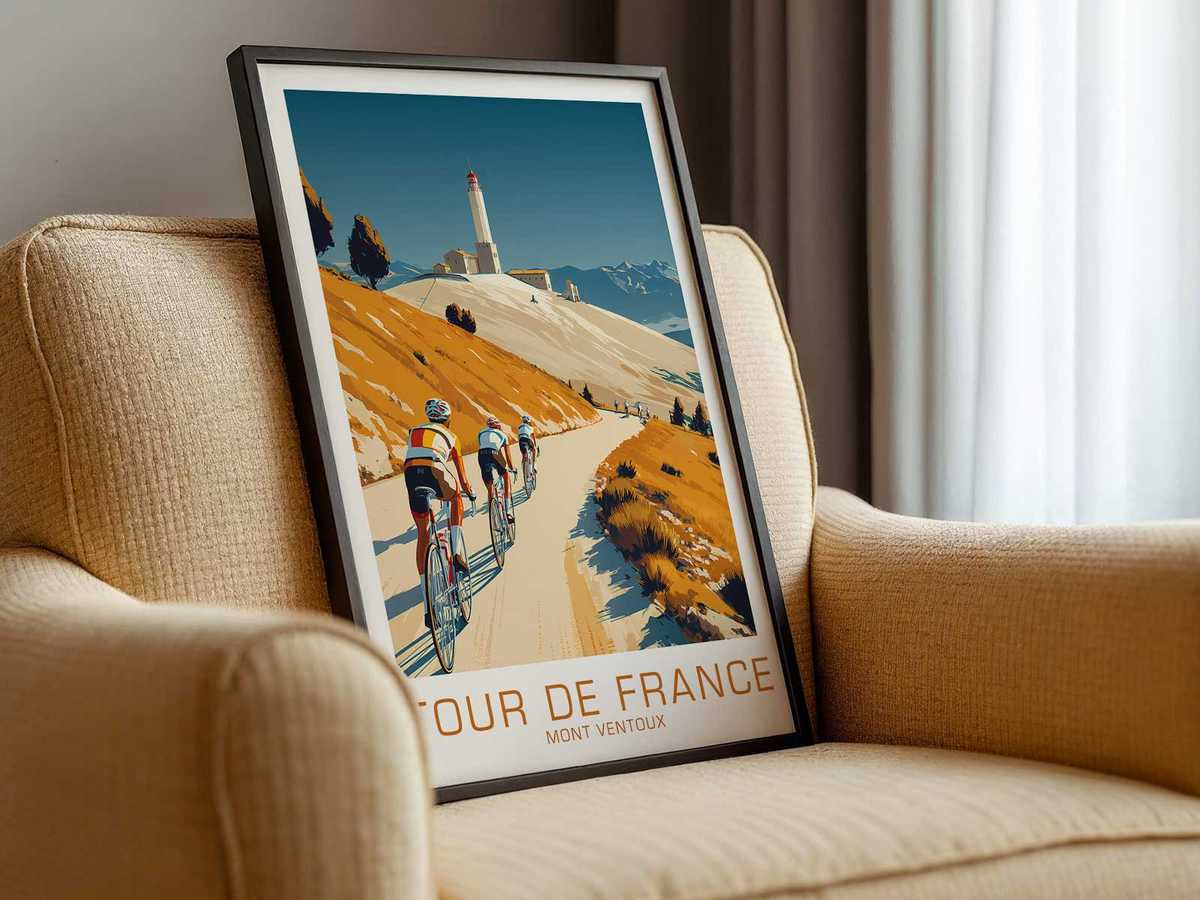
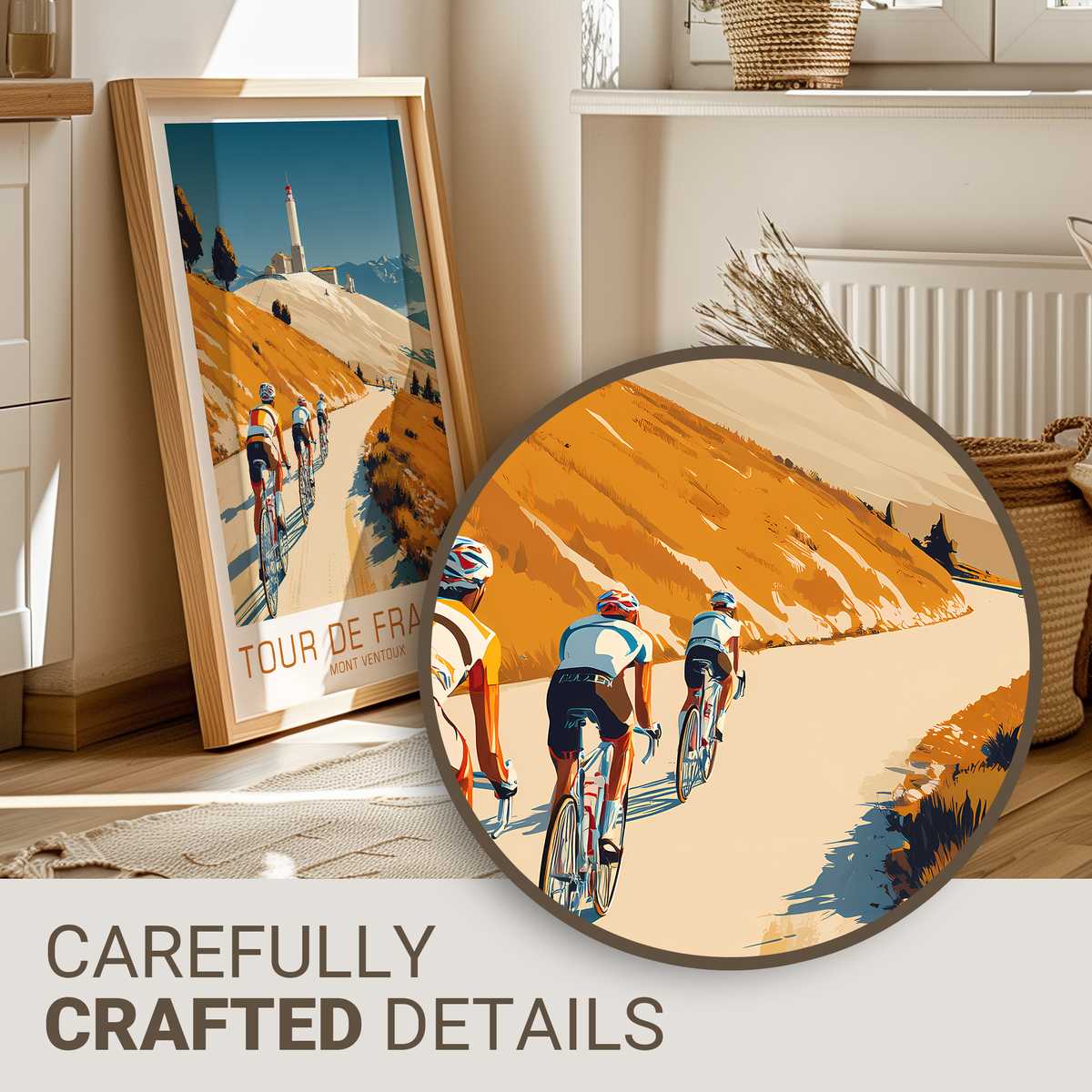
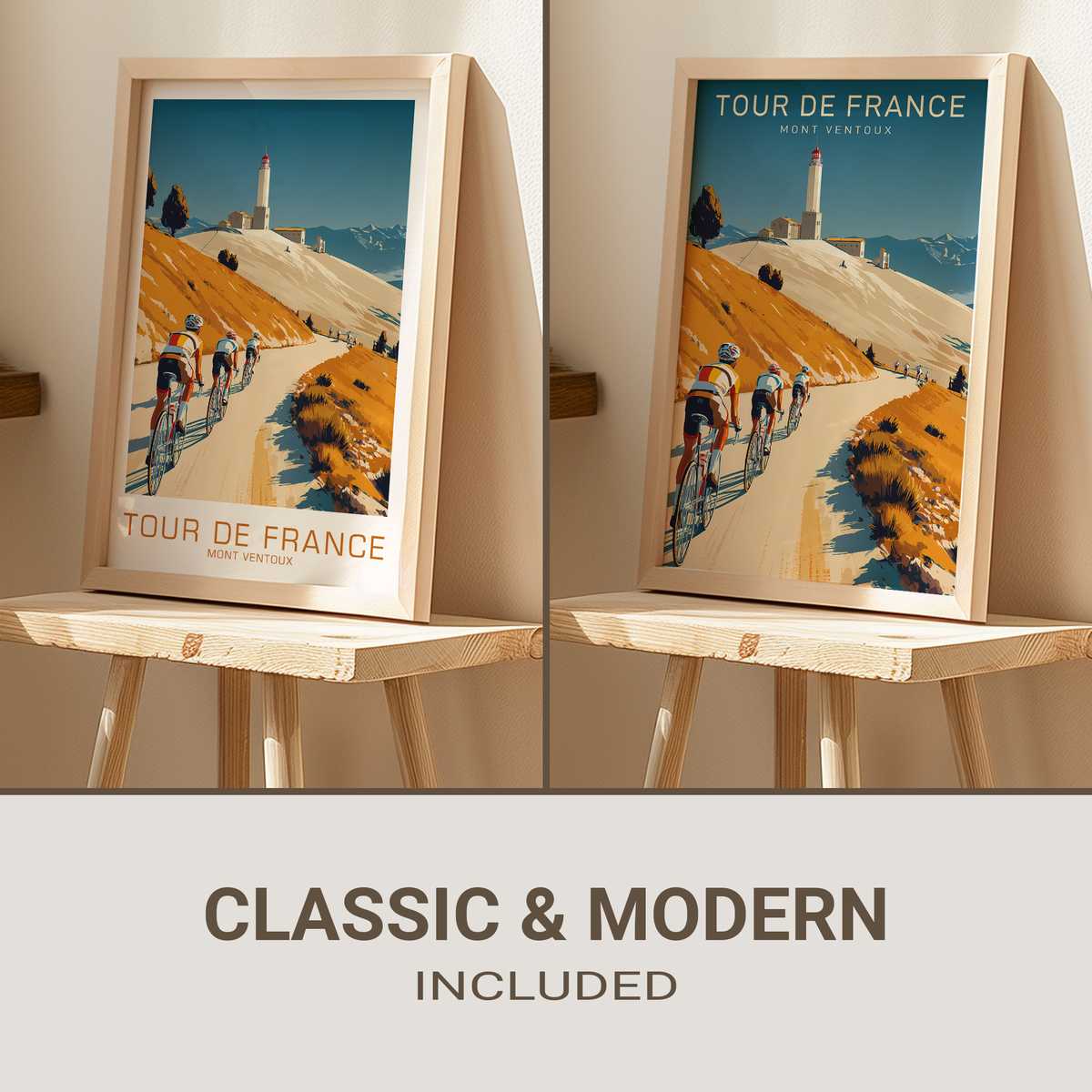
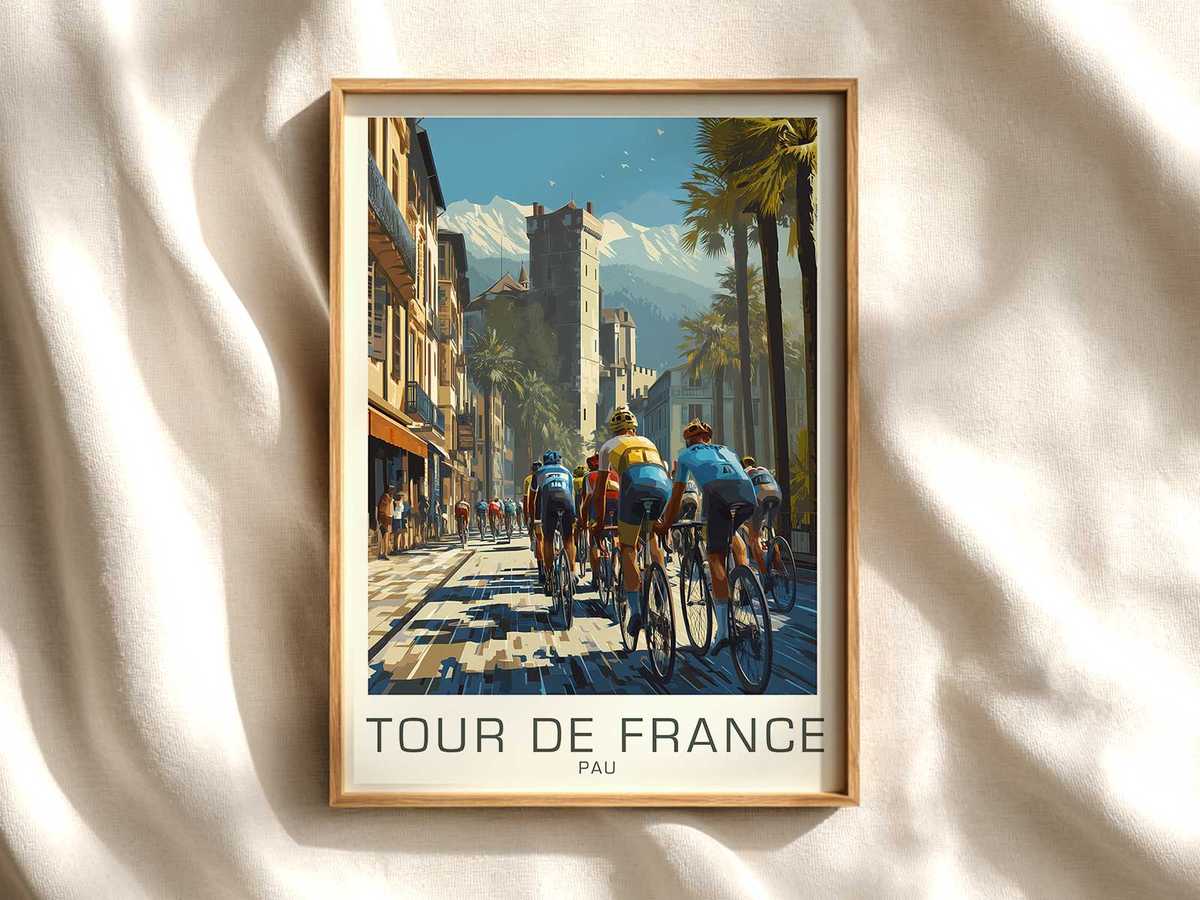
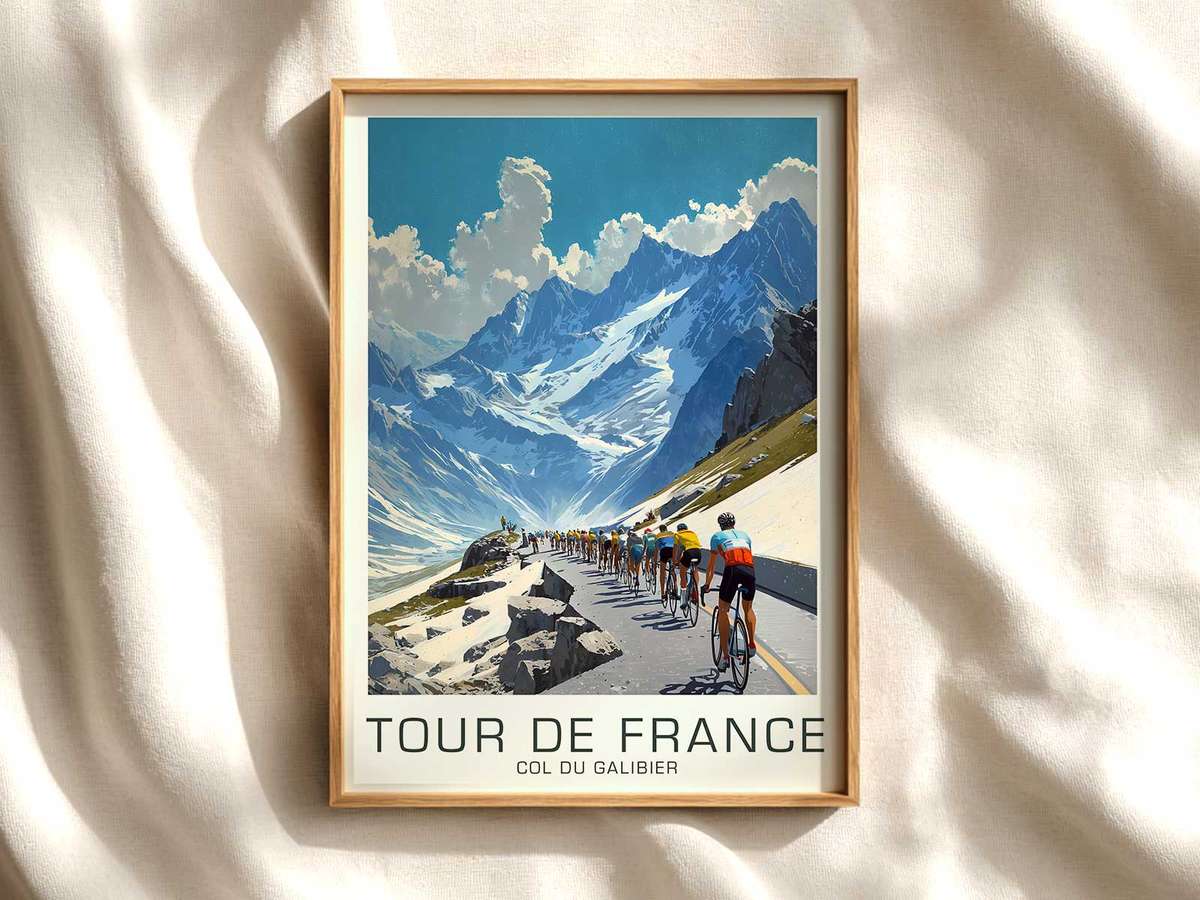
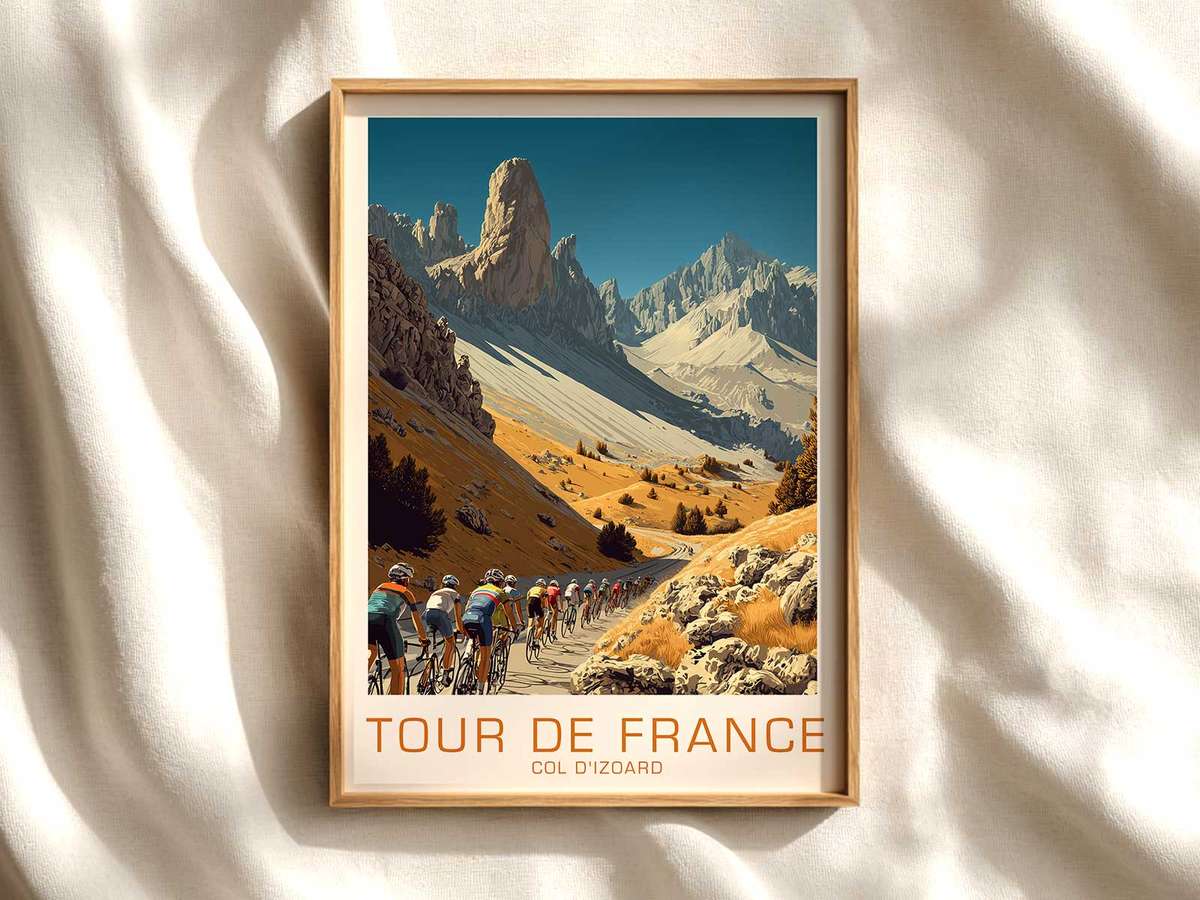
An old cycling poster that places Mont Ventoux behind a single rider does more than mark a place: it stages endurance as a visible, composable aesthetic. Here the mountain is a pared-back backdrop and the cyclist becomes the portrait of prolonged effort — concentration focused forward, respiration contained in the shoulders, and a constant, tactile conversation with the tarmac. The image insists we read gesture and attitude rather than applause and results.
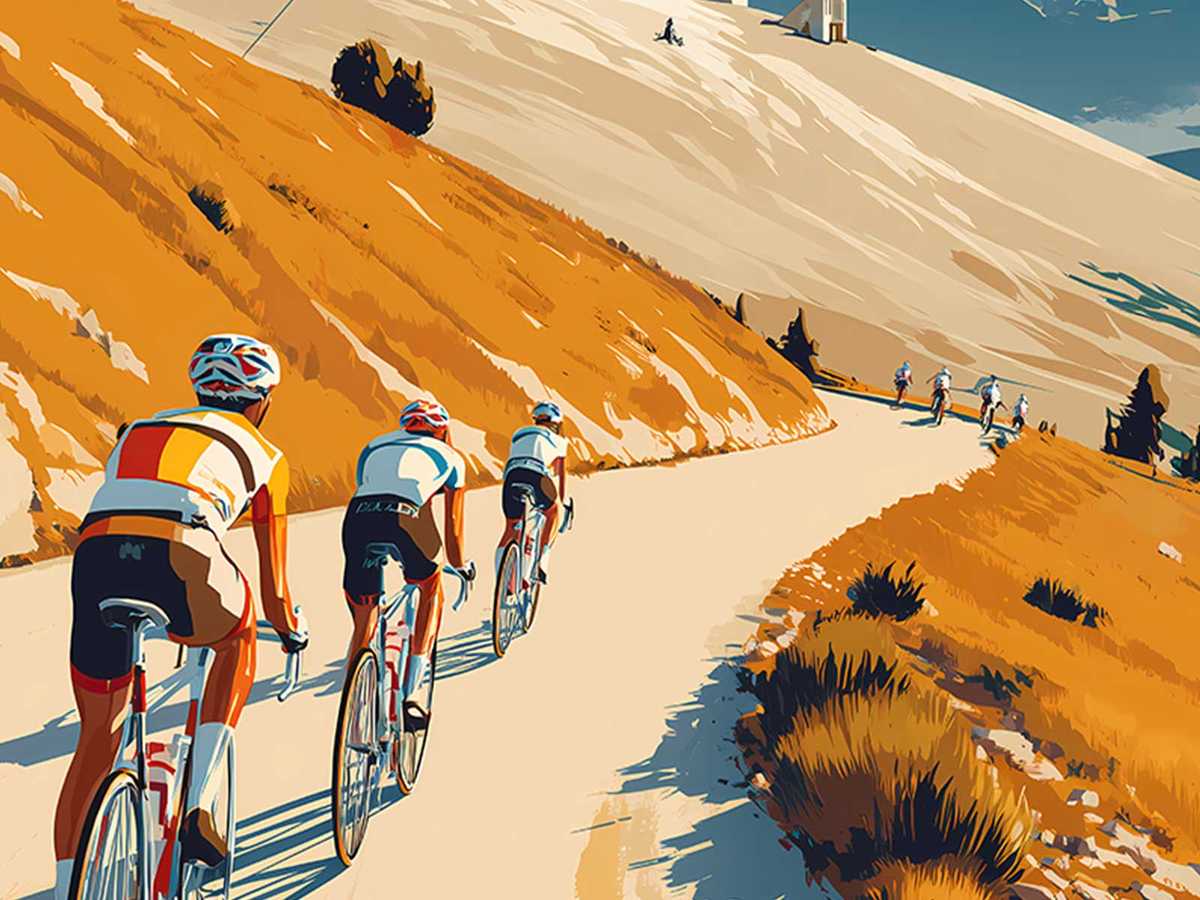
The poster’s power begins with silhouette. A well-drawn rider—helmet low, back a measured arc, hands settled on the drops or the hoods—creates a readable line of labour. That line tells us about cadence and economy: the quiet efficiency of a seated climb, or the compressed torque of a short, brutal burst. Elbows tucked, knees following a steady plane, and the slight tension at the jaw or neck register the discipline of endurance. These are visual signals that travel further than any caption: we sense effort because the pose is true to the physics of climbing, not because of a scoreboard.
Fatigue in this image is controlled, almost formal. Rather than dramatizing collapse or theatrical grimace, the poster frames weariness as a learned condition—shoulders that droop just enough to show weight, hands that grip without flailing, a torso that alternates between flex and calm. This balance between strain and composure is what makes the rider a believable emblem of endurance. The viewer reads restraint: the athlete is spent but still deliberate, every pedal stroke a chosen gesture that affirms purpose.
[IMAGE_INSERT_ARTICLE_01]
The road itself becomes an active partner. A rising strip of asphalt, a white line edging the compositional axis, or the vanishing point toward the limestone scrub of Ventoux directs both eye and narrative. The rider’s relationship to that road—how their head tilts, whether their gaze follows the horizon or the wheel—anchors the scene. It is this directness, the absence of side spectacle, that clarifies the poster’s emotional tenor: a dialogue between human exertion and a demanding landscape.
Visual restraint in colour and detail amplifies the figure. When the palette reduces distractions—muted earth tones for the mountain, a single saturated jersey, and crisp contrast around the bicycle frame—the body reads as monument. The bike is elegant but secondary: a vector for the rider’s will. The poster’s economy turns posture into personality. A compact sprint tuck signals ferocity; a long seated climb silhouette suggests stoic patience. Either way, the athlete’s stance becomes the grammar through which the viewer understands the scene.
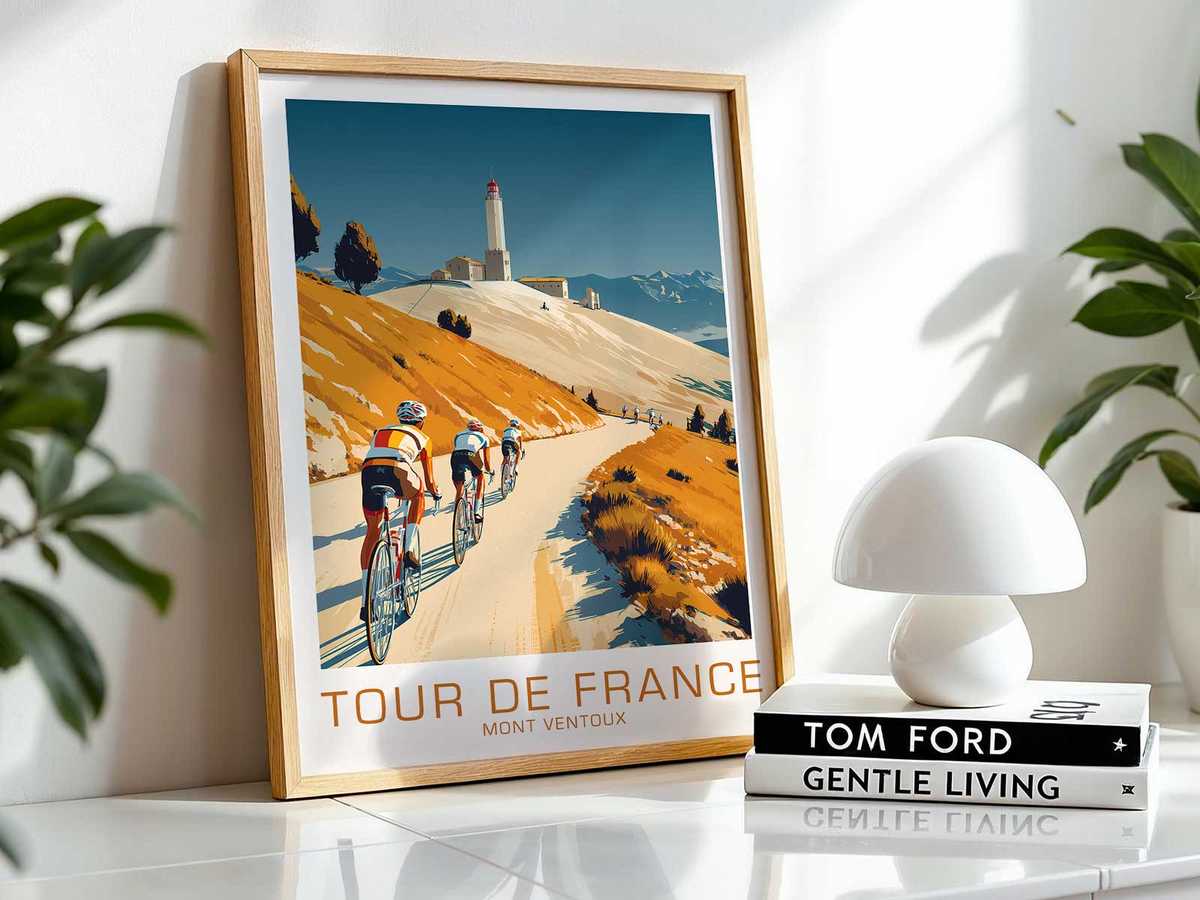
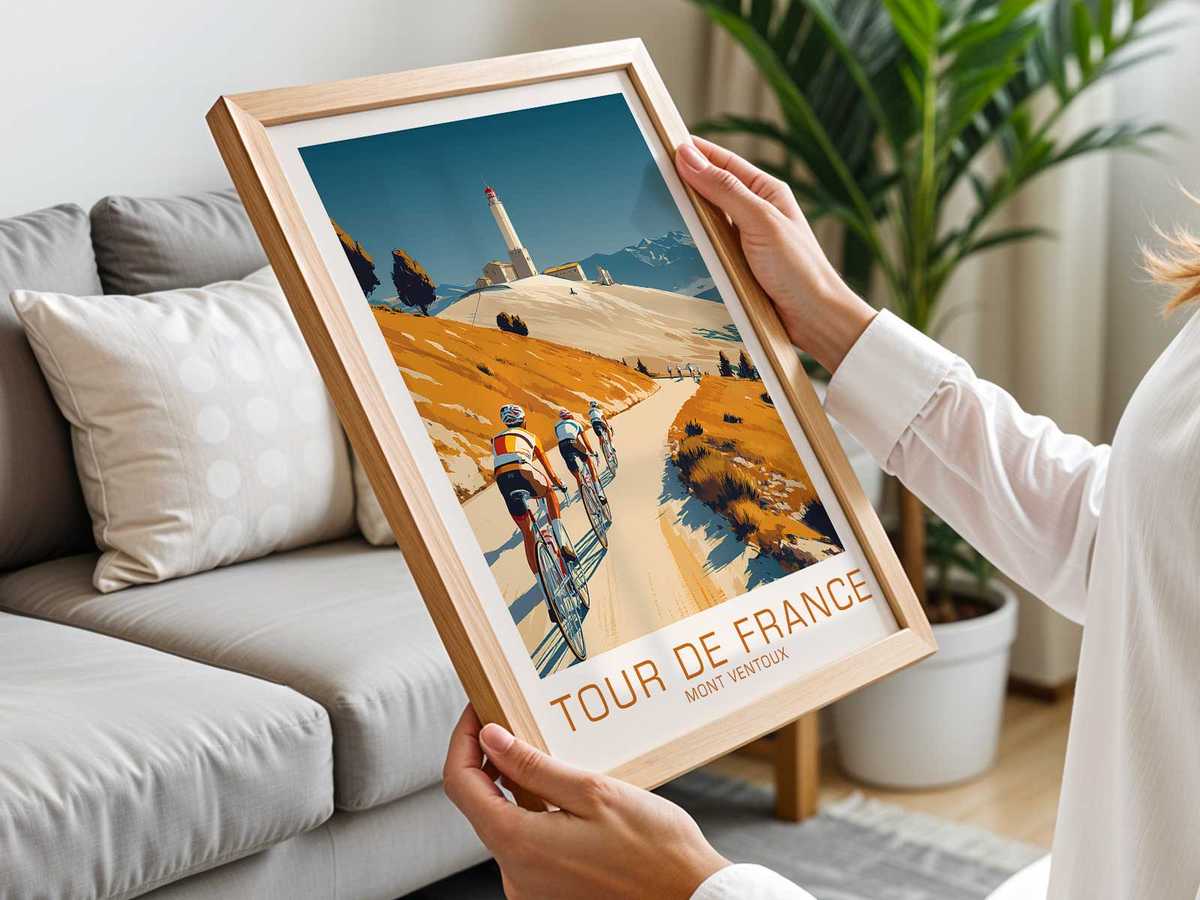
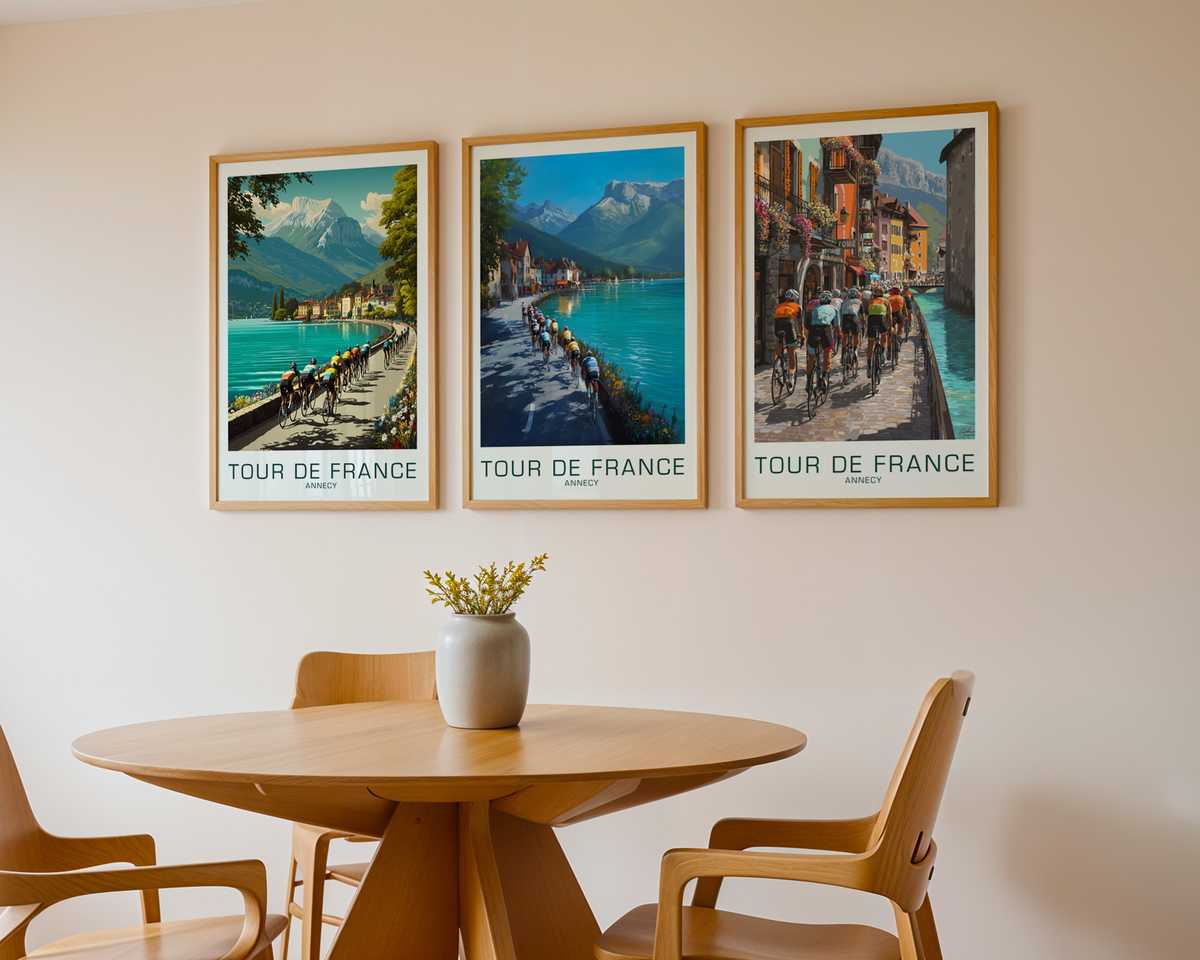
Hanging such a piece in a room reshapes that space quietly. In a study or living room the artwork introduces focused energy—an implied rhythm you can almost hear: tire hiss, pedal click, breath. In a studio or game room it offers a model of sustained effort, not spectacle. The poster does not shout, it composes; it asks the room to slow and observe the small, precise acts that produce endurance.
Ultimately, a Ventoux-centred rider poster works because it translates an invisible interior state—discipline, controlled suffering, and relentless attention—into readable form. The image trusts the viewer to interpret body language: the set of the shoulders, the angle of the head, the compression of the legs. Those visual cues make the rider a figure of endurance rather than a record of victory, and they explain why such posters feel both intimate and heroic on a wall.
Decor note: place against warm plaster or deep grey to let the silhouette and limited palette breathe; a narrow black frame will emphasise the athletic line without imposing theatricality.