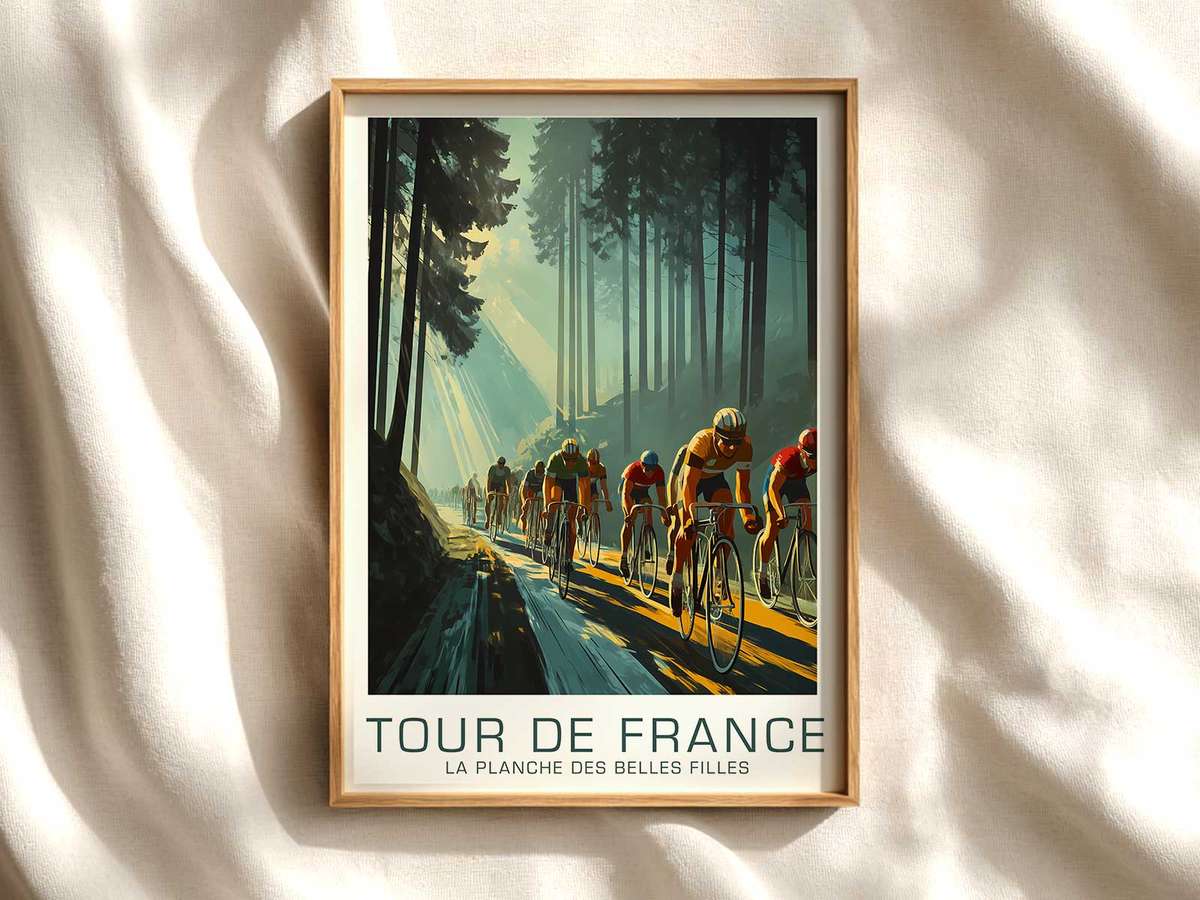
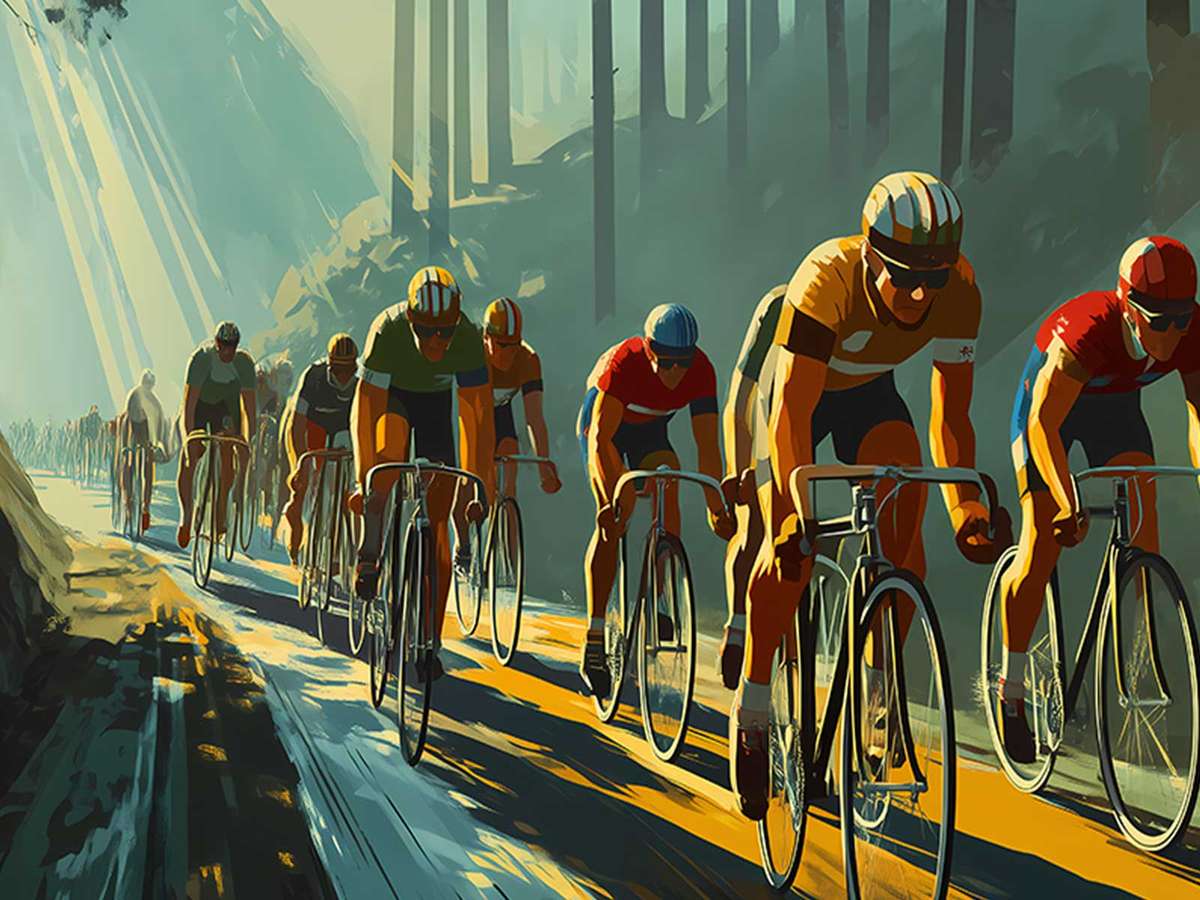
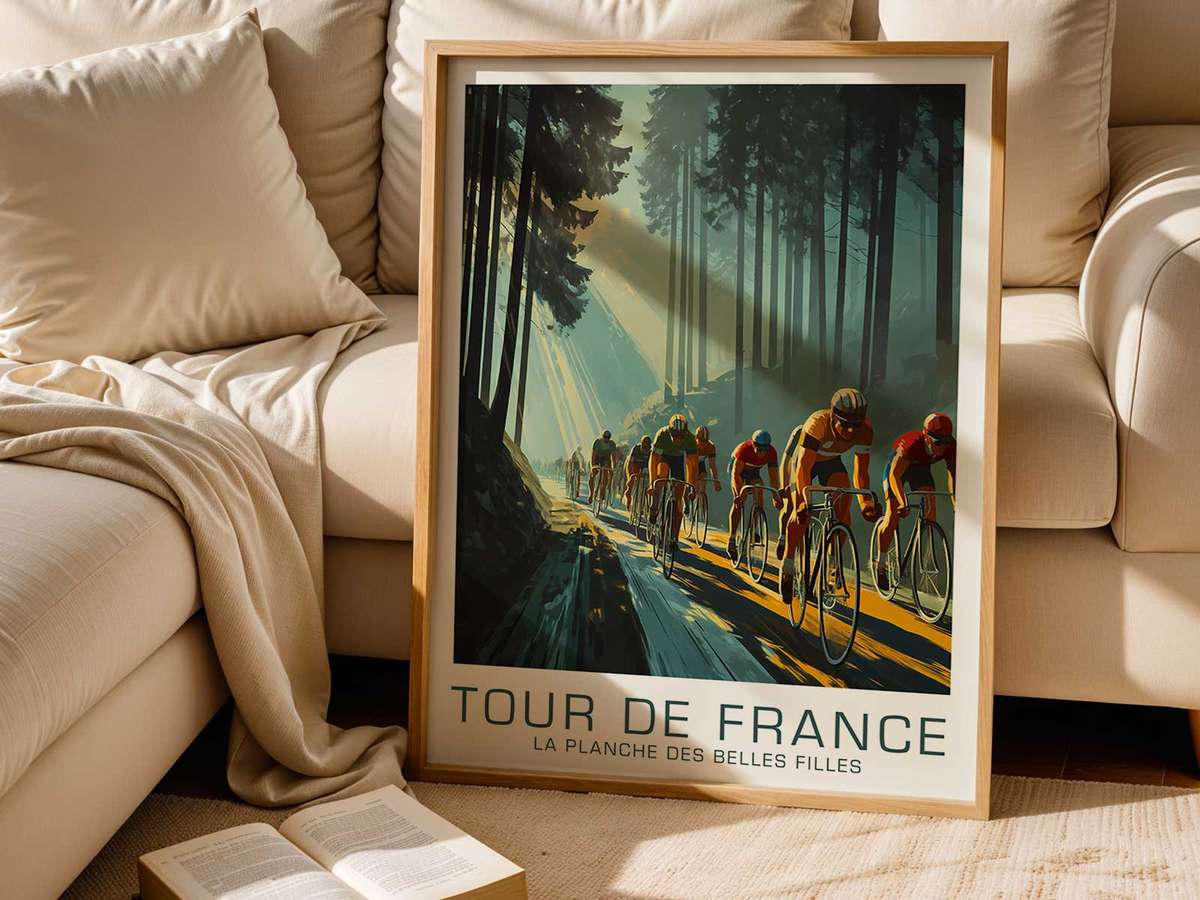
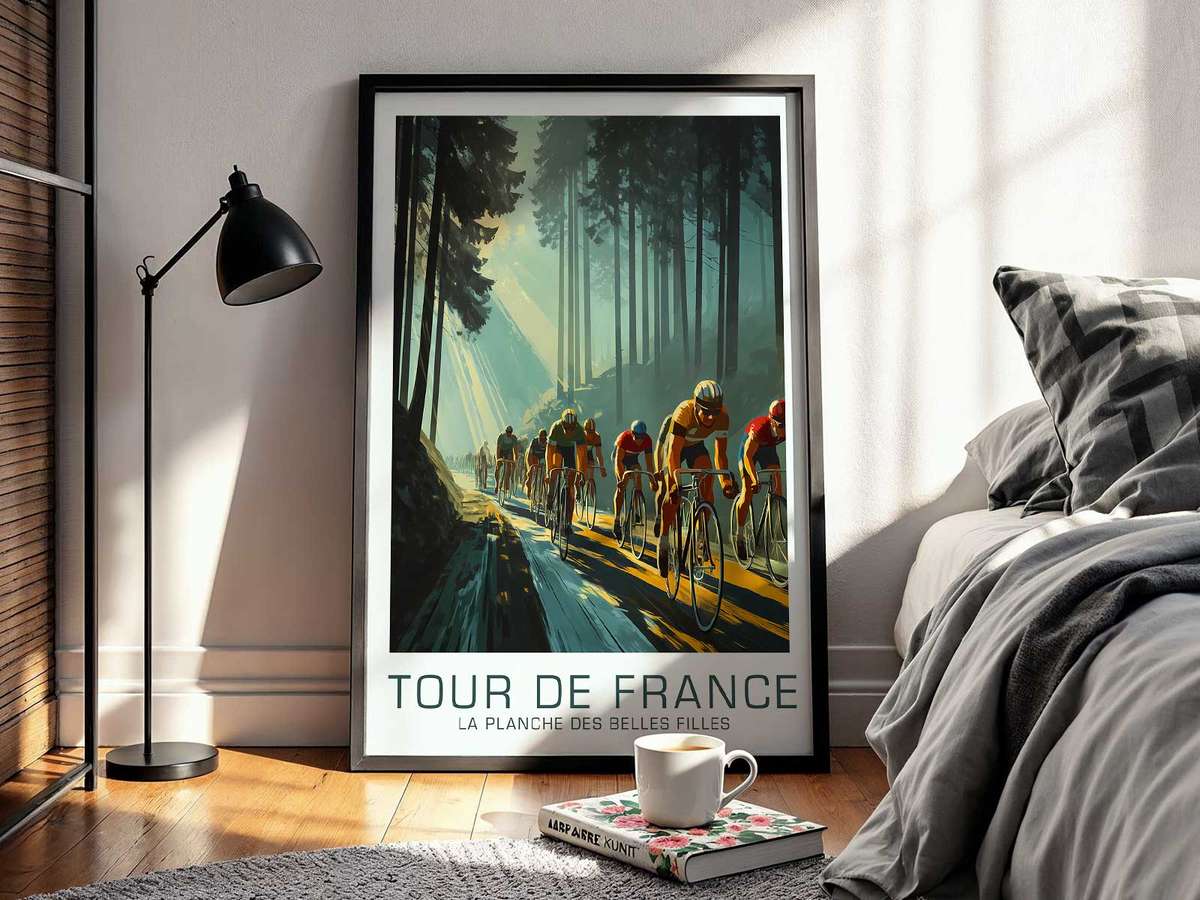
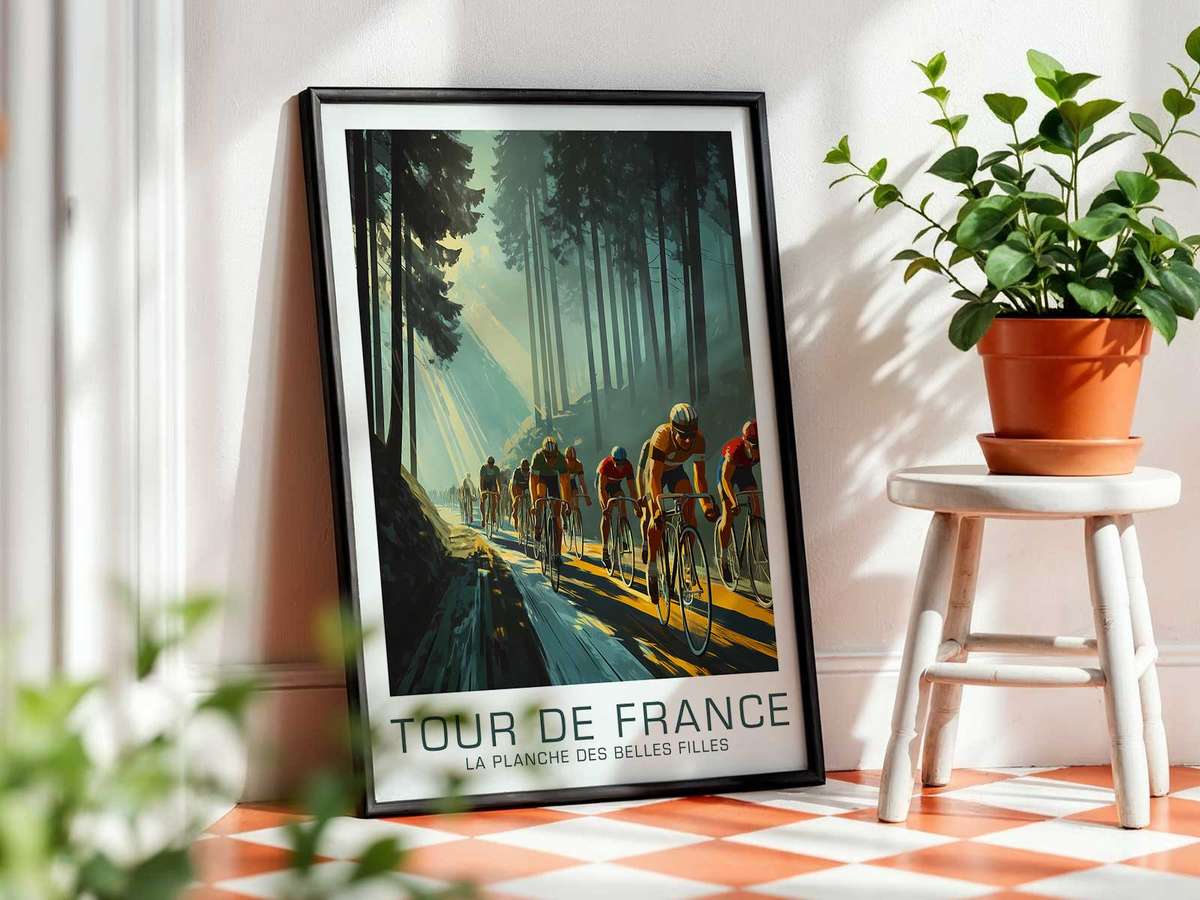
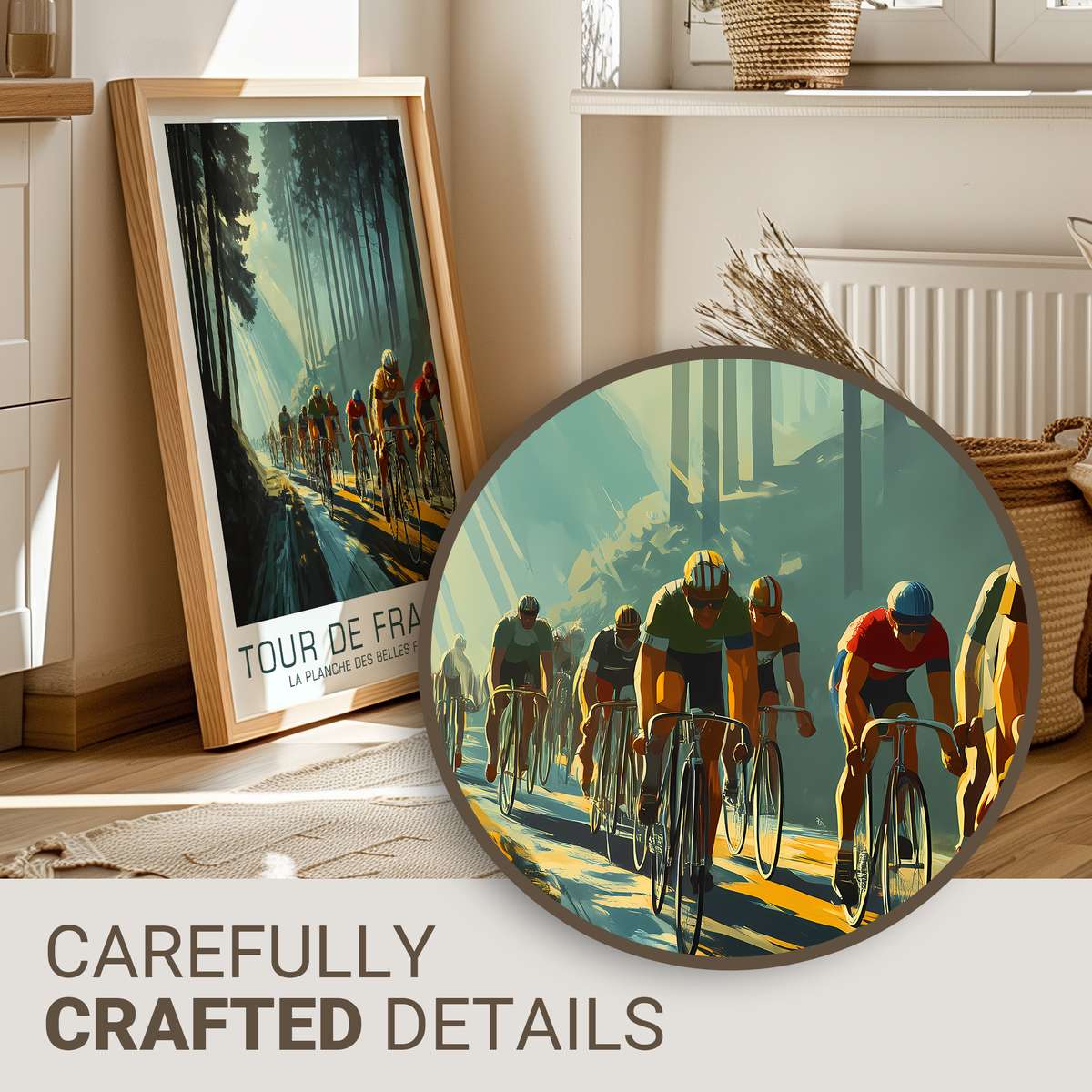
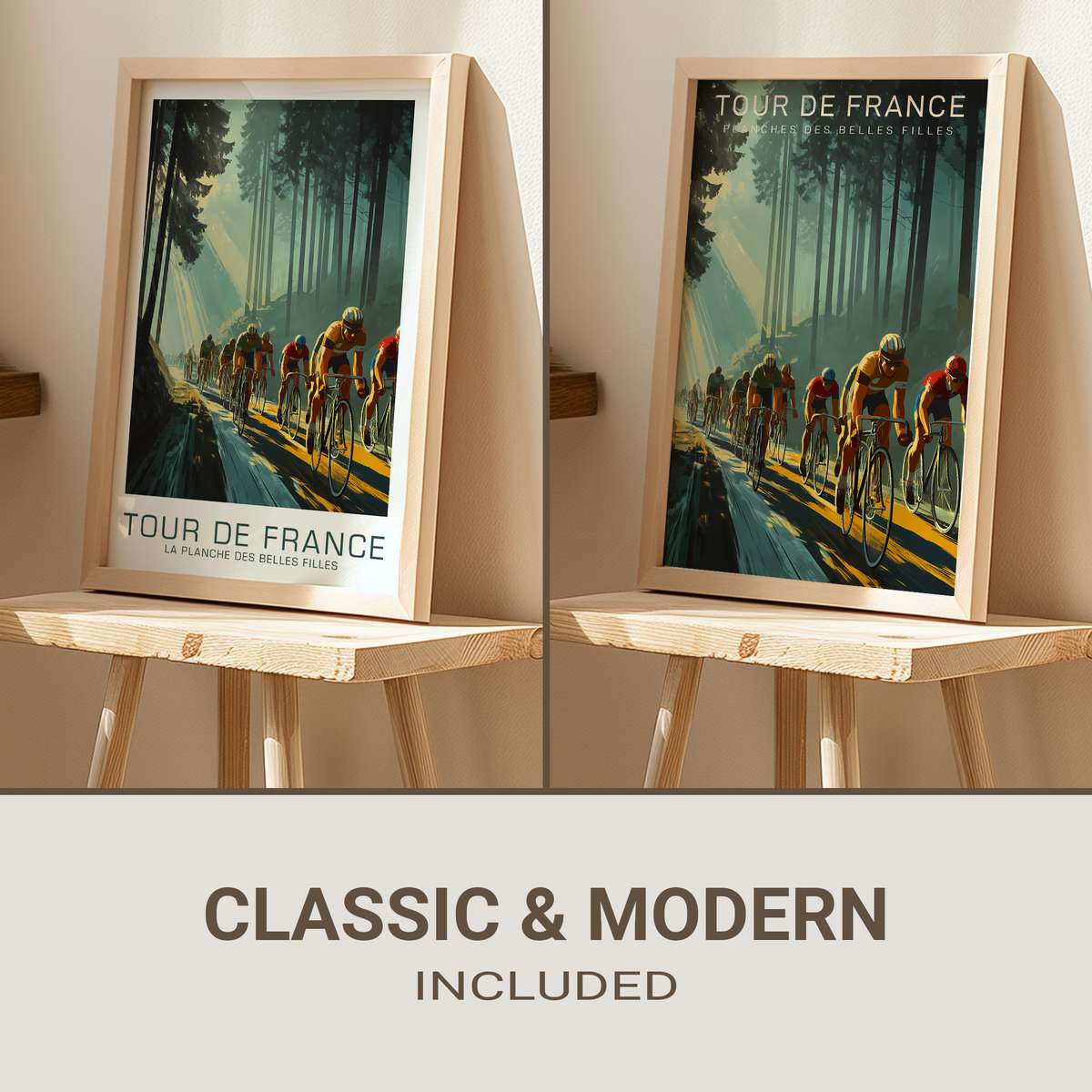
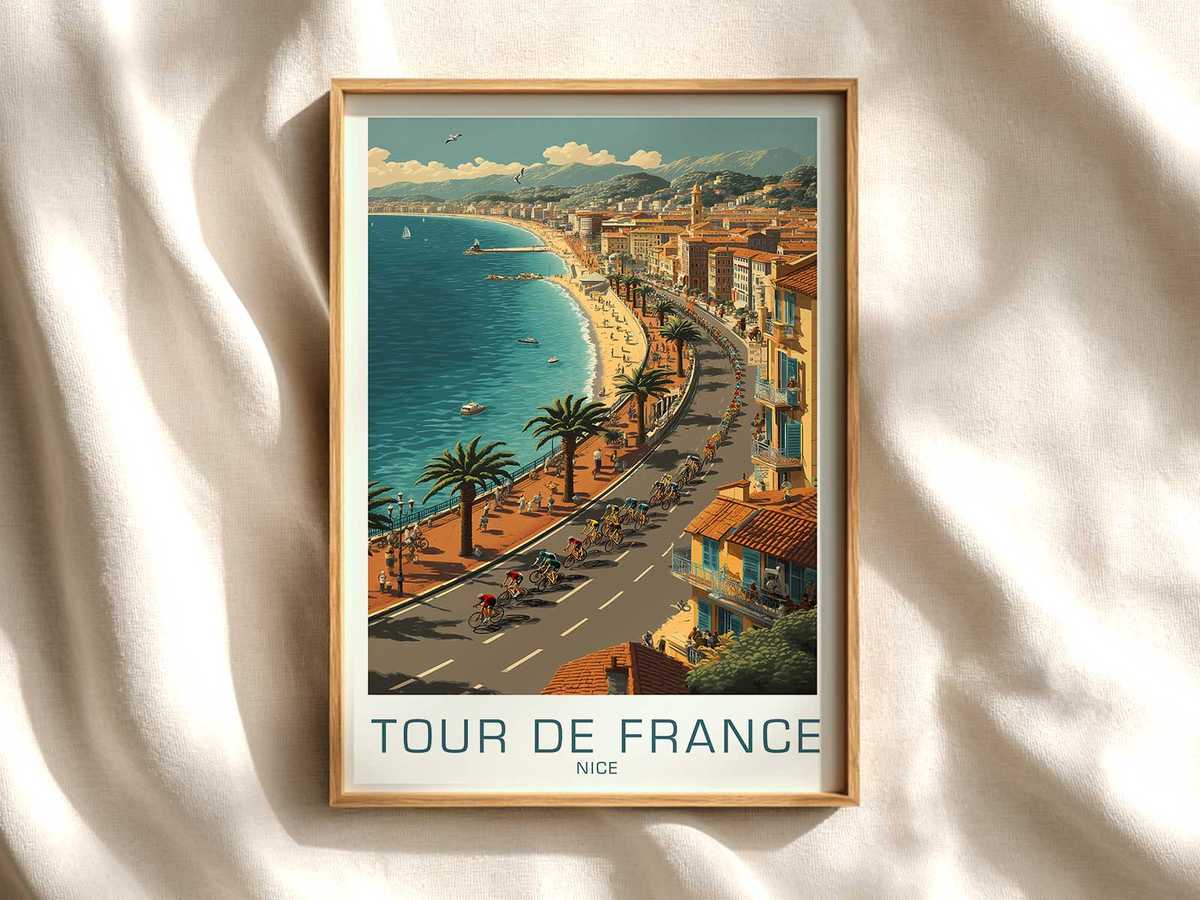
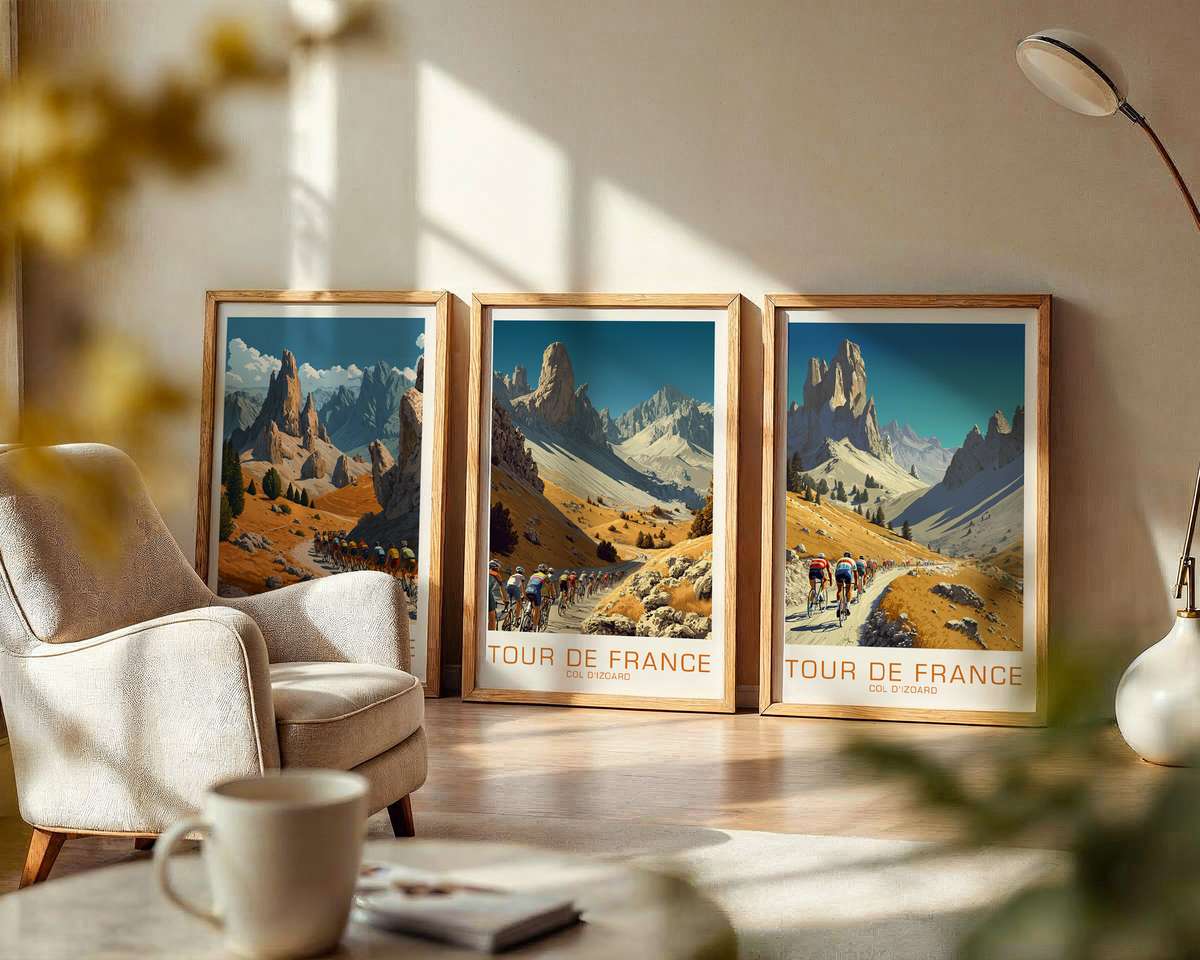
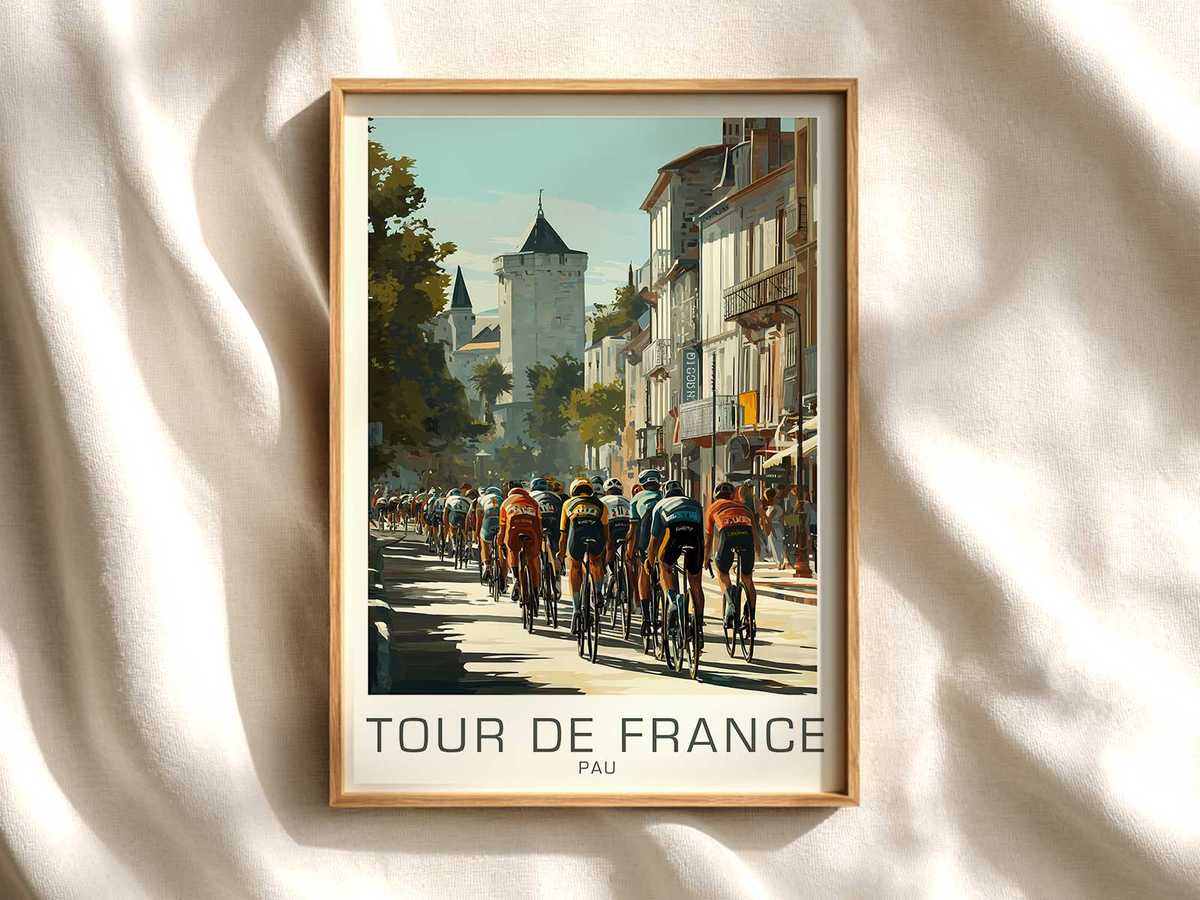
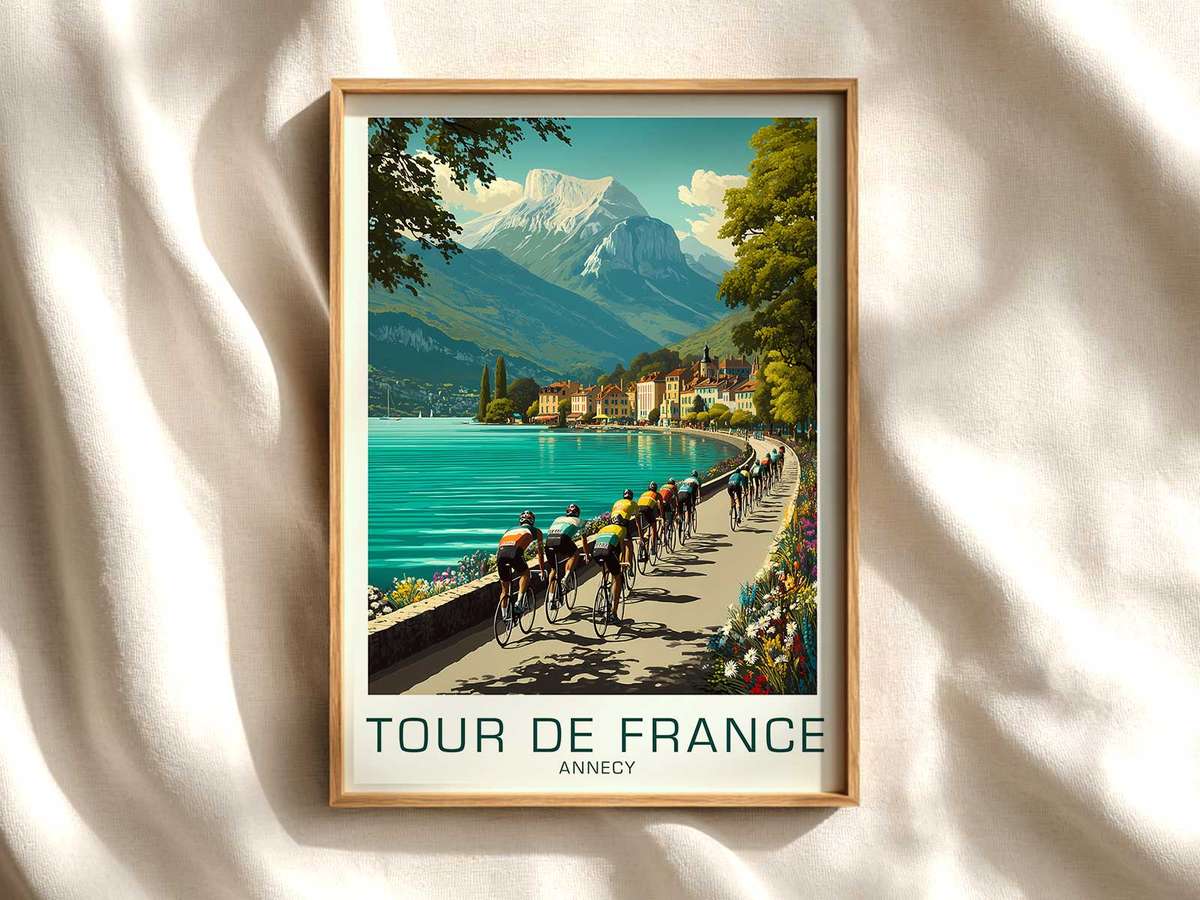
La Planche des Belles Filles has become one of the Tour de France’s most visually and narratively dramatic climbs since its first inclusion in 2012. The steep gradients, the later addition of the sharper “Super Planche” summit extension with its very steep final kilometre and gravel, and the repeated role the climb has played in decisive stages together make any single race instant on this slope feel loaded with consequence. A poster that freezes such an instant—riders hunched, wheels biting into gradient, rivals close enough to count breaths—transforms race reportage into a near-cinematic tableau.
What makes this kind of La Planche image read so powerfully on the wall is timing. The strongest implied instant is a summit attack or a GC duel on the climb: the moment when one rider decides to test rivals, when cadence tightens, shoulders rise and the road steepens into a pitch that punishes hesitation. Because La Planche’s profile is already known for sudden, savage ramps and, in recent editions, a gravel-studded final push, a still image can suggest the precise split-second where determination meets uncertainty—will the attack stick, will the chasers bridge, how much fatigue remains?
Visually the poster’s drama comes from three readable elements: effort, relief and proximity. Effort is legible in posture and cadence, in the flex of a rider’s back and the compacting of a kit against wind and gradient. Relief is contained in the slope itself—the road as a graphic diagonal that pulls the eye upward and suggests both elevation and cost. Proximity is the human punctuation: rivals close behind, elbows nearly touching, a gap measured in seconds rather than kilometres. Together these create a compressed narrative where the viewer supplies the before and after, and the image holds the charged middle.
[IMAGE_INSERT_ARTICLE_01]
Because La Planche des Belles Filles has been the site of decisive and dramatic moments across modern Tours, a poster that references this climb carries built-in heritage. It is not merely a pretty landscape; it is a stage with history, where summit finishes have reshaped general classification battles and where the introduction of a sterner summit extension heightened the visual distinctiveness of finales. This context allows the artwork to gesture toward endurance, strategy and courage without needing to name riders or results.
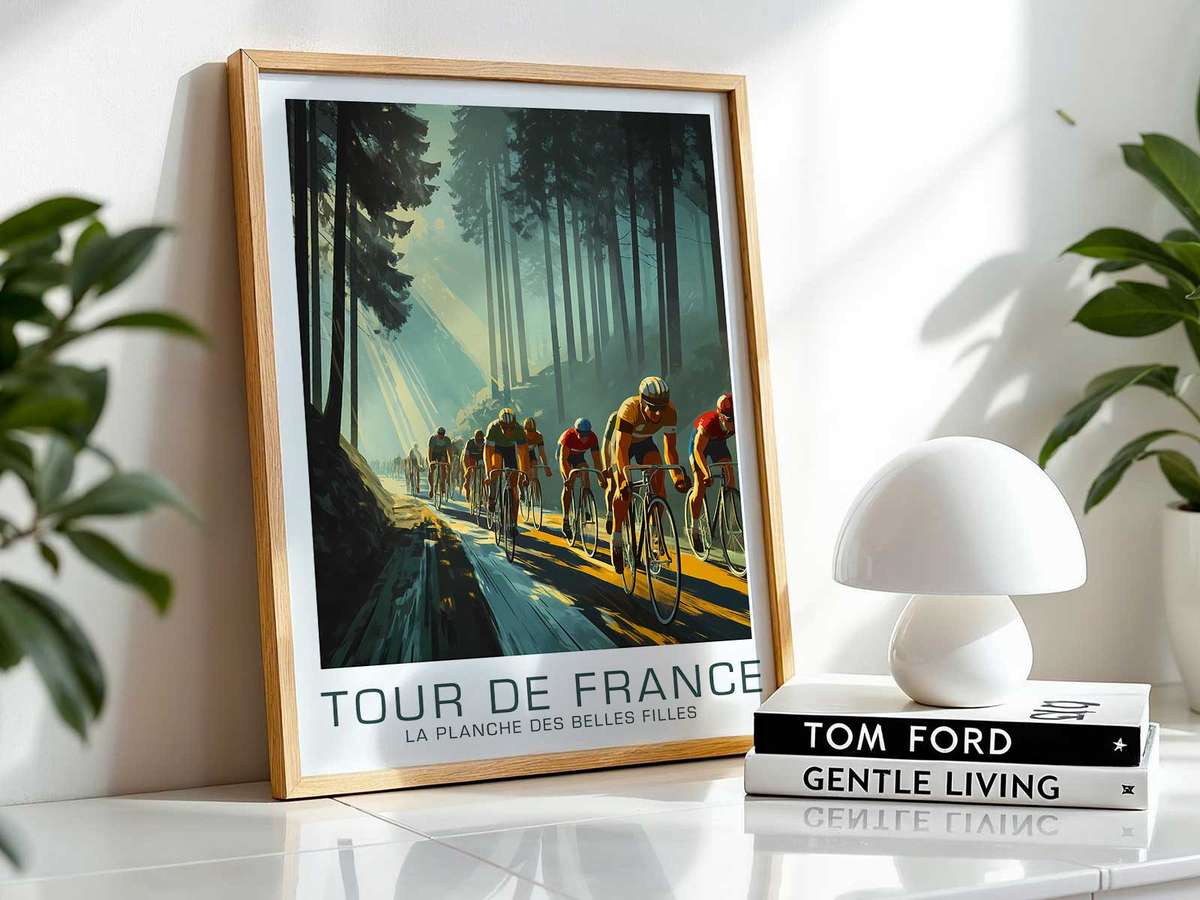
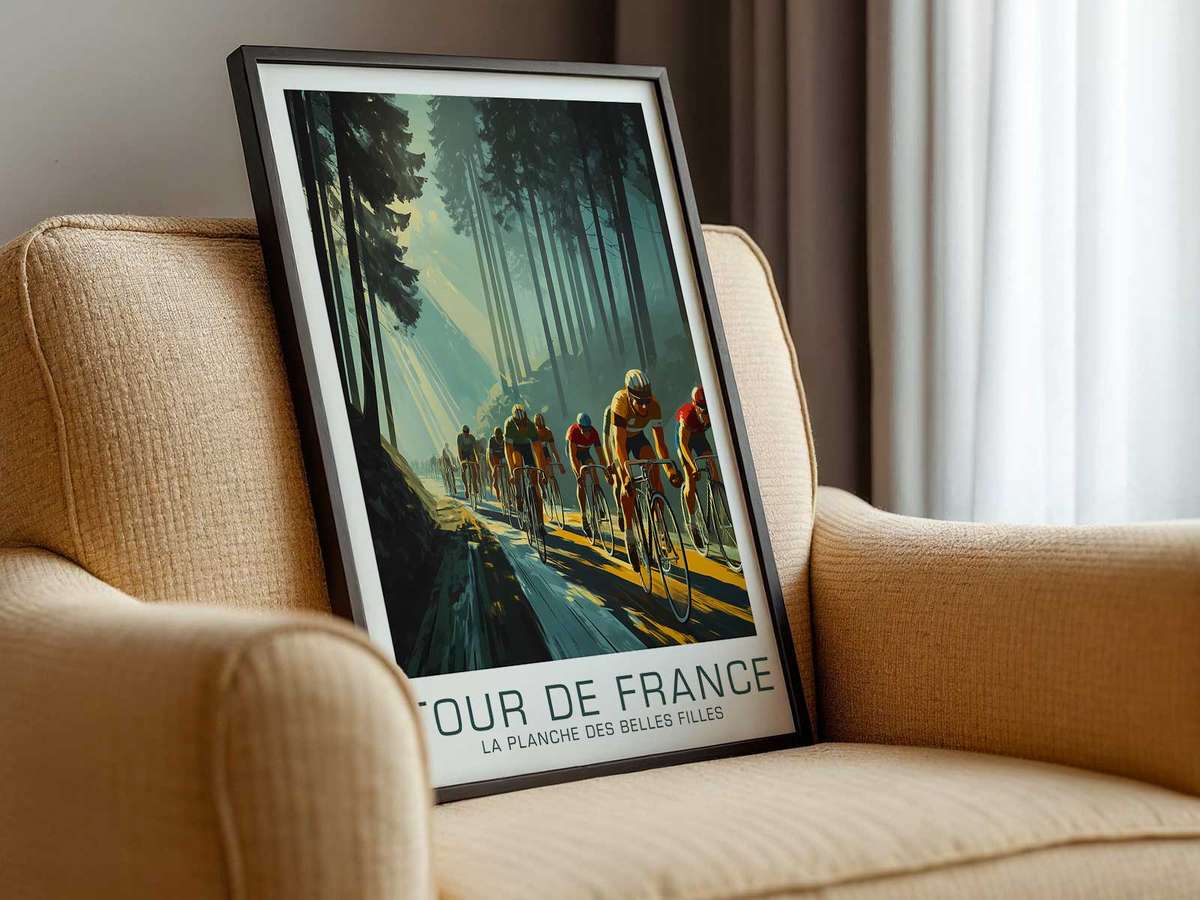
Framed as wall art, such a print works quietly but insistently in a room. In an office or study it reads as a study in focus: an emblem of single-minded effort rendered with compositional clarity. In a studio or lounge it becomes a conversation piece—the kind of image that rewards long looks because every glance suggests another tactical choice or a different angle on fatigue. The limited palette often used for vintage-style Tour prints—muted tones, restrained contrasts, an emphasis on silhouette—keeps the scene elegant and avoids sensationalism, making the poster feel like a considered object rather than an advertisement.
Ultimately, a La Planche des Belles Filles poster captures why one second of racing can feel like an entire story. The climb’s steep pitches and recent summit-extension drama supply the raw material; the photographer or artist chooses the precise instant that concentrates suspense: a rider’s surge, a small gap, a look back. That narrow slice of time carries tactics, risk and human cost—and when reproduced as a premium print it grants the viewer the rare pleasure of inhabiting that tension indefinitely.
Whether placed above a desk or in a quiet reading corner, the image’s power is not in loud proclamation but in its ability to hold a charged moment: the insistence of pedal strokes, the geometry of a mountain road, and the silent question that hangs over every attack—will it succeed?