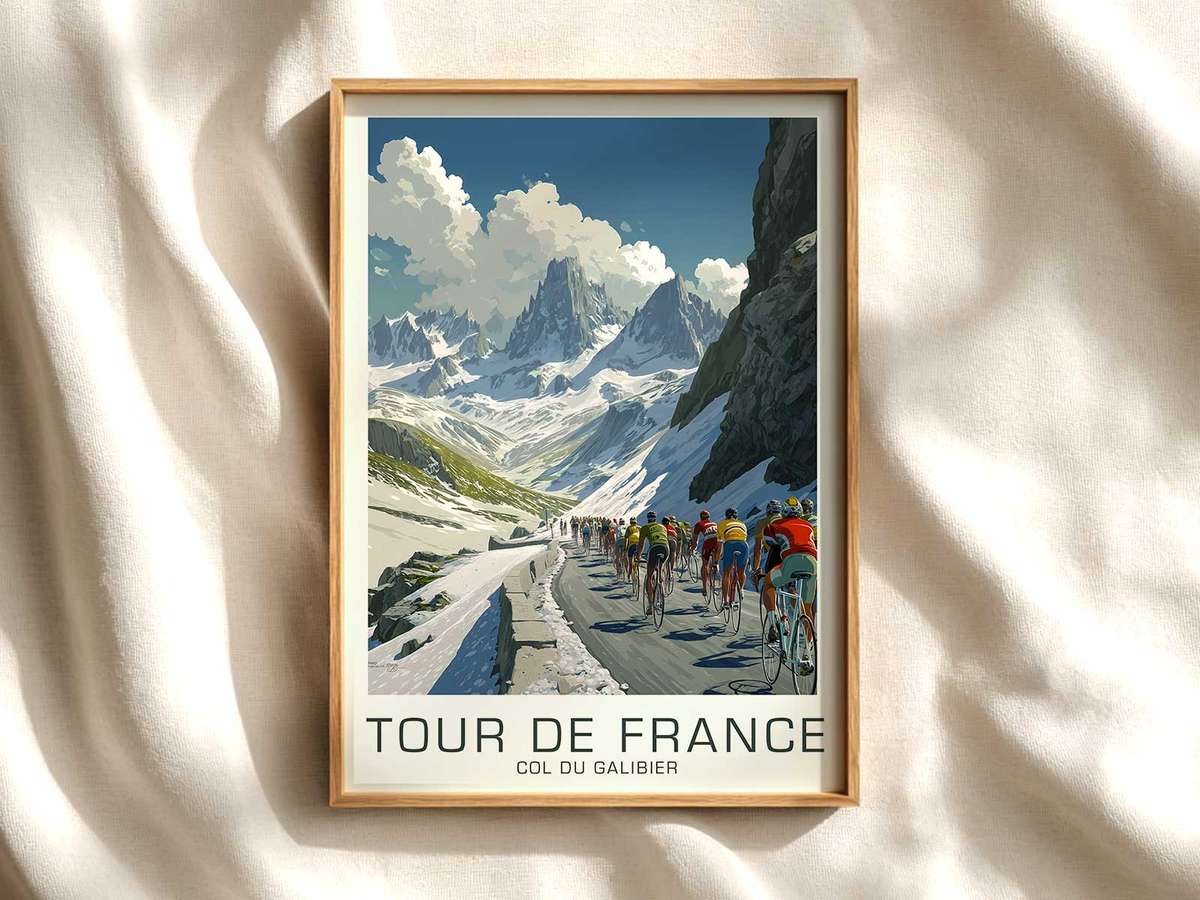
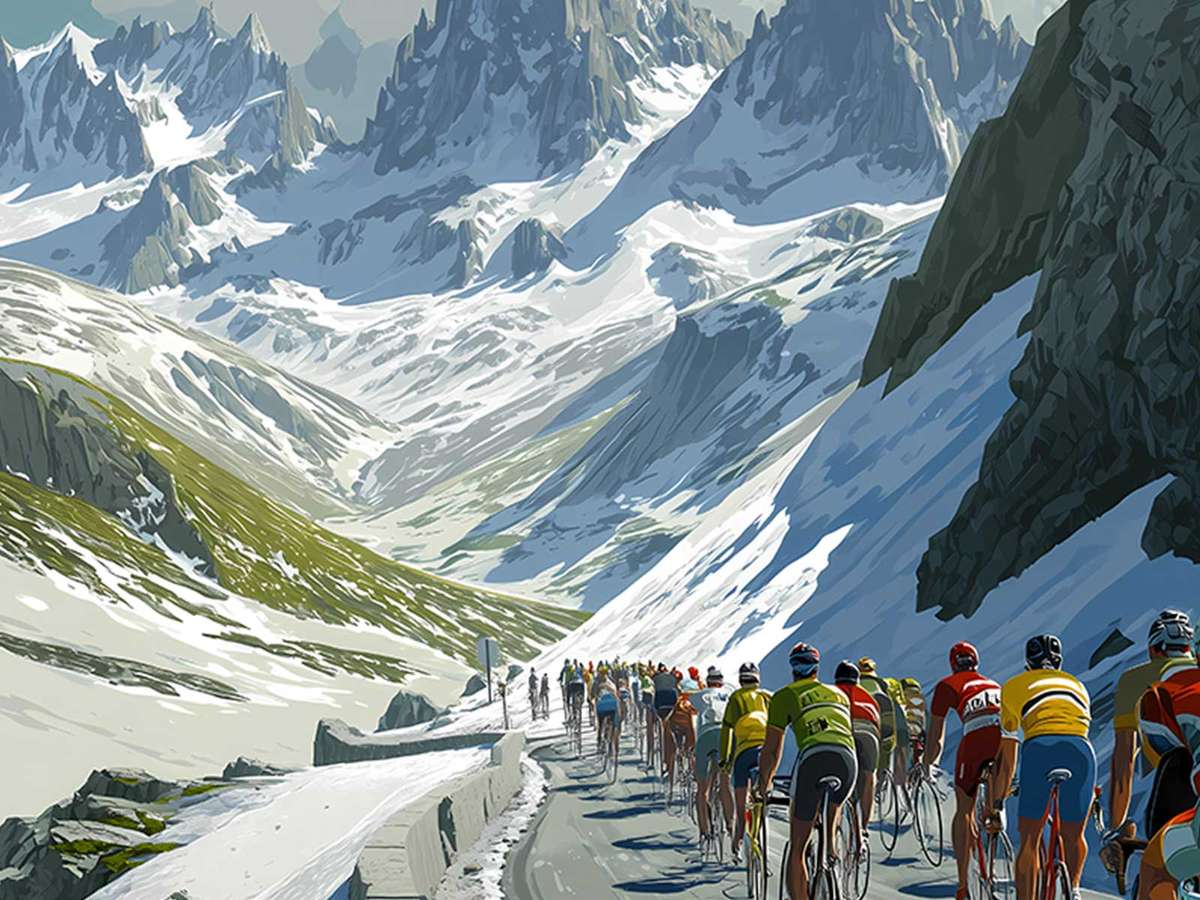
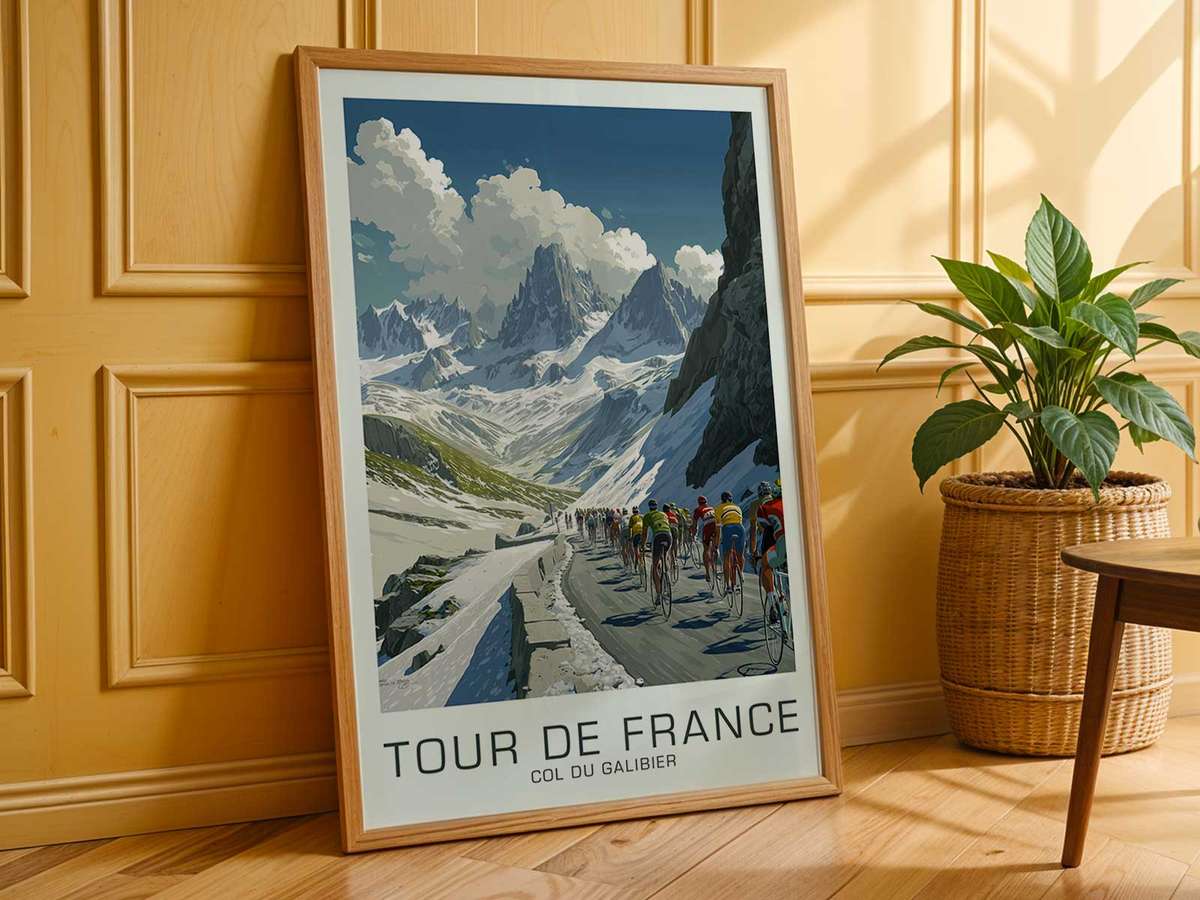
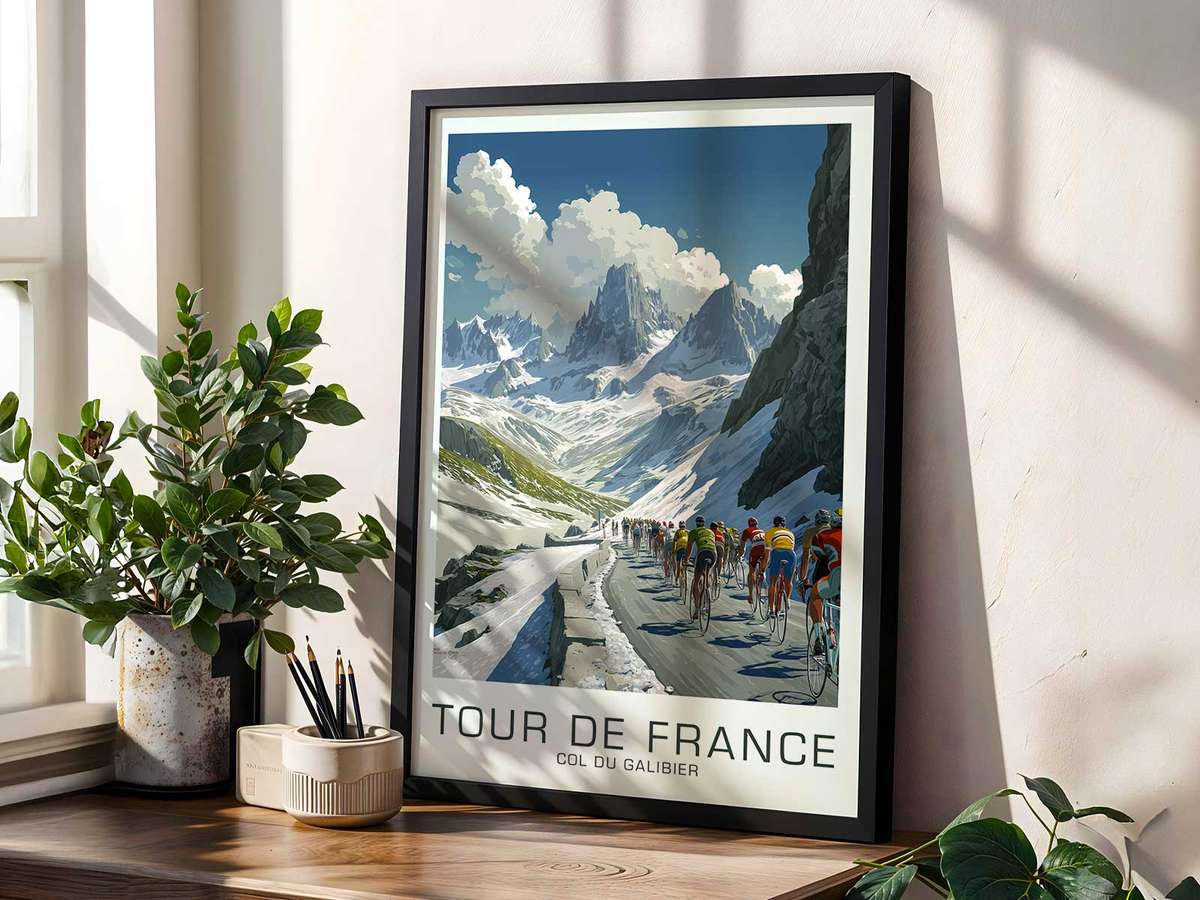
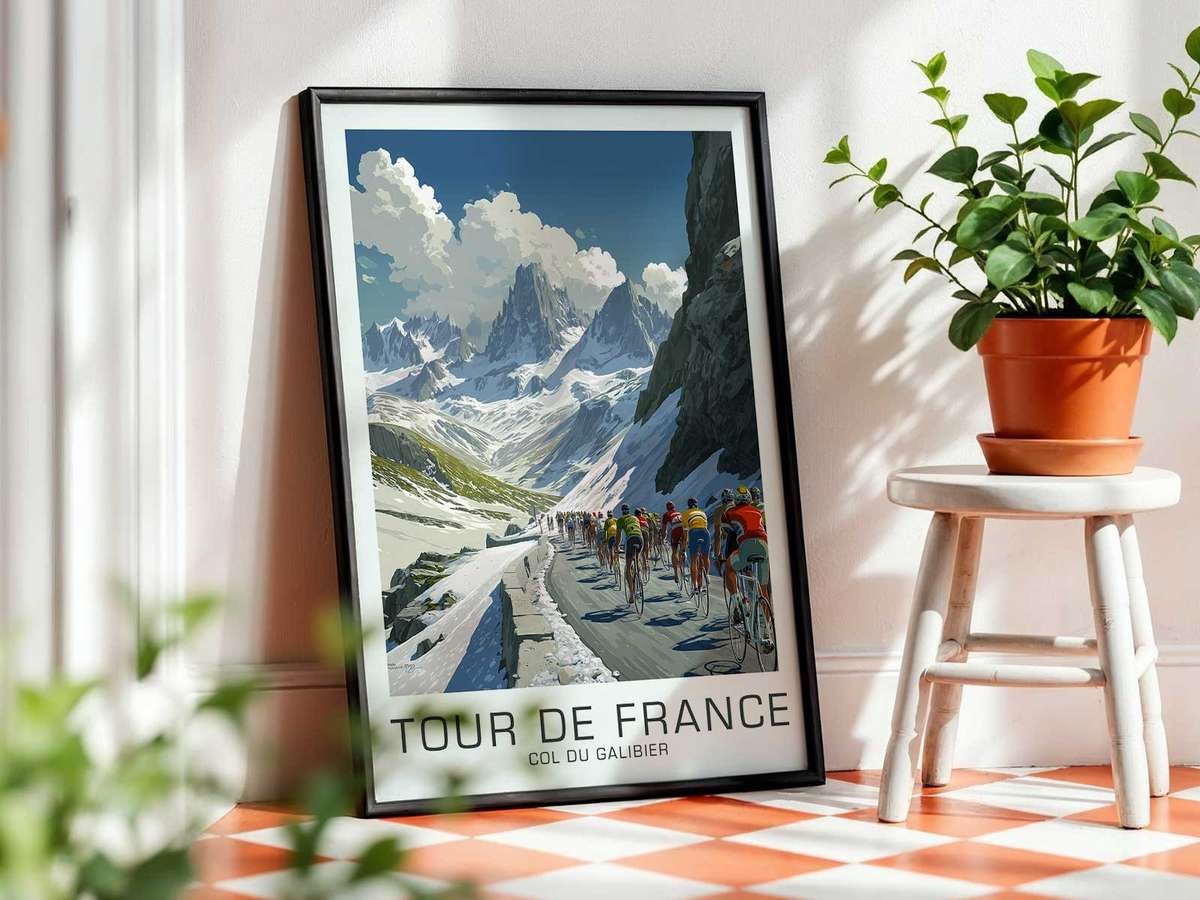
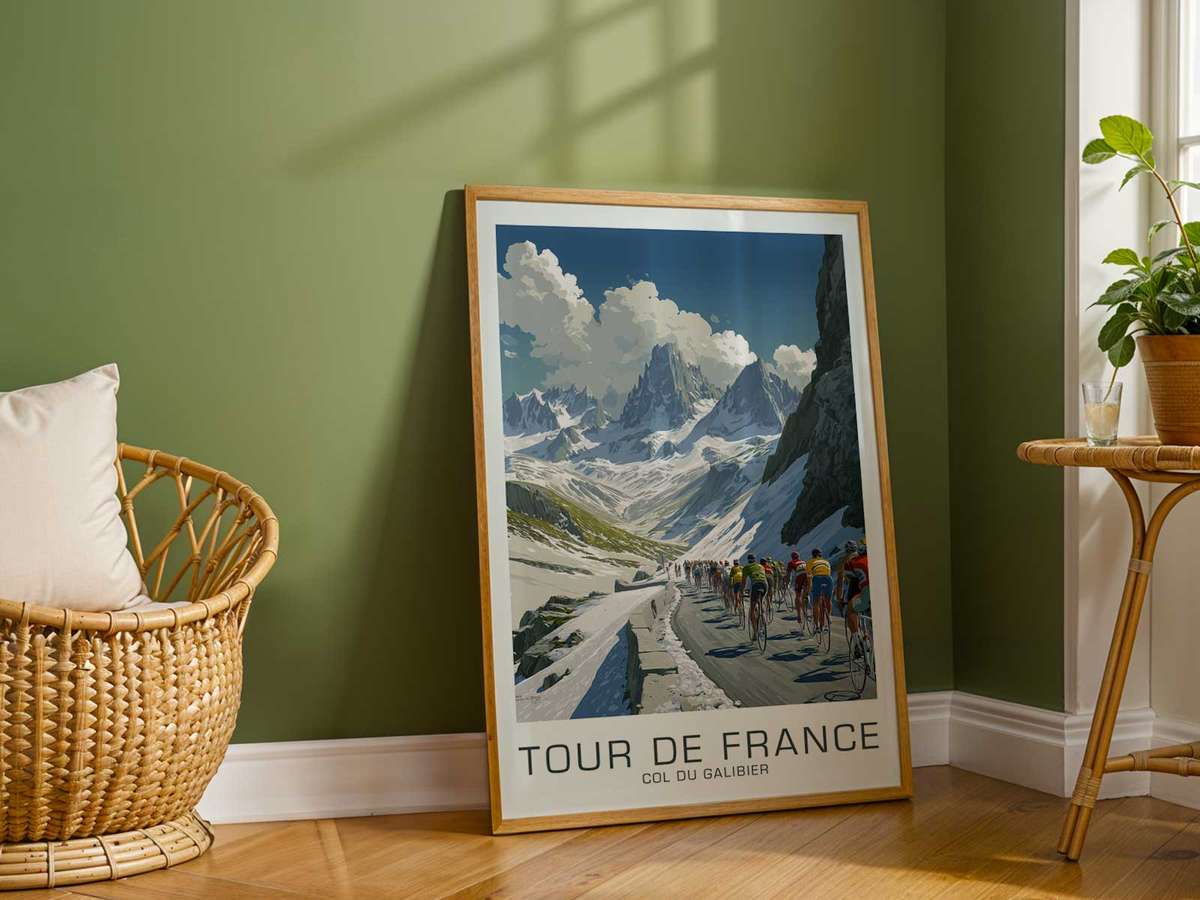
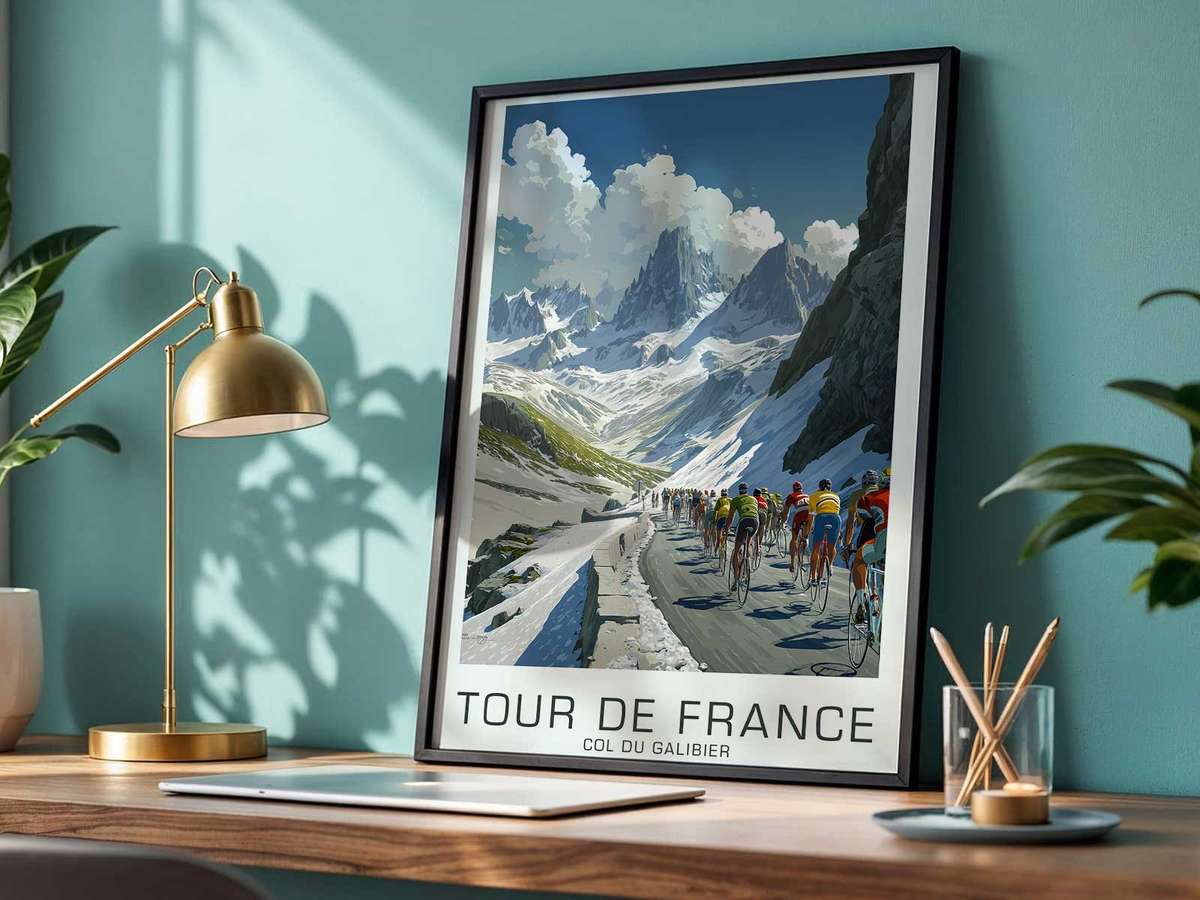
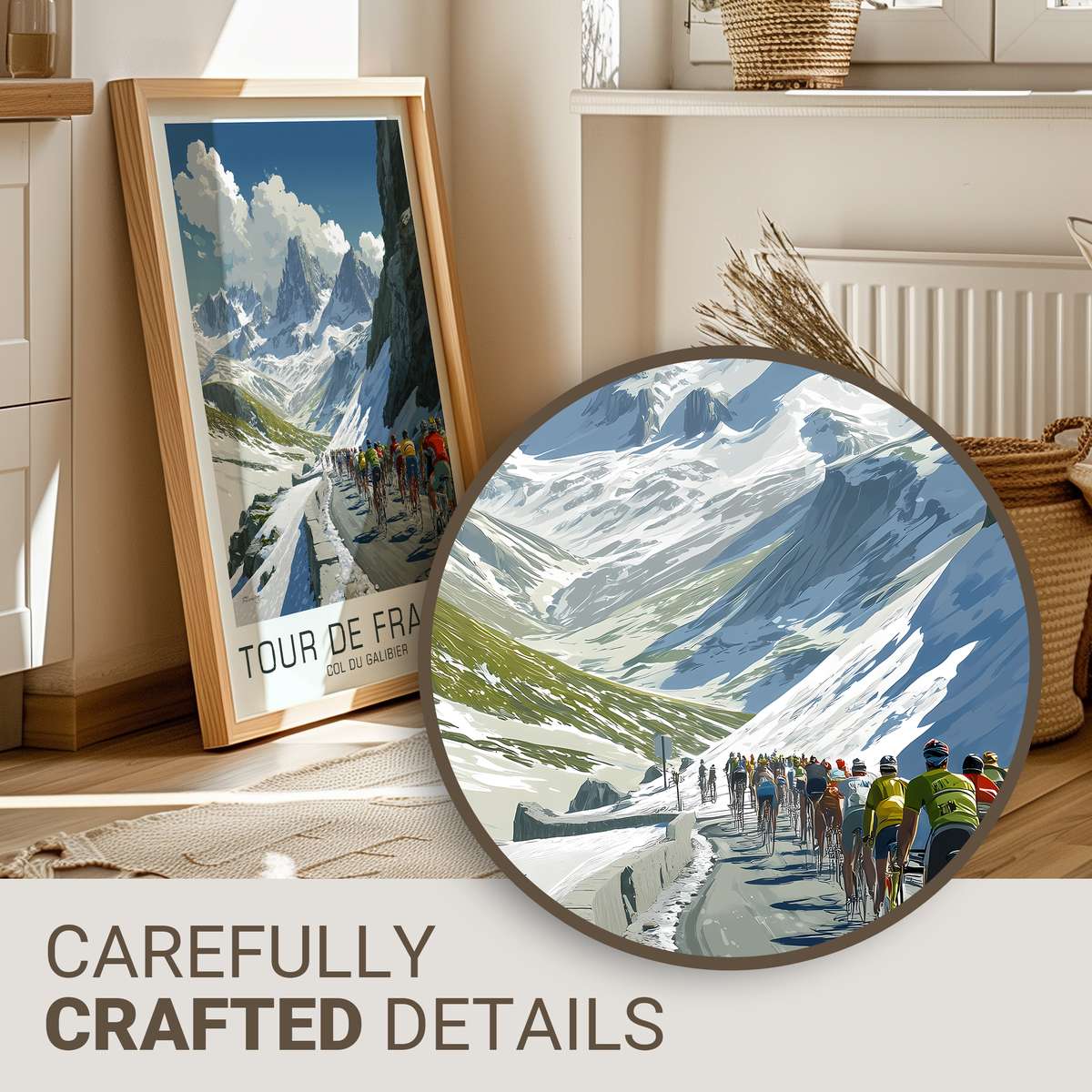
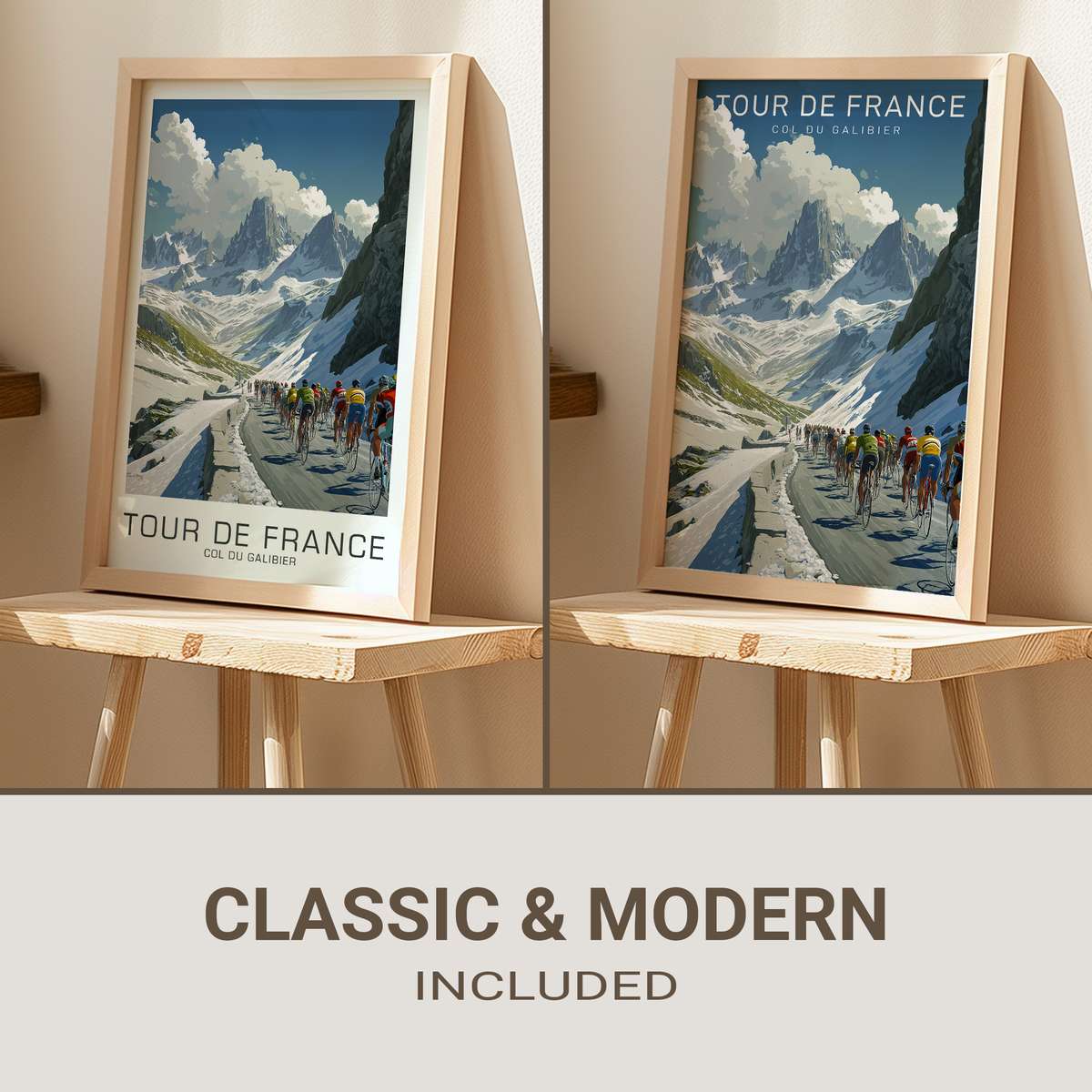
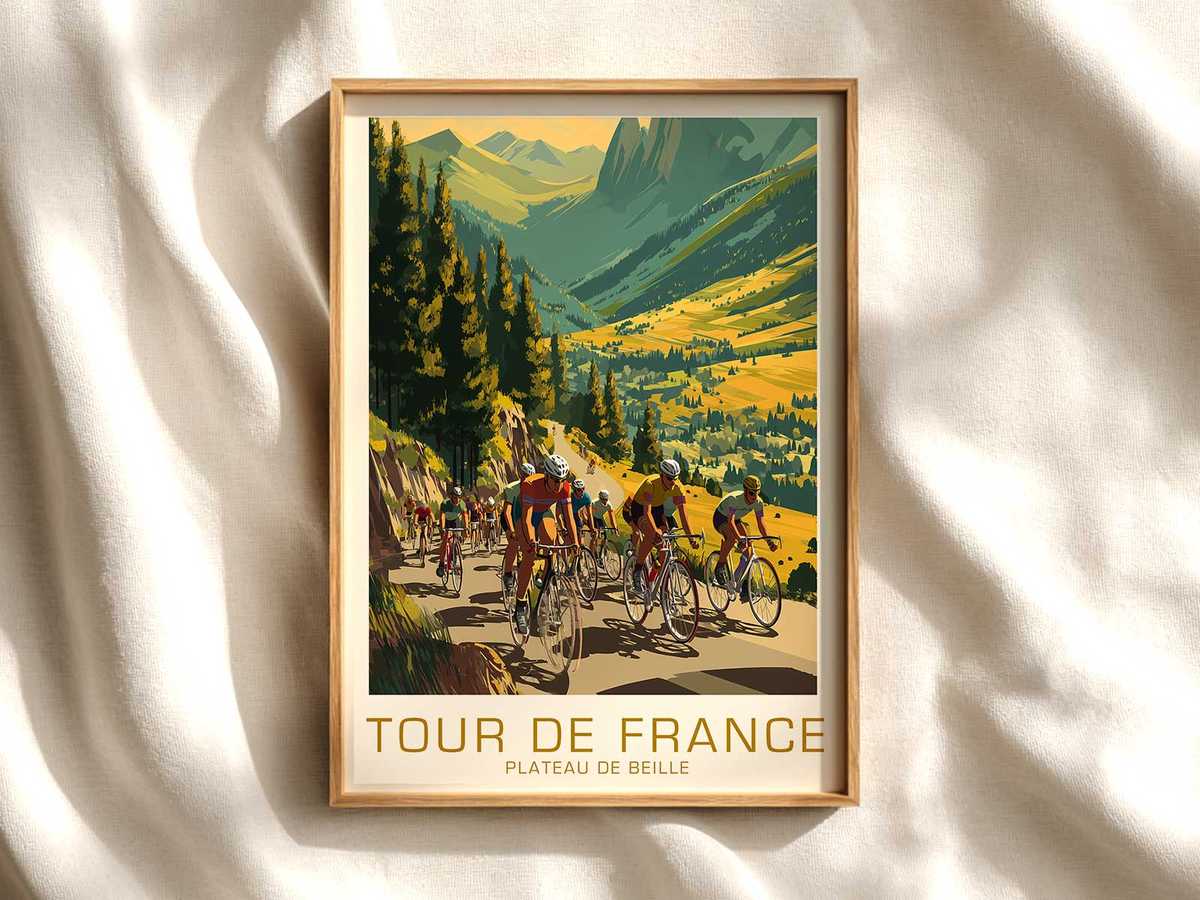
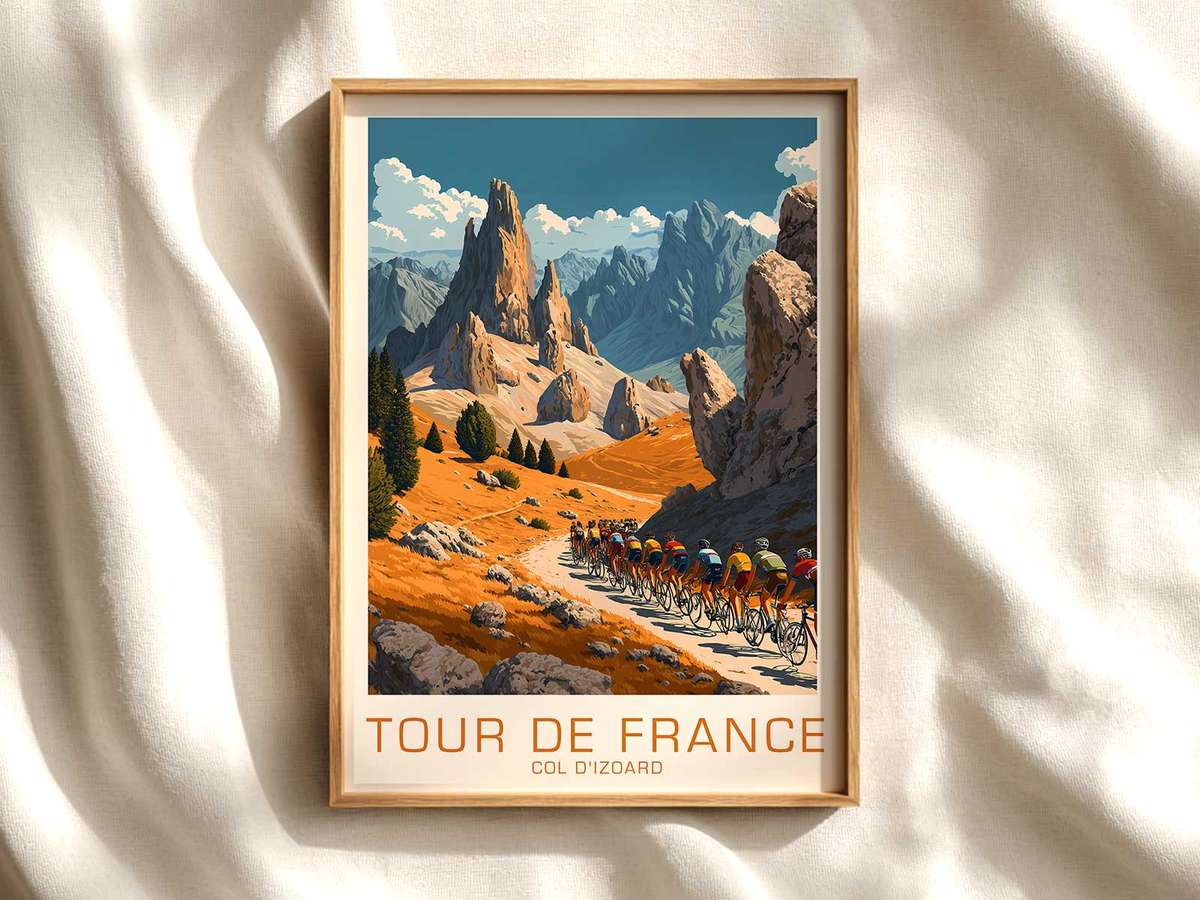
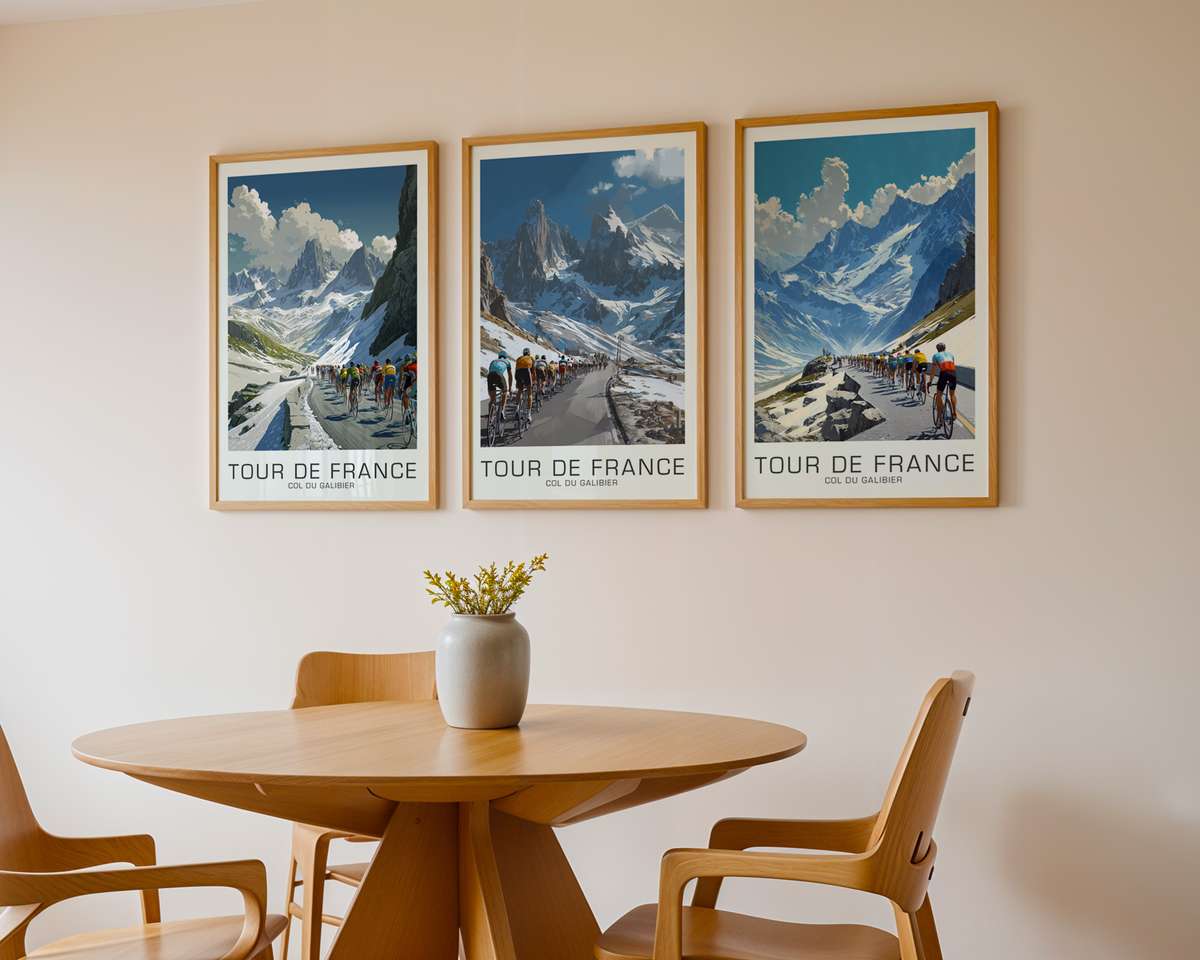
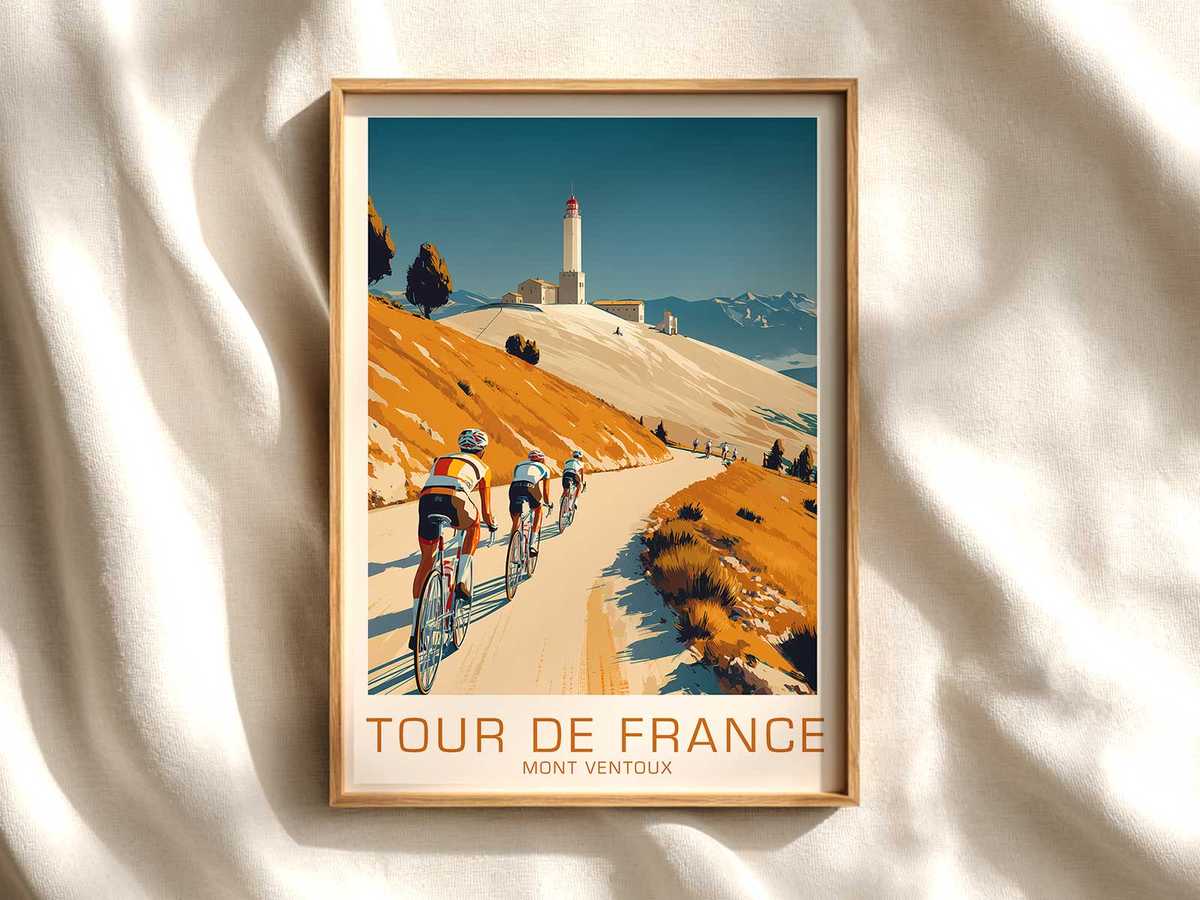
The image of a lone figure climbing toward the Col du Galibier becomes more than a portrait of a rider: it is a study in how landscape, slope and light alone can stage the drama of a great mountain day. In this Eddy Merckx poster the road is a ribbon that organizes the composition, the mountains give scale, and a spare palette of light and shadow suggests the strain and slow momentum of long climbing hours. The result reads like an elegy to sustained effort—visual proof that the experience of a stage can live on a wall as a place-based memory.
First, the road itself provides the poster’s rhythm. A rising tarmac, possibly cut with hairpins or a steady, relentless gradient, becomes the visual metronome of exertion: the angle tells you the weight of the effort, the narrowing foreshortens distance and the guardrails, cairns or roadside stones mark measurable progress. When a poster reduces these elements to a few decisive lines, the mind supplies cadence, breath, and the grinding repetition of pedal strokes. That is how slope becomes drama rather than mere backdrop.
The mountains frame the emotion. Col du Galibier evokes high altitude—air thinned, horizons opened, peaks that look carved from hard light. In print, those features translate into negative space and texture: broad swathes of sky set against serrated ridges, a scale that dwarfs the human figure and simultaneously dignifies it. When altitude is suggested rather than annotated, the viewer feels the altitude through proportion: the rider’s smallness suggests a long route, a solitary ascent, and the heroic quiet that mountain stages impose.
[IMAGE_INSERT_ARTICLE_01]
Light is the poster’s director. A low, northern light that skims the slopes will harden rock and cast long shadows along the road, evoking the late-morning hours when the climb has already begun to take a toll. Diffused light from a cloud-swept sky softens contours and hints at cold, while a warm, westering sun can gild a summit sign, the rim of a helmet, or the metallic sheen of a frame—small details that suggest both time of day and narrative progression. The specific treatment of light turns geographic fact into mood: alpine austerity, a skeletal clarity, or the cinematic sweep of a decisive stage.
Villages and roadside textures anchor the legend in human scale. A stone house, a chapel at a pass, a cluster of spectators or a simple summit marker does more than localize the scene: it shows how place and people receive the race. Even when shown sparingly, these details produce a sense of pilgrimage—the small rituals that line a mountain stage. In a poster, such elements become punctuation marks: a roadside flag, a distant cluster of figures, a smear of color from a support car—each implies crowds, noise, and the ephemeral civic theatre the Tour brings to remote places.
Finally, the image’s restraint is its persuasive power. Rather than shouting with logos or results, the print invites projection: you imagine the rider’s breathing, the click of gears, the hush of altitude. The bicycle silhouette—the elegant curve of frame and wheels—becomes a symbol of endurance, not only a sporting object. This interpretive space is what makes stage-led imagery appealing in interiors: it sits quietly in a living room or study but carries a charge of motion and history, like a window onto an austere moment of effort.
When brought into a room, a poster of the Galibier climb transforms atmosphere through specificity. It is the road’s pitch that introduces tension; the mountain’s scale that brings humility; the light that sets emotional temperature; and those few human traces that connect memory to place. Together they make the poster not merely decorative but narratively rich—an invitation to recall the endurance of a single climb and the larger romance of the Tour.
Decor tip: hang the print where natural light can change its tones during the day—morning clarity heightens altitude, evening glow emphasizes the heroic silhouette.