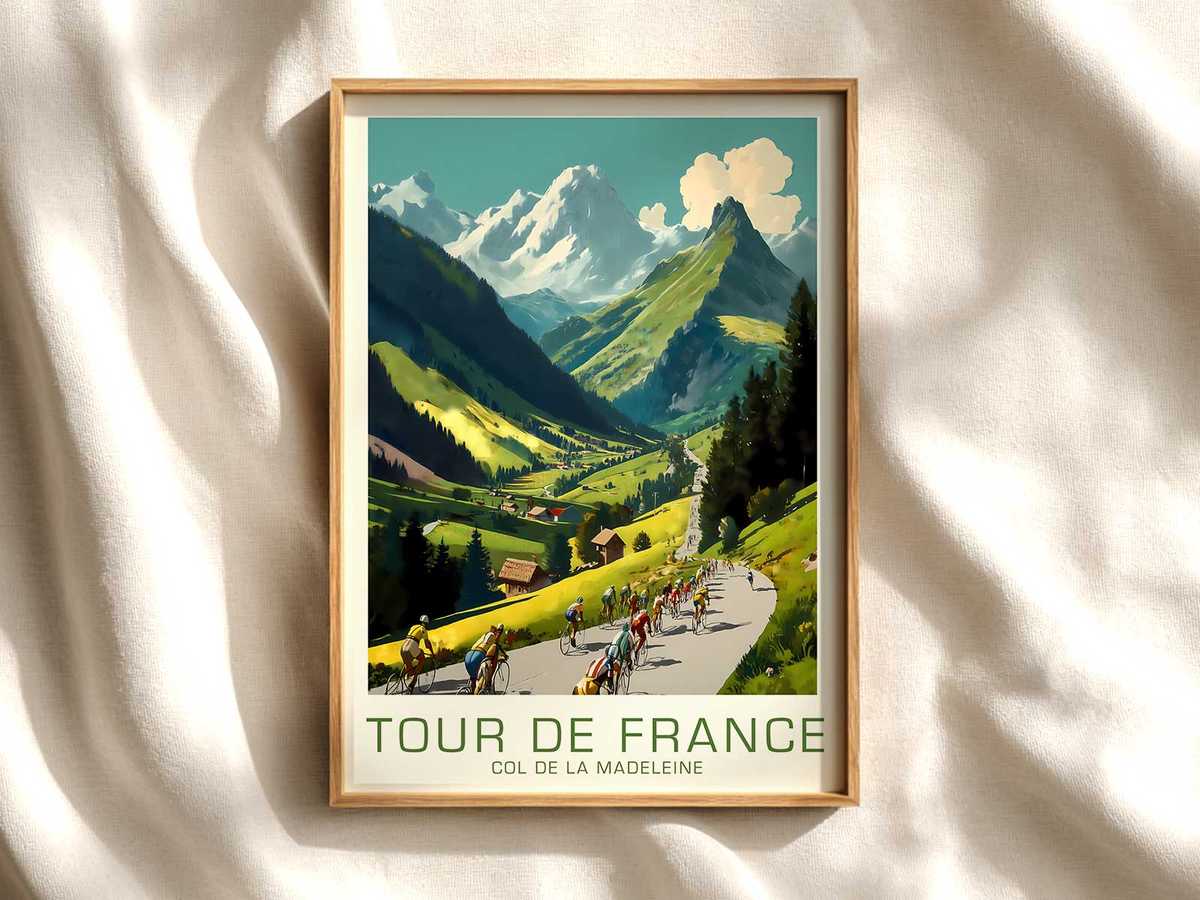
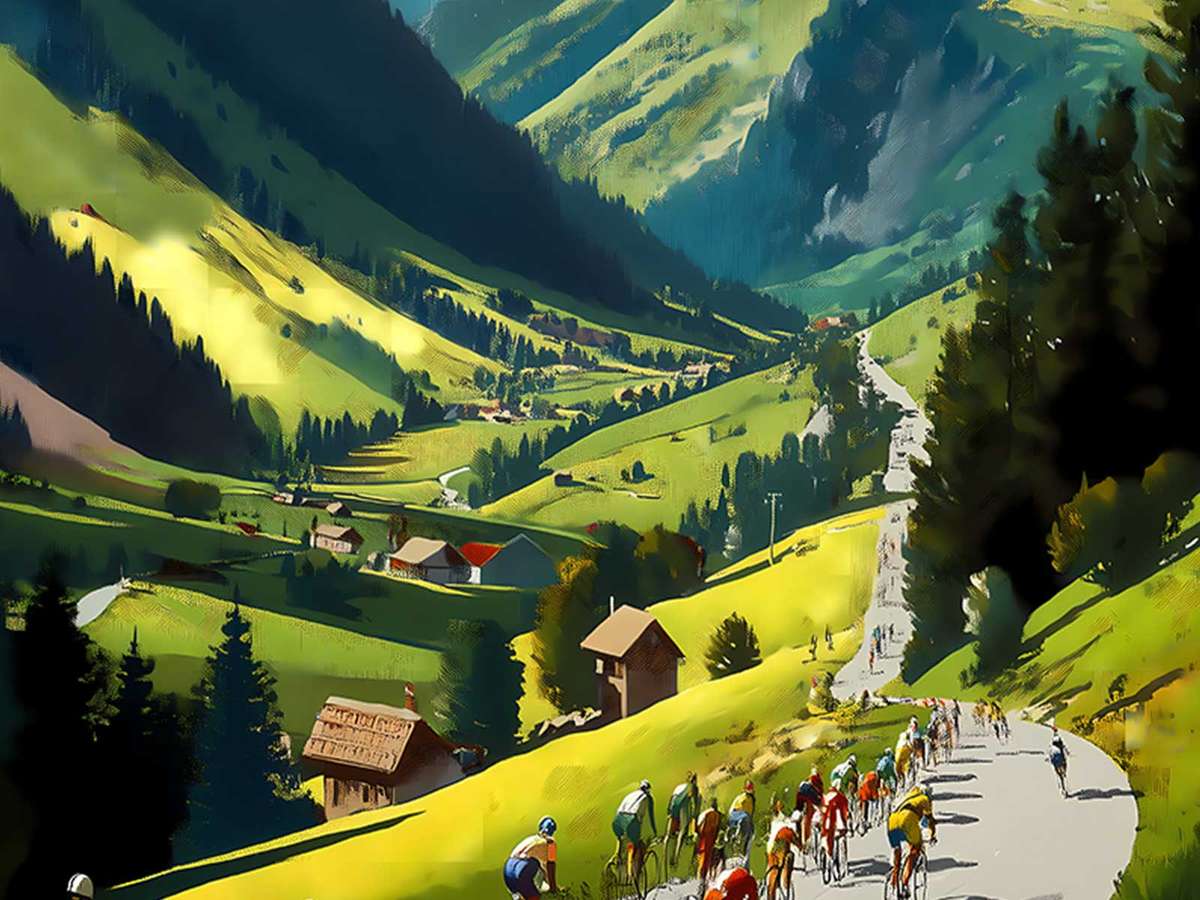
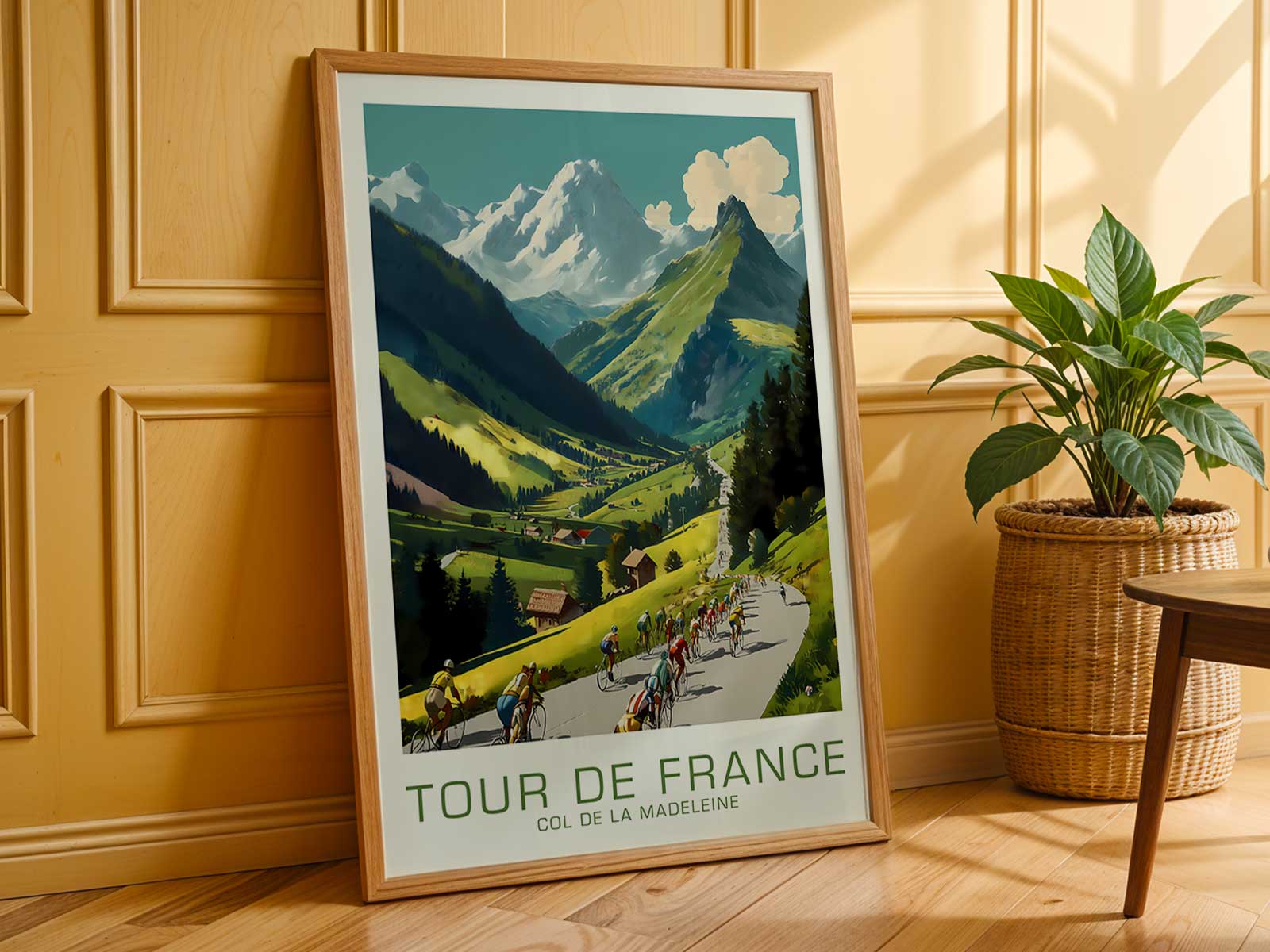
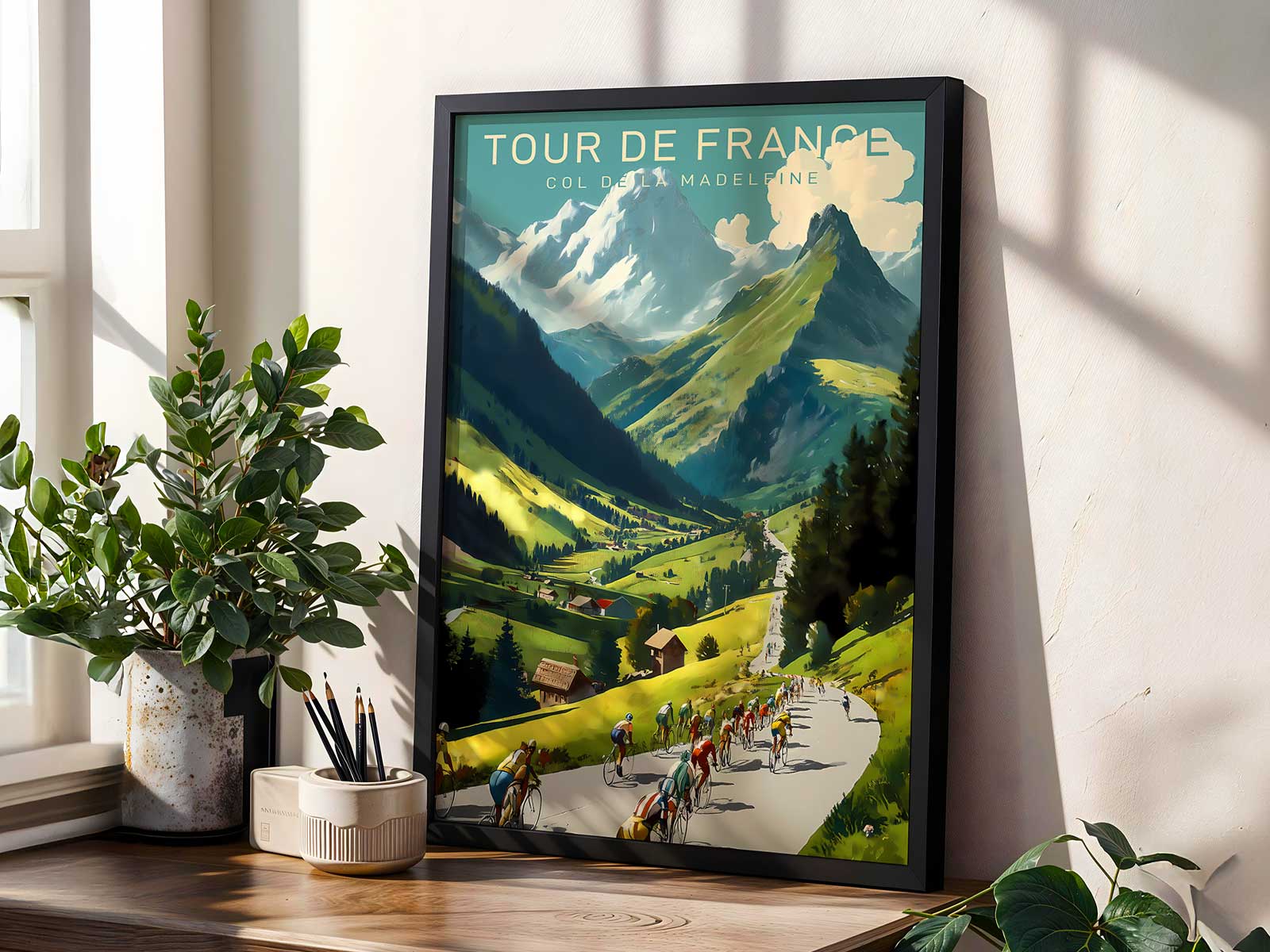
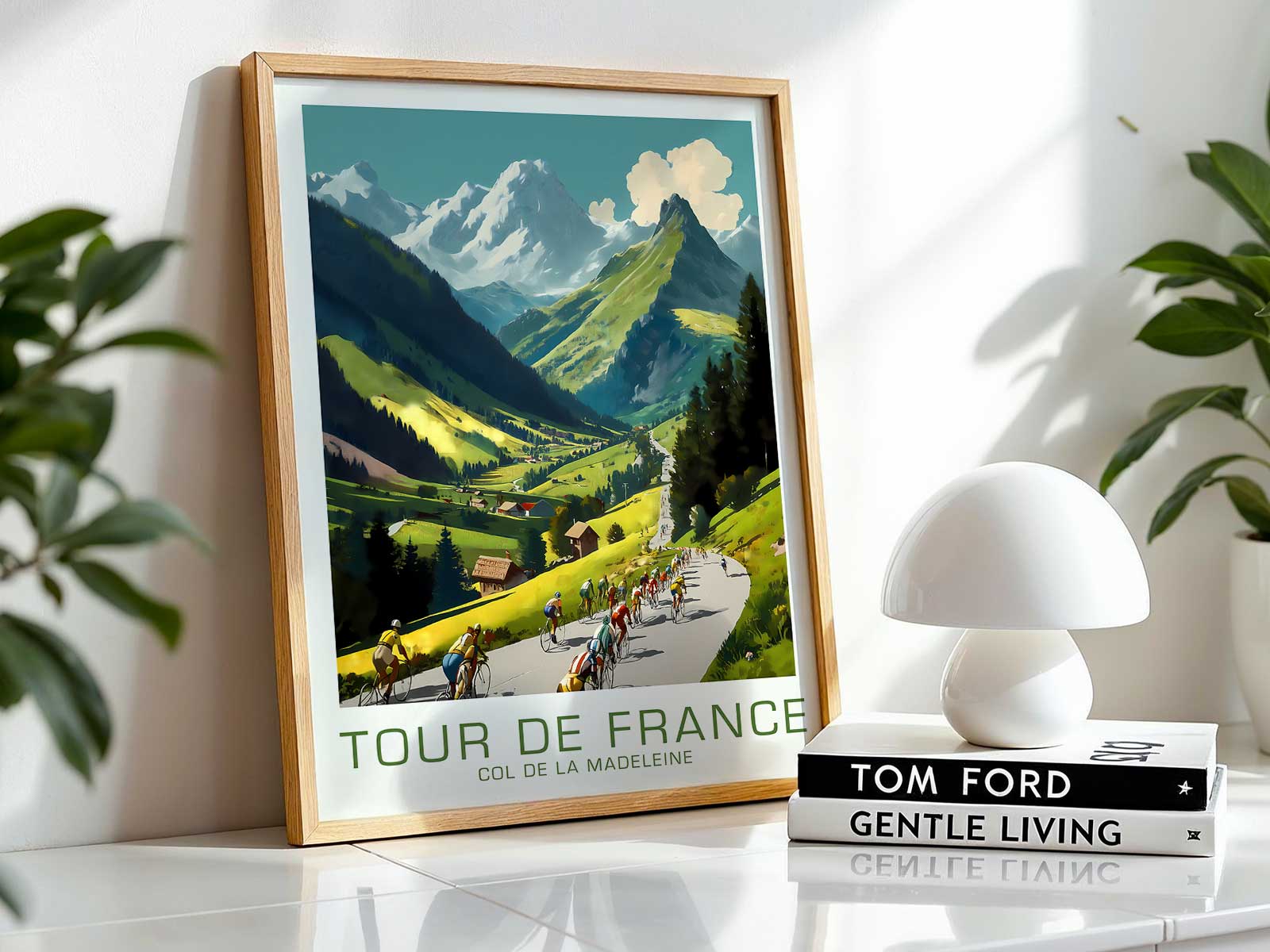
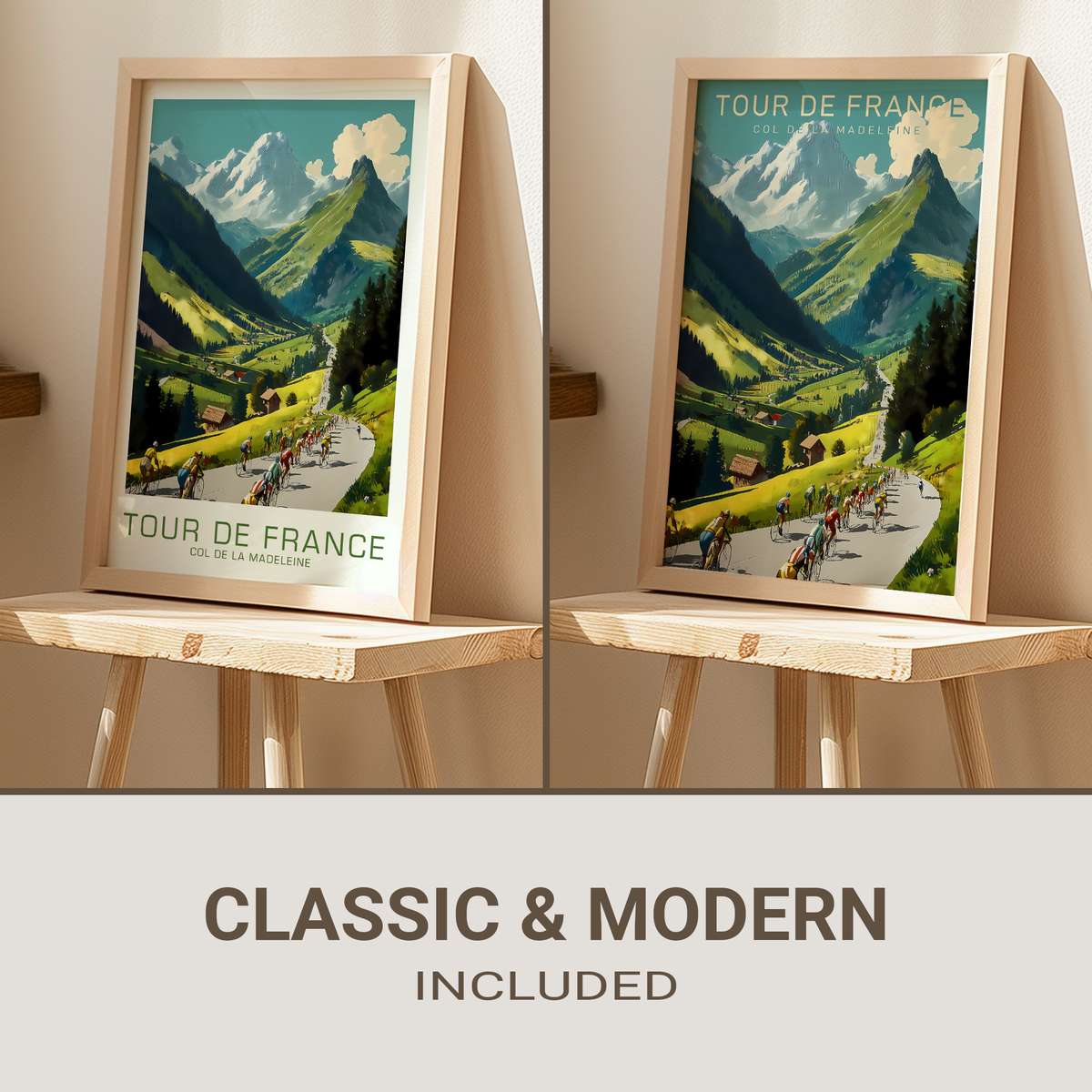
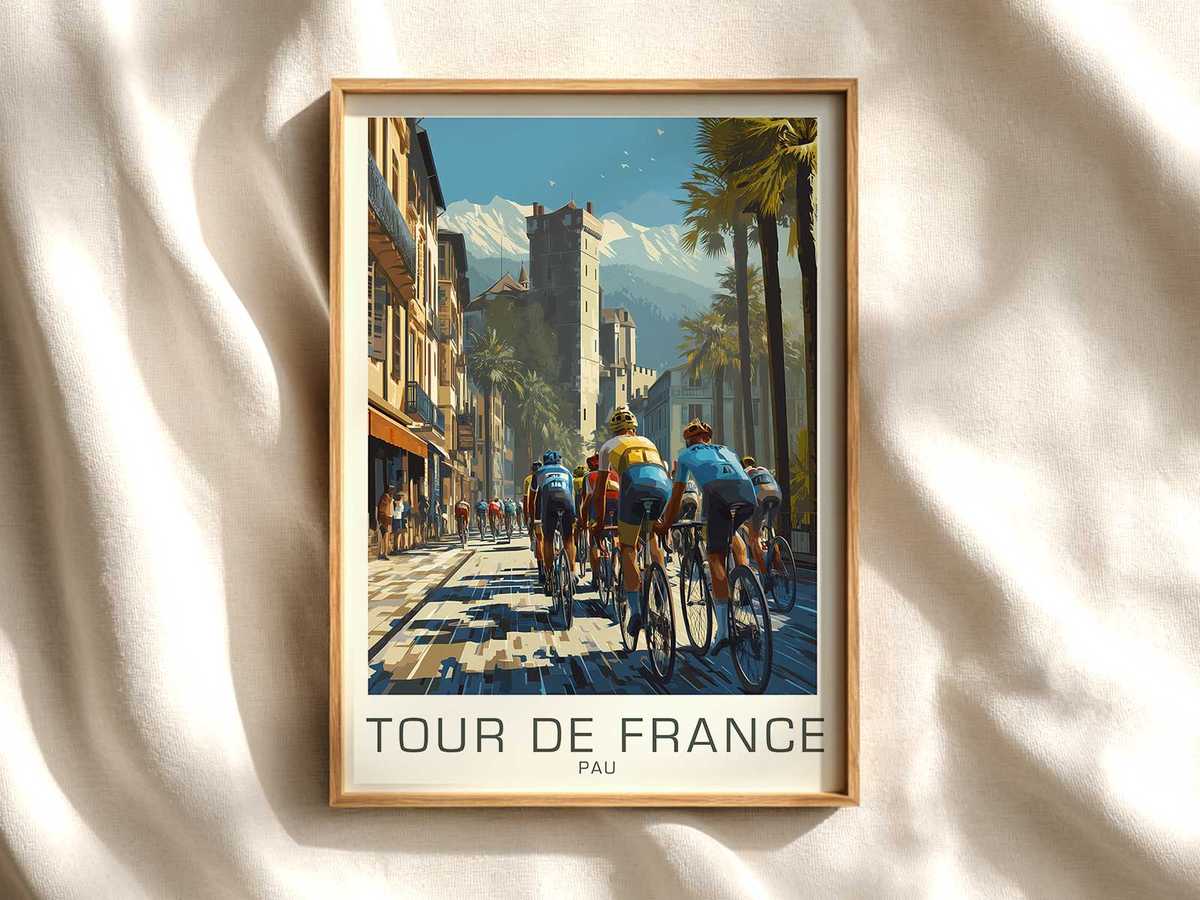
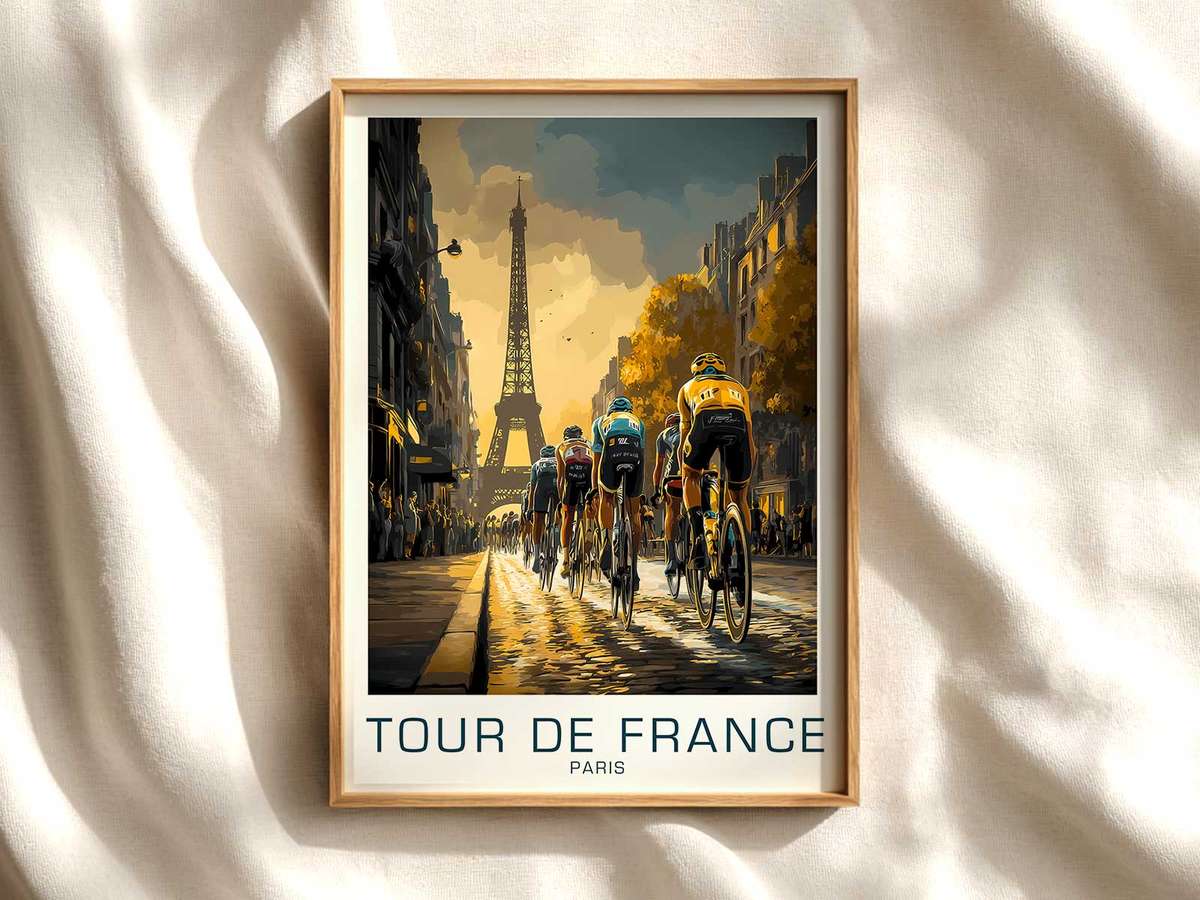
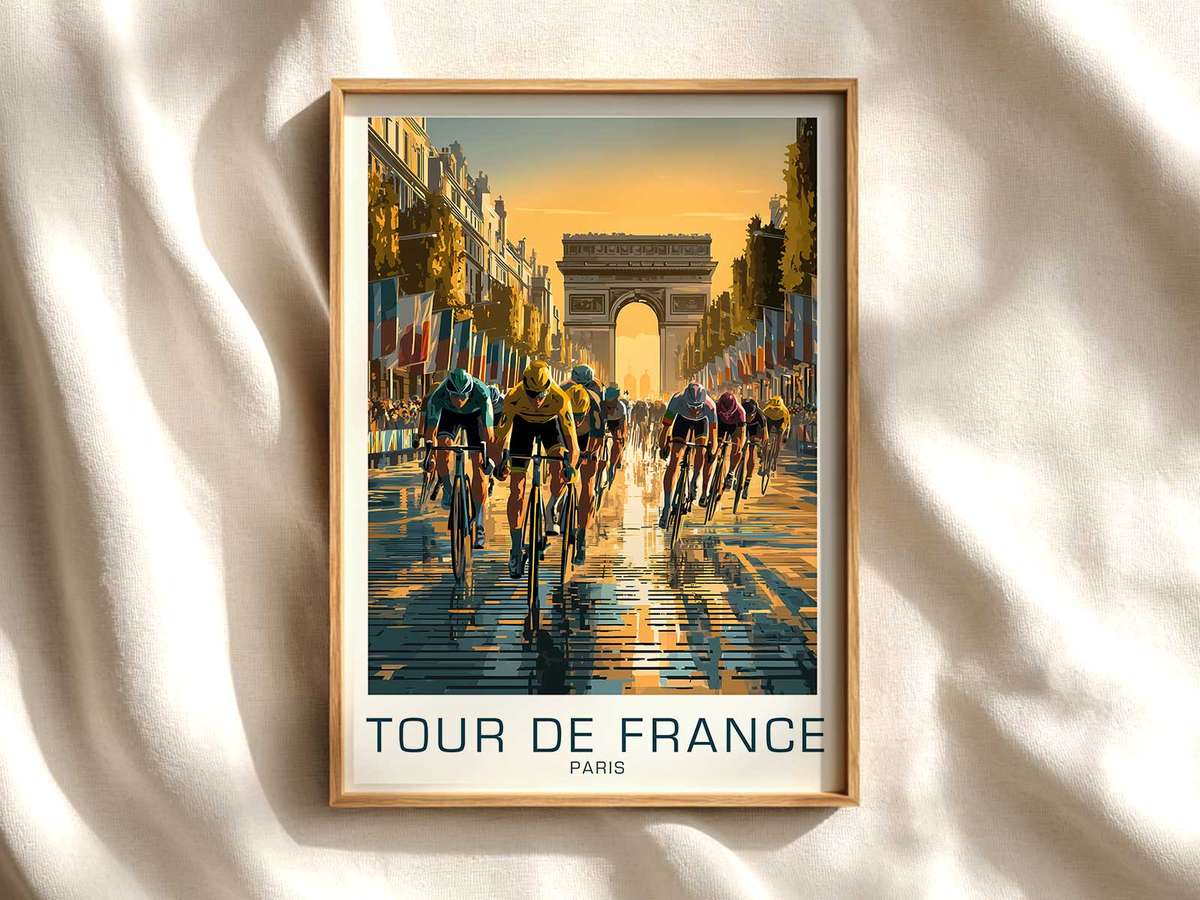
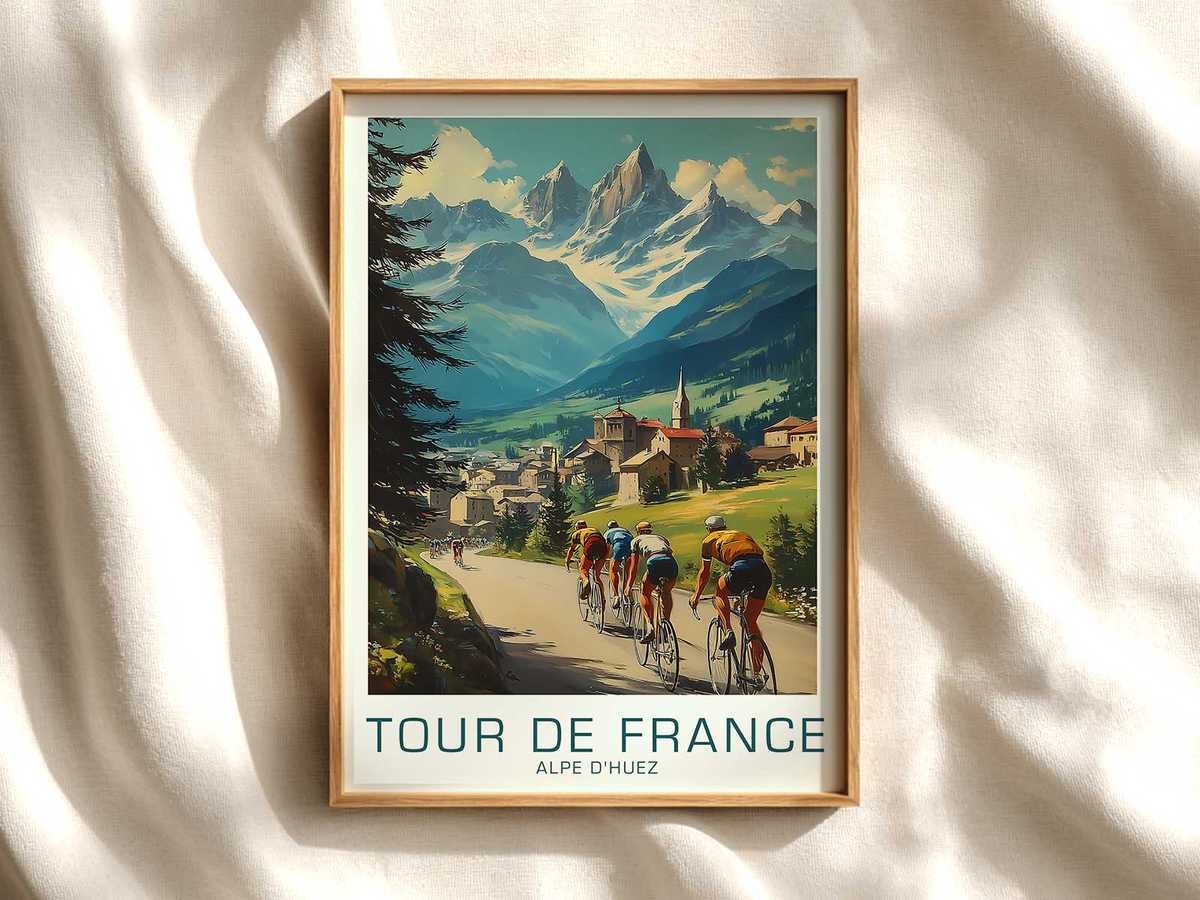
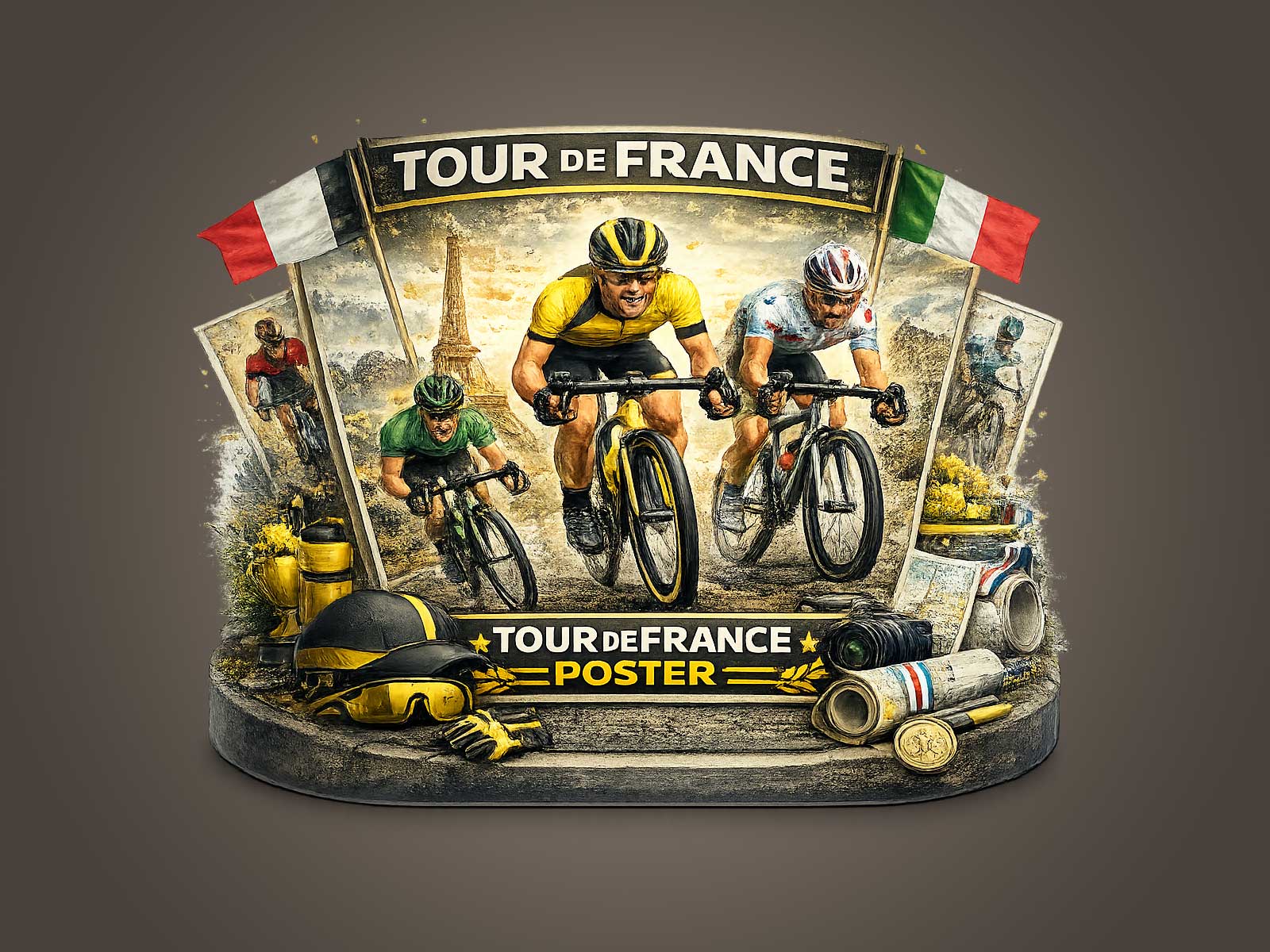
There are images that read like a short story: a single frame that contains the set-up, the conflict and the unsaid outcome. A poster of the Col de la Madeleine, focused on one charged instant of racing, does exactly that. It reduces hours of climbing, tactical planning and physical sacrifice into a compositional heartbeat—where gradient, posture and opponent proximity speak louder than results or commentary.
What the eye first registers is the geometry of effort. The rider’s torso is low, cadence compact, the shoulders taut; every millimetre of body language suggests sustained power and acute fatigue. The road’s incline becomes a graphic element: an angled line that both supports and opposes the athlete. On Col de la Madeleine—a climb famed for its long gradients—this slope is not background scenery but an active opponent. Captured at the precise moment a rider corners, accelerates or tightens to match an attack, the photo poster translates kinetic urgency into stillness without losing the tension of movement.
Timing is the image’s secret engine. This is not a portrait of triumph but a slice of uncertainty: the moment just after a surge, the few seconds before a chase organizes, when rivals hover dangerously close and the race’s balance can tip. In compositional terms, proximity of rivals compresses the field into visual pressure; hands on the hoods, wheels almost touching, helmets turned slightly toward one another—these details narrate intent. The viewer supplies the next frames, imagining whether an attack will stick, a gap will open, or the group will reel the escapee back in.
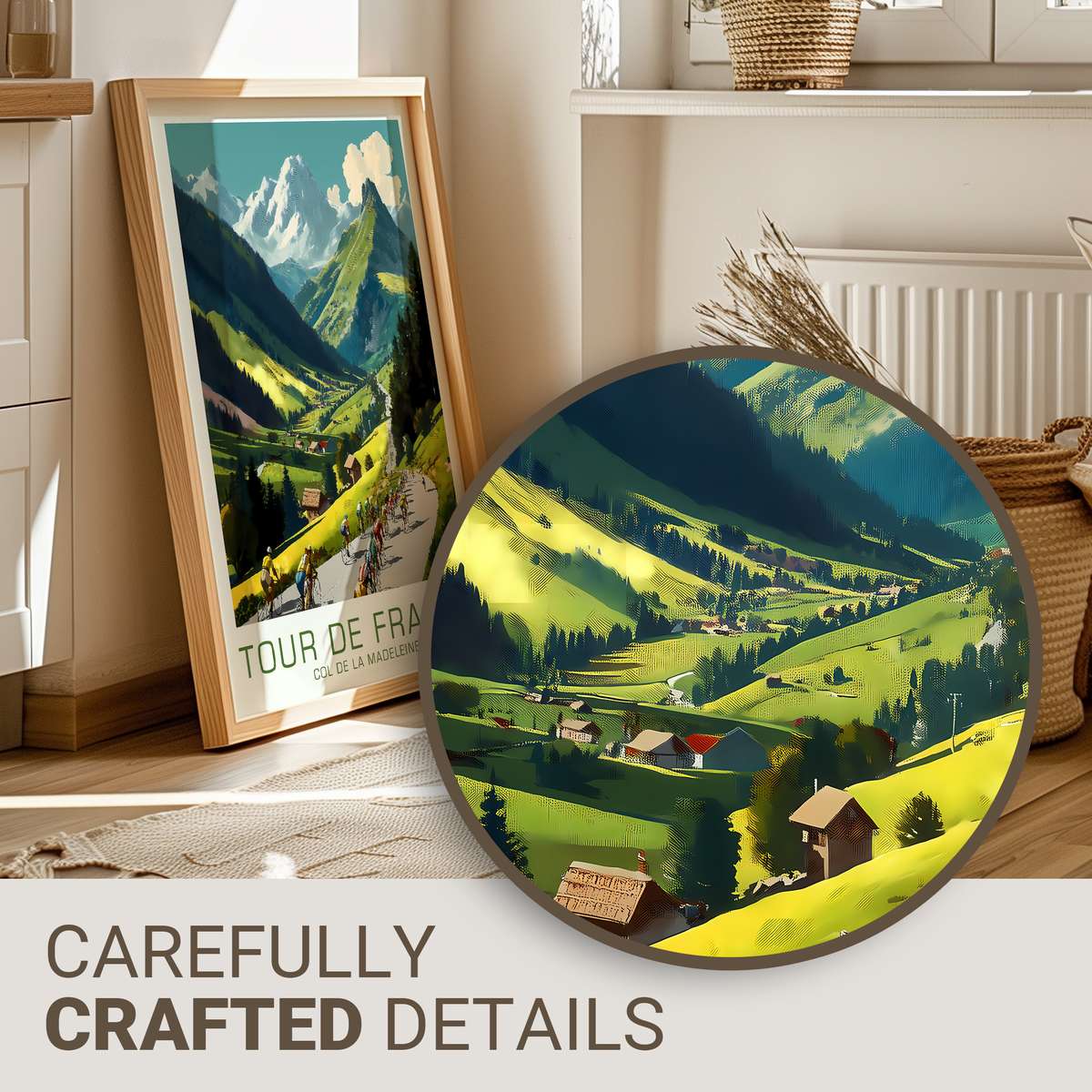
The lighting and colour palette in such posters often lean toward restraint—muted sky, weathered asphalt, the deep cloth of team kits—so that the image feels like a distilled memory rather than a spectacle. That restraint is what gives the artwork its premium quality: the eye is invited to read texture and expression rather than be distracted by excess. The bicycle becomes an elegant silhouette, its lines echoing the ridge of the mountain. These formal choices turn a sporting moment into an objet d’art that reads as both reportage and design.
[IMAGE_INSERT_ARTICLE_01]
Emotion arrives through small, honest signals. A rider’s clenched jaw, the tension in a forearm, a bead of sweat tracked back along a temple—detail anchors empathy. The implied noise of the scene—the laboured breathing, the soft mechanical clicking, the shouts of directors—does not need to be audible. The poster’s ability to suggest these sensory layers is what makes it compelling on a living-room wall or above a study desk: it invites recollection, speculation and personal projection.
Critically, this kind of race-moment poster tells you something true about the Tour de France itself. It’s a portrait of endurance and strategy compressed into a single decision point: choose to follow or to go, to conserve or to commit. In that instant the climb becomes an arena for courage and calculation. Displayed in a room, the image shifts the atmosphere from decorative to narrative. It rewards quiet inspection, ignites conversation and holds the viewer’s attention because every repeated glance reveals another tactical or human detail.
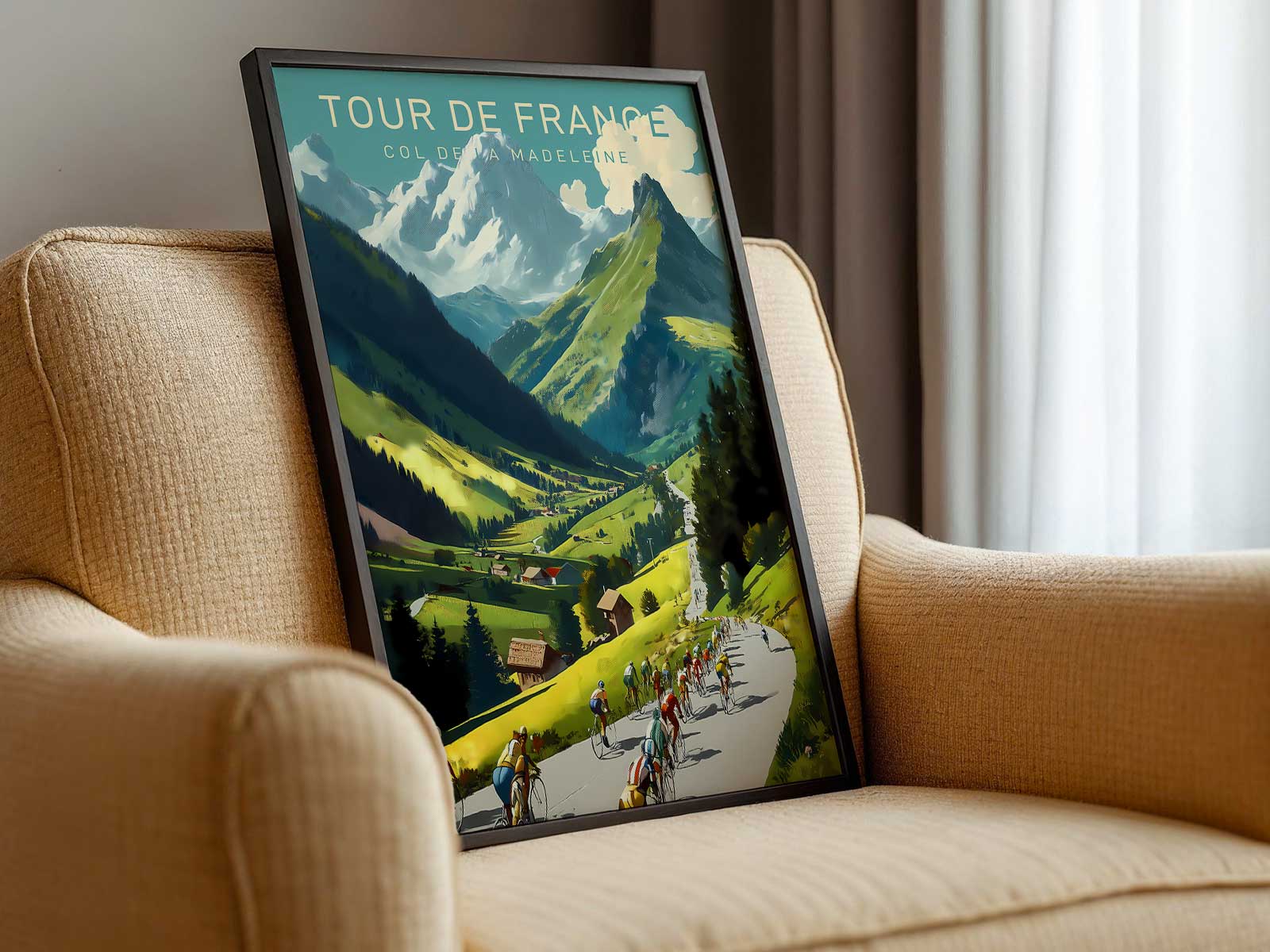
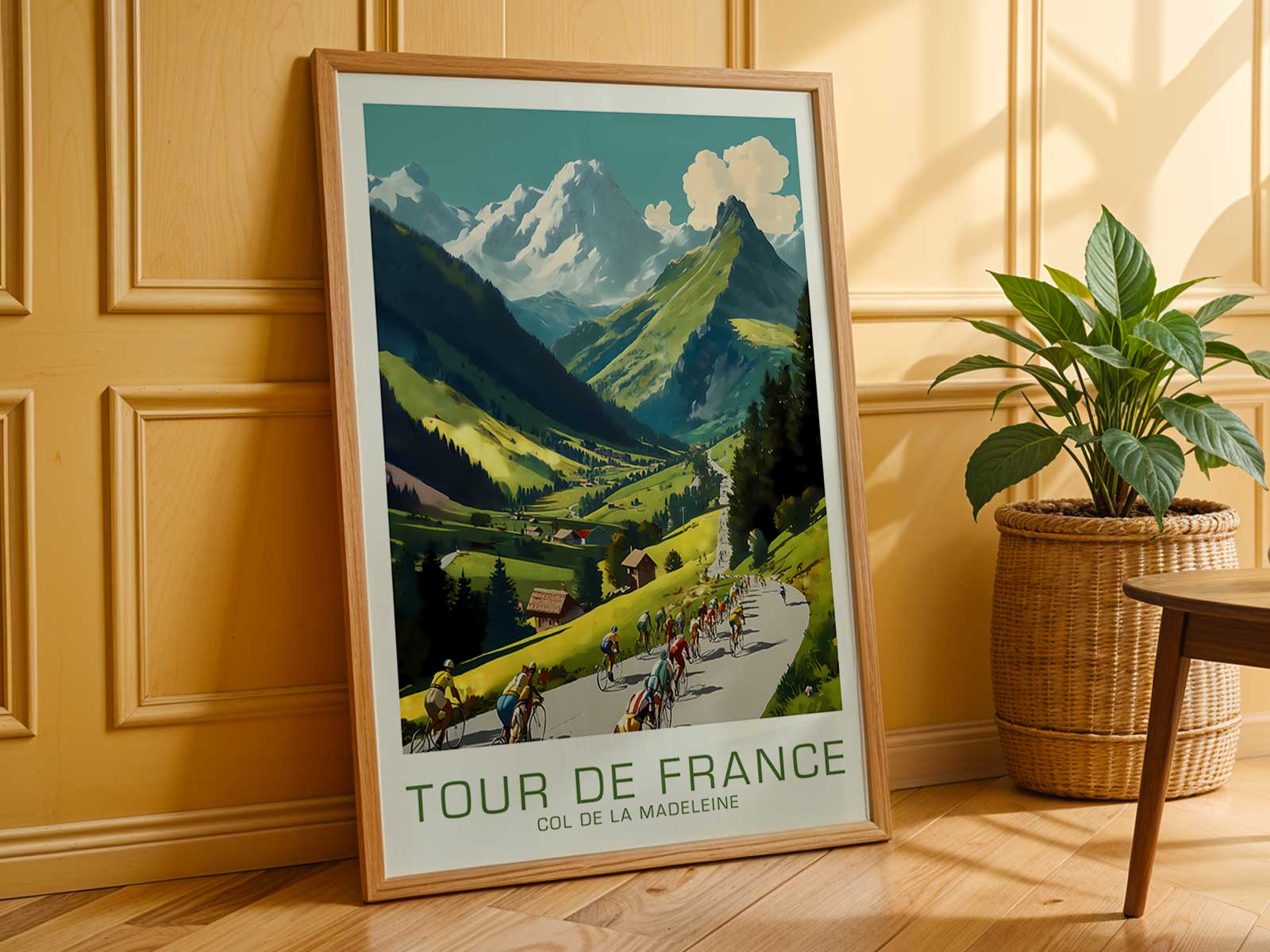
For interiors, the poster functions as a focused visual anchor. Its vertical energy suits a narrow wall above a console or beside a bookshelf; its subdued tones complement wood, leather and neutral textiles without overwhelming a space. More importantly, it brings a story—an unresolved, living story—into a home or office. Unlike an action shot of a finish line, the Col de la Madeleine moment retains a moral ambiguity that feels more honest: it is about endeavour as much as outcome.
In short, a classic Tour de France poster that captures a Col de la Madeleine instant does more than memorialise a climb. It freezes a tactical decision, a physical negotiation and an emotional pressure point. The result is an image that reads cinematic and intimate at once—a visual narrative that rewards viewers with depth, texture and the persistent question of what happens next.