Yellow jersey Tour de France explained: what it means for the GC and why it…
The yellow jersey (maillot jaune) is the single most recognisable symbol in the Tour de France. Worn each day by the rider leading the general classification — the rider with the lowest cumulative time — it shapes team tactics, TV storylines and the race's overall drama. This article explains what the yellow jersey is, how it works in stage racing, why it was introduced in 1919 and why it became cycling’s iconic garment.
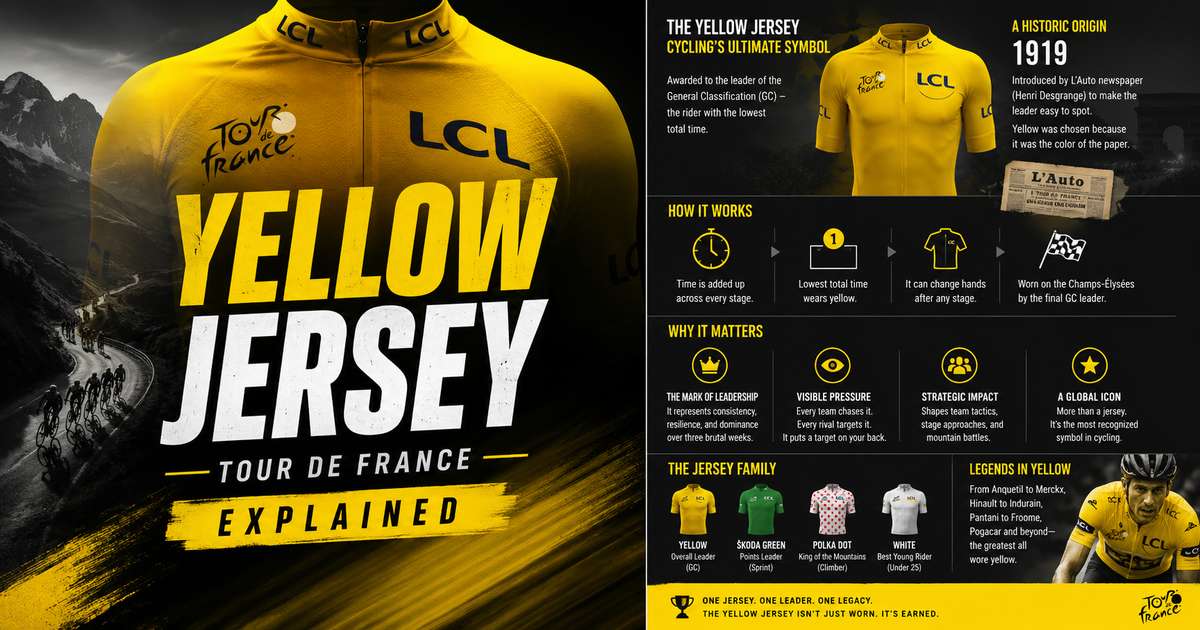
The yellow jersey is awarded daily to the rider with the lowest aggregate time in the Tour de France. It was first introduced and worn on 19 July 1919, with Eugène Christophe the first rider to wear it. The colour is most commonly linked to the yellow newsprint of L'Auto, the newspaper that organised the race; since 1987 the jersey has been associated with sponsor Crédit Lyonnais (LCL).
Definition: what the yellow jersey means
The yellow jersey is the distinctive shirt worn by the rider who leads the Tour de France general classification (GC). "Leading the GC" means having the lowest cumulative time across all completed stages; the rider in yellow at the end of the final stage in Paris is the overall winner. The maillot jaune is therefore both a daily award and the visible marker of overall race leadership.
History and 1919 origin
The yellow jersey was introduced during the 1919 Tour de France and was first worn on 19 July 1919. Eugène Christophe is recorded as the first rider to wear the maillot jaune. The most commonly cited reason for the yellow colour is its match with the yellow newsprint of L'Auto, the newspaper that organised the race; authoritative sources reference that origin. Over time the yellow jersey moved from a practical identifier to the race's central emblem.
How it works in the general classification
In practical terms the yellow jersey is awarded each day to the rider with the lowest aggregate time after the stage is completed. Time gaps earned on road stages, in time trials, on climbs and through tactical moves all feed into that cumulative total. Wearing yellow does not change the basic rules of racing, but it does change the incentives for the rider and their team: they must defend the overall lead and manage efforts across stages to avoid losing time to rivals.
Why the yellow jersey matters in racing and tactics
The yellow jersey concentrates attention on one rider and their team. Defending the maillot jaune often requires teammates to control breakaways, chase dangerous attacks and set tempo on key climbs or in crosswinds to prevent time losses. For rivals, the presence of a yellow jersey defines tactical targets: some teams will force hard racing to isolate the leader, others will save energy to attack on decisive days. The jersey therefore shapes stage-by-stage strategy across the three weeks of the Tour.
Cultural significance: why it became cycling’s symbol
From a simple identifier it became the Tour’s signature emblem because it links daily drama to the overall title. The visual clarity of a single yellow shirt makes race stories easy for spectators and media to follow. Organisers and sponsors have reinforced that status: since 1987 Crédit Lyonnais (LCL) has been associated with the yellow jersey and the presentation rituals that accompany it. That continuity — a visible leader, daily presentations and a strong sponsor link — turned the maillot jaune into one of sport's most recognisable garments.
Common misunderstandings
Beginners sometimes assume the yellow jersey is a prize for the day's stage winner; in fact it denotes the cumulative time leader, not the stage victor. Another common confusion is about the colour origin: while other explanations exist, the primary, widely referenced explanation ties the yellow to L'Auto's yellow newsprint rather than fabric availability or other factors.
Viewing guide: what to watch for on screen
When watching the Tour, note who wears yellow at the stage start and how their team rides early. The team of the maillot jaune often shoulders the responsibility of policing the race: you will see teammates near the front, closing gaps to protect their leader. Time gaps shown after finishes and at intermediate time checks directly affect who will wear yellow the next day, so small separations of seconds or minutes can have outsized narrative importance across a three-week race.
Closing interpretation
The yellow jersey is both a sporting instrument and a storytelling device. As the marker of the lowest cumulative time it structures tactical choices on every stage, while its century-long history and visual clarity make it the Tour de France's defining symbol. Understanding the maillot jaune — its origins in 1919, its daily role in the GC and its cultural weight — helps viewers read the race more sharply and appreciate how individual effort, team work and daily strategy build toward the final victory.
Author: Cynthia D.