Cycling breakaway explained: why riders attack and when they succeed
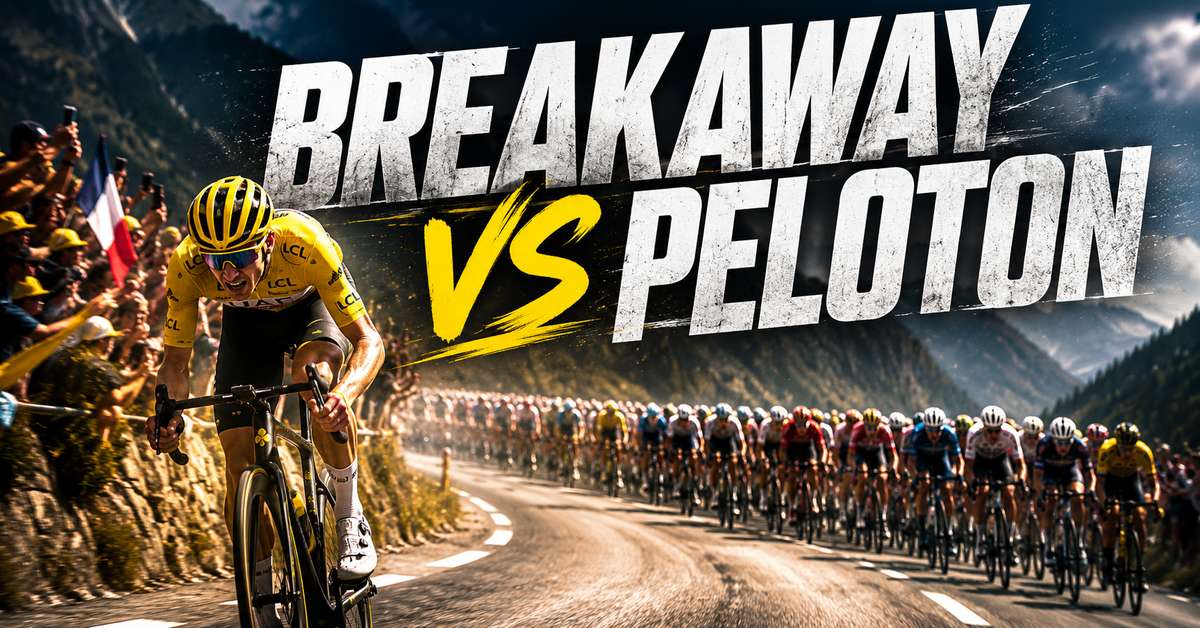
A breakaway—often shortened to a "break"—is one rider or a small group who escape ahead of the main bunch (the peloton) and try to stay away to the finish. Understanding the breakaway explained helps both beginners and fans read race tactics: a successful escape can win a stage, collect points, or force rivals into hard work while a failed attempt reveals how the peloton’s physics and teamwork usually reassert control.
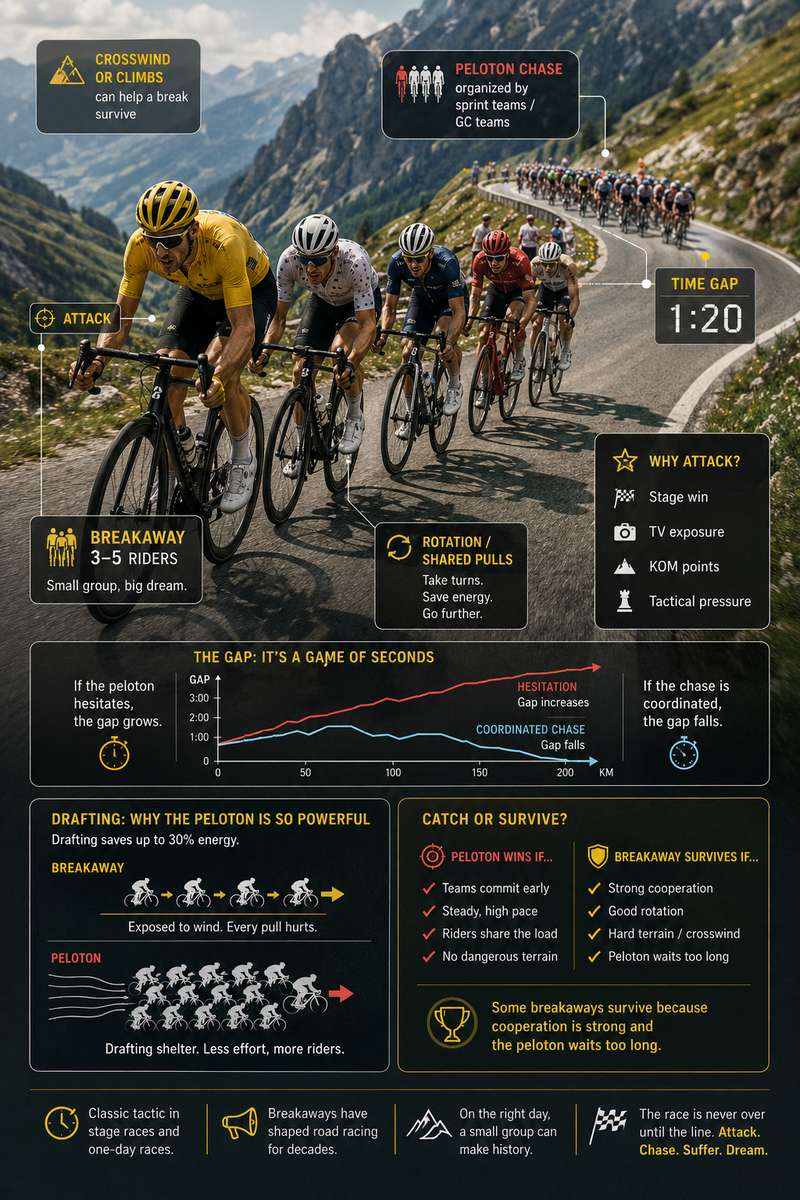
A breakaway is one rider or a small group ahead of the peloton. Riders attack to win stages, gather points, gain TV time, or help teammates. The peloton drafts efficiently, so teams calculate gaps and decide whether to chase. Breaks survive when cooperation, rider strength, terrain, or tactical avoidance by the peloton align.
CLEAR DEFINITION
In road racing terms a breakaway (or break) is one rider or a small group who ride ahead of the peloton and attempt to stay away until the finish. It is a visible tactical situation: the race splits into a front escape and the main bunch, and time gaps between them are tracked and managed by teams and sporting directors.
HOW IT WORKS
Breaks form when one or more riders accelerate away from the peloton and the main group fails to match the move. Once clear, break riders must expend more energy because they cannot take as much advantage of drafting as the peloton can. Teams in the peloton monitor time gaps using radios and live data and calculate how fast they must ride to reel the break in; such calculations are influenced by speed, remaining distance, wind and gradient.
WHY RIDERS ATTACK
Riders join or initiate breakaways for several reasons: to try for a stage win, collect intermediate sprint or mountain points, gain television exposure for their sponsors, earn the combativity or most-aggressive-rider prize, or to set up tactical advantages for their teammates by forcing rivals to chase. An individual’s motives often depend on their rider type—breakaway specialists, rouleurs or puncheurs may target different stages.
TACTICS AND TEAM STRATEGY
Teams decide whether to chase based on who is in the break and how the break affects their goals. Sprint teams will often organise a chase on a flat stage to deliver a bunch sprint, while general classification teams will chase if the break contains a rider who threatens overall standings. If several teams already have riders represented in the break, they are unlikely to contribute to the chase, leaving other teams to shoulder the workload.
PELOTON PHYSICS AND TIME-GAP MANAGEMENT
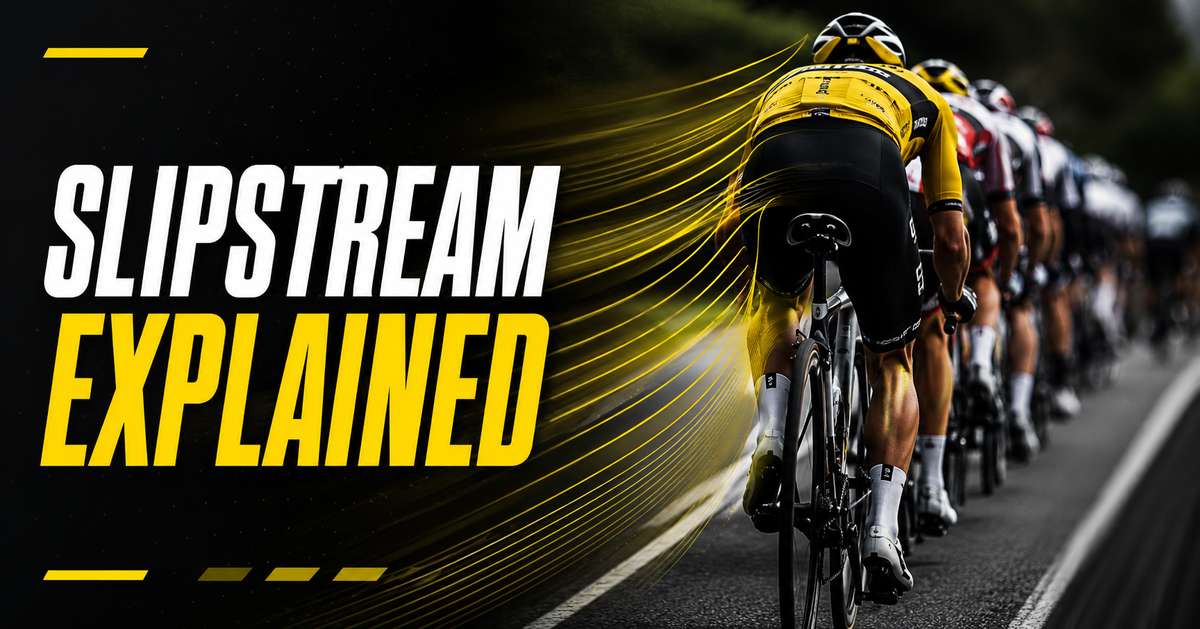
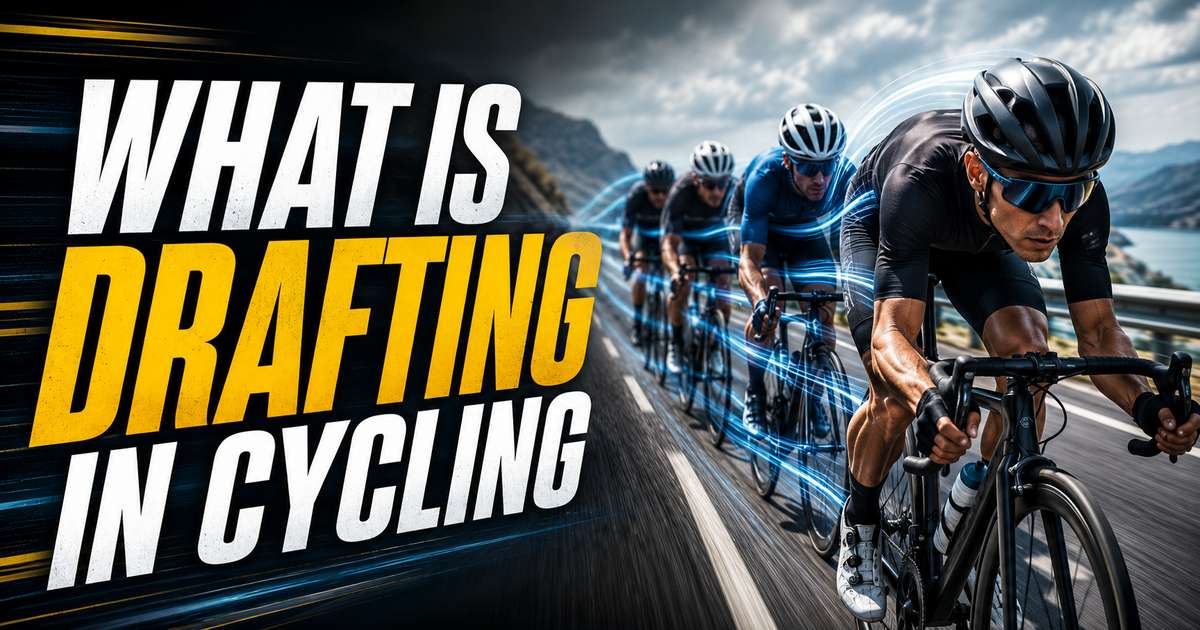
The core reason many breakaways are eventually caught is aerodynamics: riders in a peloton share wind resistance and therefore use much less energy per rider than a solo or small group. That drafting advantage means the peloton can often ride faster for the same or lower individual effort. Sports directors and online calculators model how a gap will close given speeds and remaining distance, but real-world factors—wind direction, climbs, cooperation, and rider freshness—change the outcome.
WHY SOME BREAKAWAYS SURVIVE
Breaks succeed when several elements align. Strong cooperation inside the break—sharing turns evenly—keeps the pace high. A favourable makeup of riders or teams in the break can make the peloton complacent if those teams are not threats to sprint or GC goals. Terrain and weather matter: crosswinds, rolling profiles or late climbs can favour small groups, and riders with good time-trial ability can maintain high power alone. Finally, tactical mistakes by the peloton—hesitation about who should chase—also allow escapes to make it.
TOUR DE FRANCE CONTEXT
In stage races such as the Tour de France, breakaways are a recurring drama. Over three weeks they provide stage-hunters with opportunities and can influence jersey competitions when riders collect intermediate points or mountain points. Because the exact race situation and team priorities change daily, break attempts are a persistent and compelling element of Grand Tour racing.
COMMON MISUNDERSTANDINGS
Beginners sometimes assume a break must fail because the peloton is bigger; while the peloton has aerodynamic advantages, success depends on many variables. Another mistake is thinking a break always contains weaker riders—often it includes strong specialists or riders with tactical freedom. Finally, simplistic numeric rules of thumb—like fixed minutes-per-kilometre catch rates—must be used cautiously because technology, road profile and conditions alter outcomes.
FAN VIEWING GUIDE
On-screen, watch the composition of the break (which teams are represented), the reported time gap, and the terrain ahead. If sprinter teams are missing from the front of the peloton or if GC teams send riders to the front, those are signs a chase is likely to succeed. Listen for commentary about cooperation in the break and for race radio updates—these reveal whether the escape is working or stalling.
CLOSING INTERPRETATION
Understanding the breakaway explained gives insight into cycling’s blend of endurance, aerodynamics and chess. A breakaway is a microcosm of race priorities: individual ambition, team duties, and the peloton’s collective physics. Knowing why riders attack, how gaps are calculated, and what helps a break survive makes any stage easier and more rewarding to watch.
Author: Alex R.